

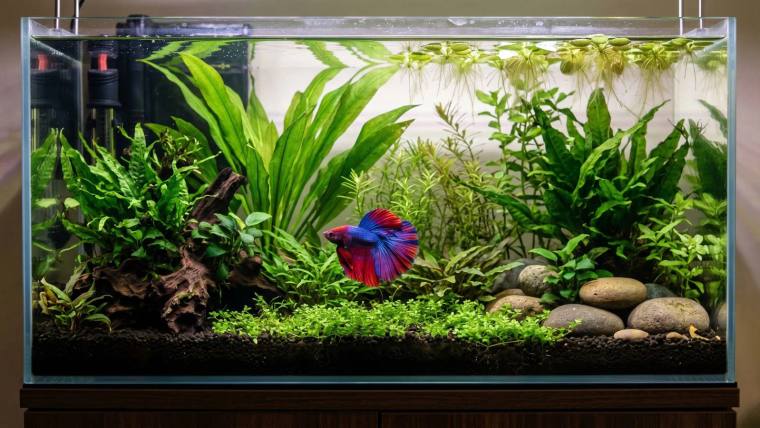
You've decided on a 15 gallon tank for your betta. Maybe someone told you it's too big, or you're second-guessing whether your fish will feel lost in there. The short answer: a 15 gallon betta fish tank is one of the best decisions you can make for your fish.
Bigger water volume means more stable conditions. Less maintenance panic. More room to add plants, decorations, and even a few peaceful tank mates. A well-set-up 15 gallon isn't overwhelming for a betta. It's closer to what they actually came from.
This guide walks you through everything specific to this tank size. Equipment choices, cycling, planting, stocking, water changes, and the mistakes that trip up most beginners. By the end, you'll have a clear picture of exactly what this setup needs and why.
Why a 15 Gallon Tank Is One of the Best Choices for Betta Fish
The Water Stability Advantage Over 5 and 10 Gallon Tanks
Here's the thing about small tanks that most beginners don't realize until something goes wrong. A tiny water volume gives you almost no margin for error. In a 5 gallon tank, a single uneaten pellet can cause an ammonia spike within hours.
A 15 gallon tank behaves very differently. There's simply more water to dilute waste, buffer temperature swings, and absorb small mistakes. If you miss a water change by a day or two, the consequences are far less severe than in a smaller setup.
Temperature stability is another real advantage. Water holds heat, and more of it holds heat longer. A 15 gallon tank is less vulnerable to room temperature fluctuations overnight, which matters a lot for a tropical fish that needs 76 to 82°F consistently.
Does a Betta Feel Overwhelmed in a 15 Gallon Tank?
This concern comes up constantly, and it's understandable. Bettas do have a reputation for preferring calm, enclosed spaces. But that reputation gets misapplied all the time.
In the wild, Betta splendens live in rice paddies, shallow streams, and floodplains. These environments are actually quite large, just slow-moving and densely planted. The idea that bettas want to live in a tiny cup is a myth that unfortunately stuck around too long [1].
A properly decorated 15 gallon with plants, driftwood, and hiding spots creates territory and breaks up sightlines. Your betta won't be swimming through open, empty water. He'll be navigating a planted environment that feels natural. Behavioral signs like active exploration, flaring at his reflection occasionally, and eating eagerly all indicate a comfortable fish.
15 Gallon vs 5 Gallon vs 10 Gallon: Which Is Actually Better?
There's no single right answer for every situation, but size does change what's possible and what's manageable.
| Feature | 5 Gallon | 10 Gallon | 15 Gallon |
|---|---|---|---|
| Water stability | Low | Medium | High |
| Plant capacity | Limited | Moderate | Full planted possible |
| Tank mate options | None realistically | Very limited | Snails, shrimp, small fish |
| Maintenance frequency | High | Medium | Lower |
| Divided tank potential | No | 2-way possible | 3-way possible |
For most betta owners who want a planted setup with some tank mates and less stressful maintenance, the 15 gallon is the clear winner among these three options.
Essential Equipment for a 15 Gallon Betta Tank
Choosing the Right Filter: Low Flow Is Non-Negotiable
Bettas aren't strong swimmers. Their long, flowing fins create drag, and a powerful filter current will exhaust and stress them. You'll notice a stressed betta spending all his time hiding in a corner or resting on the substrate just to avoid the flow.
For a 15 gallon betta tank, you want a filter that turns over the water roughly 4 to 6 times per hour, so around 60 to 90 gallons per hour maximum. A sponge filter sized for 15 to 20 gallons is often the best choice. It provides biological filtration through beneficial bacteria colonies in the sponge media, produces only gentle surface agitation, and is completely safe for bettas and shrimp alike [2].
If you prefer a hang-on-back filter, you can baffle the output by attaching a pre-filter sponge to the intake or placing a plastic bottle over the outflow. This breaks up the current before it hits the water column. Popular options include sponge filters from Aquarium Co-Op, Hikari, or Tetra, which are widely available and reliable for this tank size. You can read more about whether betta fish like bubblers and how aeration affects their behavior.
Aquarium Heater Selection and Placement
Bettas are tropical fish, and they need stable warmth year-round. The target range is 76 to 82°F (24 to 28°C). Anything below 72°F slows their metabolism, suppresses their immune system, and makes them lethargic. Temperatures above 86°F reduce dissolved oxygen and create serious health risks.
For a 15 gallon tank, a 50-watt adjustable submersible heater is the minimum. Some hobbyists prefer 75 watts for faster temperature recovery if the room gets cold at night. Fluval, Aqueon, and Marina all produce reliable heaters for this tank size.
Placement matters more than most beginners expect. Position the heater near the filter output so warm water circulates evenly. Never place it directly against the glass in a corner where heat pools and cold spots develop elsewhere in the tank.
Aquarium Lid: Why It's Not Optional
Bettas jump. It's not a fluke when it happens. It's a natural instinct they developed to escape drying pools during dry seasons and to move between water bodies. In an aquarium, that instinct doesn't switch off [3].
A 15 gallon tank has more surface area, which means more open space for a betta to exit through. A tight-fitting lid is essential. Check for gaps around filter tubes, airline tubing, and any feeding holes. Even a half-inch gap is enough. Glass lids are heavier and seal better but can reduce oxygen exchange slightly. Mesh lids allow better gas exchange but need to be secured so there's no flex.
Lighting for a 15 Gallon Planted Betta Tank
If you're keeping live plants, your light needs to actually support photosynthesis. A color temperature around 6,500K works well for low to medium light plants. You don't need anything intense or expensive for the plant species that work best in betta tanks.
Run the light on a timer set to 8 to 10 hours per day. More than 10 hours without CO2 injection and nutrient balance almost guarantees algae problems. Less than 8 hours and your plants will slowly decline. NICREW and Hygger both offer affordable full-spectrum LED lights that cover a 15 gallon tank evenly.
Aquarium Thermometer
Heater dials are notoriously inaccurate. The dial set to 78°F might actually be running at 74°F or 82°F depending on the unit. Always use a separate thermometer as a second verification point.
A digital thermometer with a probe hanging in the tank gives you a real-time accurate reading and costs very little. Check it daily until you're confident your heater is holding a stable temperature, then once every few days after that.
Substrate Selection for a 15 Gallon Betta Tank
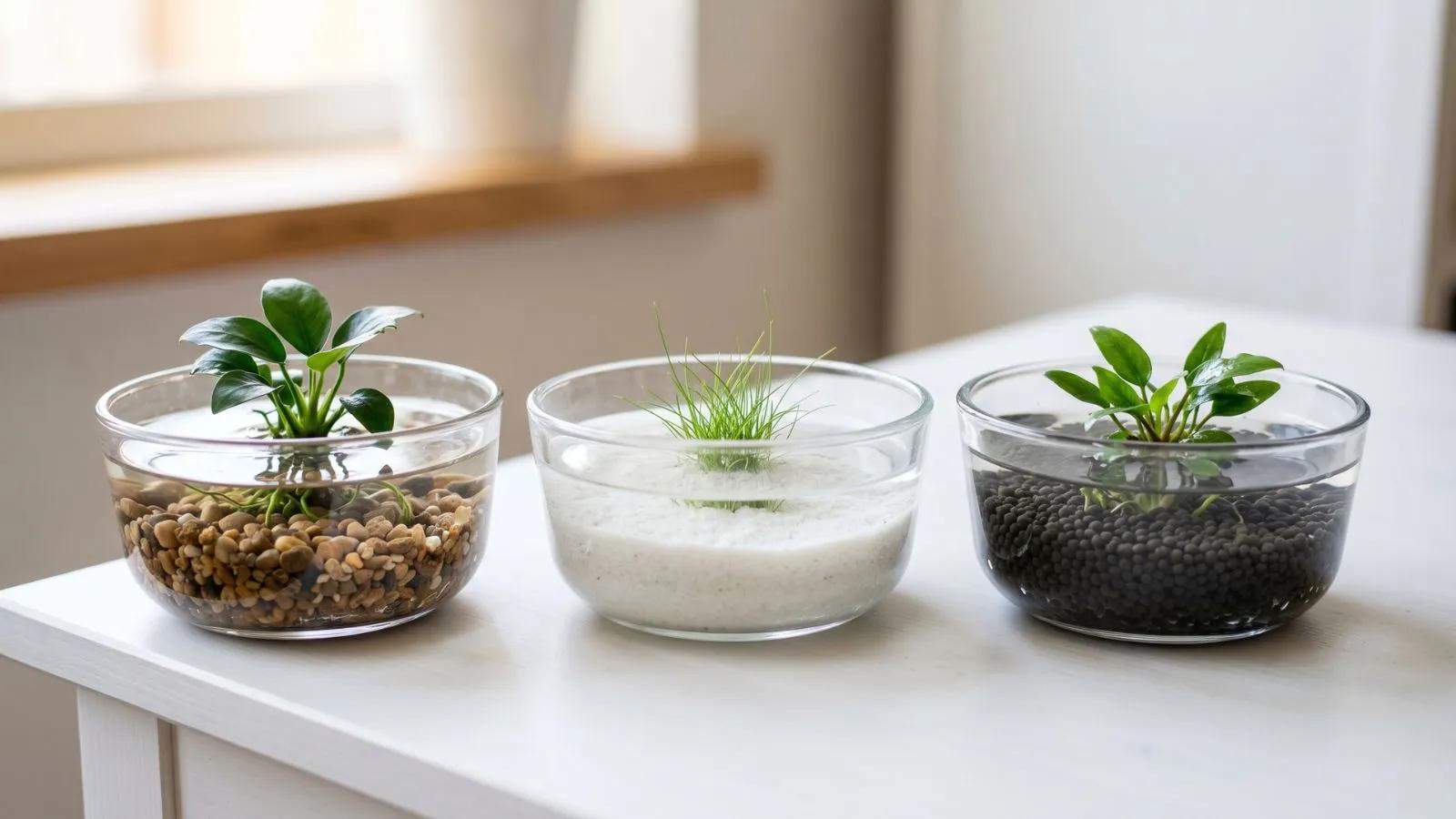
Gravel vs Sand vs Planted Substrate: Which Is Right?
The substrate you choose affects plant growth, maintenance ease, and even how your betta behaves. There's no universally correct answer, but each option has real trade-offs worth understanding.
Standard aquarium gravel works fine for bettas and low-tech setups, but the gaps between gravel pieces trap waste over time. Regular gravel vacuuming is required or ammonia problems develop from decaying matter below the surface. Sand sits flat, looks natural, and allows bettas to forage along the bottom the way they naturally would. It requires a slightly different vacuuming technique, hovering above rather than pressing in, to avoid disturbing it.
Planted substrates like Fluval Stratum or Seachem Flourite are designed specifically to support rooted plant growth. They contain minerals that feed plant roots and maintain a slightly acidic pH that bettas prefer. For a planted 15 gallon, this is often the best long-term investment. Whatever substrate you choose, aim for at least 2 to 3 inches of depth so rooted plants can anchor properly.
| Substrate Type | Plant Support | Betta Safety | Cleaning Ease |
|---|---|---|---|
| Smooth gravel | Moderate | Good | Moderate |
| Fine sand | Low to moderate | Excellent | Moderate |
| Planted substrate | Excellent | Good | Harder |
What to Avoid in Betta Tank Substrate
Sharp or coarse gravel is a real problem. Bettas rest on the substrate, and sharp edges can scratch their fins and body. The fin silk test works well here: drag a piece of pantyhose across the substrate. If it snags, it will damage betta fins too.
Colored or painted gravel is another one to avoid. The coatings on some decorative gravels can leach chemicals into the water over time. Plain natural-looking substrates are always safer. Bare-bottom tanks are easy to clean but often stressful for bettas that prefer to forage, and they limit your plant options significantly.
How to Cycle a 15 Gallon Betta Tank Before Adding Fish
What the Nitrogen Cycle Is and Why It Cannot Be Skipped
New tank syndrome kills more bettas than almost anything else. It happens when fish are added to an uncycled tank that has no established beneficial bacteria to process waste. Ammonia from fish waste builds to toxic levels fast, and betta owners often don't realize what's happening until their fish is already in serious distress.
The nitrogen cycle is the biological process that makes an aquarium safe. Ammonia from waste is converted by one type of bacteria to nitrite, which is equally toxic. A second type of bacteria then converts nitrite to nitrate, which is far less harmful at low levels and removed through water changes [4]. This bacterial colony lives primarily in your filter media and substrate. It takes time to establish, and it cannot be rushed by simply filling the tank and waiting.
Plants help with water quality but do not replace a cycled filter. A planted tank without established bacteria still produces dangerous ammonia spikes after a fish is added.
Fishless Cycling Step-by-Step for a 15 Gallon Tank
Fishless cycling is the safest method. It establishes your bacterial colony before any living fish enters the tank.
- Fill the 15 gallon tank and treat the water fully with a water conditioner like Seachem Prime to neutralize chlorine and chloramines from tap water.
- Add an ammonia source. Pure ammonia (unscented, no surfactants) dosed to around 2 to 4 ppm works well. Alternatively, place a small piece of fish food in the tank and let it decompose.
- Run the filter continuously from day one. The bacteria you're cultivating will colonize the filter media.
- Test the water every 2 to 3 days using a liquid test kit like the API Freshwater Master Test Kit. Test for ammonia, nitrite, and nitrate.
- You'll first see ammonia rise, then nitrite appear as ammonia begins to fall. Eventually nitrite drops to zero and nitrate appears. This confirms your cycle is complete.
- Perform a large 50% water change to bring nitrate down before adding your betta. Target: 0 ppm ammonia, 0 ppm nitrite, under 20 ppm nitrate.
The full process typically takes 4 to 6 weeks. It's not exciting to wait, but it's the difference between a betta that thrives and one that dies within the first month.
Speeding Up the Cycle Safely
If you have access to an established aquarium, seeded filter media is by far the most effective shortcut. A portion of the sponge or bio-media from a healthy tank already contains billions of the bacteria you need. Adding it to your new 15 gallon filter can reduce cycling time to 1 to 2 weeks.
Bottled bacteria products vary widely in quality. Some work reasonably well as a boost, others do very little. They're worth using alongside seeded media but shouldn't be relied on alone as a substitute for proper cycling.
How to Know When Your 15 Gallon Tank Is Ready
Test your water on two consecutive days before adding fish. Both days should show 0 ppm ammonia, 0 ppm nitrite, and a detectable but low nitrate reading. If ammonia or nitrite shows any reading at all, the cycle isn't complete. Keep waiting.
The parameters you're targeting before adding your betta: temperature between 78 and 80°F, pH between 6.5 and 7.5, ammonia at 0 ppm, nitrite at 0 ppm, and nitrate under 20 ppm. Once you hit these on back-to-back test days, your tank is ready. When you're ready to introduce your fish, read up on how to acclimate a betta fish safely to avoid temperature and pH shock during the transfer.
Ideal Water Parameters for a 15 Gallon Betta Tank
Complete Water Parameter Targets
Getting these numbers dialed in is what separates a tank where a betta survives from one where he genuinely thrives. Water chemistry sounds technical, but once you test regularly it becomes second nature.
| Parameter | Ideal Range | Danger Zone |
|---|---|---|
| Temperature | 76 to 82°F (24 to 28°C) | Below 72°F or above 86°F |
| pH | 6.5 to 7.5 | Below 6.0 or above 8.0 |
| Ammonia | 0 ppm | Any detectable level |
| Nitrite | 0 ppm | Any detectable level |
| Nitrate | Under 20 ppm | Above 40 ppm |
| Hardness (GH) | 3 to 12 dGH | Above 20 dGH |
How to Test Water in a 15 Gallon Betta Tank
Test strips are convenient but often inaccurate. Liquid test kits like the API Freshwater Master Test Kit give you far more reliable readings and are worth the slightly higher cost. One kit covers hundreds of tests and lasts a long time.
During the first three months of a new tank, test weekly. Once the tank is established and running stably, testing every two weeks is usually sufficient unless you notice behavioral changes in your betta. Sudden appetite loss, color fading, or unusual swimming are all reasons to test immediately rather than waiting for your regular schedule.
Water Conditioner: Why It's Required Every Single Water Change
Tap water contains chlorine and often chloramines added by water treatment facilities. Both kill beneficial bacteria and damage betta gill tissue even in small amounts. Never add untreated tap water to your tank [5].
Seachem Prime is the most widely recommended water conditioner in the hobby. It neutralizes chlorine, chloramines, and temporarily detoxifies ammonia and nitrite, which makes it valuable during cycling too. The dose for 15 gallons is small. A single bottle lasts a long time. API Stress Coat is another option that adds a slime coat protectant, which helps fish recovering from fin damage.
Live Plants for a 15 Gallon Betta Tank
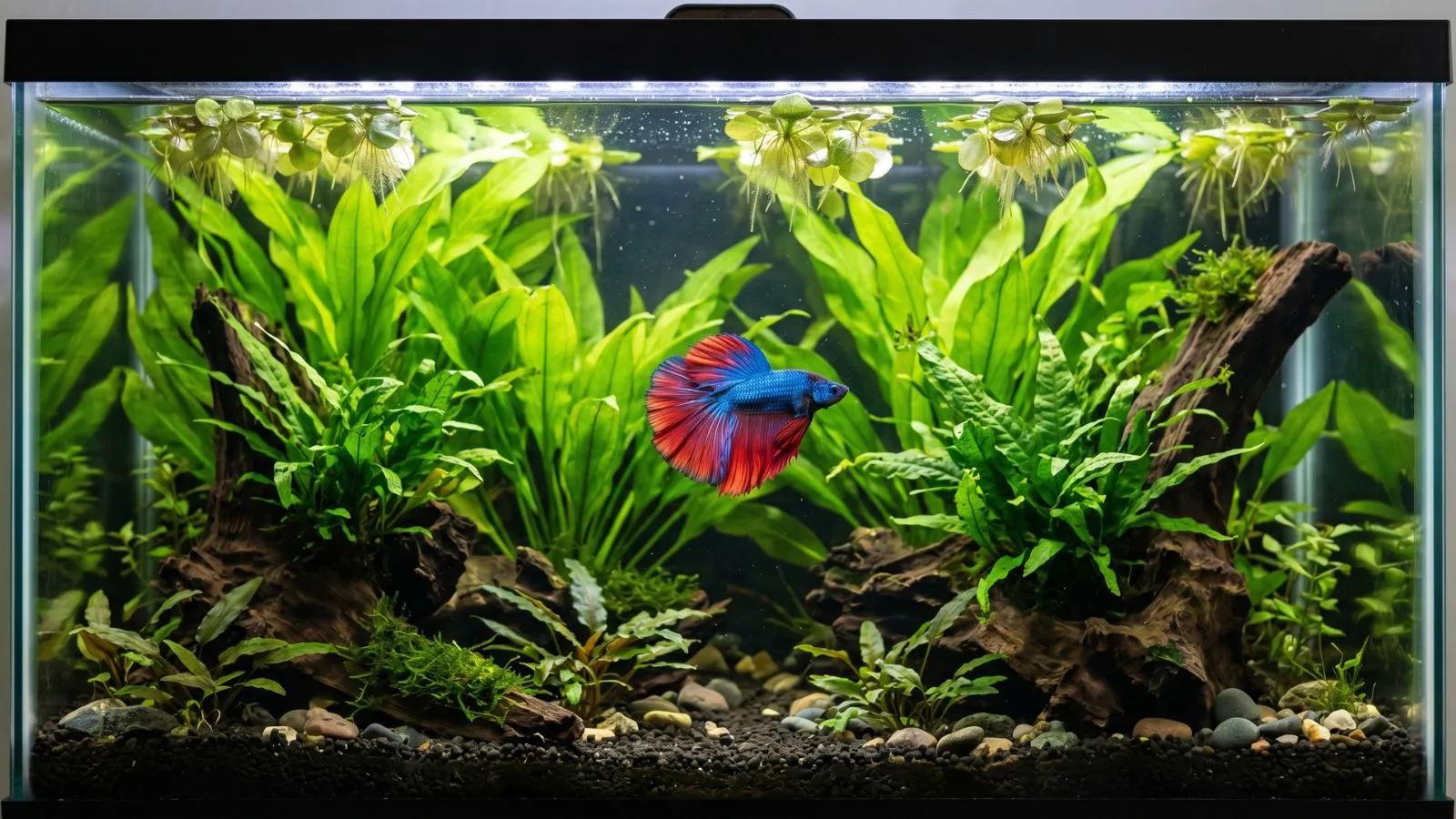
Why Live Plants Improve Betta Health
A planted 15 gallon isn't just more attractive. It actually creates a better environment for your betta in practical ways. Plants absorb ammonia, nitrite, and nitrate directly, which reduces the load on your filter and gives you more buffer between water changes.
Dense planting creates hiding spots and visual breaks that reduce stress significantly. A betta with places to retreat from his own reflection or from tank mates is a calmer, healthier fish. Floating plants in particular give bettas a shaded resting area near the surface, which suits their labyrinth organ breathing habits perfectly. Some hobbyists also add Indian almond leaves to release natural tannins, which lower pH slightly and have mild antibacterial properties.
Best Rooted Plants for a 15 Gallon Betta Tank
Amazon Sword is a classic background plant for this size tank. It grows large and creates a dense green backdrop, but it needs root tabs in the substrate to support its nutrient demands. Anubias is one of the most forgiving plants you can keep. It attaches to driftwood or rocks rather than rooting in substrate, tolerates low light, and grows slowly enough that it rarely needs trimming.
Java Fern behaves similarly to Anubias and shouldn't be buried in substrate or the rhizome rots. Attach it to hardscape instead. Water Sprite is a faster grower that absorbs nitrates efficiently, making it practically useful for water quality management on top of its visual appeal. You can find detailed guidance in this guide to the best plants for betta fish.
Best Floating Plants for a 15 Gallon Betta Tank
Amazon Frogbit is ideal. It creates a natural surface canopy, provides shade your betta genuinely seeks out, and absorbs nutrients directly from the water column. Java Moss can be left floating or attached to wood and rocks. It creates hiding spots at every level of the tank and works especially well as a surface resting area near your betta's favorite corner.
One thing to watch with floating plants in a 15 gallon: they spread quickly and can eventually block light from reaching rooted plants below. Thin them out regularly to maintain balance.
Fertilization in a Planted 15 Gallon Betta Tank
Root-feeding plants like Amazon Sword need root tabs pushed into the substrate near their base every 2 to 3 months. Water-column feeders like Anubias and Java Fern benefit from a weekly dose of liquid fertilizer. Products like Seachem Flourish or API Leaf Zone work well at the low doses appropriate for a lightly planted tank.
Don't over-fertilize thinking it speeds up growth. Excess nutrients without sufficient plant mass feed algae instead. Start with half the recommended dose and increase only if plants show deficiency signs like yellowing leaves.
Managing Algae in a 15 Gallon Planted Betta Tank
Some algae in a new planted tank is completely normal and not a sign of failure. Brown diatoms often appear in the first few weeks as the tank establishes, then fade on their own. Green spot algae on the glass is harmless and easily wiped off during water changes.
Persistent green hair algae or green water is a different story. It usually signals too much light, too many nutrients, or both. Start by reducing your photoperiod to 8 hours and increasing floating plant coverage to outcompete the algae for nutrients. Nerite snails are excellent allies here. They graze on algae constantly without touching healthy plants and never reproduce in freshwater. If you're wondering whether your betta will help with algae control, read about whether betta fish eat algae.
Aquarium Decorations and Enrichment for a 15 Gallon Betta Tank
What Betta Fish Actually Need From Their Environment
Bettas are intelligent fish with territorial instincts. In a bare or sparsely decorated tank, a betta often becomes lethargic, loses color, or develops what many hobbyists call "glass surfing," pacing back and forth along the tank walls. That behavior signals stress, not curiosity.
A 15 gallon with no decorations is actually more stressful for a betta than a smaller well-decorated tank. The open space without visual breaks and hiding spots creates anxiety rather than freedom. Your goal is to create a tank that feels like defined territory, with clear pathways, resting spots at different levels, and enough cover that he can retreat when he wants to.
Safe Decoration Choices for a 15 Gallon Betta Tank
Driftwood is one of the best additions for a betta tank. It looks natural, releases tannins that soften water and slightly lower pH, and creates immediate structure. Soak or boil new driftwood before adding it to leach tannins that would otherwise stain your water brown initially. Spider wood and cholla wood are both popular and safe for bettas.
Smooth rocks like dragon stone or river pebbles add visual interest and create caves. Betta caves and tunnel decorations give your fish a retreat spot and are widely used by experienced keepers. A floating log at the surface is worth adding too. Bettas instinctively seek out resting spots near the surface, and a floating log satisfies that perfectly.
What to Avoid in Betta Tank Decorations
Plastic plants with molded edges are a common source of fin tears. Run the pantyhose test on any decoration before it goes in the tank. If it snags fabric, it will snag fins. Soft silk artificial plants are safer than stiff plastic ones if you go the artificial route.
Avoid decorations with holes small enough for a betta to swim into but not easily back out of. Bettas occasionally get stuck exploring tight spaces, which causes injury and stress. Mirrors and highly reflective surfaces are another one to avoid long-term. Brief flaring at a reflection isn't harmful, but chronic exposure to a perceived rival causes constant stress that affects health over time.
Natural Betta Tank Aquascape Styles for 15 Gallons
A blackwater biotope setup uses driftwood, Indian almond leaves, dark substrate, and minimal lighting to replicate the tannin-rich waters of Southeast Asia where bettas originate. It's one of the most natural-looking and lowest-maintenance aquascape styles for this fish. The nature aquarium style focuses on hardscape with Anubias and Java Fern attached to rock and wood, with open swimming areas in front and dense planting in back.
A jungle aquascape goes for maximum plant density with a floating canopy overhead and a clear swimming lane through the middle. This style requires more maintenance to prevent plants from overcrowding, but it produces a visually stunning tank that also provides excellent environmental enrichment for your betta. For more inspiration, check out these betta fish aquarium ideas.
Tank Mates for a 15 Gallon Betta Tank
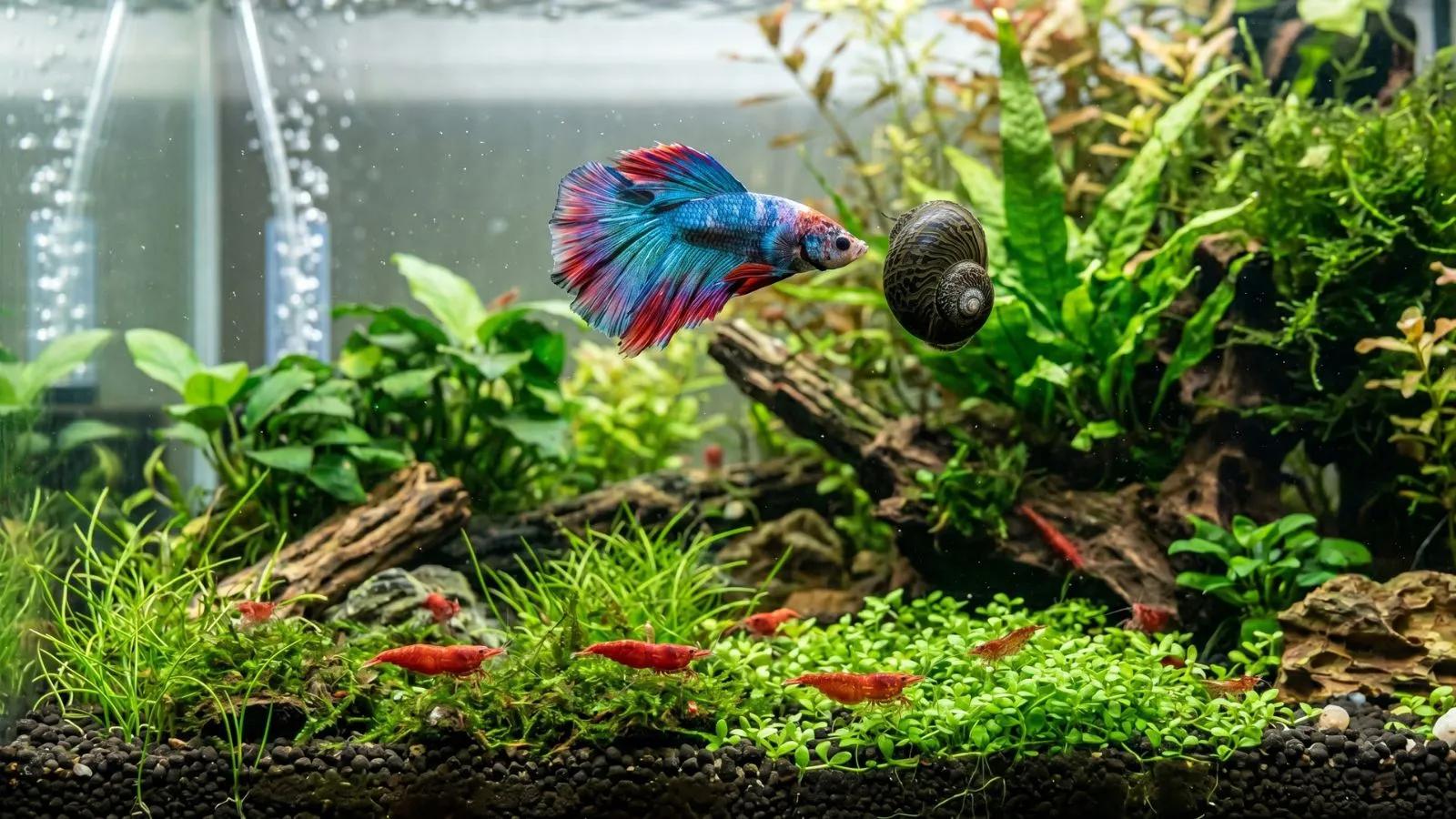
Why 15 Gallons Opens Up Tank Mate Options
In a 5 gallon tank, adding tank mates is genuinely risky. There's no meaningful territory buffer, nowhere for a target to escape, and any aggression quickly becomes unavoidable. A 15 gallon changes the math significantly. You have enough space to establish visual barriers with plants and hardscape that reduce perceived territory overlap.
That said, the 15 gallon doesn't make a betta suddenly community-friendly. It creates conditions where compatible species can coexist more safely. The key word is compatible. Choosing the wrong tank mates in a 15 gallon still ends badly.
Best Tank Mates for a Betta in a 15 Gallon Tank
| Species | Stocking Number | Why They Work | Risk Level |
|---|---|---|---|
| Nerite Snail | 2 to 4 | Algae cleaning, no fins, slow movement | Very Low |
| Mystery Snail | 1 to 2 | Peaceful, large enough bettas rarely harass | Low |
| Cherry Shrimp | 6 to 10 | Fast movers, algae cleaners | Moderate |
| Amano Shrimp | 4 to 6 | Larger size, less colorful, excellent algae eaters | Low to Moderate |
| Pygmy Corydoras | 4 to 6 | Bottom dwelling, peaceful, schooling fish | Low |
| Ember Tetra | 6 to 8 | Small, non-nippy, occupy upper water column | Moderate |
Nerite snails are the safest choice and genuinely useful. They graze on algae constantly, don't compete with your betta for food, and never reproduce in freshwater. Mystery snails are larger and less likely to be harassed. For more detail on cohabitating multiple betta fish, including female sorority considerations, read about whether you can have multiple betta fish in one tank.
What You Cannot Put With a Betta in a 15 Gallon Tank
Two male bettas cannot share any tank, regardless of size. Even a divided 15 gallon requires a fully opaque divider with zero gap. Female bettas can sometimes coexist in a sorority setup, but a 15 gallon is too small for a proper sorority of 5 or more females and should not be attempted. You can learn more about whether female betta fish are aggressive before making stocking decisions.
Long-finned or brightly colored fish are a consistent problem. Male guppies in particular trigger fin-nipping aggression in most bettas. Tiger barbs will fin-nip your betta ruthlessly. Cichlids are territorial and aggressive. Any fish marketed as "semi-aggressive" should be avoided entirely with bettas.
The hardest thing for many betta owners to accept: a betta that seems calm doesn't guarantee safety for tank mates. Individual temperament varies a lot. Some bettas ignore snails and shrimp. Others hunt them obsessively. Always have a backup plan before adding any tank mate.
The Divided 15 Gallon Betta Tank Option
A tank divider splits a 15 gallon into two sections, each housing a single betta. This is a space-efficient option if you want to keep more than one betta. Each fish gets roughly 7.5 gallons, which is functional for a single betta but not generous. You can share one filter and one heater between sections, provided the flow is distributed evenly and the heater is positioned centrally.
The divider itself needs to be completely opaque or have visual barriers on each side. Bettas can see through mesh dividers, and constant visual contact with another male causes chronic stress even without physical contact. A three-way division is technically possible in a 15 gallon but gives each fish only 5 gallons, which is the bare minimum and leaves no room for error.
How to Introduce Tank Mates to an Established 15 Gallon Betta Tank
New fish should always spend time in a quarantine tank first. Two weeks minimum. Any disease present in a new fish can devastate an established tank, and bettas are particularly vulnerable to parasites like ich and velvet that can arrive on new arrivals. Read about betta fish white spots on fins so you know what to watch for during and after introductions.
When you're ready to add a tank mate to the established 15 gallon, rearrange some decorations first. This disrupts the territory your betta has already claimed and reduces his drive to immediately chase the newcomer. Watch the first 48 to 72 hours closely. Brief chasing and flaring is normal during initial adjustment. Sustained aggression, fin nipping, or hiding by the new addition are signs the combination isn't working.
Water Changes and Maintenance for a 15 Gallon Betta Tank
How Often to Change Water in a 15 Gallon Betta Tank
An established, cycled 15 gallon with a single betta and a few tank mates needs a 20 to 25% water change weekly. If you're keeping a more densely stocked setup or you're still in the early months of the nitrogen cycle, increase that to 25 to 30% weekly. A new, uncycled tank needs 30 to 50% changes every 2 to 3 days to keep ammonia from climbing to dangerous levels before your bacterial colony is established.
One thing that surprises many beginners: a 15 gallon actually needs water changes less urgently than a smaller tank. The larger volume dilutes waste more effectively. That doesn't mean you can skip weeks, but it does mean missing one scheduled change by a day or two is far less dangerous than the same situation in a 5 gallon.
Step-by-Step Water Change Process for a 15 Gallon Tank
- Unplug the heater at least 30 minutes before you begin removing water. Running a heater exposed to air or low water can crack the element.
- Use a gravel vacuum or siphon to remove 20 to 25% of the water while simultaneously cleaning the substrate. Work systematically across the bottom to remove settled waste.
- Prepare replacement water in a clean bucket. Match the temperature as closely as possible to the tank water. Cold tap water poured directly in stresses fish even if the chemistry is treated.
- Add the correct dose of water conditioner to the replacement water in the bucket before adding it to the tank. For a 15 gallon doing a 25% change, you're treating about 3.75 gallons.
- Pour the new water in slowly, ideally against the glass or into a bowl placed in the tank to break the flow and avoid disturbing the substrate.
- Plug the heater back in once the water level is restored.
- Test water parameters 30 minutes after the change if you're troubleshooting an issue. For routine maintenance, test weekly during the first few months.
Monthly and Quarterly Maintenance Tasks
Weekly tasks cover water changes, basic parameter testing, and wiping algae from the glass. Monthly, you should rinse the filter media in a cup of old tank water removed during your water change. Never rinse it under tap water. The chlorine kills the beneficial bacteria living in your filter media, and you effectively uncycle your tank.
Also monthly: trim overgrown plants, vacuum the substrate more thoroughly, and check that your equipment is functioning correctly. Every few months, verify your heater's accuracy against your thermometer, check the filter output level, and clean the LED light fixture of any dust or mineral deposits that reduce light output over time.
| Schedule | Task |
|---|---|
| Weekly | 20 to 25% water change, wipe algae from glass, quick parameter check |
| Monthly | Filter media rinse in tank water, plant pruning, thorough substrate vacuum |
| Quarterly | Full equipment check (heater accuracy, filter output), light fixture cleaning |
Common Maintenance Mistakes That Harm Water Quality
Rinsing filter media under tap water is probably the most damaging single maintenance mistake in the hobby. Many beginners do it instinctively because the media looks dirty, not realizing they're destroying the colony that keeps ammonia levels safe. Rinse only in old tank water, and only lightly. A little brown discoloration is fine.
Doing a very large water change in an established tank to "refresh" the water can also cause problems. A sudden 75% or 80% water change shifts pH, temperature, and mineral content rapidly, which stresses fish and can cause a mini-cycle by diluting the bacterial population in the water column. Stick to 25 to 30% changes done consistently rather than occasional large ones.
Common Problems in a 15 Gallon Betta Tank and How to Fix Them
Ammonia Spike: Causes, Signs, and Emergency Response
Ammonia poisoning is a genuine emergency. The signs include rapid gill movement, gasping at the surface, lethargy, reddened or inflamed gills, and a betta that stops eating entirely. Even brief exposure to ammonia at 0.5 ppm or above causes gill damage that affects long-term health.
- Test water immediately with a liquid test kit to confirm ammonia is elevated.
- Perform a 30 to 50% water change right away using conditioned water matched to tank temperature.
- Dose Seachem Prime at double the standard rate. Prime temporarily detoxifies ammonia by converting it to a safer form that your bacteria can still process.
- Identify the source: uneaten food, dead plant matter, a dead snail or fish hidden in a corner, or an uncycled tank. Remove it immediately.
- Do not feed your betta for 24 hours. Adding more food to a tank already struggling with ammonia makes the situation worse.
- Retest after 24 hours. If ammonia is still detectable, repeat the water change and Prime dose.
Algae Overgrowth in a 15 Gallon Planted Betta Tank
Green hair algae that spreads across plants and decorations almost always has one of two causes: too much light or too many nutrients relative to plant demand. Start by reducing your lighting period to 8 hours and see if growth slows within one to two weeks before changing anything else.
If algae persists, check whether your floating plants have thinned out or died back, reducing competition for nutrients. Adding or restoring floating coverage often makes a significant difference without any chemical intervention. For aggressive algae problems, adding 2 to 4 nerite snails to the 15 gallon provides consistent biological control on surfaces without any risk to your betta.
Fin Rot in a 15 Gallon Betta Tank
Fin rot is one of the most common health problems betta owners encounter, and it almost always follows a period of poor water quality. The fins start looking ragged or uneven at the edges, then the tissue begins to recede. Advanced fin rot reaches the body and becomes life-threatening.
The most effective treatment starts with improving water quality, not adding medication. Increase water changes to every 2 to 3 days at 25 to 30% and test parameters carefully. If the rot continues progressing despite clean water, API Fin and Body Cure or aquarium salt at 1 tablespoon per 5 gallons can help. Understand that fin rot almost always comes back if the underlying water quality issue isn't resolved first. Learn more about identifying and treating betta fish diseases and cures.
Swim Bladder Disorder Signs in a 15 Gallon Setup
A betta swimming sideways, floating at the surface involuntarily, or sinking to the bottom and struggling to rise has swim bladder issues. In most home aquariums, the cause is digestive: overfeeding, constipation, or eating too fast. A simple 2 to 3 day fast resolves many cases. Follow the fast with daphnia, a natural laxative for fish, rather than immediately returning to pellets. Read more about why a betta fish might swim sideways to understand the full range of causes.
If fasting and daphnia don't help within 5 to 7 days, a bacterial infection affecting the swim bladder is possible. At that point, consulting an aquatic veterinarian is the most appropriate next step. Internal infections require antibiotic treatment that should be guided by a professional.
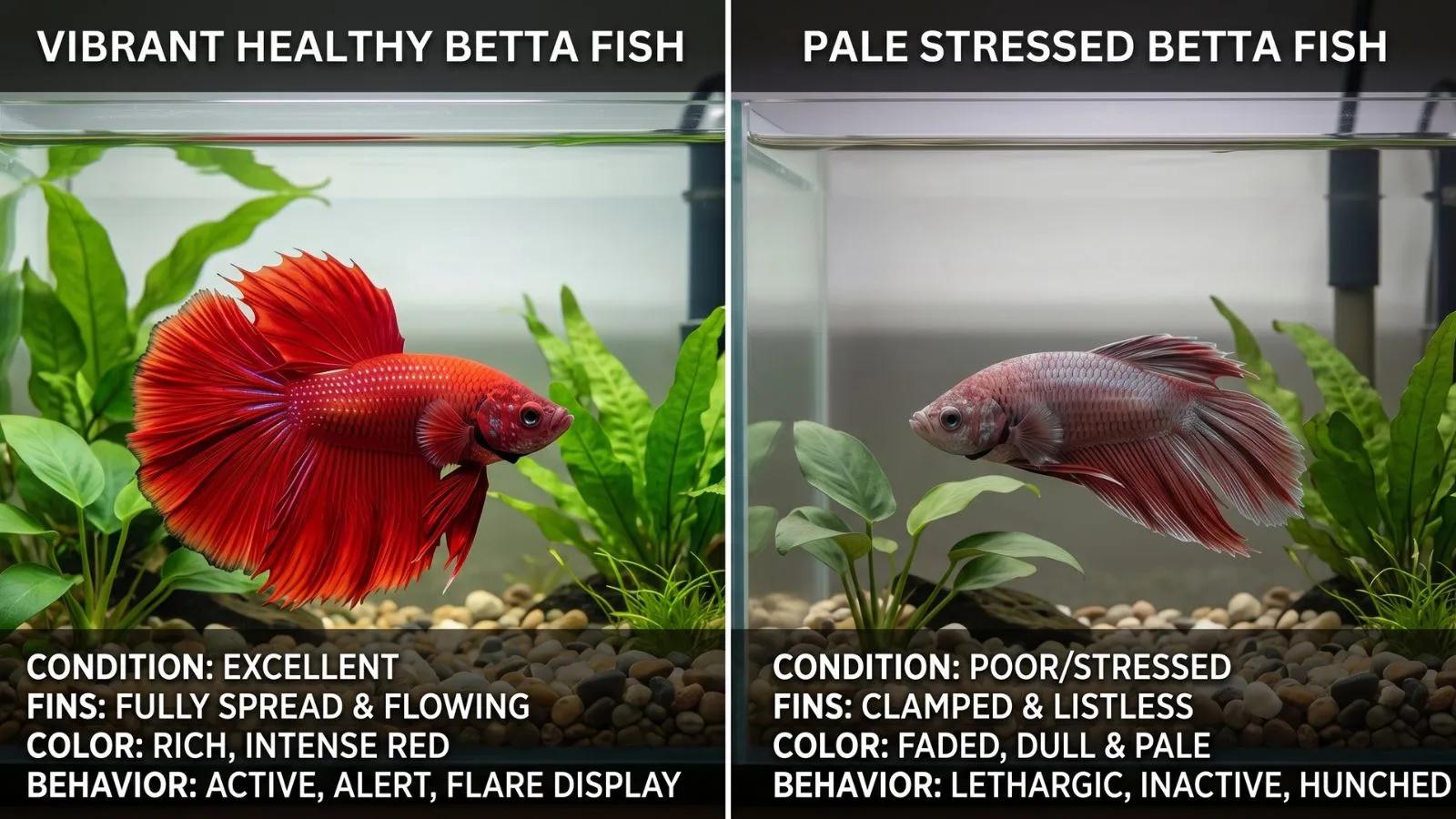
Betta Stress in a 15 Gallon Tank: Signs and Causes
Stress manifests before visible illness in most cases. One thing I've noticed is that appetite is the first thing to change. A betta that normally lunges for food and starts ignoring pellets is telling you something is wrong, even if he looks fine otherwise.
| Behavior | Normal | Stress Sign |
|---|---|---|
| Color | Vibrant and full | Pale, faded, or horizontal stress bars visible |
| Movement | Active exploration throughout the tank | Hiding constantly, clamped fins |
| Eating | Eats eagerly within 30 seconds | Ignoring food repeatedly across multiple feedings |
| Breathing | Calm, occasional surface visits | Rapid gill movement, frequent gasping at surface |
If your betta shows stress bars (horizontal dark stripes along the body), check water parameters first. Most stress in a well-decorated 15 gallon tank traces back to water quality issues, incompatible tank mates, or a too-powerful filter current. Solving the root cause is always more effective than treating symptoms. You can also track color changes over time by learning more about why betta fish change color and what those changes mean.
Beginner Mistakes to Avoid With a 15 Gallon Betta Tank
Skipping the Nitrogen Cycle Because the Tank Has Plants
This is a widespread mistake, especially among beginners who research live plants carefully and correctly but then assume the plants handle everything. They don't. Plants absorb some ammonia, yes. But without established beneficial bacteria in the filter, a betta added to a new planted tank still faces dangerous ammonia spikes within days. Always cycle fully regardless of plant load.
Using Too Powerful a Filter and Stressing the Betta
A filter rated for 30 gallons doesn't make a 15 gallon tank twice as clean. It creates current that's twice as strong as your betta needs. You'll know the filter is too powerful if your betta avoids one side of the tank, rests at the bottom to escape flow, or shows clamped fins. Downsize the filter or baffle the output until the water surface barely ripples.
Overstocking Because 15 Gallons Feels Large
Compared to a 5 gallon, a 15 gallon does feel spacious. But it has real limits. A single betta with 4 nerite snails and a group of pygmy corydoras is a reasonable stocking level. Adding more fish because "there seems to be room" creates water quality pressure that defeats the whole stability advantage of the larger tank.
Not Using a Lid Because the Tank Has a Cover
Some 15 gallon tanks come with a partial hood rather than a full cover. The gaps around the filter, heater, and tubing are often large enough for a betta to exit. A betta out of water dies within minutes. Check every gap and cover or seal anything larger than half an inch.
Changing All the Water During Maintenance
A complete water change sounds like the most thorough cleaning possible. In reality, it removes the beneficial bacteria in the water column, shifts chemistry dramatically, stresses the fish with sudden new parameters, and can cause a mini-cycle that takes days to stabilize. Stick to partial changes of 20 to 30% each time. Consistency matters more than volume.
Self-Cleaning Betta Fish Tanks: What They Are and Whether They Work
How Self-Cleaning Tank Systems Are Marketed
Self-cleaning tanks typically use one of two concepts. Some rely on a plant-growing top section that supposedly filters water through plant roots. Others use a gravity-fed water change system that slowly replaces tank water without manual siphoning. They're often marketed heavily at betta owners specifically because bettas have a reputation for being small tank fish.
The Reality: What Self-Cleaning Tanks Can and Cannot Do
No aquarium system eliminates the need for water changes and maintenance. A tank that markets itself as self-cleaning still accumulates waste, still requires monitoring, and still needs periodic cleaning. Most self-cleaning betta tanks are also very small, which creates all the water stability problems that make 5 gallon tanks risky. The plant filtration in these systems is rarely robust enough to handle the biological load of a fish.
Why a Properly Maintained 15 Gallon Outperforms Any Self-Cleaning Tank
A planted, cycled 15 gallon with nerite snails is genuinely the closest real-world equivalent to a low-maintenance self-sustaining aquarium ecosystem. The plants absorb nutrients, the snails graze algae and detritus, and the established bacteria process waste continuously. You still do water changes, but the system handles a significant portion of the biological load between those changes. No self-cleaning product currently on the market replicates that stability at the small sizes they're sold in.
If low maintenance is your primary goal, a well-planted 15 gallon with appropriate tank mates achieves that far more effectively than any product with "self-cleaning" in the name.
Is a 15 Gallon Betta Tank Right for You?
Ideal Scenarios for a 15 Gallon Betta Setup
A 15 gallon is an excellent choice if you want a planted aquascape with room to grow and experiment. It's also ideal if you want to add a few peaceful tank mates without the high-risk environment a smaller tank creates. For beginners, the water stability advantages make it genuinely more forgiving than starting with a 5 gallon, despite the larger upfront cost.
If you're interested in betta fish keeping as a long-term hobby, this size gives you room to develop aquascaping skills, experiment with different plant species, and learn about community stocking without constantly fighting poor water parameters.
When a Different Tank Size Might Be Better
Space limitations are a real consideration. A 15 gallon typically measures around 24 inches by 12 inches, which requires dedicated shelf or stand space. A 10 gallon covers the same footprint but is shorter, which can work in tighter spaces. Budget is another factor. A 15 gallon setup with quality equipment, substrate, and plants represents a larger upfront investment than a simpler 5 to 10 gallon setup.
If you're interested in breeding bettas, a 15 gallon isn't ideal for that purpose. Breeding tanks are typically smaller and more controlled, usually 5 to 10 gallons where fry can be monitored closely. You can explore what happens when a female betta is carrying eggs and whether your current setup is suitable for breeding.
Long-Term Care Commitment for a 15 Gallon Betta Tank
Before committing to this setup, run through the honest checklist:
- Do you have a surface roughly 24 by 12 inches available for the tank and stand?
- Can you commit to weekly water changes of 20 to 25%?
- Do you have a 4 to 6 week plan for cycling before adding the betta?
- Is your lid fully gapless or can you seal any gaps present?
- Do you have a separate thermometer to verify heater accuracy?
If the answers are yes, a 15 gallon betta tank is one of the most rewarding setups you can build. It gives you room to learn, stability to recover from mistakes, and a genuinely healthy environment for your fish. The investment in setup time pays back in a more stable, easier-to-maintain tank for years. For a broader look at how to approach betta keeping from the beginning, the best betta fish tank setup guide covers the foundational decisions in detail.
References
- Rainboth, W.J. (1996). Fishes of the Cambodian Mekong. Food and Agriculture Organization of the United Nations. https://www.fao.org/3/v8731e/v8731e.pdf
- University of Florida IFAS Extension. Freshwater Aquarium Basics. https://edis.ifas.ufl.edu/publication/FA007
- Merck Veterinary Manual. Ornamental Fish: Environmental Requirements and Management. https://www.merckvetmanual.com/exotic-and-laboratory-animals/ornamental-fish/ornamental-fish-introduction
- Timmons, M.B., Ebeling, J.M. (2010). Recirculating Aquaculture. Northeastern Regional Aquaculture Center. https://www.ncrac.org/publication/recirculating-aquaculture
- EPA. Chloramine in Drinking Water. United States Environmental Protection Agency. https://www.epa.gov/ground-water-and-drinking-water/chloramine-drinking-water