You added a bubbler to your betta tank hoping to help him breathe easier. Now he's hiding in the corner, barely moving, and you're starting to wonder if you made things worse. Sound familiar?
The question of whether do betta fish like bubblers is genuinely confusing, because the answer isn't a simple yes or no. It depends entirely on your tank setup, the flow rate, and where you place it.
Bettas can benefit from a bubbler in certain situations. But they can also be seriously stressed by one if it's set up wrong. This guide covers exactly when a bubbler helps, when it hurts, and how to get it right for your specific tank.
How Bettas Breathe — The Labyrinth Organ Explained
What Is the Labyrinth Organ and How Does It Work?
Bettas are labyrinth fish, which means they have a special organ, the labyrinth organ, that lets them breathe oxygen directly from the air above the water surface.[1] It works a bit like a primitive lung. That's why you'll notice your betta swimming up to gulp air every so often, that's completely normal behavior.
This evolved because Betta splendens naturally lives in the shallow rice paddies, slow streams, and flood plains of Southeast Asia, where the water is often warm and low in dissolved oxygen. Surface access is non-negotiable for a betta. Any tank setup, including a bubbler, that disrupts the path to the surface is a serious problem.
Does This Mean Bettas Don't Need Dissolved Oxygen in the Water?
Here's a myth worth busting right away: bettas still use their gills and still need dissolved oxygen in the water. The labyrinth organ is a backup system, not a replacement. When a betta is sick, stressed, or resting, gill breathing does most of the work.
Warm water holds less dissolved oxygen than cool water. A tank running at 80°F (27°C) will have noticeably lower oxygen levels than the same tank at 72°F. That's actually one case where aeration genuinely helps.
Do Betta Fish Actually Like Bubblers?
What Betta Behavior Around a Bubbler Tells You
Some bettas are genuinely curious about bubbles, they'll swim through the stream, flare mildly, and seem unbothered. Others immediately retreat to the far corner of the tank and stay there. The difference usually comes down to flow rate and placement, not the bubbler itself.
Signs your betta is comfortable with the bubbler: swimming through or near the bubbles occasionally, resting calmly in different areas of the tank, eating normally. Signs something is wrong: hiding behind decor, clamped fins, staying permanently at the surface away from the bubbler, loss of appetite.
The Real Question — Does Your Tank Actually Need One?
This is what most articles skip. Whether a bubbler helps or harms your betta depends heavily on what kind of tank you're running. Here's a straightforward breakdown:
| Tank Type | Bubbler Needed? | Notes |
|---|---|---|
| Unfiltered, warm tank | Yes, recommended | Low oxygen risk at higher temps |
| Filtered tank (sponge or HOB) | Usually no | Filter handles aeration |
| Heavily planted tank | Usually no | Plants oxygenate water during daylight |
| Large tank (10+ gal) | Optional | Surface agitation helps in warm months |
| Small tank (<5 gal), unfiltered | Yes, low-flow only | High temp depletes O₂ quickly |
The Danger Zone — When Bubblers Stress Betta Fish
How Strong Water Current Harms Bettas
Bettas evolved in slow-moving or still water. They aren't built to fight a current all day. When the flow from a bubbler is too strong, your betta is essentially swimming against resistance constantly, it's exhausting, and chronic stress follows quickly.
Long-finned varieties like halfmoon and rosetail bettas are especially vulnerable. Their large, flowing fins act like sails in current, making even moderate water movement genuinely difficult to swim through. Female bettas with shorter fins handle flow a bit better, but they're still not built for turbulence.
Physical Signs Your Bubbler Is Too Strong
Check for these warning signs within the first 48 hours of adding a bubbler. If you see more than two of these, reduce flow immediately:
- Betta hiding behind decor or staying in corners
- Clamped fins (held tight against the body)
- Torn or tattered fin edges from being pushed against surfaces
- Refusing to eat
- Staying near the surface constantly but away from the bubbler
- Pale or dull coloration
Fin damage from water turbulence can look a lot like early fin rot ragged edges, fraying. The key difference is that current-related damage stops progressing once you reduce flow, while fin rot keeps spreading without treatment.
Water Parameters That Signal Stress From Poor Aeration
| Parameter | Ideal Range | Danger Zone |
|---|---|---|
| Temperature | 76–82°F (24–28°C) | Below 72°F or above 84°F |
| pH | 6.5–7.5 | Below 6.0 or above 8.0 |
| Ammonia | 0 ppm | Any reading above 0 |
| Nitrite | 0 ppm | Any reading above 0 |
| Nitrate | <20 ppm | Above 40 ppm |
| Dissolved Oxygen | 6–8 mg/L | Below 5 mg/L |
Betta Bubble Nests — What They Mean and How Bubblers Affect Them
What Is a Betta Bubble Nest?
If you've noticed clusters of small bubbles floating at the water surface, your male betta is building a bubble nest, and that's completely natural behavior. Male bettas construct these nests using mucus-coated air bubbles as part of their reproductive instinct.[2] In the wild, the male guards the nest and tends the eggs until they hatch.
Betta fish nesting bubbles are built near the surface, usually in a sheltered corner or under floating objects. They don't need a female present to do it, males build nests even in solitary tanks.
Is Your Betta's Bubble Nest a Health Indicator?
Here's something most articles get wrong: a bubble nest does not automatically mean your betta is happy and healthy. It means he's hormonally ready to breed. A betta can build a bubble nest in poor water conditions, though a consistently healthy fish in good water tends to build them more frequently and more neatly.
| Observation | What It Likely Means |
|---|---|
| Neat, dense nest in a calm corner | Healthy, content betta |
| Small, scattered bubbles | Early nesting or mild disruption |
| No nest for weeks | Not always a problem, check water params |
| Nest near filter outflow | Betta may prefer that water flow area |
| Nest repeatedly destroyed | Strong current from bubbler or filter |
How Bubblers Can Disrupt or Encourage Bubble Nests
Strong surface agitation from a bubbler destroys nests before they can form. If your betta was building nests before and stopped after you added a bubbler, that's a clear signal, the current is too strong. Reduce the flow rate or reposition the air stone.
Floating plants like Amazon frogbit or water sprite create calm surface pockets that protect nests from surface movement. If your betta insists on building near the bubbler side, a few floating plants in that area can make a real difference.
Bubbles in the Betta Tank, What's Normal, What's Not
Types of Bubbles You'll See and What They Mean
Not all bubbles in a betta tank are the same, and knowing the difference saves a lot of unnecessary worry. Bubbler/air stone output creates a consistent, controllable stream of fine bubbles rising from one spot. Filter outflow creates gentle surface rippling, normal and desirable for gas exchange. Bubble nest clusters are coated in mucus, stick together, and float as a raft near the surface.
Protein foam is different, it looks flat, soapy, and tends to accumulate at the edges. That's worth paying attention to, since it usually signals elevated organic waste in the water. And tiny bubbles rising quickly from live plants are CO₂ being released through photosynthesis, completely harmless.
When Bubbles Signal a Water Quality Problem
Persistent surface foam that doesn't come from your bubbler or nest-building is worth testing for. It often points to elevated ammonia or a bacterial bloom, both of which require action.[3] A betta gulping air repeatedly at the surface, not occasionally, but constantly, can signal low dissolved oxygen or poor water quality rather than normal breathing behavior.
Choosing the Right Air Pump for a Betta Tank
What to Look for in a Betta-Safe Air Pump
The single most important feature for a betta tank is an adjustable output. A pump that only runs at one speed is risky, too much flow with no way to dial it back. Quiet operation also matters more than people expect. Vibration from a loud pump transmits through the water and can become a genuine stressor over time.
Sizing is where most beginners go wrong. Don't buy a pump rated for a 50-gallon tank and drop it in a 10-gallon. The output will be far too strong even at the lowest setting. Match the pump to your tank size or go one size smaller, you can always increase flow, but you can't always reduce it below a pump's minimum.
Recommended Equipment Setup for a Betta Tank
- Adjustable air pump (e.g., Tetra Whisper Air Pump or Hygger quiet series)
- Air stone or bubble wand
- Airline tubing
- Control valve — to fine-tune flow independent of the pump
- Check valve — prevents back-siphon during power outages
Air Stone vs. Bubble Wand vs. Sponge Filter — Which Is Best for Bettas?
Each method has a different role. Here's how they compare for a betta-specific setup:
| Method | Flow Level | Also Filters? | Best For |
|---|---|---|---|
| Air stone | Adjustable | No | Adding O₂ in unfiltered tanks |
| Bubble wand/curtain | Moderate | No | Aesthetic + mild aeration |
| Sponge filter | Low, gentle | Yes — biological | Best all-around for bettas |
| HOB filter with baffle | Low (baffled) | Yes — mechanical + bio | Established tanks |
If you haven't yet set up filtration and are deciding between a standalone bubbler and a sponge filter, go with the sponge filter. It gives you gentle aquarium aeration and biological filtration in one unit, exactly what a betta needs. For more on why filtration matters, see our guide on whether betta fish need a filter.
How to Set Up a Bubbler Safely in a Betta Tank
Placement Rules That Protect Your Betta
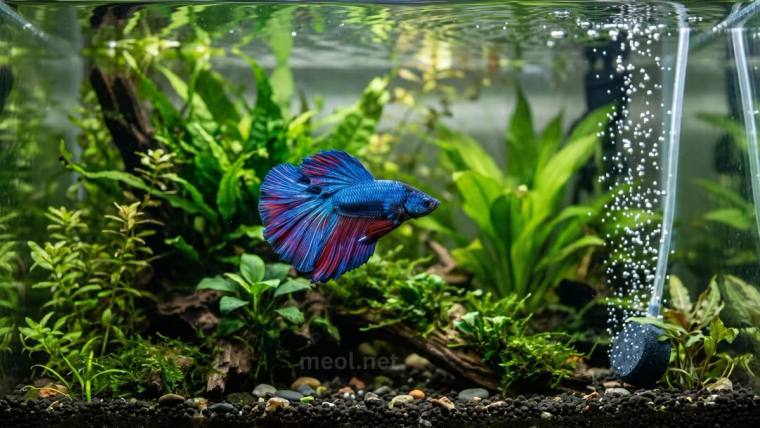
Where you put the air stone matters as much as how strong it runs. Place it in a back corner of the tank, never in the center, where current radiates in all directions. Keep it away from your betta's primary resting spots, which are usually near the bottom or behind plants.
If you have floating plants, positioning the air stone beneath them is ideal. The plants break up surface agitation and create a calm zone your betta can build a nest in. Good plants for betta tanks like Amazon frogbit and water sprite work especially well for this.
Step-by-Step: Setting Up a Low-Flow Bubbler
- Choose an adjustable air pump rated for your tank size or smaller.
- Connect the tubing in this order: pump → check valve → control valve → air stone.
- Place the air stone in the back corner of the tank.
- Turn the pump on at the lowest possible setting.
- Observe your betta for 30–60 minutes without disturbing the tank.
- Adjust the control valve until you see a slow, steady stream of small bubbles and only a gentle ripple at the surface.
- Monitor betta behavior over the next 24–48 hours.
- If stress signs appear, reduce flow further or reposition the air stone away from your betta's favorite area.
Adjusting Flow Rate — The Control Valve Is Your Best Friend
A control valve gives you precise adjustment that your pump's dial alone can't always provide. You're looking for a surface ripple, not a churn. Your betta should be able to swim comfortably to any area of the tank without visibly fighting the current.
One easy test: watch how your betta swims across the tank. If he's working hard and his body is bending against the flow, it's still too strong.
Sponge Filters — The Better Alternative for Most Betta Tanks
Why Aquarists Recommend Sponge Filters Over Standalone Bubblers
A sponge filter powered by an air pump does two jobs at once: it provides gentle, diffuse aquarium aeration and it supports biological filtration by cultivating beneficial bacteria in the sponge foam. The nitrogen cycle — the bacterial process that converts toxic ammonia into less harmful nitrate, runs through that sponge.[4]
The flow from a sponge filter is naturally low and spreads out rather than directing a jet of water in one direction. Most bettas tolerate sponge filters without any adjustment at all. It's one of the reasons experienced betta keepers almost universally recommend them for this species.
When a Separate Bubbler Makes More Sense
There are specific situations where adding a standalone bubbler on top of your filtration makes sense. A hospital or quarantine tank where you're running medication but have no active filter is the clearest case, aeration keeps oxygen up while the medication does its work. A very warm tank running above 80°F (27°C) in summer can also benefit from extra oxygenation even if it has a filter.
Common Mistakes Betta Owners Make With Bubblers
Beginner Errors That Stress or Harm Bettas
Most bubbler-related problems come from one of these six mistakes. If something seems off with your betta after adding aeration equipment, run through this list first:
- Using a pump sized for a much larger tank. The excess output can't be adequately reduced with a control valve alone.
- Skipping the control valve entirely. Running the pump at full output in any betta tank is a mistake — always include a control valve in the setup.
- Placing the air stone directly under the betta's hiding spot. You're forcing him to rest in constant water movement.
- Adding a bubbler to an already well-filtered tank "just to be safe." The tank doesn't need more oxygen — it just needs unnecessary current removed.
- Waiting days before adjusting after seeing stress signs. Chronic low-level stress weakens immunity fast. Adjust within hours, not days.
- Running the bubbler 24/7 in a planted tank. At night, plants consume oxygen instead of producing it — but a well-planted tank rarely needs the extra aeration anyway.
Troubleshooting — When Your Betta Seems Unhappy With the Bubbler
My Betta Is Hiding Since I Added the Bubbler
Reduce flow immediately using the control valve. If flow is already at minimum, move the air stone to the far corner opposite your betta's hiding spot. Add a few floating plants to diffuse surface movement. Give it 24 hours after adjusting, if hiding continues, the flow is still too strong or the positioning is off.
My Betta's Fins Look Torn After I Added a Bubbler
Turn the bubbler off temporarily and inspect the fins closely. Current-related fin damage has clean, torn edges, the fins look physically shredded. Fin rot looks different: ragged edges with dark, red, or discolored borders that suggest tissue death. Do a 25% water change and monitor. If the damage stops progressing within a few days without treatment, water movement was the cause.
My Betta Stopped Making Bubble Nests After Adding a Bubbler
Surface disturbance destroys nests before they can form. Reduce flow, add floating plants to create a calm pocket, and check water parameters, temperature, pH, and ammonia should all be within range. A betta that was previously building nests consistently will almost always resume once conditions are stable again.
The Bubbler Is Making Loud Noise — Is That Stressing My Betta?
Check whether the airline tubing is vibrating against the glass, that's usually the culprit. Place the pump on a folded cloth or a small foam pad to dampen vibration before it reaches the tank. If the pump itself is the noise source, it may be undersized or aging. Hygger and Tetra Whisper models are both notably quiet for betta-appropriate setups.
When to Worry — Emergency Warning Signs Related to Aeration
Signs Your Betta Needs Immediate Attention
These symptoms go beyond normal adjustment behavior. If you see any of these, don't wait — act the same day:
- Constant gasping at the surface (not nest-building — urgent, repetitive gulping)
- Lying on the bottom, barely moving or responding
- Gills moving rapidly even when the fish is resting
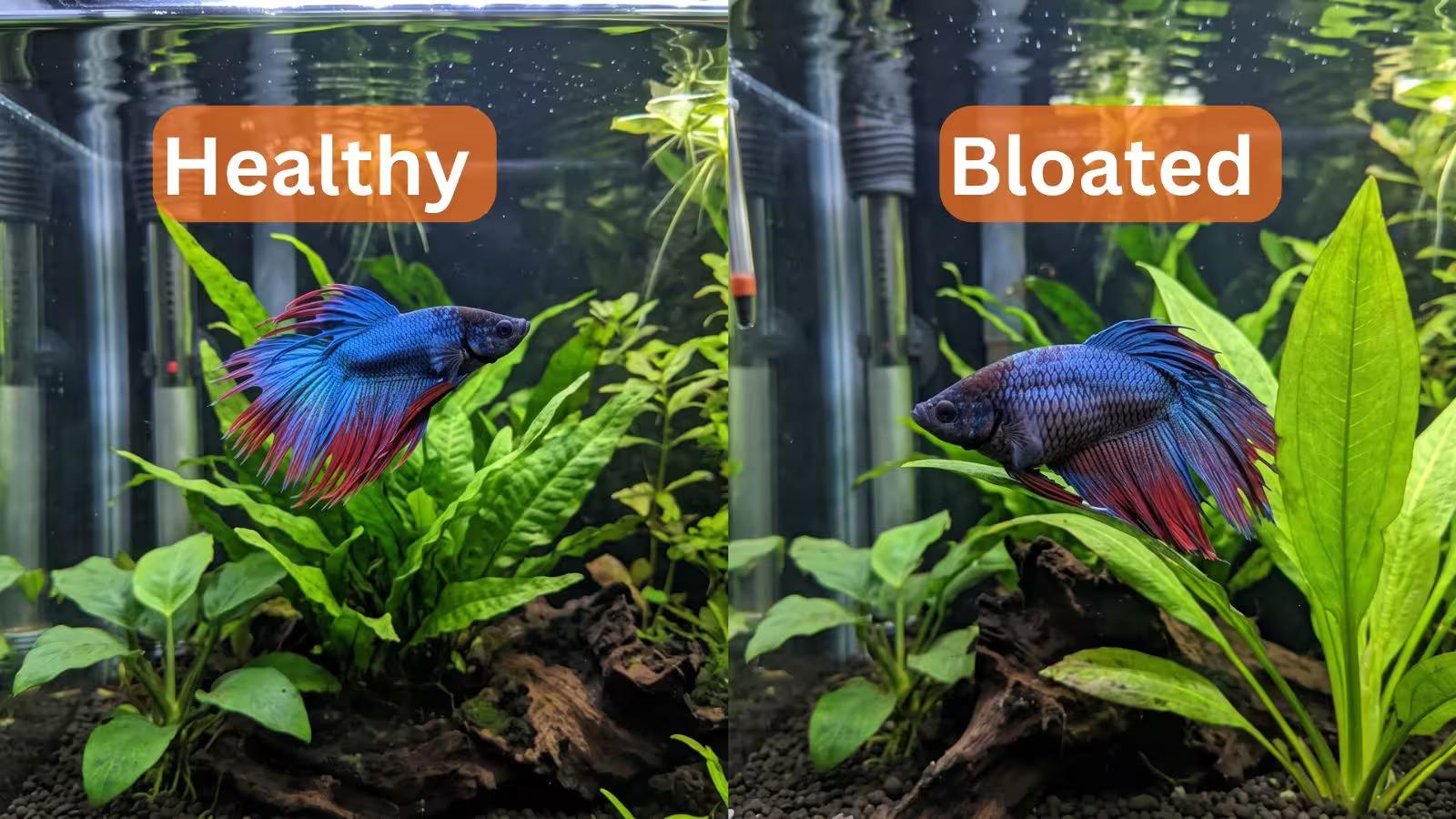
- Bloating or raised scales in a pine-cone pattern (dropsy — unrelated to bubblers, but requires immediate veterinary attention)
Betta fish sleep patterns can sometimes mimic signs of distress. If your betta is still and resting at odd times but responds when you approach the tank, he's likely sleeping. Learn more in our article on do betta fish sleep at night to know what's normal rest versus a genuine health concern.
Is It the Bubbler or Something Else? A Quick Diagnostic
Before assuming the bubbler is the cause of any problem, work through this checklist. Many betta health issues are coincidental to equipment changes, not caused by them:
- Did symptoms begin within 24–48 hours of adding the bubbler?
- What do current water parameters show (ammonia, nitrite, temperature)?
- Has there been a recent water change, new decor, or new substrate added?
- Is the betta eating normally when food is offered?
- Have any new tank mates or plants been added recently?
Myth-Busting — What the Internet Gets Wrong About Bettas and Bubblers
"Bettas Don't Need Oxygen in Their Water"
This one gets repeated constantly and it's wrong. Bettas still breathe through their gills and still depend on dissolved oxygen in the water. The labyrinth organ supplements that, it doesn't replace it. A betta in oxygen-depleted water will show stress even if it can reach the surface, because gill breathing is still happening every minute.
"A Bubble Nest Means Your Betta Is Happy"
Not exactly. A bubble nest means your male betta is hormonally primed to breed. It's a reproductive behavior, not a happiness meter. A betta can build nests in poor water conditions, though a fish in genuinely good health and stable water does tend to build them more consistently. Always verify with water parameters, not just behavior.
"More Bubbles = A Healthier Tank"
More aeration doesn't mean better water quality. Excessive bubbling in a well-filtered tank just adds surface turbulence and water evaporation without any benefit. The goal is adequate gas exchange, not the most dramatic bubble display possible.
"Bubblers Are Only Useful in Large Tanks"
Actually, small unfiltered tanks often need gentle aeration more urgently than large filtered ones. A 3-gallon unfiltered tank at 80°F has far lower oxygen reserves than a 20-gallon filtered setup. Size alone doesn't determine need, temperature and filtration status do.
"Conclusion"
Once you understand how your betta responds to water movement, the bubbler question becomes much less stressful. Most problems come down to flow rate and placement, not the equipment itself. Start low, watch your fish, and adjust from there. A betta that's swimming freely, eating well, and building the occasional bubble nest is telling you everything's fine.
References
- Seriously Fish — Betta splendens species profile, natural habitat and biology. https://www.seriouslyfish.com/species/betta-splendens/
- Aquarium Co-Op — Understanding betta fish bubble nests: behavior and care implications. https://www.aquariumcoop.com/blogs/aquarium/betta-fish-bubble-nest
- The Spruce Pets — Water quality and surface foam in aquariums: causes and solutions. https://www.thesprucepets.com/aquarium-water-quality-1381467
- Aquarium Co-Op — The nitrogen cycle explained for freshwater aquariums. https://www.aquariumcoop.com/blogs/aquarium/nitrogen-cycle
- American Veterinary Medical Association (AVMA) — Fish welfare and aquatic animal health resources. https://www.avma.org/resources-tools/animal-health-and-welfare/fish