You notice something strange. Your betta's eye looks hazy, like someone rubbed a gray film over it. It wasn't there yesterday, and now you're not sure if it's serious. That cloudy appearance is a condition called cloudy eye, and the good news is that most cases are treatable if you act quickly.[1]
Cloudy eye in betta fish isn't a disease on its own. It's a symptom of something happening underneath, whether that's poor water quality, a bacterial infection, an internal parasite, or something as simple as a nutritional gap. The key is figuring out what's behind it so you can treat it the right way.
This guide walks you through everything you need to know: what causes it, how to spot it early, what medications actually work, and how to prevent it from coming back.
What Is Cloudy Eye in Betta Fish?
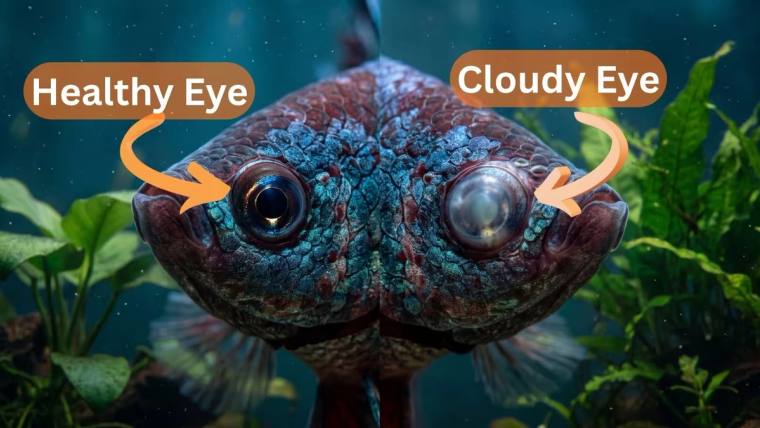
Cloudy eye is exactly what it sounds like. A gray or opaque film develops over one or both of your betta's eyes, making them appear dull or foggy. In healthy bettas, the eyes should be clear and bright, so any cloudiness is a signal worth taking seriously.
What you're actually seeing is often a buildup of mucus. Fish produce mucus as a biological defense response when the body is under stress or fighting off infection. The mucus collects around the eye tissue and creates that hazy, opaque appearance.[2]
Left untreated, cloudy eye can lead to partial or even permanent blindness. In milder cases caught early, your betta can make a full recovery with zero lasting damage. The earlier you catch it, the better the outcome.
Symptoms of Cloudy Eye in Betta Fish
The most obvious sign is a gray or opaque film covering one or both eyes. The cloudiness may start subtle, almost like a slight glaze, and then become more pronounced over the following days. If you see it getting worse quickly, don't wait to act.
Beyond the eye itself, watch for behavioral changes. Your betta may have trouble swimming in a straight line or bumping into decorations and tank walls. That's a sign its vision is already being affected.
You might also notice it struggling to find food at feeding time. A betta that used to rush to the surface and now misses pellets entirely is likely having vision problems. Lethargy and clamped fins can also appear if a secondary infection is developing alongside the cloudy eye.
Pay attention to whether one eye is affected or both. Unilateral cloudy eye (one eye only) often points to an injury. Bilateral cloudy eye (both eyes) is more commonly linked to bacterial infection or poor water quality.
What Causes Cloudy Eye in Betta Fish?
Poor Water Quality
This is the most common cause, and it's the first thing you should rule out. When ammonia or nitrite levels spike in the tank, it stresses your betta's immune system. A stressed, immunocompromised fish is much more vulnerable to eye infections and mucus overproduction.
Even a short spike in ammonia can trigger cloudy eye surprisingly fast. In my experience, water quality issues tend to show up in the eyes and fins before anything else. Test your water with an API Freshwater Master Test Kit before assuming the cause is bacterial or parasitic.
Target parameters for a healthy betta tank: ammonia at 0 ppm, nitrite at 0 ppm, nitrate below 20 ppm, pH between 6.5 and 7.5, and temperature between 76 and 82°F (24 to 28°C).
Bacterial Infection
When bacteria enter through a small injury or take hold in a fish with a weakened immune system, they can cause infection around the eye tissue. The eye responds by producing excess mucus, which creates the cloudy appearance.
Bacterial cloudy eye often comes with other symptoms like fin rot or body discoloration. If you're already dealing with other betta diseases, a bacterial infection is very likely the culprit here too. This type usually requires antibiotic medication to fully clear up.
Internal Parasites
Internal parasites can trigger systemic inflammation and excess mucus production throughout the body, including around the eyes. You might notice white stringy feces or unusual swimming patterns alongside the cloudy eye if parasites are involved.[3]
Parasitic cloudy eye won't respond well to antibiotics. You'll need a medication specifically targeting parasites, which is why diagnosing the cause properly matters so much before you reach for any treatment.
Nutritional Deficiency
A diet that's too low in protein or that relies entirely on low-quality flake food can weaken your betta's immune system over time. Bettas are carnivores and need a high-protein diet to stay healthy. Without proper nutrition, they become more susceptible to infections of all kinds, including eye infections.
If your betta has been on a poor diet for a while and suddenly develops cloudy eye, switching to better betta-specific food alongside treatment can make a real difference in recovery speed.
Cataracts (Age-Related)
Older bettas can develop a natural clouding of the lens called a cataract. This is a degenerative condition rather than an infection, so it looks different from disease-related cloudy eye. Age-related cataracts typically develop very slowly over weeks or months, not overnight.
There's no treatment for cataracts, but they aren't painful. A betta with cataracts can still live comfortably as long as the tank is consistent and food is easy to locate. The key is ruling out treatable causes before concluding it's age-related.
Injury
Sharp tank decorations, aggressive tank mates, or even a betta hitting the glass too hard can scratch or injure the eye directly. An injury causes localized inflammation, which can produce a cloudy appearance on just that one eye.
This is why unilateral cloudy eye should always prompt a look around the tank. Check for sharp edges on ornaments, torn nets, or any tank mates that might be nipping. Removing the source of injury is the first step before any treatment.
How to Diagnose Cloudy Eye in Betta Fish
Before you treat anything, you need to narrow down the cause. Start by testing the water. Grab your test kit and check ammonia, nitrite, nitrate, and pH. If any of these are off, water quality is likely the primary trigger.
Next, look carefully at the eye. Is it one eye or both? Is the eye bulging outward, or just cloudy? A cloudy eye that's also protruding is more likely Popeye, which is a different condition requiring different treatment. Popeye causes the eye to swell and push outward, while cloudy eye stays flat but loses clarity.
Also make sure you're not looking at Epistylis, a protozoan that can look like white patchy clouding and is sometimes mistaken for cloudy eye. Epistylis tends to create rough-textured white patches on the body and eyes, while true cloudy eye produces a smoother, more uniform film. Ich can also affect the eyes but usually appears as small uniform white dots across the entire body, not just the eye area. You can read more about spotting white spots specifically on the fins and body in this guide to betta fish white spots on fins.
Observe your betta's behavior. Is it eating? Swimming normally? Scratching against objects? All of these clues help you pinpoint the cause before choosing a medication.
Betta Fish Cloudy Eye Treatment
Step 1: Test and Fix Water Quality First
No medication will work well in bad water. Start with a 25 to 30% water change right away. Use a dechlorinated water conditioner like Seachem Prime to neutralize any chlorine and temporarily detoxify ammonia in the new water.
After the water change, test your parameters again. Aim for 0 ppm ammonia, 0 ppm nitrite, and a stable pH between 6.5 and 7.5. If the numbers are still off, do another partial water change the next day. Keep testing daily until the tank stabilizes.
In mild cases where water quality was the only issue, the cloudy eye may start clearing within a few days of clean, well-maintained water alone. If it doesn't improve within 48 to 72 hours of correcting the water, move to medication.
Step 2: Set Up a Hospital Tank
If you suspect bacterial infection or parasites, move your betta to a hospital tank before medicating. Treating in the display tank can kill beneficial bacteria in your filter and disrupt the nitrogen cycle.
A hospital tank doesn't need to be elaborate. A 5 to 10 gallon tank with a small sponge filter, a heater set to 78 to 80°F, and no substrate is enough. Keep the tank bare and easy to clean so you can do frequent water changes during treatment without disturbing the main tank.
If you're new to setting one up, the process is similar to any basic betta fish tank setup, just simplified and temporary.
Step 3: Choose the Right Medication
Seachem Kanaplex is the most reliable first-line antibiotic for bacterial cloudy eye. It can be dosed directly into the water or mixed with food. Most betta keepers see improvement within the first treatment cycle. If Kanaplex alone doesn't fully clear the cloudiness, API E.M. Erythromycin can be used as a follow-up.[4]
API Fin and Body Cure is another solid broad-spectrum option for bacterial cases, particularly if you're not sure whether the infection is localized to the eye or affecting other areas of the body. It covers gram-negative and gram-positive bacteria effectively.
If internal parasites are suspected based on symptoms like stringy white feces or erratic swimming, API General Cure is the go-to treatment. It addresses hexamita and other internal parasites that can trigger eye cloudiness as a secondary symptom.
Seachem Polyguard is a good option when you're genuinely unsure whether the cause is bacterial, fungal, or parasitic. It covers all three, which makes it useful in cases where the diagnosis isn't completely clear.
Step 4: Monitor Recovery
Most bettas start showing improvement within 5 to 7 days of proper treatment. The cloudiness should begin to thin out, and your betta's behavior, appetite, and swimming should gradually return to normal.
Continue the full treatment course even if the eye looks better partway through. Stopping early is one of the most common mistakes people make, and it can allow the infection to return stronger than before.
If there's no visible improvement after a full treatment cycle (usually 7 days), consider switching medications. A bacterial infection that isn't responding to Kanaplex might respond better to Maracyn Two, and vice versa. Recovery from cloudy eye can lead to full vision restoration, partial improvement, or in severe cases, permanent vision loss in the affected eye. Even a partially blind betta can live a healthy, comfortable life with some adjustments to care.
Can Cloudy Eye Cause Permanent Blindness in Betta Fish?
It can, yes, but it's not the most common outcome. Permanent blindness is more likely in cases that were left untreated for too long or where a serious secondary infection caused lasting damage to the eye tissue. When treatment starts early, most bettas recover with good or near-normal vision.
Partial vision loss, where the betta can see but not as sharply as before, is more common than full blindness. You might notice your fish taking a second or two longer to locate food, or reacting more slowly to movement outside the tank. These are manageable with small adjustments.
If your betta does lose vision in one eye, it will adapt. Blind or partially sighted bettas can still eat, explore, and behave normally. You may need to drop food in the same spot every time so it can locate meals more easily, and keeping the tank layout consistent helps enormously. Don't move decorations around unnecessarily once a visually impaired betta has learned its environment.
How to Prevent Cloudy Eye in Betta Fish
The single most effective prevention strategy is stable water quality. Test your tank weekly with a reliable test kit and perform a 25 to 30% water change every week without skipping. Consistent maintenance removes the conditions that most commonly trigger cloudy eye in the first place.
Feed a high-protein, species-appropriate diet. Bettas thrive on quality betta-specific pellets supplemented with frozen or live foods like bloodworms, daphnia, and brine shrimp. A well-fed betta with a strong immune system is far less vulnerable to eye infections. You can explore the best fish food options for bettas to make sure your betta's diet is supporting its health.
Check your tank decorations regularly. Anything with sharp edges or rough textures can scratch your betta's eye during normal swimming. Smooth ornaments, live plants, and soft silk plants are much safer choices. If you're planning a new tank, take inspiration from ideas that prioritize your betta's safety and enrichment. Good betta fish aquarium ideas naturally reduce injury risks by focusing on natural, soft-textured setups.
Always quarantine new fish before adding them to a community tank. Parasites and bacteria travel in on new arrivals, and a two-week quarantine period protects your existing fish. It's one of the most underused prevention steps in the hobby, but it genuinely makes a difference. If you ever do add tank mates, make sure they're actually compatible with bettas to avoid stress and injury-related eye problems.
Keep stress low overall. A betta living in a correctly sized, filtered, and heated tank with appropriate hiding spots and low water flow is a healthier betta in every way. A 15 gallon betta fish tank gives your betta more than enough room to thrive and reduces the stress that leads to compromised immunity.
Cloudy eye sounds alarming when you first notice it, but most bettas recover fully when it's caught and treated early. The most important thing you can do right now is test your water, observe your fish carefully, and choose the right medication based on the likely cause. Acting fast makes all the difference between a full recovery and lasting eye damage.
Sources
[1] Aquarium Co-Op - Betta Fish Care Guide
https://www.aquariumcoop.com/blogs/aquarium/betta-fish-care
[2] PetMD - Fish Eye Problems and Infections
https://www.petmd.com/fish/conditions/eyes/fish-eye-problems-infections
[3] Seachem - Kanaplex Product Information
https://www.seachem.com/kanaplex.php
[4] API Fishcare - Fin and Body Cure
https://apifishcare.com/product/fin-body-cure
[5] Badman's Tropical Fish - Betta Disease Guide
https://badmanstropicalfish.com/betta-fish-diseases/