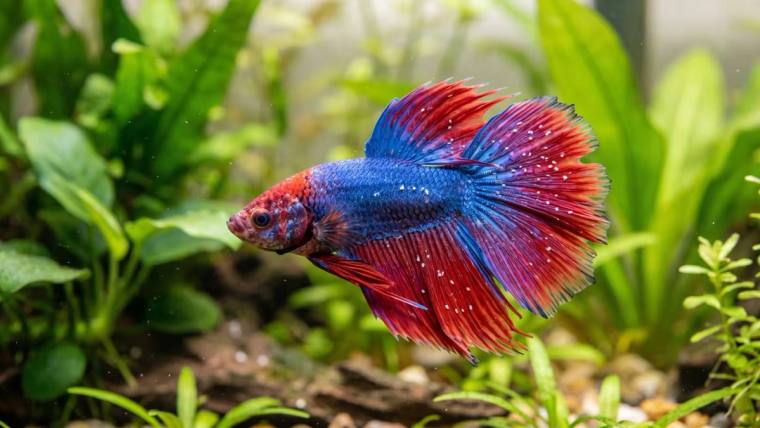
You noticed tiny white dots on your betta's fins and your stomach dropped. It looks like someone sprinkled salt on him, and you're not sure if it's serious or if you're overreacting. Sounds worrying, right?
The good news is that white spots on betta fish are one of the most common problems fishkeepers face, and when caught early, most bettas recover fully. The tricky part is figuring out exactly what you're dealing with, because not every white spot means the same thing.
This guide covers every possible cause, from ich (Ichthyophthirius multifiliis) to fungal infections to stress-related spots, plus the exact steps to treat and prevent them. By the end, you'll know precisely what to do next.
What Do White Spots on Betta Fish Actually Look Like?
Before you treat anything, you need to be sure about what you're seeing. The appearance of the spots, their texture, size, location, and distribution, tells you a lot about the cause.
Salt-like dots vs. cottony patches vs. dusty coating, visual differences
Ich spots look like small, raised white dots, roughly the size of a grain of salt or sugar. They sit on top of the fin tissue and look almost three-dimensional, like tiny white cysts embedded in the skin.
Fungal infections look completely different, they appear as fuzzy, cotton-like tufts that seem to grow outward from the fin edge. Velvet, another common disease, appears as a fine yellowish-gold dust rather than distinct white dots.
If the spots look fluffy or thread-like, think fungus. If they look powdery, think velvet. If they look like individual salt grains sitting on the fin, that's classic ich.
Where spots appear: fins vs. body vs. gills
Ich typically starts on the fins and tail before spreading to the body. You'll often notice it on the caudal fin (tail) and dorsal fin first, because parasites tend to latch where water flow is slower and the fish surface is easier to attach to.
When ich reaches the gills, things escalate quickly. Gill involvement causes labored breathing, rapid gill movement, and the fish may start gasping near the surface. That's a sign you're dealing with a more advanced infection and need to act fast.
Normal vs. abnormal fin appearance
| Feature | Normal / Healthy | Abnormal / Concerning |
|---|---|---|
| Fin edges | Smooth, intact, no fraying | Ragged, torn, or melting edges |
| Fin color | Consistent with body color | Faded, red streaks, dark spots |
| Spots | None, or very occasional minor marks | Salt-grain dots, white patches, fuzzy growth |
| Texture | Smooth, translucent | Raised spots, cottony tufts, dusty coating |
| Behavior | Active, flaring, exploring | Clamped fins, rubbing against surfaces, lethargy |
The Most Common Cause: What Is Ich Disease in Betta Fish?
Ich (Ichthyophthirius multifiliis) explained: what it is and why bettas are vulnerable
Ich is a parasitic infection caused by Ichthyophthirius multifiliis, a single-celled protozoan that burrows into fish skin and fin tissue to feed. The white spots you see are not the parasite itself, they're cysts that form around the parasite as it feeds beneath the outer layers of the fish's skin.
Bettas are particularly vulnerable because they're often kept in smaller tanks where water conditions can shift quickly. A single temperature drop or ammonia spike is enough to suppress their immune response and open the door to a full outbreak.
The 3-stage life cycle of Ichthyophthirius multifiliis
Understanding the life cycle is critical, because medication only works during one specific stage. There are three phases:
- Trophont stage — The parasite is embedded under the fish's skin, protected inside the white cyst. This is what you see on your betta's fins. No medication can reach it here.
- Tomont stage — After feeding, the parasite drops off the fish and settles on tank surfaces (gravel, glass, decorations), where it divides rapidly into hundreds of new cells.
- Theront stage — The free-swimming juvenile parasites are released into the water column searching for a host. This is the only stage vulnerable to medication and heat treatment.
Why only the free-swimming stage is treatable with medication
This is the part most beginners miss. When the white spots are still visible on your betta, the parasites are protected beneath the skin, medication in the water can't reach them. Treatment works by eliminating the free-swimming theronts before they can re-attach.
That's why treatment takes 10–14 days minimum, and why spots may actually increase in number before they start to disappear. The parasites still on the fish need to complete their cycle before the medication can intercept them.
How ich enters a freshwater aquarium
The ich parasite doesn't just appear out of nowhere, it enters through a specific route. Most outbreaks trace back to a new addition that wasn't quarantined first.
New fish, plants, equipment & contaminated water as transmission routes
A new fish carrying a low-level ich infection may look perfectly healthy at the pet store, especially if the store's water temperature is on the warmer side (which slows the parasite's life cycle). Once it enters your tank and the conditions change even slightly, the infection accelerates.
Live plants, used equipment, and even water from a bag containing a new fish can introduce the parasite. Never add water from a pet store bag directly into your tank, net the fish out and discard the bag water.
Not All White Spots Are Ich: Complete Differential Diagnosis
White spots on betta fish: ich vs. fungal infection vs. velvet vs. columnaris
| Condition | Appearance | Texture | Location | Key Difference |
|---|---|---|---|---|
| Ich | Distinct white salt-grain dots | Raised, 3D cysts | Fins, body, gills | Individual dots, like sprinkled salt |
| Fungal infection | White or grey-white patches | Fuzzy, cottony tufts | Wound sites, fin edges | Fluffy growth, not individual dots |
| Velvet (Oodinium) | Fine yellowish-gold dust | Powdery coating | Whole body, head | Gold/rust color under flashlight |
| Columnaris | White-grey patches, fin fraying | Saddle-shaped patches | Mouth, dorsal area, fins | Fraying + bacterial lesions together |
How to tell them apart using the "velvet flashlight test"
Velvet is easy to misdiagnose because the coating can look whitish in standard aquarium lighting. To check, turn off the tank lights and shine a small flashlight at a low angle across your betta's body. Velvet will glow with a distinctive gold or rusty shimmer. Ich will not.
If you see that golden sheen, treat for velvet immediately, it progresses faster than ich and is harder to eliminate.
Understanding white spots on betta fish caused by fin damage or stress
Not every white mark is an active disease. Bettas that have recently healed from fin damage or fin rot sometimes develop white edges as new fin tissue regrows. This regrowth tissue is slightly paler than the established fin and can alarm new owners.
The key difference: healing tissue is flat and follows the fin's natural contour. Ich spots are raised and scattered. If your betta is active, eating well, and the marks aren't multiplying, it could simply be regeneration in progress.
Black spots on betta fish: what they mean and when to worry
Black spots on a betta aren't usually ich-related, but they're worth understanding because they get grouped into the broader "spots" concern. You might notice them during a Google search for white spots and wonder if they apply to your fish.
Black spot disease (diplopstomiasis), ammonia burns & healing tissue, differential breakdown
True black spot disease (diplopstomiasis) is caused by parasitic flatworm larvae and is more common in pond fish than aquarium bettas. In captive bettas, black spots are more often ammonia burns, dark tissue damage caused by high ammonia levels in the water.
You might also see dark coloration in areas where the betta recently had an injury or infection that is now healing. As with white fin regrowth, the betta's immune response and tissue repair can cause temporary color changes. Test your water before assuming any disease.
Red spots on betta fish: septicemia, hemorrhagic lesions or physical injury?
Red spots look alarming, and sometimes they should be. Red streaking on fins or red sores on the body are often signs of bacterial septicemia, an internal infection that shows up as hemorrhagic (blood-like) spots on the skin.
Water quality link: how ammonia and nitrite cause red streaking
High ammonia and nitrite levels directly damage blood vessels and soft tissue, causing red streaks and sores. If you notice red spots alongside lethargy, clamped fins, or loss of appetite, test your water immediately. Ammonia and nitrite should both read 0 ppm in a healthy cycled tank. Even a reading of 0.25 ppm of ammonia can cause visible tissue damage over time [1].
Why Does My Betta Have White Spots? Root Causes & Triggers
How fish stress suppresses the immune system and opens the door to parasites
Fish stress triggers the release of cortisol, which suppresses immune function, exactly the same mechanism as in mammals. A chronically stressed betta isn't just unhappy; it's genuinely immunocompromised and far more likely to succumb to parasites that a healthy fish would shrug off.
Water quality as the #1 hidden trigger
Most ich outbreaks trace back to water quality problems, even when the aquarium looks clean. Clarity doesn't equal safety, ammonia and nitrite are invisible to the naked eye but toxic at any detectable level.
Ammonia and nitrite: target parameters (<0 ppm both) and how they crash immunity
Ammonia damages gill tissue directly, reducing oxygen absorption and creating open wounds that parasites can exploit. Nitrite interferes with the blood's ability to carry oxygen, creating a chronically stressed fish even at low concentrations.
Both ammonia and nitrite must read 0 ppm in a healthy tank. Anything above that is already causing invisible damage, even if your betta appears to be swimming normally.
Nitrate ceiling for bettas (≤20 ppm) and why high nitrates matter
Nitrate is often treated as harmless because it's the endpoint of the nitrogen cycle. But chronic exposure above 20 ppm gradually degrades immune function and stresses bettas over weeks and months. Keep nitrate under 20 ppm through regular partial water changes.
Temperature instability and ich outbreak correlation
Temperature is one of the most important, and most neglected, factors in ich prevention. The parasite thrives between 70–75°F and its life cycle slows dramatically above 82°F.
Why sudden drops below 74°F accelerate the Ichthyophthirius life cycle
A sudden temperature drop does two damaging things simultaneously: it stresses the betta and speeds up the tomont stage of the ich life cycle, causing more free-swimming theronts to be released into the water at once. Even a drop from 78°F to 72°F overnight, common in rooms that cool down, can trigger an outbreak in a tank that had a low background level of the parasite.
Overcrowded tanks, poor filtration, and new tank syndrome as outbreak conditions
An uncycled tank (one without an established colony of beneficial bacteria to process ammonia) creates a perpetual ammonia problem. This is called new tank syndrome, and it's one of the most common reasons new bettas get sick within the first few weeks. If your tank is less than 4–6 weeks old and hasn't been properly cycled, that's likely part of the problem [2].
Beginner mistakes that cause ich outbreaks
Skipping quarantine for new fish, overstocking, overfeeding, inadequate cycling
- No quarantine: Every new fish should spend 2–4 weeks in a separate tank before entering the main display. One unquarantined fish can wipe out an entire tank.
- Overstocking: More fish means higher bioload, faster ammonia accumulation, and more stress on every individual. Tank mates should be chosen carefully. If you're wondering about compatibility, this guide on having multiple betta fish in one tank is worth reading first.
- Overfeeding: Uneaten food decays and spikes ammonia. Feed only what your betta consumes in 2–3 minutes, once or twice daily.
- Skipping the nitrogen cycle: Running a filter for a few days is not the same as a cycled tank. Beneficial bacteria need 4–6 weeks to establish in a new setup.
Emergency: What to Do First When You See White Spots on Your Betta
Don't panic, but do act. The earlier you start treatment, the better your betta's odds. Here's exactly what to do, in the right order.
- Confirm the diagnosis before treating. Use the differential diagnosis table above. Check whether spots are raised salt-like dots (ich), fuzzy patches (fungus), or powdery gold coating (velvet). Using the wrong treatment adds unnecessary stress to your fish.
- Decide: quarantine tank or treat in main tank. If you have a community tank, planted tank, or invertebrates, move your betta to a separate quarantine tank before treating. Medications and salt can harm plants, shrimp, and snails. If it's a single-betta setup with no live plants or invertebrates, treating in the main tank is fine.
- Test your water immediately. Before adding anything to the tank, check ammonia, nitrite, nitrate, temperature, and pH. If your water quality is poor, medication alone won't fix the problem, the underlying stress trigger needs to be addressed too.
- Begin heat treatment. Raise the temperature gradually to 82–86°F (no faster than 0.5°F per hour). Higher temperature speeds up the ich life cycle, pushing the parasite through to the vulnerable free-swimming stage faster so medication can work.
- Increase surface agitation and dissolved oxygen. Warmer water holds less dissolved oxygen. When you raise the temperature, run an air stone or increase surface movement to keep oxygen levels adequate. A betta's labyrinth organ allows it to breathe air directly, but dissolved oxygen still matters for gill function.
Step 2 — Quarantine: when to use a quarantine tank vs. treat in main tank
When a quarantine tank is non-negotiable (multi-fish or planted tanks)
If your tank has live plants, shrimp, snails, or multiple fish species, you need to treat in a separate quarantine tank. Aquarium salt stresses most freshwater plants and can harm invertebrates. Some antiparasitic medications, particularly those containing copper, are lethal to invertebrates at any dose.
A bare-bottom 10-gallon tank with a sponge filter and a reliable aquarium heater is all you need. It doesn't need to be fancy, it just needs to maintain stable water chemistry during treatment.
Step 3 — Test your water immediately
Step 4 — Begin heat treatment
Raising temperature to 82–86°F gradually (0.5°F per hour), why speed matters
Sudden temperature spikes are just as stressful for your betta as sudden drops. Aim to raise the temperature over 12–24 hours. Most reliable aquarium heaters have an adjustable dial, turn it up in small increments and monitor with an independent thermometer, since built-in heater displays can be inaccurate.
Don't exceed 86°F in a betta tank. Above that, oxygen levels drop to a point where your fish will struggle to breathe adequately even with surface agitation.
Step 5 — Increase surface agitation and dissolved oxygen
Role of aquarium air stone and sponge filter at elevated temps
An aquarium air stone or bubbler creates gentle surface movement that replenishes dissolved oxygen as temperature rises. A sponge filter is ideal in a quarantine setup because it's gentle on a sick fish and won't create strong currents that exhaust an already stressed betta.
How to Treat Ich in Betta Fish: All Treatment Options Compared
| Treatment | Effectiveness | Betta Safety | Best For | Risk Notes |
|---|---|---|---|---|
| Heat alone | Moderate | High (if gradual) | Very mild early-stage ich | Oxygen depletion above 86°F |
| Aquarium salt | Moderate | High (correct dose) | Mild-moderate ich, no plants | Don't use with invertebrates |
| API Super Ick Cure | High | Moderate (use as directed) | Established ich infections | Remove carbon; stains silicone |
| Seachem ParaGuard | High | High (gentler formula) | Planted tanks, sensitive fish | Slower than some meds |
| Kordon Rid-Ich Plus | High | Moderate | Moderate-severe infections | Formalin-based; ventilate room |
| Fritz Coppersafe | Very High | Use with caution | Severe, treatment-resistant ich | Toxic to invertebrates; copper monitor needed |
Heat treatment alone: does it work for bettas?
Heat treatment can work for very early-stage infections in an otherwise healthy betta with excellent water quality. Raising the temperature to 82–86°F for 10–14 days shortens the ich life cycle and increases the rate at which free-swimming theronts die before finding a host.
Temperature ceiling for bettas (86°F max) and duration (10–14 days minimum)
Keep the temperature within 82–86°F for at least 10 days after the last visible spot disappears. Stopping early is the most common reason for treatment failure, the parasites are still cycling in the tank even when your betta looks clear.
Aquarium salt treatment: how to use API Aquarium Salt safely for bettas
Salt creates an osmotic pressure shift in the water that stresses the ich parasite while supporting the betta's own osmoregulation. It's one of the gentler treatment options and works well for early-to-moderate infections.
Correct dosage (1 tbsp per 5 gallons), duration, and risks of overdose
Use 1 tablespoon of API Aquarium Salt per 5 gallons of tank water. Pre-dissolve the salt in a small cup of tank water before adding it, never pour raw salt crystals directly over your fish. Overdosing salt stresses bettas and can cause osmotic damage to their kidneys over extended periods.
Why aquarium salt is not the same as table salt or marine salt
Table salt contains iodine and anti-caking additives that are toxic to fish. Marine salt contains a complex mineral mixture designed for saltwater tanks. Only use aquarium salt specifically formulated for freshwater use, the label should say so clearly.
Antiparasitic medications: which product to use and how
API Super Ick Cure: dosage, frequency, carbon removal requirement
Follow the packaging instructions exactly. The most critical step is removing all activated carbon from your filter before dosing, carbon absorbs medication from the water and makes treatment completely ineffective. Add carbon back after treatment is complete and you've done a water change.
Seachem ParaGuard: advantages for planted tanks and scaleless fish sensitivity
ParaGuard uses glutaraldehyde as its active agent rather than malachite green, making it somewhat safer for scaleless fish and less harmful to live plants. Dose according to the bottle and continue for the full recommended course, even if spots clear early.
Kordon Rid-Ich Plus: active ingredients (formalin + malachite green), betta precautions
Rid-Ich Plus contains both formalin and malachite green, a potent combination that works quickly. Because of the formalin component, always treat in a well-ventilated area and avoid breathing the product directly. Use the lower end of the dosage range for bettas, and increase surface agitation during treatment to offset the oxygen-reducing effect of formalin [3].
Fritz Coppersafe: when copper is appropriate and betta toxicity threshold
Copper-based treatments are highly effective against ich but carry real risk. Bettas can tolerate copper within the therapeutic range (0.15–0.2 ppm), but anything higher becomes toxic. You need a copper test kit to monitor levels throughout treatment. Never use copper if your tank has ever contained invertebrates, copper binds to substrate and can leach back at dangerous levels for months.
Combination approach: heat + salt + medication, when to escalate
For most betta ich cases, heat plus salt or heat plus a single medication is sufficient. Combine all three only when you're dealing with a severe infection that isn't responding after 5–7 days of standard treatment. Stacking multiple treatments increases stress on an already sick fish.
Treatment timeline: what to expect day by day
- Days 1–3: Begin heat increase and first medication dose. Spots may increase as more parasites complete their cycle and new ones attach.
- Days 4–7: Spots should begin to plateau. Continue treatment and maintain water temperature. Do a 25–30% water change before re-dosing medication.
- Days 7–10: Spots should be visibly reducing. Betta's activity and appetite should start to return.
- Days 10–14: All visible spots gone. Continue treatment for the full minimum 10 days from the last visible spot to prevent reinfestation.
Why spots may get worse before they disappear (life cycle explanation)
Many owners panic when they see more spots on day 3 or 4. This is actually expected. The parasites already under your betta's skin are completing their feeding phase and dropping off the fish, as they do, they divide and release hundreds of new theronts. Those new theronts may attach briefly before being killed by the medication. The overall number will trend down as the treatment eliminates each new generation.
Water Parameters During Ich Treatment: The Complete Checklist
Ideal betta water parameters during treatment
pH: 6.5–7.5
Ammonia: 0 ppm
Nitrite: 0 ppm
Nitrate: <20 ppm
Water change frequency: 25–30% every 48 hours during treatment
- Remove activated carbon from filter before first dose
- Test ammonia and nitrite every 48 hours throughout treatment
- Pre-dissolve any salt or powder medication before adding to tank
- Raise temperature gradually — no more than 0.5°F per hour
- Run an air stone or increase surface agitation during elevated temperature
- Do a 25–30% water change before each re-dose of medication
- Keep tank lighting normal — stress from sudden darkness is real
How frequent water changes affect treatment efficacy
Regular water changes during treatment do two things: they remove free-swimming theronts from the water column and they prevent ammonia buildup from the fish's waste and any dying parasites. Do a 25–30% partial water change every 48 hours, and redose medication proportionally after each change.
25–30% partial water change every 48 hours — rationale and method
Match the new water temperature to the treatment temperature before adding it to the tank — a sudden cold influx will stress your betta and crash your treatment temperature. Use a water conditioner like Seachem Prime on every water change to neutralize chlorine and detoxify trace ammonia.
Protecting beneficial bacteria and the nitrogen cycle during medication
Some antiparasitic medications can harm the beneficial bacteria that power your nitrogen cycle. If you're treating in the main tank, test ammonia more frequently during treatment — a temporary mini-cycle can occur.
Why removing activated carbon from the filter is essential before dosing
Activated carbon works by chemically adsorbing compounds from the water — including medications. If you dose with carbon still in the filter, the medication is absorbed before it can do anything useful. Remove all carbon-based media before starting treatment and store it in a clean bag of tank water so you can reinstate it after treatment [4].
Treating Ich in a Planted Aquarium or Community Tank
Which medications are safe for live plants
Seachem ParaGuard is the best option for planted tanks. Heat treatment alone also works safely in planted tanks, as long as you keep the temperature below 86°F and maintain good aeration. Avoid malachite green-based products around delicate plants — they can cause leaf bleaching and tissue damage.
Treating ich with tank mates present: compatibility risks
If your betta shares a tank with other fish, you're dealing with a whole-tank infection — ich doesn't limit itself to one fish. All inhabitants need treatment. The complication is that medications affect different species differently.
Scaleless fish and invertebrate sensitivity to salt and copper
Scaleless fish (cory catfish, loaches, some plecos) are more sensitive to salt and copper-based medications. Use half doses for scaleless species, or use Seachem ParaGuard which is gentler. Shrimp, snails, and other invertebrates cannot tolerate aquarium salt at treatment doses or any copper. Remove them to a separate tank before treating.
Quarantine tank setup: minimum requirements
- Tank: 10-gallon bare-bottom is ideal. Easy to clean, easy to monitor, no substrate for parasites to hide in.
- Filter: A sponge filter seeded from the main tank (squeeze the sponge into the quarantine tank water) provides biological filtration with gentle flow.
- Heater: An adjustable aquarium heater capable of maintaining 82–86°F. Confirm accuracy with a separate thermometer.
- Hiding spots: One or two simple decorations (a small piece of PVC pipe, a fake plant) reduce betta stress without creating parasite refuges.
- Water conditioner: Dose Seachem Prime at every water change to neutralize chlorine and buffer ammonia during the tank's partial cycle.
After Ich Treatment: Recovery, Monitoring & Long-Term Care
How to confirm ich is fully eliminated (not just reduced)
Visible spot elimination isn't the end. The parasite's life cycle continues in the tank substrate and glass even when your betta looks clear. Continue treatment at the full dose for a minimum of 7 days after the last visible spot disappears — not 7 days from when you started noticing improvement.
Minimum 7-day symptom-free window before declaring tank clear
This is non-negotiable. The tomont stage (where the parasite divides in the substrate) can last several days, and you want to be certain every generation of theronts has been eliminated before you stop dosing. Stopping early is the single most common cause of recurring ich outbreaks.
Fin tissue recovery: what healed fins vs. damaged fins look like
After a bout of ich, especially if it was accompanied by scratching behavior, your betta's fins may look slightly ragged or show pale edges. This is normal fin tissue damage from the infection and from the betta rubbing against surfaces. New growth comes in clear or very light in color first, then fills in with the fish's normal pigmentation over 2–4 weeks [5].
Watch for secondary bacterial infections during this period — damaged fin tissue is vulnerable, and a post-ich betta with compromised fins can develop fin rot if water quality isn't kept pristine.
Returning the betta to normal temperature and parameters safely
Reduce the treatment temperature back to your normal range (76–80°F) as gradually as you raised it — no more than 1–2°F per hour. Reinstall activated carbon in the filter to remove any remaining medication residue. Do a 30–40% water change after the full treatment course.
Re-establishing the nitrogen cycle after heavy medication
If you used a strong medication, test ammonia and nitrite daily for 1–2 weeks after treatment ends. Some medications are mild enough to leave beneficial bacteria largely intact, but others can cause a detectable mini-cycle. If ammonia or nitrite rises above 0, do an immediate 25% water change and dose Prime.
How to Prevent White Spots on Betta Fish: Long-Term Prevention Strategy
The quarantine protocol: 2–4 weeks for every new fish, no exceptions
A quarantine tank doesn't need to be elaborate. A simple 10-gallon setup with a heater, sponge filter, and a hiding spot is sufficient. Keep it running permanently if you regularly add new fish — that way it's always ready and partially cycled.
Stable water temperature: why an aquarium heater is non-negotiable
Room temperature fluctuations are one of the most overlooked ich triggers. A tank without a heater can easily swing 6–8°F overnight during seasonal changes, and even 3–4°F swings are enough to create the stress conditions that trigger an outbreak.
Recommended heaters for betta tanks: what to look for
For a 5–10 gallon betta tank, a 25–50 watt adjustable heater is appropriate. Choose a heater with an external temperature dial and verify its accuracy with a separate digital thermometer — built-in displays on budget heaters are notoriously inaccurate. Replace heaters every 2–3 years, as they become unreliable over time.
Weekly water change and test routine to keep ammonia and nitrite at zero
A consistent weekly routine is the foundation of long-term betta health. Change 20–30% of the tank water each week using a gravel vacuum to remove waste from the substrate. Test ammonia and nitrite monthly if the tank is stable, or immediately if your betta shows any behavioral changes — clamped fins, reduced appetite, or lethargy are often early warning signs before visible illness appears.
Feeding discipline: overfeeding, uneaten food, and water quality decay
Uneaten food is a hidden ammonia factory. Bettas have small stomachs — a few high-quality pellets or a pinch of frozen food twice daily is plenty. Remove any uneaten food within 5 minutes. For more on how feeding frequency affects betta health, this guide on how long bettas can go without food covers the topic well.
Avoiding ich reintroduction: equipment sanitation and plant treatment
Any equipment (nets, hoses, siphons) used in an infected tank can carry ich cysts. Soak equipment in a bleach solution (1 part bleach to 9 parts water) for 10 minutes after use, then rinse thoroughly and air dry completely before using in another tank. New live plants can carry ich in the water clinging to them — rinse plants in dechlorinated water and consider a brief plant-safe quarantine bath before adding them to your display tank.
When to Worry: Emergency Warning Signs Your Betta Needs Immediate Help
Signs ich has spread to the gills (respiratory distress indicators)
Gills are the most dangerous place for ich to establish. The gills are highly vascularized and sensitive, and a heavy ich load on gill tissue causes rapid oxygen deprivation. Watch for rapid gill movement, the betta resting near the surface or close to the filter output, or labored breathing.
Labyrinth organ stress: gasping at surface vs. normal air breathing — how to tell
Bettas naturally visit the surface periodically to breathe air through their labyrinth organ — this is completely normal. What's abnormal is continuous surface hanging, frantic gulping, or a betta that can't seem to leave the surface at all. If your betta is spending more than 40–50% of its time at the water's surface and looks distressed rather than calm, that suggests gill involvement or critically low dissolved oxygen.
This is one situation where a quick check on betta resting behavior can help you distinguish normal from abnormal patterns.
Secondary bacterial infection signs: fin rot, lethargy, loss of appetite
A betta already weakened by ich is highly vulnerable to secondary infections. Watch for fraying or melting fin edges (fin rot), unusually dark coloration, complete loss of appetite, or the fish sitting motionless on the substrate for extended periods. These are signs that the infection is progressing or that a bacterial co-infection has taken hold.
If you see signs of both ich and fin rot simultaneously, you're dealing with a dual infection that requires both antiparasitic and antibacterial treatment. This is more complex to manage and you should increase water change frequency to support recovery.
When to consider a veterinary consultation for your betta
Aquatic veterinarians exist and are worth consulting in serious cases. If your betta has completed a full treatment course and continues to show symptoms, if it develops secondary infections that don't respond to standard medication, or if the fish seems to be getting rapidly worse despite treatment, an aquatic vet can prescribe prescription-strength treatments that aren't available over the counter.
Betta Ich Myths: What the Internet Gets Wrong
Myth: "Just do a water change and the ich will go away"
Water changes support treatment and remove free-swimming theronts, but they cannot cure an established ich infection on their own. Once the parasite is embedded under your betta's skin, only heat and/or medication can eliminate the life cycle. Water changes are essential as a supporting measure — not a cure.
Myth: "Salt alone is always enough to cure ich in bettas"
Salt can be effective for mild, early-stage infections in a fish with otherwise excellent water quality. For moderate to severe infections, or any fish already weakened by stress or poor conditions, salt alone is rarely sufficient. It's best used in combination with heat treatment, or escalated to a full antiparasitic medication if spots aren't reducing after 5–6 days.
Myth: "If spots disappear, the ich is gone"
This is probably the most dangerous myth in betta keeping. When spots disappear from the fish, the parasites have dropped off to enter the tomont stage — they're dividing in your substrate right now. The infection is very much still present. This is exactly why treatment must continue for 7–10 days after the last visible spot.
Myth: "All white spots are ich — treat immediately with medication"
Medicating for ich when your fish actually has a fungal infection wastes time and adds unnecessary chemical stress to your betta. Correct diagnosis using the differential chart above saves you time, money, and your fish's health. Treat the right condition with the right medication.
Related Betta Fish Care Guides
Understanding ich is part of a broader picture of betta health. If you're working through a health issue with your fish, these related guides cover conditions and care topics that often connect to immune health and disease prevention:
- Betta Fish Diseases and Cures — an overview of the full range of betta illnesses, symptoms, and treatments.
- Why Is My Betta Fish Swimming Sideways — swim bladder disorder is often triggered by the same stress conditions that cause ich outbreaks.
- Why Is My Betta Fish Turning White — color changes alongside white spots can indicate multiple concurrent issues worth investigating.
- Do Betta Fish Change Color — helps distinguish normal color variation from disease-related pigmentation changes.
- Do Betta Fish Need a Filter — proper filtration is directly tied to maintaining the water quality that prevents ich triggers.
- Best Plants for Betta Fish — choosing the right plants matters when you need to treat a planted tank for ich.
- Do Betta Fish Like Bubblers — dissolved oxygen management is critical during elevated-temperature ich treatment.
Once you understand the full picture — water quality, stress management, and immune health — keeping your betta disease-free becomes a lot more manageable. Ich is a setback, not a death sentence. Catch it early, treat it correctly, and most bettas bounce back completely. The key is knowing what to look for and acting before the infection has a chance to progress.
References
- Merck Veterinary Manual — Ichthyophthirius multifiliis (White Spot Disease). Available at: merckvetmanual.com
- Helfman, G.S., Collette, B.B., Facey, D.E., & Bowen, B.W. (2009). The Diversity of Fishes: Biology, Evolution, and Ecology. Wiley-Blackwell. (Chapter on fish immunity and disease resistance)
- Kordon LLC — Rid-Ich Plus Product Documentation and Usage Guidelines. Available at: kordon.com
- Seachem Laboratories — ParaGuard Product Information and Aquarium Chemistry Resources. Available at: seachem.com
- Noga, E.J. (2010). Fish Disease: Diagnosis and Treatment, 2nd Edition. Wiley-Blackwell. (Standard reference for aquatic veterinary practice)