You finally upgraded your betta's tank. Now you're staring at an empty glass box wondering what to put in it. That blank space feels like a missed opportunity, right?
Good betta fish aquarium ideas aren't just about looks. The right setup keeps your fish active, curious, and noticeably less stressed. In this guide, you'll get real design styles, safe materials, and a few mistakes I see beginners make over and over.
Whether you want a lush jungle scape or a simple nano tank, there's a layout here that fits your space and your budget.
What Makes a Great Betta Fish Aquarium Idea?
A great betta tank idea does two things at once. It looks good to you, and it makes sense for your fish.
That second part gets skipped a lot. People grab whatever looks nice on a store shelf without thinking about how their betta will actually use it.
Balancing Aesthetics with Betta Biology
Bettas aren't just decoration in your tank. They're curious, mildly territorial animals who explore their space constantly.
A tank designed with that in mind includes open swimming lanes, a few defined hiding spots, and at least one resting area near the surface. Looks come second to function here, even though you can absolutely have both.
Why Decor Choices Affect Behavior, Not Just Looks
In my experience, tanks with visual barriers, like a piece of driftwood or a dense plant cluster, produce calmer fish. The barrier breaks sightlines, which matters more than people expect.
Bettas use vision heavily to assess threats. A wide open tank with nothing to break it up can actually make a betta more reactive, not less.
This also connects to their resting habits. A betta without a calm spot to settle near the surface often shows disrupted rest patterns.
Understanding Your Betta's Natural Habitat First
Before picking a single decoration, it helps to know where bettas actually came from. This shapes almost every design decision later in this guide.
What Wild Betta Splendens Environments Look Like
Betta splendens is native to Southeast Asia, found across Cambodia, Laos, Myanmar, Malaysia, Thailand, and Vietnam.[1] Their wild habitats are shallow, vegetation-heavy, and often slow-moving.
Many wild populations live in rice paddies, ditches, and dense marshland rather than open rivers. Their labyrinth organ lets them breathe atmospheric air, which allows them to survive in low-oxygen water conditions found in rice paddies, slow streams, drainage ditches, and large puddles.[1]
Why This Matters for Aquascape Design Choices
This is exactly why dense, plant-heavy layouts feel so natural to bettas. They evolved around clutter, not clean open water.
Knowing this helps explain why a bare tank often looks fine to us but feels exposed to your fish. The aquascape styles below all borrow something from this natural blueprint.
Core Aquascaping Styles for Betta Tanks
You don't need to copy one style exactly. Most successful betta tanks borrow ideas from two or three of these at once.
Jungle Aquascape
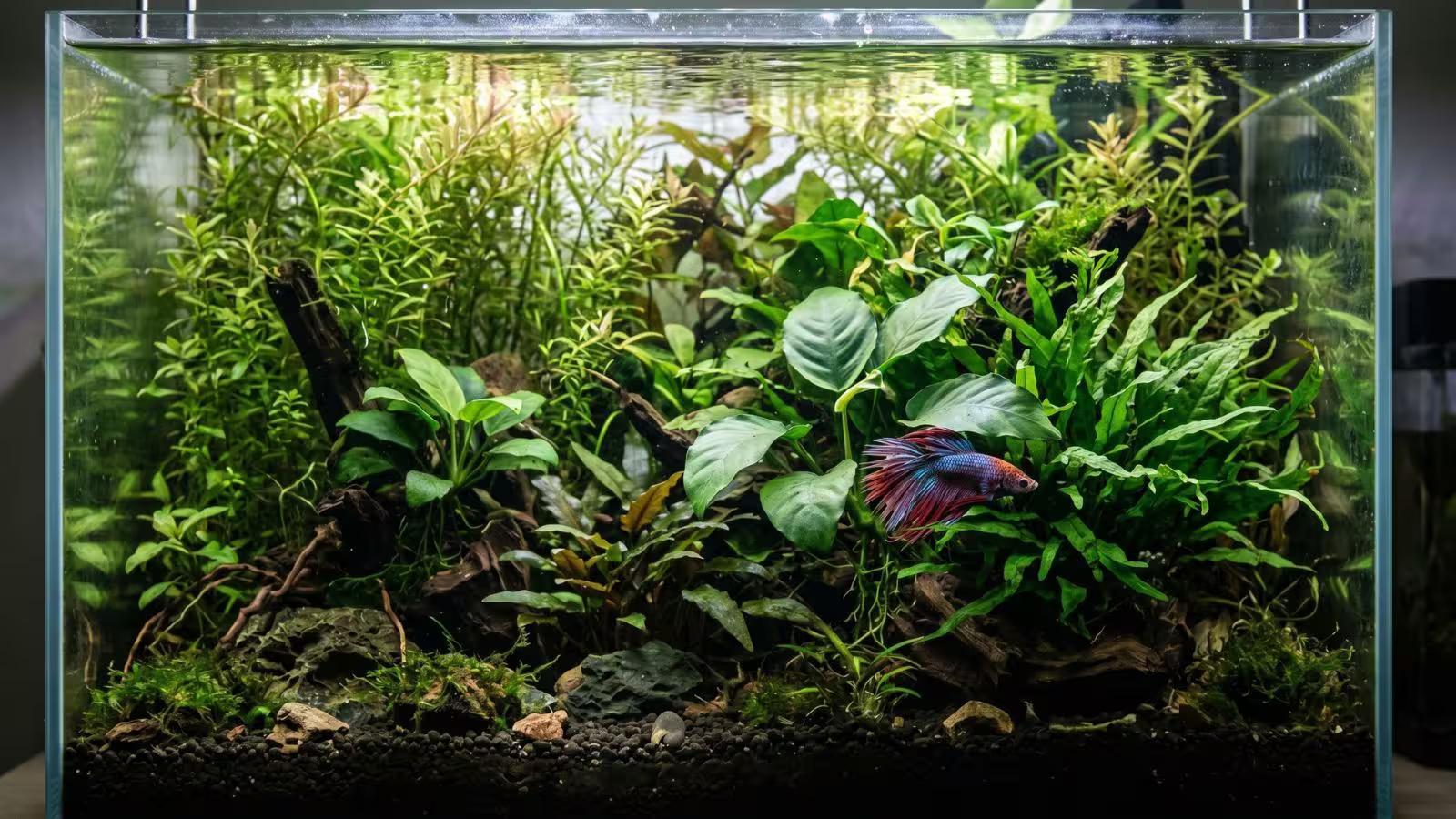
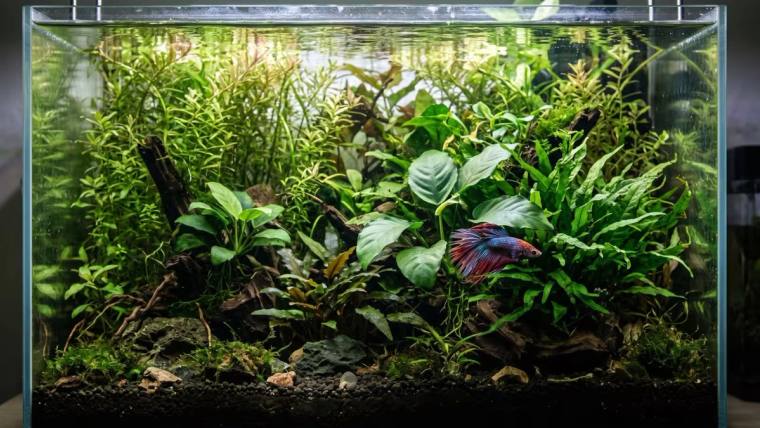
A jungle aquascape leans into dense, almost overgrown planting. Think tall stem plants in the back, broad leaves in the middle, and very little open substrate showing.
This style hides your betta often, which sounds counterintuitive for an aquarium you want to look at. In practice, bettas dart in and out constantly, so you still get plenty of viewing time.
Key Plants and Layout
Java Fern and Anubias do a lot of the work here since both tolerate low light and don't need to be planted in substrate. Wedge them onto driftwood or rock instead of burying the rhizome.
Leave one clear column of open water from front to back. Even in a jungle scape, your betta needs a defined swimming lane.
Nature Aquarium Style
This style is more deliberate than a jungle scape. Think structured hardscape, like one large piece of driftwood as a focal point, with plants placed to complement it rather than crowd it.
It's a good middle ground if you want something that looks intentional in photos but isn't overplanted.
Open Swimming Space with Structured Hardscape
The trick is restraint. One strong focal piece, a few plants around its base, and open negative space on either side usually works better than filling every inch.
This layout also makes maintenance easier since there's less plant matter to trim and clean around.
Blackwater Betta Tank
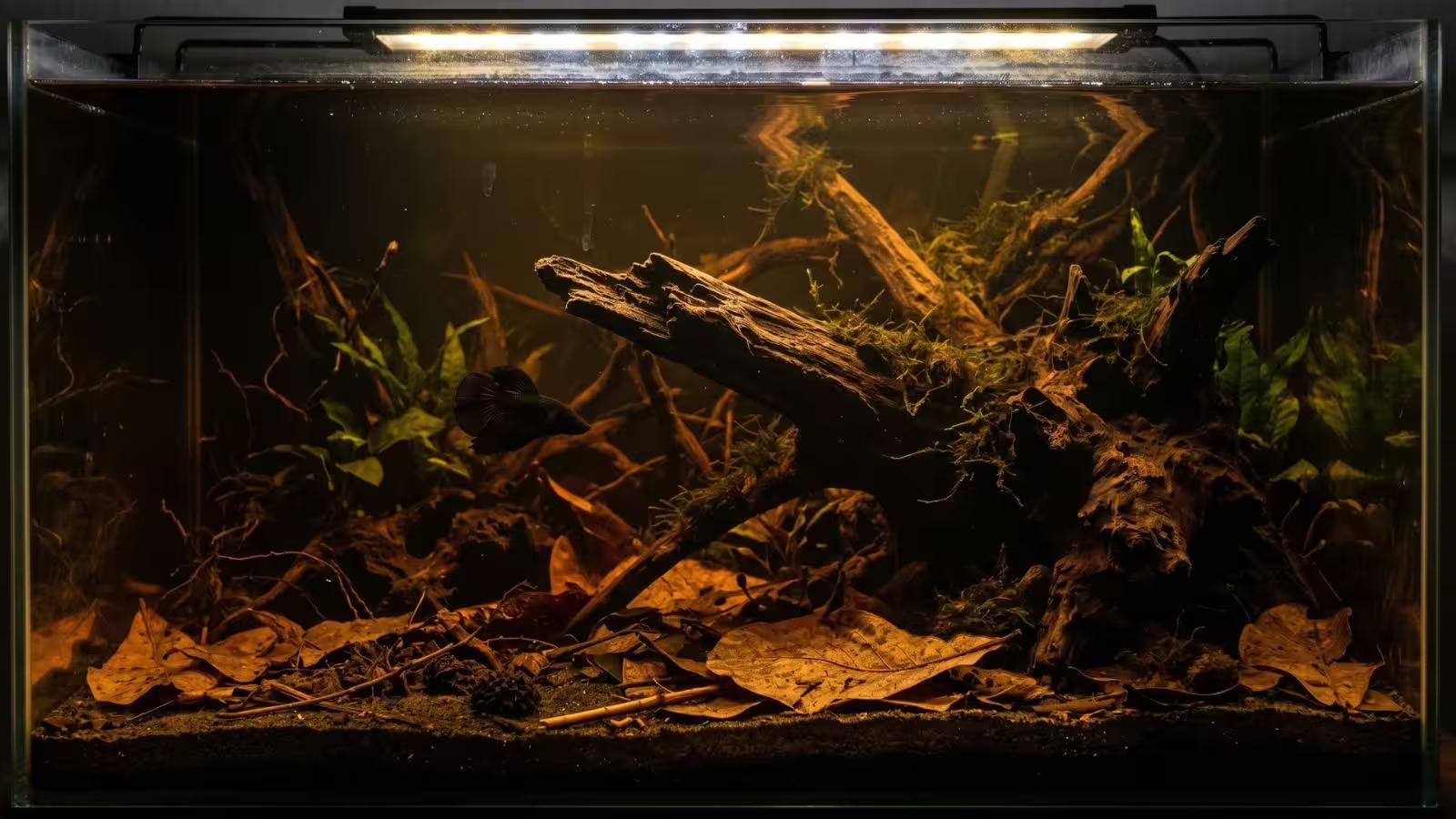
Blackwater tanks mimic the tannin-stained, acidic waters found in parts of Southeast Asia and South America. The water often looks tea-colored rather than crystal clear.
This isn't dirty water, even though it can look that way to a new fishkeeper. It's a deliberate aesthetic with real chemistry behind it.
Tannins, Botanicals, and Indian Almond Leaves
Indian almond leaves, driftwood, and similar botanicals release tannins as they break down. Tannins are astringent, polyphenolic compounds that leach naturally from wood and leaf matter sitting in water.[2]
In freshwater systems, this tannin release tends to lower pH and soften water, similar to how naturally tannin-rich blackwater rivers form.[3] In an aquarium, the effect is much milder, but it still shifts your water chemistry slightly, so test your parameters after adding botanicals rather than assuming nothing changed.
One thing I've noticed is that blackwater setups tend to calm down skittish bettas. The dimmer light and tinted water seem to reduce how exposed they feel.
Minimalist Aquarium Design
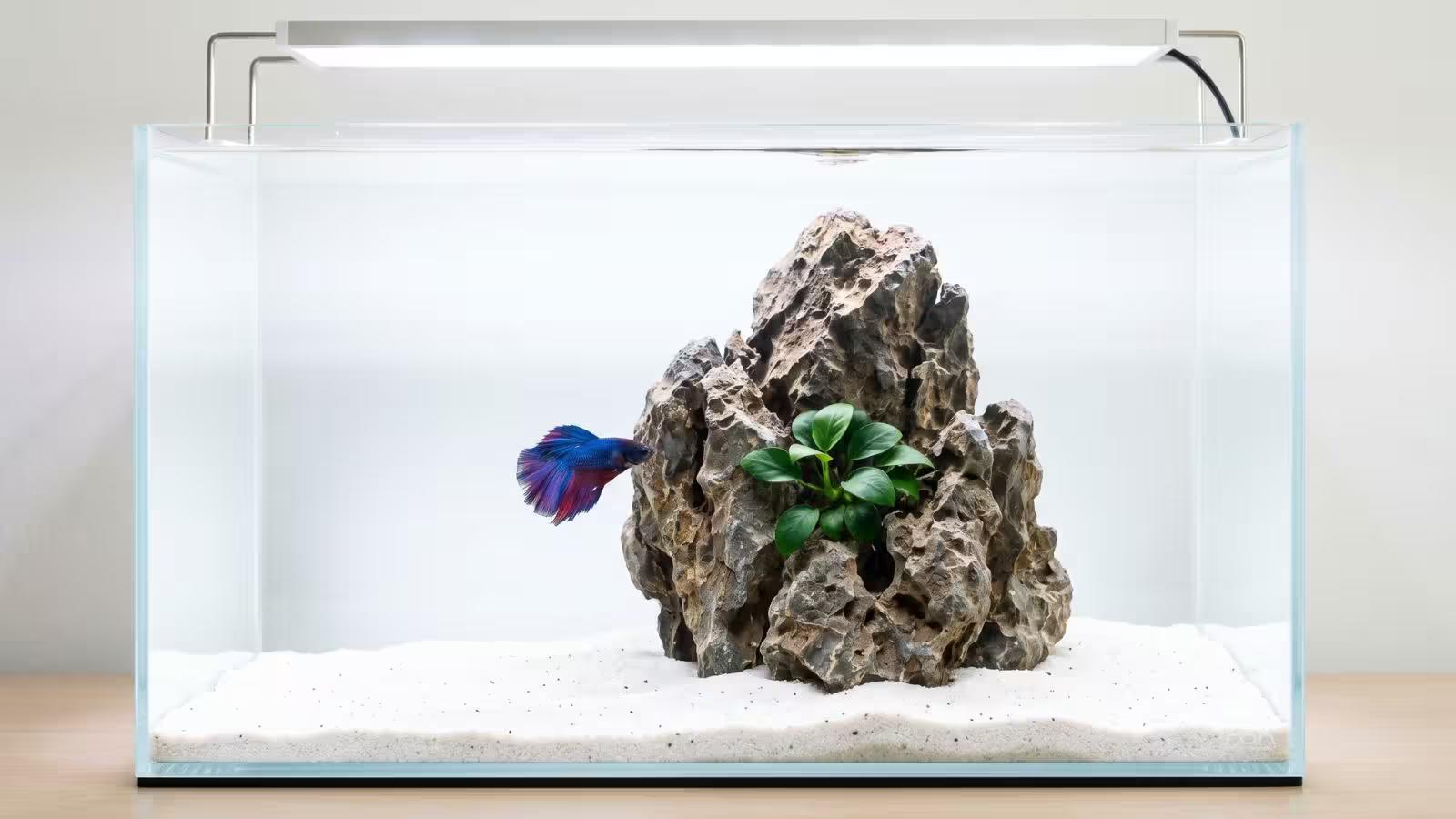
Not every betta owner wants a jungle. A minimalist design uses negative space deliberately, often with just one or two hardscape pieces and a single plant species.
This style works especially well in smaller tanks where overcrowding decor becomes a real problem fast.
Clean Lines, Negative Space, Single Focal Hardscape
Pick one piece, a rock formation or driftwood branch, and build everything else around it sparingly. Resist the urge to add "just one more thing."
Minimalist doesn't mean boring for your fish. As long as there's one hiding spot and a resting area, a sparse tank can still meet your betta's needs.
Nano Betta Aquarium
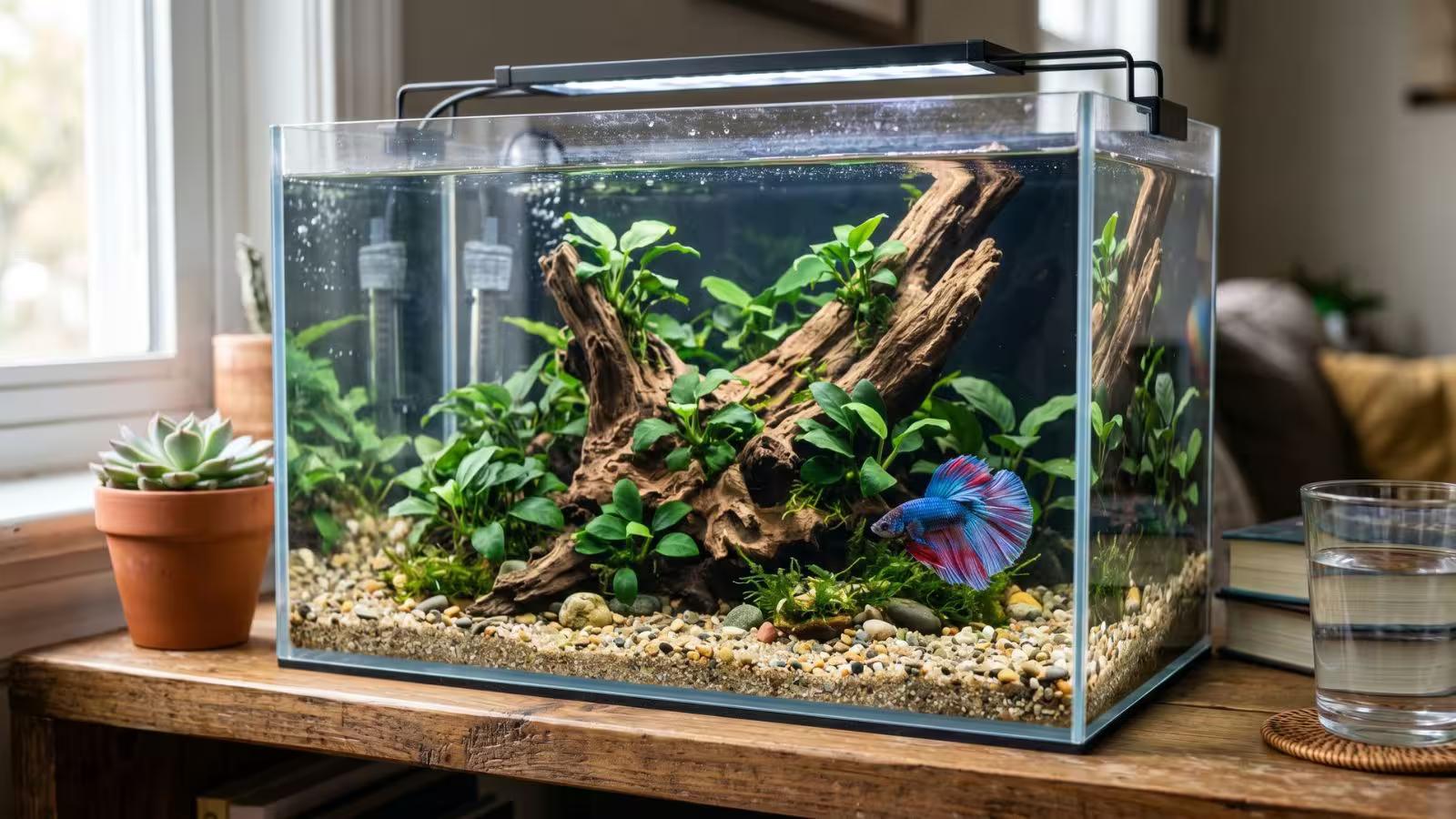
Nano setups, generally 5 to 10 gallons, need scaled-down versions of the ideas above. Big driftwood branches and tall plant clusters simply won't fit.
Scaling Ideas Down for 5 to 10 Gallon Tanks
Smaller hardscape pieces, like a single Dragon Stone formation or a short driftwood branch, work better than miniaturized versions of large-tank designs. Anubias nana and small Java Fern varieties scale down well too.
Avoid the temptation to cram a 20-gallon idea into a 5-gallon tank. Less decor, placed thoughtfully, looks better and leaves more swimming room.
Rice Paddy Inspired Tank
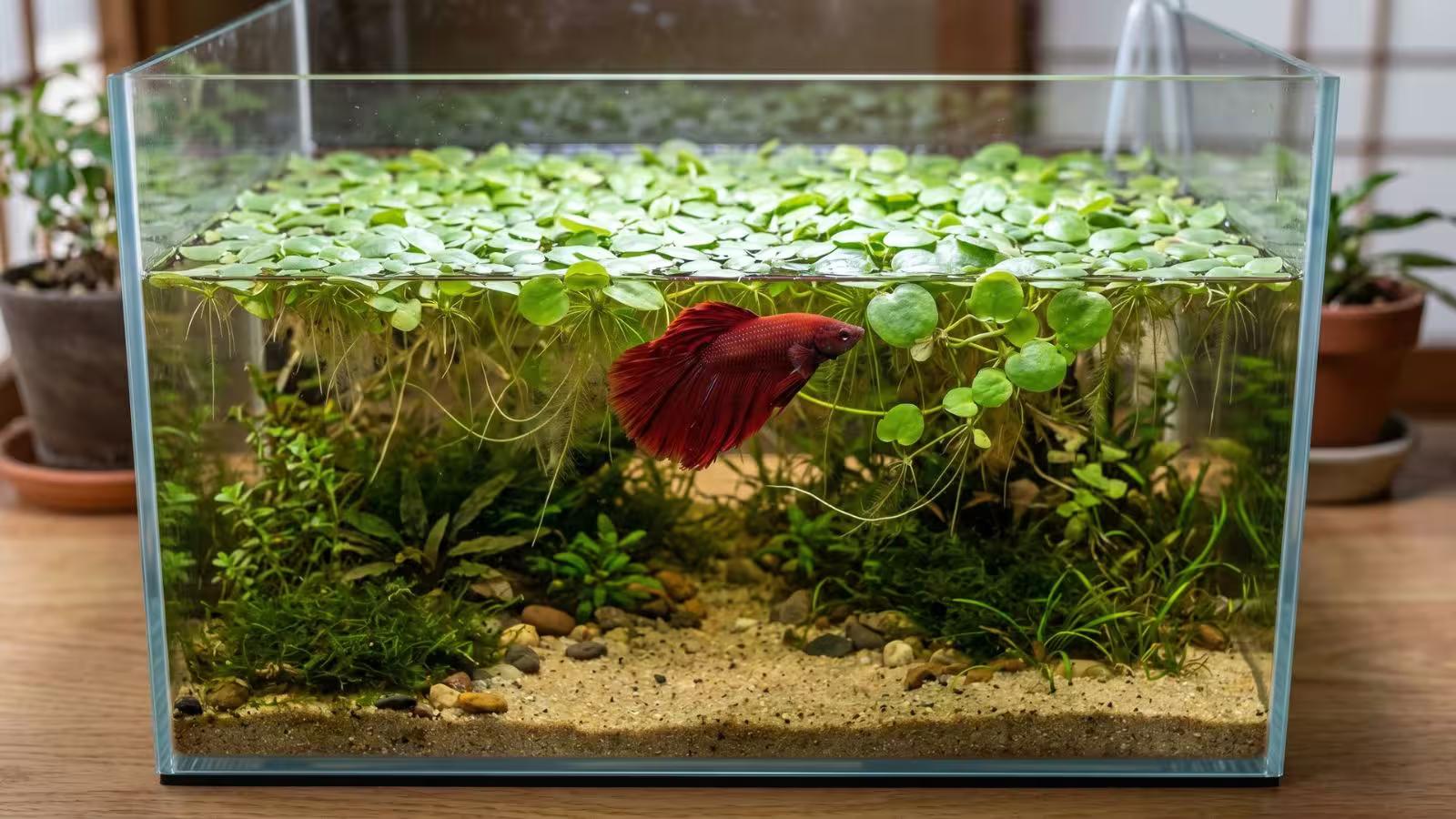
This style leans directly into the wild habitat described earlier. Shallow planting, dense vegetation at the surface, and minimal hardscape recreate that rice paddy feel.
Recreating Shallow, Vegetation Rich Asian Wetlands
Floating plants do most of the visual work here rather than rooted ones. A dense mat of Amazon Frogbit across part of the surface mimics the vegetation mats bettas naturally rest under.
Keep the substrate simple, sand or fine gravel, since wild rice paddy habitats aren't known for dramatic hardscape.
Asian Biotope Aquarium
A true biotope tries to match native conditions as closely as possible, including substrate color, plant species, and water tannins. It's the most research-heavy style on this list.
Native Inspired Substrate, Driftwood, and Plant Choices
Darker, fine-grain substrate, modest driftwood, and Southeast Asian plant species like Java Fern fit this approach well. Avoid bright gravel or non-native ornamental plants if you're going for true biotope accuracy.
This style rewards patience more than the others. It usually takes a few months of plant growth before it looks fully settled.
Themed Aquarium Concepts
Plenty of betta owners want something more personal than a strict biotope, and that's fine. A themed tank just needs internal consistency.
Combining Styles Without Overcrowding
Pick one dominant style and borrow lightly from a second. A blackwater jungle works. A minimalist biotope works. Three competing themes in one small tank usually doesn't.
The real test is whether your betta still has a clear swimming lane once you're done decorating. If not, it's time to remove something, no matter how good it looks.
Hardscape Elements: Driftwood, Rock, and Structure
Hardscape gives your tank its bones. Plants and color come and go, but rock and wood placement defines the whole layout.
Spider Wood and Dragon Stone Placement Tips
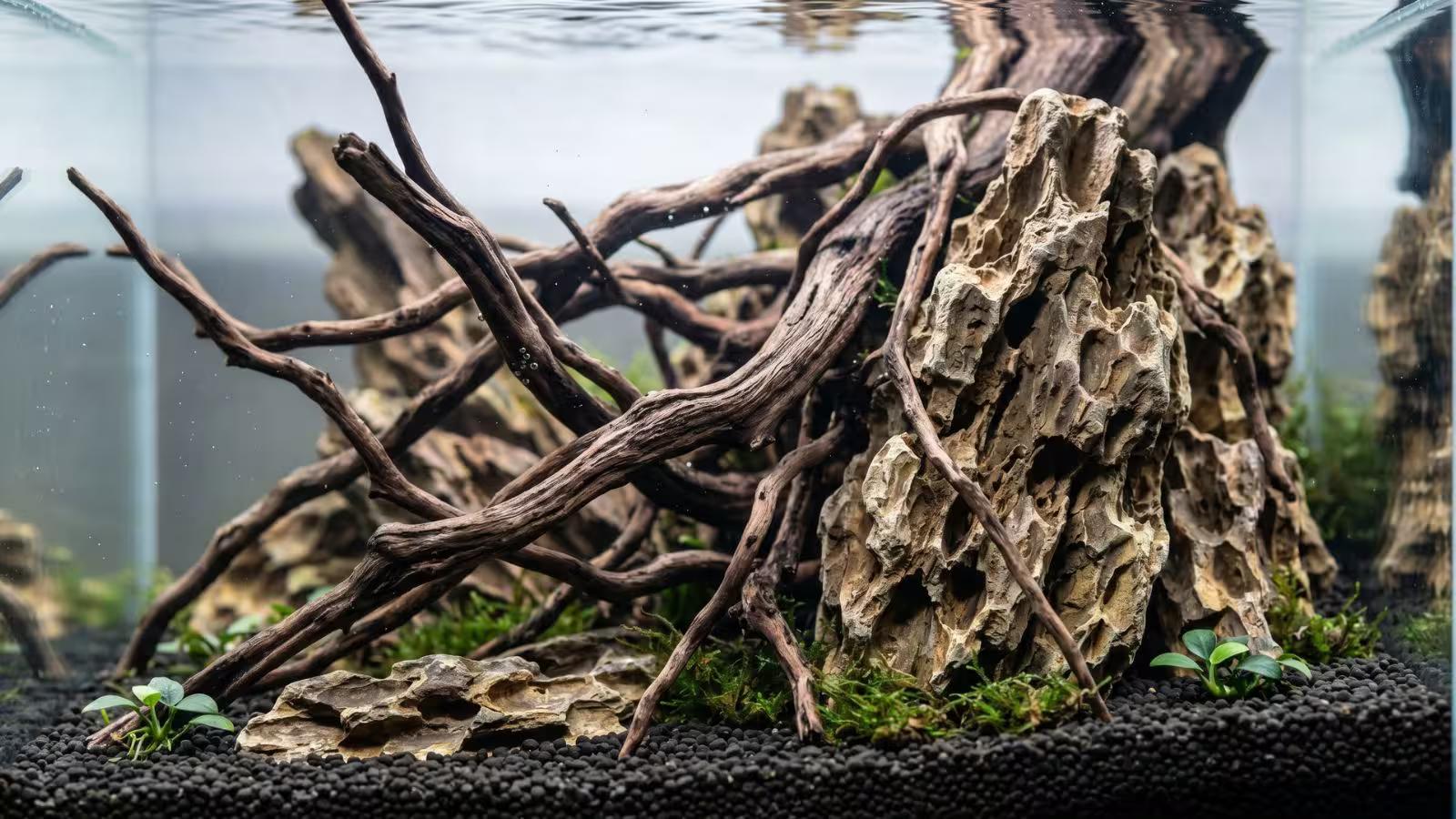
Spider Wood's thin, branching shape works well as a centerpiece in nano and standard tanks alike. Soak it for a week or two beforehand, since it tends to float until fully saturated.
Dragon Stone pairs naturally with Spider Wood and creates instant texture. Stack pieces with wide, stable bases so nothing shifts once your betta starts swimming around them.
How Hardscape Creates Hiding Spots and Visual Barriers
Every cave or gap between rocks gives your betta a place to retreat. This matters more for skittish individuals, but even confident bettas use hiding spots regularly.
Hardscape placed mid-tank also breaks up sightlines, which reduces how much of the tank your betta sees as one open, exposed space.
Avoiding Excessive Water Flow Disruption from Poor Placement
Large hardscape pieces can redirect filter output in ways you don't expect. A driftwood branch placed wrong can turn gentle filtration into a strong, fin-battering current.
After placing anything large, watch the water surface for a few minutes. If you see strong turbulence near where your betta rests, you'll likely need to adjust the piece or your filter's flow direction.
Live and Floating Plants for Betta Tanks
Plants do more than fill space. They shape behavior, water quality, and how your betta uses the tank day to day.
Best Plants: Java Fern, Anubias, Amazon Frogbit, Marimo Moss Ball
Java Fern and Anubias are the two most forgiving plants for beginners. Both attach to hardscape, tolerate low light, and rarely melt or die back unexpectedly.
Amazon Frogbit floats at the surface and gives your betta shaded resting spots, which pairs well with their natural surface-dwelling habits. A Marimo Moss Ball adds texture without any real maintenance, and most bettas treat it as a mild curiosity rather than ignoring it.
If you're still deciding what to grow, this list of betta-safe plants covers more species in detail.
Floating Plants and Surface Resting Spots
Surface cover matters because of how bettas breathe. Their labyrinth organ means they regularly visit the surface for air, and floating plants give them cover while doing it.
Leave gaps in the floating mat rather than covering the entire surface. Full coverage can trap stale air and make it harder for your betta to reach fresh oxygen at the surface.
Planted Tank Benefits Beyond Looks
Live plants absorb some nitrogenous waste, which takes a small amount of pressure off your filtration. They also produce oxygen during daylight hours, supporting overall water quality.
None of this replaces proper filtration or water changes. Think of plants as a helpful supplement, not a substitute for tank maintenance.
Safety First Decoration Checklist
This is the section most decorating guides skip, and it's the one that actually prevents injuries. Betta fins tear easily, so material choice matters as much as style.
Materials and Shapes to Avoid
Skip anything with sharp edges, rough texture, or peeling paint. Cheap plastic plants are a common offender since their leaf edges are often stiff and slightly jagged.
Avoid decorations with narrow gaps your betta could squeeze into but not back out of. Long, flowing fins catch on tight spaces far more easily than people expect.
How to Inspect Any Decoration Before Adding It
Run a piece of nylon stocking gently over every surface and edge before adding it to your tank. If the fabric catches or snags anywhere, that spot is sharp enough to damage fins.
Check painted ornaments closely for chips or rough seams, especially around molded edges. When in doubt, choose the smoother option, even if it looks slightly less detailed.
Table: Safe vs Unsafe Decoration Materials
| Safe Materials | Unsafe or Risky Materials |
|---|---|
| Smooth aquarium-grade silk plants | Stiff plastic plants with jagged leaf edges |
| Cured driftwood and Spider Wood | Untreated outdoor wood |
| Rounded river rock, Dragon Stone | Sharp or porous unidentified rock |
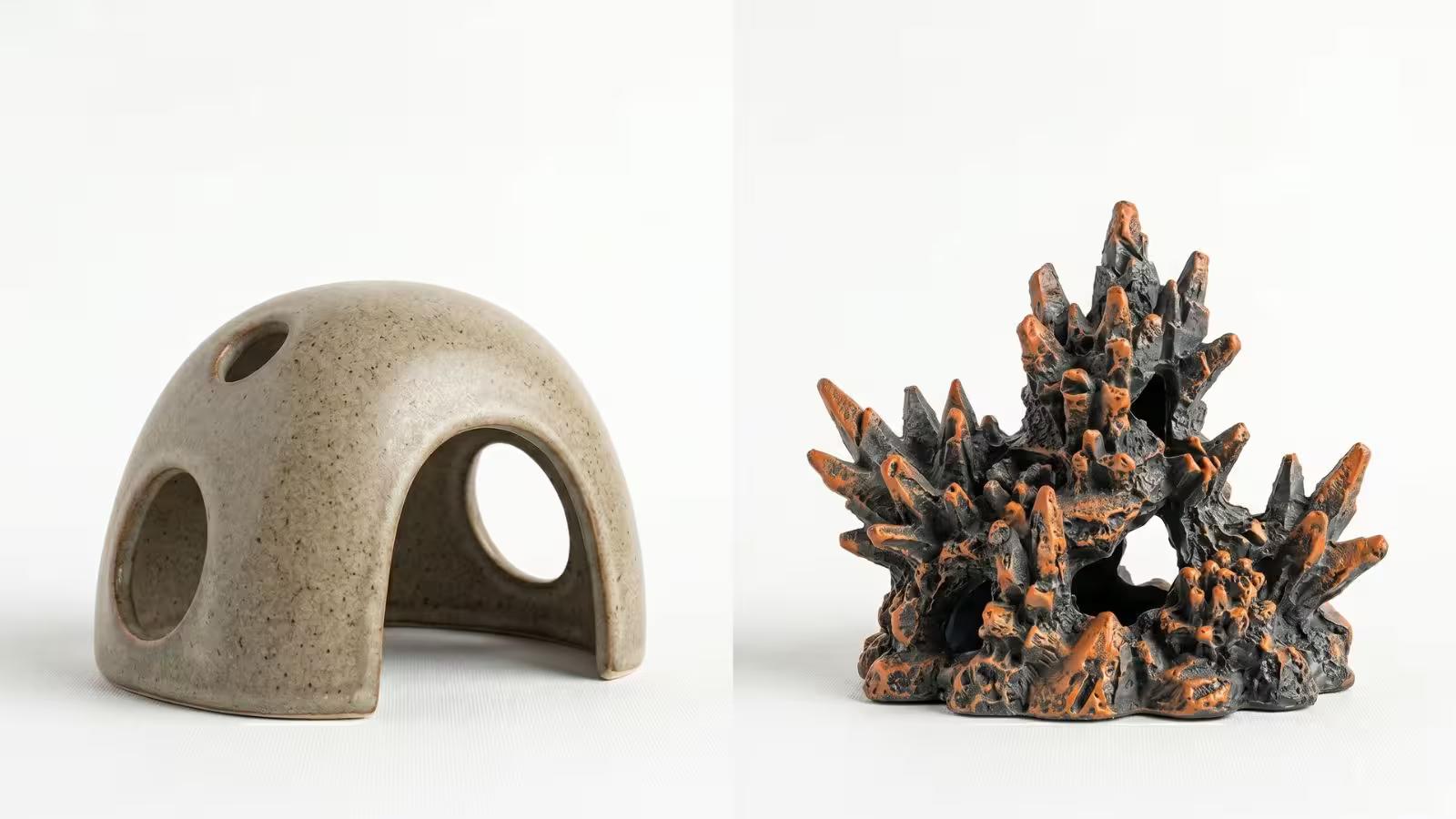
| Sanded, sealed ceramic or terracotta | Painted or glazed household ceramics |
| Aquarium-specific resin ornaments | Generic craft-store decorations |
DIY Betta Fish Tank Ideas on a Budget
You don't need an expensive haul to build a good-looking tank. A few DIY pieces, prepared correctly, can hold their own next to store-bought decor.
Sealed Terracotta and Ceramic Hideouts
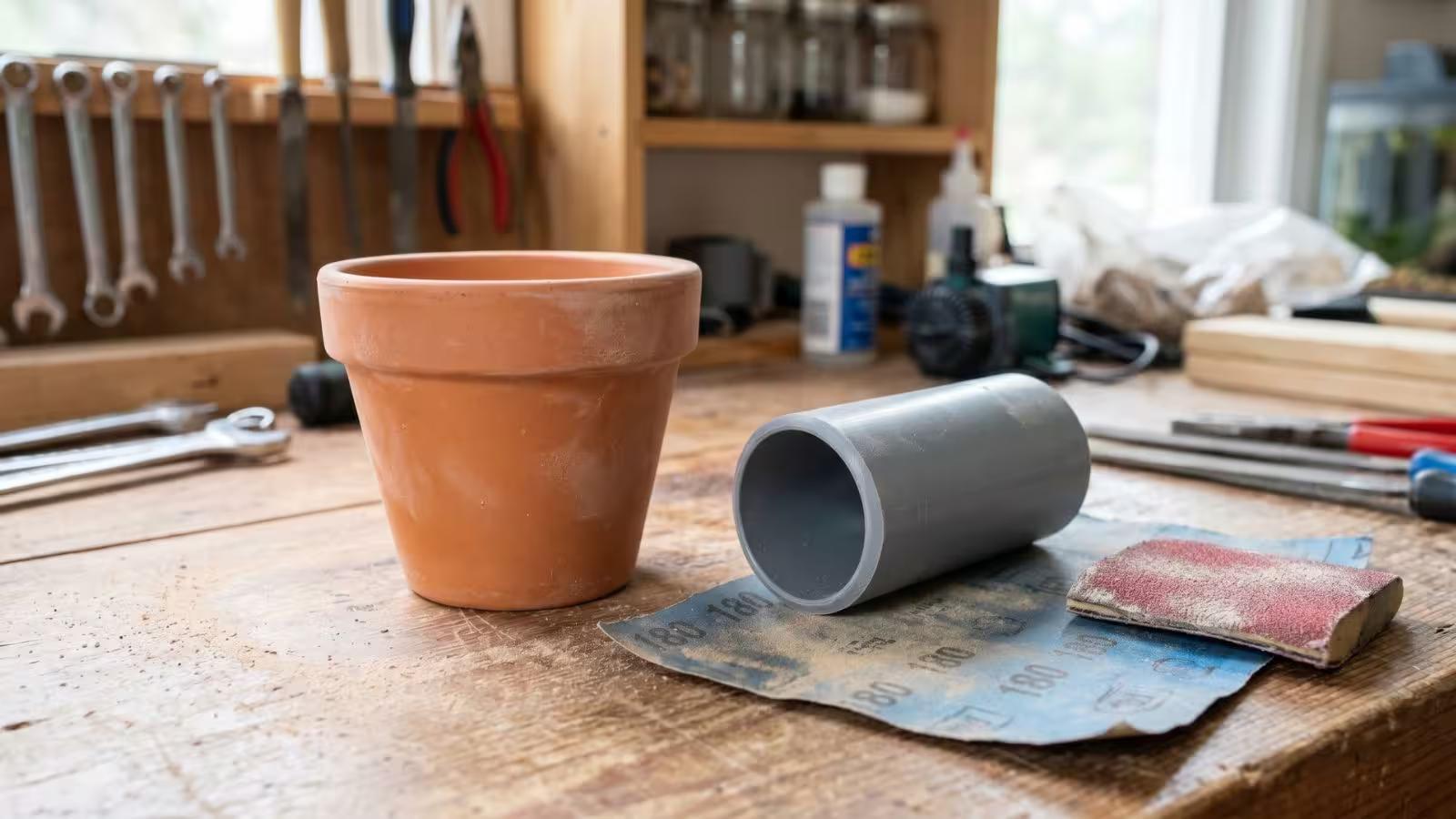
A plain terracotta pot makes a solid cave once the edges are sanded smooth. Avoid glazed or painted pots, since the coating can leach into your water over time.
Rinse thoroughly after sanding to remove dust before placing it in the tank.
PVC Tunnel Caves
A short length of PVC pipe, cut and sanded at both ends, creates an instant swim-through tunnel. Bettas tend to investigate these almost immediately after they're added.
Stick to plain, uncolored PVC rated for plumbing use rather than scrap pieces of unknown origin.
Step by Step: How to Safely Prepare DIY Decor
Sand every cut or rough edge until it feels completely smooth to the touch. Rinse the piece under running water to clear dust and debris.
Soak it in plain water for 24 to 48 hours, changing the water once partway through. Only then add it to your established tank.
Avoiding Tank Boredom and Fish Stress Through Design
A tank can look great and still feel flat to the fish living in it. Enrichment is about more than just having "enough" decorations.
Signs Your Current Setup Lacks Enrichment
A betta that hovers in one spot for hours or rarely investigates anything new may be under-stimulated. This often gets mistaken for a calm, low-energy personality, but it's worth watching closely.
Reduced flaring at reflections, less interest in food, or general sluggishness can all point to a tank that needs more variety. If your betta's behavior changes suddenly, it's also worth ruling out illness through resources like this guide on betta fish diseases and cures.
Rotating Decor Without Overstressing Your Betta
Small, occasional changes work better than full redesigns. Swapping one ornament every few weeks gives your betta something new to investigate without disrupting their whole sense of territory.
Avoid rearranging everything at once right after introducing a new fish. Let them settle into a stable layout first, especially during the early days covered in guides on how to acclimate a betta fish safely.
Checklist: Signs of a Well Enriched Betta Tank
| Sign | What It Looks Like |
|---|---|
| Active exploration | Betta investigates new or rearranged items within a day |
| Clear swimming lane | Open path from one end of the tank to the other |
| Defined hiding spot | At least one cave, plant cluster, or dense area to retreat to |
| Surface resting area | Floating plants or calm water near the top of the tank |
| Stable territory | Betta returns to the same general "home base" regularly |
Common Decorating Mistakes and How to Fix Them
Most decorating problems fall into one of three categories. Once you know what to look for, they're easy to spot and fix.
Overcrowded Decor and Poor Swimming Space
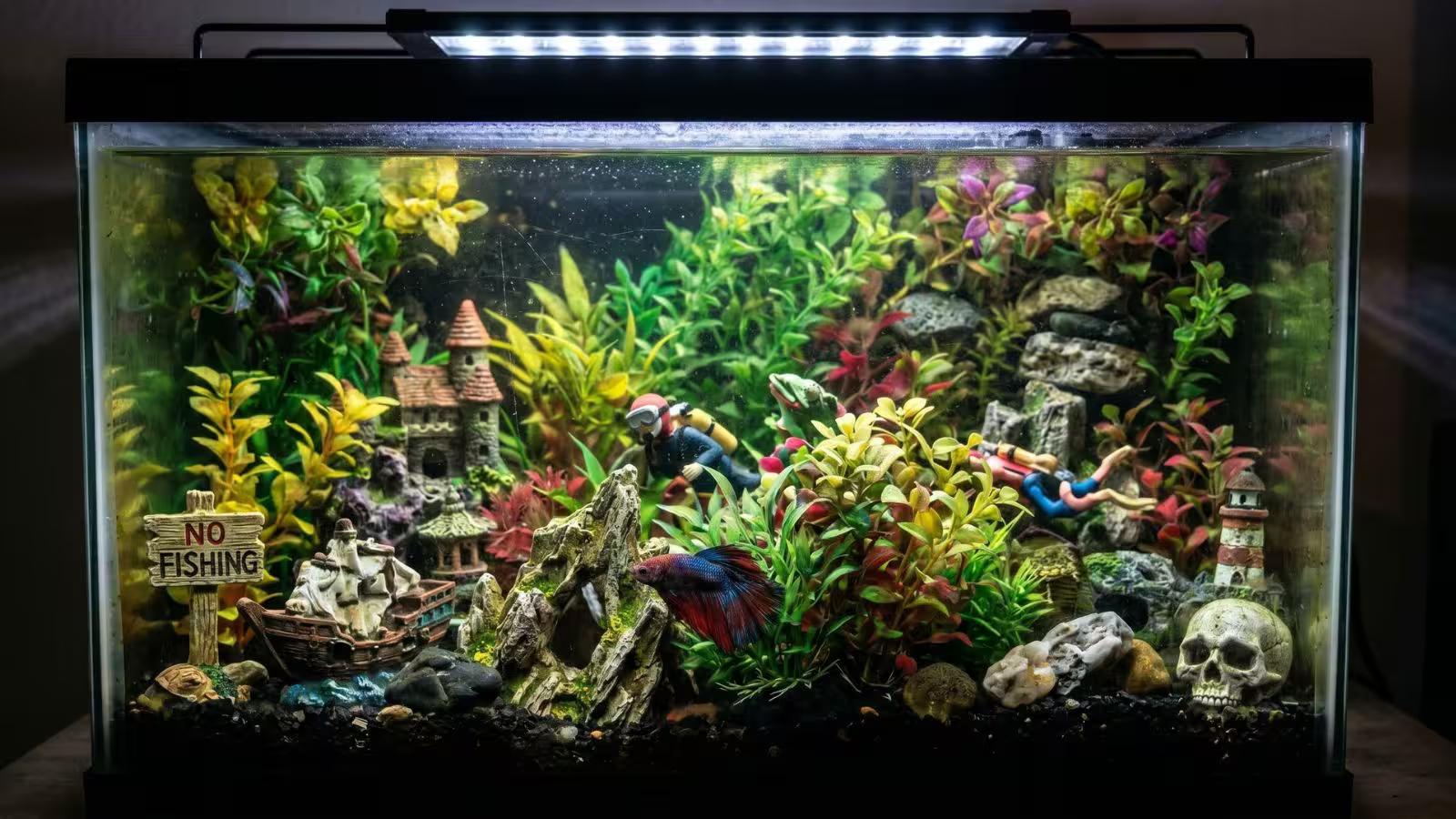
This mistake causes more problems than people expect. A tank packed with ornaments looks impressive in photos but leaves almost no open water for actual swimming.
Fix it by removing items until you can trace one continuous swimming path with your eyes from front to back.
Decor That Creates Excessive Water Flow
Large flat decorations placed near the filter outlet can bounce current straight at your betta's resting area. Over time, this kind of stress can resemble symptoms people often search for, like a betta swimming sideways after struggling against strong flow.
Reposition the piece or redirect your filter outlet toward open water instead of toward hardscape.
Sharp or Unsafe Material Damage to Fins
Frayed or torn fin edges after adding new decor are a strong sign something in the tank is too rough. Remove anything added in the past week and inspect it again using the stocking test.
If fin damage doesn't improve once the sharp item is removed, it may be worth reviewing betta fish white spots on fins, since damaged fin tissue is more vulnerable to secondary infection.
Step by Step Troubleshooting Workflow
Start by identifying which decoration changed most recently. New stress, fin damage, or odd swimming usually traces back to something added in the last week or two.
Remove that item temporarily and observe your betta for 48 hours. If behavior improves, you've found your culprit. If not, move on to checking water parameters instead of assuming decor is the cause.
Pro Tips for Long Term Aquascape Maintenance
A good-looking tank on day one isn't the same as a good-looking tank six months later. Maintenance keeps the design intact.
Trimming and Replacing Live Plants
Trim fast growers like Amazon Frogbit regularly so they don't completely block light or surface access. Replace any plant that melts repeatedly rather than fighting to save it.
In my experience, swapping a struggling plant for a hardier species saves more time than babying one that clearly isn't suited to your setup.
Cleaning Hardscape Without Disrupting Beneficial Bacteria
Rinse algae off rocks and wood using tank water removed during a water change, not tap water. This protects the beneficial bacteria living on those surfaces.
Avoid scrubbing every surface spotless. A light biofilm on hardscape is normal and isn't harming your fish.
Myth Busting Common Betta Decor Beliefs
"Bettas Don't Need Decor, They're Fine in Bare Tanks"
Bettas can survive in a bare tank, but surviving and thriving aren't the same thing. Given their natural habitat among dense vegetation, decor isn't optional luxury, it's closer to a basic need.
"More Decorations Always Mean More Enrichment"
Past a certain point, more decor just means less swimming room. Enrichment comes from variety and accessible hiding spots, not sheer quantity of items crammed into the tank.
"Plastic Plants Are Always Unsafe"
Quality matters more than material here. Soft, aquarium-grade plastic or silk plants designed for fish tanks are perfectly safe. The risk comes from cheap, stiff plastic with rough leaf edges, not plastic as a category.
Once you settle on a style, the rest mostly comes down to patience. Plants fill in, hardscape settles, and your betta gradually claims the space as their own. Start simple if you're unsure, you can always add more once you see how your fish responds to the space.
References
1. Wikipedia – Siamese fighting fish. https://en.wikipedia.org/wiki/Siamese_fighting_fish
2. Wikipedia – Tannin. https://en.wikipedia.org/wiki/Tannin
3. Wikipedia – Blackwater river. https://en.wikipedia.org/wiki/Blackwater_river