You just got home with your new betta. The bag is sitting on the counter, the fish is staring at you, and you're not entirely sure what happens next. That pressure is real, this first hour matters more than most people realize.
Acclimating a betta fish isn't complicated, but skipping it, or rushing through it, can cause osmotic shock, temperature stress, or immune collapse that shows up days later. The good news? The process is simple once you understand what's actually happening to your fish during a transfer.
This guide covers both the floating bag method and drip acclimation, when to use each one, what to watch for afterward, and how to troubleshoot if something goes wrong. By the end, you'll feel confident handling this, and every future transfer.
What Is Fish Acclimation and Why Does It Matter for Betta Fish?
Acclimation is the process of gradually adjusting a fish to its new water environment before releasing it. It sounds simple, but there's real biology behind it.
Betta fish are sensitive to sudden changes in water chemistry. When the water around them shifts too fast, in temperature, pH, or mineral content, their bodies struggle to compensate. That's where the problems start.
The Science Behind Osmotic Shock
Betta fish regulate fluid balance through osmosis. Their cells constantly exchange water with the surrounding environment based on salt and mineral concentration. When that external environment changes abruptly, the cells can't keep up.
The result is osmotic shock, a state where the fish's internal chemistry is thrown off before its body can adapt. This suppresses the immune system almost immediately, leaving your betta vulnerable to bacterial infections and disease within days of the transfer.[1]
Most betta deaths that happen a week after a move aren't caused by the move itself. They're caused by disease that the fish couldn't fight off because acclimation stress had already weakened it.
Temperature Shock vs. Water Chemistry Shock, They're Different Problems
These are two separate risks, and they need to be handled differently. Temperature shock happens fast, within minutes of a sudden temperature change. Water chemistry shock (pH, hardness, dissolved minerals) builds more slowly but can be just as damaging.
Floating the bag addresses temperature. Gradually mixing tank water into the bag addresses chemistry. You need both steps, not just one.
| Shock Type | Trigger | Symptoms |
|---|---|---|
| Temperature shock | More than 2°F sudden difference | Clamped fins, rapid gill movement, lethargy |
| pH shock | More than 0.5 unit difference | Darting, loss of balance, pale color |
| Ammonia stress | Transfer to uncycled tank | Red streaks on fins, surface gulping |
Before You Acclimate: Setting Up for Success
The single most common acclimation failure isn't bad technique, it's transferring a betta into a tank that wasn't ready in the first place. Before you even open the transport bag, there are a few things worth confirming.
Is Your Tank Actually Ready?
A cycled tank isn't just a nice bonus, it's the foundation your betta depends on. Without beneficial bacteria established in the filter and substrate, ammonia from your fish's waste will spike within 24–48 hours of the transfer. No amount of careful acclimation can protect a fish from that.
If your tank isn't fully cycled yet, acclimation buys you a safe transfer, but it doesn't solve the ammonia problem waiting on the other side. That's the part most beginner guides leave out.[2]
Minimum tank requirements before transfer:
- Ammonia: 0 ppm
- Nitrite: 0 ppm
- Nitrate: under 20 ppm
- Temperature stable at 76–82°F (24–28°C) for at least 24 hours
- pH between 6.5–7.5
- Water conditioner already dosed
- Filter running on low flow
Water Parameters to Check Before Acclimation
It helps to actually test your tank water before you start, not just assume it's fine. If you don't know your pH or ammonia level, you don't know how much buffer you have for the acclimation process.
Most pet store water sits between pH 7.0–7.8 and temperature 72–76°F. If your tank runs significantly warmer or has a very different pH, you'll want to extend your acclimation time accordingly rather than rushing through it.
| Parameter | Ideal Range | Danger Zone |
|---|---|---|
| Temperature | 76–82°F (24–28°C) | Below 74°F or above 84°F |
| pH | 6.5–7.5 | Below 6.0 or above 8.0 |
| Ammonia | 0 ppm | Any detectable level |
| Nitrite | 0 ppm | Any detectable level |
| Nitrate | Under 20 ppm | Above 40 ppm |
What to Gather Before You Start
Having everything ready before you open the bag makes the whole process calmer, for you and your fish. Here's what you'll need depending on which method you use:
- Soft mesh fish net (never pour the bag directly)
- Small clean cup (for the floating bag method)
- Airline tubing or drip acclimation kit (for drip method)
- Aquarium thermometer
- Water conditioner - API Stress Coat works well here for protecting the slime coat
- Dim lighting or a towel over part of the bag - bright light adds stress
Method 1: How to Acclimate a Betta Fish Using the Floating Bag Method
This is the method most beginners start with, and it works well in the majority of situations. If your betta came home in a standard store bag, transport time was under an hour, and your tank parameters aren't dramatically different from the store's water, the floating bag technique is the right call.
Step-by-Step: Floating Bag Technique
Step 1: Float the sealed bag (15–20 minutes)
Place the sealed bag directly on the water surface. Don't open it yet. The bag water will slowly match your tank's temperature through the plastic. Keep the room lighting dim during this step.
Step 2: Confirm temperature before opening
Use a thermometer to check that the bag water is within 1–2°F of your tank. If you open the bag too early and there's still a temperature gap, you've skipped the most important protection step.
Step 3: Open the bag and create an air collar
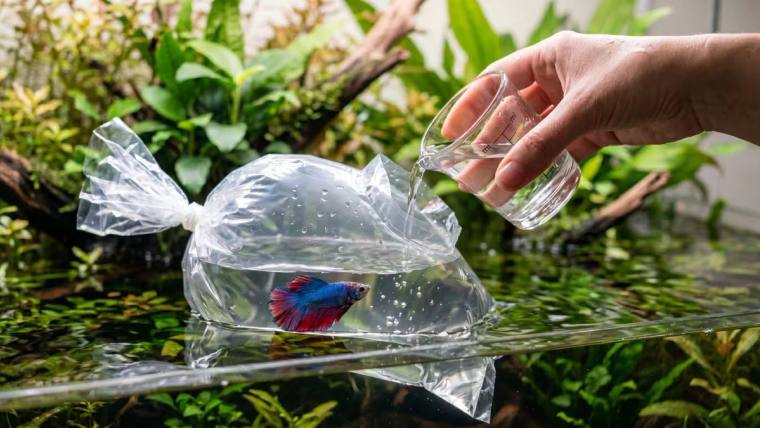
Roll the top of the bag down once or twice. This traps air inside the fold and lets the bag float upright without you holding it. Now add ¼ cup (about 60ml) of tank water to the bag.
Step 4: Gradual water mixing (20–30 minutes)
Every 5 minutes, add another ¼ cup of tank water. Repeat this 4–6 times. You're slowly replacing the store water with your tank's water - shifting the chemistry gradually so the betta's body can adjust without stress.[3]
Step 5: Net the betta and release
Gently scoop your betta out of the bag with a soft mesh net and lower it into the tank. Don't pour the bag water in. Store water can carry pathogens, low-level medications, or disease organisms that you don't want introduced to your tank.
Common Mistakes During the Floating Bag Method
Floating the bag under a tank light or near a window is one of the most frequent errors. Heat builds up quickly inside a bag, and your betta can overheat before temperature equilibration even finishes.
Another issue is treating the 15-minute float as the whole process. I see this constantly, people float the bag, open it, dump the fish in, and call it done. The water mixing step is not optional. Without it, you've only addressed temperature shock.
Also: never leave the bag floating longer than about an hour. The oxygen inside depletes, and your betta starts gasping before it's even in the tank.
Method 2: How to Acclimate a Betta Fish Using the Drip Acclimation Method
Drip acclimation is slower, a bit more involved, and genuinely better for fish that are already stressed. If your betta was in transport for more than two hours, or if you know the pH difference between the store and your tank is significant, this method gives your fish the gentlest possible transition.
Step-by-Step: Drip Acclimation Method
Step 1: Set up a clean bucket or container
Place your betta (with the store water) into a small clean bucket or acclimation box. You only need 1–2 cups of store water in the container to start - enough to cover the fish.
Step 2: Set up the drip line
Run airline tubing from your tank down to the bucket. Tie a loose knot in the tubing, or clip on a control valve, to slow the flow down to 2–4 drops per second. You want a slow, steady drip - not a stream.
Step 3: Let the drip run for 45–60 minutes
Over this time, the container volume will roughly double. The chemistry in the bucket will have shifted significantly toward your tank's parameters by the time you're done. Keep the room quiet and the lighting low.
Step 4: Net and transfer
Same as the bag method - use a soft net, transfer the betta gently, and discard the water in the bucket. Do not add any of that water to your tank.[4]
Floating Bag vs. Drip Acclimation: Which Method Is Right for You?
Both methods work. The right choice depends on how stressed your betta is and how different the water conditions are between the store and your tank.
| Situation | Recommended Method |
|---|---|
| Healthy betta, short transport, similar water | Floating bag |
| Visibly stressed betta, long transport | Drip acclimation |
| pH difference over 0.5 units | Drip acclimation |
| First betta, new tank setup | Either, with careful monitoring |
When in doubt, drip acclimation is always the safer choice. It just takes more time.
Acclimating Betta Fish to New Water After a Tank Move or Water Change
Not every acclimation involves a pet store bag. Sometimes you're moving a betta between your own tanks, restarting a tank after a deep clean, or dealing with a significant water change. The same principles apply.
Partial Water Changes Don't Require Acclimation - But Large Ones Do
Routine 25–30% weekly water changes are gentle enough that your betta adjusts without any special process. That gradual dilution is actually one of the reasons weekly water changes are recommended - small, consistent changes that don't shock the system.
But replace more than 50% at once, and you're essentially putting your fish in new water. That warrants a slower approach, refilling gradually over 30–45 minutes rather than dumping fresh water all at once.[2] If your betta shows any signs of stress after a large water change, swimming sideways or losing balance can be an early warning sign worth taking seriously.
Acclimating a Betta After a Full Tank Restart
If you're moving a betta from a quarantine container or temporary holding tank back into a main tank, use the floating bag technique with 20–30 minutes of temperature equilibration followed by gradual water mixing. Even between your own tanks, chemistry can differ, especially if one tank has more plant mass, different substrate, or a longer-established nitrogen cycle.
Test both tanks before transferring. It only takes a few minutes and removes the guesswork entirely.
How Long Does It Take to Acclimate a Betta Fish?
This is one of the most common questions, and one of the most rushed parts of the process. Here's the honest answer: faster is not better.
| Method | Minimum Time | Recommended Time |
|---|---|---|
| Floating bag | 35 minutes | 45–60 minutes |
| Drip acclimation | 45 minutes | 60–90 minutes |
If your store water and tank water are very similar in temperature and pH, you can get away with the shorter end of those ranges. But if there's any meaningful difference, err toward the longer time. The extra 20 minutes costs you nothing, and can make a real difference for your fish.
What to Watch for During and After Acclimation
Acclimation doesn't end when the fish enters the tank. The next 24–48 hours are actually when you need to pay the most attention.
Normal vs. Abnormal Behavior During Acclimation
A lot of new owners panic when their betta barely moves inside the bag. That's actually fine, low activity conserves oxygen and reduces stress during confinement. What you're watching for is anything that suggests acute distress.
| Behavior | Normal or Abnormal |
|---|---|
| Resting at bag bottom | Normal - conserving energy |
| Slow gill movement | Normal |
| Rapid, labored gill movement | Abnormal - possible oxygen depletion or ammonia |
| Darting or jumping | Abnormal - temperature or pH shock |
| Pale or washed-out color | Abnormal - severe stress response |
Monitoring the First 24–48 Hours After Transfer
Once your betta is in the tank, resist the urge to hover. Constant observation adds to the stress. Check in periodically and look for these signs:
- Betta is upright and balanced - not tilting sideways
- Fins are held naturally, not clamped tight against the body
- Fish is exploring or resting in a hiding spot - both are fine
- No rapid breathing at the water surface
- No red streaks on fins or body
- Appetite returns within 24–48 hours (skip feeding on day one)
It's completely normal for a betta to hide for the first 24–72 hours. This is stress behavior, not illness. Keep the lights dim, avoid tapping on the glass, and don't add any tank mates during this period. Your betta is adjusting, give it space to do that.
For context on what healthy resting looks like versus illness-driven lethargy, it helps to understand your betta's normal sleep and rest patterns before reading too much into stillness.
Troubleshooting: What to Do If Acclimation Goes Wrong
Sometimes things go sideways despite doing everything right. Here's how to work through the most common post-acclimation problems without panicking.
My Betta Is Sitting at the Bottom After Transfer
This is the scenario that sends most new owners into a spiral. More often than not, it's stress, not disease. A betta that just went through the stress of capture, bagging, transport, and a new environment needs time to decompress.
Before assuming the worst, test your water. If ammonia and nitrite are at zero, temperature is in range, and your betta is upright (even if still), give it 24 hours. Don't move it again, don't add medication, and don't start changing the water aggressively. Stability is what it needs right now.
My Betta Is Breathing Rapidly at the Surface
Surface breathing in a betta isn't always alarming, bettas have a labyrinth organ and naturally breathe surface air. But rapid, frantic gulping combined with lethargy suggests something else is going on.
Test your ammonia immediately. Even a trace of ammonia (0.25 ppm) can cause surface gasping. If it's detectable, do a 25–30% water change and dose with Seachem Prime, which detoxifies ammonia temporarily while your cycle catches up. Also confirm your water temperature is between 76–82°F - water that's too warm holds less dissolved oxygen.
My Betta's Color Has Faded Since the Transfer
Color fading after acclimation is usually stress-related and temporary. Most bettas regain their color within a few days once they settle in. One thing I've noticed is that bettas in dark or heavily planted tanks tend to recover color faster, the cover seems to reduce their stress response.
If fading continues beyond a week, or if the white or pale patches look patchy or fuzzy rather than even, it may point to early disease rather than stress. Betta fish turning white can have several different causes, some stress-related, some requiring treatment. And if you notice any unusual spots developing, check out our guide on betta fish white spots on fins to rule out ich or other parasitic infections early.
My Betta Won't Eat After Acclimation
Completely expected for the first 24–48 hours. Don't try to force it, offer one or two pellets, and if they're ignored, remove them before they foul the water. Uneaten food in a new, potentially un-established tank is an ammonia risk you don't need right now.
If appetite doesn't return within 4–5 days, test your water first. Poor water quality is the number-one reason bettas go off food. A healthy betta in a stable, heated, cycled tank almost always starts eating within two days. Betta fish can safely go without food for a few days without harm, so don't panic and don't overfeed trying to tempt them.
Post-Acclimation Troubleshooting Workflow
- Test water immediately - ammonia, nitrite, pH, temperature
- Ammonia or nitrite detectable? → 25–30% water change, dose Seachem Prime
- Temperature outside 76–82°F? → Adjust heater, recheck in 30 minutes
- pH outside 6.5–7.5? → Identify source, begin gradual correction
- All parameters normal? → Dim lights, reduce disturbance, observe for 24–48 hours
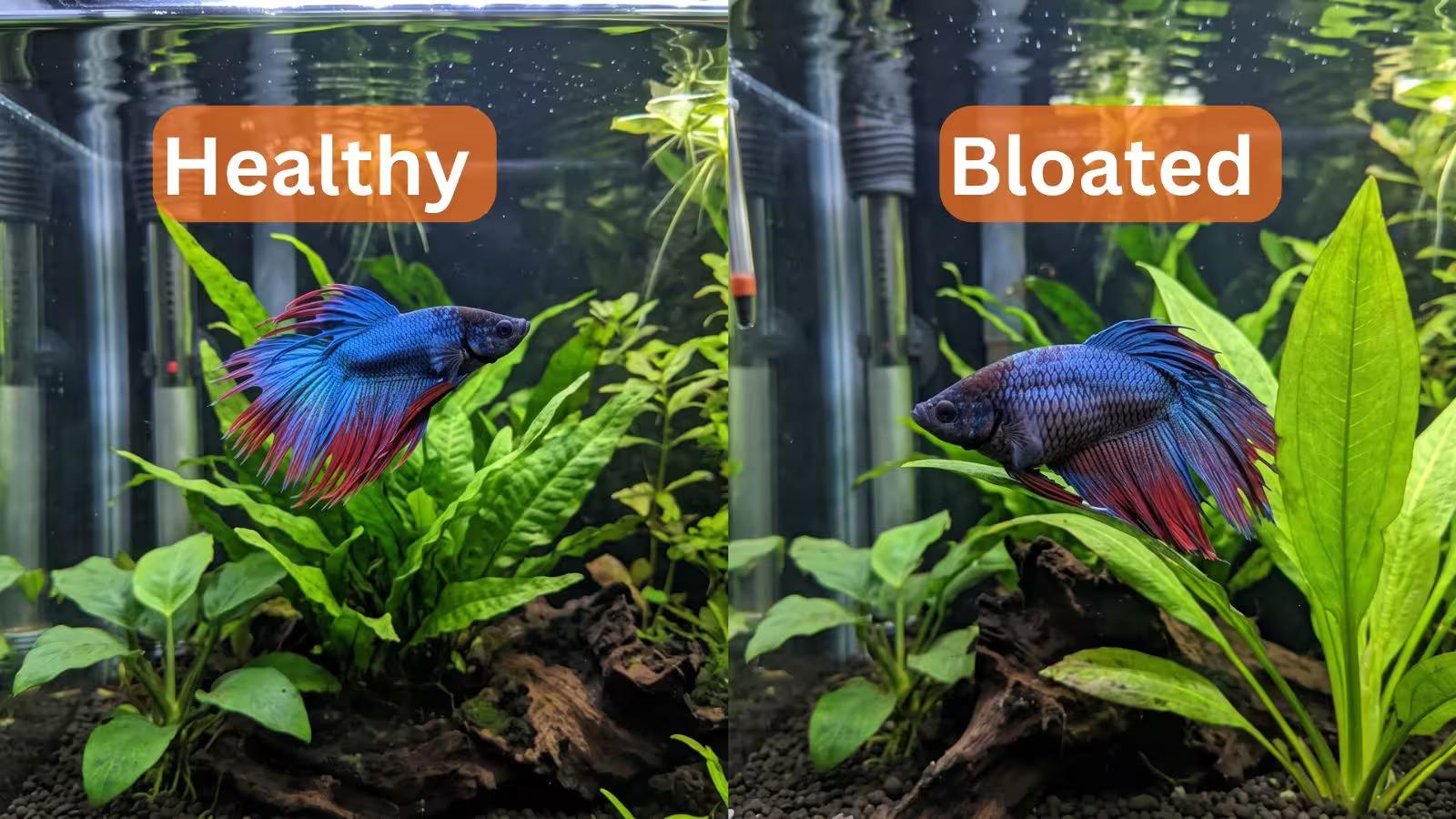
- Physical symptoms appearing (red streaks, white spots, bloating)? → Consult a betta fish disease guide before treating
Beginner Mistakes That Make Acclimation Dangerous
Most acclimation failures come down to one of these seven mistakes. Knowing them ahead of time is the easiest way to avoid them.
- Skipping acclimation entirely - "The water looks the same" is not a safe assumption. You can't see pH, dissolved minerals, or ammonia.
- Pouring bag water into the tank - Store tank water can carry pathogens, untreated disease, or low-level medications you don't want in your setup.
- Rushing the process - Under 20 minutes total is almost always too short. The chemistry shift needs time.
- Adding a betta to an uncycled tank - Acclimation handles the transfer safely, but it can't protect a fish from an ammonia spike 48 hours later.
- Netting too aggressively - Torn fins during a stressful moment add injury to an already immunocompromised fish.
- Adding tank mates immediately - A newly transferred betta is immunocompromised for 48–72 hours. Introducing other fish during this window increases aggression stress and disease risk.
- Keeping bright lights on - Dim conditions reduce visual stimulation and help the betta settle faster. Bright light is a stressor in the first few hours.
Myth-Busting: Acclimation Advice That's Actually Wrong
Some of the most-repeated acclimation tips online are either incomplete or flat-out wrong. Here's what to stop believing.
Myth: "Float the bag for 15 minutes and release."
Reality: Floating equalizes temperature only. Without gradual water mixing, you've done half the job. Your fish is now in familiar-temperature but chemically different water, and that's still a shock.
Myth: "Adding water faster speeds up safe acclimation."
Reality: The whole point is gradual change. Dumping large amounts of tank water into the bag faster than every 5 minutes defeats the purpose. You're causing the same shock you were trying to prevent.
Myth: "Store water is clean, so it's fine to add to my tank."
Reality: Even clean-looking store water can carry velvet, ich cysts, or bacterial loads that aren't visible to the naked eye. This is one of the most common ways disease enters an otherwise healthy tank.
Myth: "Bettas are tough fish, they don't need careful acclimation."
Reality: Bettas tolerate poor long-term conditions better than many fish. But they're just as vulnerable to sudden parameter changes as any other species. Hardiness is not the same as invincibility.
Using an Acclimation Box: A Lower-Stress Alternative
If your betta is going into a community tank, or if you already have fish in the tank and want to reduce territorial stress during the adjustment period, an acclimation box is worth considering.
An acclimation box hangs inside the tank wall and allows tank water to flow through mesh sides. Your betta adjusts to the water chemistry passively while being protected from any tank residents and able to see its new environment without being exposed to it. It's a gentler option for fish that seem particularly skittish or stressed.
Some keepers use it for 24–48 hours after the initial acclimation before doing a full release into the tank. For a betta going into a shared setup with other fish, this can reduce aggression significantly at the introduction stage.
When to Be Concerned: Signs Your Betta Needs Immediate Attention
Most post-acclimation issues resolve on their own with stable water and time. But some signs indicate that something more serious is happening, and these warrant prompt action rather than a wait-and-see approach.
Contact an aquatic veterinarian or consult a disease guide if you observe any of the following:
- Betta lying on its side and unable to right itself - possible swim bladder involvement
- White, gray, or fuzzy patches on the body or fins - possible fungal or bacterial infection
- Pinecone-like raised scales (dropsy) - a serious internal condition requiring fast response
- Extreme lethargy beyond 72 hours with no appetite
- Visible external parasites - small white dots, or fish scraping against surfaces (flashing)
White spots specifically are worth catching early. Ich and other parasitic infections spread quickly in stressed fish and are far easier to treat in the early stages than after they've progressed. For a broader overview of what to watch for, a good betta fish disease reference is worth bookmarking from day one of ownership.
Once you've done this once with care, it stops feeling like a high-stakes procedure. You understand what your betta is going through, and why each step exists. A well-acclimated betta settles in faster, eats sooner, and shows better color within days. The process takes less than an hour. The benefit lasts the lifetime of the fish.
References
- Merck Veterinary Manual - Aquatic Animal Section: Osmotic Stress and Freshwater Fish
https://www.merckvetmanual.com/exotic-and-laboratory-animals/aquarium-fishes/water-quality-for-aquarium-fish - Aquarium Co-Op - The Nitrogen Cycle and Aquarium Cycling for Beginners
https://www.aquariumcoop.com/blogs/aquarium/aquarium-nitrogen-cycle - University of Florida IFAS Extension - Water Quality Parameters for Fish Health
https://edis.ifas.ufl.edu/publication/FA005 - World Aquatic Veterinary Medical Association (WAVMA) - Transport Stress in Ornamental Fish
https://www.wavma.org