
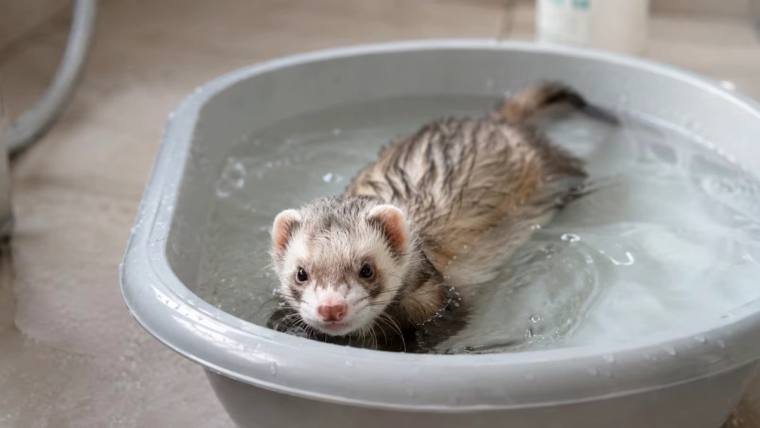
Ferrets can swim, and this article explains what drives that instinct, whether it's safe, and how to introduce water play without stressing your pet or putting it at risk.
Watch a ferret near a bathtub or puddle and you'll usually see one of two reactions: total delight or total panic. There's rarely an in-between, and that unpredictability is exactly why so many owners aren't sure what to do.
The truth is that ferrets are built with a swimming instinct, but that instinct doesn't guarantee comfort in the water. Some ferrets treat a shallow basin like a personal pool. Others act like they've been dropped into the ocean during a storm.
This guide breaks down the science behind ferret swimming, the real risks involved, and a step-by-step way to introduce water safely if your ferret shows interest.
Can Ferrets Swim Naturally?
Domestic ferrets (Mustela putorius furo) belong to the mustelid family, the same group that includes otters, minks, badgers, and weasels. Many of their relatives are semi-aquatic, which is why ferrets retain an instinctive paddling reflex even though they themselves are not aquatic animals.
This reflex allows a ferret to stay afloat and move through water for short bursts. It's an inherited survival trait, not a learned behavior, and it appears even in ferrets that have never been near water before.
Having the ability to swim is different from wanting to swim. A ferret can paddle competently and still hate every second of the experience. Personality, past exposure, and individual temperament all shape how a ferret responds once it's actually in the water.
Do Ferrets Actually Enjoy Swimming?
There's no single answer here because ferrets vary as much as people do when it comes to water preferences.
A ferret that enjoys water usually explores it on its own, paddles with relaxed movements, and returns to the water after climbing out. A ferret that dislikes water tends to freeze, scratch at the sides of the container, or try to escape within seconds of contact.
Neither reaction is unusual, and neither should be corrected or discouraged. A ferret's comfort level with water is not something that improves with repeated exposure if the animal is genuinely fearful. Forcing the issue usually backfires and damages trust.
Tip: Let your ferret choose. If it approaches water voluntarily and shows relaxed body language, occasional supervised swimming can be a fine enrichment option. If it doesn't, there's no benefit to pushing it.
Is Swimming Actually Good for Ferrets?
Swimming can offer mild mental stimulation and a change of scenery, but it isn't a core requirement for ferret health or happiness. Unlike daily out-of-cage exercise, which is essential, swimming falls into the category of optional enrichment.
For ferrets that enjoy it, water play can:
- Provide novel sensory stimulation
- Offer a low-impact form of physical activity
- Break up repetitive daily routines
That said, tunnels, digging boxes, puzzle feeders, and interactive play with an owner generally provide more consistent enrichment value with far less risk. A ferret that never swims a day in its life can still live a fully enriched, healthy life.
Is Swimming Safe for Pet Ferrets?
Swimming is generally safe when it's supervised, shallow, and brief, but it is not without risk. The biggest mistake owners make is assuming that because a ferret can paddle, it's safe in any amount of water for any length of time.
Ferrets tire quickly. They can also become disoriented or frightened if the water is too deep, too cold, or too hot, and panic tends to make swimming far less efficient. A stressed ferret burns energy fast and can struggle to stay afloat even in water it could normally handle.
Safety note: Always stay within arm's reach, use lukewarm shallow water, and end the session the moment your ferret shows any sign of distress. Dry your ferret thoroughly afterward and keep it warm until its fur is completely dry.
Can Ferrets Drown?
Yes, ferrets can drown, and this is the single most important safety fact for any owner to understand. A natural paddling instinct does not make a ferret immune to accidents.
Common drowning hazards around the home include bathtubs filled too deep, unattended sinks, buckets, garden ponds, swimming pools, and even toilets left with the lid open. Ferrets are curious and often climb into spaces before an owner realizes what's happening.
If a ferret accidentally falls into water, remove it immediately, dry it thoroughly, and keep it warm. Watch closely for coughing, labored breathing, unusual lethargy, or shivering that doesn't resolve. Contact an exotic animal veterinarian right away if any of these symptoms appear, since aspiration and hypothermia can both become serious quickly.
How to Introduce a Ferret to Water Safely
If your ferret seems curious about water, introduce it gradually instead of placing it directly into a full bathtub or sink.
Start with a shallow plastic basin lined with a non-slip mat so your ferret always has secure footing. Fill it with just a few inches of lukewarm water, enough to paddle in while still being able to touch the bottom comfortably.
Let your ferret approach on its own terms. Stay close, speak calmly, and offer light praise if it seems relaxed. Keep the very first session short, just a couple of minutes, and let your ferret exit whenever it wants. A positive first experience matters more than a long one.
Signs a Ferret Is Comfortable vs. Stressed in Water
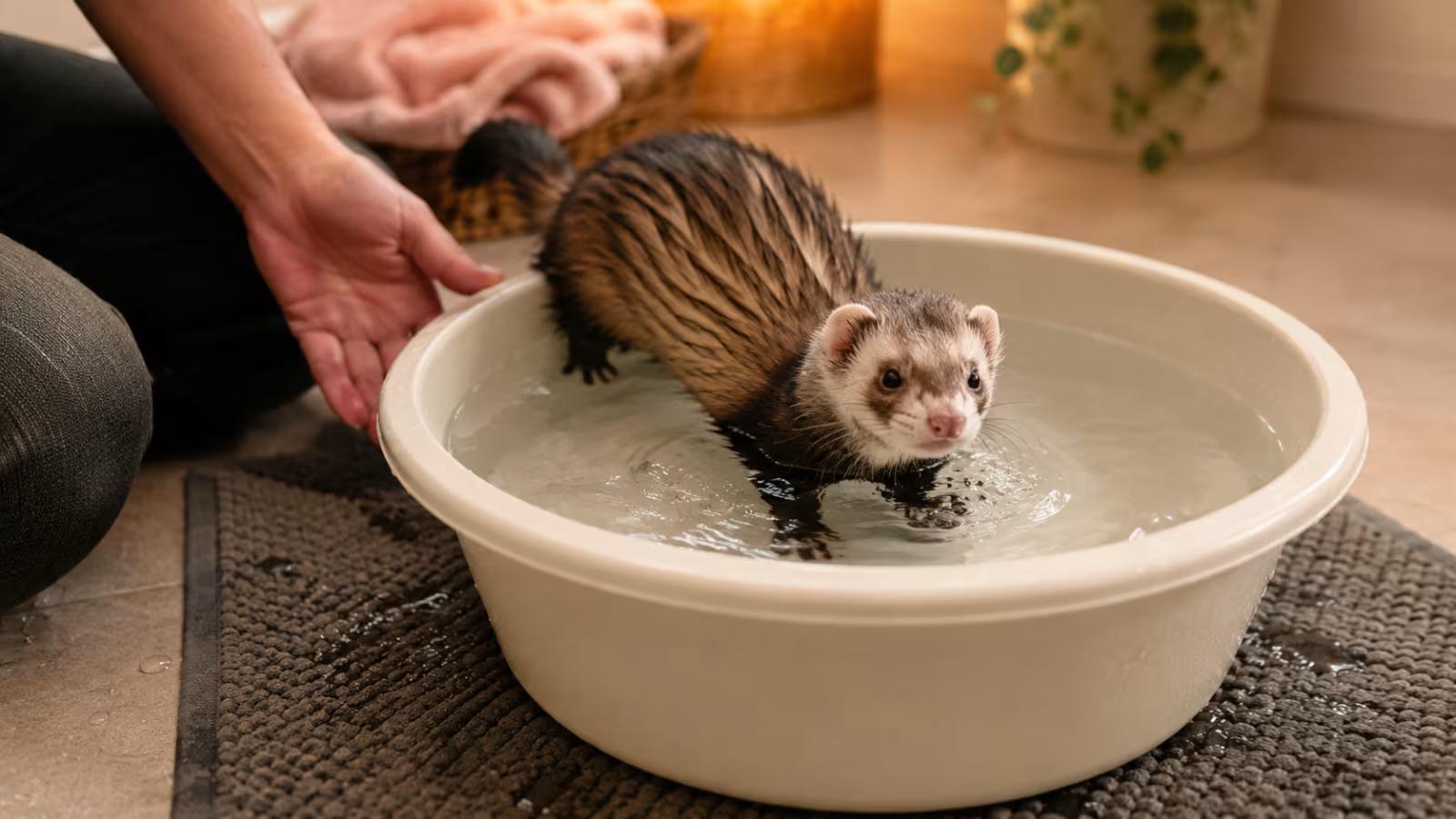
Reading your ferret's body language is the most reliable way to know whether a swimming session should continue or end.
A relaxed ferret typically shows calm paddling, curious sniffing at the water's surface, and a willingness to return after a short break. These signals suggest the ferret feels safe and can be allowed to keep playing under supervision.
A stressed ferret often shows the opposite: frantic scratching at the container's sides, rapid breathing, trembling, freezing in place, or loud vocalizing. Any of these signs means the session should stop immediately, even if it just started.
Swimming vs. Bathing: Why They're Different
Swimming and bathing are often confused, but they serve completely different purposes and shouldn't be treated the same way.
Swimming is optional enrichment that some ferrets enjoy and others don't. Bathing, by contrast, is a hygiene task that should only happen when a ferret is genuinely dirty or has come into contact with something that needs to be washed off.
Ferrets produce natural skin oils that protect their coat and skin. Bathing too often strips these oils away, which triggers the skin to overproduce oil in response, often making a ferret's natural musk smell stronger rather than weaker. Most healthy ferrets need only occasional baths, and some rarely need one at all.
Common Mistakes Owners Make With Ferret Swimming

A large share of water-related incidents come down to a handful of avoidable errors. Recognizing them ahead of time makes water play far safer for your pet.
- Assuming every ferret wants to swim
- Using water that's too cold, too hot, or too deep
- Leaving a ferret unattended near any water source
- Skipping a thorough dry-off afterward
Avoiding these mistakes takes very little extra effort and dramatically lowers the risk of stress or injury during water play.
Should You Let Your Ferret Swim?
For most healthy ferrets, occasional supervised swimming in shallow lukewarm water is a safe option, but it's never a requirement. Plenty of ferrets live happy, fully enriched lives without ever getting wet on purpose.
The decision should always come down to your individual ferret's personality. A confident, curious ferret that approaches water calmly can enjoy occasional splash sessions as one of several enrichment activities. A nervous or fearful ferret does just as well with tunnels, toys, and interactive play instead.
What matters most isn't whether your ferret swims. It's whether your ferret feels safe, supervised, and free to make that choice for itself.
Conclusion
Ferrets are natural paddlers thanks to their mustelid heritage, but swimming ability doesn't mean every ferret wants or needs to get wet. Some genuinely enjoy supervised water play, while others are happier staying completely dry.
The safest approach is to introduce water gradually, keep sessions short and shallow, and always let your ferret's body language guide the experience. Respecting that choice, rather than forcing it, is what keeps swimming a positive and safe activity rather than a risky one.