You walk over to the tank and your betta is lying on his side, struggling to stay upright. Your stomach drops. Is he dying? That panic is completely understandable, and honestly, very common among betta owners.
The good news is that a betta fish swimming sideways is often a sign of swim bladder disorder, which is treatable in most cases. It looks alarming, but it doesn't always mean the worst. The key is figuring out why it's happening so you can act quickly.
This guide walks you through every likely cause, how to tell them apart, and exactly what to do, with real numbers, not vague advice.
What Does It Mean When a Betta Fish Swims Sideways?
Normal vs. Abnormal Swimming Behavior in Betta Fish
A healthy betta swims horizontally with effortless control, darting, hovering, patrolling the tank. They might rest near the bottom or float near the surface, but their body stays level. When something disrupts that balance, you'll notice it immediately.
Sideways swimming, listing to one side, floating involuntarily, or sinking without trying, these are all signs of abnormal buoyancy. They're not normal resting positions.
| Behavior | Normal? | Notes |
|---|---|---|
| Resting on a leaf or near the bottom | ✓ Normal | Bettas rest often, especially at night[1] |
| Floating at the surface occasionally | ✓ Normal | Labyrinth organ use, breathing surface air |
| Lying sideways, unable to right themselves | ✗ Abnormal | Swim bladder or water quality issue |
| Floating sideways at the surface constantly | ✗ Abnormal | Positive buoyancy, swim bladder overinflated |
| Sinking to the bottom and struggling to rise | ✗ Abnormal | Negative buoyancy, swim bladder underinflated |
| Tilted or listing to one side while swimming | ✗ Abnormal | Loss of equilibrium, multiple possible causes |
How the Swim Bladder Controls Buoyancy
When the swim bladder is functioning properly, a betta can effortlessly hover at any water level. When it's disrupted, by pressure from a full gut, infection, injury, or poor water quality, the fish loses that precise buoyancy control.
That's when you see them struggling to maintain a normal position. It's physically exhausting for them, which is why affected fish often look lethargic and stop eating.
Is Sideways Swimming Always a Sign of Swim Bladder Disorder?
Not always. Swim bladder disorder is the most common cause, but sideways swimming can also come from ammonia toxicity, severe temperature shock, bacterial infection, or a neurological response to stress. The organ itself may be fine, but something else is disrupting the fish's ability to control its body.
That's why diagnosis matters before treatment. Treating for constipation when the real problem is ammonia poisoning won't help, and might waste precious time.
7 Causes of Sideways Swimming in Betta Fish (Ranked by Likelihood)
1. Constipation and Overfeeding
How digestive blockage compresses the swim bladder
This is the most common cause by a wide margin. When a betta is overfed, or fed foods that expand after swallowing, like freeze-dried bloodworms or brine shrimp, the digestive tract fills up and physically presses against the swim bladder. That compression throws off the gas regulation inside the organ.
The result is a fish that can't control where it floats. Sometimes they bob at the top; other times they sink and struggle to rise.
Signs: bloating, pinecone scales, refusal to eat
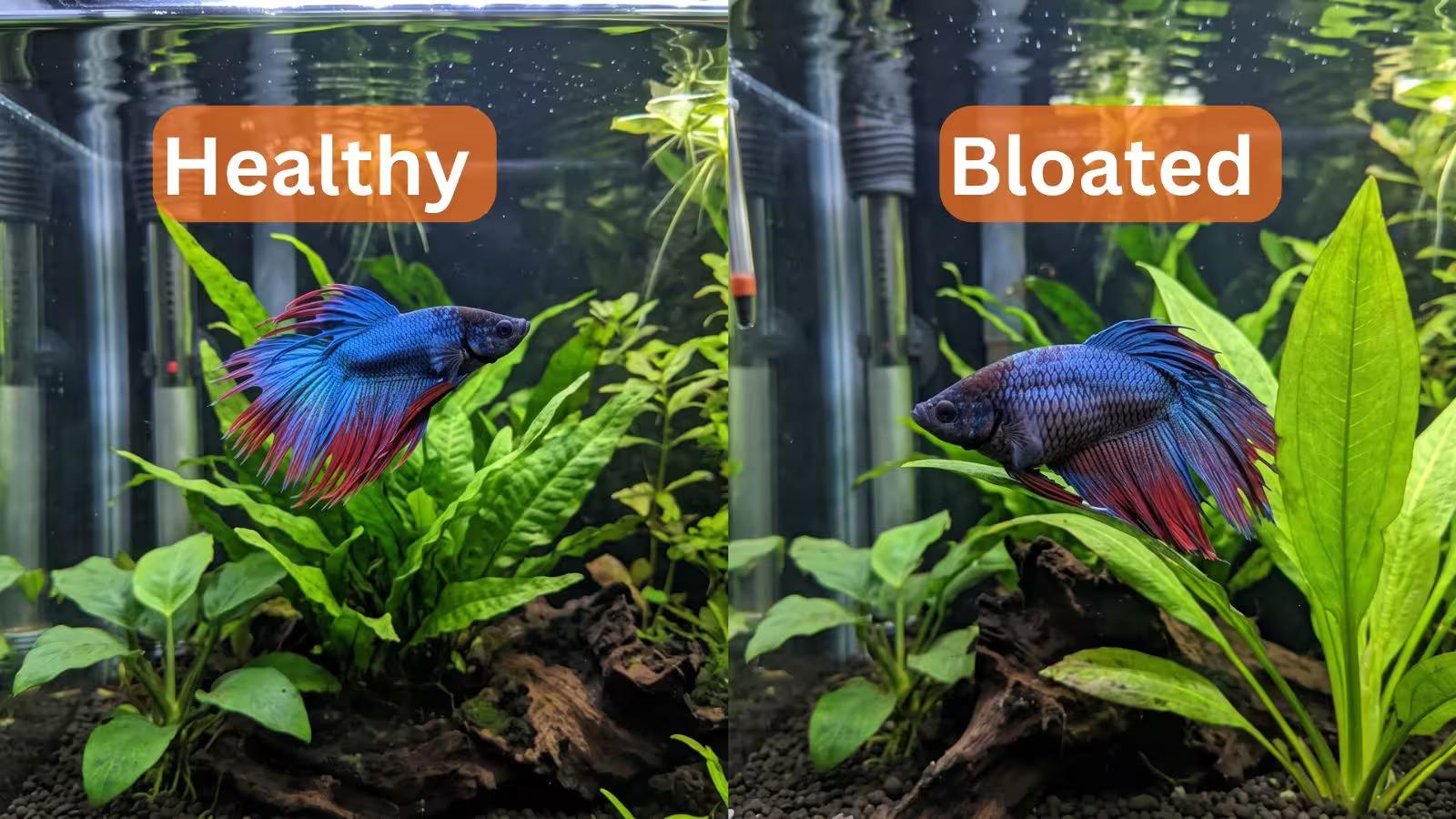
A constipated betta often looks visibly bloated, rounder than usual, especially toward the belly. You might also notice the scales starting to lift slightly outward, like a pinecone. If left untreated, that progresses into dropsy, which is a much more serious condition.
Appetite usually drops when a betta is constipated. If your fish is ignoring food it normally goes crazy for, that's a significant clue.
2. Poor Water Quality (Ammonia & Nitrite Toxicity)
Safe water parameters for betta fish (exact numbers)
| Parameter | Safe Range for Bettas | Danger Zone |
|---|---|---|
| Ammonia | 0 ppm | Any reading above 0 |
| Nitrite | 0 ppm | Any reading above 0 |
| Nitrate | Under 20 ppm | Above 40 ppm |
| pH | 6.5–7.5 | Below 6.0 or above 8.0 |
| Temperature | 76–82°F (24–28°C) | Below 72°F or above 86°F |
| Oxygen levels | Adequate surface agitation | Stagnant, no surface movement |
How ammonia toxicity disrupts the nervous system and balance
Ammonia toxicity is sneaky. Your fish might look physically fine while ammonia is quietly damaging its gills, nervous system, and internal organs. Sideways swimming or erratic movement is often the first visible sign that ammonia levels have crossed a threshold the fish can no longer tolerate.
Test your water before doing anything else. If you haven't cycled the tank, or it's been weeks since a water change, water quality is likely the culprit, not swim bladder disorder. Use the API Freshwater Master Test Kit for accurate readings; test strips are far less reliable.[3]
3. Sudden Water Temperature Fluctuation
Ideal temperature range: 76–82°F — why it matters
Bettas are tropical freshwater fish from Southeast Asia. Their bodies are built for warm, stable water. A sudden drop, even by 5–6°F - can cause temperature shock, which looks a lot like swim bladder disorder: loss of balance, lethargy, floating sideways.
The difference is that temperature-related issues usually resolve quickly once the temperature is corrected. Bettas don't have the metabolic resilience of cold-water fish, and sustained cold temperatures suppress their immune system dramatically.
Signs of temperature shock vs. swim bladder disorder
| Symptom | Temperature Shock | Swim Bladder Disorder |
|---|---|---|
| Onset | Sudden, after temp change | Gradual or after feeding |
| Lethargy | Severe, immediate | Moderate, ongoing |
| Appetite | Completely lost | Often reduced |
| Improvement after temp correction | Yes, within hours | No, needs treatment |
| Bloating visible | Unlikely | Often present (if constipation-related) |
4. Bacterial or Internal Infection
How to tell infection from simple swim bladder disorder
Bacterial infection usually comes with additional symptoms beyond sideways swimming. Look for visible fin deterioration, unusual color loss, pale or reddened gills, swelling in the abdomen, and clamped fins. A fish with simple swim bladder disorder from constipation usually still looks healthy otherwise.
If your betta is swimming sideways AND looks visibly unwell in other ways, infection should be your first suspicion, especially if water parameters are normal. Learn more about identifying these conditions in our full guide to Betta Fish Diseases and Cures.
When bacterial treatment is necessary
Fasting and Epsom salt baths won't resolve a bacterial infection. If symptoms persist after 5–7 days despite clean water and proper treatment protocols, antibiotic treatment becomes necessary. This is also the point at which consulting an aquatic vet is genuinely worthwhile.
5. Physical Injury or Trauma
Bettas are curious and sometimes reckless. A hard collision with a decoration, filter intake, or another fish can physically damage the swim bladder. Injury-related buoyancy issues often appear suddenly after a visible incident, or after introducing tank mates.
The injury itself may not be visible externally. Watch for signs like one-sided listing that developed after a specific event, along with changes in behavior or hiding. Recovery from physical trauma can take weeks and depends heavily on the severity of the impact.
6. Parasitic Infection
Internal parasites - including Hexamita and various worm species, can cause weight loss, abnormal swimming, and digestive disruption that mimics swim bladder disorder. Parasitic infections are more common in fish sourced from overcrowded pet store tanks or those fed live foods with inconsistent sourcing.
A telltale sign is significant weight loss alongside the balance issues, combined with a normal appetite. The fish keeps eating but keeps losing mass. That pattern points toward parasites, not constipation.
7. Genetic or Congenital Swim Bladder Defect
If your betta has always had trouble staying level, even as a young fish in a healthy tank, a congenital defect is likely the explanation. This isn't a failure on your part. It's a known issue in certain heavily line-bred varieties.
How to Diagnose Why Your Betta Is Swimming Sideways
5-Minute Visual Triage Checklist
Before doing anything, spend five minutes observing and checking. This narrows down the cause fast.
- Is the belly visibly swollen or rounded? → Likely constipation
- Are the scales lifting outward like a pinecone? → Possible dropsy, urgent
- Did sideways swimming start suddenly after a temperature drop? → Temperature shock
- Is the fish showing fin rot, color loss, or clamped fins? → Possible bacterial infection
- Is the tank uncycled or overdue for a water change? → Test water immediately
- Has the fish been eating heavily or fed freeze-dried foods recently? → Constipation most likely
- Is the fish young and has always had balance issues? → Possible congenital defect
Testing Your Water: What to Check First
- Shake both the ammonia and nitrite reagent bottles for 30 full seconds before use.
- Fill the test tube to the 5ml mark with tank water.
- Add the specified drops for each test, cap, and shake for 5 seconds.
- Wait the full development time (ammonia: 5 mins, nitrite: 5 mins).
- Compare against the color chart in bright natural light, not under aquarium lighting, which distorts colors.
If the visual triage doesn't give you a clear answer, water quality is almost always worth ruling out first, especially if you can't point to overfeeding as the cause.
Using the API Freshwater Master Test Kit: exact steps
The API Freshwater Master Test Kit is the most reliable option for home testing. Test strips give rough approximations, they're not accurate enough when you need exact readings during a health crisis.
Interpreting results: ammonia 0, nitrite 0, nitrate under 20 ppm
Any ammonia or nitrite reading above 0 ppm is a problem. Even 0.25 ppm of ammonia is stressful and damaging to a betta. Nitrate under 20 ppm is the target, if it's creeping above 40 ppm, do a partial water change immediately.[3]
Floating Sideways vs. Sinking to the Bottom: What Each Means
| Symptom | Likely Cause | First Action |
|---|---|---|
| Floating sideways at the surface | Positive buoyancy - swim bladder overinflated (often constipation) | Fast for 48 hours |
| Sinking and struggling to rise | Negative buoyancy - swim bladder deflated (infection or injury) | Test water, check for other symptoms |
| Tilting to one side while swimming | Loss of equilibrium - neurological or internal pressure | Full water test + observation period |
| Rolling completely onto back | Severe case - organ failure or extreme toxicity | Emergency water change, consider vet |
Is Your Betta Bloated? Checking for Constipation vs. Dropsy
This is one of the most important distinctions to make early. Constipation causes mild belly swelling, the fish looks rounder but the scales stay flat. Dropsy causes the entire body to swell and the scales to protrude outward. That pinecone appearance is a clinical sign of organ failure and requires an entirely different response.
Run your eyes along the fish's side under good lighting. Flat scales with a swollen belly = likely constipation. Protruding scales = dropsy. Get familiar with both, the difference matters enormously for treatment.
Step-by-Step Treatment for Each Cause
Treating Constipation: Fasting Protocol and Daphnia Method
How long to fast a betta (48–72 hours rule)
Fasting is the first treatment for constipation-related swim bladder issues, and it works in most mild cases. Withhold all food for 48–72 hours. This gives the digestive system time to clear the blockage and relieve pressure on the swim bladder.
This sounds harsh, but bettas handle short fasting very well. A healthy fish in warm, clean water can go over a week without food safely. If you're worried, our guide on How Long Can Betta Fish Go Without Food covers this in full detail.
Feeding live daphnia as a natural laxative
After the fasting period, offer live or frozen daphnia as the first meal back. Daphnia works as a gentle natural laxative for bettas, it helps move things along without stressing the fish further. Skip the pellets and freeze-dried foods for at least a few more days.
Epsom Salt Bath: Exact Dose, Method, and Duration
1 tsp per gallon - how to prepare the bath correctly
- Fill a clean container with 1 gallon of dechlorinated water matched to the betta's tank temperature.
- Dissolve 1 level teaspoon of plain Epsom salt (no added fragrances) into the water completely.
- Acclimate your betta by floating it in the bath container for 5 minutes first.
- Place the betta in the Epsom salt bath.
- Stay nearby and watch carefully throughout.
Duration: 10–15 minutes, max 3x per day
Keep each bath to 10–15 minutes. You can repeat this up to three times per day, but give at least 4 hours between sessions. Return the fish to clean tank water between baths, do not leave it in the Epsom solution for extended periods.
Warning signs to stop the bath immediately
- Fish goes completely limp or stops moving
- Color suddenly fades dramatically
- Rapid gill movement or gasping at the surface
- Fish rolls onto its back and stops righting itself
If any of these occur, move the fish back to the main tank immediately.
Emergency Water Change Protocol for Ammonia/Nitrite Spikes
- Prepare dechlorinated water at the exact same temperature as the tank, temperature matching is critical.
- Add Seachem Prime to the new water at the recommended dose. Prime detoxifies ammonia and nitrite within minutes, buying time while the biological filter recovers.
- Remove 25% of the tank water and replace with the prepared water. For severe spikes (ammonia above 1 ppm), do 50%.
- Test again after 2 hours. If levels are still elevated, repeat a 25% change.
- Do not change more than 50% at once, sudden shifts in water chemistry create additional stress.
Using Seachem Prime to detoxify ammonia instantly
Seachem Prime is worth keeping in your fishkeeping kit at all times. It doesn't remove ammonia, it converts it to a non-toxic form that beneficial bacteria can still process. This is especially useful during tank cycling problems or after discovering an unexpected ammonia spike.[3]
25% vs. 50% water change: which situation calls for which
For ammonia readings of 0.25–0.5 ppm, a 25% water change combined with Seachem Prime is usually sufficient. For readings above 1 ppm, do 50% - the situation is more urgent. Always use a dechlorinator. Straight tap water contains chlorine and chloramine that will stress a sick fish even further.
Fixing Temperature Problems with the Fluval Betta Heater
If temperature shock is the likely cause, the priority is warming the tank back up, but slowly. Sudden reheating causes its own stress.
How to raise temperature safely (1°F per hour max)
Raise the temperature no faster than 1°F per hour. If you have an adjustable heater, turn it up incrementally rather than jumping straight to the target. The Fluval Betta Heater is preset to 78°F and works well for smaller tanks, it's a solid beginner option that removes the guesswork. Always use an aquarium thermometer to verify actual temperature, not just the heater's setting.
Treating Bacterial Infection: When and How
Indian almond leaves as a natural antibacterial aid
Indian almond leaves (Catappa leaves) release tannins and humic acids into the water that have mild antibacterial and antifungal properties. They also slightly lower pH, which bettas prefer. Placing one or two leaves in the tank supports immune function and reduces bacterial load naturally without disrupting the nitrogen cycle.
When to graduate to antibiotic treatment
If the betta shows no improvement after 5–7 days of clean water, stable temperature, and supportive care, or if symptoms are clearly worsening - antibiotic treatment is the next step. Use a product specifically formulated for freshwater fish bacterial infections. Follow dosing instructions exactly and complete the full course, even if the fish looks better partway through.
When to Worry: Emergency Warning Signs
Signs Your Betta Needs Veterinary Attention
Most swim bladder cases don't require a vet. But some situations genuinely do, and recognizing them early makes a difference.
- No improvement after 7–10 days of proper treatment
- Visible scale protrusion (pinecone appearance) - possible dropsy
- Fish has completely stopped eating for more than 5 days
- Open sores, ulcers, or red streaking visible on the body
- Extremely rapid gill movement suggesting internal damage
- Fish rolled completely onto its back with no righting response
Aquatic vets exist in most urban areas and can run diagnostics, prescribe antibiotics, and provide palliative care. The cost is often lower than people expect. If you've exhausted home treatment options, finding one is worth the effort.
Dropsy vs. Swim Bladder Disorder: A Critical Distinction
| Feature | Swim Bladder Disorder | Dropsy |
|---|---|---|
| Scale appearance | Flat against body | Raised, pinecone pattern |
| Belly swelling | Mild, localized | Severe, entire body |
| Buoyancy problem | Primary symptom | Secondary to organ failure |
| Prognosis | Often good with treatment | Poor - high mortality rate |
| Cause | Constipation, infection, injury | Bacterial infection, kidney failure |
| Treatment approach | Fasting, Epsom salt, water change | Antibiotics, isolation, palliative care |
Can a Betta Recover from Swim Bladder Disease? Realistic Prognosis
The honest answer is: most bettas with swim bladder disorder do recover, especially if caught early and the cause is environmental. Don't give up on a fish that's still eating and showing some fight. The ones that genuinely can't be saved are usually those where organ failure or severe infection was already advanced before treatment began.
How to Prevent Sideways Swimming from Recurring
Correct Feeding Schedule and Portion Size
How many pellets per feeding (2–3 pellets, twice daily)
Two to three high-quality pellets, twice daily, is the right amount for most adult bettas. Their stomach is roughly the size of their eye, that's genuinely not much. Overfeeding is the most preventable cause of swim bladder disorder, and it's also one of the most common mistakes in betta keeping.
Why a weekly fasting day matters
Building a fasting day into your betta's weekly routine, one day per week with no food - gives the digestive system time to clear itself fully. Many experienced keepers swear by this practice as a simple way to prevent constipation-related issues before they start. It's not harmful; it's genuinely beneficial.
Maintaining Water Quality: The Nitrogen Cycle Explained Simply
Beneficial bacteria, biological filtration, and tank cycling
Beneficial bacteria live in your filter media and substrate. They're the reason a cycled tank stays safe even between water changes. Never replace all filter media at once, you'll crash the cycle and restart ammonia buildup from scratch. Rinse filter media in old tank water only, never tap water. Chlorine kills the bacteria.
Weekly maintenance checklist for a healthy betta tank
- Change 20–30% of the water weekly using dechlorinated, temperature-matched water
- Vacuum the substrate to remove uneaten food and waste
- Test ammonia and nitrite once per week
- Rinse filter media in old tank water (not tap) every 2–4 weeks
- Check heater output against thermometer reading
- Remove any uneaten food within 2–3 minutes of feeding
For a deeper dive into filtration needs, see our article on Do Betta Fish Need a Filter.
Stable Temperature: Heater Setup and Thermometer Use
A reliable aquarium heater paired with a separate thermometer is non-negotiable for bettas. Heaters can malfunction without obvious signs, only a thermometer tells you the actual water temperature. Check it every time you feed. Catching a heater failure early can prevent temperature shock entirely.
Aim for 78–80°F as your target. Stability matters as much as the actual temperature, a tank that swings between 74°F at night and 82°F during the day is more stressful than one that holds steady at 76°F.
Reducing Fish Stress in the Aquarium
Chronic stress weakens a betta's immune system and makes it far more susceptible to infection and disease. Stressors include aggressive tank mates, high-flow filters, bright lighting with no cover, and reflections triggering territorial responses.
Adding floating plants, hiding spots, and a gentle sponge filter, rather than a powerful hang-on-back, makes a significant difference to long-term betta health. A relaxed fish in a well-set-up tank handles health challenges much better than a constantly stressed one. You can learn more about compatible plants in our guide to Best Plants for Betta Fish.
Common Beginner Mistakes That Cause Sideways Swimming
Overfeeding: The #1 Cause Most Owners Miss
It bears repeating because it's that common. Bettas perform. They flare, swim to the front, and look hungry even when they're not. New owners interpret this as genuine hunger and feed accordingly, often multiple times a day, in generous portions.
The result is chronic constipation, recurring swim bladder issues, and degraded water quality from uneaten food decomposing. Stick to the schedule even when the fish "asks" for more.
Skipping the Tank Cycle Before Adding Your Betta
Placing a betta in an uncycled tank is one of the most common - and damaging - beginner mistakes. Without established beneficial bacteria, ammonia builds to toxic levels within days. The fish often looks fine initially, then crashes suddenly. If your betta developed health issues within the first few weeks of being in a new tank, an incomplete nitrogen cycle is the most likely explanation.
Using a Tank That Is Too Small (Under 5 Gallons)
Small tanks are harder to keep stable, temperature fluctuates more, ammonia spikes faster, and the water quality deteriorates quickly between water changes. Bettas need a minimum of 5 gallons to thrive. Bowls and tiny cubes sold as "betta tanks" are unfortunately not suitable for long-term health, regardless of what the packaging suggests.
Not Using a Heater in a Tropical Freshwater Aquarium
Room temperature in most homes drops at night or seasonally. Even if your room feels warm, ambient air temperature and aquarium water temperature aren't the same thing. Bettas kept in unheated tanks spend their lives chronically cold, their immune systems are suppressed, digestion slows, and they become far more vulnerable to every illness, including swim bladder disorder.
Myth-Busting: What You've Heard That Isn't True
"Swim Bladder Disease Always Means Your Betta Will Die"
This is the most damaging myth out there because it leads owners to give up on treatable fish. The majority of swim bladder cases are caused by constipation, a very fixable problem. Even bacterial swim bladder infections, while more serious, have a reasonable recovery rate when caught early. Don't assume the worst based on the name alone.
"Epsom Salt Will Cure Any Case of Sideways Swimming"
Epsom salt works specifically for constipation-related buoyancy problems. It does nothing for bacterial infections, temperature shock, genetic defects, or physical trauma. Using it in those situations wastes time that could be spent on the correct treatment. Diagnosis first, then treatment.
"Bettas Don't Need a Heater in Warm Climates"
Even in warm climates, nighttime temperatures and air conditioning can drop aquarium water below safe levels. A heater provides stability, that's the real value. Consistent temperature matters more than average temperature.
"A Sideways Betta Is Just Sleeping"
Bettas do rest in unusual positions, on leaves, near the bottom, tucked into corners. But a betta that stays sideways for extended periods, cannot right itself, or shows this behavior repeatedly is not sleeping. If you're not sure, check whether the fish responds to your presence. A sleeping betta wakes up quickly when approached. A sick one doesn't.[1] For more on betta sleep behavior, see our detailed article on Do Betta Fish Sleep at Night.
Troubleshooting Guide: My Betta Is Still Swimming Sideways After Treatment
No Improvement After Fasting - Next Steps
- Complete the Epsom salt bath protocol (1 tsp/gallon, 10–15 minutes, up to 3x per day) for 3–5 days.
- Offer daphnia - live or frozen - as the first post-fast meal. Skip pellets and freeze-dried foods.
- Test water parameters regardless of assumptions. Rule out ammonia or nitrite elevation.
- If still no improvement after 7 days, consider that the cause may be bacterial rather than digestive.
- Begin antibiotic treatment if bacterial infection symptoms are present (see symptoms listed above).
Water Parameters Are Fine but Betta Is Still Losing Balance
If your water is clean, temperature is stable, and the fasting protocol hasn't helped, the issue is likely internal. This is where a bacterial or parasitic cause should be seriously considered. Look for any additional symptoms, even subtle ones like slightly clamped fins, reduced color, or increased hiding. These often confirm an infection that needs targeted treatment.
Betta Has Recovered Before but Keeps Relapsing
Recurring swim bladder issues almost always trace back to one of two root causes: chronic overfeeding, or a persistent water quality issue. Review your feeding routine honestly. Are you sticking to 2–3 pellets twice daily? Are you including a weekly fasting day? Is your tank fully cycled with stable parameters? Fixing the recurring trigger, not just the symptom, is the only way to stop the cycle of relapse.
Frequently Asked Questions
How long does it take for a betta to recover from swim bladder disorder?
It depends on the cause. Constipation-related cases usually clear up within 3–7 days with fasting and Epsom salt baths. Water quality issues can resolve in 24–48 hours once parameters are corrected. Bacterial infections typically take 1–3 weeks of treatment. Congenital or injury-based cases may be permanent, but the fish can still live comfortably with the right setup.
Can I leave my betta in the main tank during treatment?
For fasting and water changes, yes - keep the fish in the main tank. Epsom salt baths are done in a separate container only. Never add Epsom salt directly to the main aquarium, it will affect the water chemistry and can harm beneficial bacteria in the filter.
Is my betta in pain when it swims sideways?
Fish do experience stress, and an inability to control buoyancy is physically exhausting. Whether they experience pain in the way mammals do is still debated in aquatic science. What's clear is that the underlying cause creates genuine physiological stress. Treating it quickly - whatever the cause - is the right call both for their welfare and their long-term health.
What foods can cause swim bladder issues in bettas?
Freeze-dried bloodworms and brine shrimp are the main culprits, they expand significantly after swallowing and can cause digestive blockages. Dry pellets fed without pre-soaking also expand internally. Soak pellets in a few drops of tank water for 30 seconds before feeding. Live and frozen foods cause fewer problems because they don't expand the same way.
Can swim bladder disorder in bettas be permanent?
Yes, in some cases. Congenital defects, severe bacterial scarring, or significant physical trauma can cause lasting buoyancy problems. A fish with permanent swim bladder disorder can still live well, the key is a shallow tank (under 6 inches of water depth) so the fish doesn't exhaust itself reaching the surface to breathe, along with careful feeding and pristine water quality.
Does swim bladder disorder always cause sideways swimming?
No. It can also cause a fish to sink to the bottom and struggle to rise (negative buoyancy), float helplessly at the surface without the ability to dive (positive buoyancy), or list consistently to one side during otherwise normal swimming. Sideways swimming is one presentation, not the only one. All of these patterns warrant the same diagnostic approach.
Should I euthanize a betta with chronic swim bladder disorder?
Only if the fish is in continuous distress, has stopped eating entirely for more than two weeks, and shows no response to any treatment. A betta with a permanent buoyancy issue that still eats, responds to its owner, and maintains a quality of life, even if it can't swim perfectly, doesn't need to be euthanized. Adapt the environment to the fish, not the other way around.
Once you know the cause, sideways swimming in bettas becomes much less frightening. Most cases are environmental, constipation from overfeeding, water quality issues from incomplete cycling, or temperature instability, all fixable problems. The fish that don't recover are usually the ones where treatment was delayed too long or the cause was never properly identified.
Start with the triage checklist, test your water, and work through the appropriate treatment. Most bettas bounce back surprisingly well when the underlying problem is addressed correctly.
References
- University of Florida IFAS Extension, Ornamental Fish Health and Disease Management. Available at: https://edis.ifas.ufl.edu
- Fishbase.org — Betta splendens: Species Summary and Physiology. Available at: https://www.fishbase.se/summary/Betta-splendens.html
- Aquarium Co-Op — Aquarium Water Quality and the Nitrogen Cycle. Available at: https://www.aquariumcoop.com/blogs/aquarium/nitrogen-cycle
- Yanong, R.P.E. — Bacterial Diseases of Fish. University of Florida IFAS Extension. Available at: https://edis.ifas.ufl.edu/fa032