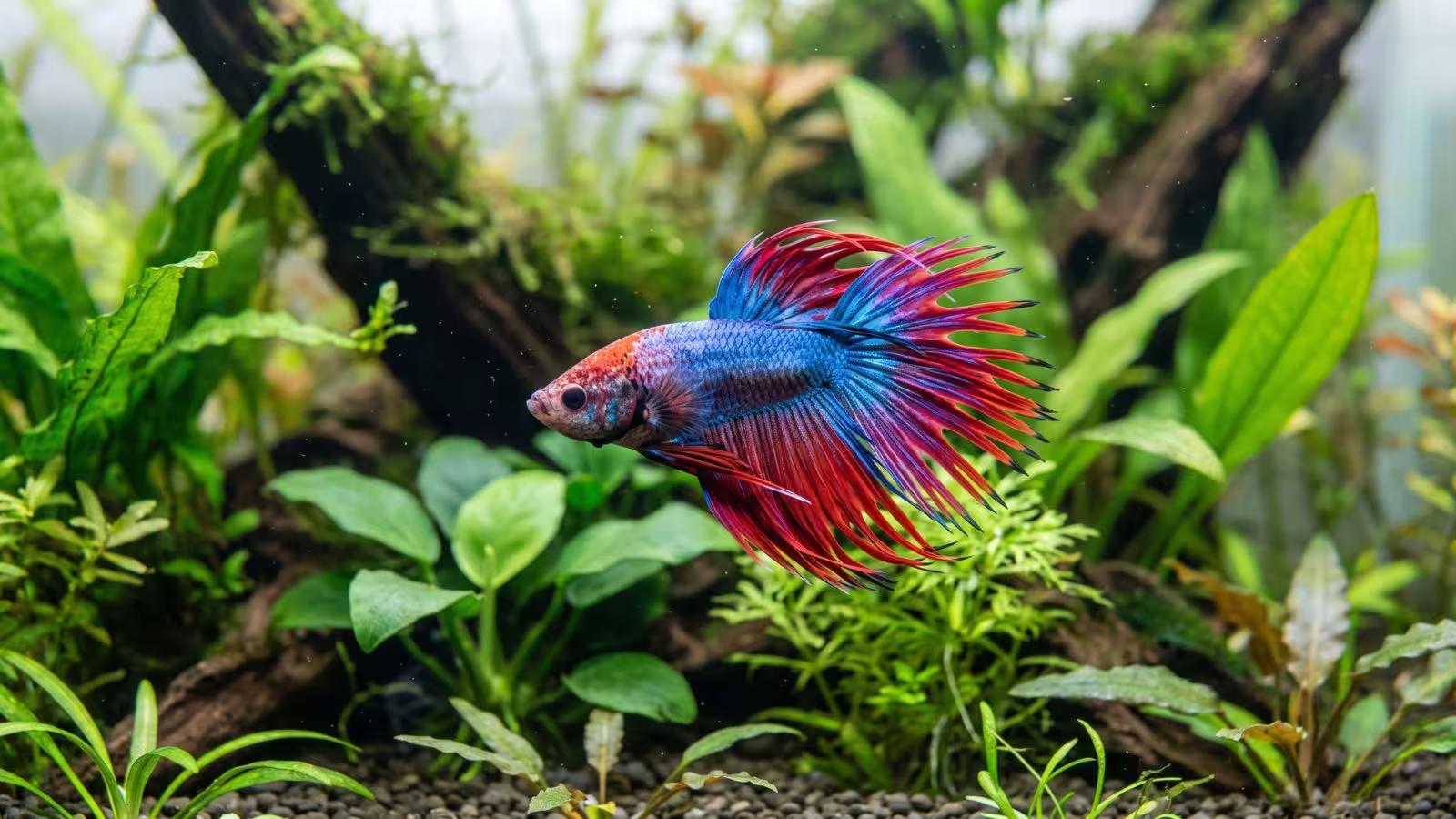
You noticed your female betta has a noticeably round, swollen belly. Maybe she looks bigger than usual, or something just seems off. Now you're searching "pregnant betta fish" and wondering if she's okay. That's completely understandable.
Here's the good news: a swollen belly in a female betta is almost always normal. But the word "pregnant" is actually a bit misleading, and understanding what's really happening will help you make the right decisions for her.
This guide covers everything from identifying a gravid female and understanding the spawning process, to caring for eggs, raising fry, and knowing when a swollen belly is actually a warning sign instead.
Can Betta Fish Actually Get Pregnant?
The Truth About Betta Fish Reproduction
Betta fish do not get pregnant the way mammals do. They are egg-layers, which means fertilization happens outside the body entirely [1]. The term "pregnant betta fish" is popular because it's how most people describe a female carrying eggs, but the more accurate term is gravid.
A gravid female betta is simply carrying unfertilized eggs inside her body. Those eggs stay unfertilized until a male betta wraps around her during the spawning process and releases sperm simultaneously. Until that moment, no fertilization occurs at all.
One thing that surprises many new owners: a female can become gravid even without a male in the tank. Her body produces eggs naturally as part of her reproductive cycle, whether or not a mate is present.
What "Gravid" Means and Why It Matters
In aquatic biology, gravid simply means a female is carrying eggs. For Betta splendens, this is a normal and healthy biological state. The eggs develop inside the ovaries and gradually fill the lower portion of the abdomen [2].
If no spawning occurs, the female's body will eventually reabsorb those eggs. This is a completely natural process and not harmful. You don't need to do anything special for a gravid female who isn't being bred.
Understanding this distinction matters because it prevents a very common mistake: treating a perfectly healthy gravid female as if she were sick. Many new keepers add medication or change their entire tank setup when they see that rounded belly, and none of that is necessary.
What Does a Pregnant (Gravid) Betta Fish Look Like?
Physical Signs of a Gravid Female Betta
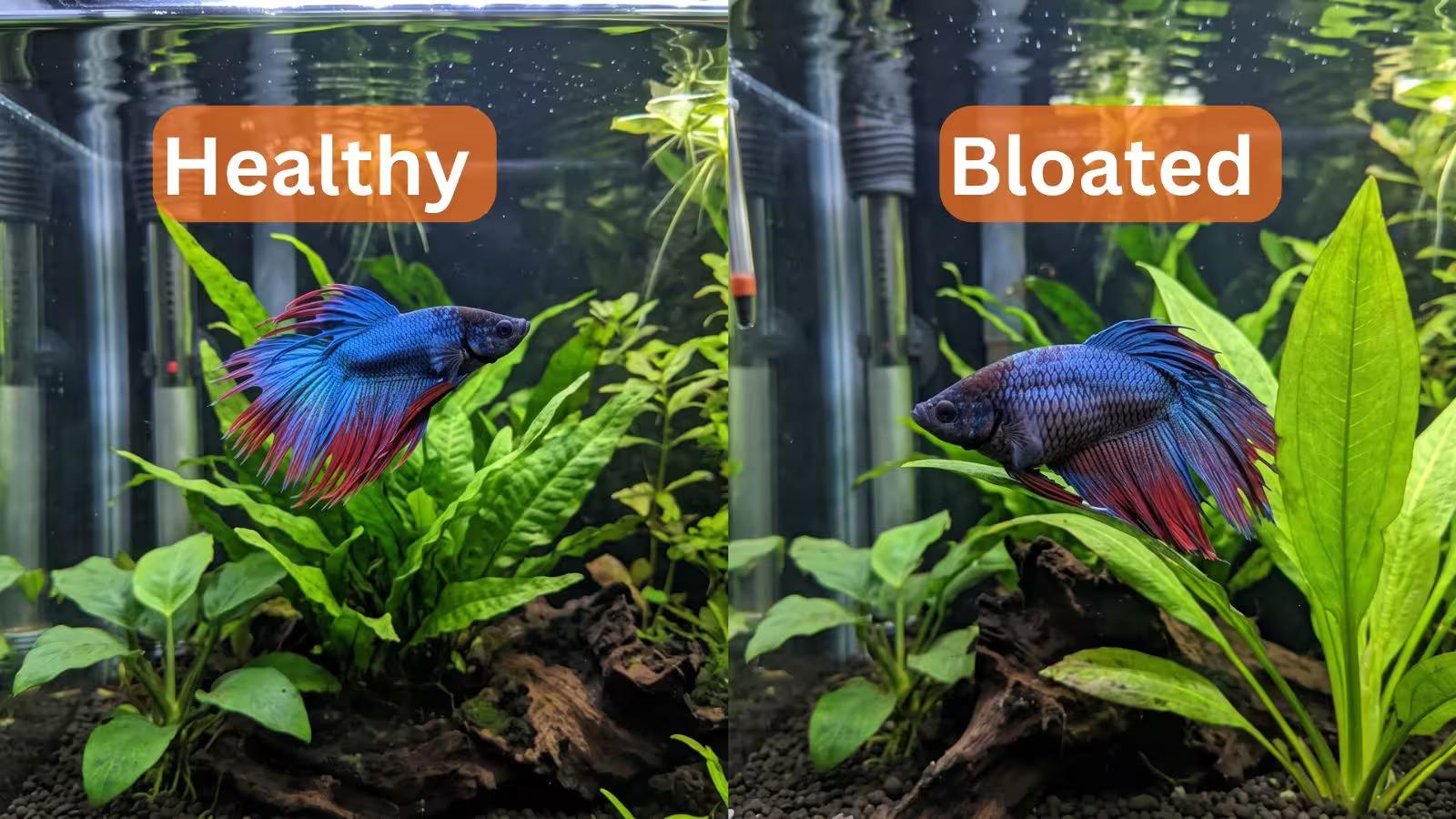
The most obvious sign is a rounded, symmetrical swelling in the lower abdomen, behind the pectoral fins. It looks like a small, smooth bulge, not a distorted or lumpy shape. The belly may look slightly paler or more translucent than the rest of her body, especially if she's carrying a lot of eggs.
The Egg Spot (Ovipositor)
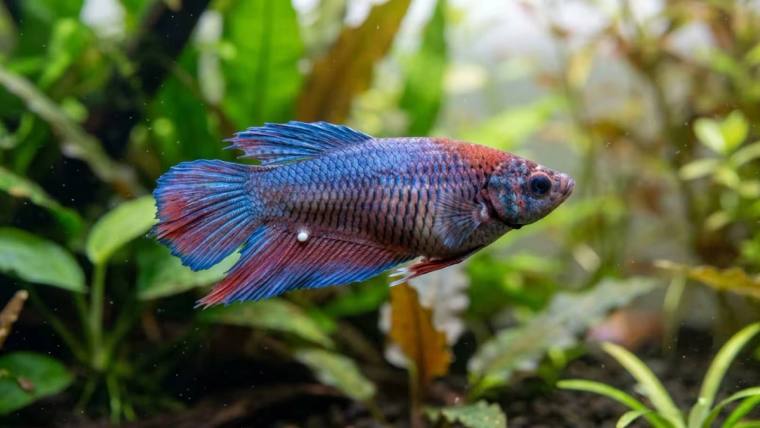
Look closely at the underside of your female, between the ventral fins and the anal fin. You'll notice a tiny white dot. That's the ovipositor, sometimes called the egg spot, and it's the tube through which eggs are released during spawning [3].
This spot becomes more visible when the female is gravid. Not every fish makes it easy to see, but with a flashlight and a calm fish, you can usually spot it. This is one of the most reliable ways to confirm she's carrying eggs and not suffering from something else.
Breeding Stripes (Barring)
When a gravid female is near a male, or sometimes even when she's ready to spawn without one present, you may notice faint vertical dark stripes appear along her sides. These are called breeding stripes or breeding bars.
Don't confuse these with horizontal stress stripes, which run along the length of the body and indicate the fish is frightened or unwell. Breeding stripes run vertically, side to side, and are a positive sign of reproductive readiness.
Body Shape Changes
Female bettas are naturally more compact than males, but a gravid female looks noticeably rounder through the midsection. Her body shape shifts from a streamlined oval to something closer to a teardrop when viewed from above. This is a good visual cue when you're trying to assess her condition without stressing her out by netting her. To learn more about telling the sexes apart, the guide on male vs female betta fish covers the differences in depth.
How to Tell If a Betta Fish Is Pregnant vs Sick
This is where most beginner panic actually comes from. A swollen belly can mean several different things, and getting this wrong leads to either unnecessary stress or, worse, delayed treatment for something serious.
Here's how to read what you're seeing:
| Condition | Belly Shape | Scales | Behavior | Action Needed |
|---|---|---|---|---|
| Gravid (egg-bearing) | Rounded, symmetrical | Flat, normal | Active, may show stripes | None — monitor normally |
| Constipation | Mildly bloated | Flat | Lethargic, not eating well | Fast 24–48 hours |
| Overfeeding / Bloat | Uniformly puffed | Flat | Sluggish, less active | Reduce feeding immediately |
| Dropsy | Severely bloated | Raised, pinecone-like | Very lethargic, clamped fins | Emergency — veterinary care |
| Egg binding | Swollen, not releasing | Flat | Restless, rubbing against objects | Intervention may be needed |
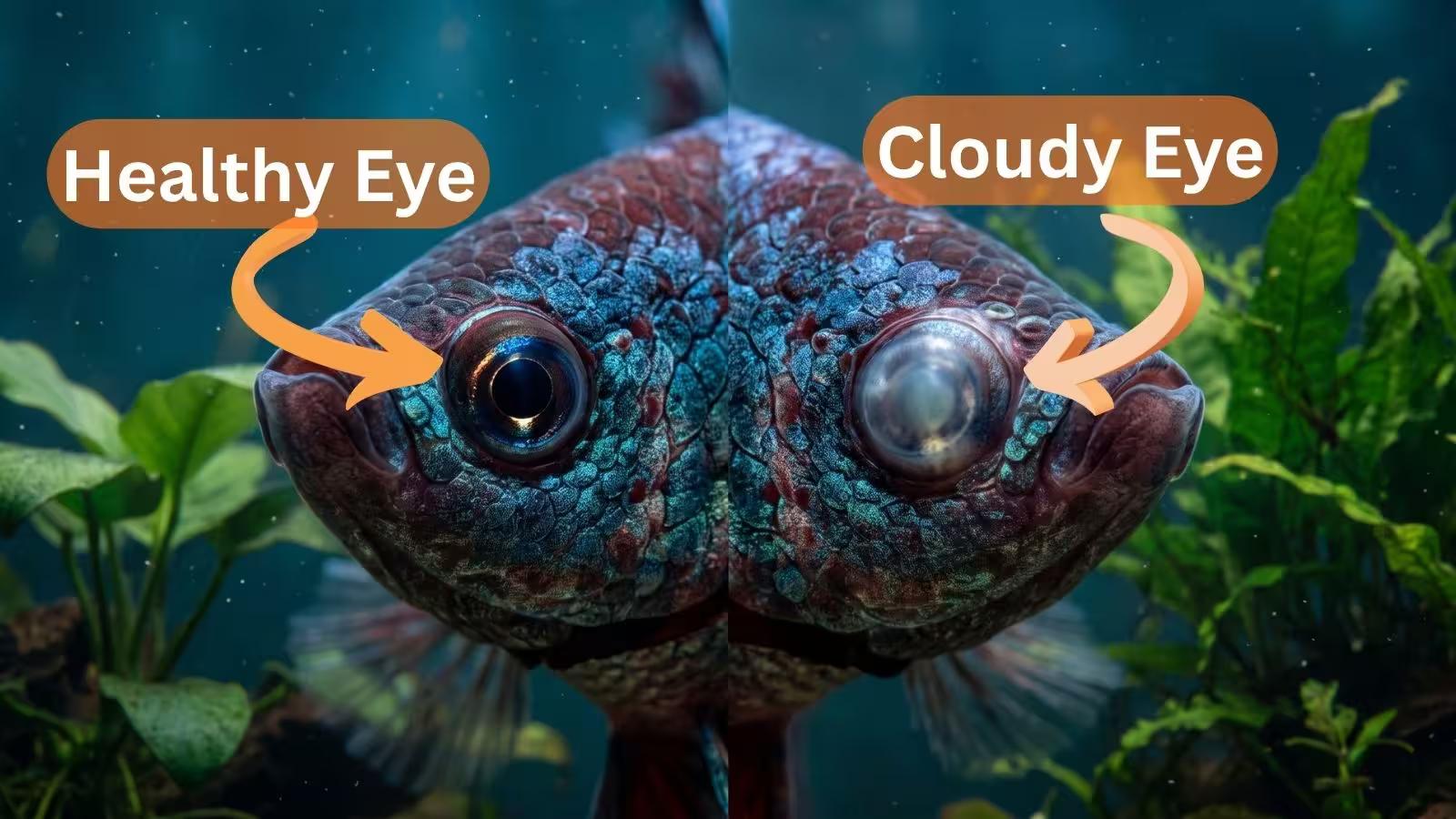
The pinecone-scale appearance of dropsy is the one to watch for most urgently. If your female's scales are sticking out from her body at all, that's an emergency situation, not a pregnancy. Learn more about identifying and treating serious conditions in this guide to betta fish diseases and cures.
The Betta Fish Reproductive Cycle Explained
How Female Bettas Produce Eggs
Female bettas produce eggs through their natural ovarian cycle, similar to many other fish species. Water temperature, nutrition, and environmental cues all play a role in how actively a female produces eggs [2].
A well-fed female in warm, stable water tends to become gravid more regularly than one in poor conditions. If you've recently improved her tank quality or diet, you might notice her belly filling out more noticeably as a result.
The presence of a male, even just within her line of sight, can accelerate her readiness to spawn. Her body picks up on visual and chemical cues from the male and responds by preparing for reproduction.
The Role of the Male Betta in Reproduction
The male's job starts before any physical contact happens. He builds a bubble nest at the surface, which serves as an oxygen-rich nursery for the fertilized eggs. This nest-building is triggered by instinct and breeding readiness [1].
When he senses a gravid female nearby, his courtship display intensifies. He flares his fins, spreads his gill covers, and parades along the divider or tank wall. His colors often become more vivid. This display isn't just showing off; it's a signal to the female that he's ready and capable of caring for the eggs.
Something interesting: a female doesn't need to be physically present for a male to become reproductively active. Just seeing her through a divider can trigger nest-building. I've seen males build impressive bubble nests just from the female being in a separate nearby container for a few days.
The Betta Fish Bubble Nest and What It Means for Breeding
Why Male Bettas Build Bubble Nests
Bubble nests are clusters of air bubbles coated in the male's saliva, built at the water surface. In the wild, bettas live in shallow, warm water with low oxygen levels. A bubble nest keeps eggs close to the surface where oxygen exchange is highest, giving developing embryos the best chance of survival [1].
Males build bubble nests out of biological instinct. A male can build a nest with no female anywhere nearby, and it doesn't necessarily mean spawning is about to happen. It simply means he's healthy, comfortable, and in breeding condition. If your male builds a bubble nest in his regular tank, take it as a good sign about his overall wellbeing. You can read more about why bettas behave this way in the article on do betta fish like bubblers.
What Bubble Nests Look Like
A well-built nest looks like a cluster of foam or tiny bubbles gathered at the surface, usually in a corner or near floating plants. Some males build large, thick nests the size of a palm. Others build small, scattered clusters.
The size of the nest has nothing to do with fertility. Some of the most productive spawning males build modest nests. What matters is that the nest holds together well enough to keep eggs in place after spawning.
Bubble Nest and Eggs After Spawning
Once spawning is complete, the male collects the fertilized eggs in his mouth and carries them to the bubble nest. He repeats this until all eggs are secured. From that point, he guards the nest aggressively, retrieving any eggs or fry that fall out.
The eggs sit inside and just below the bubbles, held in place by surface tension and the male's constant maintenance. He blows new bubbles regularly to replace ones that pop. This is an instinctive behavior that requires no interference from you.
How to Tell If Your Female Betta Is Ready to Spawn
Physical Signs of Breeding Readiness
A female ready to spawn will have a visibly full, rounded abdomen. The egg spot should be clearly visible, appearing as a small white dot near the vent area. Breeding stripes often appear when she's placed near a male, though some females show them even without direct visual contact.
Her overall color may also intensify slightly, similar to the way the male brightens during courtship. This color change is subtle but noticeable if you know your fish well.
Behavioral Signs of a Ready-to-Spawn Female
A receptive female behaves differently near a male. Instead of retreating or showing stress, she'll approach the divider, mirror his movements, and sometimes dip her head slightly downward. That head-down posture is a submission signal that tells the male she's receptive.
She may also show increased interest in the area directly under his bubble nest. If she's hovering near the surface looking upward toward where a nest would normally be built, that's a good behavioral indicator of readiness.
How Long Before a Gravid Betta Lays Eggs
There's no fixed timeline, and this trips up a lot of beginners. A female can hold eggs for weeks without spawning if no male is present. Once introduced to a conditioned male with a bubble nest, spawning usually occurs within 24–72 hours, though some pairs take longer to synchronize.
If no spawning occurs within a week, separate them, rest the female for a few more days, and try again. Rushing the process tends to lead to aggression rather than successful spawning. If no male is ever introduced, the eggs are simply reabsorbed over time, which is completely harmless. For more context on this, the article about can betta fish lay eggs without a male goes into more detail.
How to Set Up a Betta Breeding Tank
Breeding Tank Requirements
A dedicated breeding tank is non-negotiable. Trying to breed bettas in a community setup or the male's regular display tank creates too many variables and almost always fails. A 10-gallon tank is ideal. It gives the pair enough space to spawn comfortably without the male having to chase the female across a large area.
Keep the water level lower than usual, around 5 to 6 inches deep. This makes it easier for the male to retrieve eggs that fall from the nest during and after spawning. A tight-fitting lid is essential because both bettas will jump, especially during the chase phase of courtship.
Water Parameters for Breeding
Water quality for breeding needs to be even more precise than normal betta keeping. Any ammonia or nitrite in the water will stress the pair and suppress spawning behavior entirely.
| Parameter | Ideal Range |
|---|---|
| Temperature | 78–82°F (25.5–27.8°C) |
| pH | 6.5–7.0 |
| Ammonia | 0 ppm |
| Nitrite | 0 ppm |
| Nitrate | Below 10 ppm |
| Water Hardness | Soft to moderately soft (2–10 dGH) |
Warmer water, around 80°F, tends to accelerate spawning behavior noticeably. Indian almond leaves are worth adding to the breeding tank. They release tannins that lower pH slightly, reduce bacterial load, and mimic the natural blackwater environment bettas evolved in. Most experienced breeders consider them almost essential.
Filtration should come from a sponge filter only. A hang-on-back or canister filter will create too much surface agitation, which destroys the bubble nest and makes it impossible for the male to maintain egg placement. If you're unsure whether your current setup is right, the best betta fish tank setup guide covers the fundamentals well.
Plants and Decor for the Breeding Tank
Floating plants like Amazon frogbit or hornwort serve a practical purpose: they give the male an anchor point for building his bubble nest and provide visual cover that reduces stress during courtship. Dense plant coverage along the bottom and sides gives the female places to retreat when she needs a break from the male's attention.
Keep decorations simple and smooth. Sharp edges or rough ornaments will cause fin damage during the inevitable chasing phase of courtship. For aquascape ideas that work well for bettas generally, the betta fish aquarium ideas page has useful inspiration. A floating breeding log or a small cave-like shelter gives the female a refuge the male won't follow her into easily.
The Breeding Divider
Before introducing the pair to the breeding tank together, separate them with a solid or mesh divider for at least 7 to 14 days. This allows the male to build his bubble nest undisturbed and lets the female see his courtship display without risk of injury.
Watch their behavior through the divider. If both are showing interest, flaring gently toward each other, and the female is displaying breeding stripes, they're likely ready. If the female looks stressed, pale, or is hiding constantly, extend the conditioning period before removal.
How to Condition a Female Betta for Breeding
What Is Conditioning and Why It's Critical
Conditioning means feeding both fish high-protein live or frozen foods for 1 to 2 weeks before breeding. This brings the female into peak reproductive condition, improves egg quality, and increases the number of viable eggs she'll carry.
Skipping this step is one of the most common reasons first-time betta breeding attempts fail. A female who isn't properly conditioned may not have enough energy reserves to survive the physical demands of spawning, which is genuinely exhausting for her.
What to Feed a Gravid Betta Fish
Live brine shrimp, bloodworms, and daphnia are the gold standard for conditioning. Feed twice daily, offering only what she can consume in 2 to 3 minutes. Daphnia is particularly useful because it acts as a mild laxative, keeping her digestive system clear before the physical stress of spawning.
High-quality betta pellets can serve as a base diet alongside live foods, but don't rely on them exclusively during conditioning. The protein and fat content in live foods is what actually triggers the hormonal response that signals breeding readiness.
Pre-Breeding Conditioning Checklist:
- Female is at least 4 to 6 months old and fully mature
- Feeding live or frozen food twice daily for 7 to 14 days
- Water parameters stable and within breeding range
- Visible gravid belly and egg spot confirmed
- Breeding tank cycled and water tested
- Male has built an active bubble nest
The Betta Spawning Process, Step by Step
Step 1: Introduction and Courtship Display
Remove the divider or release the female into the breeding tank. Expect an immediate and intense response from the male. He will flare, chase, and display aggressively. This is completely normal behavior, even if it looks alarming to watch.
The female may initially flee and hide. That's fine. She needs to assess him before signaling receptivity. Watch for the first signs of interest from her: approaching rather than fleeing, showing breeding stripes, and the characteristic head-down posture. If she's being severely attacked with no signs of interest within 15 to 20 minutes, separate them and extend the conditioning period.
Step 2: The Spawning Embrace
When the female is ready, she'll swim under the bubble nest. The male wraps his body around hers in what's called the spawning embrace. He squeezes gently, and both fish release eggs and sperm simultaneously, fertilizing the eggs externally [1].
During the embrace, the female may appear completely limp or unresponsive. This is a natural physiological response, not a sign she's being harmed. Many first-time breeders panic and separate the pair at this point, which interrupts the spawning. Don't interfere unless she's being physically injured.
Each embrace lasts 10 to 30 seconds. A full spawning session involves multiple embraces, sometimes 10 to 20 or more, spread over several hours. The female can lay anywhere from 50 to 300 eggs in a single session.
Step 3: Egg Collection by the Male
After each embrace, the male collects the falling eggs in his mouth and carries them to the bubble nest. He's incredibly focused during this phase and will do this repeatedly without rest.
The female may begin helping collect eggs, or she may begin eating them. Both behaviors happen. The female eating eggs is instinctive and doesn't indicate something went wrong. This is one of the reasons her removal becomes necessary shortly after spawning completes.
Step 4: Removing the Female After Spawning
Once the male stops initiating embraces and focuses entirely on the bubble nest, spawning is complete. Remove the female promptly, ideally within a few hours of the final embrace. The male's protective instincts kick in immediately after, and he will attack her aggressively if she approaches the nest [3].
Move the female to a clean, well-maintained tank with good hiding spots and begin recovery feeding with high-quality foods. She'll need several days to a week to recover fully. Check her fins for injury and monitor her closely. For post-spawn feeding recovery context, the article on how long betta fish can go without food gives useful perspective on appetite during recovery.
Leaving the female in too long after spawning is one of the most damaging mistakes in betta breeding. The male will injure or kill her. No exceptions.
Betta Fish Eggs: Care, Development, and Hatching
What Betta Eggs Look Like
Freshly laid betta eggs are small, round, and white to pale cream in color. They sit inside and just beneath the bubble nest, held in place by surface tension. A cluster of healthy eggs looks like tiny white pearls grouped together in the foam.
Within 24 to 48 hours, infertile or fungused eggs will begin to turn brown, gray, or develop a white fuzzy coating. The male typically removes these himself, which is another reason not to interfere with the nest during this period. If you notice large numbers of eggs going fuzzy quickly, it usually indicates water quality issues or an unsuccessful fertilization.
How Long Do Betta Eggs Take to Hatch
At the ideal breeding temperature of 80°F, betta eggs hatch in approximately 24 to 36 hours. After hatching, the fry enter a wriggler stage, where they remain in the nest for another 2 to 3 days while absorbing their yolk sac. Once the yolk sac is fully absorbed, they become free-swimming [2].
The transition from wriggler to free-swimming fry is the moment things get exciting, and also more demanding. At this point, feeding begins and the male's protective role starts to wind down.
The Male's Role During Egg and Fry Care
From the moment spawning ends until the fry are free-swimming, the male is on constant duty. He guards the nest, retrieves fallen eggs or wrigglers, blows fresh bubbles to replace burst ones, and eats very little himself during this period.
Do not remove the male while eggs are still in the nest or while fry are still in the wriggler stage. He is the only thing keeping them alive. Remove him once fry are consistently swimming horizontally and actively feeding, which typically happens around day 5 to 7.
What You Should and Shouldn't Do During This Period
Keep the tank covered at all times. Betta fry need to breathe warm, humid air to develop their labyrinth organ properly, which allows them to breathe air directly from the surface later in life. Cold drafts or an uncovered tank can damage fry development even if the water temperature stays stable.
Avoid water changes, strong lighting, and any disturbances to the tank during the egg and early fry stage. Even small vibrations from footsteps or filter noise can stress the male into eating the eggs. Dim the lighting and leave the tank alone as much as possible.
Betta Fry Care: From Hatching to Juvenile
First 48 Hours After Hatching
For the first 2 to 3 days after hatching, fry still have their yolk sac attached. They don't need any food during this stage. Their only job is to absorb that nutrient reserve, and your only job is to keep the tank stable and undisturbed.
Maintain temperature consistently at 80°F. Fluctuations during this stage are particularly risky because fry have no capacity to regulate their own body temperature and their labyrinth organ is still developing.
First Foods for Betta Fry
Once fry are free-swimming, they need food immediately. The first food should be infusoria (microscopic aquatic organisms) or vinegar eels for days 3 to 7. These are small enough for fry to actually consume. Skipping straight to baby brine shrimp at this stage is a common mistake that leads to mass starvation because fry mouths are too small to eat them.
From week 2 onward, introduce freshly hatched baby brine shrimp. This is the single best food for betta fry growth. Micro worms make a good alternative. As fry grow through weeks 4 to 6, you can begin supplementing with finely crushed high-quality betta pellets alongside live foods.
Water Changes During the Fry Stage
Begin small water changes from day 7. Change 10 to 15% of the water every 2 days using a turkey baster or soft airline tubing to avoid sucking up fry. In a small tank with dozens of actively feeding fry, ammonia builds up fast and is the leading cause of fry death after the first week.
Temperature-match all replacement water precisely before adding it. Even a few degrees difference can shock and kill fragile fry. This is not an area to rush or improvise.
Betta Fry Development Timeline
| Age | Stage | Approximate Size | Feeding |
|---|---|---|---|
| Day 0–2 | Hatching | Microscopic | None |
| Day 3–5 | Wriggler (in nest) | ~1mm | None (yolk sac) |
| Day 5–7 | Free-swimming | ~2mm | Infusoria or vinegar eels |
| Week 2 | Juvenile fry | ~4mm | Baby brine shrimp |
| Week 4–6 | Growing fry | ~8–12mm | BBS + micro pellets |
| Week 8–12 | Young betta | ~2–3cm | Crushed pellets + BBS |
When to Separate Male Fry
Around 8 to 12 weeks, male fry begin developing territorial instincts. You'll start to see chasing, fin nipping, and positioning behavior. Once that begins, males need to be separated into individual containers to prevent injuries.
This is one of the more logistically demanding parts of betta breeding. A single spawn can produce dozens of males, each requiring their own space. Plan for this before you breed, not after. For general context on keeping multiple bettas, the article on can you have multiple betta fish in one tank explains the compatibility issues well.
Caring for a Gravid Betta When You're Not Breeding
Do You Need to Do Anything?
If you're not planning to breed your female betta, the honest answer is: not much. A gravid female in a well-maintained tank doesn't need any intervention. Her body will reabsorb the unfertilized eggs naturally over time, and the process is harmless.
What she does need is a stable environment. Keep water parameters consistent, maintain the temperature between 76 and 80°F, and make sure ammonia and nitrite stay at zero. Beyond that, your regular care routine is sufficient.
Maintaining Optimal Conditions
A gravid female can be slightly more sensitive to stress than usual, so it's worth double-checking her tank setup. She should have hiding spots, a gentle filter, and appropriate lighting. Avoid placing her tank where a male betta is visible, unless you're intentionally conditioning her for breeding. Visual contact with a male she can't get away from becomes stressful rather than stimulating.
Feed a balanced diet with a mix of quality betta pellets and occasional live or frozen foods. Don't overfeed during this period. Overfeeding adds physical stress to an already full abdomen and risks constipation, which can compound the visual swelling and make diagnosis harder.
When to Worry: Warning Signs in a Gravid Female
A gravid female who is eating normally, swimming actively, and behaving like herself is fine. Watch for changes from her baseline rather than fixating on belly size alone.
Contact a vet if you notice: belly suddenly becoming asymmetrical or developing a pinecone-like scale pattern, fish becoming lethargic and refusing food over multiple days, or the belly remaining persistently swollen for weeks with the female showing clear signs of distress. That last scenario may point to egg binding, discussed in the next section. If your female is also showing color changes, the article on why is my betta fish turning white may also be relevant.
Common Problems With Pregnant and Breeding Betta Fish
Egg-Bound Betta Fish
Egg binding is uncommon but does happen, particularly in older females or those kept in poor conditions for extended periods. An egg-bound female carries eggs she cannot release, either due to lack of male stimulus, hormonal issues, or suboptimal water parameters.
Signs to watch for: persistent swelling over several weeks, restless behavior like rubbing against objects or the substrate, loss of appetite, and general lethargy. The female may appear visibly uncomfortable.
Treatment starts with improving conditions: raise the temperature to around 82°F, add Indian almond leaves to the water, and ensure water quality is pristine. If these don't help within a week, consult an aquatic veterinarian. This is one of those situations where waiting too long makes outcomes worse.
Pregnant Betta vs Bloated vs Dropsy: Final Diagnostic Workflow
Use this step-by-step process before deciding what action to take:
Step 1: Look at the belly shape from above and from the side. Is the swelling symmetrical and smooth?
Step 2: Examine the scales closely. Are they lying flat, or are they raised and sticking outward from the body?
Step 3: Look for the egg spot. Is there a small white dot visible near the vent area on the underside?
Step 4: Observe her behavior. Is she swimming normally, eating, and interacting with her environment?
Step 5: Is a male betta in or visible from her tank?
Symmetrical belly + visible egg spot + active behavior = gravid and normal. Symmetrical belly + no egg spot + sluggish = constipation or overfeeding, try a 24 to 48 hour fast. Raised, protruding scales + lethargy + appetite loss = dropsy, an emergency requiring immediate veterinary attention. If you notice unusual swimming patterns alongside the swelling, check the article on why is my betta fish swimming sideways for additional diagnostic guidance.
Managing Aggressive Male Betta During Breeding
Some aggression during courtship is expected and normal. The male chases the female, nips at her fins, and generally makes himself the center of attention. Mild fin damage is common and heals quickly in clean water.
Separate them immediately if: the female is pinned in a corner unable to surface for air, fins are torn severely rather than just nipped, the female shows stress colors and refuses to surface within 20 to 30 minutes of introduction, or the male is constantly attacking her regardless of her signals. Female betta aggression is a topic worth understanding before you begin breeding. The article on are female betta fish aggressive covers the behavioral context.
Female Betta Hiding After Spawning
Don't be alarmed if the female hides or stays near the bottom of her recovery tank after spawning. Spawning is genuinely exhausting. She's just been through hours of chasing, squeezing, and physical contact. A few days of quiet, low-activity recovery is completely normal.
Keep the recovery tank well-planted with places to hide, maintain stable warm water, and offer small amounts of high-quality food. If she's not eating after 4 to 5 days, or if you see physical signs of illness beyond fin damage, that warrants closer attention.
Myths About Pregnant Betta Fish, Debunked
Myth 1: Betta fish get pregnant. Bettas are egg-layers. Fertilization is entirely external. "Pregnant" is a popular shorthand, but gravid is the accurate term.
Myth 2: You need a male for a female to carry eggs. False. Females produce eggs independently as part of their natural reproductive cycle. A male is only needed for fertilization to occur.
Myth 3: A bubble nest means spawning is about to happen. Not necessarily. Males build bubble nests instinctively, even in tanks with no female present. It signals health and readiness, not an imminent spawn.
Myth 4: The male should stay with eggs and fry until they're fully grown. False. The male must be removed once fry are free-swimming, typically around day 5 to 7. Leaving him longer risks him eating the fry.
Myth 5: A swollen belly always means pregnancy. Definitely not. Dropsy, constipation, overfeeding, and egg binding all cause similar visual swelling. Always assess the full picture before concluding.
Myth 6: Female bettas can lay eggs without a male. Technically true, and this surprises people. But those eggs are unfertilized and will not hatch. The male is needed for fertilization, not egg production.
Beginner Mistakes to Avoid With Gravid and Breeding Bettas
Not conditioning the female before introduction. An unconditioned female won't have the energy reserves needed for spawning and is more likely to be injured during the courtship chase. Two weeks of live food feeding makes a real difference.
Using a strong filter in the breeding tank. A hang-on-back filter creates surface agitation that destroys the bubble nest and makes egg retention impossible. Sponge filter only, always.
Leaving the female in after spawning. The male becomes defensive of the nest immediately. Leaving the female in after the final embrace is the fastest way to end up with an injured or dead female.
Removing the male before fry are free-swimming. Eggs in the wriggler stage will fall from the nest and die without the male to retrieve and maintain them. His care during this phase is irreplaceable.
Doing a large water change during the egg stage. Temperature differences between tank water and replacement water can kill eggs and wrigglers almost instantly. Any water changes during this stage should be minimal and temperature-matched precisely.
Not covering the breeding tank. Open-top tanks lead to fry that develop labyrinth organ problems because they breathe cold, dry air instead of warm, humid air from the water surface. A tight lid is not optional.
Mistaking dropsy for a gravid belly. This one has real consequences. Treating a fish with dropsy as if she's simply gravid means delaying urgent care. Always check the scales.
Final Thoughts
Once you understand what's actually happening inside your female betta's body, that swollen belly stops being scary. She's not sick. She's not in pain. She's doing exactly what her biology is designed to do.
If you're not breeding, you don't need to do much at all. Keep her tank clean, feed her well, and let her body handle the rest. The eggs will reabsorb on their own, and she'll be completely fine. Most gravid females are perfectly comfortable and go about their normal routine without any issues.
If you are planning to breed, the biggest lessons here are patience and preparation. Condition both fish properly, set up the breeding tank before you need it, and resist the urge to interfere once spawning begins. The male genuinely knows what he's doing with that bubble nest. Your job is mostly to stay out of the way and keep the water right.
The mistakes that cause real problems, leaving the female in too long after spawning, skipping conditioning, using the wrong filter, not covering the tank, are all avoidable once you know what to watch for. And now you do.
Sources
- Seriously Fish. Betta splendens — Siamese Fighting Fish. Seriously Fish Species Database. https://www.seriouslyfish.com/species/betta-splendens/
- FishBase. Betta splendens Regan, 1910. FishBase Species Summary. https://www.fishbase.se/summary/Betta-splendens.html
- Froese, R. and D. Pauly, eds. (2024). FishBase World Wide Web electronic publication. https://www.fishbase.org