Many betta owners notice their fish spending long periods hiding behind filters, resting on decorations, or pacing around the glass. In many cases, the tank simply doesn't provide the natural cover and security a betta instinctively seeks.
The good news is that adding the right plants can completely change how your fish uses the aquarium. Some plants create resting spots, some provide shade, and others help improve water quality by absorbing excess nutrients.
If you're wondering what plants are good for betta fish, you're in the right place. This guide covers beginner-friendly live aquarium plants that are safe, easy to maintain, and genuinely beneficial for your fish. You'll also learn which plants work best in low-light setups and which common mistakes to avoid.
Why Live Plants Are Beneficial for Betta Fish
Live aquarium plants do much more than decorate a tank.
A healthy planted betta tank functions more like a miniature ecosystem. Plants interact with the water, beneficial bacteria, and even your fish's behavior in ways that artificial decorations simply cannot.
How Plants Mimic a Betta's Natural Habitat
Wild bettas are not found in bare glass boxes.
They naturally inhabit slow-moving waters filled with aquatic vegetation, roots, leaf litter, and floating plants. These environments provide shelter, shade, and protection from predators.
When you add live plants to an aquarium, you're recreating parts of that environment.
Many bettas immediately become more confident once plant coverage is added. Instead of hiding constantly, they often spend more time exploring and displaying natural behaviors.
One thing many beginners notice is that a planted tank simply feels calmer. The fish appears less frantic and more relaxed throughout the day.
The Relationship Between Plants and Fish Stress Reduction
Stress is one of the most overlooked issues in betta care.
A stressed fish may become less active, lose appetite, clamp its fins, or spend excessive time hiding. Sometimes owners assume the fish is sick when the real problem is environmental stress.
Plants help solve this by creating visual barriers and safe resting areas.
Broad-leaf species like Anubias and Amazon Sword often become favorite lounging spots. Bettas frequently rest on leaves close to the surface where they can easily access air using their labyrinth organ.
Floating plants add another layer of security.
In nature, bettas often live beneath dense vegetation. When the tank surface has some coverage, many fish become noticeably more comfortable.
If you've ever wondered why your betta spends time wedged behind a filter, it may simply be searching for cover.
How Live Plants Support Water Quality
Cleaner water benefits every aquarium inhabitant.
As plants grow, they absorb nutrients from the water. This helps reduce the accumulation of compounds that contribute to poor water quality and unwanted algae growth.
Plants are not a replacement for maintenance.
You still need regular water changes, filtration, and proper feeding habits. However, live plants provide an extra layer of stability that many beginner tanks lack.
In my experience, planted aquariums often recover from minor mistakes more smoothly than completely bare setups.
That doesn't mean they are mistake-proof. It simply means the ecosystem has more support working in your favor.
The Role of Plants in the Aquarium Nitrogen Cycle
Every aquarium produces waste.
Fish waste, leftover food, and decaying material release ammonia into the water. Even small amounts can become harmful if the tank is not properly cycled.
Beneficial bacteria convert ammonia into nitrite and then nitrate.
Plants help by utilizing some of that nitrate as a nutrient source. This creates a healthier balance inside the aquarium ecosystem.
For bettas, stable water conditions often matter more than chasing perfect numbers.
A cycled tank with healthy plant growth usually provides more consistent conditions than a bare tank that experiences frequent swings.
Expert Advice: Water Parameters for a Healthy Planted Betta Tank
Many plant species commonly recommended for bettas thrive under the same conditions your fish prefers.
Aim for:
| Parameter | Recommended Range |
|---|---|
| Temperature | 76–82°F (24–28°C) |
| pH | 6.5–7.5 |
| Ammonia | 0 ppm |
| Nitrite | 0 ppm |
| Nitrate | Below 20 ppm |
| Tank Size | 5 gallons minimum |
One mistake that causes recurring problems is focusing only on plants while ignoring water chemistry.
If your betta suddenly loses color, develops unusual behavior, or stops eating, water quality should always be checked first. Articles discussing issues like Why Is My Betta Fish Turning White often reveal that environmental conditions play a major role in fish health.
What Makes a Plant Suitable for a Betta Tank?
Not every aquatic plant is equally suitable for bettas.
Some species require intense lighting, injected CO₂ systems, or constant trimming. Others remain easy to care for and fit perfectly into beginner-friendly aquariums.
The best plants for betta fish share several important characteristics.
Soft Leaves That Protect Delicate Fins
Betta fins are beautiful, but they're also vulnerable.
Sharp decorations and rough surfaces can cause tears that increase the risk of infection.
This is one reason many experienced hobbyists prefer live plants over plastic decorations.
Plants such as Java Fern, Java Moss, and Anubias have soft surfaces that allow fish to move comfortably throughout the aquarium.
When selecting plants, imagine your betta swimming through them repeatedly every day.
Anything that looks rough enough to snag fabric probably isn't ideal for delicate fins.
Low-Light Compatibility
Most betta tanks use moderate lighting.
High-light aquarium plants may look attractive in photos, but they often frustrate beginners because they demand more maintenance and equipment.
Fortunately, many of the best betta-safe plants thrive under low to moderate light.
This includes:
- Anubias
- Java Fern
- Java Moss
- Cryptocoryne Wendtii
- Amazon Sword
These species generally adapt well to beginner setups without turning plant care into a second hobby.
Slow Water Movement Preferences
Bettas are not powerful swimmers.
Their long fins create resistance in the water, making strong currents exhausting.
Certain plant layouts help reduce water movement by breaking up flow patterns inside the aquarium.
Floating plants are particularly useful here.
They soften surface movement and create calmer areas where your fish can rest comfortably.
A tank with gentle circulation often supports more natural behavior than one with strong currents pushing the fish around all day.
Easy Maintenance Requirements for Beginners
Complicated plants can quickly become discouraging.
If a plant constantly melts, requires special fertilizers, or demands advanced equipment, many beginners simply remove it.
The best beginner aquarium plants are forgiving.
They tolerate occasional mistakes and continue growing under normal aquarium conditions.
Success builds confidence.
A thriving plant encourages better aquarium habits and helps beginners learn how planted tanks function.
Safe Hiding and Resting Areas
Bettas love structure.
They enjoy investigating plant roots, weaving through leaves, and finding protected areas where they can pause and observe their surroundings.
Dense vegetation becomes even more valuable in community aquariums.
If you're considering tank mates in the future, articles like Can You Have Multiple Betta Fish in One Tank explain why territory and visual barriers become extremely important.
Plants naturally help create those boundaries.
A well-planted aquarium often feels larger to the fish because sightlines are broken up.
Best Beginner-Friendly Plants for Betta Fish
If you're just starting your first planted betta tank, these plants offer the best combination of beauty, durability, and ease of care.
Anubias
Anubias is often the first plant I recommend to beginners.
It grows slowly, tolerates low light, and survives conditions that would kill many delicate species.
Its broad leaves create perfect resting platforms.
Many bettas choose Anubias leaves as their favorite daytime lounging spot.
Another advantage is flexibility.
You can attach Anubias to driftwood, rocks, or decorations rather than burying it in substrate.
| Difficulty Level | Easy |
| Growth Rate | Slow |
| Lighting Needs | Low to moderate |
| Placement Recommendation | Midground or attached to hardscape |
Betta-Specific Benefits:
- Excellent resting surfaces
- Creates natural shelter
- Requires minimal maintenance
- Safe for delicate fins
Java Fern
Java Fern has earned its reputation as one of the most beginner-friendly aquatic plants available.
Unlike many rooted plants, it prefers attachment to hard surfaces instead of being buried.
Its long leaves create a jungle-like appearance that many bettas seem to enjoy.
The plant also adapts well to a wide range of water conditions.
Many hobbyists successfully grow Java Fern for years with very little intervention.
| Difficulty Level | Easy |
| Growth Rate | Slow to moderate |
| Lighting Needs | Low to moderate |
| Placement Recommendation | Attached to rocks or driftwood |
Betta-Specific Benefits:
- Creates shaded areas
- Helps reduce stress
- Provides exploration zones
- Works well in smaller aquariums
Java Moss
Java Moss may not be the flashiest plant, but it is incredibly useful.
This plant forms dense mats that create shelter for fish and support beneficial bacteria colonies.
It can be attached to decorations, driftwood, or rocks.
Given enough time, it develops into a soft green network that adds a natural appearance to the aquarium.
One hidden benefit is that it helps break up open spaces.
Shy bettas often appreciate the extra cover.
| Difficulty Level | Very Easy |
| Growth Rate | Moderate |
| Lighting Needs | Low |
| Placement Recommendation | Foreground, hardscape, or decorative structures |
Betta-Specific Benefits:
- Soft texture
- Excellent shelter
- Supports biological filtration
- Beginner friendly
Cryptocoryne Wendtii
Cryptocoryne Wendtii offers a more traditional planted-tank appearance.
Its attractive leaves come in several colors and forms, making it popular among aquascapers.
New hobbyists sometimes worry when Crypts lose leaves after planting.
Don't panic if this happens.
"Crypt melt" is common during adjustment periods, and healthy plants often regrow once established.
| Difficulty Level | Easy |
| Growth Rate | Slow to moderate |
| Lighting Needs | Low to moderate |
| Placement Recommendation | Foreground or midground |
Betta-Specific Benefits:
- Dense cover
- Natural hiding spaces
- Low maintenance
- Suitable for smaller tanks
Amazon Sword
Amazon Sword is larger than many beginner plants.
Because of its size, it works best in tanks with enough room for growth.
Its broad leaves provide outstanding resting locations for bettas.
Many fish use these leaves almost like hammocks near the middle of the aquarium.
Keep in mind that this plant benefits from nutrient-rich substrate or root tabs.
That extra nutrition often rewards you with strong growth and impressive foliage.
| Difficulty Level | Easy to Moderate |
| Growth Rate | Moderate |
| Lighting Needs | Moderate |
| Placement Recommendation | Background |
Betta-Specific Benefits:
- Large resting surfaces
- Natural shelter
- Improves aquarium aesthetics
- Creates visual security
Best Floating Plants for Betta Fish Tanks
If I could add only one type of plant to a betta tank, floating plants would be near the top of the list.
Many bettas naturally spend time near the surface. Floating plants help recreate the shaded conditions they often experience in the wild.
The roots hanging beneath the surface also create a fascinating area for exploration.
Amazon Frogbit
Amazon Frogbit is one of the most popular floating plants for betta fish.
It produces long roots that dangle into the water, creating a natural curtain effect. Bettas frequently swim through these roots or rest beneath them.
The broad floating leaves help diffuse bright light.
This is especially useful if your fish seems nervous or spends most of its time hiding.
Why Bettas Benefit from Amazon Frogbit:
- Creates surface shade
- Provides security from above
- Encourages natural behavior
- Helps absorb excess nutrients
One thing to watch for is excessive coverage.
Leaving some open surface area helps your betta access air comfortably.
Water Sprite
Water Sprite is one of the most versatile aquatic plants available.
It can be planted in the substrate or allowed to float freely. Many betta keepers prefer the floating approach because it develops extensive root systems near the surface.
Those roots create excellent shelter.
Young or shy fish often spend significant time among them.
Why Bettas Benefit from Water Sprite:
- Fast-growing
- Excellent nutrient absorption
- Creates soft cover
- Beginner friendly
Fast growth comes with one responsibility.
You'll occasionally need to trim it to prevent the tank from becoming overcrowded.
Salvinia
Salvinia is a small floating plant that spreads across the surface.
Its compact leaves create gentle shade without completely blocking light from reaching lower plants.
Many beginners appreciate how easy it is to manage.
Unlike some larger floating species, it rarely overwhelms the aquarium when maintained regularly.
Why Bettas Benefit from Salvinia:
- Gentle surface coverage
- Easy maintenance
- Supports water quality
- Creates a more natural environment
Red Root Floaters
Red Root Floaters add color and visual interest.
Under proper lighting, their leaves can develop attractive reddish tones that contrast beautifully against green plants.
Aside from appearance, they provide the same practical benefits many floating plants offer.
Their root systems create cover while helping reduce excess nutrients.
Why Bettas Benefit from Red Root Floaters:
- Surface shelter
- Attractive appearance
- Natural shade
- Supports biological balance
Why Bettas Love Floating Plant Cover
A common misconception is that bettas prefer open water.
In reality, many feel more secure with partial surface coverage.
Think about how your fish behaves throughout the day.
Does it frequently rest near the top? Does it seek shelter behind equipment?
Floating plants often solve both issues naturally.
One thing I've noticed is that nervous bettas usually become more visible after floating plants are introduced. They feel protected, so they spend less time hiding.
That confidence can even enhance coloration over time.
For owners interested in betta appearance, it's worth reading about Do Betta Fish Change Color, since environment and stress levels often influence color intensity.
Best Plants for Creating Natural Hiding Places
Not all plants provide the same type of shelter.
Some create dense forests. Others offer broad resting platforms. The most comfortable betta tanks usually combine both.
Dense Plant Areas and Security
Dense vegetation helps break up open space.
This matters because bettas are territorial fish that enjoy having protected areas to retreat to when they feel threatened.
Large open tanks sometimes make fish feel exposed.
Strategically placing groups of plants creates safe zones without making the aquarium look crowded.
Java Moss, Cryptocoryne Wendtii, and Water Sprite work especially well for this purpose.
Moss-Based Shelter Zones
Moss creates a very different type of cover.
Instead of large leaves, it forms intricate networks filled with tiny hiding spaces.
Java Moss is particularly useful because it grows on rocks, driftwood, and decorations.
This allows you to create shelter exactly where it's needed.
Many aquarists use moss to soften hardscape features and make the aquarium feel more natural.
Broad Leaf Resting Plants
Bettas are famous for resting on leaves.
It's completely normal behavior and often surprises new owners.
Anubias and Amazon Sword are among the best options because their leaves provide stable platforms near the middle and upper portions of the aquarium.
Some fish return to the same resting spot every day.
Others rotate between several favorite locations.
Planting Strategies for Shy or Stressed Bettas
If your betta hides constantly, adding more plants may help.
Start by increasing cover around the back and sides of the tank.
This reduces the feeling of exposure and creates a more secure environment.
Avoid placing every plant in one corner.
Distributing cover throughout the aquarium encourages exploration while still giving the fish quick access to shelter.
If stress-related symptoms continue despite good water quality, it's worth learning about common illnesses in Betta Fish Diseases and Cures.
Behavior changes are often the first warning sign that something isn't right.
Expert Advice: Understanding Betta Stress Through Behavior
Plants influence more than appearance.
They directly affect how secure a fish feels inside its environment.
Signs of stress may include:
- Constant glass surfing
- Fin clamping
- Hiding all day
- Reduced appetite
- Loss of activity
Adding plant coverage won't cure disease, but it often reduces environmental stress significantly.
A healthy betta should spend time exploring, resting, and interacting with its surroundings.
When a fish suddenly becomes withdrawn, the tank setup deserves just as much attention as water testing.
Floating Plants vs Rooted Plants: Which Is Better for Betta Fish?
Many beginners assume they need to choose one or the other.
In reality, the best planted betta tanks often use both.
Each type provides different benefits.
| Feature | Floating Plants | Rooted Plants |
|---|---|---|
| Shade | Excellent | Limited |
| Water Nutrient Absorption | Very Good | Good |
| Surface Security | Excellent | Minimal |
| Resting Leaves | Limited | Excellent |
| Aquascaping Value | Moderate | High |
| Root Structure | Hanging Roots | Anchored Roots |
| Beginner Friendly | Very Easy | Easy |
When Floating Plants Make More Sense
Floating plants are ideal when:
- The tank feels too bright
- The fish appears nervous
- Surface coverage is limited
- Extra nutrient control is needed
Many betta keepers add floating plants first because they produce noticeable behavioral improvements quickly.
When Rooted Plants Make More Sense
Rooted plants provide structure.
They help define territories, create permanent hiding places, and improve the overall appearance of the aquarium.
Species like Amazon Sword and Cryptocoryne Wendtii also make the tank feel more natural and established.
Why Using Both Often Works Best
A combination approach delivers the strongest results.
Floating plants provide shade and security from above.
Rooted plants create shelter throughout the lower and middle sections of the tank.
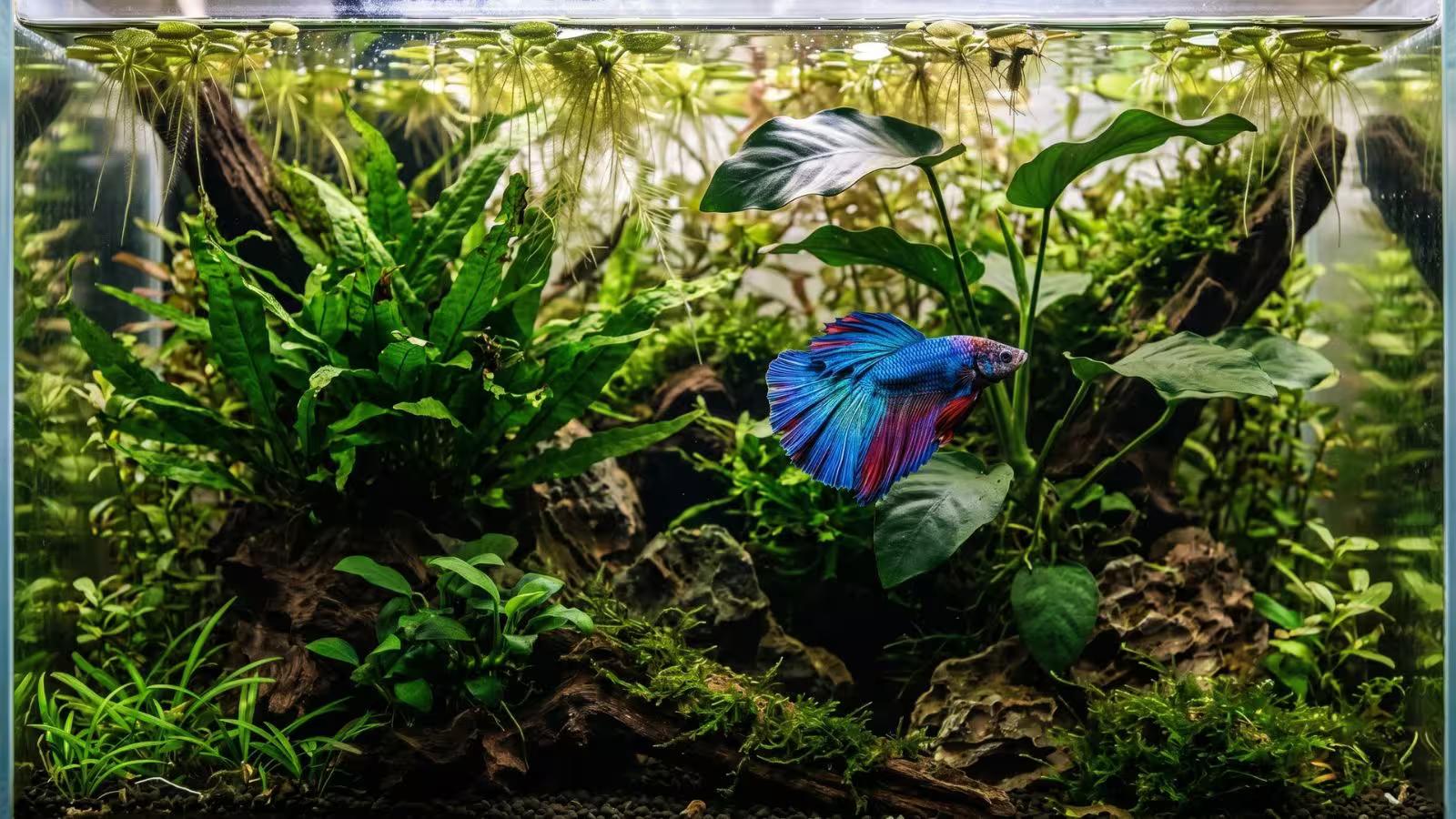
Together, they create a layered environment that closely resembles a natural betta habitat.
This balance supports water quality, fish comfort, and visual appeal at the same time.
How to Set Up a Planted Betta Tank Step by Step
A planted aquarium doesn't need to be complicated.
Many beginners assume they need expensive equipment, advanced fertilizers, and professional aquascaping skills. Most bettas thrive in much simpler setups.
Choose the Right Tank Size
Start with at least a 5-gallon aquarium.
Larger tanks are generally easier to maintain because water parameters stay more stable. Small tanks can experience ammonia spikes much faster.
If you're keeping one of the naturally smaller betta varieties, you might enjoy learning about the Smallest Betta Fish species and how their care compares to common Betta splendens.
Select a Suitable Substrate
The substrate acts as the foundation for your planted tank.
For beginner setups, aquarium gravel, sand, or plant-friendly substrates all work well. Rooted plants such as Amazon Sword and Cryptocoryne Wendtii benefit from nutrient-rich substrates or root tabs.
Don't overthink substrate selection.
Healthy maintenance habits matter far more than buying the most expensive option.
Position Plants for Maximum Coverage
Plant placement affects fish behavior more than many people realize.
Place taller plants toward the back and sides of the aquarium. Mid-sized plants work well in the center, while shorter plants can remain near the front.
Leave some open swimming space.
A tank packed wall-to-wall with plants may look impressive, but your betta still needs room to move comfortably.
Install Gentle Filtration
A filter helps maintain water quality and supports beneficial bacteria.
Strong currents, however, can exhaust a betta.
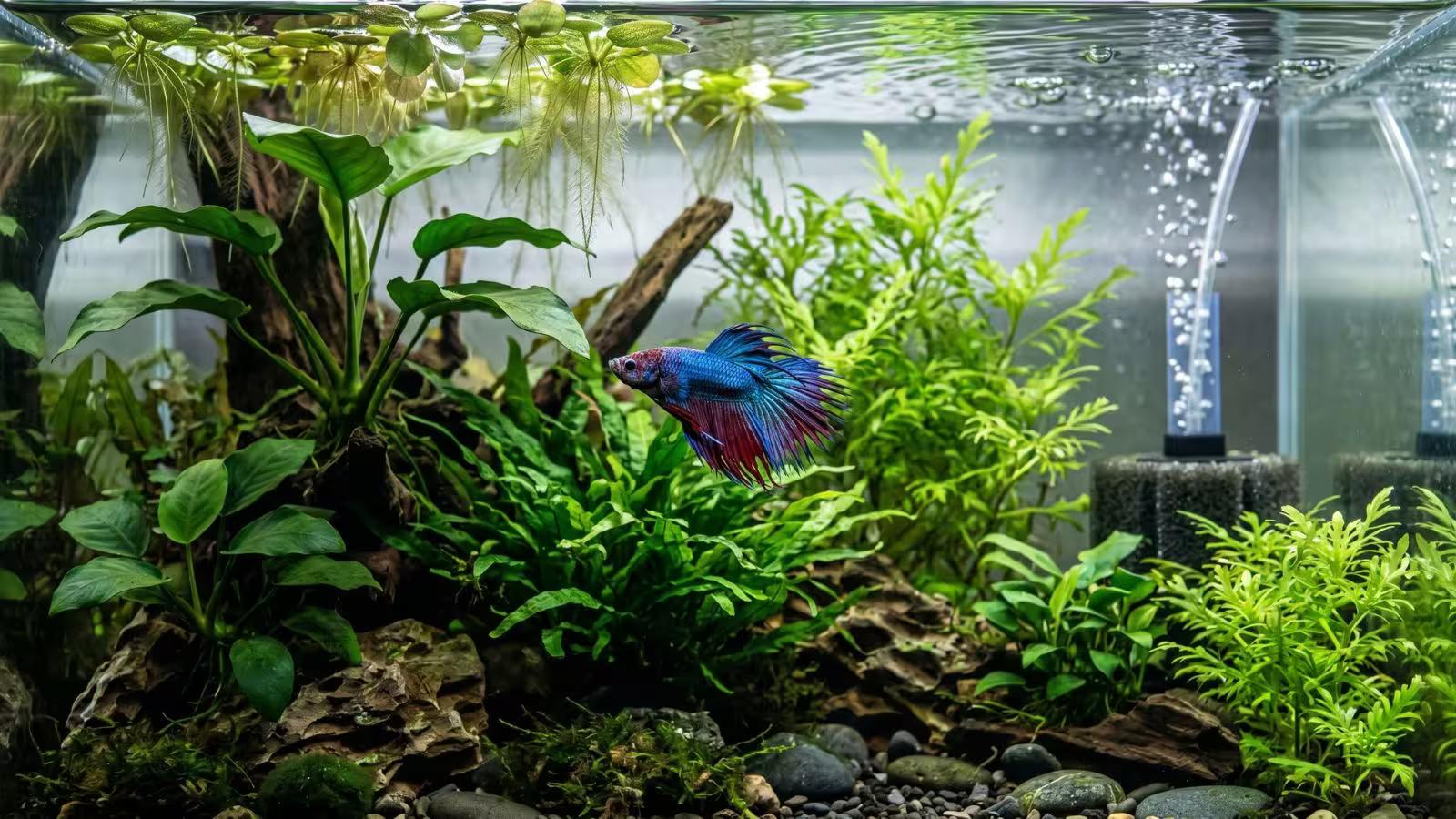
Sponge filters are often excellent choices because they provide biological filtration without creating excessive water movement.
If your fish constantly struggles against the flow, the current may be too strong.
Add Lighting Without Encouraging Excess Algae
Plants need light to grow.
Most beginner-friendly plants thrive under moderate aquarium lighting for around 6–8 hours daily.
Long lighting periods often cause algae problems.
Using a timer can make plant care much easier and more consistent.
Cycle the Aquarium Before Adding Fish
This step is frequently skipped.
Unfortunately, it is also one of the most important.
Cycling establishes beneficial bacteria that process ammonia and nitrite. Without a proper nitrogen cycle, even beautiful planted tanks can become dangerous for fish.
Patience here saves countless problems later.
Quick Setup Checklist
✔ Tank (5 gallons or larger)
✔ Heater set between 76–82°F (24–28°C)
✔ Gentle filter
✔ Suitable substrate
✔ Beginner-friendly plants
✔ Water conditioner
✔ Water test kit
✔ Fully cycled aquarium
✔ Open swimming area
✔ Resting and hiding spots
Common Mistakes When Adding Plants to a Betta Aquarium
Most planted tank problems aren't caused by the plants themselves.
They're usually the result of simple beginner mistakes.
Choosing Sharp Plastic Decorations Instead of Live Plants
Plastic plants often look harmless.
Some, however, have sharp edges that can tear delicate fins.
A simple test is to run a piece of pantyhose or soft fabric across the decoration. If it snags, it can potentially damage your betta's fins.
Soft live plants are generally the safer option.
Using High-Light Plants Without Proper Equipment
Many online aquascapes feature demanding plant species.
These tanks often use CO₂ systems, specialized lighting, and intensive fertilization routines.
Beginners usually achieve better results with low-maintenance plants such as Anubias, Java Fern, and Java Moss.
Success builds confidence.
Constant plant failures do the opposite.
Overcrowding the Aquarium
More plants aren't always better.
An aquarium completely filled with vegetation may reduce swimming space and make maintenance difficult.
Aim for balance.
Provide shelter while still leaving open areas for movement and observation.
Ignoring Plant Maintenance
Even easy plants require occasional care.
Dead leaves should be removed promptly to prevent unnecessary waste buildup.
Regular trimming also improves water circulation and keeps the tank looking healthy.
Buying Plants That Are Not Fully Aquatic
This mistake catches many beginners off guard.
Some stores sell semi-aquatic plants that survive underwater only temporarily.
Research plant species before purchasing.
If a plant begins rapidly melting despite stable conditions, verify that it is truly aquatic.
Low-Maintenance Plant Combinations for Beginners
One plant can help.
A combination of compatible plants often works even better.
The Easiest 5-Gallon Betta Plant Setup
This setup is simple and beginner friendly.
- Anubias
- Java Fern
- Java Moss
- Amazon Frogbit
These plants tolerate low light and require minimal maintenance.
The Best 10-Gallon Betta Plant Layout
A larger tank allows more variety.
- Amazon Sword
- Cryptocoryne Wendtii
- Java Fern
- Water Sprite
- Amazon Frogbit
This combination provides resting areas, hiding spots, and excellent visual depth.
Budget-Friendly Plant Combination
Trying to keep costs low? Consider:
- Java Moss
- Java Fern
- Water Sprite
These plants are widely available and often affordable.
Low-Light Plant Combination
If your aquarium receives modest lighting, try:
- Anubias
- Java Fern
- Cryptocoryne Wendtii
- Java Moss
This setup performs well without requiring powerful lights.
How Plants Improve Long-Term Betta Health
Healthy plants do more than make an aquarium look attractive.
Over time, they contribute to a more stable and natural environment.
Better Water Stability
Plants help utilize nutrients that would otherwise accumulate in the water.
This additional biological support can improve overall stability.
That said, regular maintenance remains essential.
Water changes are still one of the most effective tools for maintaining aquarium health.
Reduced Stress Levels
Stress weakens a fish over time.
A planted aquarium gives bettas places to rest, hide, and feel secure.
Many owners notice increased activity and confidence after introducing live plants.
Natural Exploration and Enrichment
Bettas are curious fish.
They investigate roots, weave through leaves, and interact with their surroundings throughout the day.
Plants encourage these natural behaviors.
A more enriching environment often leads to a more active and interesting fish.
Improved Biological Filtration
Plant surfaces provide additional areas for beneficial bacteria to colonize.
This helps support the nitrogen cycle and contributes to overall aquarium balance.
A More Stable Aquarium Ecosystem
One thing experienced fishkeepers learn quickly is that balance matters.
A planted tank combines fish, plants, bacteria, filtration, and maintenance into a working ecosystem.
When these elements support each other, long-term care becomes much easier.
Final Thoughts
The best plants for betta fish do far more than decorate an aquarium.
They create hiding places, improve water quality, reduce stress, and encourage natural behavior. Even a few beginner-friendly plants can make a noticeable difference in how comfortable your fish feels.
If you're just getting started, focus on simple choices like Anubias, Java Fern, Java Moss, and Amazon Frogbit. These plants are forgiving, attractive, and well-suited to the conditions most bettas prefer.
A healthy betta doesn't need a complicated aquascape. It simply needs a stable environment where it can explore, rest, and behave naturally.
Once you see your fish relaxing on a leaf or weaving through plant roots, it's easy to understand why so many experienced keepers recommend live plants.