Quick Summary
Most bloated bettas are dealing with simple overfeeding or constipation, which clears up within a few days of fasting and a corrected feeding routine. But if you notice scales sticking outward in a pinecone pattern, that points to dropsy, a much more serious condition that needs immediate hospital tank care and antibiotics. Watching your betta closely, especially appetite and behavior, is the best way to catch problems early and treat them before they get worse.
You glance at your betta and something feels off. His belly looks rounder than usual, maybe even lopsided. Your first thought is probably panic, and that's completely normal.
Here's the good news. Most bloated bettas are dealing with overfeeding or constipation, not something life threatening. But a small number of cases point to something more serious, like dropsy, so knowing the difference matters.
Betta splendens, commonly known as the Siamese fighting fish, is a tropical freshwater fish originally from Southeast Asia. This guide walks you through every possible cause of a bloated betta fish, how to tell them apart, and exactly what to do next.
Is Your Betta Actually Bloated, or Is Something Else Going On?
Before jumping into treatment, take a breath and look closer. Not every round belly means illness.
A betta that just ate a big meal will look a little fuller for an hour or two. That's normal digestion, not bloat.
If you have a female betta, a swollen belly could simply mean she's carrying eggs. A gravid female betta often shows a small white egg spot near her vent along with the swelling, and she'll still act completely normal otherwise.
Male bettas building bubble nests sometimes get mistaken for sick fish too, since owners assume something is wrong with all that foam on the surface. That behavior is just breeding instinct kicking in, not illness.
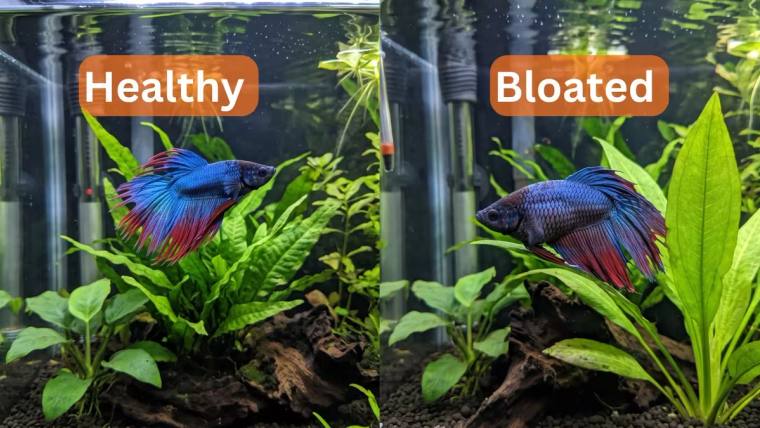
True bloat looks different. The belly stays swollen for days, it doesn't shrink after a bowel movement, and it's often paired with behavior changes like hiding or refusing food.
Symptoms of a Bloated Betta Fish
Once you've ruled out the harmless explanations, look for these signs together rather than in isolation.
- A round, distended belly, sometimes lopsided on one side
- Scales that start to stick outward, giving a pinecone-like texture[1]
- Trouble swimming, sinking, or floating sideways
- Loss of appetite or sudden disinterest in food
- Lethargy, hiding, or resting at the bottom for long stretches
- Gasping repeatedly at the surface instead of normal, occasional trips for air
- Stringy or irregular waste trailing behind the fish
One thing I've noticed over the years is that appetite loss usually shows up before the visible swelling does. If your betta suddenly turns down food he normally loves, that's worth watching closely, even before any bloating appears.
It helps to remember that bettas breathe partly through a labyrinth organ, which lets them gulp air directly from the surface. A bloated betta that struggles to reach the surface for this reason is under real stress, not just discomfort.
What Causes Bloating in Betta Fish
Bloat isn't one condition. It's a symptom with several possible root causes, and each one needs a different response.
Overfeeding and Constipation
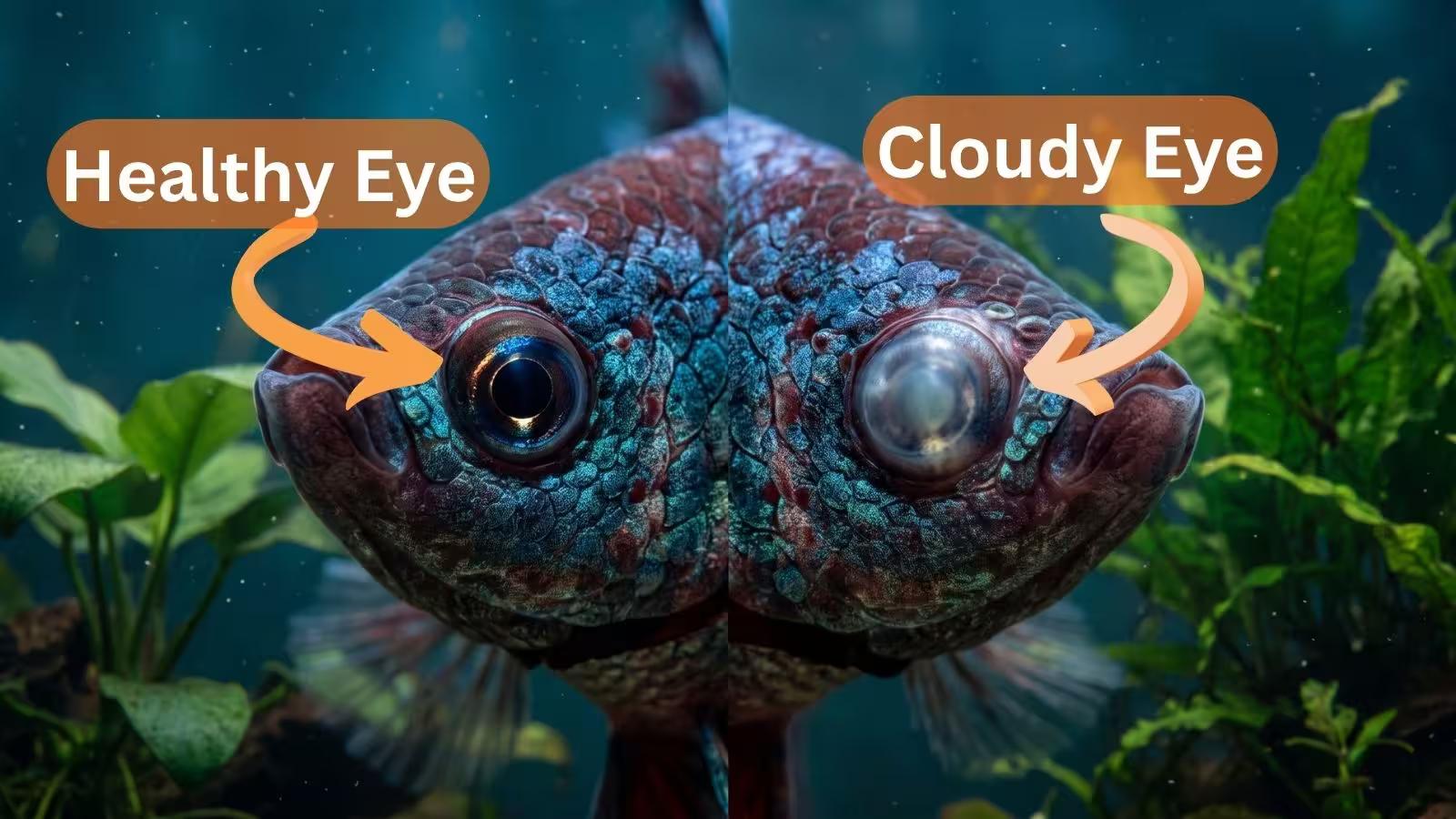
This is by far the most common cause, and honestly, the easiest to fix. A betta's stomach is roughly the size of its eyeball, which surprises a lot of new owners.
Feeding 8 to 10 pellets twice a day, which sounds reasonable on packaging, is actually double or triple what most bettas need. Two to four pellets once or twice daily is closer to the right amount for an average adult betta.
Pellets also expand once they absorb water. A fish that eats too many dry pellets too fast can end up with a stomach that's more swollen than it should be, simply from that expansion.
Many beginners overfeed without realizing it, especially since a hungry betta will beg for food no matter how full it already is. Bettas can't really feel "full" the way we do, so the portion control has to come from you.
Swim Bladder Disorder
The swim bladder sits right next to the stomach, so anything that overstuffs the gut can press against it and throw off buoyancy. You'll usually notice your betta struggling to stay upright, floating sideways, or sinking to the bottom.
Cold water slows digestion down, which lets food sit longer and adds extra pressure on the swim bladder. Keeping the tank steady between 78 and 80°F helps prevent this from happening in the first place.
If your betta is swimming oddly along with the bloating, our guide on why bettas swim sideways covers this in more depth.
Egg Binding in Females
A gravid female that can't release her eggs properly may develop a swollen, uncomfortable belly. This isn't an illness on its own, but it can become one if the eggs aren't expelled and start to cause internal pressure.
Warm, stable water and a calm environment usually help her release eggs naturally within a few days.
Dropsy
This is the one every betta owner dreads. Dropsy happens when the kidneys or liver stop regulating fluid properly, causing fluid to build up inside the body.[2]
The telltale sign is pineconing, where the scales lift outward across the whole body, not just the belly. This is different from simple bloat, which usually stays contained to the stomach area.
Dropsy is almost always secondary to something else, often a bacterial infection, chronic stress, or organ failure from old age.[3] Sadly, the outlook is poor once pineconing appears, and it's one of the harder conditions in the hobby to reverse.
Parasites or Internal Infection
Sometimes a betta looks bloated in the belly while appearing thin or bony everywhere else, almost emaciated along the back. That combination usually points toward internal parasites rather than overfeeding.
This pattern is easy to miss because most owners assume all bloating means the fish ate too much. If cutting back food doesn't shrink the belly within a few days, a parasite treatment is worth considering instead.
How to Treat a Bloated Betta Fish
Treatment depends entirely on the cause, so start with the simplest explanation first.
If It's Overfeeding or Constipation
Fast your betta for 2 to 3 days. Skipping meals sounds harsh, but a healthy adult betta handles short fasting just fine.
After the fast, offer a small piece of blanched, skinned pea. It works as a natural laxative and often gets things moving within a day.
Once the swelling goes down, return to a smaller, consistent feeding routine. Two to four pellets once or twice daily, with one fasting day per week, keeps most bettas at a healthy weight going forward.
If It's Swim Bladder Disorder
Fast the fish the same way you would for constipation, since overfeeding is the most common trigger. Lower the water level slightly so it's easier for your betta to reach the surface without struggling.
Keep the temperature steady around 78°F, and avoid sudden water changes that shock the system further.
If It's Dropsy
Move your betta to a separate hospital tank rather than treating in the main aquarium. This protects your nitrogen cycle and the beneficial bacteria supporting your main tank from any potential contamination.
Keep the water around 78°F, add an air stone for extra oxygen, and dose with a broad-spectrum antibiotic such as Kanaplex or Maracyn Two.[1] Aquarium salt at roughly 0.5 teaspoons per gallon can also help ease fluid pressure, though it should be dissolved fully before your betta goes in.
Be honest with yourself about the odds here. Dropsy has a low survival rate even with fast treatment, and some owners choose to focus on comfort care rather than aggressive medication once pineconing sets in.
If your betta stops eating entirely, can no longer reach the surface to breathe, or shows no improvement after a full course of treatment, it's worth having an honest conversation about fish euthanasia consideration. It's never an easy decision, but prolonged suffering isn't kind to the fish either.
When to Involve a Vet
If the bloat doesn't respond to fasting within 3 to 4 days, or if pineconing appears, a veterinarian consultation with a fish-experienced vet can confirm the actual cause through water and tissue testing.[2] This isn't something every owner has access to, but it's worth checking if an aquatic vet practices near you.
How Long Can a Betta Survive With Bloat?
Simple constipation resolves within a few days once feeding is corrected. Most bettas bounce back fully with no lasting issues.
Dropsy is a different story. Once pineconing shows up, survival is often measured in days to a couple of weeks, even with treatment.[3] Catching the early signs, like appetite loss and lethargy before the scales flare, gives you the best shot at a good outcome.
How to Prevent Bloating in Betta Fish
Most bloat cases trace back to feeding habits and water quality, both of which are fully within your control.
- Feed 2 to 4 pellets once or twice daily, and fast one day per week
- Choose high-quality betta food with real protein sources instead of fillers
- Keep a tank of at least 5 gallons, ideally set up as shown in our betta tank setup guide
- Make sure your tank has fully completed its nitrogen cycle before adding a betta, so beneficial bacteria are established to break down waste
- Change 20 to 30 percent of the water weekly, and test ammonia if appetite suddenly drops
- Maintain a steady temperature between 76 and 82°F with a reliable heater
- Avoid overcrowding or housing bettas with aggressive tank mates
- Quarantine any new fish or plants before adding them to the main tank
A betta in a properly cycled, heated tank with a consistent feeding routine rarely develops bloat at all. Most of the cases owners run into really do trace back to portion size or an incomplete nitrogen cycle, not bad luck.
Once you understand what's actually causing the swelling, this stops being so scary. Most bloated bettas recover fully with a short fast and a better feeding routine going forward. The real skill is catching the early warning signs, appetite loss, lethargy, a belly that isn't shrinking, before things progress any further.
Sources
1. Bryan, "Betta Fish Dropsy," Bettafish.org. https://bettafish.org/diseases/dropsy/
2. Jessie Sanders, DVM, DABVP, "Dropsy in Fish: Symptoms, Causes, and Treatment," PetMD. https://www.petmd.com/fish/conditions/urinary/dropsy-fish
3. "Dealing With Dropsy," Chewy. https://www.chewy.com/education/fish/health-and-wellness/dealing-with-dropsy
4. "Dropsy (Edema), Malawi Bloat And Similar Syndromes," Chewy. https://www.chewy.com/education/fish/general/dropsy-edema-malawi-bloat-and-similar-syndromes