

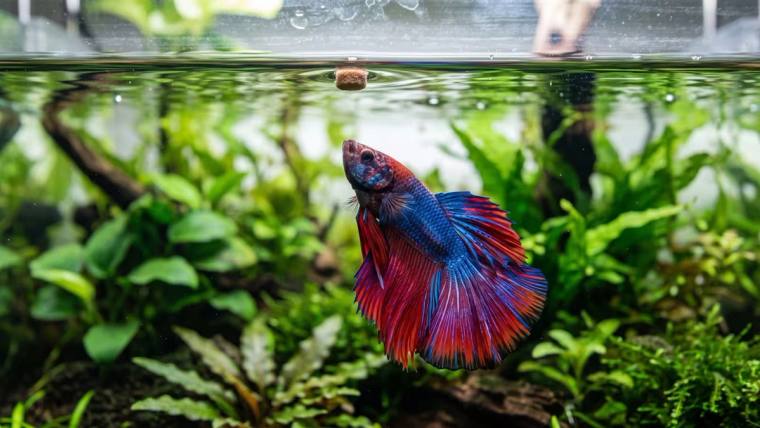
You picked up a bag of food at the pet store, came home, and now you're wondering - is this actually good for him? Maybe your betta spits it out, or looks a little bloated, or just seems... off. It's a more common situation than you'd think.
The truth is, betta fish have specific nutritional needs that most generic fish foods don't meet. The wrong food, or the right food fed the wrong way, can quietly cause health problems over weeks and months.
This guide covers the best fish food for bettas, how to read labels before buying, how much to feed and when, and what to do when things go wrong. By the end, you'll have a clear picture of exactly what your betta needs to stay healthy for years.
What Do Betta Fish Actually Eat in the Wild?
The Natural Diet of Betta splendens
Wild Betta splendens live in the shallow rice paddies, ponds, and slow-moving streams of Southeast Asia [1]. Their natural diet is almost entirely animal-based: mosquito larvae, small insects, water fleas, and zooplankton. They hunt at the water's surface, which is why they're called surface feeders.
That hunting lifestyle shaped their entire digestive system. They have a short gut designed to process dense animal protein quickly, not to ferment plant matter slowly like herbivores do. When you understand that, the right food choices become obvious.
Why Bettas Are Obligate Carnivores
Bettas can't efficiently digest high-carbohydrate diets. When they eat food loaded with wheat flour or soy protein, those fillers pass through poorly digested, creating more waste and putting stress on their organs over time.
One thing I've noticed is that bettas fed high-starch diets often show duller coloration and produce more waste, which clouds the water faster. It's not an immediate problem, but it adds up. Their digestive tract simply isn't built for plant-heavy food.
This is also why "tropical fish flakes" are a poor long-term choice for bettas, even if bettas will eat them. A betta eating flakes is like a person surviving on crackers, technically possible, not actually healthy.
How to Read a Betta Fish Food Label Before You Buy
The Guaranteed Analysis Panel
Every bag of fish food has a guaranteed analysis panel. For betta food, the numbers you care about most are crude protein and crude fiber. Aim for a minimum crude protein of 40%, crude fat between 5% and 8%, and crude fiber under 5% [2].
High fiber sounds healthy, but for a carnivore it means the food is bulked up with indigestible plant material. That puts unnecessary strain on a digestive system that was never designed for it. If fiber is above 5%, that's a red flag worth noting.
The Ingredient List Tells You More Than the Label
The ingredient list is ranked by weight — whatever appears first is the primary ingredient. For quality betta food, you want to see a named protein source at the top: black soldier fly larvae, whole krill, salmon, herring, or shrimp meal.
Red flags include wheat flour, corn gluten, soy protein isolate, or vague terms like "fish meal" with no species named. These are cheap fillers that dilute the nutritional value of the product. Black soldier fly larvae (BSFL) in particular have become popular in premium betta foods for good reason — research on Betta splendens has shown that BSFL-based diets support strong growth performance and healthy gut morphology [1].
Color Enhancers, Omega Fatty Acids, and Immune Support: Real or Marketing?
Some label claims are legitimate. Astaxanthin, a natural pigment found in krill and shrimp meal, genuinely enhances red and orange coloration in bettas because bettas can't produce these pigments on their own — they must get them from food [3]. Omega-3 fatty acids sourced from fish oil support fin tissue health and reduce inflammation.
Vitamins C and E have a real evidence base for immune support. Probiotics for fish are a newer addition and the research is still evolving, but strains like Bacillus subtilis have shown promise in aquaculture settings. What doesn't mean much is vague language like "immune formula" or "fin growth support" without any ingredient backing it up.
| Ingredient | Quality Signal | What It Provides |
|---|---|---|
| Black soldier fly larvae | Excellent | High protein, healthy fat, digestibility |
| Whole krill / krill meal | Excellent | Astaxanthin, protein, omega-3s |
| Shrimp meal | Good | Protein, minerals, natural color pigments |
| Named fish meal (salmon, herring) | Good | Complete amino acid profile |
| Wheat flour / corn gluten | Filler | Empty carbohydrates, digestive burden |
| Soy protein isolate | Avoid | Low bioavailability for carnivores |
Types of Betta Fish Food, Ranked by Nutritional Value
Pellets: The Non-Negotiable Staple
Pellets are the best everyday food for bettas and should make up the core of their diet. They're nutritionally formulated specifically for bettas, easy to portion accurately, and the good ones pack enough protein density to meet a carnivore's needs without the risks of live food.
Pellet size matters more than most people realize. A pellet that's too large forces your betta to bite down hard and swallow air in the process, which puts pressure on the swim bladder. Look for pellets around 1mm in diameter, or micro pellets for bettas with smaller mouths. Floating pellets suit bettas best since they're natural surface feeders, but slow-sinking pellets work too as long as your betta catches them before they hit the substrate.
One thing worth doing: soak pellets in a few drops of tank water for 30 to 60 seconds before feeding. It reduces the air ingestion risk and makes the pellet easier to digest, especially for bettas that have had swim bladder issues in the past.
Live Food: The Gold Standard Supplement
Nothing triggers a betta's natural feeding behavior like live food. The movement activates their predatory instincts in a way pellets never will. Bettas that look sluggish or disinterested in pellets almost always come alive when live food hits the water.
The best live food options for bettas are mosquito larvae, daphnia, brine shrimp, and bloodworms. Daphnia is especially valuable because it acts as a gentle natural laxative, making it the go-to food after a fasting day or when your betta shows signs of constipation. Offer live food two to three times per week as a supplement, not a replacement for pellets.
The main risk with live food is introducing parasites or bacteria into your tank. Source from reputable suppliers, avoid wild-caught mosquito larvae from stagnant outdoor water, and if you culture your own brine shrimp or daphnia, you eliminate the risk almost entirely.
Frozen Food: The Safest Alternative to Live
Frozen bloodworms, brine shrimp, mysis shrimp, and daphnia offer nearly the same nutritional value as live food with one major advantage: the freezing process kills parasites, making them much safer. This is why frozen food is the practical choice for most betta keepers who don't want to maintain live cultures.
Always thaw frozen food before feeding. The easiest method is to drop a small piece into a cup of tank water for two to three minutes, then pour just the food (not the cup water) into your tank. Never feed a frozen cube directly into the tank — the portion is too large and the temperature shock isn't good for your fish.
Freeze-Dried Food: Convenient, but Handle Carefully
Freeze-dried bloodworms and brine shrimp are popular because they're shelf-stable and easy to use. The problem is that freeze-dried food is dehydrated, and dry food expands significantly when it hits your betta's stomach. That expansion is a direct cause of bloating and is one of the leading diet-related triggers of swim bladder disorder.
The fix is simple: always pre-soak freeze-dried food in tank water for two to three minutes before feeding. Watch how much it expands. Once you've seen it, you'll never skip that step again. Treat freeze-dried food as an occasional supplement, not a regular staple.
Betta Flakes: The Weakest Option
Flakes dissolve quickly once they hit water, losing nutritional value fast and making accurate portion control nearly impossible. They also cloud the water faster than any other food type because uneaten flake particles break down rapidly.
If you're currently using flakes as your betta's primary food, switching to micro pellets is one of the simplest improvements you can make. The difference in water quality alone is noticeable within a week.
| Food Type | Nutrition Level | Convenience | Risk Level | Recommended Frequency |
|---|---|---|---|---|
| Premium pellets | High | Very High | Very Low | Daily staple |
| Live food | Very High | Medium | Low-Medium | 2-3x per week |
| Frozen food | High | High | Very Low | 2-3x per week |
| Freeze-dried (pre-soaked) | Medium | Very High | Low (if soaked) | Occasional treat |
| Flakes | Low | Very High | Medium | Not recommended |
Best Betta Fish Food Brands: Reviewed by Ingredient Quality
The brands below are evaluated on what actually matters: first ingredient, crude protein percentage, pellet size, and how they perform in a real tank. Not on packaging or marketing claims.
Fluval Bug Bites Betta Formula
Black soldier fly larvae is the first ingredient, which puts this at the top of the list immediately. The crude protein sits around 40%, the pellets are small floating granules that suit most adult bettas, and the BSFL base means excellent digestibility. Research on Betta splendens specifically has shown positive growth outcomes with BSFL-based diets [1]. This is a strong everyday staple pick.
NorthFin Betta Bits
Whole Antarctic krill is the first ingredient, giving it a naturally high astaxanthin content for color enhancement alongside solid protein density around 45%. These are 1mm micro pellets with no artificial preservatives, which makes them a good choice for bettas that are sensitive to additives. One of the most ingredient-transparent options on the market.
New Life Spectrum Betta
Whole fish protein base with natural astaxanthin from krill, a comprehensive vitamin profile, and a well-rounded amino acid composition. This brand has a long track record in the betta keeping community and tends to show visible color improvements over a few weeks of consistent feeding. A reliable all-around pick.
Hikari Betta Bio-Gold
Hikari is a Japanese brand with decades of fishkeeping credibility. The protein sits around 38%, slightly below others on this list, but the quality control is consistent and the pellets are appropriately sized for most adult bettas. It's widely available and reasonably priced, making it a solid budget-friendly staple [4].
Zoo Med Betta Micro Pellets
Ultra-small pellet diameter makes these the best choice for juvenile bettas, small-bodied bettas, or any betta that consistently rejects standard-sized pellets. If your betta has been spitting out food and you suspect the pellet is too large, these are worth trying.
Omega One Betta Buffet Pellets
Salmon is the first ingredient, giving it a strong omega-3 fatty acid profile. Good for supporting fin tissue health and a nice option to rotate in for variety. Not quite as protein-dense as the top picks, but a quality product overall.
Xtreme Betta Pellets
Insect meal-based formula with crude protein around 43%. Less common than some others but well-regarded among experienced betta keepers who prioritize high-protein, insect-based nutrition.
Ultra Fresh Betta Pro Shrimp Patties
An unconventional format — small shrimp-based patties rather than round pellets. This is a useful option for bettas that have become so accustomed to one brand they refuse anything else. The texture and format is different enough to break the pattern.
| Brand | First Ingredient | Crude Protein | Pellet Size | Best For |
|---|---|---|---|---|
| Fluval Bug Bites | Black soldier fly larvae | ~40% | Small float | Everyday staple |
| NorthFin Betta Bits | Whole Antarctic krill | ~45% | 1mm micro | Nutrition density |
| New Life Spectrum | Whole fish | ~40% | Small float | Color enhancement |
| Hikari Bio-Gold | Fish meal | ~38% | Small float | Budget staple |
| Zoo Med Micro | Salmon | ~36% | Ultra-small | Small/picky bettas |
| Omega One Buffet | Salmon | ~39% | Small float | Omega-3 profile |
| Xtreme Betta | Insect meal | ~43% | Small float | High protein |
| Ultra Fresh Shrimp | Shrimp | ~42% | Patty/small | Pellet-refusing bettas |
How Much Food to Feed a Betta Fish
The Betta Stomach Size Reality
A betta's stomach is roughly the size of its eye — about 2 to 3mm in diameter. That's not much space. In practical terms, two to four small pellets per meal is the right amount for most adult bettas. It sounds like very little, but it's genuinely enough.
A useful rule: feed only what your betta can consume within two minutes. Anything left floating after that is too much. Remove uneaten food promptly with a turkey baster or a small net — uneaten food sitting on the substrate will start breaking down and raising ammonia within hours.
How Aquarium Temperature Affects How Much to Feed
This is something competitors almost never cover, and it matters. Betta metabolism is directly tied to water temperature. At the optimal range of 78 to 80°F (25 to 27°C), digestion runs efficiently and your betta processes food well. Drop that temperature below 72°F and metabolism slows significantly.
Feeding the same amount to a cold betta as you would to a warm betta means food sits undigested in their gut, leading to bloating and water quality issues. If your tank temperature is consistently below 75°F, reduce portion size by around 30%. A good heater isn't just about comfort — it directly affects how your betta digests food. If you're still setting up your tank, the best betta fish tank setup guide covers heater selection in detail.
Normal vs Abnormal: Post-Feeding Behavior
| Behavior | Normal | Abnormal — Take Action |
|---|---|---|
| Eating pace | Active, finishes in under 2 minutes | Ignores food or frantic desperation feeding |
| Swimming after eating | Normal patrol behavior resumes | Floating at surface, sinking, listing sideways |
| Abdomen after eating | Slightly rounded | Severely distended or scales lifting |
| Waste production | Daily, dark brown waste | White stringy waste or no waste for 2+ days |
Signs of Overfeeding
- Bloated or pinecone-like abdomen
- Floating near the surface or tilting sideways after meals
- Uneaten food visible on the tank bottom within minutes of feeding
- Water clouding within 24 hours
- Increased lethargy following meals
Signs of Underfeeding
- Visible sunken belly or prominent spine
- Extreme food aggression at the glass
- Dull, faded coloration over time
- Fin clamping
- Weight loss over several weeks
How Often to Feed a Betta Fish: The Optimal Schedule
Adult Betta Feeding Frequency
Twice daily is the standard for adult bettas: once in the morning and once in the evening, with roughly 8 to 12 hours between meals. Two to four small pellets per meal is sufficient for most adults. Feeding twice rather than once keeps each meal smaller, which is easier on their digestive system and produces less waste per feeding.
Some keepers prefer once daily with a slightly larger portion, and that works too. The key variable is total daily intake, not the number of meals. What doesn't work is feeding "whenever they look hungry," because bettas beg for food constantly regardless of whether they actually need it. They are very convincing actors at the glass.
The Weekly Fasting Day: Why One Day Without Food Helps
One fasting day per week is standard practice among experienced betta keepers, and for good reason. It clears the digestive tract, reduces the risk of chronic constipation, and mirrors the natural cycle of food scarcity that bettas evolved with. Many bettas actually become more active and alert on fasting days — they explore the tank more, flare at their reflection, show more vibrant color. It's worth observing.
The common concern is that your betta will starve. It won't. Bettas can go well over a week without food when healthy. One day is completely safe and genuinely beneficial for their long-term digestive health.
7-Day Rotational Feeding Schedule
Rotating food types across the week prevents nutritional gaps and stops bettas from becoming fixated on a single food type. It's a real problem: bettas fed one brand for months sometimes refuse anything else when you try to switch. Variety from the start prevents that entirely.
| Day | Morning | Evening |
|---|---|---|
| Monday | Premium pellets (3 pellets) | Premium pellets (3 pellets) |
| Tuesday | Frozen brine shrimp (thawed) | Premium pellets |
| Wednesday | Premium pellets | Freeze-dried bloodworms (pre-soaked) |
| Thursday | Live or frozen daphnia | Premium pellets |
| Friday | Premium pellets | Frozen mysis shrimp (thawed) |
| Saturday | Premium pellets | Premium pellets |
| Sunday | Fasting day | Fasting day |
Feeding Schedule by Life Stage
Juvenile bettas under six months old need more frequent feeding — two to three times daily with micro pellets or live baby brine shrimp — because they're actively growing. Adult bettas follow the twice-daily schedule above. Senior bettas over two years benefit from slightly smaller portions and more frequent daphnia to support digestion.
Breeding females need the highest nutritional input of any life stage. During conditioning for spawning, increasing live or frozen food to daily feedings gives her the protein she needs to develop healthy eggs. If you're working toward breeding, the pregnant betta fish guide covers the nutrition side of conditioning in detail.
Overfeeding and Its Consequences
How Uneaten Food Damages Water Quality
Every pellet left sitting on the substrate is an ammonia source. At a tank temperature of 78°F, uneaten food starts decomposing and releasing detectable ammonia within two to four hours. Ammonia burns your betta's gills and weakens their immune system before you see a single visible symptom.
Overfeeding regularly overwhelms the beneficial bacteria in your filter — the same bacteria responsible for processing ammonia through the nitrogen cycle. The result is a tank that feels perpetually "off": slightly cloudy water, a betta that looks stressed, and water tests that never quite look right. Keeping a properly sized and filtered tank gives you a much larger buffer against feeding mistakes.
Constipation in Betta Fish: Causes, Signs, and Recovery
Constipation is probably the most common diet-related problem in home bettas. Signs include a swollen belly, no waste production for two or more days, white stringy waste (a mucus cast rather than actual digested waste), and reduced appetite. It looks worrying, but in most cases it resolves quickly with the right approach.
Step-by-step recovery protocol:
- Fast your betta for 24 to 48 hours immediately. No food at all.
- On day three, offer live or frozen daphnia. It acts as a gentle natural laxative and is the most effective dietary treatment for this specific problem.
- Perform a 25% water change to remove waste buildup and refresh water parameters.
- Keep temperature steady at 78 to 80°F to support metabolism during recovery.
- Resume normal feeding with smaller portions only after you observe normal, dark-colored waste.
- If no improvement after five to seven days, try an Epsom salt bath: 1 teaspoon of plain Epsom salt per gallon of dechlorinated water, 15 minutes, then return your betta to the main tank.
Swim Bladder Disorder From Diet: What You Need to Know
Diet-related swim bladder disorder (SBD) shows up as your betta floating at the surface, sinking to the bottom, or swimming with a permanent tilt. It looks alarming, and many new owners assume it's fatal. Most diet-related cases are fully reversible. If you're seeing this, check the dedicated guide on why your betta fish is swimming sideways for a full diagnostic breakdown.
Diet-related SBD typically resolves within three to seven days of the fasting and daphnia protocol described above. The distinction to watch for: if your betta is also showing other symptoms — pineconed scales, lesions, dramatic color change — that suggests a bacterial cause rather than diet, and that requires a different approach entirely.
The Freeze-Dried Food Bloating Problem
This mistake causes more problems than people expect, and it's almost entirely preventable. Dry freeze-dried bloodworms expand to several times their original size when they absorb liquid. When that expansion happens inside your betta's stomach rather than in a cup of water first, the result is rapid bloating and pressure on the swim bladder.
Always soak freeze-dried food in a small cup of tank water for two to three minutes before feeding. Once you've seen how much it expands while soaking, the reason becomes obvious. Treat freeze-dried food as a convenient occasional treat, not a regular staple.
Feeding Challenges: When Your Betta Won't Eat
Why Bettas Spit Out Pellets
A betta that picks up a pellet and immediately spits it out is usually dealing with one of a few things: the pellet is too large for their mouth, the water temperature is too low and has suppressed their appetite, or they're rejecting a new brand they've never encountered before. Check tank temperature first — anything below 74°F will noticeably reduce appetite. If temperature is fine, try switching to a smaller pellet diameter.
If the spitting is a new behavior in a betta that previously ate well, it can be an early illness signal. Appetite changes are often the first warning sign before other symptoms appear. Check for lethargy, fin clamping, or unusual spots. If any of those are present alongside food refusal, visit the betta fish diseases guide for a diagnostic checklist.
My Betta Acts Hungry Constantly: Is Something Wrong?
Probably not. Bettas are opportunistic feeders that evolved to eat whenever food was available, because food in the wild isn't guaranteed. That instinct doesn't switch off in captivity. Your betta pressing against the glass, following your finger, and doing its best "I'm starving" display happens with well-fed fish just as much as underfed ones.
The way to tell the difference: look at the abdomen and coloration. A well-fed betta has a slightly rounded belly, bright colors, and alert behavior. An actually underfed betta will show a visibly sunken belly and spine, dull coloration, and progressive weight loss over weeks. Begging at the glass alone means nothing.
Transitioning to a New Food Brand
Bettas can become strongly attached to a specific food after eating it for months. If you try to switch brands cold and your betta refuses the new food for several days, that's normal betta behavior, not a health problem. Introduce new food gradually over seven to ten days.
Start with a ratio of about 80% old food and 20% new food, then shift the balance week by week. If your betta still refuses entirely, try briefly soaking the new pellets in a small amount of garlic extract (available at fish stores). Garlic acts as a natural appetite stimulant and can break through even stubborn brand preferences.
Betta Feeding Myths Debunked
"Bettas Can Live on Flakes Just Fine"
Flakes lack the protein density bettas need, dissolve too quickly to be portioned accurately, and pollute the water faster than any other food type. Bettas will eat them, but that's not the same as thriving on them. This myth persists because bettas don't visibly decline in a week — the effects are gradual.
"Feed as Much as They'll Eat"
Bettas don't self-regulate. They will continue eating past the point of healthy intake because their survival instinct is to eat whenever food is present. Following this advice reliably leads to chronic overfeeding, bloating, and degraded water quality.
"Freeze-Dried Food Is Just as Good as Frozen"
Freeze-drying removes moisture and reduces some heat-sensitive nutrients compared to frozen food. More importantly, the dry form creates a real bloating risk if fed without soaking. Frozen food is the safer and nutritionally superior choice when you can use it.
"Bettas Don't Need Food Variety"
A single food source, even a premium one, can create nutritional gaps over time. Variety across pellets, live food, and frozen food ensures a complete nutritional profile and also prevents the brand-fixation problem where bettas refuse everything except one specific food.
"A Betta That Begs Is a Hungry Betta"
Covered above, but worth including here: betta begging behavior is instinctive and essentially constant. It is not a reliable indicator of genuine hunger. Feed on a schedule, not on demand.
Common Beginner Feeding Mistakes
Most feeding problems trace back to the same short list of mistakes. Here's what to watch for:
- Using generic tropical flakes as the primary food instead of betta-specific pellets
- Feeding freeze-dried food dry without pre-soaking
- Using pellets that are too large, causing air ingestion and swim bladder pressure
- Skipping the weekly fasting day
- Feeding the same single food for months without any rotation
- Ignoring water temperature's direct effect on appetite and digestion
- Leaving uneaten food in the tank for more than five minutes
- Feeding more because the betta appears to be begging
- Not adjusting portion size for juvenile vs adult vs senior bettas
- Sourcing live food from unknown or unsafe sources and introducing parasites
Feeding and Water Quality: The Direct Connection
The Feeding-Ammonia-Disease Triangle
Here's the chain most beginners don't see until it's already causing problems: overfeeding leads to uneaten food, uneaten food raises ammonia, elevated ammonia weakens your betta's immune system, and a weakened immune system makes them vulnerable to bacterial infections, parasites, and fin damage. Diet and water quality are not separate topics. They directly affect each other.
The most effective single habit for maintaining good water quality through feeding is removing uneaten food within two to five minutes of feeding. A small turkey baster or fine-mesh net makes this easy. If you're testing your water and seeing consistent ammonia above 0 ppm or nitrate above 20 ppm, your feeding amounts are worth examining first before assuming a filtration problem.
How a Disciplined Feeding Routine Reduces Maintenance
Correct portion sizes mean less decomposing food, which means lower ammonia load, which means less frequent water changes needed to keep parameters stable. High-starch diets also produce a higher volume of waste than protein-dense diets, which is another reason quality food isn't just a nutrition choice — it's a water quality choice too.
Water parameters to test weekly: ammonia (target 0 ppm), nitrite (target 0 ppm), nitrate (target under 20 ppm). If any of these spike after adjusting your feeding routine, that's diagnostic information, not coincidence. For more on maintaining the right tank environment, the betta fish aquarium ideas page has some useful setup references too.
When to Worry: Emergency Warning Signs Related to Diet
Act Immediately If You See These Signs
Pinecone-scale protrusion — where scales lift away from the body like a pine cone — indicates dropsy, which is a sign of systemic organ failure. This goes far beyond diet and requires immediate veterinary attention. Complete food refusal combined with lethargy for five or more days, a betta floating upside down for more than 24 hours, or white stringy waste persisting beyond three days are all signals to take seriously.
When Diet Protocol Isn't Enough
If constipation or swim bladder symptoms don't resolve within seven days of the fasting, daphnia, and water change protocol, the cause may not be dietary. Bacterial infections and internal parasites can produce identical symptoms and require targeted treatment. An aquatic veterinarian is the right resource at that point. Color changes that appear alongside any of these symptoms are worth checking against the betta fish turning white guide, as some color changes are disease indicators rather than diet-related.
Once you understand how bettas are built and what they actually need, feeding them well becomes simple. A quality protein-rich pellet as the daily staple, a weekly rotation of frozen or live food for variety, one fasting day per week, and consistent portion control. That's the whole system. The bettas that thrive long-term aren't the ones given the most expensive food — they're the ones fed the right amount of good food, consistently, in a clean tank.
Sources
- Kamarudin MS et al. — Effect of Fish Meal Substitution with Black Soldier Fly (Hermetia illucens) on Growth Performance, Feed Stability, Blood Biochemistry, and Liver and Gut Morphology of Siamese Fighting Fish (Betta splendens). National Center for Biotechnology Information, PMC. https://www.ncbi.nlm.nih.gov/pmc/articles/PMC11401699/
- Aquarium Nexus — Betta Fish Feeding: Guide for Beginners. Covers protein, fat, and fiber targets for betta-specific diets. https://www.aquariumnexus.com/betta-fish-feeding/
- KnowBetta — What to Feed a Betta Fish: A Complete Guide to Betta Diet and Nutrition. Covers carotenoid pigments, color-enhancing ingredients, and carnivore nutritional needs. https://knowbetta.com/what-to-feed-a-betta-fish-a-complete-guide-to-betta-nutrition/
- Chewy — Betta Fish Care Guide: Habitat, Feeding, and Health. Covers feeding practices including frozen food thawing and freeze-dried soaking guidance. https://www.chewy.com/education/fish/betta-fish/how-to-keep-your-betta-fish-healthy-and-happy
- Silverman JA et al. — Care and Use of Siamese Fighting Fish (Betta splendens) for Research. PMC, National Center for Biotechnology Information. Includes diet protocols used in research settings with specific protein and nutritional data. https://pmc.ncbi.nlm.nih.gov/articles/PMC9334006/