It's an understandable question. After all, bettas seem to survive in tiny spaces, and you've probably heard people say they can live happily in bowls or unfiltered tanks. Unfortunately, that's one of the most common misconceptions in fishkeeping.
The short answer is yes, most betta fish benefit greatly from having a filter. While a betta can survive without one under specific conditions, thriving is a different story. A filter helps maintain water quality, supports beneficial bacteria, stabilizes the nitrogen cycle, and gives your fish a healthier environment with far less risk of ammonia-related stress.
If you're trying to decide whether a filter is necessary, or you're worried your current setup might be harming your fish, this article will help you make an informed decision based on real-world betta care rather than outdated myths.
Do Betta Fish Need a Filter?
The Short Answer
For most home aquariums, yes.
A betta fish does best in a heated, filtered, cycled tank where water conditions remain stable. Filters are not just pieces of equipment that move water around. They play a major role in biological filtration and overall aquarium health.
That doesn't mean a betta will instantly die without a filter. Some fishkeepers successfully maintain filterless tanks, but those setups require more attention, more aquarium maintenance, and much less room for error.
For beginners especially, a filter is one of the easiest ways to provide a safer environment.
Why So Many People Think Bettas Don't Need Filters
A lot of the confusion comes from how bettas survive in nature.
Wild bettas often live in slow-moving waters such as rice paddies, shallow ponds, and floodplains. These environments contain calm water and low oxygen levels.
To adapt, bettas developed something called a labyrinth organ. This special organ allows them to breathe atmospheric air from the surface in addition to using dissolved oxygen from the water.
Many people hear this fact and assume filtration isn't necessary.
That's where the misunderstanding starts.
The labyrinth organ helps with breathing. It does not remove fish waste. It does not process ammonia. It does not support beneficial bacteria. It does not maintain the nitrogen cycle.
Those are jobs performed by biological filtration.
Survival Is Not the Same as Thriving
One thing I've noticed over the years is that many bettas are remarkably resilient.
A fish may survive for months in poor conditions and still eat regularly. That often convinces owners everything is fine.
The problem is that stress doesn't always appear immediately.
Water quality issues tend to build gradually. A fish might become less active, spend more time hiding, lose color intensity, or develop weakened immunity long before obvious illness appears.
If you've ever wondered why some bettas display brighter colors and more natural behavior than others, stable water conditions are often a major reason.
The goal shouldn't be keeping a fish alive.
The goal should be helping it thrive.
What Most Experienced Betta Keepers Recommend
Ask experienced hobbyists what changed their success rate the most, and many will point to proper filtration and tank cycling.
A filter creates a more stable ecosystem. Instead of constantly fighting water quality problems, you're allowing beneficial bacteria to do much of the work naturally.
That stability becomes especially important if you're already monitoring behavior changes such as appetite loss, unusual resting patterns, or color fading. In many cases, environmental conditions play a bigger role than beginners realize.
How a Filter Actually Helps a Betta Tank
Many new fishkeepers assume a filter's main purpose is making water look clean.
That's only part of the story.
The most important benefits happen where you can't see them.
Biological Filtration: The Real Job of a Filter
Every betta produces waste.
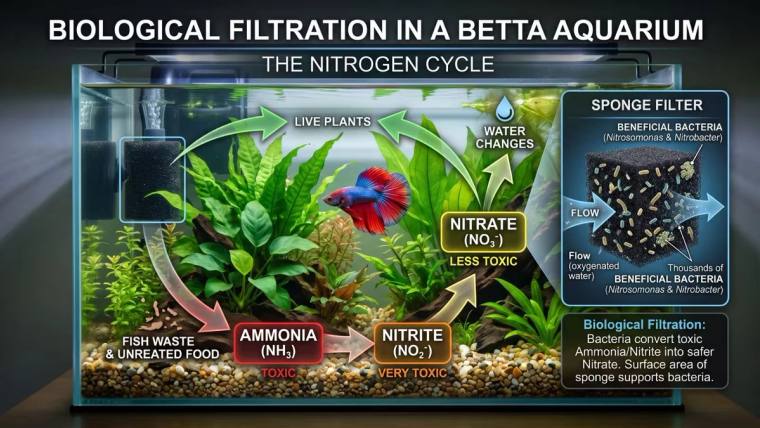
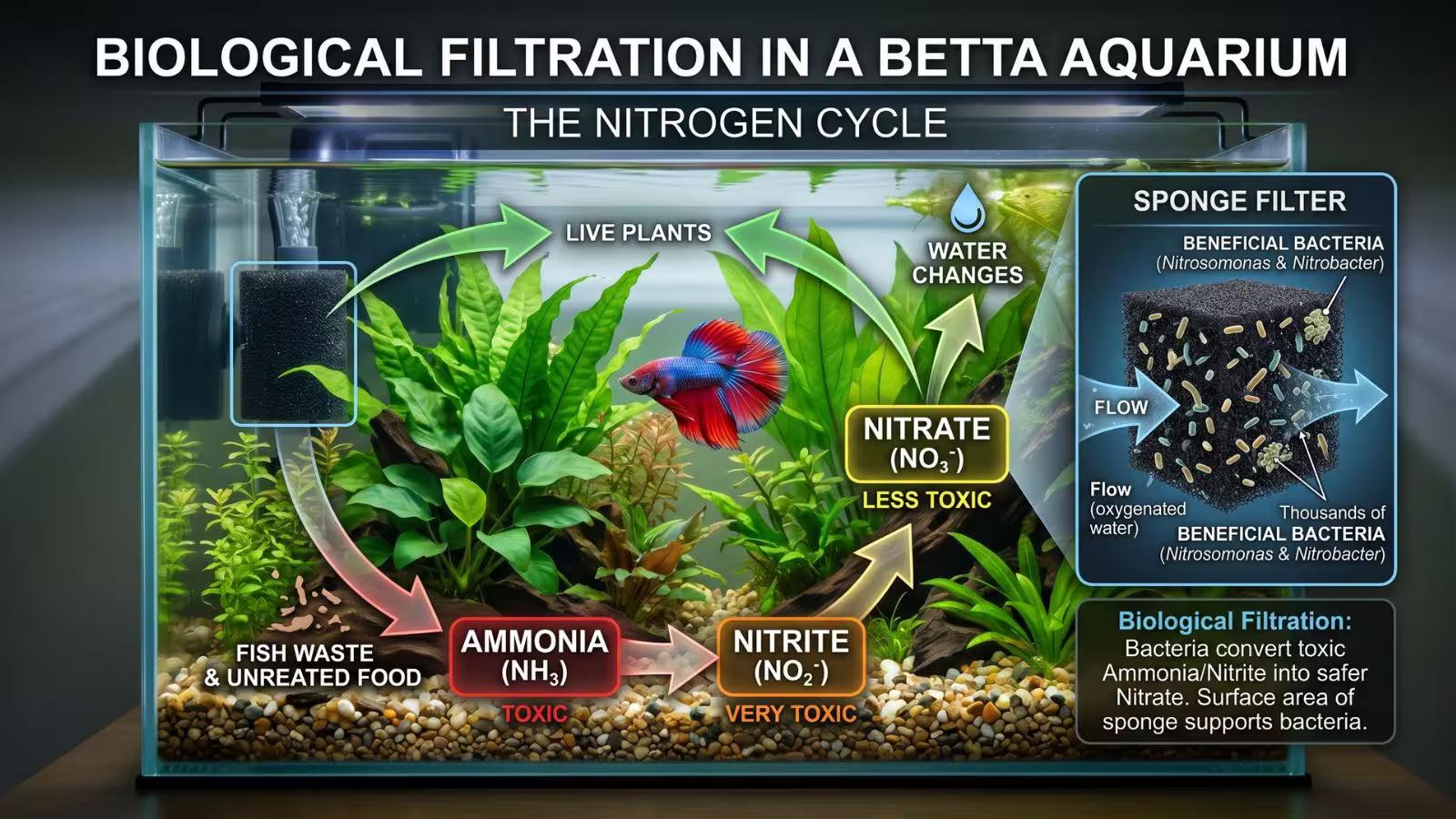
Uneaten food, decaying plant matter, and fish waste release ammonia into the aquarium. Even in a tank that looks crystal clear, ammonia may still be present.
This is where biological filtration becomes important.
Beneficial bacteria colonize filter media and convert toxic ammonia into nitrite. A second group of bacteria then converts nitrite into nitrate.
Together, these processes form the nitrogen cycle.
Without enough bacterial colonies, ammonia and nitrite can accumulate to dangerous levels.
A healthy filter provides one of the best places for these bacteria to grow.
Why Ammonia Is More Dangerous Than Many Beginners Realize
Ammonia poisoning is one of the most common causes of stress in aquarium fish.
What makes it tricky is that the symptoms often resemble other problems.
A betta experiencing elevated ammonia levels may:
- Become lethargic
- Refuse food
- Clamp its fins
- Stay near the surface
- Hide more than usual
- Lose some of its normal activity
Many owners immediately suspect disease.
Sometimes the real issue is water quality.
This is one reason experienced hobbyists test water parameters whenever a fish suddenly behaves differently.
Water Circulation Creates a More Stable Environment
Filters also improve water circulation.
Without circulation, waste tends to collect in certain areas while temperature differences develop across the aquarium.
Gentle water movement helps distribute heat evenly and reduces stagnant areas where debris accumulates.
The keyword here is gentle.
Bettas are not strong-current fish. They prefer calm water and can become stressed if flow rates are excessive.
We'll cover filter flow in more detail later because it's another area where many beginners accidentally create problems.
Filters Help Support a Cycled Tank
You'll often hear experienced fishkeepers talk about a "cycled tank."
For newcomers, that phrase can sound confusing.
A cycled tank simply means the aquarium contains enough beneficial bacteria to process waste efficiently.
The filter acts as a home for much of that bacterial colony.
Without adequate biological filtration, maintaining a stable cycle becomes more difficult. That doesn't mean it's impossible, but it does require more active management.
One common mistake is adding a brand-new filter and assuming the aquarium is instantly cycled. Beneficial bacteria need time to establish themselves.
Patience during this stage prevents many future problems.
Cleaner Water Doesn't Always Mean Healthy Water
This catches many people off guard.
A tank can look spotless while water quality is actually poor.
Clear water doesn't automatically mean ammonia and nitrite are under control.
Likewise, slightly tinted water isn't always dangerous.
Healthy aquariums are defined by stable water parameters, functioning biological filtration, and balanced bacterial activity—not simply by appearance.
That distinction becomes important when evaluating whether a filter is helping your aquarium.
Can a Betta Live Without a Filter?
The honest answer is yes.
A betta can live without a filter under certain circumstances.
What often gets left out of the conversation is how much additional work may be required to make that happen safely.
Why Filterless Tanks Exist
Some hobbyists intentionally keep filterless aquariums.
These setups are usually carefully designed and maintained. They often include heavy live planting, low stocking levels, and strict maintenance routines.
The owner understands how waste accumulates and knows how to monitor water quality closely.
In other words, success isn't coming from the lack of a filter.
It's coming from the extra effort used to compensate for it.
The Biggest Risk in Filterless Aquariums
The main challenge is stability.
Every aquarium experiences biological changes throughout the week. Fish produce waste, food breaks down, and bacterial populations fluctuate.
A filter helps buffer many of those changes.
Without one, small mistakes can have larger consequences.
Missing a water change by several days may not matter much in a mature filtered aquarium. The same delay in a small filterless setup can produce noticeably different conditions.
That's why beginners often struggle with filterless tanks while experienced hobbyists manage them successfully.
When a Filterless Tank Has a Better Chance of Success
Several factors improve the odds:
- Larger water volume
- Heavy live plant growth
- Light fish stocking
- Stable temperature
- Consistent water changes
- Regular water testing
Plants can help absorb nitrate and contribute to overall biological balance.
Still, plants are not magical replacements for filtration.
Many people overestimate how much waste plants can realistically process in a typical betta aquarium.
Why Most Beginners Are Better Off Using a Filter
If someone asks me whether they should start with a filtered or filterless setup, the answer is almost always the same.
Use a filter.
Not because filterless tanks never work, but because beginners already have enough things to learn. Feeding, water changes, temperature control, and fish behavior take time to understand.
A filter provides a larger margin for error while you're building experience.
That's especially valuable during the first few months of betta ownership when most mistakes happen.
A Simple Rule That Helps
Here's a practical way to think about it:
Can a betta survive without a filter?
Yes.
Will most bettas have a healthier, more stable environment with a properly sized low-flow filter?
Also yes.
For most fishkeepers, that second question matters far more.
What Happens When a Betta Has No Filter?
A filterless aquarium doesn't automatically become unhealthy.
The problem is that the tank loses one of its biggest tools for maintaining stability. Without filtration, the aquarium depends much more heavily on water changes, plant growth, and the keeper's consistency.
That's where many problems begin.
Ammonia Can Build Up Faster Than Expected
One of the biggest risks in an unfiltered aquarium is ammonia accumulation.
Fish waste, leftover food, and decaying organic matter constantly release ammonia into the water. In a filtered tank, beneficial bacteria help process these compounds before they reach dangerous levels.
Without sufficient biological filtration, ammonia can rise surprisingly fast.
Small aquariums are especially vulnerable. A slight feeding mistake that barely affects a larger tank may create noticeable water quality issues in a smaller setup.
Stress Often Appears Before Disease
Many beginners wait for visible illness before investigating water conditions.
Unfortunately, stress usually shows up first.
You may notice:
- Less activity
- Reduced appetite
- More hiding
- Faded coloration
- Clamped fins
- Increased surface breathing
One thing I've noticed is that subtle behavioral changes often appear days or even weeks before obvious health problems develop.
This is why experienced hobbyists pay close attention to behavior.
Water Parameters Can Swing More Easily
Stable water quality is one of the hardest things to achieve in an unfiltered aquarium.
Temperature fluctuations, waste accumulation, and bacterial population changes can affect the environment much faster than many owners realize.
A healthy betta generally prefers consistency.
Sudden swings in water parameters create stress even if the values remain technically survivable.
Maintenance Becomes More Demanding
Many people choose a filterless setup because they assume it will be simpler.
In reality, the opposite is often true.
A properly functioning filter performs continuous work every hour of the day. When you remove that support system, the responsibility shifts to you.
That usually means:
- More water testing
- More frequent water changes
- Closer observation
- Faster responses to problems
Some hobbyists enjoy that hands-on approach.
Others quickly discover it's more work than expected.
Do You Need a Filter if You Do Frequent Water Changes?
This is one of the most common questions betta owners ask.
The logic makes sense.
If you're replacing dirty water regularly, does a filter still matter?
In most cases, yes.
Water Changes and Filtration Do Different Jobs
A water change removes waste products from the aquarium.
A filter supports beneficial bacteria that continuously process waste between water changes.
These functions work together rather than replacing each other.
Think of it this way.
A water change is a periodic reset.
Biological filtration is ongoing support.
Both contribute to a healthy aquarium ecosystem.
Why Frequent Water Changes Aren't Always Enough
Many beginners focus entirely on visible cleanliness.
The challenge is that ammonia production never stops.
Fish continue producing waste every day. Uneaten food continues breaking down. Organic matter continues decomposing.
Even if you perform frequent water changes, there are still periods between those changes when waste accumulates.
A filter helps reduce those fluctuations.
The Hidden Risk of Inconsistent Maintenance
Life gets busy.
Everyone misses a scheduled maintenance day occasionally.
A filtered aquarium generally handles small delays better because beneficial bacteria continue processing waste.
An unfiltered setup offers less forgiveness.
This doesn't mean filterless tanks are doomed to fail. It simply means consistency becomes much more important.
What Experienced Keepers Usually Do
Many advanced fishkeepers combine both approaches.
They use effective filtration and maintain regular water changes.
That combination creates the most stable conditions over the long term.
Do Betta Fish Need a Filter in a 1 Gallon Tank?
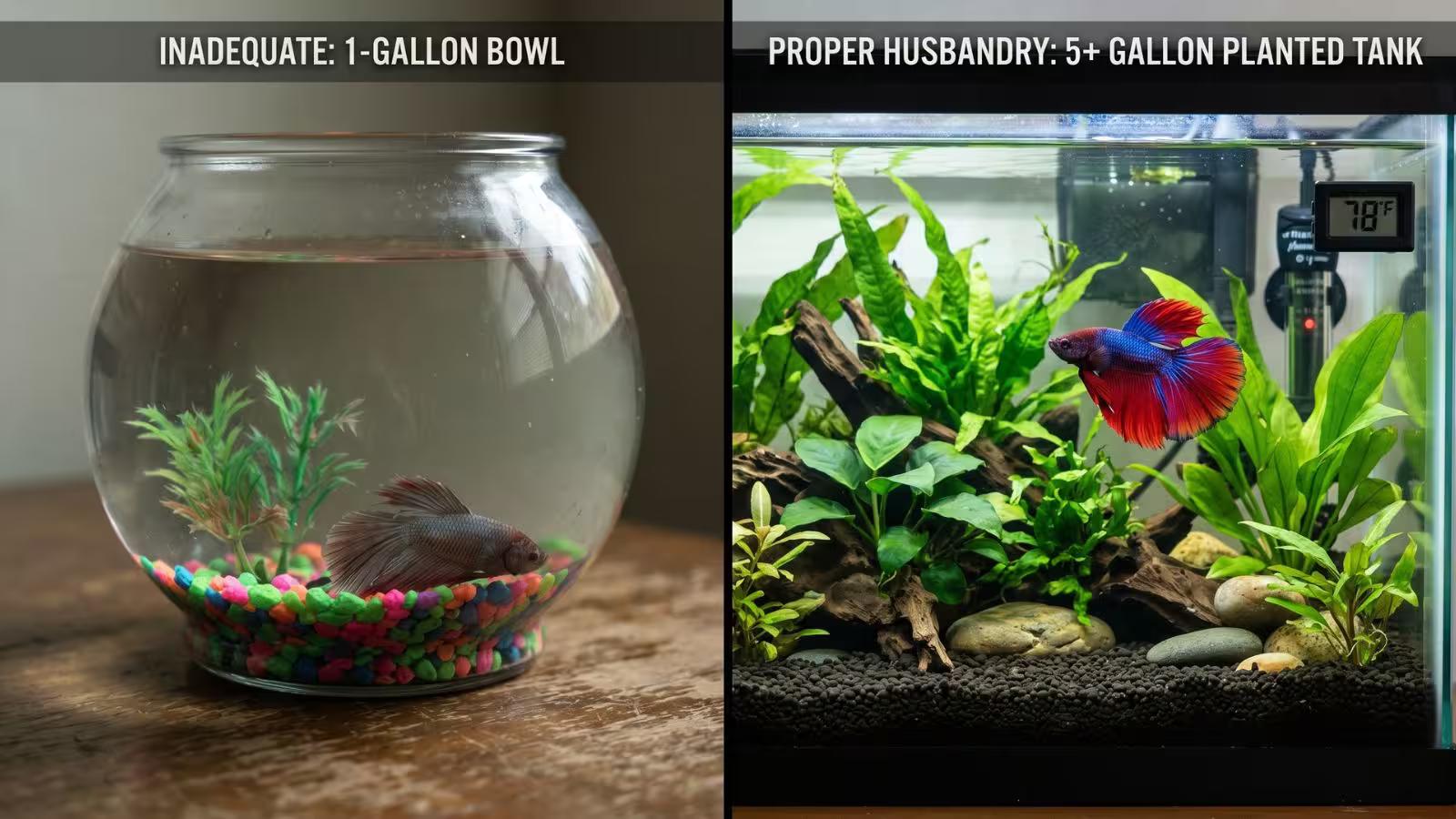
If a betta is living in a 1-gallon tank, a filter becomes even more valuable.
The smaller the water volume, the faster conditions can change.
Why Small Tanks Are Harder to Maintain
Many new owners assume a small tank is easier.
It actually tends to be less stable.
In a 1-gallon aquarium:
- Ammonia rises faster
- Temperature changes faster
- Water quality deteriorates faster
- Mistakes have greater impact
A single missed maintenance session can create significant stress.
The Bigger Issue Is Tank Size
While filtration helps, the larger concern is the tank itself.
Most experienced betta keepers recommend at least a 5-gallon aquarium.
Larger tanks provide greater stability and make it easier to maintain healthy water parameters.
They also offer more swimming space and enrichment opportunities.
Can a Filter Solve the Problems of a 1-Gallon Tank?
Not completely.
A filter improves conditions, but it doesn't overcome the limitations of extremely small water volume.
If possible, upgrading the tank often provides greater benefits than upgrading the filter alone.
Do Betta Fish Need a Filter in a 5 Gallon Tank?
A 5-gallon aquarium changes the equation considerably.
This is where many bettas begin to truly thrive.
Why 5 Gallons Is Often Recommended
A larger water volume creates more stability.
Waste becomes diluted more effectively, temperature remains steadier, and maintenance becomes less stressful.
The fish also gains more room to explore.
Many owners notice increased activity and more natural behavior after upgrading from smaller setups.
Does a Filter Still Help?
Absolutely.
Even in a 5-gallon aquarium, waste continues accumulating.
A filter supports biological filtration, strengthens the nitrogen cycle, and helps maintain better water quality between maintenance sessions.
The larger tank simply gives the system more breathing room.
The Ideal Combination
For most betta owners, one of the safest setups includes:
- 5-gallon or larger tank
- Heater maintaining 76–82°F
- Low flow filter
- Cycled aquarium
- Weekly maintenance routine
This combination addresses many of the issues that commonly lead to stress and illness.
If you've ever researched topics such as betta fish diseases and cures or wondered why a betta fish is turning white, you'll notice that poor environmental conditions are frequently part of the story.
Stable water quality helps prevent many problems before they begin.
Do Betta Fish Need a Filter if the Tank Has Live Plants?
This is another area filled with confusion.
Live plants are excellent additions to a betta aquarium.
They improve appearance, provide cover, and contribute to overall biological balance.
The question is whether they can replace a filter.
What Live Plants Actually Do
Aquatic plants absorb nutrients from the water.
They can help reduce nitrate levels and contribute to a healthier aquarium ecosystem.
Many species also provide resting spots that bettas seem to enjoy.
One thing I've noticed is that bettas often appear more relaxed in planted tanks than in sparsely decorated aquariums.
Why Plants Don't Fully Replace Filtration
Plants help manage waste.
They do not instantly process all ammonia being produced inside the aquarium.
The amount of waste a plant system can handle depends on:
- Plant density
- Plant species
- Growth rate
- Fish load
- Feeding levels
Most typical planted betta tanks still benefit from biological filtration.
Heavily Planted Filterless Tanks
Some advanced hobbyists successfully maintain heavily planted filterless aquariums.
These setups often rely on dense plant growth and careful observation.
Success usually comes from experience rather than simplicity.
Many online examples make these aquariums look effortless.
What you don't always see is the knowledge and maintenance happening behind the scenes.
The Best Approach for Most Owners
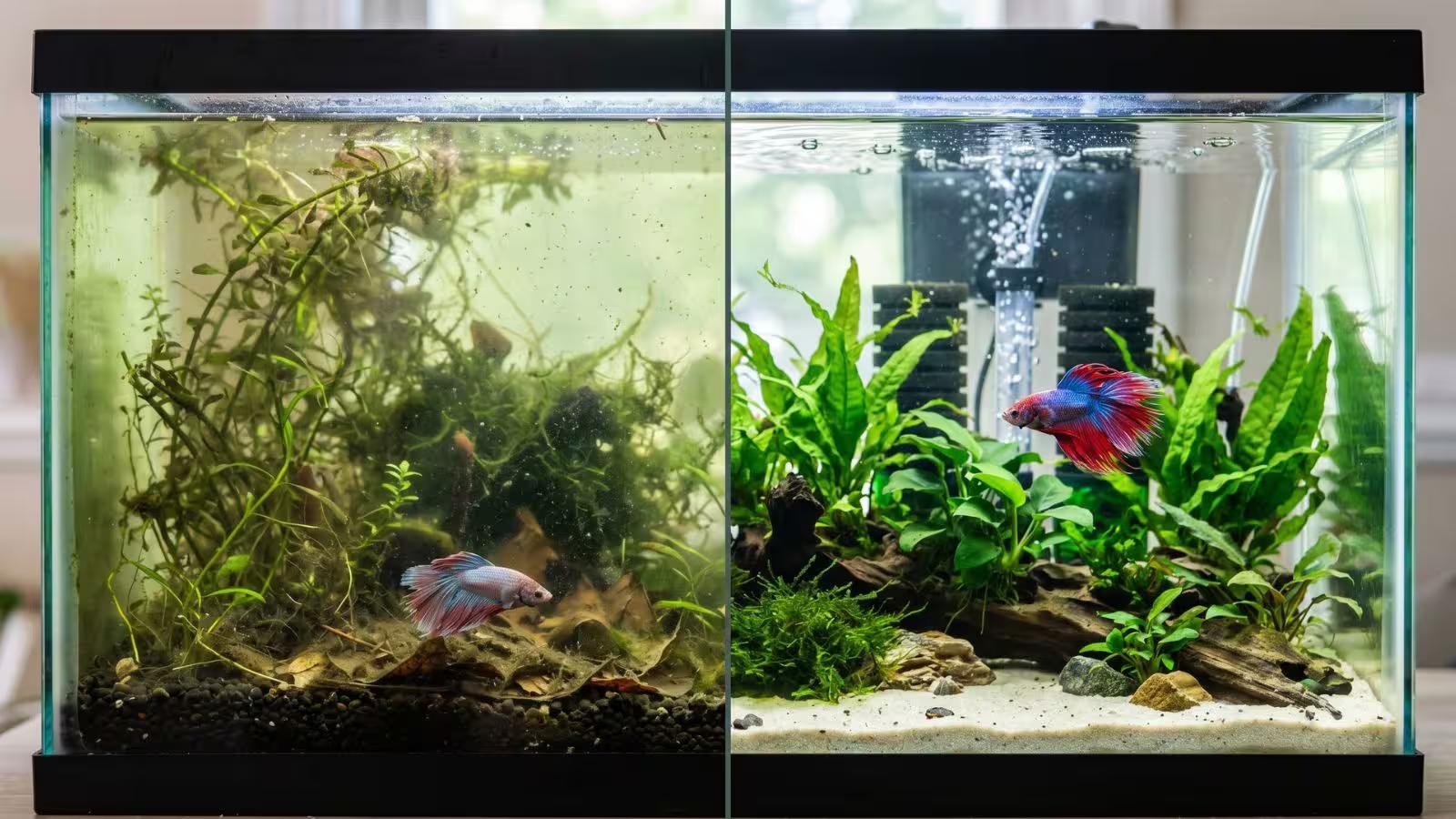
If you're keeping a betta in a planted aquarium, combining live plants with a gentle filter often provides the best results.
Plants contribute to stability.
The filter supports beneficial bacteria.
Together, they create a stronger and more resilient system than either could provide alone.
That extra stability becomes especially valuable if you're monitoring stress-related issues such as appetite changes, color loss, or unusual behavior patterns.
Choosing the Best Filter for a Betta Fish
Not all aquarium filters are suitable for bettas.
This is where many new owners run into trouble. They purchase a filter designed for fast-swimming community fish, install it in a small betta tank, and then wonder why their fish suddenly seems stressed.
The best filter for a betta balances effective biological filtration with gentle water movement.
What Matters Most in a Betta Filter
A good betta filter should provide:
- Strong biological filtration
- Gentle water circulation
- Safe intake design
- Reliable operation
- Easy maintenance
Flow rate is usually more important than raw filtering power.
Bettas are built for calm waters. A filter that creates a strong current can make daily life difficult for them.
Why Biological Filtration Should Be Your Priority
Many advertisements focus on crystal-clear water.
Clear water looks nice, but biological filtration is what protects your fish.
The filter media provides a home for beneficial bacteria that process ammonia and nitrite before they become dangerous.
A tank can appear spotless while harmful compounds remain present.
That's why experienced fishkeepers pay close attention to the biological side of filtration rather than focusing only on appearance.
Sponge Filters: The Most Beginner-Friendly Option
If someone asks me for a single betta filter recommendation, a sponge filter is usually near the top of the list.
There's a reason so many long-term hobbyists continue using them.
Why Sponge Filters Work So Well
Sponge filters offer several advantages:
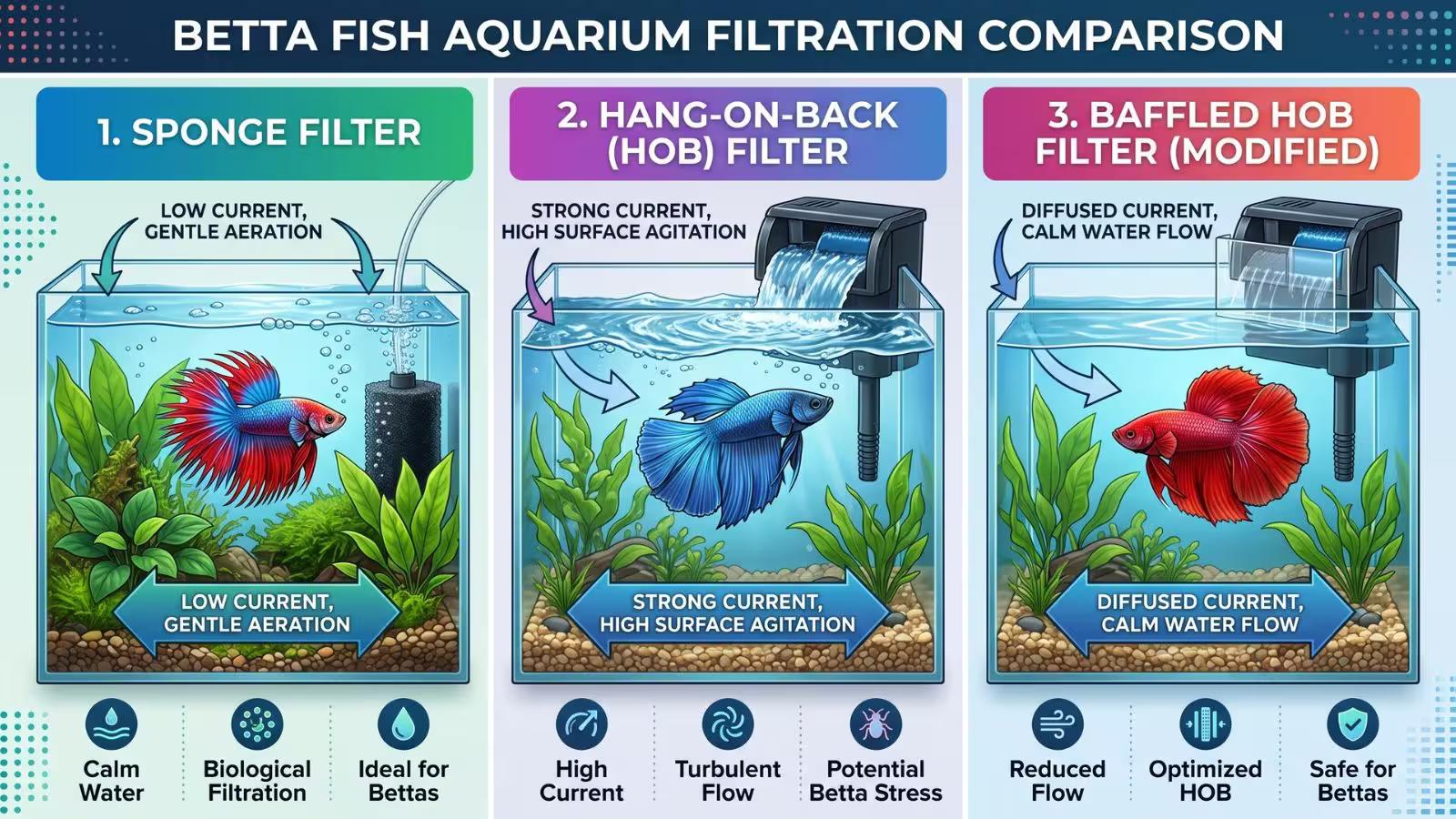
- Gentle flow
- Excellent biological filtration
- Low maintenance costs
- Safe for delicate fins
- Reliable bacterial colonization
Because they operate using an air pump, water movement tends to remain soft and predictable.
That suits bettas extremely well.
Ideal for Long-Finned Bettas
Long-finned varieties often struggle in strong currents.
Their large fins create drag in the water, forcing them to work harder while swimming.
A sponge filter allows these fish to move naturally without constantly fighting water movement.
One thing I've noticed is that many bettas become noticeably more active after switching from an overly powerful filter to a gentler sponge filter.
Easy Maintenance
Cleaning a sponge filter is straightforward.
During a water change, simply rinse the sponge in removed tank water.
Avoid rinsing it under tap water because chlorine can harm the beneficial bacteria living inside the filter media.
This mistake causes more problems than many beginners realize.
Hang-On-Back Filters: Good When Properly Adjusted
Hang-on-back filters, often called HOB filters, can also work very well for bettas.
The challenge is managing their flow.
Advantages of HOB Filters
Many hobbyists like these filters because they provide:
- Strong filtration capacity
- Easy access for maintenance
- Space for multiple filter media types
- Good water circulation
In larger betta aquariums, these benefits can be useful.
The Current Problem
Some hang-on-back filters create stronger currents than bettas prefer.
A fish that constantly fights moving water may become exhausted over time.
This issue becomes especially noticeable in smaller aquariums where the flow affects a larger portion of the tank.
How to Reduce Excessive Flow
Several simple modifications can help:
- Install a filter baffle
- Use a pre-filter sponge
- Redirect the output
- Lower the flow setting if available
Small adjustments often make a dramatic difference.
Low Flow Filters Are Usually the Best Choice
The phrase "low flow filter" appears frequently in betta care discussions for a reason.
Gentle circulation is generally safer than aggressive water movement.
What Low Flow Means
Low flow doesn't mean stagnant water.
Water should still circulate through the aquarium.
The goal is to avoid creating a current that forces the fish to swim constantly.
A healthy betta should be able to move comfortably throughout the tank without being pushed around.
Signs You've Found the Right Balance
A betta in a properly filtered aquarium typically:
- Explores regularly
- Reaches the surface easily
- Uses resting spots comfortably
- Shows normal feeding behavior
- Maintains good activity levels
When these behaviors are present, filter flow is often close to ideal.
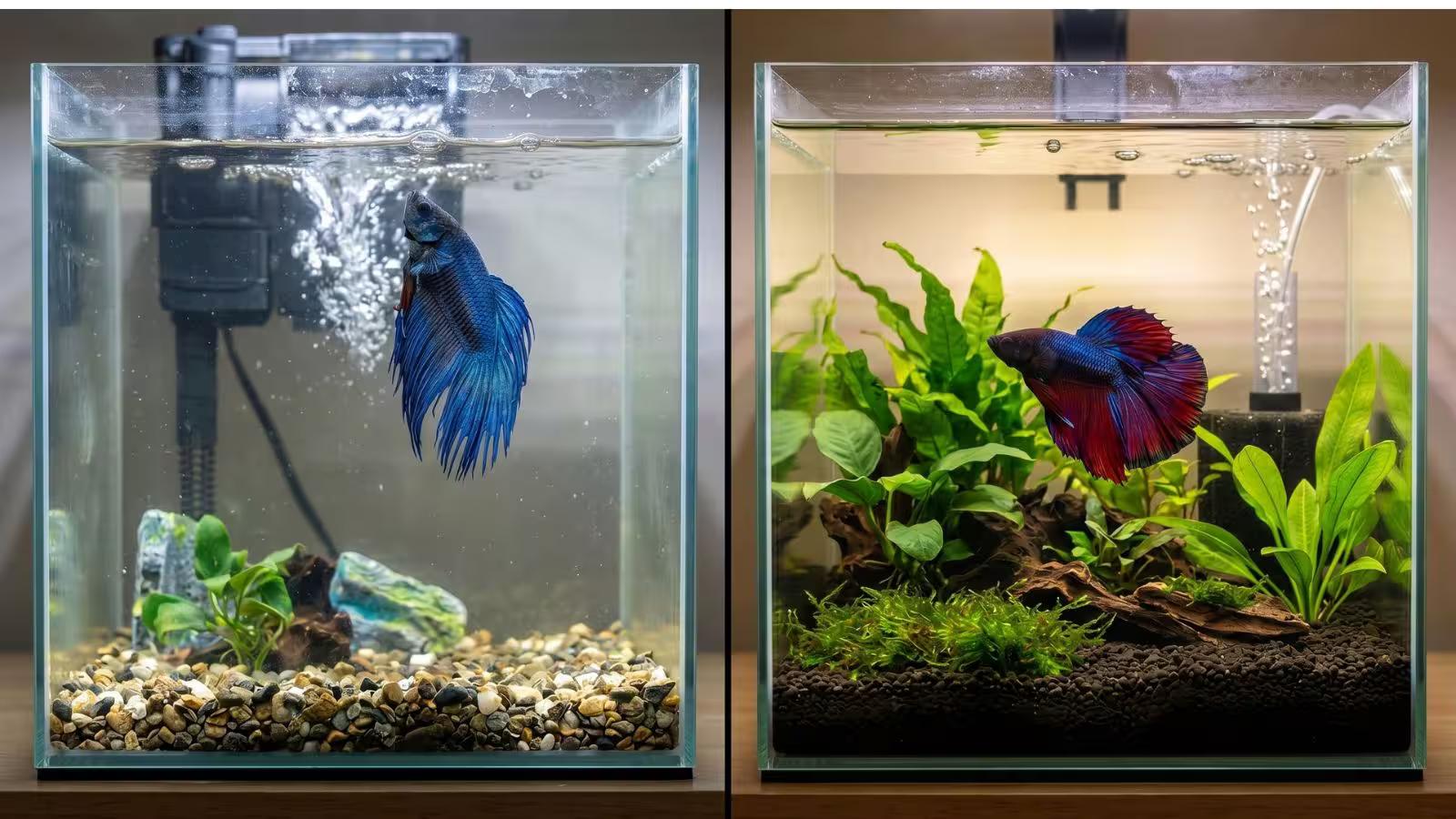
How Strong Should Filter Flow Be for a Betta?
This is one of the most overlooked aspects of betta care.
A filter may be biologically effective while still creating a stressful environment.
Signs the Filter Flow Is Too Strong
Watch your fish carefully.
Strong current often causes:
- Difficulty swimming
- Constant drifting
- Fin fatigue
- Hiding behind decorations
- Remaining near corners
- Avoiding open water
Many beginners mistake these behaviors for laziness.
In reality, the fish may simply be trying to escape the current.
Signs the Flow Is Comfortable
A relaxed betta usually:
- Swims throughout the aquarium
- Reaches the surface normally
- Uses all areas of the tank
- Rests comfortably
- Displays natural curiosity
Behavior often tells you more than equipment specifications.
Why Long-Finned Bettas Need Extra Consideration
Fish with large fins work harder while swimming.
Imagine trying to run while dragging a parachute behind you.
That's roughly what long flowing fins can feel like in strong currents.
A flow rate that seems mild to a short-finned fish may still be excessive for a heavily finned betta.
Can a Filter Make a Betta Sick?
This question surprises many people.
Technically, yes.
Not because filters are harmful, but because improper filtration can create stress.
Excessive Current Stress
The most common issue is excessive flow.
When a fish spends all day fighting water movement, energy is diverted away from growth, immune function, and normal behavior.
Chronic stress often makes fish more vulnerable to illness.
Poorly Maintained Filters
Filters require maintenance.
A neglected filter can become clogged, reducing efficiency and water circulation.
Waste accumulation inside the system may also affect overall water quality.
Cleaning should be regular but gentle.
Preserving beneficial bacteria remains important.
Unsafe Intake Areas
Some filters have intake openings that can trap delicate fins.
Long-finned bettas are particularly vulnerable.
Using a sponge pre-filter often solves this problem while also providing extra biological filtration.
Sudden Changes Can Cause Stress
Many owners clean or replace all filter media at once.
This can remove a significant portion of the beneficial bacteria colony.
The resulting instability may trigger water quality problems.
Replacing everything simultaneously is rarely necessary.
Filtered vs Unfiltered Betta Tanks
Both setups can work.
The difference lies in stability, maintenance requirements, and margin for error.
| Feature | Filtered Tank | Unfiltered Tank |
|---|---|---|
| Biological Filtration | Strong | Limited |
| Ammonia Control | Better | More Challenging |
| Nitrogen Cycle Stability | Higher | Lower |
| Maintenance Frequency | Lower | Higher |
| Beginner Friendly | Yes | Usually No |
| Margin for Error | Larger | Smaller |
| Long-Term Stability | Better | Depends on Experience |
The biggest advantage of filtration isn't convenience.
It's consistency.
Fish tend to thrive when conditions remain predictable.
Common Mistakes Betta Owners Make
Believing Bettas Prefer Dirty Water
This myth refuses to disappear.
Bettas tolerate difficult conditions better than many fish, but that doesn't mean they enjoy them.
Clean, stable water supports stronger health and better behavior.
Buying a Powerful Filter Without Research
A filter designed for larger community fish may overwhelm a betta.
Checking flow characteristics before purchasing equipment prevents many headaches later.
Ignoring the Nitrogen Cycle
Many new aquarists focus entirely on equipment.
The biological processes happening inside the aquarium are often more important.
Understanding the nitrogen cycle helps explain why water quality problems occur.
Skipping Water Testing
Water can appear perfectly clear while ammonia or nitrite levels rise.
Occasional testing provides information that visual inspections cannot.
Replacing Filter Media Too Aggressively
Many filter instructions encourage replacing media frequently.
Doing so may remove beneficial bacteria and destabilize the aquarium.
In most cases, gentle cleaning is more useful than complete replacement.
Expert Recommendations for the Ideal Betta Setup
If your goal is long-term success, simplicity usually wins.
The healthiest betta setups often share several characteristics.
Recommended Betta Tank Setup
- Minimum 5-gallon aquarium
- Stable temperature of 76–82°F (24–28°C)
- pH between 6.5 and 7.5
- Gentle low flow filter
- Fully cycled tank
- Weekly 20–30% water changes
- High-quality protein-rich food
- Live plants where possible
- Regular monitoring of water quality
This setup provides excellent stability while remaining manageable for beginners.
A Small Investment That Prevents Bigger Problems
Many health issues start with environmental stress.
Poor water quality can contribute to appetite loss, color fading, weakened immunity, and unusual behavior.
If you've ever researched topics such as how long can betta fish go without food, do betta fish change color, or why is my betta fish turning white, you'll find that water conditions often play a significant role.
A proper filter doesn't guarantee perfect health.
What it does provide is a more stable foundation for everything else that contributes to a healthy betta.
Filtered vs Unfiltered Betta Tanks (Final Comparison)
Both setups can work, but they serve different types of owners.
| Feature | Filtered Tank | Unfiltered Tank |
|---|---|---|
| Stability | High | Variable |
| Maintenance | Moderate | High |
| Beginner Friendly | Yes | No |
| Ammonia Control | Strong | Limited |
| Margin for Error | Larger | Smaller |
| Long-Term Health Support | Better | Depends on Experience |
A filtered tank gives you a safety buffer.
An unfiltered tank demands precision and consistency.
Most beginners benefit from the extra stability.
Common Mistakes Betta Owners Make With Filters
Overestimating "Self-Cleaning" Water
Some owners believe a filter removes the need for water changes.
That's not true.
A filter supports water quality, but it doesn't eliminate waste buildup entirely.
Regular maintenance is still necessary.
Ignoring Behavioral Signals
Fish don't tell you directly when something is wrong.
They show it through behavior.
A betta struggling with filter flow may still eat, but reduced activity or hiding patterns often appear first.
These small signs matter.
Using the Wrong Filter Size
Too large or too powerful filters can stress a betta.
Too small filters may not support proper biological filtration.
Balance is key.
Cleaning Everything at Once
This is one of the most damaging mistakes.
It removes beneficial bacteria and destabilizes the tank.
Gradual cleaning preserves the ecosystem.
Expert Recommendations for a Healthy Betta Setup
If you want long-term stability, keep things simple and consistent.
A strong foundation usually looks like this:
- Minimum 5-gallon tank
- Stable heater (76–82°F / 24–28°C)
- Gentle sponge or low-flow filter
- Fully cycled aquarium
- Weekly 20–30% water changes
- High-protein diet (pellets + frozen/live food)
- Live plants for balance
- Regular observation of behavior
This combination reduces most common beginner problems.
It also makes it easier to notice early warning signs like appetite changes, color fading, or unusual swimming patterns.
Final Answer: Do Betta Fish Need a Filter?
A betta fish does not strictly need a filter to survive, but most bettas live healthier, more stable lives with one.
A filter supports biological filtration, stabilizes the nitrogen cycle, and reduces the risk of ammonia spikes. It also makes aquarium maintenance more predictable for beginners.
A filterless tank can work in experienced hands, especially with heavy plant growth and strict maintenance. But it offers less margin for error.
For most aquarists, especially beginners, a gentle low-flow filter in a cycled 5-gallon tank provides the safest and most reliable environment.
Your betta doesn't just need water.
It needs stability.
And a filter is one of the simplest ways to provide it.
Once you understand that balance, most confusion around betta care starts to disappear.