

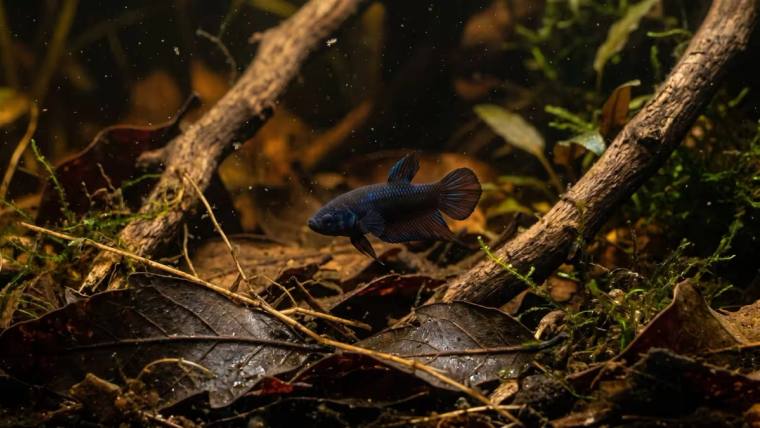
The confusing part is that sellers often use terms like dwarf betta, mini betta, and small betta interchangeably. In reality, some fish are genuinely small species, while others are simply young fish that haven't reached adult size yet.
If you're trying to find the smallest betta fish, you're in the right place. You'll learn which betta species stay the smallest, how large they become as adults, and what separates true small species from marketing labels that can mislead beginners.
What Is the Smallest Betta Fish?
The smallest betta fish are usually found among wild betta species rather than the common Betta splendens sold in most pet stores. These fish evolved in specialized habitats and often remain much smaller throughout adulthood.
Many beginners assume all bettas grow to roughly the same size. That's not quite true. Different species can have noticeably different body lengths, growth rates, and overall proportions.
Understanding Betta Size Measurements
One source of confusion is how fish size is measured. Some people include the fins, while others only measure the body.
A long-finned male Betta splendens can look much larger than a wild betta even if their actual body lengths are closer than expected. Large flowing fins often create an illusion of size.
When comparing species, body length gives a more accurate picture. This helps you understand which fish are genuinely smaller rather than simply having shorter fins.
Adult Size vs Juvenile Size
This mistake catches many new hobbyists.
A juvenile Betta splendens may look tiny in a store tank and appear similar in size to a small wild species. A few months later, it can grow significantly larger.
Always check the expected adult size rather than judging a fish by its current appearance. Growth can happen surprisingly fast under good conditions.
Fin Length vs Actual Body Size
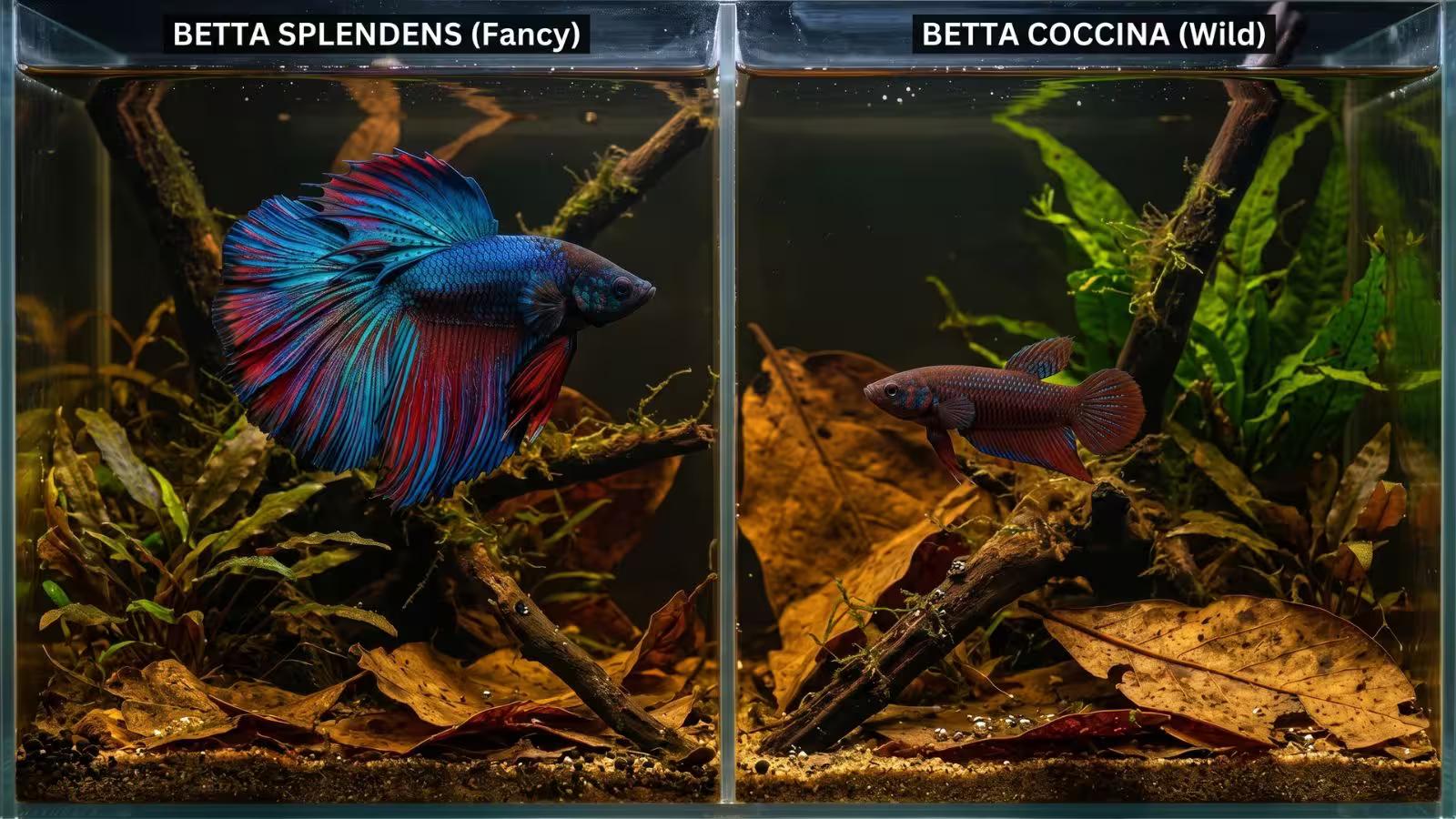
Fancy domestic bettas have been selectively bred for dramatic finnage. Those oversized fins can make the fish seem much bigger than it truly is.
Wild species usually have shorter fins and a more streamlined appearance. As a result, they often look smaller and more compact even before measuring them.
The Difference Between Common and Wild Bettas
Most hobbyists are familiar with Betta splendens. This species dominates the aquarium trade and comes in countless colors and fin types.
Wild bettas are different. Many species live in forest streams, peat swamps, and blackwater habitats throughout Southeast Asia.
One thing I've noticed is that people are often surprised by how subtle and elegant wild bettas look. They may lack the dramatic fins of domestic varieties, but their natural behaviors and smaller size make them fascinating fish to keep.
Betta splendens
An adult Betta splendens typically reaches around 2.5 to 3 inches (6–7.5 cm) in length. Some individuals can grow slightly larger under ideal conditions.
Males usually appear bigger because of their elaborate finnage. Females tend to look more compact, although the body size difference is often smaller than many people expect.
Wild Betta Species
Several wild betta species remain noticeably smaller than the average Betta splendens. These include species from the coccina group and other specialized lineages.
Many of these fish evolved in environments with dense leaf litter, tannin-rich water, and limited open swimming space. Their smaller size likely helped them adapt to those habitats over time.
Smallest Betta Fish Species Ranked by Adult Size
If your goal is finding the smallest betta fish available, these species deserve attention. Keep in mind that exact sizes vary between individuals, but the following rankings reflect typical adult lengths.
Betta Persephone
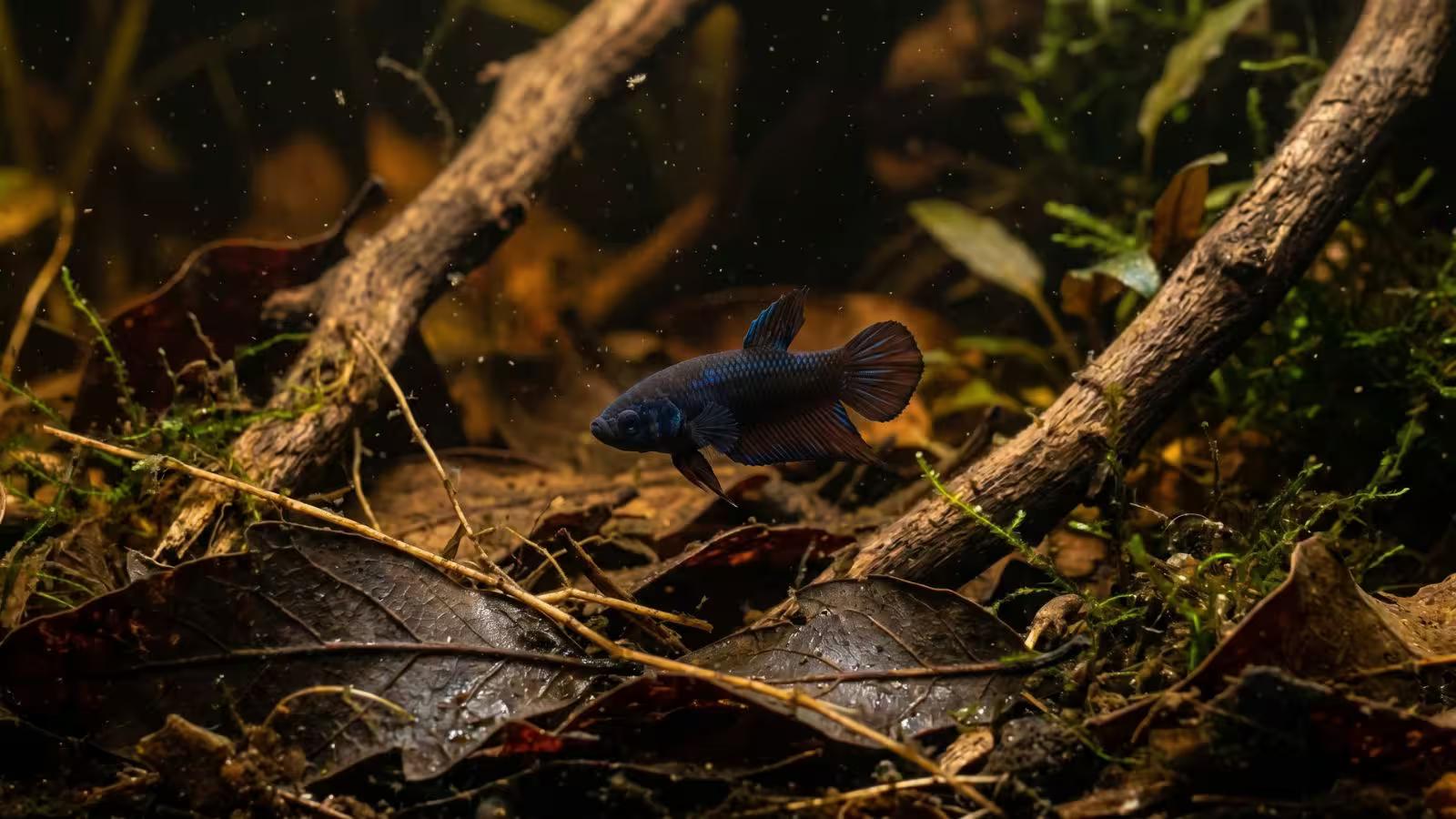
Betta persephone is often considered one of the smallest betta species known to aquarists. Adults frequently remain around 1.2 to 1.6 inches (3–4 cm).
This species comes from acidic blackwater habitats rich in leaf litter. Its small size and specialized care requirements make it more suitable for experienced keepers than complete beginners.
Despite its size, it can display surprisingly bold territorial behavior. Small does not always mean timid.
Betta Miniopinna
Betta miniopinna is another exceptionally small species that attracts serious wild betta enthusiasts.
Adults generally stay around 1.5 inches (4 cm) or slightly larger. Their compact bodies and subtle coloration make them very different from the flashy domestic bettas seen in stores.
Finding healthy specimens can be challenging because they are not commonly available through mainstream aquarium retailers.
Betta Burdigala
Betta burdigala belongs to the coccina complex and remains relatively small throughout adulthood.
These fish are known for their attractive red coloration and preference for soft, acidic water. Stable water conditions matter because smaller wild species often react poorly to sudden parameter changes.
Betta Coccina
Betta coccina is another small species frequently mentioned in discussions about dwarf bettas.
Most adults remain well below the size of a typical Betta splendens. Their vivid coloration and compact body shape make them popular among wild betta collectors.
Many beginners underestimate how sensitive coccina-group species can be. Consistent water quality usually matters more than expensive equipment.
Betta Imbellis
Betta imbellis, often called the peaceful betta, is slightly larger than some of the tiny coccina species but still smaller than many domestic bettas.
Its calmer temperament has helped it become one of the more accessible wild species in the hobby.
If you're interested in wild bettas but don't want to start with extremely delicate species, this can be a more forgiving choice.
Betta Mahachaiensis
Betta mahachaiensis is admired for its metallic coloration and unique appearance.
Adults generally remain smaller and slimmer than many selectively bred Betta splendens varieties. They also display fascinating natural behaviors that are often hidden in heavily domesticated strains.
Betta Smaragdina
Betta smaragdina is sometimes overlooked in size discussions because attention usually goes to its iridescent green coloration.
While not the absolute smallest species, it still tends to remain relatively compact compared with many fancy domestic bettas.
Its active swimming behavior often makes it appear larger than it actually is.
Smallest Betta Species Size Comparison
| Species | Average Adult Length | Maximum Length | Care Difficulty |
|---|---|---|---|
| Betta persephone | 1.2–1.6 inches | Around 1.8 inches | Advanced |
| Betta miniopinna | Around 1.5 inches | Around 1.8 inches | Advanced |
| Betta burdigala | 1.5–2 inches | Around 2 inches | Intermediate |
| Betta coccina | 1.5–2 inches | Around 2 inches | Intermediate |
| Betta imbellis | 2–2.5 inches | Around 2.5 inches | Beginner to Intermediate |
| Betta mahachaiensis | 2–2.5 inches | Around 3 inches | Intermediate |
| Betta smaragdina | 2–2.5 inches | Around 3 inches | Intermediate |
How Big Does a Betta Fish Get?
This is one of the most common questions among new betta owners.
The answer depends on species, genetics, nutrition, and environmental conditions. Not all bettas follow the same growth pattern.
Average Adult Size of Betta Splendens
Most adult Betta splendens reach approximately 2.5 to 3 inches in body length.
Some giant lines grow much larger due to selective breeding. On the opposite end, certain smaller strains may remain slightly below average size.
A healthy fish should look proportionate and well-conditioned rather than simply large.
Male vs Female Betta Size
Many hobbyists assume males are dramatically larger than females. In reality, the difference is often exaggerated.
Males mainly appear bigger because of their flowing fins. When measuring body length alone, the gap is usually much smaller.
Females often have sturdier bodies and can appear surprisingly robust when viewed from above.
Wild Betta Size Compared to Domestic Bettas
Wild bettas generally prioritize survival traits over ornamental features.
Domestic Betta splendens have been selectively bred for color, finnage, and appearance for many generations. Wild species often remain slimmer, shorter, and more streamlined.
This difference explains why some wild bettas qualify among the smallest betta fish even when their care requirements are more demanding.
Growth Rate From Juvenile to Adult
Most bettas experience rapid growth during their first few months of life.
Good nutrition, stable temperature, and excellent water quality all support healthy development. Fish kept in poor conditions may appear small, but that does not necessarily mean they belong to a naturally small species.
One mistake I see regularly is confusing stunted growth with a genetically small fish. A healthy dwarf species stays small because of its genetics. A stunted fish stays small because something interfered with normal development.
Typical Growth Timeline
| Age | Expected Development |
|---|---|
| 1 Month | Early juvenile stage |
| 3 Months | Rapid growth period |
| 6 Months | Near adult size for many species |
| 12 Months | Fully mature adult |
Understanding this timeline helps you identify whether a fish is truly a small species or simply a young betta that still has plenty of growing left to do.
Why Are Some Bettas Smaller Than Others?
Not all bettas are built the same. Genetics play the biggest role, but several other factors influence how large a fish becomes during its lifetime.
This is why two bettas raised in similar tanks can end up noticeably different in size.
Species Genetics
Genetics set the foundation for adult size.
A Betta persephone will never grow into the size range of a standard Betta splendens, no matter how ideal the care is. Its smaller body size is part of the species itself.
The same principle applies throughout the betta family. Some species evolved to stay compact, while others naturally grow larger.
Growth Rate Differences
Different species mature at different speeds.
Some small wild bettas reach their adult size fairly quickly. Others continue developing slowly over many months.
A fish that grows slowly is not necessarily unhealthy. Patience often matters when keeping uncommon species.
Nutrition During Development
Food quality has a major impact on growth.
Young bettas need protein-rich nutrition to support healthy muscle and body development. High-quality betta pellets, frozen foods, and occasional live foods usually produce better results than low-quality fillers.
One thing I've noticed is that underfed juveniles often appear healthy at first glance. Their slower growth only becomes obvious months later.
Environmental Factors
Poor environmental conditions can limit normal development.
Chronic stress, unstable temperatures, elevated ammonia, and poor water quality all place extra strain on a growing fish.
A healthy aquarium should maintain:
| Parameter | Recommended Range |
|---|---|
| Temperature | 76–82°F (24–28°C) |
| pH | 6.5–7.5 |
| Ammonia | 0 ppm |
| Nitrite | 0 ppm |
| Nitrate | Under 20 ppm |
Even naturally small bettas benefit from stable conditions. Small size does not mean lower care requirements.
Selective Breeding
Selective breeding has created dramatic differences within Betta splendens.
Some lines were developed for giant size. Others focused on color, finnage, or body shape.
This explains why two domestic bettas can look very different despite belonging to the same species.
Are Mini Bettas and Dwarf Bettas Real?
This topic causes a lot of confusion.
Many hobbyists search for a "mini betta" expecting a permanently tiny fish. Unfortunately, the aquarium trade does not always use those labels consistently.
The Truth About "Mini Betta" Marketing
The term mini betta has no universally accepted scientific definition.
Some sellers use it for small species. Others use it for younger fish that have not reached adulthood yet.
That's why buying solely based on a label can be risky.
Always ask for the species name whenever possible.
What Sellers Mean by Dwarf Betta
The phrase dwarf betta is often used loosely.
In some cases, it refers to genuinely small wild betta species. In other situations, it may simply describe a fish that appears smaller than average.
The label itself tells you very little unless the actual species is identified.
Juvenile Bettas Mistaken for Mini Bettas
This is probably the most common misunderstanding.
A young Betta splendens can be surprisingly small when displayed in store tanks. Many buyers assume the fish will stay that size permanently.
Several months later, the fish reaches normal adult proportions and the owner feels misled.
The fish wasn't mislabeled intentionally in every case. Sometimes the seller simply provided incomplete information.
How to Identify a True Small Species
The easiest method is checking the scientific name.
Species such as Betta persephone, Betta miniopinna, and Betta coccina naturally remain small throughout adulthood.
If the seller cannot identify the species and only uses marketing terms, proceed carefully.
A few extra questions before purchasing can prevent disappointment later.
Tank Size Requirements for Small Betta Fish
Many people assume a tiny fish needs a tiny tank.
That sounds logical, but it often leads to problems.
Why Tiny Bettas Still Need Adequate Space
Small bettas still produce waste, experience stress, and require stable water conditions.
Very small aquariums fluctuate quickly. Temperature, pH, and water quality can change much faster than in larger systems.
That instability often causes more trouble than the fish's actual size.
Recommended Tank Size by Species
Even the smallest betta fish benefits from proper swimming room and stable water.
| Species Type | Minimum Recommended Tank |
|---|---|
| Betta persephone | 5 gallons |
| Betta miniopinna | 5 gallons |
| Betta coccina group | 5 gallons |
| Betta imbellis | 5–10 gallons |
| Betta splendens | 5 gallons minimum preferred |
Many experienced keepers choose larger tanks because maintenance becomes easier.
Water Flow Considerations
Strong currents create unnecessary stress.
Wild bettas often come from slow-moving habitats with gentle water movement. A powerful filter can leave them constantly fighting the current.
Watch your fish closely. If it struggles to rest or gets pushed around, the flow may be too strong.
Aquascaping for Small Bettas
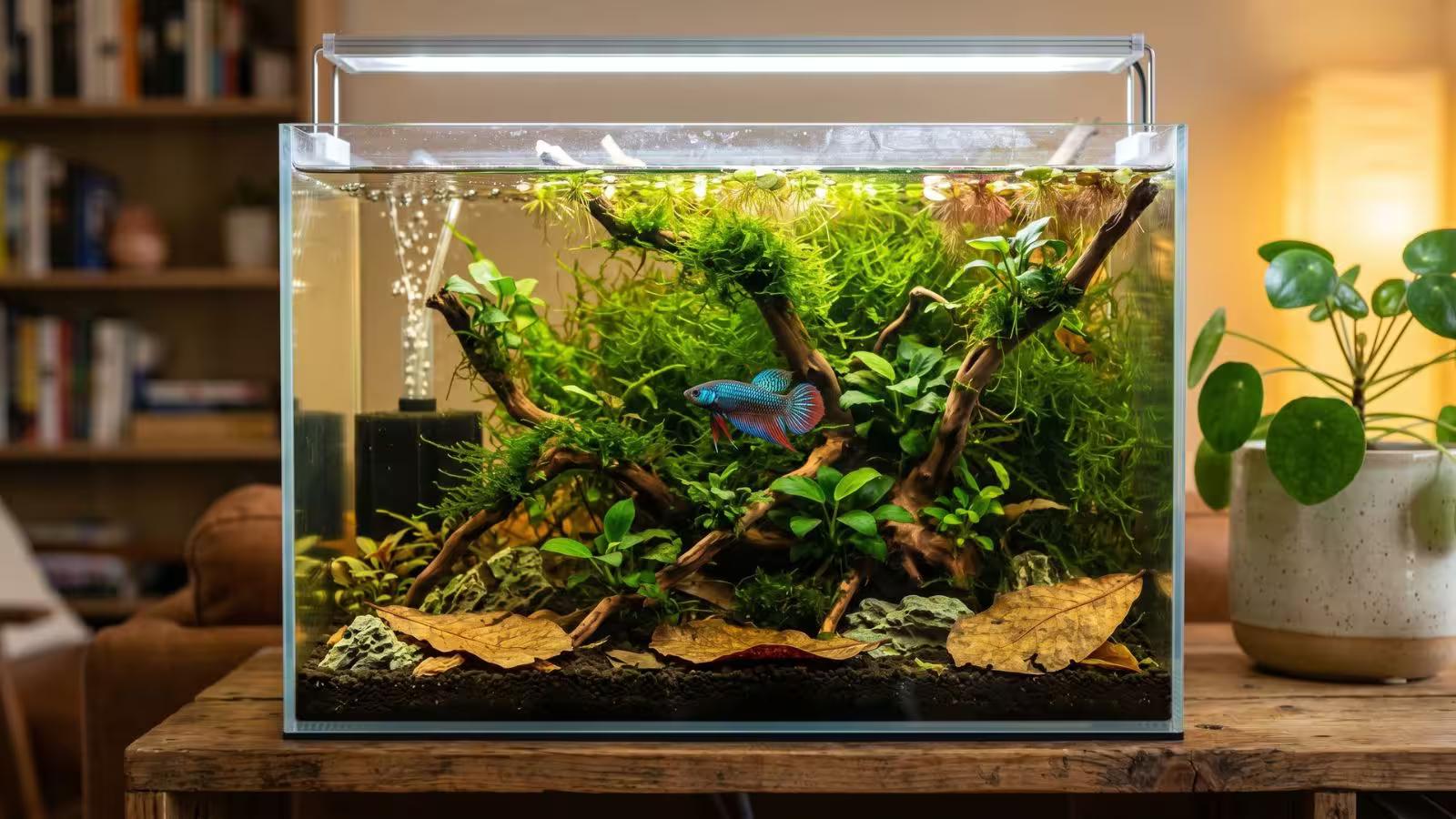
Dense planting often works well for smaller species.
Plants, driftwood, leaf litter, and shaded areas help create a sense of security. These fish generally appreciate cover more than large open spaces.
A well-structured layout can reduce stress significantly.
Plant Selection for Nano Aquariums
Smaller aquariums benefit from plants that don't overwhelm the space.
Popular options include:
- Java Fern
- Anubias
- Cryptocoryne
- Java Moss
- Floating plants
Floating plants are especially useful because they soften lighting and create a more natural environment.
Expert Advice: Water Parameters for Small Wild Bettas
Many care issues begin with water chemistry rather than disease.
Small wild bettas often come from habitats that differ greatly from typical tap water conditions.
For most species, aim for:
| Parameter | Recommended Range |
|---|---|
| Temperature | 76–82°F (24–28°C) |
| pH | 6.0–7.5 (species dependent) |
| Ammonia | 0 ppm |
| Nitrite | 0 ppm |
| Nitrate | Under 20 ppm |
| Water Flow | Gentle |
Some species from blackwater habitats prefer softer, more acidic conditions.
Trying to chase exact numbers every day often creates more stress than maintaining stable parameters.
Consistency usually beats perfection.
Care Requirements for the Smallest Betta Species
Small bettas may be tiny, but their care standards are not.
In fact, some of the smallest species can be less forgiving than common Betta splendens.
Water Parameters
Water quality directly affects behavior, appetite, and long-term health.
A cycled aquarium with stable conditions provides the best foundation for success.
Many beginners focus on feeding while overlooking water quality. In reality, poor water conditions often cause problems long before feeding mistakes do.
Recommended Water Parameters
| Parameter | Target Range |
|---|---|
| Temperature | 76–82°F (24–28°C) |
| pH | 6.5–7.5 |
| Ammonia | 0 ppm |
| Nitrite | 0 ppm |
| Nitrate | Under 20 ppm |
Feeding Small Bettas
Tiny mouths require appropriately sized foods.
High-quality betta pellets designed for smaller fish work well. Frozen bloodworms, daphnia, baby brine shrimp, and other protein-rich foods can provide variety.
Overfeeding remains one of the most common mistakes.
A small fish needs surprisingly little food. Excess food quickly affects water quality in smaller aquariums.
Behavior and Temperament
Each species behaves differently.
Some remain shy and spend time among plants and leaf litter. Others become surprisingly bold once they settle into their environment.
One thing I've observed is that stressed bettas often hide more than usual before showing visible health problems.
Behavior changes are often an early warning sign.
Compatible Tank Mates
Tank mate selection requires caution.
Many small wild bettas do best in species-focused setups. Fast, aggressive, or fin-nipping fish can create constant stress.
Research the specific species before adding companions.
A peaceful fish on paper may still be a poor match in practice.
Common Care Mistakes
Several mistakes appear repeatedly among new keepers:
- Buying based on size alone
- Using uncycled tanks
- Keeping water too cold
- Overfeeding
- Choosing strong filtration
- Ignoring stress behaviors
- Purchasing unidentified "mini bettas"
Most of these problems are preventable.
A little research before bringing the fish home usually saves a lot of frustration later.
Challenges of Keeping Small Wild Bettas
The smallest betta fish can be incredibly rewarding to keep.
They can also test your patience more than a standard Betta splendens.
Availability Issues
Finding healthy specimens is often difficult.
Many species appear only through specialty breeders or dedicated wild betta importers.
Availability can vary dramatically throughout the year.
Sensitivity to Water Changes
Some small species react strongly to sudden environmental shifts.
Large water changes, temperature swings, and abrupt parameter changes may trigger stress responses.
Smaller, consistent maintenance routines usually work better.
Stress Factors
Wild bettas often experience stress from situations that domestic bettas tolerate reasonably well.
Bright lighting, excessive activity around the aquarium, and lack of hiding places can all affect behavior.
A fish that constantly hides is telling you something about its environment.
Breeding Difficulties
Breeding certain small species requires patience and attention to detail.
Water chemistry, environmental cues, and pair compatibility often play a larger role than beginners expect.
This is one reason many species remain uncommon in the hobby.
Acclimation Problems
The first few weeks are often the most challenging.
New arrivals may refuse food temporarily while adjusting to unfamiliar surroundings.
Don't panic immediately if appetite is reduced during acclimation. Focus on stable water conditions and a calm environment.
Many healthy fish begin feeding normally once they feel secure in their new home.
Smallest Betta Fish vs Betta Splendens
Many people assume all bettas behave and grow similarly. Once you compare wild species to Betta splendens side by side, the differences become much more obvious.
Neither option is automatically better. The right choice depends on your goals, experience level, and aquarium setup.
| Feature | Small Wild Bettas | Betta splendens |
|---|---|---|
| Average Size | 1.2–2.5 inches | 2.5–3 inches |
| Appearance | Natural colors, shorter fins | Bright colors, large fins |
| Availability | Often limited | Widely available |
| Care Difficulty | Moderate to advanced | Beginner-friendly |
| Price | Usually higher | Usually affordable |
| Water Preferences | Often species-specific | More adaptable |
| Behavior | Varies by species | Generally predictable |
| Breeding Difficulty | Often challenging | Easier for hobbyists |
One thing that surprises many beginners is how active wild bettas can be.
A small Betta persephone may look less impressive in a store photo, but watching its natural behavior in a well-designed aquarium can be far more interesting than watching a heavily bred fish spend most of the day resting.
Size Isn't Everything
Many hobbyists become focused on finding the smallest betta fish possible.
In reality, temperament, care requirements, and availability usually have a bigger impact on your long-term enjoyment.
A slightly larger species that thrives in your aquarium is often a better choice than an extremely rare species that struggles under your care.
Which Small Betta Fish Is Best for Beginners?
Not every small species makes a good first wild betta.
Some are relatively forgiving, while others require careful attention to water chemistry and environmental stability.
Best Beginner-Friendly Small Bettas
Betta Imbellis
Betta imbellis is often one of the safest introductions to wild bettas.
It remains relatively compact, adapts well to aquarium life, and is generally more forgiving than many coccina-group species.
Its peaceful nature also appeals to hobbyists looking for a calmer fish.
Betta Mahachaiensis
This species combines manageable care requirements with striking metallic coloration.
It still requires proper research, but many keepers find it less intimidating than some of the rarer blackwater specialists.
Betta Smaragdina
Betta smaragdina offers beautiful iridescent coloration and interesting behavior.
With stable water parameters and proper care, it can be a rewarding next step for someone moving beyond standard Betta splendens.
Species Beginners Should Approach Carefully
Betta Persephone
This species is fascinating but demanding.
Its small size often attracts beginners, yet its environmental requirements can be challenging for someone with limited experience.
Betta Miniopinna
Availability, acclimation challenges, and specialized habitat preferences make this species more suitable for experienced hobbyists.
Many beginners achieve better results by starting with easier species first.
Best Choice for Nano Aquariums
If you're building a planted nano aquarium, it may be tempting to chase the absolute smallest species.
A better approach is choosing a fish whose care requirements match your experience level.
A healthy Betta imbellis in a well-maintained 5-gallon setup will often provide a better experience than a delicate species that constantly struggles with stress.
Expert Recommendations Before Buying a Small Betta
The buying stage is where many future problems begin.
A few extra minutes of research can prevent months of frustration later.
Questions to Ask the Seller
Always try to learn:
- The scientific species name
- Approximate age
- Current diet
- Water parameters
- Source of the fish
- Captive-bred or wild-caught status
A knowledgeable seller should be able to answer most of these questions.
Signs of a Healthy Specimen
Look for:
- Clear eyes
- Smooth swimming
- Consistent balance
- Healthy appetite
- Intact fins
- Good body condition
Avoid fish that remain motionless for long periods, breathe heavily, or show visible signs of stress.
Quarantine Recommendations
Quarantine is often overlooked.
Even healthy-looking fish can carry parasites or infections that become noticeable later.
A simple quarantine setup allows observation before introducing the fish to a permanent aquarium.
This precaution prevents many avoidable problems.
Avoiding Mislabelled Fish
The easiest way to avoid mistakes is focusing on scientific names.
Labels such as "mini betta" and "dwarf betta" may not tell you what species you're actually buying.
Whenever possible, identify the fish first and the marketing term second.
Final Thoughts
Finding the smallest betta fish is about more than measuring inches.
The truly tiny species, such as Betta persephone and Betta miniopinna, are fascinating because of their unique habitats, behaviors, and natural history. Their small size is only part of the story.
For most hobbyists, success comes from matching the fish to the aquarium rather than matching the aquarium to the fish. Stable water quality, proper nutrition, gentle filtration, and patience will always matter more than chasing the smallest possible species.
Once you understand the difference between a genuinely small wild betta and a young fish being marketed as a mini betta, choosing the right species becomes much easier. And when that fish finally settles into a well-planted tank and begins showing natural behavior, you'll see why so many aquarists become fascinated with these tiny members of the betta family.