You clean your rabbit's litter box. Within hours, it is full again. You wonder: why do bunnies poop so much? The answer lies in their unique digestive system. Rabbits are designed to eat constantly and produce waste continuously.
According to the RSPCA, rabbits have a highly efficient digestive system that processes large amounts of fiber. Their diet consists mainly of hay, which is high in fiber and low in nutrients. To extract nutrients efficiently from a high-fiber diet, rabbits eat frequently and produce waste continuously. The House Rabbit Society explains that this constant production of droppings is a sign of a healthy digestive system.
This guide covers everything about rabbit digestion and droppings: why bunnies poop so much, what normal droppings look like, cecotropes, and signs of digestive problems. For general illness signs, see sick bunny. For appetite loss and digestive issues, see why is my rabbit not eating.
Why do bunnies poop so much? Rabbits eat continuously and their digestive system processes food efficiently. A healthy rabbit produces hundreds of droppings daily. This constant production is normal and indicates good digestive health.
Why Rabbits Poop So Often
Why do bunnies poop so much? The answer is rooted in their biology. Rabbits are herbivores with a digestive system designed for processing large amounts of plant material.
Hay is the main component of a rabbit's diet. It is high in fiber and low in nutrients. To extract enough nutrition, rabbits must eat large volumes. More food in means more waste out. Rabbits are continuous eaters, grazing throughout the day. This constant intake keeps their digestive system moving. A moving digestive system produces constant waste.
A healthy rabbit gut is active and efficient. The digestive system processes food quickly, resulting in frequent bowel movements. Rabbits eat small amounts frequently, and this grazing behavior keeps the digestive system active. The waste produced is the fiber that passes through the digestive system. More fiber intake means more waste production.
According to veterinary sources, a healthy rabbit produces well over 100 droppings daily, though exact numbers vary by breed, weight, and diet. This is a sign of a healthy, active digestive system.
The table below summarizes why rabbits poop so much:
| Reason | Explanation | Result |
|---|---|---|
| High-fiber diet | Hay is mostly indigestible fiber | Large volume of waste |
| Continuous eating | Rabbits graze throughout the day | Constant digestive activity |
| Fast digestion | Food moves quickly through the gut | Frequent bowel movements |
| Efficient system | Maximum nutrient extraction | Regular waste production |
Rabbits poop so much because they eat continuously, their diet is high in fiber, and their digestive system processes food efficiently. This constant production is normal and healthy.
How Many Times a Day Do Rabbits Poop
How many times a day do rabbits poop? A healthy rabbit produces well over 100 droppings daily, though exact numbers vary by breed, weight, hay intake, and age. The amount should be consistent from day to day. A rabbit that produces noticeably fewer droppings than normal is a concern.
Healthy rabbits produce droppings consistently throughout the day. Rabbits produce droppings throughout the day and night. This continuous production is normal. The rabbit digestive system is very efficient. It extracts nutrients from food quickly, and the remaining waste is eliminated rapidly.
Normal droppings are round, dry, and uniform in size. They are golden-brown to dark brown. Quantity should be consistent daily. Droppings are one of the most important health indicators. Changes in frequency, size, or shape indicate problems.
For more on what normal droppings look like, see our guide on healthy bunny poop.
A healthy rabbit produces well over 100 droppings daily, though exact numbers vary. The amount should be consistent day to day. A noticeable decrease in droppings is a warning sign.
What Healthy Rabbit Poop Looks Like
Understanding what healthy rabbit poop looks like helps you monitor your rabbit's health.
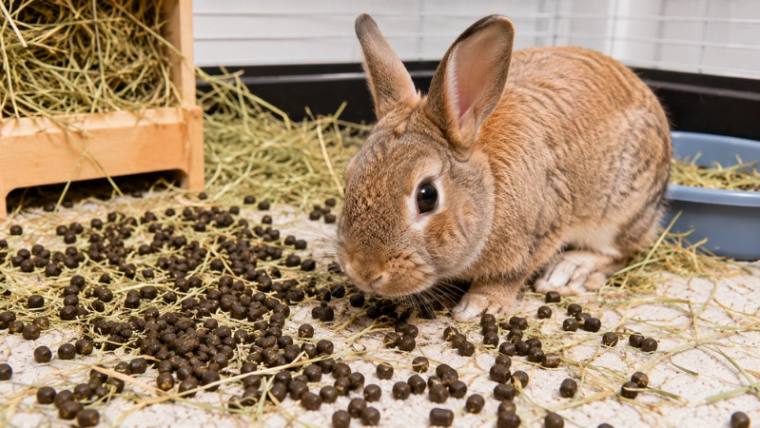
Healthy droppings are round, dry, and uniform in size. They are golden-brown to dark brown. The surface should be slightly rough, not smooth. They should not stick together.
Normal droppings are about the size of a pea to a chickpea (0.5-1 cm in diameter). They are uniform in size and shape. The color varies based on diet. Hay-based diets produce lighter brown droppings. Pellets and greens can darken the color.
Size varies by breed. Larger rabbits produce larger droppings. Smaller rabbits produce smaller droppings. Size should be consistent for your individual rabbit. Consistent droppings indicate good digestive health. Persistent changes in appearance may indicate problems.
For more on rabbit droppings and digestive health, see healthy bunny poop.
Healthy rabbit droppings are round, dry, and uniform in size. They are golden-brown to dark brown. Consistency in size, shape, and quantity indicates good digestive health.
Cecotropes Explained
Cecotropes are an important part of rabbit digestion. Understanding them helps you recognize normal rabbit behavior.
Cecotropes are soft, grape-like droppings. Rabbits produce them at night or early morning. They eat them directly from their bottom. According to veterinary sources, this is normal and essential for nutrition.
Why do rabbits eat their poop? Rabbits eat cecotropes to absorb nutrients. Cecotropes contain protein, vitamins, and beneficial bacteria. This process is called cecotrophy. It is essential for rabbit health.
Cecotropes are often produced at night. They are sometimes called "night feces." Rabbits eat them immediately. You may rarely see them. Cecotropes are soft and shiny. They are often clustered together. They look different from normal droppings. If you see uneaten cecotropes, your rabbit may have digestive issues.
Cecotrophy recycles nutrients. Rabbits extract maximum nutrition from their food. This is why rabbits can survive on a high-fiber diet. Cecotropes are also called cecal pellets. They are produced in the caecum. They contain beneficial bacteria that help digest fiber. Eating cecotropes replenishes gut bacteria.
Cecotropes are soft, grape-like droppings that rabbits eat directly from their bottom. This process, called cecotrophy, is normal and essential for nutrition. Uneaten cecotropes may indicate digestive problems.
When Too Much Poop Is Normal
Excessive poop is often normal for rabbits. Understanding what is normal helps you distinguish normal from abnormal.
Rabbits on a hay-based diet produce more droppings. Hay is mostly fiber. Fiber passes through the digestive system quickly. More fiber means more droppings. Rabbits that eat unlimited hay produce large amounts of droppings. This is normal and healthy. The droppings should be round, dry, and uniform.
Active digestion produces frequent droppings. A healthy rabbit digestive system is always moving. This results in constant waste production. A rabbit with a healthy appetite eats frequently. More food intake means more waste production. This is normal.
Rabbits process a large amount of fibrous material every day. This results in the production of many droppings. This is a positive sign. It indicates good digestive health.
Excessive poop is normal for rabbits on a hay-based diet. A healthy rabbit produces large amounts of droppings. This is a sign of good digestive health.
Signs of Digestive Problems
Recognizing signs of digestive problems helps you seek treatment early. Changes in droppings are often the first sign.
Abnormal droppings indicate illness. Signs include very small droppings, misshapen droppings, soft droppings, or no droppings. Digestive disorders cause changes in droppings. GI stasis is the most serious. Other disorders include diarrhea and bloating.
Very small droppings indicate reduced food intake. The rabbit is eating less than normal. This can be due to dental pain, GI stasis, or other illness. Misshapen droppings indicate poor digestion. They may be elongated, flattened, or uneven. This can indicate dental disease, dietary imbalance, or gastrointestinal slowdown.
Persistent or significant color changes may indicate a problem. A slowed digestive system produces fewer droppings. The droppings may be small, hard, or completely absent. This is a sign of GI stasis.
For more on digestive problems, see why is my rabbit not eating and sick bunny.
Signs of digestive problems include very small droppings, misshapen droppings, soft droppings, or no droppings. These signs indicate illness and require veterinary attention.
Rabbit Diarrhea Causes
Diarrhea in rabbits is serious. Understanding the causes helps you prevent and treat it.
Common causes include sudden diet changes, too many sugary foods, stress, infections, and parasites. According to veterinary sources, diarrhea requires prompt treatment. A diet too low in fiber causes digestive upset. Too many pellets, sugary treats, or vegetables high in sugar can cause diarrhea.
Introducing new foods too quickly causes digestive upset. Change foods gradually over 5-7 days. Internal parasites can cause diarrhea. Coccidia is a common parasite that causes diarrhea in young rabbits. Bacterial infections can cause diarrhea. Treatment requires veterinary antibiotics. Stress can cause digestive upset. A stressed rabbit may develop diarrhea. Reduce stress to prevent digestive problems.
Diarrhea in rabbits is serious and requires veterinary attention. Causes include sudden diet changes, parasites, infections, and stress. Prompt treatment is essential.
How Rabbit Diarrhea Is Treated
Rabbit diarrhea requires prompt treatment. Do not attempt to treat at home without veterinary guidance.
Treatment depends on the cause. A veterinarian must diagnose the underlying issue. Never give human medications to rabbits. Treatment may include fluid therapy, antibiotics, antiparasitic medications, and dietary adjustments. Your vet will recommend the appropriate treatment.
Diarrhea causes rapid dehydration. Offer fresh water. Your vet may recommend fluid therapy. A rabbit with diarrhea needs emergency care. Diarrhea can be fatal without treatment. Contact your vet immediately.
Offer unlimited hay. Offer fresh water. Do not give sugary treats. Follow your vet's dietary recommendations. After treatment, monitor your rabbit closely. Watch for eating, drinking, and droppings. Follow up with your vet as recommended.
Rabbit diarrhea requires veterinary treatment. Do not attempt to treat at home without veterinary guidance. Diarrhea causes rapid dehydration and can be fatal. Contact your vet immediately.
When to See a Vet
Knowing when to seek veterinary care for digestive problems is essential. Early intervention saves lives.
Severe diarrhea requires immediate veterinary care. A rabbit with severe diarrhea is at risk of dehydration and death. A rabbit that stops eating needs emergency care. Loss of appetite with diarrhea is serious.
Signs of dehydration include sunken eyes, sticky gums, and lethargy. Dehydration requires immediate treatment. A lethargic rabbit is very sick. Lethargy with diarrhea indicates serious illness. Emergency signs include no droppings for 12 hours, severe diarrhea, labored breathing, collapse, and unresponsiveness. Seek immediate veterinary care.
GI stasis is a life-threatening emergency. A rabbit with no droppings for 12 hours is in danger. For more on emergency signs, see how to know if your rabbit is dying.
Seek veterinary care for severe diarrhea, not eating, dehydration, lethargy, or no droppings for 12 hours. These signs indicate serious illness and require immediate attention.
How to Keep a Rabbit's Digestion Healthy
Prevention is the best approach to digestive health. Good care prevents most digestive problems.
Hay should be 80-90% of the diet. Timothy hay is best for adults. Hay provides the fiber needed for healthy digestion. According to the Humane Society, unlimited hay prevents most digestive problems. A high-fiber diet keeps the digestive system moving. Hay is the best source of fiber.
Fresh water must be available at all times. Dehydration causes digestive problems. Check water daily. A healthy gut is essential for digestion. Provide a balanced diet, fresh water, and a clean environment. Offer 2 cups of fresh greens daily. Good options include romaine lettuce, cilantro, and parsley. Avoid iceberg lettuce (low nutritional value) and vegetables high in sugar.
Unlimited hay, fresh greens, and limited pellets. Avoid sugary treats. Routine health checks, a proper diet, and stress reduction prevent digestive problems.
For more on rabbit droppings and digestive health, see our guide on healthy bunny poop.
Prevent digestive problems with unlimited hay, fresh water, a balanced diet, and routine health checks. Hay is the most important food for digestive health.
Final Thoughts
Why do bunnies poop so much? Rabbits have a high-fiber diet and a fast digestive system. They eat continuously and produce waste continuously. A healthy rabbit produces well over 100 droppings daily, though exact numbers vary. This constant production is normal and healthy.
Understanding your rabbit's droppings helps you monitor their health. Healthy droppings are round, dry, and uniform in size. Cecotropes are soft, grape-like droppings that rabbits eat for nutrition. Changes in droppings indicate problems.
Prevention is the best approach. Provide unlimited hay, fresh water, a balanced diet, and routine health checks. A healthy digestive system means a healthy rabbit.
For more information on rabbit health, see our guides on sick bunny, why is my rabbit not eating, and healthy bunny poop.
Trusted Resources for Rabbit Digestive Health
- RSPCA Rabbit Health Guide – Expert advice on rabbit health and digestive issues
- House Rabbit Society Health – Comprehensive health information for pet rabbits
- PDSA Rabbit Health – UK veterinary charity guidance on rabbit health
- Cornell University Rabbit Health – Veterinary research-based health information
- Humane Society Rabbit Care – General rabbit care and health guidance