You notice your rabbit scratching more than usual. There is dandruff in her fur. She seems less energetic. You worry about rabbit parasites. Parasites are common in rabbits and can cause significant health problems if left untreated.
According to veterinary sources, rabbits can be affected by both external and internal parasites. External parasites include mites and fleas. Internal parasites include worms and protozoa like coccidia. The RSPCA notes that parasite infestations require prompt veterinary attention. The House Rabbit Society emphasizes that regular health checks help detect parasites early.
This guide covers everything about rabbit parasites: common types, signs to watch for, treatment options, and prevention strategies. For general illness signs, see sick bunny. For skin conditions, see ringworm in rabbits.
Rabbit parasites include external parasites (mites, fleas) and internal parasites (worms, coccidia). They can cause itching, weight loss, and digestive problems. Prompt veterinary treatment is essential.
Types of Rabbit Parasites
Rabbit parasites are classified into two main categories: external and internal. Understanding the types helps you recognize the signs and seek appropriate treatment.
External parasites: These live on the skin and fur. Common external parasites include mites (ear mites, fur mites) and fleas. They cause itching, hair loss, and skin irritation.
Internal parasites: These live inside the body. Common internal parasites include intestinal worms and protozoa like coccidia. They can cause digestive problems, weight loss, and poor coat condition.
Rabbit mites: Mites are the most common external parasite in rabbits. Ear mites affect the ears. Fur mites affect the skin and fur. Both cause intense itching and irritation.
Rabbit fleas: Fleas are less common in rabbits but can occur. They cause itching and skin irritation.
Rabbit worms: Intestinal worms are uncommon in pet rabbits but can occur. They cause digestive problems and weight loss.
Protozoan parasites: Coccidia is a common protozoan parasite in rabbits. Many rabbits carry coccidia without showing signs of illness. Disease is most common in young, stressed, or immunocompromised rabbits.
Rabbit parasites include external parasites (mites, fleas) and internal parasites (worms, coccidia). Many rabbits carry coccidia without illness; disease is most common in young or stressed rabbits.
Signs of Parasites
Recognizing the signs of parasites helps you seek treatment early. A rabbit with parasites may show several symptoms.
Rabbit itching: Itching is the most common sign of external parasites. A rabbit with mites or fleas scratches excessively. They may rub against objects or shake their head.
Excessive scratching: Excessive scratching can cause skin damage. The rabbit may develop sores, scabs, or hair loss from scratching.
Hair loss: Parasites can cause hair loss. Fur mites cause patchy hair loss. Ear mites cause hair loss around the ears.
Weight loss: Internal parasites can cause weight loss. The parasites consume nutrients that the rabbit needs. A rabbit with worms may lose weight despite eating normally.
Digestive problems: Internal parasites can cause digestive problems. Signs include diarrhea, soft stool, and changes in appetite.
Skin irritation: External parasites cause skin irritation. The skin may be red, flaky, or crusty. Dandruff is common with fur mites.
Diarrhea: Coccidia causes diarrhea, especially in young rabbits. Diarrhea can lead to dehydration. If you notice any of these signs, contact your veterinarian immediately. For more on recognizing a sick bunny, see sick bunny.
Signs of parasites include itching, scratching, hair loss, weight loss, digestive problems, skin irritation, and diarrhea. Early detection is essential for effective treatment.
External Parasites
External parasites live on the skin and fur. They cause discomfort and can lead to secondary infections if left untreated.
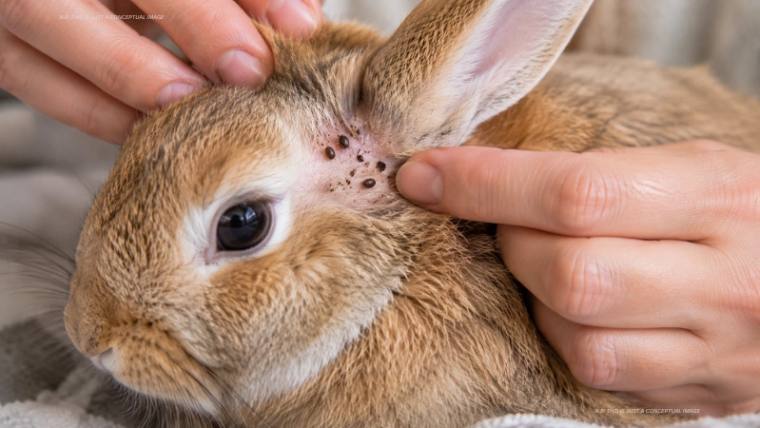
Rabbit mites: Mites are the most common external parasite in rabbits. There are two main types: ear mites and fur mites. Ear mites cause intense itching in the ears. Infected rabbits shake their head and scratch at their ears. The ears may have a dark, crusty discharge. Fur mites cause itching and dandruff. The fur may appear patchy or dull.
Rabbit fleas: Fleas are less common but can affect rabbits. They cause itching and skin irritation. Check your rabbit regularly for fleas if they have contact with other animals.
Fur mites in rabbits: Fur mites, also called Cheyletiella, cause "walking dandruff." The mites are visible as tiny white specks moving through the fur. They cause itching and hair loss.
Ear mites in rabbits: Ear mites, also called Psoroptes cuniculi, cause intense itching in the ears. The ears may have a dark, crusty discharge. Ear mites are highly contagious among rabbits.
Rabbit skin disease: Untreated external parasites can cause skin disease. Secondary infections can develop from scratching. The skin may become red, inflamed, and infected.
Rabbit dandruff: Dandruff is a common sign of fur mites. The skin flakes off in small white pieces. The rabbit may groom excessively.
For more on skin conditions, see ringworm in rabbits.
External parasites include mites (ear mites, fur mites) and fleas. They cause itching, hair loss, and skin irritation. Treatment requires veterinary medication.
Internal Parasites
Internal parasites live inside the body. They can cause digestive problems, weight loss, and poor overall health.
Intestinal worms in rabbits: Intestinal worms are uncommon in pet rabbits but can occur. They cause digestive problems and weight loss. Pinworms are the most common type of intestinal worm in rabbits. Transmission occurs through ingestion of contaminated food or water. Symptoms include weight loss, poor coat condition, and sometimes diarrhea. Diagnosis is made through microscopic examination of feces. Treatment requires veterinary deworming medication.
Coccidia in rabbits: Coccidia is a common protozoan parasite in rabbits. Many rabbits carry coccidia without showing signs of illness. Disease is most common in young, stressed, or immunocompromised rabbits. It affects the intestinal tract and causes diarrhea, especially in young rabbits. According to veterinary sources, coccidia is one of the most common parasitic infections in rabbits. Treatment requires veterinary medication.
Rabbit digestive parasites: Internal parasites affect the digestive system. Signs include diarrhea, soft stool, and changes in appetite. A rabbit with internal parasites may lose weight despite eating normally.
Parasitic infections: Parasitic infections can weaken the immune system. A rabbit with parasites is more susceptible to other illnesses.
Rabbit gut health: Internal parasites disrupt the gut's normal function. They can cause malnutrition and poor growth in young rabbits.
Internal parasite symptoms: Symptoms of internal parasites include weight loss, diarrhea, poor coat condition, and reduced appetite. A rabbit with internal parasites may also have a pot-bellied appearance.
Internal parasites include intestinal worms (pinworms) and coccidia. Pinworms are transmitted through contaminated food or water. Many rabbits carry coccidia without illness; disease is most common in young or stressed rabbits.
Rabbit Parasite Treatment
Rabbit parasite treatment requires veterinary care. Do not attempt to treat parasites without veterinary guidance.
Anti parasite treatment for rabbits: Treatment depends on the type of parasite. External parasites are treated with topical or injectable medications. Internal parasites are treated with oral or injectable dewormers.
Rabbit deworming: Deworming medication is prescribed by a veterinarian. The medication is given orally or by injection. Follow your vet's instructions carefully.
Parasite medication: Never use over-the-counter parasite medications without veterinary guidance. Some medications are toxic to rabbits. Your vet will prescribe the correct medication and dosage.
Veterinary parasite treatment: Your vet will diagnose the parasite and prescribe appropriate treatment. They may also recommend environmental cleaning to prevent reinfection.
Rabbit recovery care: After treatment, monitor your rabbit for improvement. The itching should decrease. The rabbit should regain weight and energy.
Rabbit health management: Follow your vet's instructions for follow-up treatment. Some parasites require multiple doses.
For more on veterinary care, see poorly rabbit.
Rabbit parasite treatment requires veterinary care. Medications must be prescribed by a veterinarian. Never use over-the-counter parasite medications without veterinary guidance.
Prevention and FAQs
Preventing parasites is easier than treating them. Good care reduces the risk of infestation.
Preventing rabbit parasites: Maintain clean housing. Check your rabbit regularly for signs of parasites. Quarantine new rabbits before introducing them to existing rabbits. Exposure to infected animals is the primary risk factor for parasite infestations.
Clean rabbit housing: Clean cages regularly. Remove soiled bedding promptly. A clean environment prevents parasite infestations.
Routine health checks: Check your rabbit's skin and fur regularly. Look for signs of itching, hair loss, or dandruff. Check the ears for discharge.
Quarantine new rabbits: Quarantine new rabbits for 2-4 weeks before introducing them to existing rabbits. This prevents the spread of parasites.
Rabbit hygiene: Wash your hands after handling rabbits. This prevents the spread of parasites between rabbits.
Parasite prevention: Routine veterinary checkups detect parasites early. Ask your vet about parasite prevention recommendations.
For more on rabbit care, see ideal rabbit cage and rabbit in cages.
Prevent parasites with clean housing, routine health checks, and quarantine of new rabbits. Exposure to infected animals is the primary risk factor for parasite infestations.
Final Thoughts
Rabbit parasites are common but manageable with proper care. External parasites like mites and fleas cause itching and skin irritation. Internal parasites like coccidia cause digestive problems and weight loss. Recognizing the signs early helps you seek treatment before the condition worsens.
Treatment requires veterinary care. Never use over-the-counter parasite medications without veterinary guidance. Some medications are toxic to rabbits. Your vet will prescribe the correct medication and dosage.
Prevention is the best approach. Maintain clean housing, perform routine health checks, and quarantine new rabbits. Exposure to infected animals is the primary risk factor for parasite infestations.
For more information on rabbit health, see our guides on sick bunny, ringworm in rabbits, and rabbit in cages.
Trusted Resources for Rabbit Parasite Information
- RSPCA Rabbit Health Guide – Expert advice on rabbit health and parasites
- House Rabbit Society Health – Comprehensive health information for pet rabbits
- PDSA Rabbit Health – UK veterinary charity guidance on rabbit health
- Cornell University Rabbit Health – Veterinary research-based health information
- Humane Society Rabbit Care – General rabbit care and health guidance