Types of Wild Rabbits
You see a rabbit dart across your backyard. It has a white, fluffy tail. It disappears into a brush pile. You wonder: what kind of wild rabbit was that? Understanding the types of wild rabbits helps you identify the species living in your area.
According to the RSPCA, rabbits belong to the family Leporidae. There are over 30 species of wild rabbits and hares worldwide. The most common wild rabbit species in North America are cottontails (genus Sylvilagus). In Europe, the European rabbit (Oryctolagus cuniculus) is widespread. Rare species include the pygmy rabbit and volcano rabbit, which are listed as endangered by the IUCN Red List.
This guide covers the most common types of wild rabbits, rare and unusual species, their habitats, behavior, diet, and conservation status. For a complete overview of all rabbit breeds including domestic varieties, see our main guide on types of rabbits.
There are over 30 species of wild rabbits worldwide. Common types include Eastern cottontail, Desert cottontail, European rabbit, and Swamp rabbit. Rare species include pygmy rabbit (smallest) and volcano rabbit (critically endangered). Wild rabbits are not the same as domestic rabbits.
Wild Rabbit Species Comparison Table
The table below compares the key characteristics of the major wild rabbit species covered in this guide.
| Species | Region | Weight (lbs) | Distinctive Feature | Conservation Status |
|---|---|---|---|---|
| Eastern Cottontail | Eastern North America | 2-4 | White fluffy tail | Least Concern |
| European Rabbit | Southwestern Europe | 3-5 | Lives in burrows (warrens) | Near Threatened |
| Desert Cottontail | Western US, Mexico | 1.5-3 | Pale fur, large ears | Least Concern |
| Swamp Rabbit | Southeastern US | 4-6 | Largest cottontail, swims | Least Concern |
| Pygmy Rabbit | NW United States | Under 1 | Smallest rabbit, short ears | Endangered |
| Volcano Rabbit | Mexico (volcanoes) | 1-1.5 | Short rounded ears | Critically Endangered |
Most Common Wild Rabbit Species
Here are the most common types of wild rabbits found across North America and Europe. These are the species you are most likely to encounter in your backyard or local park.
1. Eastern Cottontail (Sylvilagus floridanus)
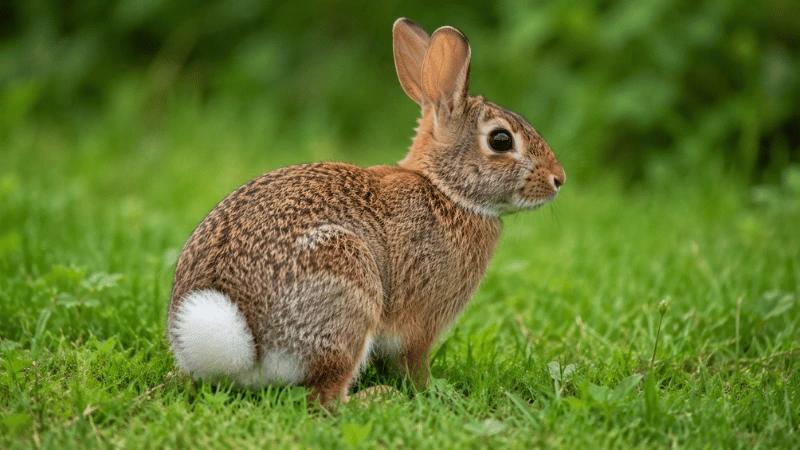
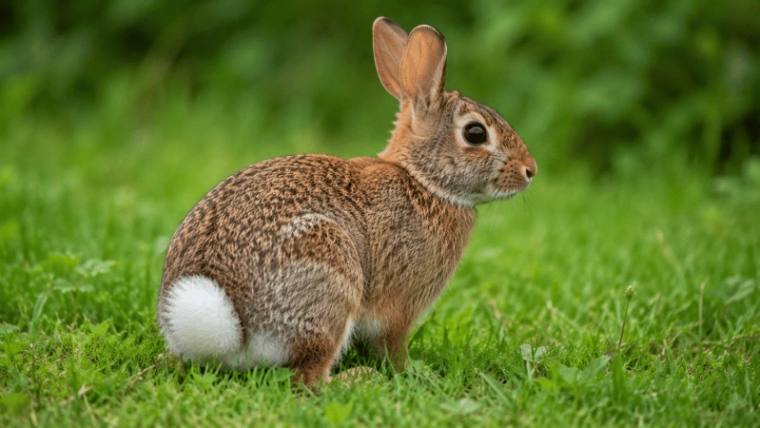
The Eastern Cottontail is the most common wild rabbit in North America. According to the National Wildlife Federation, it has brownish-gray fur on the back, white fur on the belly, and a distinctive white, fluffy tail (the "cottonball"). Ears have black tips. Weighs 2 to 4 pounds. Found in fields, meadows, suburbs, and backyards throughout eastern and central North America.
2. European Wild Rabbit (Oryctolagus cuniculus)
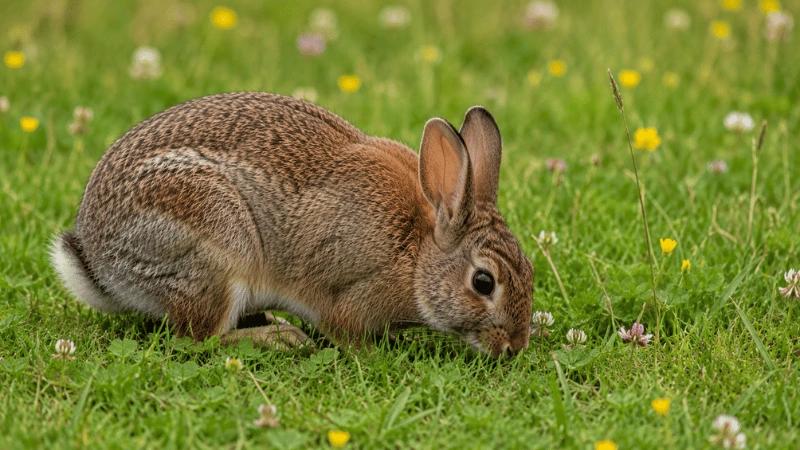
The European wild rabbit is the ancestor of all domestic rabbit breeds. According to the IUCN Red List, it has grayish-brown fur, a lighter belly, and upright ears. Weighs 3 to 5 pounds. Lives in social groups in underground burrows called warrens. Native to southwestern Europe (Spain, Portugal, France) but introduced worldwide.
3. Desert Cottontail (Sylvilagus audubonii)
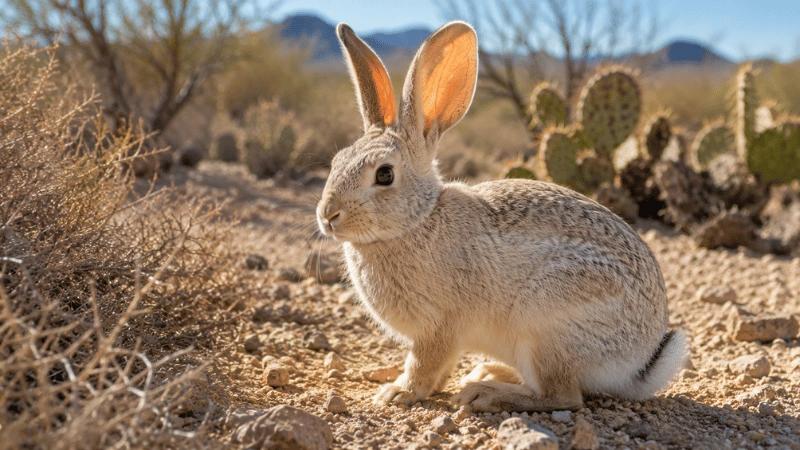
The Desert Cottontail is found in arid regions of the western United States and Mexico. It has pale, grayish-brown fur that blends with desert sand and rocks. The tail is white underneath but less fluffy than the Eastern Cottontail. Ears are larger and more erect. Weighs 1.5 to 3 pounds. Adapted to survive in hot, dry environments.
4. Swamp Rabbit (Sylvilagus aquaticus)
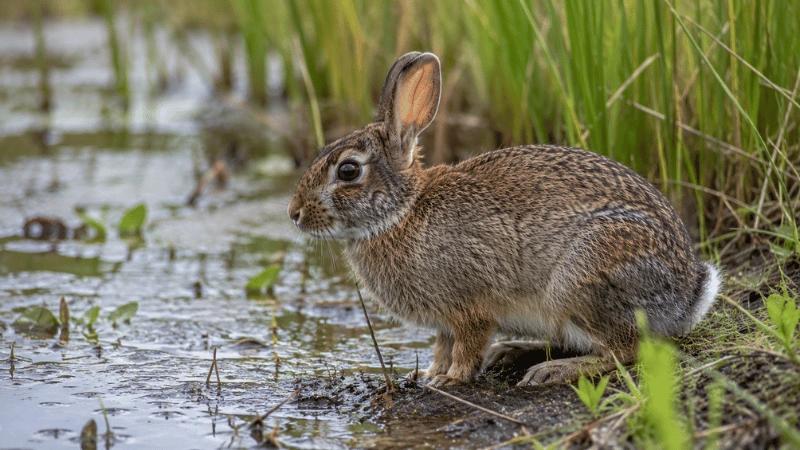
The Swamp Rabbit is the largest cottontail species, weighing 4 to 6 pounds. It has dark brown fur, a reddish-brown nape, and a white tail. Found in wetlands, swamps, and floodplains of the southeastern United States. It is an excellent swimmer and often takes to water to escape predators.
5. Brush Rabbit (Sylvilagus bachmani)
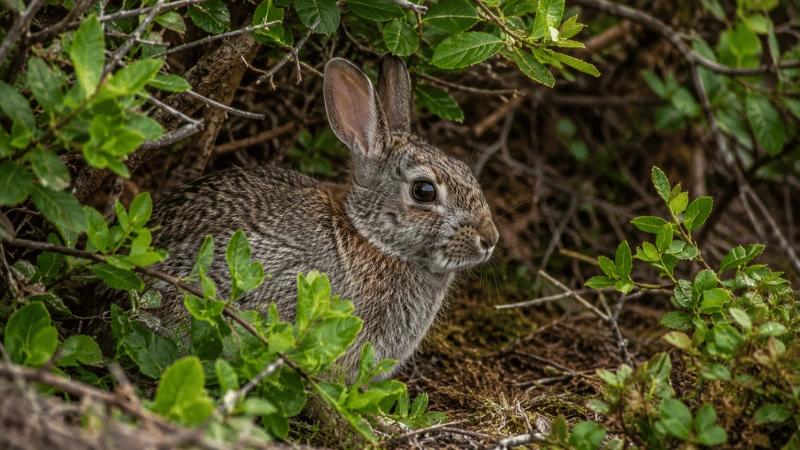
The Brush Rabbit is found along the Pacific coast of North America, from Oregon to Baja California. It has dark brown fur, a short tail, and small ears. Weighs 1.5 to 2.5 pounds. Lives in dense brush, chaparral, and forest edges. It does not dig its own burrows but uses existing cover.
6. Mountain Cottontail (Sylvilagus nuttallii)
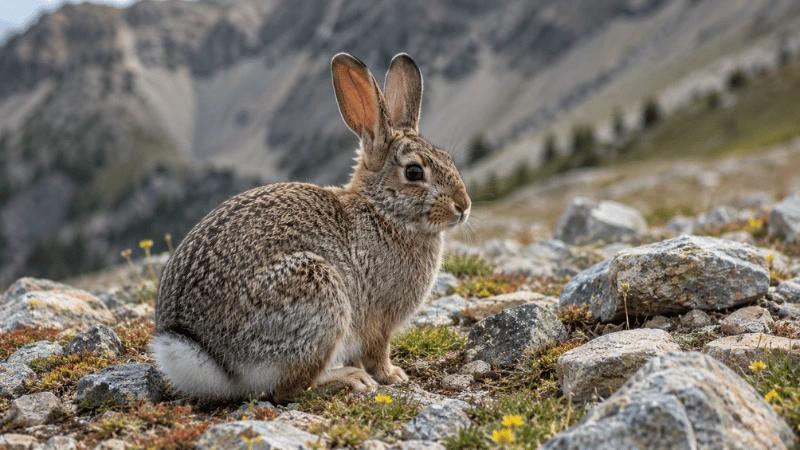
The Mountain Cottontail is found in mountainous regions of the western United States and Canada. It has grayish-brown fur with a pale underside. Weighs 2 to 3 pounds. Lives in sagebrush, pinyon-juniper woodlands, and mountain meadows at elevations up to 10,000 feet.
7. New England Cottontail (Sylvilagus transitionalis)
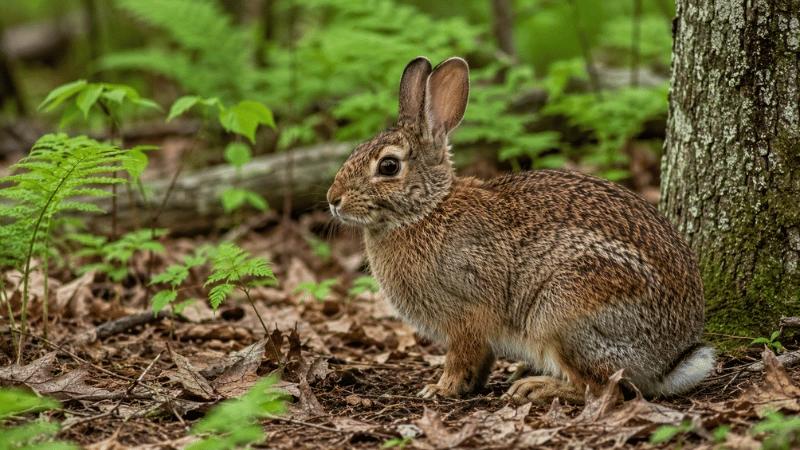
The New England Cottontail is found in the northeastern United States. It looks very similar to the Eastern Cottontail but has black patches between the ears and a dark line on the forehead. Weighs 2 to 3 pounds. This species has declined significantly due to habitat loss and is now a species of special concern in many states.
Common wild rabbit species include Eastern Cottontail (most common in North America), European wild rabbit (ancestor of domestic rabbits), Desert Cottontail (arid regions), Swamp Rabbit (largest cottontail), Brush Rabbit (Pacific coast), Mountain Cottontail (high elevations), and New England Cottontail (northeastern US).
Rare and Unusual Wild Rabbits
Some wild rabbit species are rare, endangered, or found only in specific regions. These types of wild rabbits are rarely seen and face significant conservation threats according to the IUCN Red List.
8. Pygmy Rabbit (Brachylagus idahoensis)
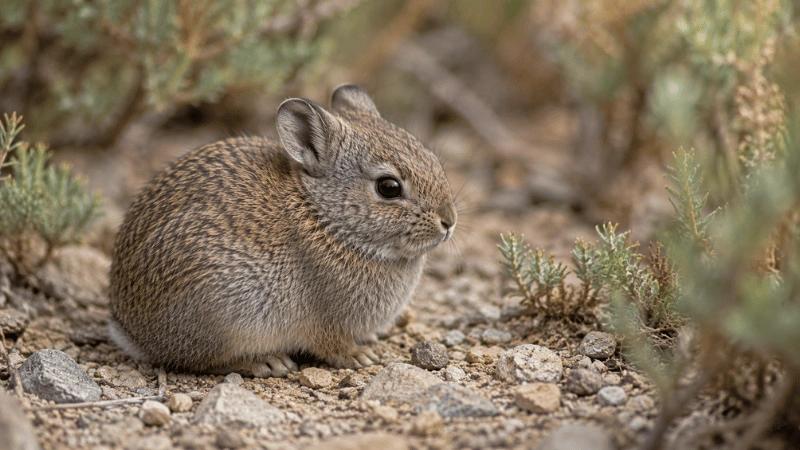
The Pygmy Rabbit is the smallest rabbit species in the world. It weighs under 1 pound and has very short, rounded ears (not pointed). Fur is grayish-brown. Found only in the northwestern United States (Washington, Oregon, Idaho, Montana, California). This is a "short eared rabbit" species. According to the IUCN, it is listed as Endangered, with very small populations remaining.
9. Volcano Rabbit (Romerolagus diazi)
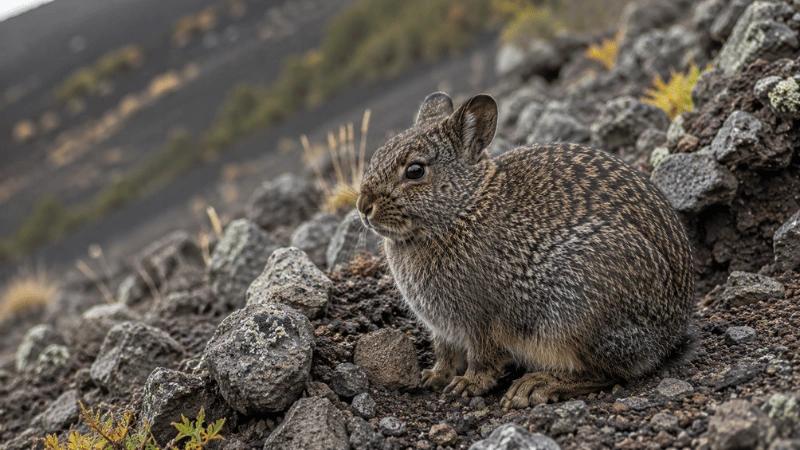
The Volcano Rabbit is found only on the slopes of four volcanoes in Mexico (Popocatépetl, Iztaccíhuatl, El Pelado, Tláloc). It has short, rounded ears, dark brownish-yellow fur with black speckling, and short legs. Weighs 1 to 1.5 pounds. This is another "short eared rabbit" species. According to the IUCN, it is listed as Critically Endangered.
10. Riverine Rabbit (Bunolagus monticularis)
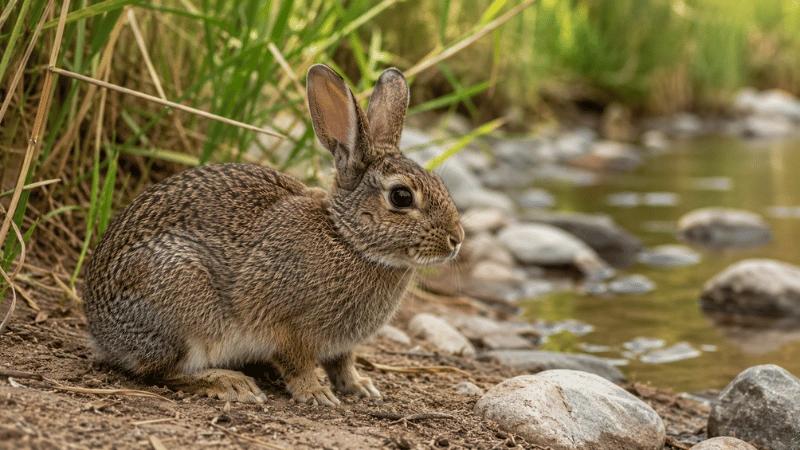
The Riverine Rabbit is found only in the Karoo region of South Africa. It has a distinctive dark stripe running from the jaw to the cheek and a reddish-brown coat. Weighs 3 to 4 pounds. Lives along seasonal rivers. According to the IUCN, it is listed as Critically Endangered, with fewer than 250 breeding pairs remaining.
11. Sumatran Striped Rabbit (Nesolagus netscheri)
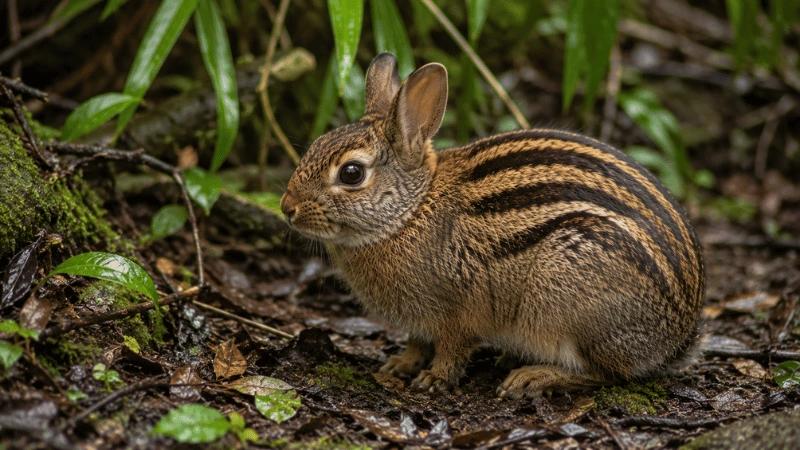
The Sumatran Striped Rabbit is found only in the forests of Sumatra, Indonesia. It has a distinctive pattern of dark stripes on its back. Weighs 3 to 4 pounds. Very little is known about this species because it is extremely rare and elusive. According to the IUCN, it is listed as Endangered due to habitat loss.
12. Amami Rabbit (Pentalagus furnessi)
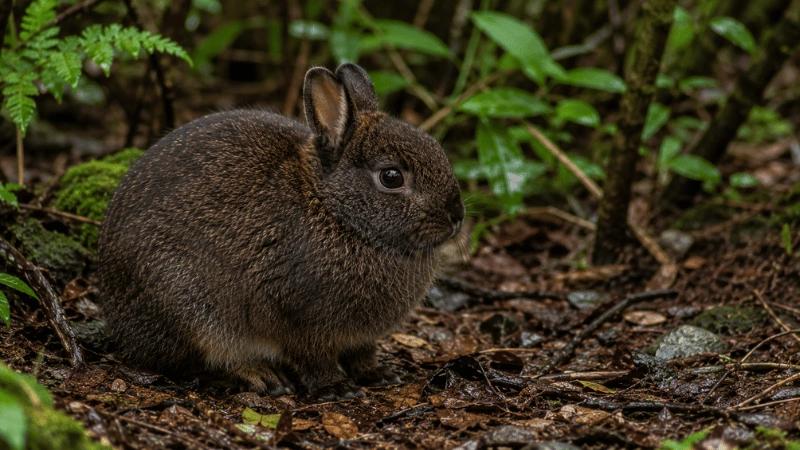
The Amami Rabbit is found only on two islands (Amami Ōshima and Tokunoshima) in Japan. It is often called a "living fossil" because it resembles ancient rabbit species. It has dark brown, thick fur, short ears, and powerful claws for digging. Weighs 4 to 5 pounds. According to the IUCN, it is listed as Endangered.
Rare and unusual wild rabbit species include Pygmy Rabbit (smallest, endangered), Volcano Rabbit (critically endangered, found only in Mexico), Riverine Rabbit (one of the rarest mammals), Sumatran Striped Rabbit (striped pattern), and Amami Rabbit (living fossil of Japan).
Rabbits vs Hares: Key Differences
Many people confuse rabbits with hares. While they look similar, they are different animals with distinct characteristics. Hares are not a type of rabbit; they are a separate group within the same family (Leporidae).
The table below compares rabbits and hares:
| Characteristic | Rabbits | Hares |
|---|---|---|
| Ear length | Shorter ears | Much longer ears, often with black tips |
| Leg length | Shorter hind legs | Much longer hind legs |
| Body shape | Compact, rounded | Leaner, more muscular |
| Newborns | Born hairless and blind (altricial) | Born fully furred with open eyes (precocial) |
| Nesting | Dig burrows (warrens) | Nest in shallow depressions (forms) |
| Social behavior | Often social, live in groups | Usually solitary |
| Domestication | Domesticated (European rabbit) | Never domesticated |
Examples of hares include: Snowshoe Hare, Black-tailed Jackrabbit, European Brown Hare, and Arctic Hare. Jackrabbits are actually hares, not rabbits, despite their name.
For more on rabbit body types and how they differ from hares, see rabbit body types.
Rabbits and hares are different animals. Hares have longer ears, longer legs, and are born fully furred with open eyes. Hares are solitary and nest in shallow depressions. Rabbits are social, dig burrows, and are born hairless and blind. Jackrabbits are actually hares.
Wild Rabbits Around the World
Types of wild rabbits vary by region. Different species have adapted to specific habitats, from deserts to forests to mountains.
Wild rabbits in North America: The most diverse region for wild rabbits. Species include Eastern Cottontail, Desert Cottontail, Swamp Rabbit, Brush Rabbit, Mountain Cottontail, New England Cottontail, and Pygmy Rabbit. Cottontails are found across the continent in various habitats.
Wild rabbits in Europe: The European rabbit is the primary species. It is native to southwestern Europe but has been introduced throughout the continent. European rabbits live in social groups in warrens and are the ancestors of all domestic breeds.
Wild rabbits in deserts: Desert Cottontail in North America. These rabbits have pale fur for camouflage, larger ears for heat regulation, and can survive on limited water. They are most active at dawn and dusk to avoid midday heat.
Wild rabbits in forests: Brush Rabbit, Swamp Rabbit, and New England Cottontail. Forest-dwelling rabbits have darker fur for camouflage in shadows. They use dense vegetation for cover and rarely venture into open areas.
Wild rabbits in mountains: Mountain Cottontail and Volcano Rabbit. These species live at high elevations where temperatures are cooler. They have thicker fur for insulation and are adapted to rocky terrain.
Wild rabbits are found on every continent except Antarctica and Australia. North America has the most species diversity. Europe is dominated by the European rabbit. Desert rabbits have pale fur and large ears. Forest rabbits have darker fur. Mountain rabbits have thicker fur.
Wild Rabbit Behavior
Understanding wild rabbit behavior helps explain how these animals survive in nature. Their behaviors are shaped by predator avoidance and seasonal changes.
Wild rabbit survival instincts: Rabbits are prey animals. Their primary defenses are speed, agility, and camouflage. When threatened, they freeze to avoid detection. If a predator approaches, they dash away in a zigzag pattern to confuse the pursuer.
Rabbit predator avoidance: Wild rabbits use several strategies. They have excellent hearing and can detect predators from a distance. They thump their hind feet to warn other rabbits of danger. They stay near cover so they can escape quickly.
Wild rabbit burrows: European rabbits dig extensive underground burrow systems called warrens. Warrens have multiple entrances, nesting chambers, and escape routes. Cottontails do not dig their own burrows; they use existing holes made by other animals or hide in dense vegetation.
Rabbit nesting behavior: Wild rabbits build shallow nests called forms. The nest is a depression lined with grass and fur pulled from the mother's belly. Nests are hidden in tall grass or under bushes. Mothers visit only once or twice daily to nurse, avoiding attracting predators. For more on nesting, see bunny nest.
Wild bunny communication: Rabbits communicate through body language (ear position, tail position, posture), vocalizations (thumping, growling, screaming), and scent marking. For more on rabbit sounds, see what does a rabbit scream sound like.
Wild rabbit behavior is shaped by predator avoidance. They freeze when threatened, zigzag when chased, and thump to warn others. European rabbits live in burrows (warrens). Cottontails use existing holes or dense vegetation. Nests are hidden and visited only once daily.
Wild Rabbit Diet
What wild rabbits eat varies by season and habitat. They are herbivores that eat a variety of plant materials.
What wild rabbits eat in spring and summer: Fresh grasses, clover, dandelions, wildflowers, and garden vegetables. In spring, they eat tender new growth. In summer, they eat a variety of greens.
What wild rabbits eat in winter: When grass is unavailable, wild rabbits eat tree bark, twigs, buds, and evergreen needles. They gnaw on young trees, especially apple, maple, and poplar. This is why you may see bark stripped off the lower parts of trees in early spring.
Wild rabbits eating bark: Bark is less nutritious than fresh greens, but it provides enough energy to survive winter. Rabbits also eat their own cecotropes (nutrient-rich droppings) to extract more nutrition from their food.
Foraging behavior: Rabbits are most active at dawn and dusk (crepuscular). They feed in open areas but stay close to cover so they can escape predators. They have a wide field of vision (nearly 360 degrees) to watch for danger while eating.
For more on rabbit anatomy and how they digest food, see anatomy of a rabbit.
Wild rabbits eat grass, clover, and wildflowers in spring and summer. In winter, they eat tree bark, twigs, buds, and evergreen needles. They are crepuscular (active at dawn and dusk). Bark stripping on trees is a sign of wild rabbits in winter.
Wild vs Domestic Rabbits
Wild rabbits and domestic rabbits are the same species (European wild rabbit is the ancestor), but they are very different in behavior and appearance.
Wild rabbit vs domestic rabbit appearance: Wild rabbits have grayish-brown fur for camouflage. Domestic rabbits come in many colors (white, black, spotted, tortoiseshell). Wild rabbits have longer, leaner bodies. Domestic rabbits have rounder, more compact bodies due to selective breeding.
Wild bunny temperament: Wild rabbits are fearful of humans. They flee when approached. They cannot be tamed or kept as pets. Domestic rabbits have been selectively bred for centuries to be calm and tolerant of human handling.
Rabbit domestication history: Rabbits were domesticated in medieval Europe, likely by monks in France and Spain. All domestic rabbit breeds (over 300) descend from the European wild rabbit. Domestication changed their appearance, temperament, and behavior. For more on domestic breeds, see types of rabbits.
Wild rabbit instincts: Even domestic rabbits retain some wild instincts (thumping, hiding, chewing). However, they cannot survive in the wild. A domestic rabbit released into nature will likely die from predators, starvation, or exposure.
For more on the differences between wild and domestic rabbits, including body type comparisons, see rabbit body types. For why wild rabbits cannot be pets, see wild bunny rabbits as pets.
Wild rabbits have grayish-brown fur for camouflage; domestic rabbits come in many colors. Wild rabbits are fearful of humans; domestic rabbits are bred for calm temperaments. Domestic rabbits cannot survive in the wild. All domestic breeds descend from the European wild rabbit.
Threats to Wild Rabbits
Wild rabbit populations face numerous threats from predators, habitat loss, disease, and human activity.
Rabbit predators: Natural predators include foxes, coyotes, wolves, bobcats, hawks, eagles, owls, snakes, and domestic dogs and cats. In urban areas, domestic pets are a significant threat.
Habitat loss for rabbits: Development of farmland, forests, and grasslands reduces available habitat for wild rabbits. Suburban sprawl eliminates nesting areas and food sources. Road construction fragments rabbit populations.
Wild rabbit diseases: Myxomatosis and Rabbit Hemorrhagic Disease Virus (RHDV) are deadly diseases that affect wild and domestic rabbits. These diseases can wipe out local rabbit populations.
Climate change and rabbits: Changing weather patterns affect food availability. Drought reduces vegetation. Severe winters can cause starvation. Heat waves can cause heat stress.
Endangered rabbit populations: According to the IUCN Red List, several wild rabbit species are endangered or critically endangered: Pygmy Rabbit, Volcano Rabbit, Riverine Rabbit, Sumatran Striped Rabbit, and Amami Rabbit. Conservation efforts include habitat protection, captive breeding programs, and reintroduction projects.
Wild rabbits face threats from predators (foxes, hawks, domestic pets), habitat loss from development, deadly diseases (myxomatosis, RHDV), and climate change. Several species are endangered. Conservation efforts include habitat protection and captive breeding.
Final Thoughts
The types of wild rabbits are incredibly diverse. From the common Eastern Cottontail in North American backyards to the critically endangered Volcano Rabbit on Mexican volcanoes, each species has unique adaptations for its environment. Cottontails are the most widespread group. The European wild rabbit is the ancestor of all domestic breeds. Rare species like the Pygmy Rabbit and Riverine Rabbit need conservation to survive.
Wild rabbits face many threats: predators, habitat loss, disease, and climate change. Understanding these species helps us appreciate their role in ecosystems. They are a food source for predators. They help disperse seeds. Their burrows aerate the soil.
If you see a wild rabbit in your yard, enjoy watching from a distance. Do not attempt to catch or feed it. If you find a nest of baby rabbits, leave them alone. The mother will return. For more information on rabbit species, see our guides on types of rabbits, rabbit body types, and bunny nest.
Trusted Resources for Wild Rabbit Information
- IUCN Red List – Conservation status of wild rabbit species
- National Wildlife Federation – Information on Eastern Cottontail and other North American species
- RSPCA Rabbit Care Guide – Wild rabbit welfare information
- US Fish & Wildlife Service – Endangered rabbit species conservation programs