
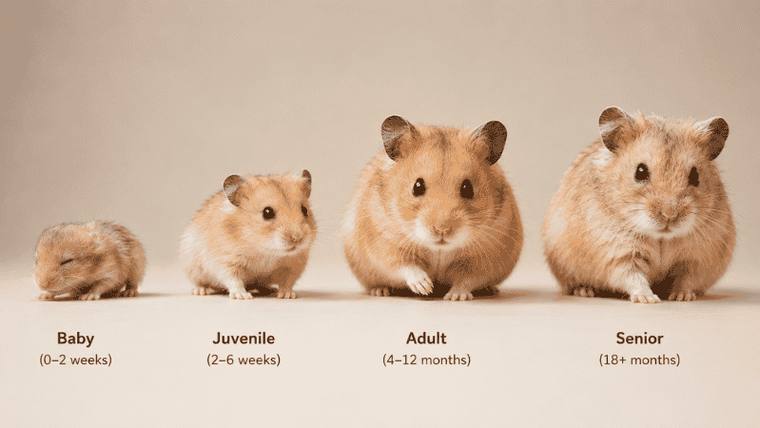
How to Tell Hamster Age
You brought home a hamster from the pet store. The worker said she was "young." But what does that actually mean? Three months? Six months? A year? Knowing how to tell hamster age helps you understand what your pet needs at different life stages.
Here is the honest truth. You cannot pinpoint an exact birthday unless you watched the litter being born. But you can make a solid estimate. Baby hamsters look and act nothing like seniors. Young adults have different energy levels and body conditions than elderly hamsters. Once you know what to look for, you can guess within a few months.
This guide walks through every clue: eyes, fur, weight, teeth, behavior, and activity levels. You will learn what newborn hamsters look like, when they open their eyes, how fast they grow, and what signs indicate an old hamster approaching the end of her life.
A quick observation from years of hamster rescue work. Most pet store employees have no idea how old the hamsters really are. They guess. Learning to spot age signs yourself is the only reliable way to know what you are getting.
Important: Hamsters live only 18 to 36 months on average. A "young" hamster might already be six months old. Factor this into your expectations before bringing one home.
Baby Hamster Signs: Birth to 4 Weeks
The first step in learning how to tell hamster age is recognizing babies. Newborn hamsters look completely different from adults. They are born hairless, blind, and deaf. Their ears are folded flat against their heads. They cannot regulate their own body temperature.
At birth, a Syrian hamster pup weighs about two to three grams. That is less than a nickel. Dwarf hamsters are even smaller. You cannot hold them safely for the first week. The mother will reject babies with human scent, so do not touch them.
Day four brings the first visible change. The pups develop a thin coat of fuzz. Their skin is no longer completely bare. By day seven, you can see distinct fur color patterns emerging. This is when you can first tell what color the hamster will be as an adult.
The big milestone happens around day fourteen. Baby hamsters open their eyes. This is the most reliable answer to "how to tell hamster age" for very young pups. Eyes opening right at two weeks means they are developing normally. Eyes opening earlier or later can indicate health problems.
Between two and three weeks, babies start eating solid food. They still nurse, but you will see them nibbling at soft hamster blocks and vegetables. By three weeks, they look like tiny versions of adult hamsters, just smaller.
Weaning happens at three to four weeks. By four weeks, baby hamsters should be separated from the mother. Males go in one cage, females in another. At this age, a Syrian hamster is about the size of a large grape. A dwarf is smaller than a ping pong ball.
In our experience, most pet stores sell hamsters at four to six weeks old. If you see a hamster with bright, clear eyes, smooth fur, and small body size, she is likely in this baby to young juvenile range. This is the youngest age you should bring a hamster home.
For more on very early development, including why mother hamsters sometimes reject litters, check out why do hamsters eat their babies. That guide covers stress factors that affect newborn pups.
Age clue: Open eyes = at least 14 days old. Fully furred = at least 10 days old. Eating solid food = at least 18 days old.
Young Hamsters: 1 to 6 Months
Once you know how to tell hamster age for babies, the next stage is young adulthood. Hamsters between one and six months look and act differently than both babies and seniors. This is the prime of their lives.
Young hamsters grow rapidly. A Syrian hamster at two months is about half her adult size. By four months, she is nearly full grown. By six months, she has reached her final size. Dwarf hamsters mature even faster, reaching adult size by three to four months.
Energy levels are your biggest clue. Young hamsters are tireless. They run on their wheels for hours. They climb, dig, and explore constantly. A young hamster who wakes up at night does not stop moving until dawn. In our observation, this boundless energy starts fading around eight to ten months.
Coat quality is another sign. Young hamsters have thick, plush, uniform fur. No thinning. No bald patches. The coat looks vibrant and healthy. Colors are rich and clear, not faded or dull.
Eyes in young hamsters are bright, clear, and fully black or dark red depending on the color mutation. No cloudiness. No discharge. The eyes look moist and alert. When you are learning how to tell hamster age, know that cloudy eyes mean older, not younger.
Weight is steady and healthy. A young adult Syrian hamster should weigh between 100 and 150 grams. Dwarf hamsters range from 25 to 50 grams depending on species. Obesity can start creeping in around six months if diet is poor, so a fat hamster could be young or old.
We recommend adopting hamsters as young as possible. A two to three month old hamster gives you the most time together. A six month old is not old, but you have already missed several months of her short life. Factor this into your decision.
Compared to other small pets, hamsters mature much faster than guinea pigs but slightly slower than mice. A six month old hamster is a fully mature adult. A six month old guinea pig is still adolescent. Knowing how to tell hamster age helps you set realistic expectations.
Adult Hamsters: 6 to 12 Months
Hamsters between six and twelve months are in their prime adult years. They are fully grown, still healthy, and usually very active. But subtle changes start appearing that help with how to tell hamster age.
Growth stops completely by six months. Your hamster will not get any bigger after this age. Weight might fluctuate slightly with diet and exercise, but body size is fixed. A hamster who continues gaining weight past six months is getting fat, not growing.
Energy levels remain high but may drop slightly. An eight month old hamster still runs on her wheel every night. But she might take more short breaks. She might sleep a little longer during the day. The endless zoomies of youth start tapering off.
Coat remains thick and healthy, but you might notice slight changes. The fur might not be quite as plush as a four month old. Colors might look slightly less vibrant. Nothing dramatic. But if you compare side by side, you can see the difference.
Eyes are still clear and bright at this age. No cloudiness. No cataracts. The eyes should look healthy and alert. If you see any haze or grayness in a hamster under one year, that is not normal aging. That is a health problem.
Behavior becomes more settled. Young hamsters are often nippy and skittish. Adult hamsters who have been handled regularly are usually calmer and more tolerant. They learn routines. They recognize their owners. They might even come to the front of the cage when you approach.
In our rescue work, we often get hamsters surrendered at eight to ten months. Owners say "they seem less fun." That is not the hamster being boring. That is a young adult settling into normal adult behavior. Knowing how to tell hamster age helps you understand this shift is normal.
For a deeper look at hamster vision changes with age, including when eyes start clouding, read can hamsters see. That guide covers how eyesight declines over time.
Senior Hamsters: Over 12 Months
Once a hamster passes one year, you enter the senior phase. This is when how to tell hamster age becomes easier because visible aging signs appear. Not all hamsters show every sign, but most show several.
Weight loss is common in senior hamsters. They may eat less. Their metabolism changes. Muscle mass decreases. A previously plump hamster may feel bony, especially along the spine and hips. Some weight loss is normal. Rapid weight loss needs a vet visit.
Fur thinning is another clear sign. Older hamsters often develop bald patches, especially behind the ears and on the belly. The fur that remains may look dull, dry, or patchy. Long-haired hamsters may stop grooming properly, leading to matted fur.
Cloudy eyes indicate cataracts. This is extremely common in hamsters over eighteen months. The lens becomes opaque, blocking light. Your hamster may not see well or at all. She might bump into things or startle easily. This does not hurt her, but it changes how she navigates.
Energy levels drop significantly. A senior hamster still uses her wheel, but less often and for shorter periods. She sleeps more during the day and may nap during her active hours too. She might not climb or dig as much. She prefers staying in her nest.
Appetite changes are common. Some seniors eat less. Others develop picky eating habits. Soft foods may become easier to eat than hard blocks. In our observation, offering moistened senior food or small amounts of cooked egg helps maintain weight.
Behavior changes include less curiosity, more hiding, and sometimes irritability. A previously friendly hamster might nip when handled. She is not mean. She may have arthritis or just want to be left alone. Respect her space.
So how to tell hamster age when you adopt an adult? Cloudy eyes, thinning fur, low energy, and weight loss all point to a hamster over twelve months, likely closer to eighteen. An adoption center that says "senior" usually means over a year old.
Resource from the RSPCA hamster health guide provides additional information on caring for elderly hamsters and recognizing age-related health issues.
Quick age check: Under 6 months = bright eyes, thick fur, endless energy. 6-12 months = full size, settled behavior. Over 12 months = possible cloudy eyes, fur thinning, slower movement.
Signs That Require a Vet Visit, Not Age Guessing
Sometimes owners confuse illness with old age. Knowing how to tell hamster age helps, but some symptoms need medical attention regardless of age. Do not assume every problem is just aging.
Sudden weight loss is different from gradual senior thinning. If your hamster loses noticeable weight in a week, see a vet. Dental problems, parasites, or organ disease could be the cause. A senior hamster should lose weight slowly over months, not days.
Breathing changes are never normal. Wheezing, clicking sounds, or labored breathing mean respiratory infection. This can happen at any age. Do not dismiss it as "old age." Hamsters need antibiotics for pneumonia.
Lumps or bumps need examination. Older hamsters are prone to tumors. Some are benign. Some are cancerous. Only a vet can tell the difference. A lump that grows quickly or changes appearance needs attention.
Not eating for more than 24 hours is an emergency. Elderly hamsters may eat less, but they should still eat something every day. A hamster who stops eating completely has a medical problem. Dental issues are common in seniors.
p>Wet tail is a bacterial infection that causes severe diarrhea. It is most common in young hamsters under 12 weeks. It is almost always fatal without treatment. This is not an age sign. It is an emergency.In our experience, many owners assume a sick hamster is "just old." Do not make that mistake. A vet visit costs less than a new hamster. And treating a treatable illness is kinder than letting your hamster suffer.
For more on hamster health problems that mimic aging signs, check out hamster eyesight. That guide explains how eye problems can look like normal aging but need treatment.
How Long Different Hamster Breeds Live
Knowing how to tell hamster age matters less if you do not know the expected lifespan. Different breeds live for different lengths. Understanding averages helps you interpret the age signs you see.
p>Syrian hamsters live 24 to 36 months on average. Some reach three years. Rare individuals make it to four. These are the largest hamsters and generally the longest lived. A two year old Syrian is a senior. A one year old is middle aged.Russian dwarf hamsters (Campbells and Winter Whites) live 18 to 24 months. They mature faster and age faster than Syrians. An eighteen month old dwarf is old. A one year old dwarf is entering the senior phase.
p>Roborovski hamsters live 24 to 36 months, sometimes longer. These tiny hamsters have the longest lifespan of any pet hamster species. A two year old Robo is still active. A three year old is elderly.Chinese hamsters live 24 to 30 months. They are similar to Syrians in lifespan. They stay healthy longer than Russian dwarfs but not as long as Roborovskis.
p>Mixed breed hamsters have variable lifespans. Pet store hamsters are often hybrids, especially dwarf hamsters. Hybrid vigor can extend lifespan, but genetic problems can shorten it. Guessing age for hybrids is harder.In our observation, female hamsters tend to live slightly shorter lives than males. Breeding takes a toll on the body. Spayed females may live longer, but spaying hamsters is risky and rarely done.
Resource from the PDSA hamster care guide provides additional information on breed-specific lifespans and senior care.
Factors That Affect How Quickly Hamsters Age
A hamster's calendar age does not always match her biological age. Some hamsters age faster than others. Understanding these factors helps refine how to tell hamster age in individual pets.
p>Diet is the biggest factor. Hamsters fed high-quality food with proper protein levels live longer and stay healthier. Cheap seed mixes with too much fat cause obesity and shorten lifespan. Fresh vegetables add nutrients. Junk treats take days off the clock.Genetics play a huge role. Hamsters from ethical breeders live longer than pet store hamsters. Responsible breeders select for health and longevity. Pet store hamsters often come from mills where no one cares about lifespan.
p>Stress accelerates aging. Hamsters in too-small cages, loud environments, or with improper bedding age faster. Chronic stress weakens the immune system and shortens life. A two year old stressed hamster may look older than a three year old calm hamster.Exercise matters. Hamsters with wheels and space to run maintain muscle mass and mobility longer. Sedentary hamsters lose condition faster. A hamster who has never had a wheel may show senior signs at one year.
p>Veterinary care affects aging. Hamsters who receive treatment for minor problems live longer than those who do not. A respiratory infection that goes untreated can shorten life by months. Regular health checks catch problems early.In our experience, the best thing you can do for any hamster is provide a large cage, a proper wheel, high-quality food, and a stress-free environment. These factors slow aging more than any supplement or treatment.
For more on creating an optimal hamster environment, read can a hamster see in the dark. That guide covers cage setup and stress reduction.
Final Thoughts
Learning how to tell hamster age takes practice. No method is perfect. But combining eye clarity, fur condition, weight, energy level, and behavior gives you a solid estimate. Baby hamsters are tiny with closed eyes. Young adults have bright eyes, thick fur, and endless energy. Adults are full-sized and settled. Seniors have cloudy eyes, thinning fur, and slower movement.
The most important thing is not knowing the exact birthday. It is understanding what your hamster needs at each life stage. Babies need stability. Young adults need enrichment and handling. Adults need consistent care. Seniors need comfort, soft food, and vet checkups. Adjust your care as your hamster ages, and you will maximize whatever time she has left.
Remember that hamsters live tragically short lives. Two or three years is all you get. Knowing how to tell hamster age helps you make the most of that time. You will know when to expect health changes. You will know when to switch to senior care. You will know when to prepare for goodbye. That knowledge is a gift. Use it to give your hamster the best life possible, from baby fuzz to gray whiskers.
Trusted Resources for Hamster Age and Care
For more information on hamster aging, lifespan, and senior care, these independent organisations provide evidence-based guides and research.
- RSPCA Hamster Care Guide – Veterinary-reviewed advice on hamster welfare across all life stages
- PDSA Hamster Care – UK veterinary charity guidance on hamster health and aging
- Humane Society Hamster Care – Practical guidance for hamster owners of all experience levels
- NCBI Rodent Aging Research – Scientific research on aging patterns in small rodents
You may also find these related guides helpful: can hamsters see covers age-related vision decline, how far can hamsters see explains visual changes in seniors, and why do hamsters eat their babies discusses stress factors that affect hamster health at any age.