Can Guinea Pigs Eat Strawberries?
The good news is that strawberries are not harmful to guinea pigs. They are actually one of the safer fruit options and can offer real nutritional benefits when fed correctly.
The issue is not whether guinea pigs can eat strawberries. It is how much, how often, and what mistakes owners tend to make without realizing it.
Can Guinea Pigs Eat Strawberries?
Yes, guinea pigs can eat strawberries safely. Strawberries are not toxic and are generally well-tolerated by healthy adult guinea pigs when served in appropriate portions.
Strawberries offer a few genuine nutritional benefits. They contain vitamin C, natural antioxidants, fiber, and a high water content that can help with hydration.
For a small animal like a guinea pig, even a small slice provides a meaningful nutritional boost alongside a balanced daily diet.
The important word here is moderation. Strawberries contain natural sugar, and guinea pigs have digestive systems that were built for grasses and fibrous plants, not sweet fruits.
That natural sugar, even from a wholesome source, can cause digestive disruption and weight gain when fed too frequently.
Important: Think of strawberries as a treat, not a vegetable. They belong in the same mental category as a small reward rather than a core food.
Most healthy adult guinea pigs can enjoy them once or twice a week without any issues.
Are Strawberries Good for Guinea Pigs?
Strawberries offer more than just sweetness. When fed in the right amounts, they bring some genuinely useful nutrients to a guinea pig's diet.
Vitamin C
Guinea pigs cannot produce their own vitamin C. This is a biological fact that makes dietary vitamin C non-negotiable for their health.
A deficiency leads to scurvy, which causes symptoms like swollen joints, rough fur, lethargy, and slow wound healing.
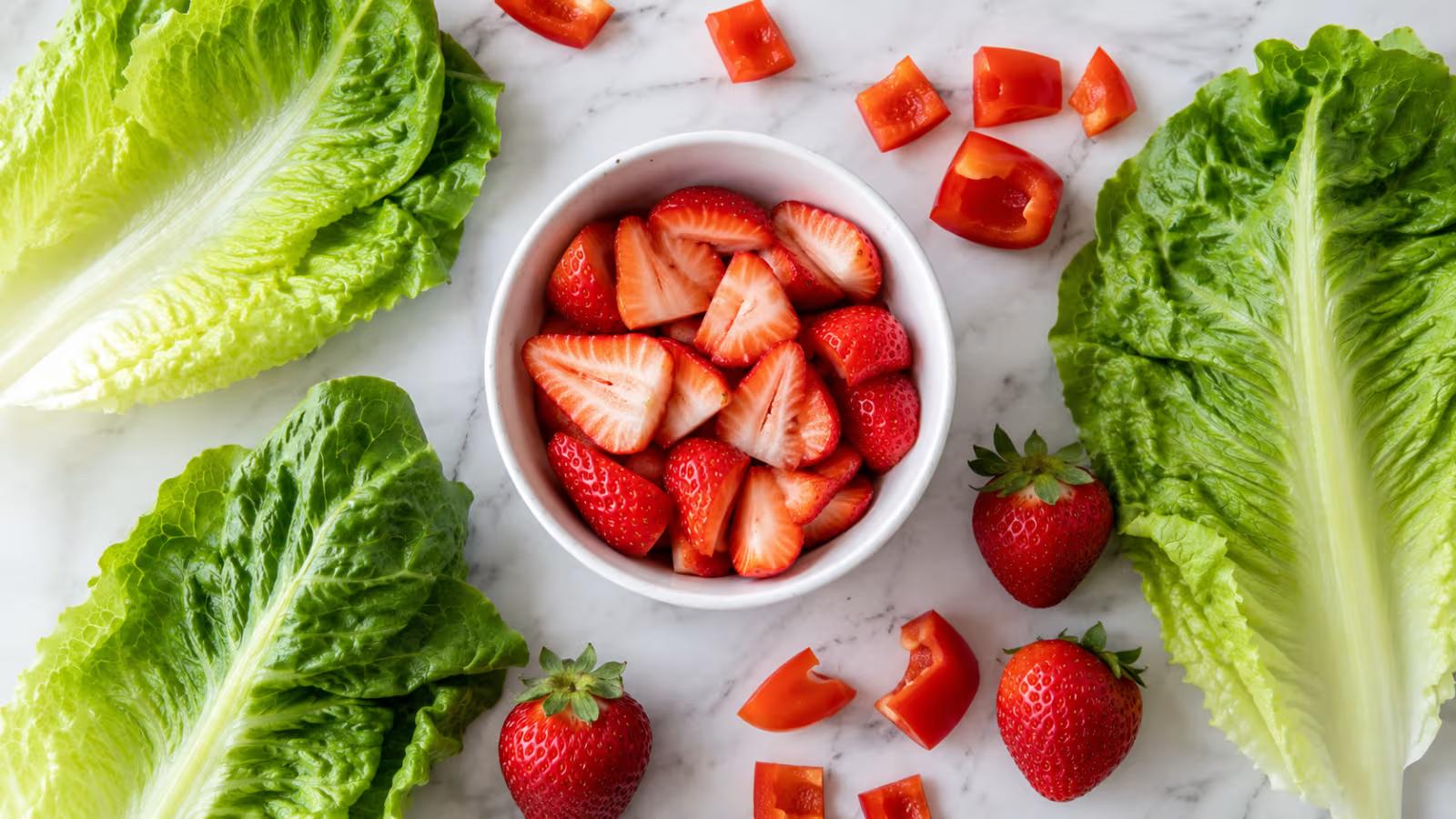
Strawberries contain moderate amounts of vitamin C and can help supplement daily intake alongside leafy greens.
That said, fresh vegetables like red bell peppers, romaine lettuce, and parsley should remain the main vitamin C source. Strawberries are a helpful addition, not a replacement for greens.
Antioxidants
Strawberries contain flavonoids and anthocyanins, which are naturally occurring antioxidant compounds.
These help the body manage oxidative stress at a cellular level. While guinea pigs do not specifically require strawberries for antioxidants, the compounds contribute positively to general cellular health over time.
Hydration Support
Strawberries are made up of roughly 91 percent water. On hot days or during warmer months, a small strawberry slice can support hydration alongside a guinea pig's main water supply.
This is a small but real benefit, especially for guinea pigs that do not drink water as enthusiastically as they should.
That said, high-moisture foods fed in excess can sometimes cause softer stools. Balance matters.
Enrichment and Mental Stimulation
Fruit treats are not just physical nutrition. The smell, texture, sweetness, and novelty of a strawberry naturally stimulate foraging behavior and curiosity.
Guinea pigs benefit from mental engagement during feeding, and varied treats help prevent boredom in their daily routine.
Enrichment through food is a legitimate part of good guinea pig care that beginner owners often overlook entirely.
Nutritional Snapshot: What Is Actually in a Strawberry?
Per 100 grams of fresh strawberries, the nutritional profile looks like this:
Vitamin C
Amount: 58.8 mg
Relevance for Guinea Pigs: Supports immune health and helps prevent scurvy.
Fiber
Amount: 2.0 g
Relevance for Guinea Pigs: Aids digestive function.
Water
Amount: 90.9 g
Relevance for Guinea Pigs: Supports hydration.
Natural Sugars
Amount: 4.9 g
Relevance for Guinea Pigs: Requires strict moderation.
Calcium
Amount: 16 mg
Relevance for Guinea Pigs: Relatively low, less risky than high-calcium foods.
Phosphorus
Amount: 24 mg
Relevance for Guinea Pigs: Present in balanced amounts.
Oxalates
Amount: Trace amounts
Relevance for Guinea Pigs: Not a major concern in small portions.
The sugar column is the one to watch. Nearly 5 grams of sugar per 100 grams might sound small, but guinea pigs are tiny animals.
Even a single large strawberry contains meaningful sugar relative to their body weight.
How Much Strawberry Can Guinea Pigs Eat?
Portion size is the single most important factor when feeding strawberries to guinea pigs. Get this right, and strawberries are a perfectly safe treat.
Get it wrong regularly, and digestive problems follow.
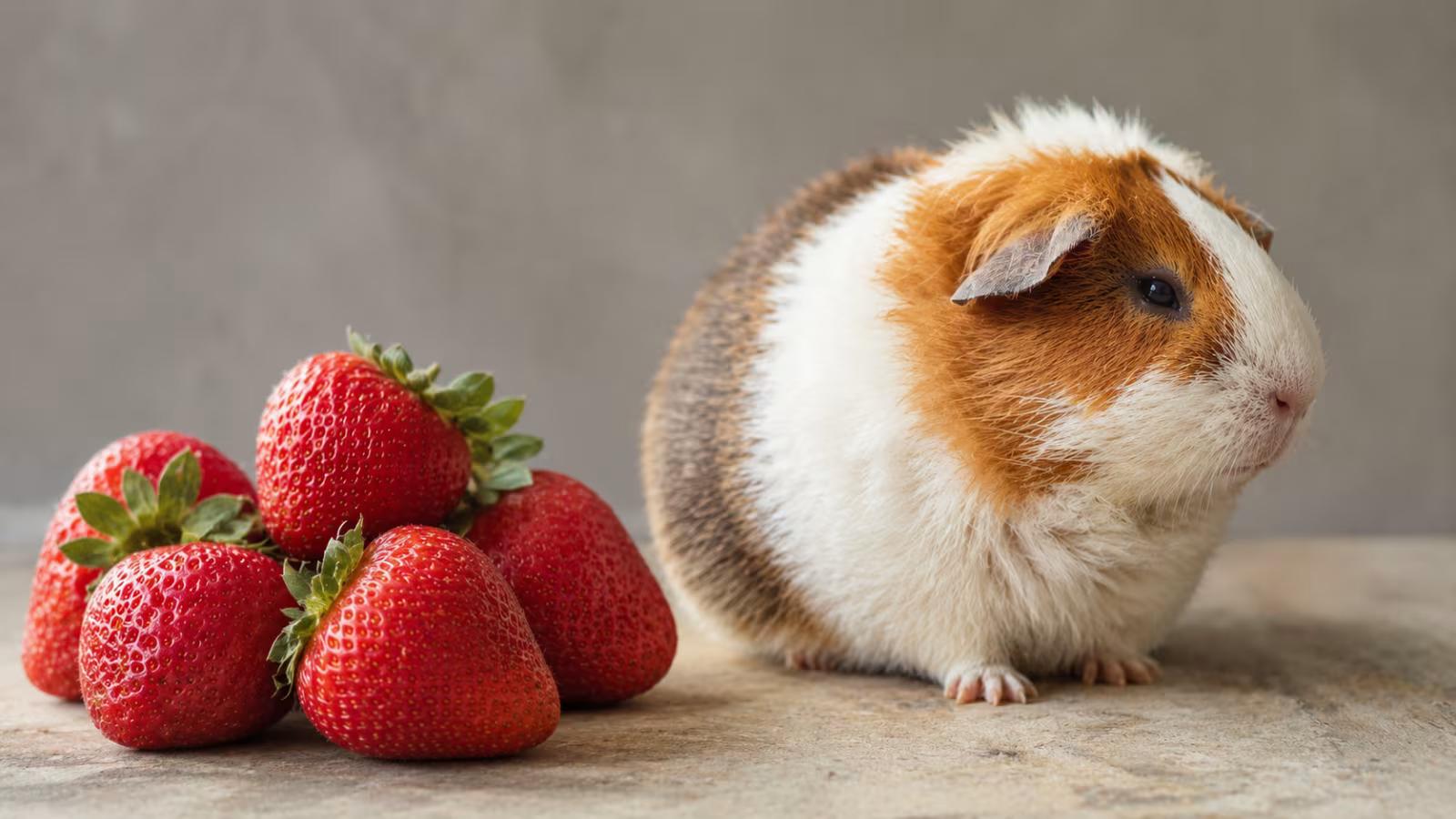
Safe serving size for a healthy adult guinea pig:
- One small thin slice of strawberry, roughly the size of your thumbnail
- Or one small whole strawberry, not a large one
- Once or twice per week maximum
That is genuinely enough. Guinea pigs have small bodies and small digestive systems.
A portion that looks tiny to you is actually a significant treat for them.
Many owners underestimate this because their guinea pigs react to strawberries with such obvious excitement, squeaking, popcorning, or rushing to the feeding area.
Excitement tells you the animal enjoys it. It does not tell you the food is safe in unlimited quantities.
Feeding tip: Overfeeding fruit is one of the most common beginner mistakes. The animal seems happy, so the owner gradually increases the amount. A few weeks later, softer stools, reduced hay intake, and weight gain may appear.
Keep servings small. Keep frequency to twice a week at most. Your guinea pig will still love you for it.
Can Guinea Pigs Eat Strawberry Leaves and Tops?
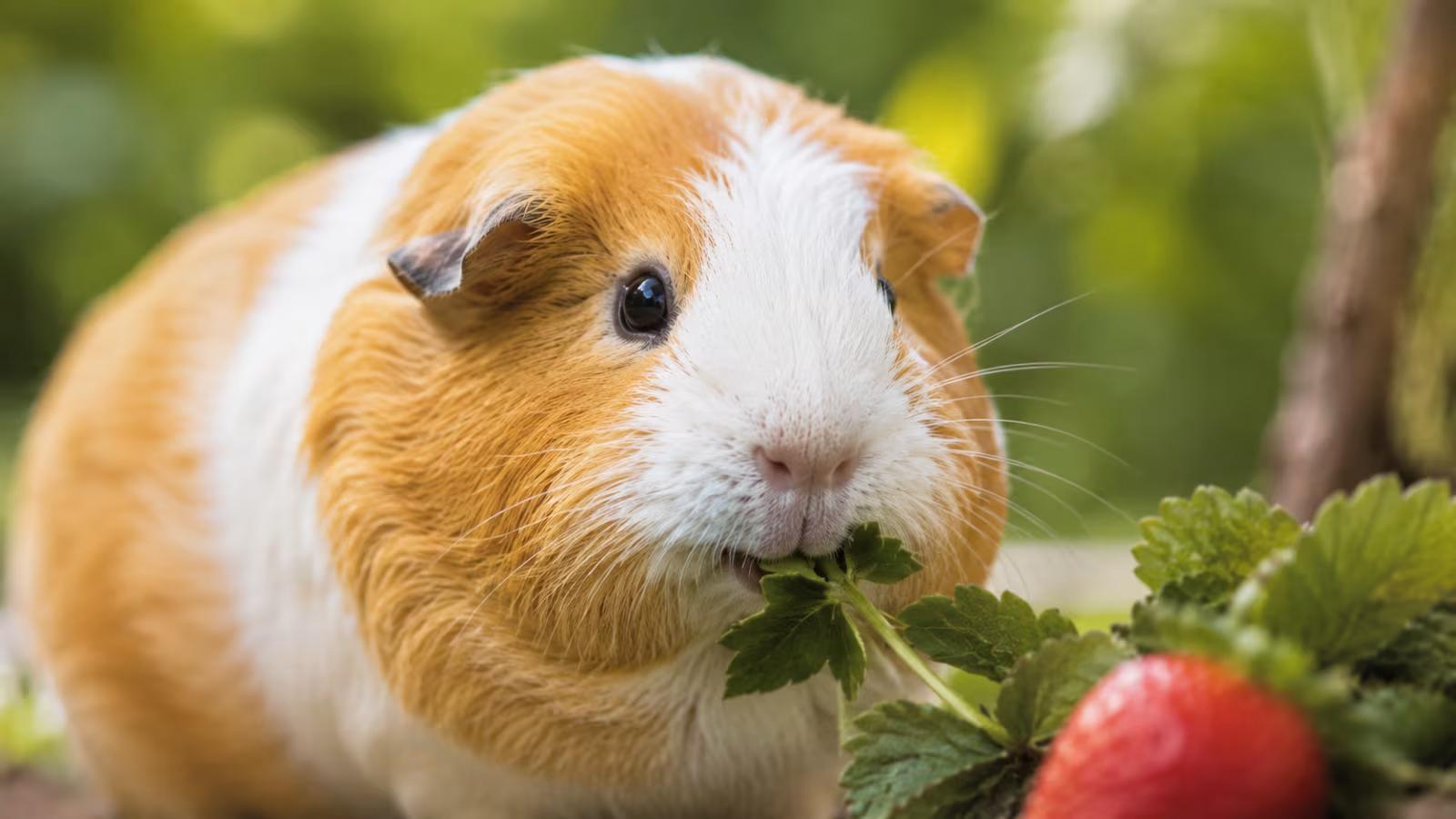
Yes, the leaves and green tops of strawberries are generally safe for guinea pigs.
In fact, the leafy parts are often a better choice than the fruit itself because they contain significantly less sugar.
Strawberry leaves offer fiber, plant compounds, and enrichment value. Many guinea pigs enjoy chewing through the stems and leaves almost more than the berry itself.
The texture is different, the flavor is more subtle, and the chewing action provides a form of dental and mental stimulation.
There are a few practical rules to follow. Always wash the entire strawberry, including the leaves, thoroughly before feeding.
Strawberry leaves can carry pesticide residue just as the fruit does. Remove any leaves that look wilted, yellowed, or show signs of mold.
Only feed fresh, clean leaves.
If you have access to organic strawberries, those are the best option since pesticide exposure through repeated feeding is something worth reducing where possible.
For conventionally grown strawberries, thorough rinsing under cold running water for at least 30 seconds is important every time.
Strawberry leaves are a good example of a part of the fruit that gets discarded but is actually more suitable for guinea pigs than the sweet berry itself.
Can Guinea Pigs Eat Strawberry Seeds?
Yes, strawberry seeds are safe. The tiny seeds on the surface of a strawberry are soft and small enough that they do not pose any choking or digestive blockage risk for guinea pigs.
There is no need to remove seeds before feeding. The seeds pass through the digestive system without causing harm.
This is one concern that comes up often in guinea pig owner forums, and the answer is consistently that the seeds are not a problem.
Can Baby Guinea Pigs Eat Strawberries?
Baby guinea pigs should be introduced to strawberries very cautiously, if at all during their early weeks.
Young guinea pigs have especially sensitive digestive systems that are still developing and adapting to solid foods.
The diet priority for a young guinea pig should be unlimited hay, high-quality pellets formulated for their age, fresh leafy greens, and clean water.
These provide the nutritional foundation that a growing guinea pig needs. Sweet fruit treats are simply not necessary at this stage.
If you want to introduce strawberries to a young guinea pig, wait until they are eating solid foods confidently and are at least six to eight weeks old.
Offer a piece no larger than a fingernail. Then wait 24 hours and observe their droppings.
Normal firm pellet-shaped droppings are a good sign. Soft, watery, or unusually small droppings suggest the food should be held back for a few more weeks.
Never introduce multiple new foods at the same time.
Young guinea pigs cannot tolerate rapid dietary changes well, and pinpointing the cause of a digestive reaction is impossible if you have changed several things at once.
Risks of Feeding Strawberries to Guinea Pigs
Strawberries are safe, but that safety comes with clear conditions. When those conditions are ignored, real health problems develop.
Sugar and Digestive Imbalance
The primary risk is sugar intake. Guinea pig digestive systems rely on a delicate balance of gut bacteria that thrive on high-fiber, low-sugar food.
Too much fruit sugar disrupts that balance, leading to an overgrowth of harmful bacteria and a reduction in beneficial ones.
The result can be diarrhea, gas, bloating, and loose stools.
In more prolonged cases of overfeeding, it can contribute to obesity and chronic digestive sensitivity.
Reduced Hay Consumption
This risk is underappreciated. When guinea pigs receive too many sweet treats, they sometimes become less interested in eating hay.
Hay is the single most important food in a guinea pig's diet.
It provides the fiber that keeps their digestive system moving and the constant chewing that keeps their teeth worn down properly.
A guinea pig that fills up on fruit and then ignores its hay is a guinea pig heading toward dental problems and digestive issues.
Always monitor hay intake after introducing new treats.
Pesticide Exposure
Strawberries consistently appear on lists of produce with higher pesticide residue.
Repeated exposure to pesticide traces, even in small amounts, is not something to be casual about with a small animal.
Always wash strawberries thoroughly, and choose organic varieties when available and affordable.
Mold Risk
Soft fruits like strawberries spoil quickly, especially once cut.
Never leave strawberry pieces in your guinea pig's habitat for more than a couple of hours.
Moldy or fermented fruit can cause serious digestive harm and should be removed and discarded promptly.
Can Guinea Pigs Eat Dried Strawberries?
No. Dried strawberries are not suitable for guinea pigs.
The dehydration process removes water but leaves the sugar behind in a much more concentrated form.
A small amount of dried strawberry contains far more sugar than the equivalent fresh portion.
Commercial dried strawberries also frequently contain added sweeteners, preservatives, or coatings.
None of those belong in a guinea pig's diet.
The same principle applies to yogurt-coated strawberry treats, candied fruit snacks, strawberry-flavored pellets or drops, and any processed product that claims to be strawberry-flavored.
Fresh, whole, washed strawberries are the only acceptable form.
Can Guinea Pigs Drink Strawberry Juice?
No. Strawberry juice is not appropriate for guinea pigs.
Juice removes the fiber from fruit while keeping the sugar in a rapidly absorbable liquid form.
The result is a spike in sugar intake that a guinea pig's system handles poorly.
Guinea pigs should drink plain, clean, fresh water.
Their hydration needs are fully met by water, and fruit juice adds nothing beneficial while creating real sugar-related risks.
How to Serve Strawberries to Guinea Pigs Safely
Preparation is straightforward, but doing it right every time matters.
- Wash thoroughly. Rinse the strawberry under cold running water for at least 30 seconds. This applies even to organic strawberries.
- Check for damage. Remove any bruised, moldy, or overripe sections. When in doubt, discard the strawberry entirely.
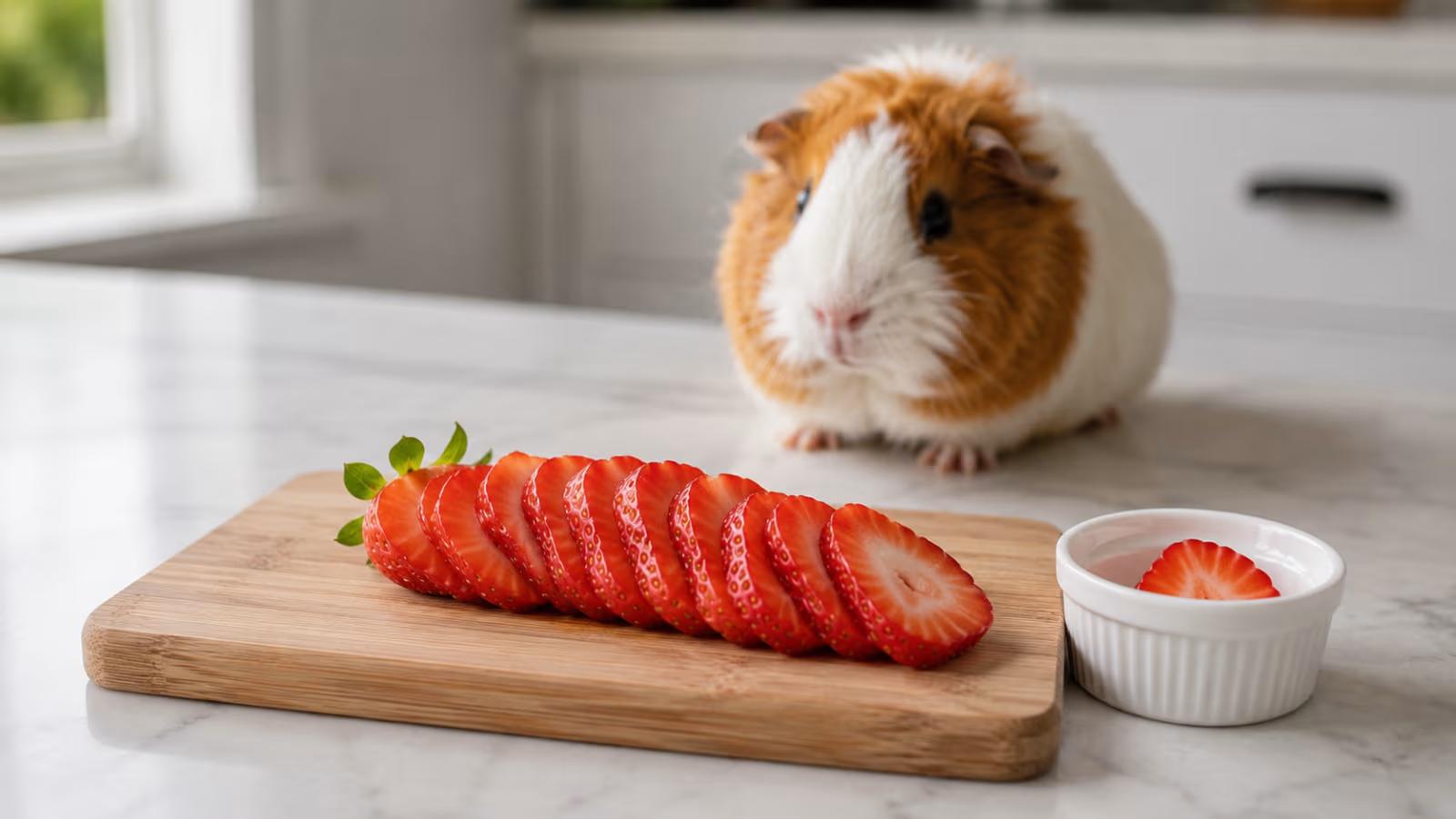
- Cut into small pieces. Slice a thin round or cut a small cube. The piece should be small enough that your guinea pig can handle it comfortably.
- Introduce slowly for first-time feeders. If your guinea pig has never eaten strawberries before, start with an even smaller piece than usual on the first two or three occasions.
- Observe for 24 hours. Watch for changes in stool consistency, reduced hay intake, lethargy, or bloating.
- Remove uneaten pieces. Do not leave strawberry pieces sitting in the habitat. Remove any uneaten portions within one to two hours.
Signs Your Guinea Pig Ate Too Much Strawberry
- Soft, mushy, or unusually runny droppings
- Fewer droppings than usual
- Bloated or rounded abdomen
- Reduced interest in hay
- Low energy or reluctance to move
- Wet or stained fur around the rear end
- Refusing food
Any of these signs following a strawberry feeding session suggest the portion was too large or the frequency too high.
Stop offering fruit, ensure hay is freely available, and monitor closely over the next 24 to 48 hours.
Emergency note: If symptoms persist beyond 48 hours, or if your guinea pig stops producing droppings altogether, contact an exotic veterinarian. Guinea pigs can deteriorate quickly when their digestive systems are out of balance.
A lack of droppings, often called GI stasis, is a veterinary emergency in small animals.
Healthy Guinea Pig Diet Overview
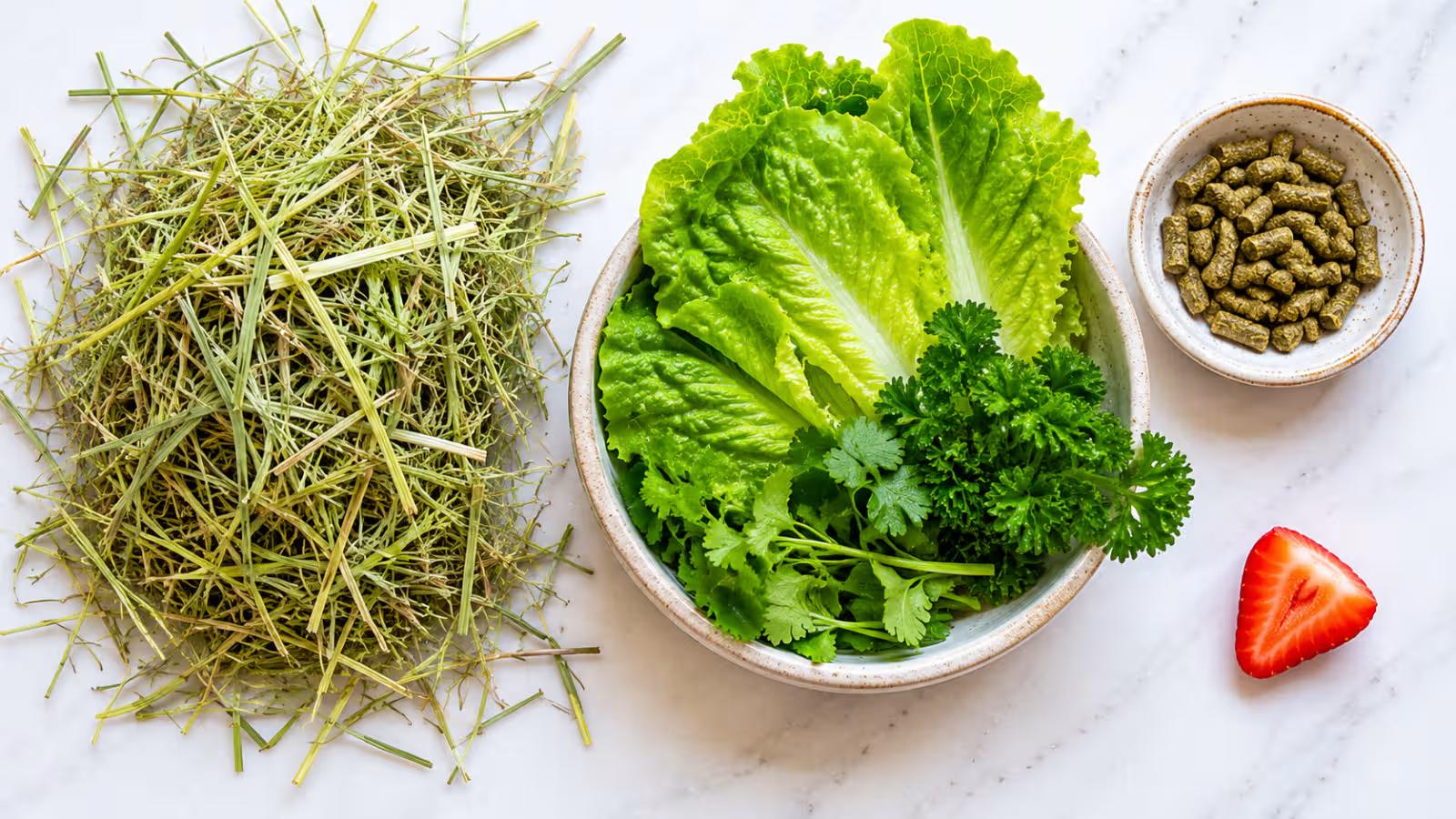
Strawberries only make sense as part of a correctly structured overall diet.
Here is what a healthy daily diet looks like:
Timothy Hay
How much: Unlimited, always available.
How often: Every day, all day.
Fresh Leafy Greens
How much: A large handful per day.
How often: Daily.
High-Quality Pellets
How much: About 1/8 cup per adult.
How often: Daily.
Fresh Clean Water
How much: Unlimited.
How often: Always.
Fruit Treats Like Strawberries
How much: 1 small slice or 1 small berry.
How often: 1 to 2 times per week.
Vitamin C-Rich Vegetables
Examples: Bell peppers, romaine, parsley.
How often: Daily as part of greens.
Hay is the foundation of this diet, making up roughly 80 percent of what your guinea pig should eat by volume.
Greens fill the gap for vitamins and minerals. Pellets provide consistent nutrition. Fruit is the occasional bonus.
If your guinea pig is not eating hay freely and consistently, that is a more urgent problem than getting the fruit schedule exactly right.
Safe Fruits Guinea Pigs Can Eat in Moderation
Strawberries are one of several safe fruit options. Rotating fruit varieties is healthier than relying on a single type repeatedly.
Some other safe choices in small portions include:
- Blueberries, two or three at a time
- Apple slices with seeds removed
- Seedless grapes, halved
- Kiwi, a small slice
- Small watermelon pieces without rind
- Pear, a small slice without seeds
Red bell pepper deserves a special mention here.
It contains more vitamin C than most fruits, produces less sugar, and can be fed daily as part of the vegetable portion.
For vitamin C specifically, bell pepper is a far better daily choice than strawberries.
Fruits to Avoid or Limit
- Citrus fruits in large amounts, because the acidity can irritate the digestive system
- Avocado, which is toxic to many small animals
- Rhubarb, which is toxic to guinea pigs
- Any fruit with pits left in
- Canned or syrup-packed fruit
- Any processed or sweetened fruit product
Common Mistakes Guinea Pig Owners Make with Fruit
Feeding Fruit Every Day
Even a small piece daily adds up to a significant sugar load over time.
Twice a week is the practical upper limit for fruit treats like strawberries.
Offering Too Large a Portion
One large strawberry is genuinely too much.
A slice, not the whole fruit, is the right portion for most guinea pigs.
Forgetting to Wash
Pesticide residue on unwashed strawberries is a real exposure risk that compounds with every feeding.
Relying on Fruit for Vitamin C
Fresh vegetables are more consistent and lower in sugar.
Fruit should supplement, not substitute, daily greens.
Assuming Excitement Means Health Approval
Guinea pigs respond enthusiastically to sweet foods because sweetness is naturally appealing to them.
That excitement is not a signal that more is better.
Not Monitoring Hay Intake After Treats
If your guinea pig gets a fruit treat and then ignores hay for the rest of the day, reduce the treat portion or frequency.
Normal vs. Concerning Reactions After Eating Strawberries
Normal Response
- Eating enthusiastically
- Normal firm pellet droppings
- Continued hay consumption
- Active and curious behavior
- Occasional softer stool once
- Mild messiness around mouth
Concerning Response
- Refusing to eat afterward
- Soft, watery, or absent droppings
- Ignoring hay for hours
- Lethargy or hiding
- Diarrhea lasting more than 24 hours
- Bloated or distended abdomen
A single softer stool after a first-time strawberry feeding is not immediately alarming.
Guinea pigs can react mildly to new foods.
Persistent soft stools, complete dietary refusal, or any signs of abdominal discomfort are different and should be taken seriously.
Expert Feeding Tips
Rotate Your Fruit Choices
Feeding the same fruit every treat session limits nutritional variety and can cause your guinea pig to fixate on one food.
Rotating between strawberries, blueberries, apple slices, and kiwi creates a healthier and more interesting treat rotation.
Feed Fruit Earlier in the Day
Offering treats in the morning or early afternoon gives you the full day to monitor droppings and behavior before nightfall.
Most digestive issues show up within four to six hours.
Weigh Your Guinea Pig Monthly
A kitchen scale accurate to one gram is inexpensive and genuinely useful.
Gradual weight gain from excess treats is nearly impossible to notice by eye but easy to catch with regular weigh-ins.
Keep Treats Small and Memorable
A guinea pig does not need a large strawberry piece to enjoy the experience.
A small piece delivers the same enrichment, smell, and taste engagement with far less sugar.
Prioritize Hay Above Everything Else
If you ever have to choose between improving the treat variety and improving hay quality or availability, hay wins every time.
Myth Busting: Common Strawberry Misconceptions
Myth: Strawberries are dangerous for guinea pigs.
False. Strawberries are safe and can be a healthy occasional treat when served correctly.
The danger only appears with overfeeding.
Myth: Guinea pigs can eat unlimited fruit because it is natural.
False. Natural does not mean unlimited.
Wild guinea pigs in South America do not have consistent access to sweet fruits. Their digestive systems evolved around grasses and fibrous plants.
Myth: Strawberry leaves are toxic.
False. Clean, fresh strawberry leaves are safe and often better tolerated than the fruit itself.
Myth: More strawberries mean more vitamin C.
False. Excess fruit creates sugar and digestive problems that outweigh the vitamin C benefit.
Bell peppers are a far better daily vitamin C source.
Myth: Organic strawberries do not need washing.
False. Organic produce can still carry soil bacteria, handling residue, and environmental contaminants.
Washing is always necessary.
Conclusion
Guinea pigs can eat strawberries safely, but only when they are served in small portions and offered occasionally.
A small slice once or twice per week is enough for most healthy adult guinea pigs.
Strawberries can provide vitamin C, hydration, antioxidants, and feeding enrichment, but their natural sugar content means they should never become a daily food.
The healthiest guinea pig diet is still built around unlimited hay, fresh leafy greens, high-quality pellets, and clean water.
Use strawberries as a small treat, not a staple, and always monitor your guinea pig’s droppings, appetite, and hay intake after introducing any new food.
Conclusion
Strawberries are a safe, enjoyable, and genuinely beneficial treat for guinea pigs when fed correctly. They bring vitamin C, antioxidants, hydration, and enrichment to a diet that can sometimes feel repetitive.
Your guinea pig can absolutely enjoy them, and sharing that moment with your pet is one of the genuine pleasures of guinea pig ownership.
The key is keeping portions small, frequency limited to once or twice a week, and hay always at the center of the daily diet.
Wash every strawberry carefully, skip the dried versions entirely, and monitor your guinea pig's response after any new food introduction.
Once you have the basics of a balanced diet in place, adding small fruit treats becomes easy and stress-free.
Most guinea pigs do perfectly well with strawberries as an occasional part of a varied and well-managed diet.
The problems only start when treats become habits and portions stop being measured.
References and Source Links
- The Humane Society of the United States — Guinea Pig Care
- RSPCA Australia — Guinea Pig Diet and Nutrition
- The Veterinary Nurse — Nutritional Needs of Guinea Pigs
- British Veterinary Association — Small Pet Welfare Guidelines
- VCA Animal Hospitals — Feeding Guinea Pigs
- Merck Veterinary Manual — Guinea Pig Nutrition