Bananas are not toxic to guinea pigs, but the right amount is far smaller than most owners realize. Guinea pigs have sensitive digestive systems built for fiber, not sugar. What feels like a generous little treat to you can be a meaningful sugar load for an animal weighing under three pounds.
This guide covers exactly how much banana is safe, what happens when guinea pigs eat too much, and how to build a treat routine that keeps your pet healthy long term. If you have ever second-guessed yourself standing at the fruit bowl, you are in the right place.
Can Guinea Pigs Eat Bananas?
Yes, guinea pigs can eat bananas. Bananas are not toxic to guinea pigs, and many piggies absolutely love the soft, sweet taste. A tiny slice offered once or twice a week is generally considered safe for a healthy adult guinea pig.
The issue is not the banana itself. The problem is how quickly a well-meaning owner can go from a small treat to a daily habit. Bananas are one of the highest-sugar fruits available, and guinea pigs are strict herbivores built for fibrous, low-sugar plant material. Their bodies are simply not designed to handle large amounts of natural sugar on a regular basis.
Think of banana the same way you would think of a piece of cake for a person. Not toxic. Enjoyable in small amounts. But a bad idea every day.
Understanding the Guinea Pig Digestive System
Before adding any new food to your guinea pig's diet, it really helps to understand how their digestion works. Guinea pigs are what experts call hindgut fermenters. This means most of their digestion happens in the cecum, a large pouch in the lower digestive tract where fiber is broken down by beneficial bacteria.
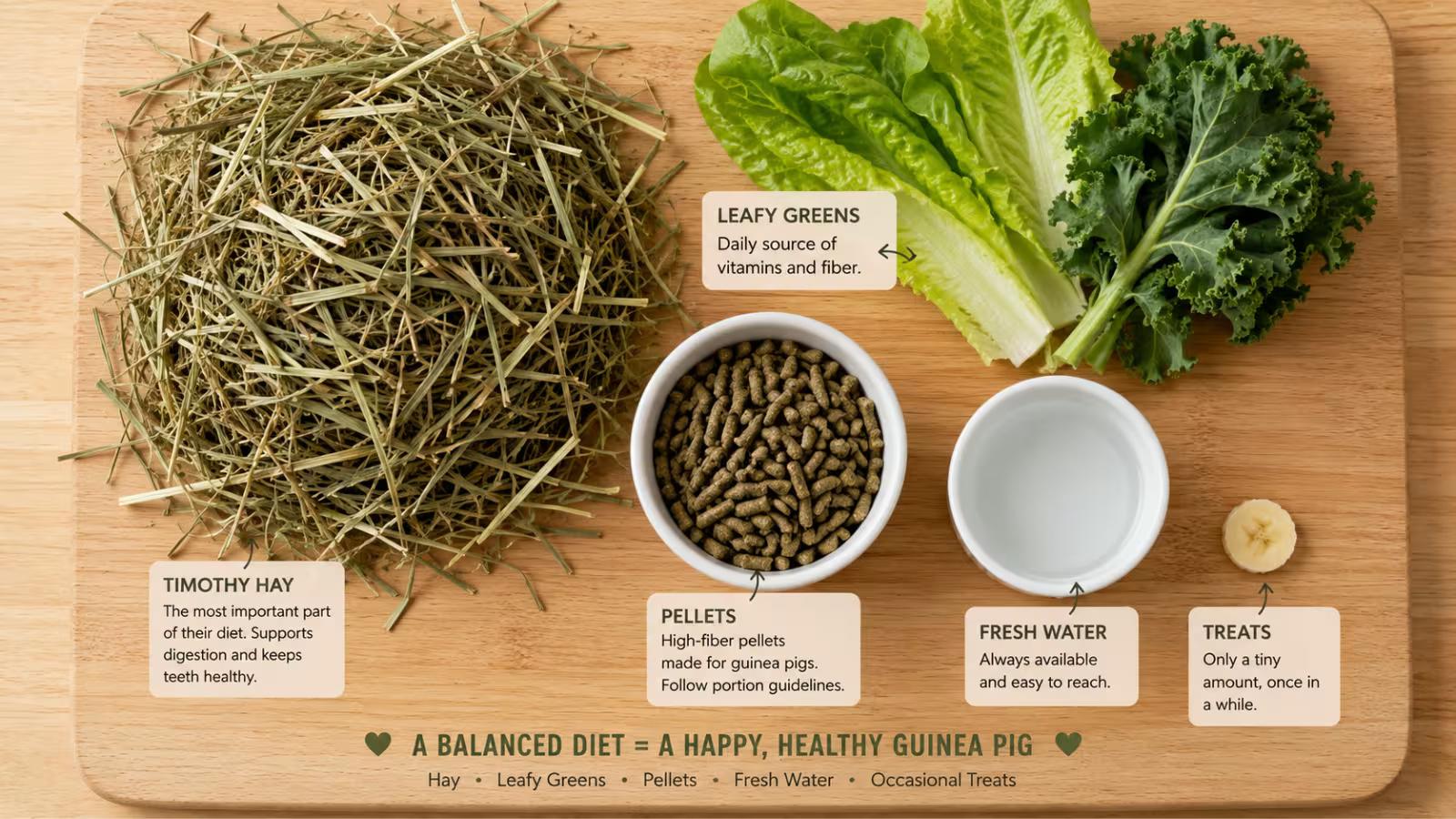
Timothy hay is the cornerstone of this process. Guinea pigs need constant access to hay because it keeps food moving through their gut at a healthy pace. Without enough fiber, digestion slows, harmful bacteria can multiply, and a condition called gastrointestinal stasis can develop.
Sugary foods like bananas introduce a different kind of energy that the gut bacteria are not accustomed to processing in large amounts. Excess sugar can shift the bacterial balance, leading to bloating, gas, loose stools, and general digestive discomfort. In severe cases, an imbalanced gut can spiral into a serious health event quickly.
Unlike humans, guinea pigs do not naturally self-regulate their sugar intake. If given unlimited sweet food, most guinea pigs will keep eating. This is why portion control is entirely your responsibility as the owner.
Nutritional Benefits of Bananas for Guinea Pigs
Bananas do offer some real nutritional value when fed correctly. They are not just empty calories, and that is worth understanding.
Potassium
Bananas are well known for potassium content, which supports healthy muscle and nerve function. A small amount goes a long way for a tiny animal.
Vitamin C
Guinea pigs cannot synthesize their own vitamin C. They need a steady supply from their food to prevent scurvy, a condition that causes joint pain, lethargy, poor coat condition, and bleeding gums. Bananas contain modest amounts of vitamin C, though bell peppers and leafy greens are far superior sources for this purpose.
Dietary Fiber
Ripe bananas contain some soluble fiber, which can mildly support gut motility. This does not replace the roughage that hay provides, but it is not entirely without benefit in small amounts.
Mental Enrichment
This one often gets overlooked. Guinea pigs benefit from dietary variety and sensory enrichment. A tiny piece of banana given occasionally adds excitement and novelty to feeding time, which contributes positively to overall wellbeing.
That said, the nutritional benefits of banana are modest compared to many vegetables. There is no reason to feed banana frequently just for nutrition. Leafy greens and quality pellets do a far better job.
Why Bananas Can Become Dangerous
The core concern is sugar content. A medium banana contains around 14 grams of natural sugar. For a creature the size of a guinea pig, even a fraction of that is significant.
Regular overfeeding of sugary foods can contribute to a range of problems:
- Soft or watery stools
- Gas buildup and bloating
- Gradual weight gain and obesity
- Reduced interest in hay, which disrupts fiber intake
- Dental disease, as the sticky texture clings to teeth
- Nutritional imbalance over time
Many of these problems develop slowly and quietly. An owner might not notice their guinea pig is gaining weight or eating less hay until the pattern has been going on for weeks. By then, reversing the habit takes time and patience.
The sticky texture of banana is also worth noting. Unlike crunchy vegetables, banana pulp can cling to teeth and gum lines. Guinea pig teeth grow continuously, and sticky residue can contribute to tartar buildup and dental issues if banana is fed too often.
The good news is that these risks are almost entirely avoidable with the right portion size and feeding frequency.
How Much Banana Can Guinea Pigs Eat?
Portion control is everything here. A safe serving size for a healthy adult guinea pig is:
- One thin coin-sized slice of banana
- Or one small cube roughly the size of your thumbnail
That is the entire serving. Not a quarter of a banana. Not a few bites. One small piece.
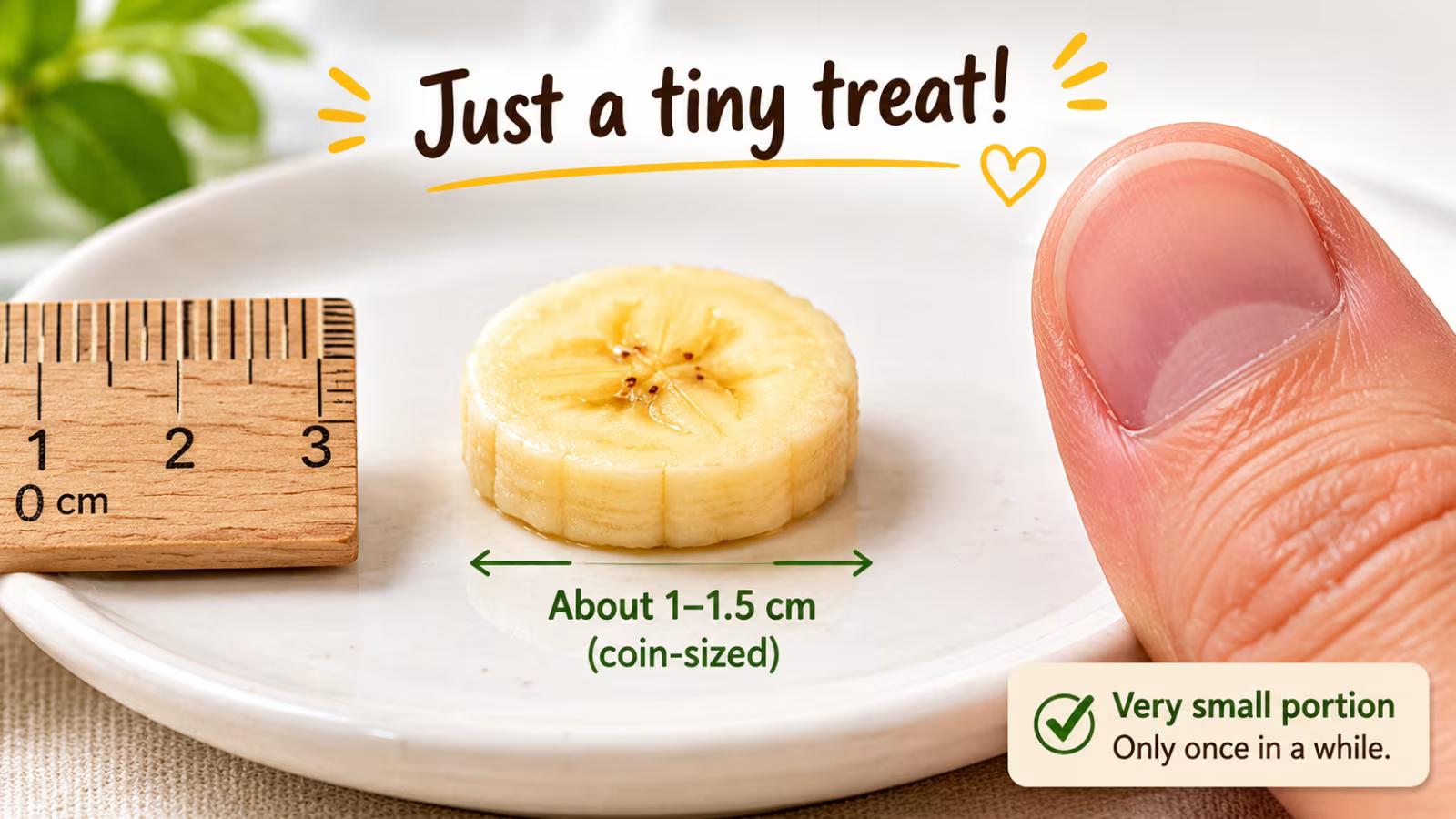
For most healthy adult guinea pigs, offering banana once or twice per week is considered safe. Some owners space it out to once every ten days to keep sugar intake low, which is also a perfectly reasonable approach.
If your guinea pig has any of the following conditions, it is often best to skip banana entirely or consult an exotic vet before offering any:
- Known obesity or weight concerns
- History of digestive sensitivity
- Dental problems
- Diabetes or suspected blood sugar issues
Even in healthy guinea pigs, more is never better when it comes to fruit. Keeping portions small protects your pet without eliminating the occasional treat.
Can Guinea Pigs Eat Banana Peel?
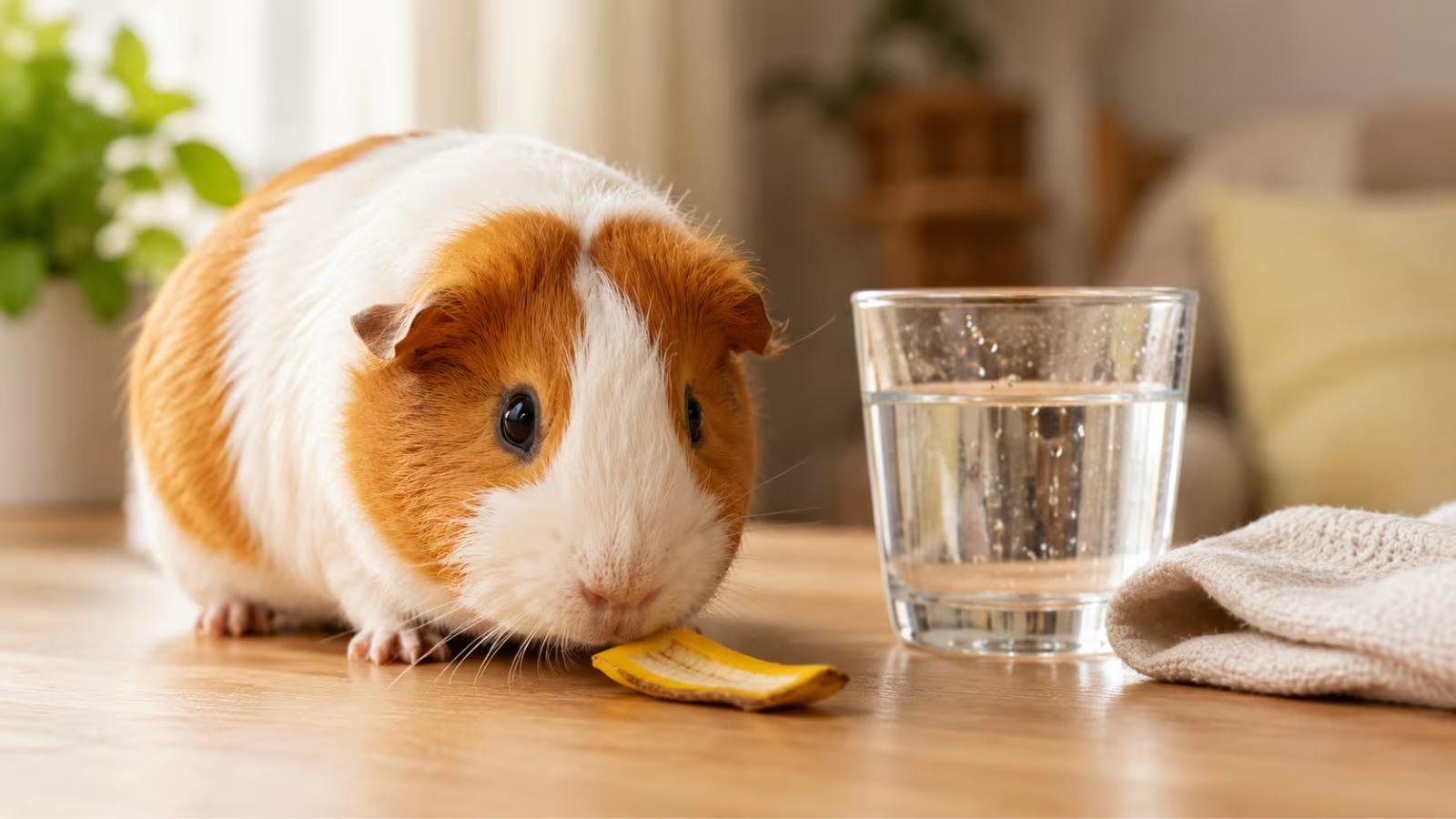
Yes, technically guinea pigs can eat banana peel in very small amounts. The peel is not toxic, and some guinea pigs enjoy chewing on it because of the tougher, more fibrous texture compared to the soft fruit inside.
However, there is a serious catch. Commercially grown bananas are regularly sprayed with pesticides and may be coated with wax or other surface treatments during shipping and storage. These chemical residues sit on the peel and cannot be completely removed even with thorough washing.
If you want to offer banana peel:
- Wash it very thoroughly under running water
- Use organic bananas whenever possible to reduce pesticide exposure
- Offer only a very small piece
- Treat it as an occasional extra, not a regular addition
Even with organic bananas, banana peel should remain a rare offering. The extra fiber is a mild benefit, but it does not outweigh the need for caution around surface contaminants on store-bought fruit.
Can Baby Guinea Pigs Eat Bananas?
Baby guinea pigs have more delicate digestive systems than adults, and their nutritional needs are more specific during the first weeks and months of life. While a tiny taste of banana is unlikely to cause a crisis, it is generally smarter to hold off.
Young guinea pigs should focus on:
- Unlimited timothy hay for fiber and healthy gut development
- Fresh leafy greens appropriate for young piggies
- Quality guinea pig pellets formulated for growth
- Clean, fresh water at all times
Introducing sugary treats too early can lead to picky eating later. Some young guinea pigs that get used to sweet foods will begin refusing hay in favor of waiting for fruit, which sets up long-term digestive problems.
Wait until your guinea pig is fully established on a balanced hay-based diet before introducing fruit in any form. When you do introduce banana, start with the smallest possible piece and watch for any digestive reaction.
Fresh Banana vs Dried Banana: What Is the Difference?
Fresh ripe banana is always the better choice. Dried banana may seem like a convenient snack option, but it is significantly more concentrated in sugar and calories per gram than fresh banana.
Many commercial dried banana chips also contain:
- Added sugars or syrups
- Oils used during frying or processing
- Artificial flavorings
- Preservatives not appropriate for guinea pigs
Even plain unsweetened dried banana has a much higher sugar density than fresh banana, simply because the water content has been removed. The texture is also harder and stickier, which can be more difficult to digest and worse for dental health.
There is no real benefit to feeding dried banana when fresh is available. Skip the chips entirely and stick to a thin slice of fresh, ripe banana.
The Best Way to Feed Banana to a Guinea Pig
Good preparation makes a real difference. Here is the right way to offer banana safely.
Choose the Right Banana
Use a fresh, ripe banana that shows no signs of mold, mushy overripeness, or fermentation. An overripe banana has broken down more of its starch into sugar, making it even sweeter and more concentrated than a normal ripe banana.
Wash It First
Always wash the outer peel before cutting, even if you are not offering the peel itself. Residues on the surface can transfer to your hands and onto the slice during cutting.
Cut a Small Portion
One thin coin-sized slice is the target. There is no need to offer more, and no benefit to doing so.
Serve It Separately
Offer the banana slice directly to your guinea pig as a treat rather than burying it in a bowl of mixed vegetables. This lets you observe how your pet responds and ensures they actually eat the right portion.
Remove Leftovers Within an Hour
Soft fruit spoils quickly in a warm habitat. Uneaten banana left sitting can attract bacteria and insects. Check the enclosure after thirty to sixty minutes and remove any uneaten pieces.
Signs Your Guinea Pig Ate Too Much Banana
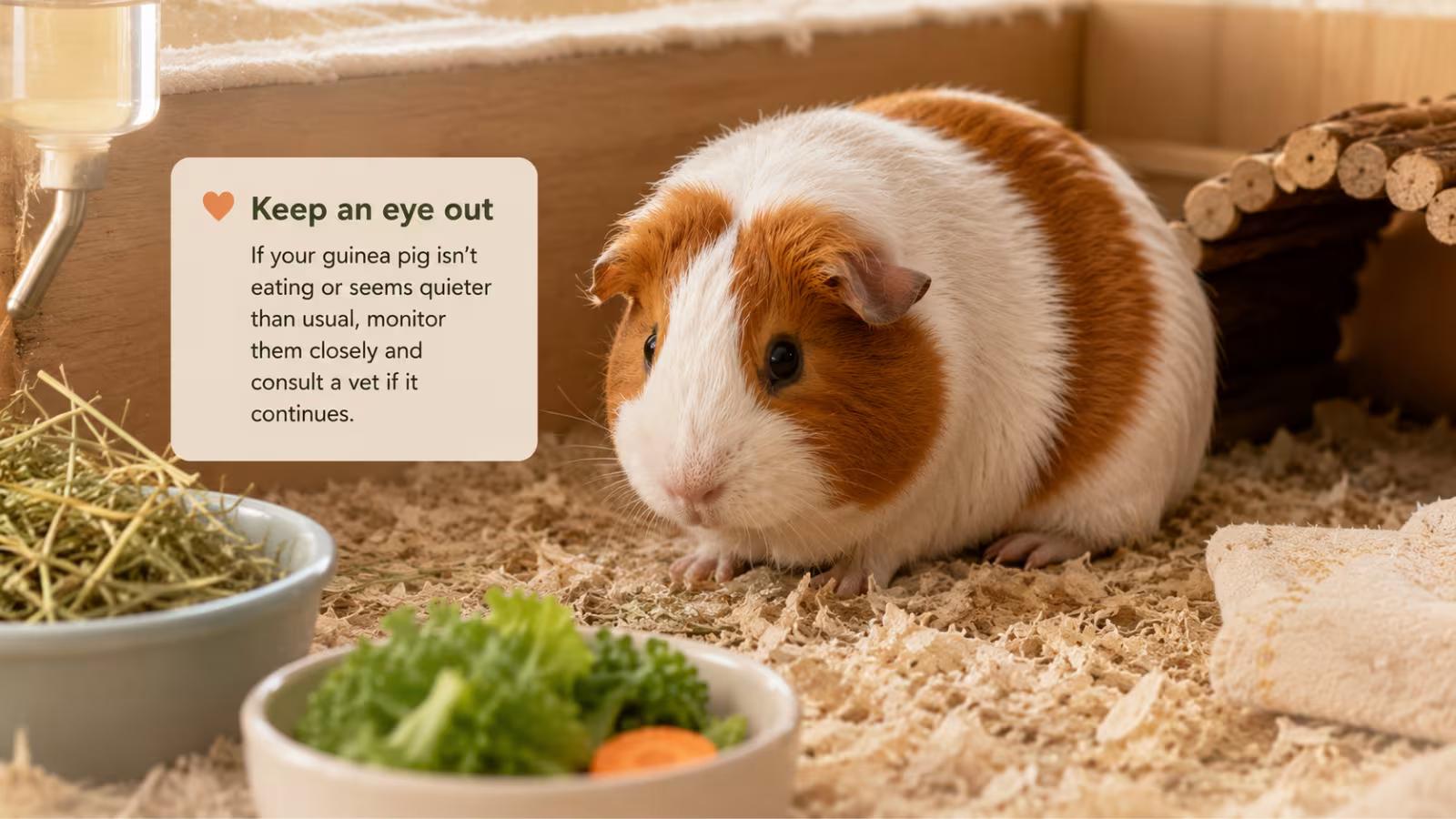
If your guinea pig got into more banana than intended, or if someone in the household gave an extra portion without knowing, watch for the following signs over the next twelve to twenty-four hours.
Mild symptoms that usually resolve on their own:
- Slightly softer stools than usual
- Sticky or mushy droppings
- Brief decrease in activity
More concerning symptoms that deserve close monitoring:
- Diarrhea lasting more than a few hours
- Loss of interest in hay or food
- Hunched posture or signs of abdominal discomfort
- Visible bloating or puffiness in the belly
- Decreased movement or prolonged hiding
One slightly soft dropping is not an emergency. But a pattern of loose stools, reduced appetite, or behavioral changes that persist for more than a day should be taken seriously.
Guinea pigs must eat almost continuously to keep their digestive systems functioning. A guinea pig that stops eating for more than a few hours can deteriorate rapidly. Never wait several days to see if things improve on their own if real symptoms appear.
When to Call a Vet Immediately
Seek veterinary attention without delay if your guinea pig:
- Has completely stopped eating or drinking
- Shows severe diarrhea with blood or mucus
- Appears lethargic and unresponsive
- Has a visibly distended or painful abdomen
- Is grinding teeth or vocalizing in distress
- Shows difficulty breathing
These are signs of a potential gastrointestinal emergency that requires professional care immediately.
How Bananas Compare to Other Fruits for Guinea Pigs
Bananas sit on the higher end of the sugar scale compared to many other fruits that guinea pigs can enjoy. If you want to offer fruit treats but prefer lower-sugar options, these alternatives are generally safer for more frequent offering:
- Strawberries: lower sugar, good vitamin C source
- Blueberries: antioxidant rich, naturally sweet but lower glycemic
- Apple slices with skin removed: moderate sugar, offer in small amounts
- Kiwi: excellent vitamin C, relatively low sugar
- Small pieces of fresh pear: mild and well-tolerated by most guinea pigs
Even lower-sugar fruits should still be limited to small occasional servings. The hierarchy of a guinea pig diet always places hay and vegetables above any fruit, regardless of how healthy the fruit seems by human standards.
Rotate your fruit offerings rather than relying on the same one every week. Variety reduces the risk of developing a single-fruit dependency and exposes your guinea pig to a broader range of micronutrients.
What Should a Guinea Pig Eat Every Day?
Banana will never be a foundation food. Understanding the full picture of a proper guinea pig diet helps keep fruit in proper perspective.
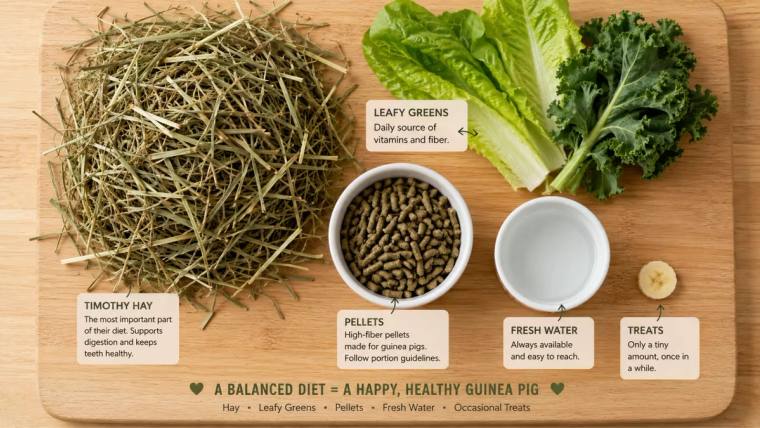
Unlimited Timothy Hay
This is the most important food a guinea pig eats. It should make up roughly 80 percent of their daily intake. Hay supports gut motility, dental wear, and healthy bacterial balance in the cecum.
Fresh Vegetables Daily
Leafy greens like romaine lettuce, green leaf lettuce, and cilantro should be offered every day. Bell peppers are especially valuable because of their high vitamin C content. Aim for a cup of mixed fresh vegetables per guinea pig per day.
Guinea Pig Pellets
A small daily serving of high-quality plain guinea pig pellets provides consistent vitamins and minerals. Look for pellets specifically formulated for guinea pigs, not general small animal blends.
Clean Water at All Times
Fresh water should always be available. Change it daily and clean the bottle or bowl regularly to prevent bacterial growth.
Occasional Fruit Treats
Small portions of appropriate fruit, no more than once or twice weekly, offered as enrichment rather than nutrition.
Keeping this hierarchy clear in your mind will help you make better decisions every time you open the refrigerator and wonder whether today is a good day for banana.
Common Mistakes Guinea Pig Owners Make with Fruit
Most feeding problems with guinea pigs come down to a few repeating patterns. Recognizing them early saves a lot of trouble.
Treating Fruit Like a Daily Vegetable
Fruit is not a substitute for leafy greens. Many owners start offering fruit every day because their guinea pig loves it, without realizing the cumulative sugar load building up over time.
Giving Portions Sized for Humans
A "small" banana piece to a human can be several times larger than what a guinea pig actually needs. Always size portions relative to the animal, not your hand.
Ignoring Hay Intake Changes
One of the earliest warning signs that a guinea pig is eating too many sweet treats is reduced hay consumption. If your guinea pig is leaving hay untouched, review what else they are eating.
Feeding Overripe or Damaged Fruit
Mushy, fermenting, or moldy banana contains far more sugar and potential pathogens than fresh banana. Always inspect fruit carefully before offering it.
Assuming All Fruit Is Equally Safe
Some fruits carry real risks for guinea pigs. Citrus fruits, for example, are highly acidic and can cause mouth sores. Grapes can be problematic in large amounts. Always research a new fruit before offering it.
Small improvements in how you approach fruit feeding can make a meaningful difference in your guinea pig's long-term health.
Myth Busting: Common Banana Misconceptions
"Bananas are healthy, so more must be better."
Not for guinea pigs. Their physiology is fundamentally different from humans. What benefits a human nutritionally can create real stress on a small herbivore's digestive system.
"Banana peel is toxic to guinea pigs."
False. Banana peel is not toxic. The concern is pesticide residue, not the peel itself. Washed organic peel in tiny amounts is generally safe.
"Fruit can replace vegetables in a guinea pig's diet."
Absolutely not. Vegetables provide sustained vitamin C, lower sugar, and higher water content. Fruit is always secondary to vegetables in terms of nutritional value for guinea pigs.
"Guinea pigs will stop eating when they are full."
This is partially true for hay, but many guinea pigs will continue eating sweet or novel foods well past what is healthy. Self-regulation around sugar-rich foods is poor in most guinea pigs.
"Dried fruit is a safe alternative to fresh fruit."
Dried fruit is almost always more concentrated in sugar and often contains additives. It is generally worse than fresh fruit for guinea pigs, not equivalent.
Conclusion
Bananas are a perfectly safe occasional treat for guinea pigs when offered thoughtfully. The key word is occasional. A thin slice once or twice a week gives your guinea pig a pleasant sensory experience without placing meaningful stress on their digestive system.
The foundation of your guinea pig's health will always come back to unlimited timothy hay, daily fresh vegetables, quality pellets, and clean water. Fruit treats, including banana, sit at the very edge of that diet as enrichment rather than nutrition.
Pay attention to your guinea pig's stool, energy levels, and hay consumption. These three signals tell you more about their digestive health than almost anything else. When everything looks normal, you can offer an occasional banana slice with confidence.
Most problems happen when good intentions slowly become bad habits. Keeping portion sizes honest and fruit days deliberate will serve your guinea pig far better than any treat ever could.
References and Source Links
- The Humane Society of the United States. Guinea Pig Feeding Guide. https://www.humanesociety.org/resources/guinea-pig-feeding
- RSPCA. What Should I Feed My Guinea Pig? https://www.rspca.org.uk/adviceandwelfare/pets/rodents/guineapigs/diet
- Merck Veterinary Manual. Guinea Pigs: Feeding. https://www.merckvetmanual.com/exotic-and-laboratory-animals/guinea-pigs/guinea-pigs
- PDSA. Guinea Pig Diet Advice. https://www.pdsa.org.uk/pet-help-and-advice/looking-after-your-pet/small-pets/guinea-pig-diet
- USDA FoodData Central. Bananas, Raw. Nutritional Composition. https://fdc.nal.usda.gov/fdc-app.html#/?query=banana