That instinct to pause and check is exactly right. Guinea pigs look sturdy, but their digestive systems are genuinely fragile. The wrong food, the wrong portion, or even the right food fed too often can trigger gas, bloating, diarrhea, or worse. Not every vegetable that belongs on your plate belongs in their bowl.
So can guinea pigs eat asparagus? Yes, but with conditions that are worth understanding before you feed it. This guide covers what asparagus actually does for your guinea pig, how much is safe, and what warning signs to watch for afterward.
Is Asparagus Safe for Guinea Pigs?
Asparagus is not toxic to guinea pigs. That is the first thing worth knowing. Unlike some plants and vegetables that cause serious urinary or digestive harm in small pets, asparagus does not contain compounds that are inherently dangerous to guinea pigs.
That said, safe does not automatically mean unlimited. Guinea pigs have highly sensitive gastrointestinal tracts built for consistent, fibrous, low-moisture foods. Hay drives their digestion. Fresh vegetables are welcome additions, but they play a supporting role rather than a starring one.
Asparagus fits best as an occasional treat, offered once or twice per week in small portions. Think of it as dietary variety rather than a nutritional staple. When prepared properly and fed in moderation, most healthy adult guinea pigs tolerate it without any issues.
Nutritional Benefits of Asparagus for Guinea Pigs
Asparagus is not a powerhouse food for guinea pigs, but it does carry some genuinely useful nutrients when offered as part of a rotating vegetable schedule.
Vitamin C
This one matters more than any other nutrient on the list. Guinea pigs, like humans, cannot produce their own vitamin C. A deficiency leads to scurvy, which causes weakness, joint pain, rough coat, and eventually serious illness.
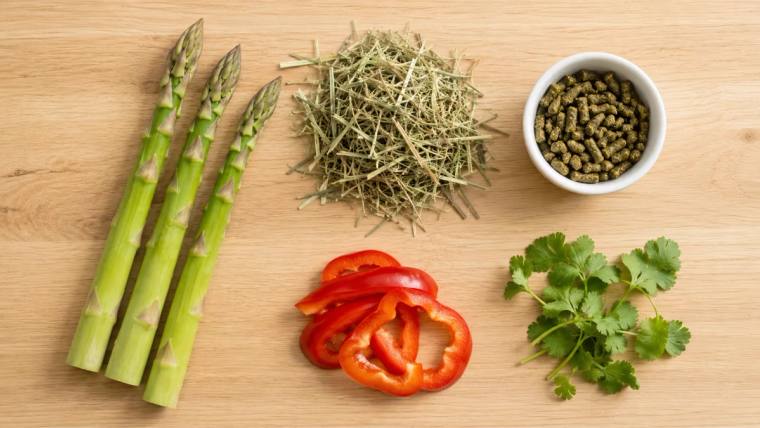
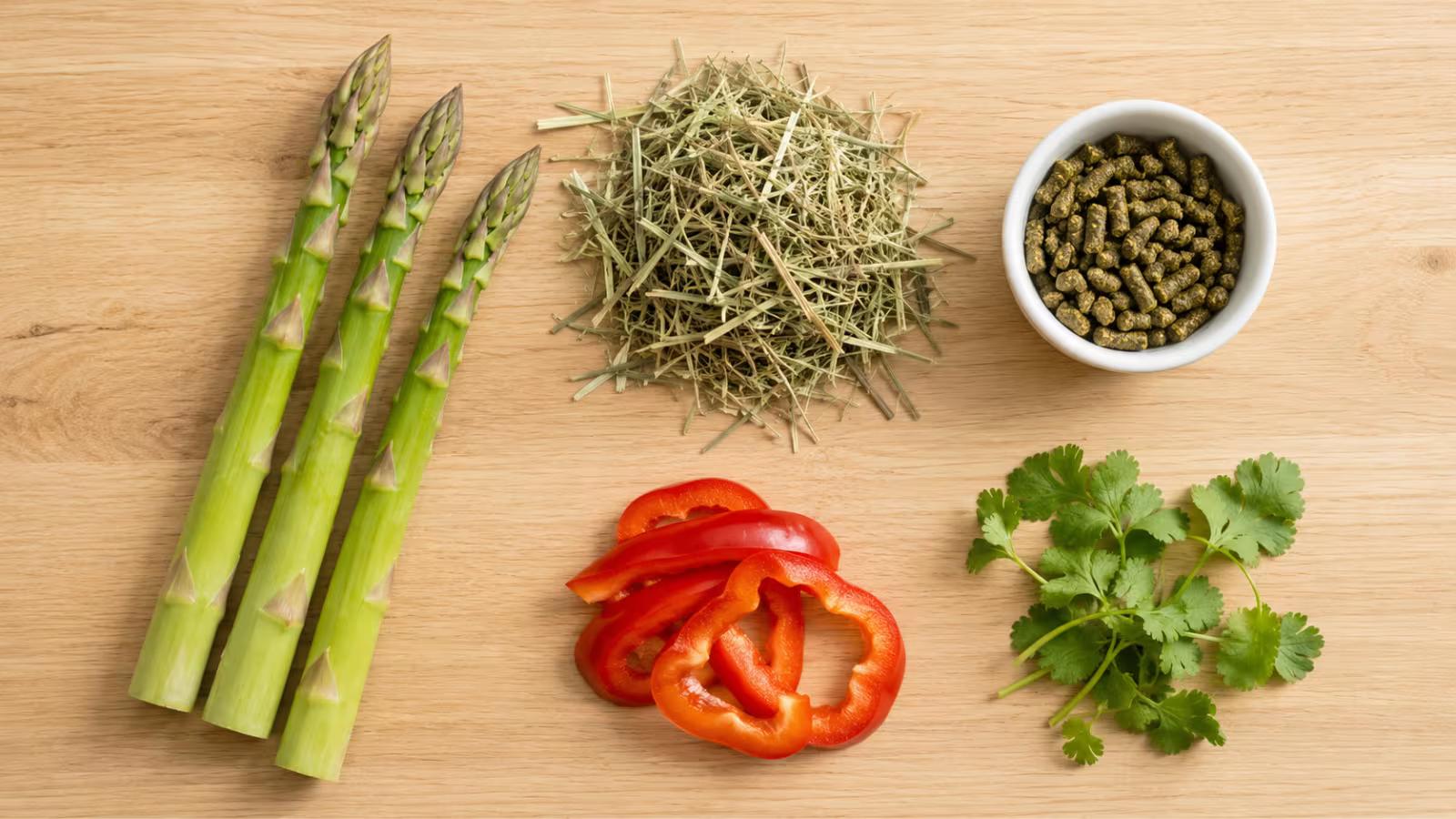
Asparagus contains moderate levels of vitamin C, which means it contributes to overall intake without being the best source available. Bell peppers, parsley, and cilantro deliver more vitamin C per gram and are better candidates for daily rotation. Asparagus still adds variety to the mix.
Fiber
Fiber keeps guinea pig digestion moving. Their gastrointestinal system runs almost constantly, and a disruption in fiber intake causes problems quickly. Asparagus contains dietary fiber that supports healthy gut movement when fed as part of a balanced diet.
Antioxidants and Plant Compounds
Asparagus contains antioxidants that may support general cellular health. While guinea pigs do not need exotic superfoods, dietary variety from a range of safe vegetables tends to produce better long-term outcomes than a narrow, repetitive menu.
Folate and Vitamin K
Asparagus also provides folate and vitamin K, both of which play roles in normal bodily function. These nutrients are useful in small quantities, though no single vegetable should be viewed as the source of any critical nutrient for guinea pigs.
The takeaway here is simple: asparagus offers real nutritional value without being irreplaceable. It earns a spot in the vegetable rotation, not a permanent seat at the table.
Can Guinea Pigs Eat Raw Asparagus?
Yes, raw asparagus is the right choice. Guinea pigs process raw vegetables far more naturally than cooked ones, and asparagus is no exception.
Fresh, raw asparagus should always be:
- Thoroughly washed to remove pesticide residue and dirt
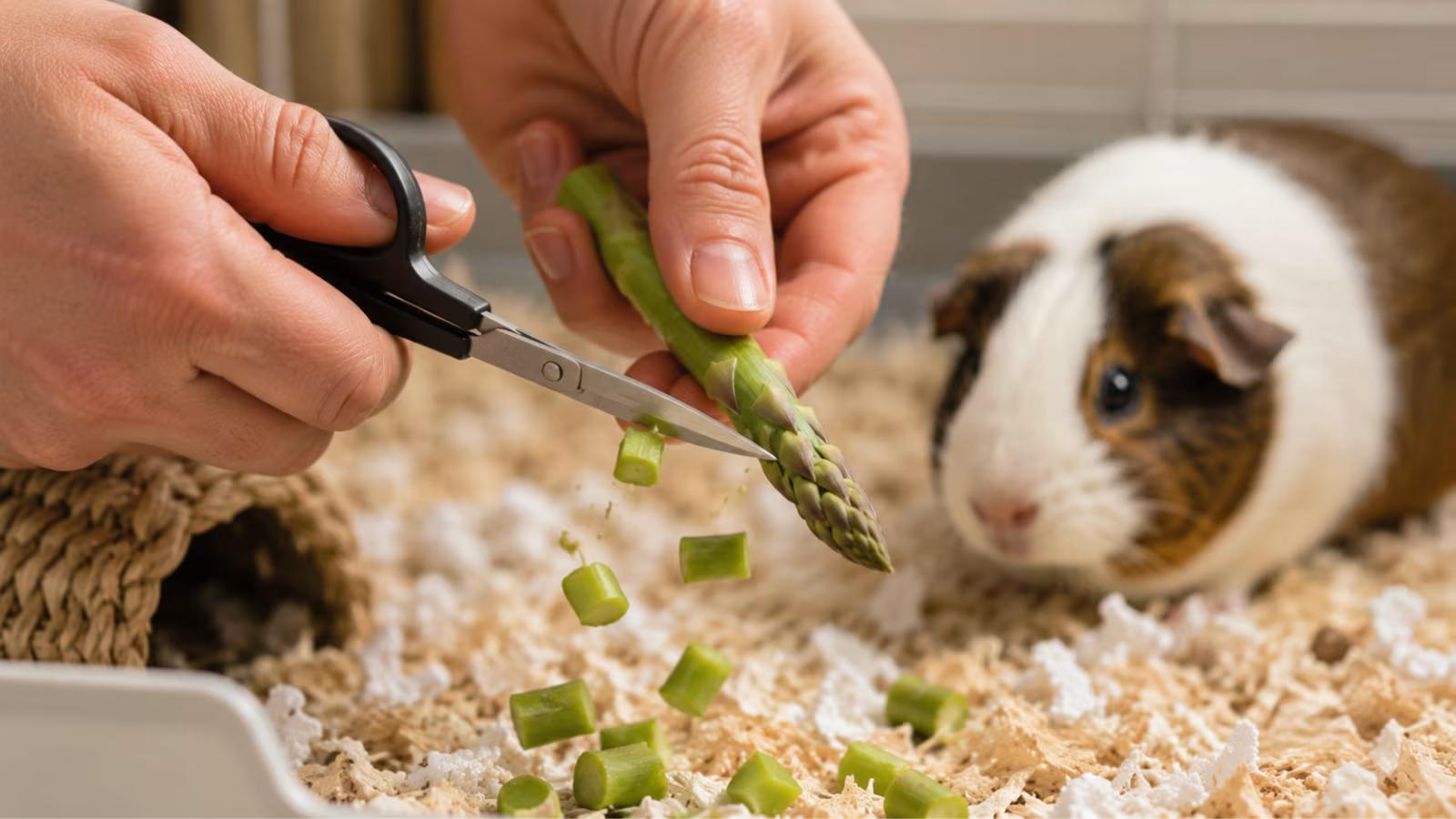
- Cut into small, manageable bite-sized pieces
- Free from any oil, seasoning, or added flavoring
- Served fresh rather than left sitting in the habitat for hours
Canned asparagus is completely off the table. It almost always contains sodium and preservatives that are inappropriate and potentially harmful for guinea pigs. If the asparagus came from a can, do not feed it.
Can Guinea Pigs Eat Cooked Asparagus?
No. Cooked asparagus should not be fed to guinea pigs, even if it is plain with no added ingredients.
Cooking changes the texture, moisture content, and nutrient profile of vegetables in ways that do not suit guinea pig digestion. Their systems expect firm, fibrous raw foods. Soft, cooked vegetables can disrupt digestive balance and increase the risk of loose stool.
More importantly, most cooked asparagus in a typical household is prepared with butter, salt, garlic, oil, or other seasonings. Any of these additions make the food genuinely dangerous for guinea pigs. Even a small amount of garlic or onion can cause toxicity in small animals.
Stick with fresh and raw every time. It is the safest, most nutritionally appropriate option.
Can Guinea Pigs Eat Asparagus Tips?
Yes, asparagus tips are safe and are often the easiest part for guinea pigs to eat. The tips are softer than the lower stalk, which makes chewing easier, especially for younger or older animals.
That said, the tougher lower portion of the stalk is not off-limits. Just cut it into smaller pieces to reduce the effort required to chew and lower any choking risk. The same rules apply regardless of which part you are offering: small amounts, occasional feeding, careful observation.
Can Baby Guinea Pigs Eat Asparagus?
Baby guinea pigs have even more sensitive digestive systems than adults, and their early diet should stay simple and consistent. Once they begin eating solid foods alongside nursing, the focus should be on:
- Timothy hay with unlimited access
- Alfalfa hay for younger animals still developing
- High-quality guinea pig pellets
- Simple, well-tolerated greens
Asparagus is not a priority food for young guinea pigs. Introducing too many vegetables too early can disrupt the gut flora they are still establishing. If you want to offer asparagus to a baby guinea pig, wait until they are a bit older, start with the tiniest possible piece, and monitor closely for any digestive reaction.
How Much Asparagus Can Guinea Pigs Eat?
Portion size is where many well-meaning owners run into trouble. More is not better when it comes to vegetables and guinea pigs.
A reasonable serving looks like one small spear or two to three thin bite-sized pieces. This portion, offered one to two times per week, is enough to provide variety without overloading the digestive system.
Overfeeding asparagus can lead to:
- Gas and bloating
- Soft or loose stool
- Reduced appetite
- Digestive imbalance from excess moisture
Asparagus contains more water than hay, and a diet too heavy in high-moisture foods throws off the gut balance guinea pigs depend on. Moderation is not a suggestion here. It is genuinely important.
How to Introduce Asparagus Safely
First-time introductions of any new food deserve a cautious approach. Guinea pigs do not handle sudden dietary changes well, and a slow introduction helps you identify any sensitivity before it becomes a bigger problem.
Step 1: Wash Thoroughly
Rinse the asparagus under cool running water to remove surface pesticides, dirt, and chemical residues. Even if the asparagus is labeled organic, washing is still a good habit.
Step 2: Cut into Small Pieces
Trim the asparagus into small, thin pieces. This reduces the effort required to eat it and lowers any risk of choking.
Step 3: Offer a Very Small Amount First
Start with one tiny piece. Resist the temptation to offer a larger portion just because your guinea pig seems enthusiastic. Their initial reaction does not tell you how their digestion will respond.
Step 4: Observe for 24 to 48 Hours
After the first feeding, watch for any changes. Normal stool, continued hay eating, and regular activity are all good signs. Any changes in behavior, appetite, or stool consistency are signals to pause and reassess.
If your guinea pig shows no negative reaction, you can continue offering asparagus occasionally in the recommended portion size. If something seems off, discontinue it and give the digestive system time to settle before trying again.
Signs Your Guinea Pig Ate Too Much Asparagus
Guinea pigs are prey animals with an instinct to hide discomfort. By the time symptoms become obvious, the problem has often been building for a while. Knowing what to look for makes a real difference.
Watch for these warning signs after feeding asparagus:
- Diarrhea or noticeably soft stool
- Bloated or firm-feeling abdomen
- Loss of appetite or reduced interest in hay
- Hunched sitting posture
- Teeth grinding, which signals discomfort
- Reduced activity or lethargy
- Refusing water or behaving unusually quiet
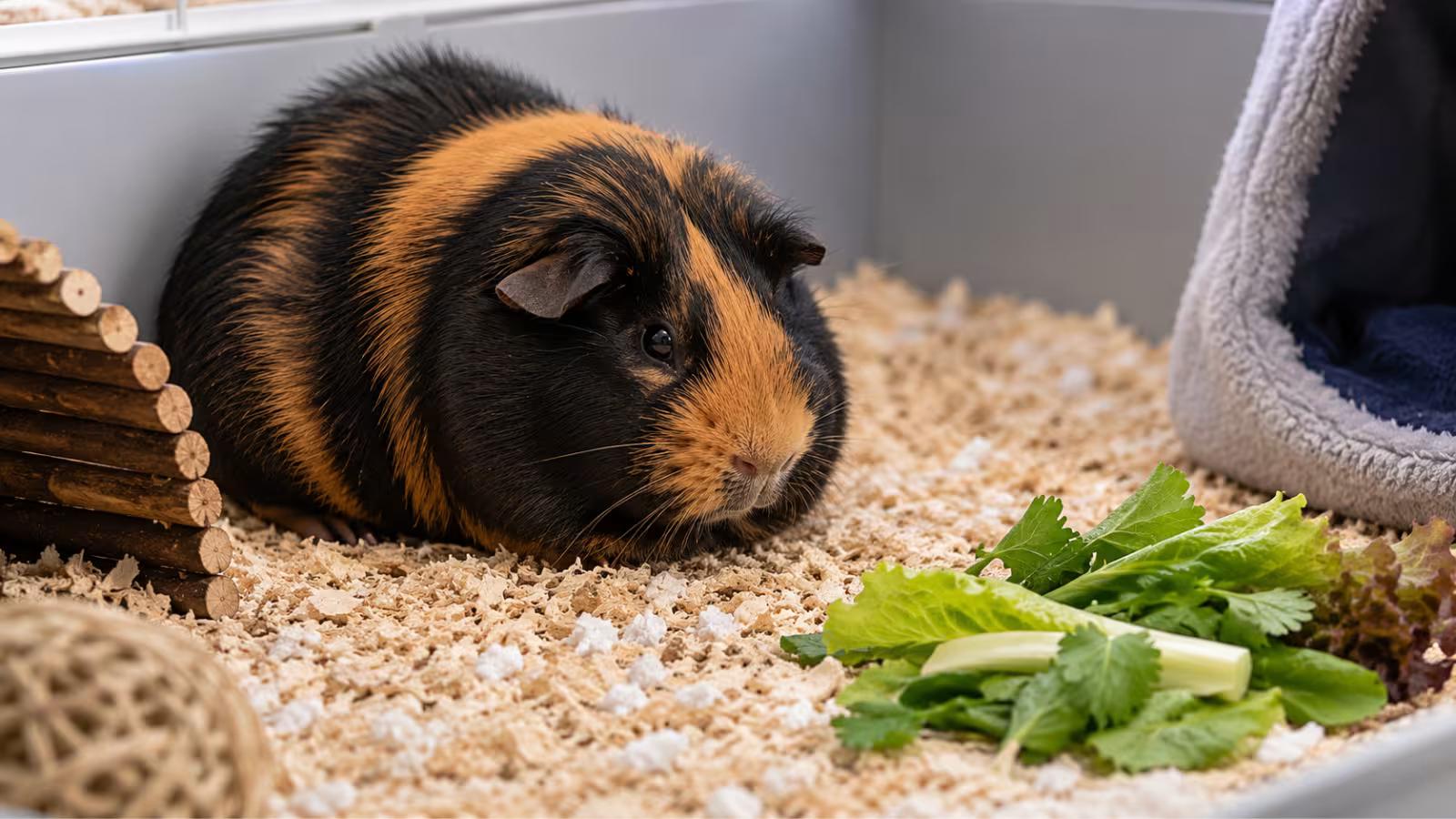
If you notice any of these signs, stop offering asparagus immediately. Make sure hay and water are freely available. Most mild digestive reactions resolve within a day or two once the offending food is removed. If symptoms persist beyond 24 to 48 hours, or if your guinea pig stops eating entirely, contact an exotic animal veterinarian as soon as possible. Digestive stasis in guinea pigs can become serious quickly.
Best Vegetables to Rotate With Asparagus
A well-rounded vegetable rotation is one of the best things you can do for your guinea pig's long-term health. No single vegetable delivers everything, and variety reduces the risk of overloading any one nutrient.
Some excellent vegetables to rotate alongside asparagus include romaine lettuce, green leaf lettuce, bell peppers, especially red and yellow for higher vitamin C, cilantro, cucumber, zucchini, celery leaves, and small portions of carrot. Each of these brings a slightly different nutritional profile to the diet without introducing unnecessary risk.
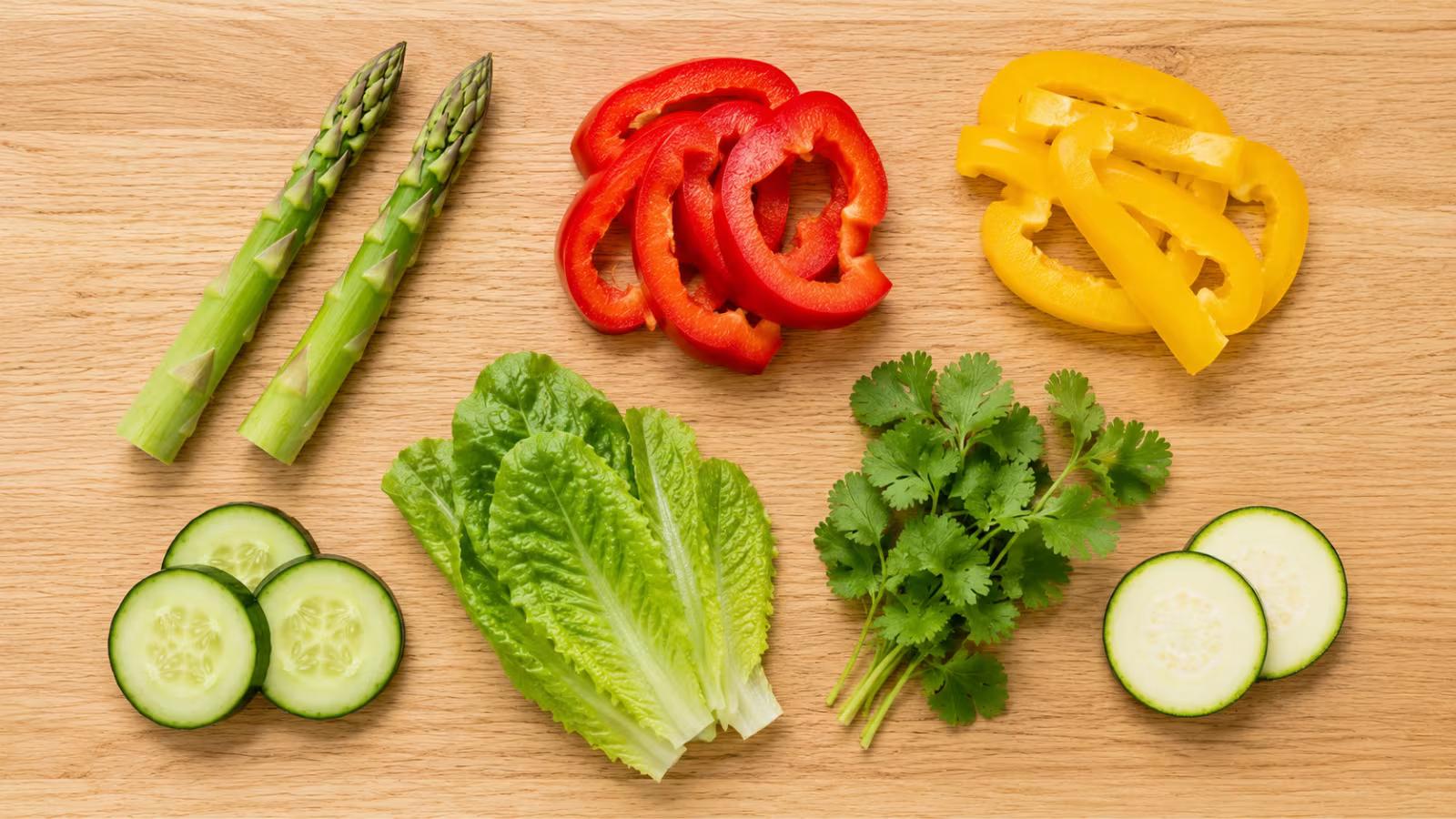
Bell peppers deserve a special mention. They are one of the best natural sources of vitamin C for guinea pigs and tend to be very well-tolerated. If you are rotating vegetables weekly, bell pepper is a reliable anchor to build the schedule around.
Vegetables Guinea Pigs Should Avoid
Not everything in the produce section is guinea pig-friendly. Some foods that seem harmless are actually dangerous.
Avoid feeding your guinea pig onions, garlic, potatoes, especially raw or green-tinged potatoes, rhubarb, mushrooms, avocado, or iceberg lettuce. Onions and garlic can cause toxicity even in small amounts. Rhubarb contains oxalic acid at levels harmful to small animals. Iceberg lettuce is not toxic but provides very little nutritional value and its high water content can trigger diarrhea.
The general rule is to research before feeding. Just because something is healthy for humans does not mean it translates safely to a guinea pig's digestive system.
Common Feeding Mistakes Guinea Pig Owners Make
Most feeding problems come from the same handful of mistakes. Recognizing them early saves a lot of trouble later.
Overfeeding vegetables while underfeeding hay is the most common issue. Many new owners see fresh vegetables as the exciting part of guinea pig care and start offering more than necessary. Hay should make up around 80 percent of the diet. Fresh vegetables supplement it.
Introducing several new foods at once is another frequent mistake. If your guinea pig reacts badly and you changed three foods that day, you have no idea which one caused the problem. Introduce one new food at a time, wait several days, and observe carefully before adding anything else.
Feeding large, uncut pieces increases choking risk and makes digestion harder. Cutting everything into small pieces takes ten extra seconds and genuinely matters. And finally, assuming that a vegetable being natural or healthy makes it automatically safe in any quantity leads a lot of owners into trouble. Even genuinely beneficial foods become problematic without portion control.
What Veterinary Experts Say About Guinea Pig Diet Balance
Veterinary professionals who work with exotic small animals are consistent on one point: hay is non-negotiable. A guinea pig's digestive system is built around constant, high-fiber intake, and no fresh vegetable compensates for insufficient hay.
A healthy guinea pig diet generally follows this structure: unlimited access to timothy hay, a measured daily portion of high-quality guinea pig pellets, daily leafy greens in moderate amounts, limited vegetable variety offered on rotation, and constant access to fresh clean water.
Asparagus and similar vegetables are best understood as enrichment additions rather than dietary staples. They add variety, stimulate natural foraging behavior, and contribute supplemental nutrients. But they are not the foundation of the diet. Understanding that distinction helps owners make much better feeding decisions overall.
Normal vs. Abnormal Reactions After Eating Asparagus
Not every reaction to a new food is a crisis. Knowing the difference between normal curiosity and genuine concern helps you stay calm and make good decisions.
Normal responses include sniffing the asparagus cautiously before eating, taking small bites and then returning to hay, mild interest without obsessive behavior, and normal stool consistency in the hours following.
Abnormal responses include diarrhea or very soft stool, refusal to eat hay or drink water, a bloated or unusually rounded belly, sitting hunched and still rather than moving normally, and grinding teeth, which guinea pigs do when they are in pain. Any combination of these signs after feeding asparagus is a reason to discontinue it and monitor closely.
Conclusion
Asparagus is a safe occasional treat for guinea pigs when prepared and served correctly. Raw, washed, cut into small pieces, and offered once or twice a week, it contributes fiber, vitamin C, and dietary variety without posing serious risks to a healthy adult guinea pig.
The most important thing to remember is that the foundation of guinea pig health is hay, not vegetables. No matter how nutritious a fresh vegetable might be, it plays a supplementary role. Guinea pigs thrive on consistency, high fiber intake, and gradual, carefully monitored dietary additions.
Introduce asparagus slowly, watch how your guinea pig responds, and trust what you observe. When in doubt, keep portions small and rotate through a variety of well-tolerated vegetables rather than relying on any single one too heavily.