
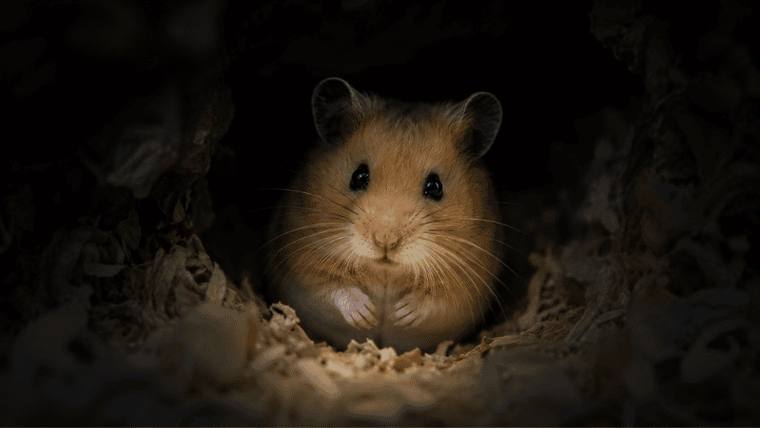
Can a Hamster See in the Dark
You wake up at 2 AM to the sound of tiny feet spinning on a wheel. Your hamster is running at full speed, climbing, digging, and exploring. How does she see what she is doing? The question "can a hamster see in the dark" is one of the most common things new owners ask. The answer is more interesting than a simple yes or no.
Hamsters are nocturnal. They sleep all day and become active at night. This is not a choice. Their bodies are built for darkness. But here is the catch. Can a hamster see in the dark well enough to get around? Yes, up to a point. However, total darkness is a different story.
This guide explains exactly how hamsters see at night, what happens in complete darkness, and why your hamster runs on her wheel at 2 AM. You will also learn how to set up a safe nighttime environment and spot signs of vision problems.
Before we get into the details, a quick observation. Most owners assume their hamster sees perfectly in the dark because she is so active at night. That is not quite right. She sees well in low light. But she relies on other senses just as much as her eyes.
Important: Hamsters cannot see in total darkness. They need at least a small amount of light to see. In pitch black conditions, they navigate entirely by whiskers, smell, and hearing.
How Hamsters See in Low Light
So can a hamster see in the dark? The short answer is yes, but the more accurate answer is that hamsters have excellent low-light vision. Their eyes are built for twilight and nighttime activity. This is not the same as seeing in pitch black darkness.
Why can a hamster see in the dark better than humans? The difference comes down to eye structure. Hamster retinas contain far more rod cells than cone cells. Rod cells detect light and movement. Cone cells detect color and fine detail. A hamster's eye has about ninety-five percent rod cells. A human eye has roughly fifty percent rod cells.
This rod-heavy design means hamsters are incredibly sensitive to tiny amounts of light. They can see in conditions that would seem pitch black to us. But there is a trade-off. Their color vision is poor, and their daytime vision is blurry.
How far can hamsters see at night? Not far. Even with their night vision, hamster eyesight remains nearsighted. They can see clearly only a few inches in front of their faces. Beyond that distance, shapes become blurry. This is why they use their whiskers to feel their way around.
In our experience, owners often overestimate how well their hamster sees at night. She can see enough to run, climb, and find her food bowl. But she cannot see details. She identifies you by your smell and the sound of your footsteps, not by your face.
Resource from the NCBI rodent vision research confirms that small rodents have eyes optimized for low-light conditions, not for sharp, detailed vision.
Can a Hamster See in Complete Darkness
Here is where many owners get confused. Can a hamster see in the dark when there is absolutely no light? The answer is no. Complete darkness means zero light. No animal can see in true pitch black because vision requires photons.
So what happens when the lights go out completely? Your hamster does not panic. She switches to her backup systems. Her whiskers, sense of smell, and hearing take over completely. In our observation, hamsters navigate just fine in total darkness using these other senses.
Think of it this way. Can a hamster see in the dark with no light? No. Can she find her way around without light? Yes. Her whiskers act like a blind person's cane. They detect walls, toys, and tunnels before she runs into them. Her sense of smell leads her to food and water.
This is an important distinction for owners. If you have a hamster, you do not need to leave a bright light on for her. In fact, bright light stresses her out. But a completely dark room also limits her. The best solution is ambient light from a window or a dim night light.
We recommend using a red light if you want to watch your hamster at night. Hamsters cannot see red wavelengths well. A red light allows you to observe her natural behavior without disrupting her. From her perspective, the room is still dark.
Compared to other small pets, hamsters have better low-light vision than guinea pigs but similar night vision to mice and rats. Gerbils, which are diurnal, have worse night vision than hamsters. Each rodent species has eyes adapted to its natural activity pattern.
Our recommendation: Provide a dim night light or place the cage in a room with natural ambient light. Total darkness is fine occasionally, but consistent low light helps your hamster navigate more confidently.
Why Hamsters Are Active at Night
The question "can a hamster see in the dark" connects directly to why hamsters are nocturnal. Their bodies evolved to be active when predators are less of a threat. In the wild, being out during the day meant being seen by birds of prey, snakes, and larger mammals.
Hamster eyesight adapted to this lifestyle. Their vision works best in the dim light of dusk and dawn. This is technically called being crepuscular, though most owners say nocturnal. The difference is subtle but important. Hamsters are most active during twilight hours, not necessarily the middle of the night.
Have you noticed your hamster wakes up around sunset? That is her natural rhythm. She becomes active when the light starts fading. Her eyes adjust quickly to the changing conditions. This is when her vision is at its sharpest.
So can a hamster see in the dark during these twilight hours? Absolutely. The low light of dawn and dusk is where her vision excels. This is why you see her running, climbing, and exploring right after the sun goes down.
Your hamster's sleep cycle is hardwired. Do not try to change it. Waking her up during the day stresses her. Let her sleep. Trying to force a hamster to be active during daylight hours is like forcing a human to sleep all day and stay up all night without adjustment.
In our observation, hamsters who are disturbed during their sleep become irritable and more prone to biting. Respecting their natural rhythm keeps them healthier and easier to handle.
Our previous article on hamster eyesight covers more details about how these small rodents perceive light and movement.
How Hamsters Navigate Without Good Vision
We already know the answer to "can a hamster see in the dark" is not a simple yes. But even with their limitations, hamsters get around just fine. How? They use a combination of senses that work together seamlessly.
Whiskers are the most important navigation tool. Hamster whiskers are extremely sensitive. They detect air currents, vibrations, and physical contact. As your hamster moves, her whiskers brush against objects. This creates a real-time map of her surroundings.
Never trim your hamster's whiskers. This is a common mistake new owners make. Whiskers are not cosmetic. They are essential sensory organs. A hamster with trimmed whiskers becomes disoriented and stressed. She cannot navigate properly.
Sense of smell is another critical tool. Hamsters leave scent trails as they walk. They have scent glands on their flanks and belly. These trails help them find their way back to their nest. They also use smell to locate food and recognize familiar objects.
Can a hamster see in the dark well enough to find her food bowl? Not always. But she can smell it from across the cage. This is why scatter feeding works so well. Your hamster will use her nose to hunt for each piece of food, which mimics natural foraging behavior.
Hearing is also excellent. Hamsters can hear frequencies up to 60,000 Hz. Humans top out around 20,000 Hz. Your hamster can hear sounds you cannot even detect. This helps her sense approaching people or potential threats.
Compared to vision, we think a hamster's sense of smell and hearing are far more important for daily survival. The question "can a hamster see in the dark" matters less when you understand how much she relies on other senses.
Our previous article on are hamsters color blind explains how limited color vision fits into the larger picture of hamster sensory abilities.
Signs Your Hamster May Have Vision Problems
Even with normal hamster eyesight, vision is never perfect. But some signs indicate a problem beyond typical limitations. Knowing what to watch for helps you catch issues early.
Bumping into objects is the most obvious sign. A healthy hamster rarely runs into things. Her whiskers warn her. If your hamster keeps walking into cage walls, toys, or her food bowl, her eyesight may be failing.
Cloudy eyes indicate cataracts. This is common in older hamsters. The lens becomes opaque, blocking light from reaching the retina. Cataracts are not usually painful, but they reduce vision significantly. Can a hamster see in the dark with cataracts? Very poorly, if at all.
Startling easily when approached suggests vision loss. A hamster with healthy eyesight sees you coming. She might wake up and look toward you. A blind or nearly blind hamster does not see you until you touch her or make a loud sound.
Disorientation in the cage is another warning sign. Your hamster may struggle to find her food bowl or water bottle. She might circle in place or seem confused in familiar surroundings. This is stressful for her.
Eye discharge or redness means infection or injury. This is different from normal aging. If you see discharge, swelling, or redness, see a veterinarian. Untreated eye infections can spread and cause permanent damage.
In our experience, older hamsters almost always lose some vision. Hamsters typically live two to three years. By eighteen months, many show signs of eyesight decline. They move more slowly and cautiously. This is normal. Adjust their cage to make navigation easier.
Resource from the RSPCA hamster health guide provides more information on eye problems and when to seek veterinary care.
How to Create a Safe Night Environment
Understanding that the answer to "can a hamster see in the dark" depends on lighting conditions helps you set up the perfect habitat. A few simple changes make your hamster feel safer and more comfortable.
Keep the cage in a room with natural light during the day. Hamsters need a consistent light-dark cycle. Sunlight through a window is fine. Direct sunlight on the cage can overheat it. Position the cage where light enters but not directly.
At night, provide ambient light. Total darkness is not ideal. Your hamster can manage, but low light helps her see. A dim night light works well. So does placing the cage in a room where street light or hallway light enters.
We strongly recommend using a red light for nighttime observation. You can buy red LED bulbs or red night lights. Hamsters cannot see red wavelengths well. A red light allows you to watch your hamster without disrupting her natural behavior.
Avoid bright lights near the cage at night. A sudden bright light startles your hamster. Her eyes are adapted for dim conditions. A bright light overwhelms her vision. She may freeze or hide. If you need to check on her, turn on a dim light first, then slowly brighten if needed.
Covering part of the cage with a towel gives your hamster a dark hiding spot. She can choose to sleep in the covered area during the day or retreat there if lights are too bright. This simple addition reduces stress significantly.
Do not use colored lights other than red. Blue or green lights may disturb your hamster. Hamsters can see blue and green. These colors will affect their perception of night and day. Stick with red for observation and darkness or dim white light for general ambient lighting.
Our previous article on hamster vision provides additional context on how lighting affects hamster behavior and stress levels.
Fun Facts About Hamster Night Behavior
Now that you know the answer to "can a hamster see in the dark," here are some interesting observations about what hamsters actually do at night. These behaviors might seem strange, but they make perfect sense once you understand hamster senses.
Why does your hamster run on her wheel for hours? She is not just exercising. In the wild, hamsters travel long distances at night searching for food. The wheel satisfies this instinct. She can run miles every night without leaving her cage.
Do hamsters recognize their owners at night? Not by sight. But she recognizes your smell and the sound of your voice. If you approach her cage at night and speak softly, she may come to the front. She knows it is you.
Why do hamsters sometimes freeze and stare at nothing? They are listening. Hamster hearing is excellent. What looks like staring is often intense listening. She heard a sound you cannot detect. Freezing is a predator avoidance behavior.
How do hamsters find their way back to their nest in the dark? Scent trails and memory. They leave scent marks as they walk. They also memorize the layout of their cage. Even if the answer to "can a hamster see in the dark" is no for that moment, she knows where her nest is.
We think the most fascinating hamster behavior is their ability to run full speed on a wheel without crashing. They use a combination of muscle memory, whisker feedback, and limited vision. They do not need to see well to run. Their bodies remember the motion.
Compared to other pets, hamsters are uniquely adapted for darkness. Dogs and cats have decent night vision but are not strictly nocturnal. Hamsters have taken night living to an extreme. Their entire sensory system is built for the dark.
Our previous article on why do hamsters eat their babies covers other instinctive behaviors driven by stress and survival programming, many of which happen at night.
Final Thoughts
So can a hamster see in the dark? Yes, but with important caveats. Hamsters have excellent low-light vision thanks to their rod-rich eyes. They can navigate, run on wheels, and find food in dim conditions that would leave humans stumbling. But they cannot see in total darkness. No animal can.
The more important takeaway is that hamsters do not rely on vision alone. Their whiskers, sense of smell, and hearing are just as critical for nighttime activity. A hamster with poor eyesight can still live a full, happy life using these other senses. In fact, we think most owners overestimate how much their hamster actually uses her eyes.
Setting up a safe nighttime environment is simple. Provide a dim night light or ambient room light. Use a red light if you want to watch your hamster. Keep the cage layout consistent. Avoid sudden bright lights. Respect her natural sleep cycle. Do these things, and your hamster will thrive in the dark.
Understanding the real answer to "can a hamster see in the dark" makes you a better owner. You stop expecting her to see you from across the room. You learn to announce yourself before touching her. You provide the right lighting conditions. Small changes like these reduce stress and help your hamster feel safe in her home.
Trusted Resources for Hamster Vision and Care
For more information on hamster eyesight, night vision, and overall care, these independent organisations provide evidence-based guides and research.
- RSPCA Hamster Care Guide – Veterinary-reviewed advice on hamster welfare and habitat
- PDSA Hamster Behaviour – UK veterinary charity guidance on hamster senses
- NCBI Rodent Vision Research – Scientific research on rodent eyesight and low-light adaptation
- Humane Society Hamster Care – Practical guidance for hamster owners
You may also find our related guides helpful: hamster eyesight covers general vision capabilities, and are hamsters color blind explains the limits of hamster color perception.