
Can Hamsters Eat Banana?
Banana is not toxic to hamsters. But handing over a chunk like you would for a monkey at the zoo could genuinely hurt your pet over time.
This guide explains exactly what is safe, how much banana a hamster can eat, how often to offer it, and why getting this wrong is more common than most owners realize.
Is Banana Safe for Hamsters?
The short answer is yes, but with real limits. Banana will not poison your hamster. A small piece will not send it to the emergency vet.
What banana can do, especially over weeks and months of overfeeding, is quietly push your hamster toward diabetes, obesity, and digestive problems that shorten its life.
The issue is sugar. A single medium banana contains around 14 to 15 grams of natural sugar per 100 grams.
Now think about your hamster. A Syrian hamster weighs somewhere between 100 and 200 grams on a good day. A Roborovski dwarf weighs as little as 15 grams. Even a small piece of banana represents a significant sugar hit relative to that tiny body.
Expert Advice: Fruit should make up no more than 5 percent of a hamster's total diet. The rest comes from high-quality pellets, fresh vegetables, small amounts of seed mix, and occasional protein. Banana is a treat, not a meal.
Understanding Your Hamster's Natural Diet
Before you can make sense of why banana is risky, it helps to understand what hamsters actually evolved to eat.
Wild hamsters are omnivores. They spend their nights foraging across surprisingly large territories, collecting seeds, grains, grasses, plant roots, the occasional insect, and sometimes a small wild berry in season.
Notice what is not on that list: tropical fruit. Bananas simply do not exist anywhere near the natural habitat of any wild hamster species.
Their digestive systems evolved over thousands of generations to handle low-sugar, high-fiber foods. A ripe banana is essentially the opposite of that.
Hamsters also have a short digestive tract that moves food through quickly. Excess sugar absorbs into the bloodstream fast, and the pancreas can be overwhelmed by a sudden sugar spike.
This is why diarrhea can start within a few hours of a too-large fruit serving.
Trust Signal: Introduce any new food, banana included, in the smallest possible amount first. Then watch closely for 24 to 48 hours before offering it again.
How Much Banana Can a Hamster Eat?
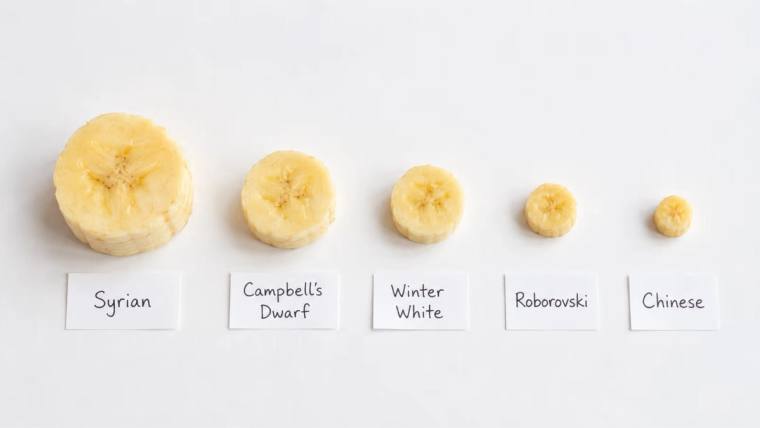
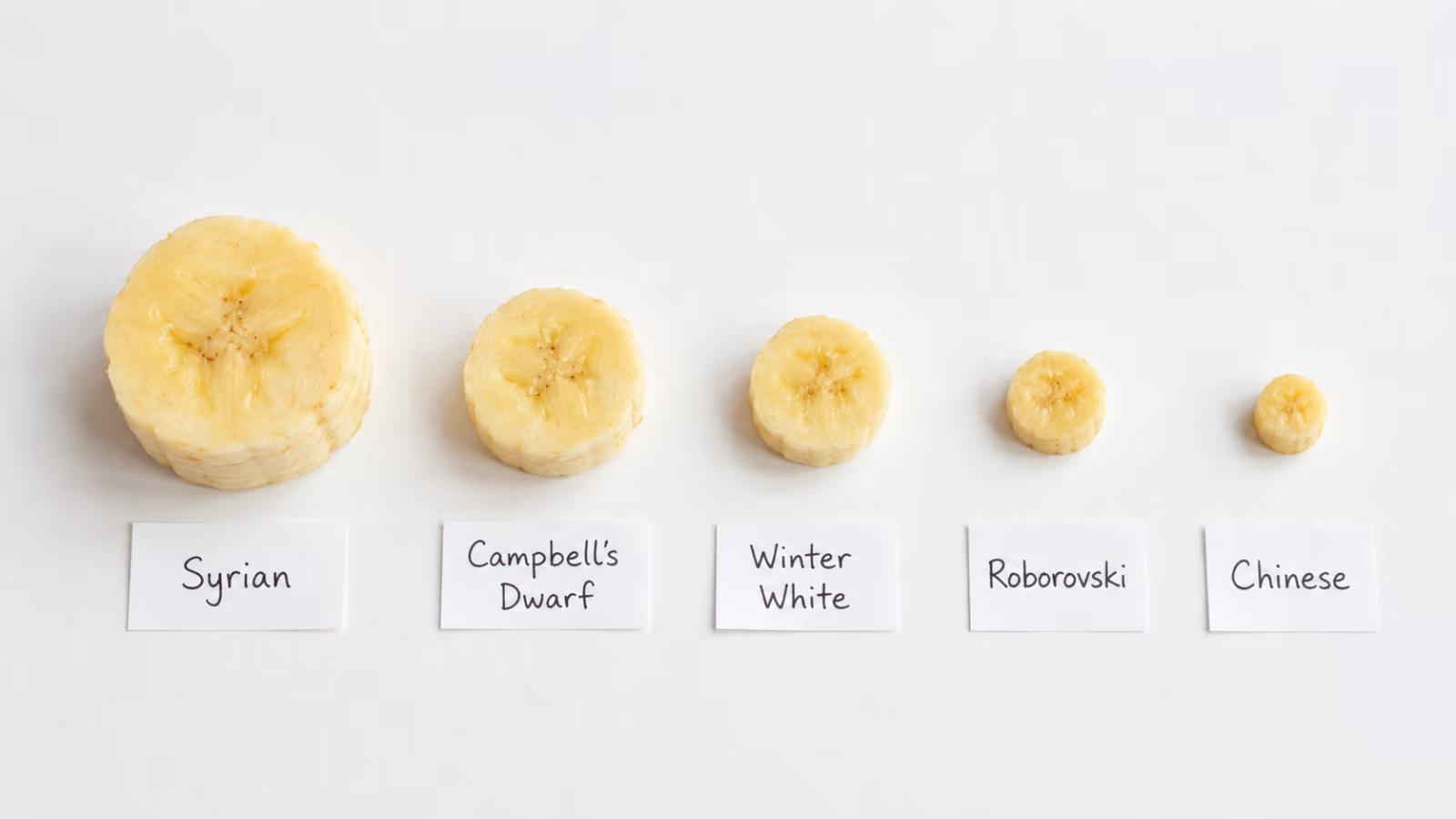
This is where most articles let you down. They say give a small piece without explaining that a small piece for a Syrian hamster is three times the safe amount for a dwarf.
Species matters enormously here.
Syrian Hamsters
Syrian hamsters are the largest common pet hamster, typically weighing between 100 and 200 grams.
Their size gives them slightly more metabolic tolerance for sugar than smaller species, but that does not make banana a free-for-all treat.
A safe portion is roughly a 1 cm cube of fresh banana flesh, about the size of your pinky fingernail or a quarter teaspoon.
Give it once or twice a week at most, and never on back-to-back days. The cumulative sugar load across consecutive days matters just as much as any single feeding.
Dwarf Hamsters
Dwarf hamsters need roughly half the portion of a Syrian. A piece about the size of a small pea, no larger than 0.5 cm, is the maximum.
Many exotic vets recommend offering banana only once every two weeks for this group, and some advise skipping it entirely.
Expert Advice: Campbell's dwarf hamsters carry a documented genetic predisposition to diabetes mellitus. Regular exposure to high-sugar food can increase this risk significantly.
Roborovski Hamsters
Roborovskis are the smallest pet hamster, weighing only 15 to 25 grams as adults.
Even a pea-sized piece of banana is proportionally large for an animal this size. Keep portions to a fragment, smaller than a pea, and offer it no more than once every two weeks.
Chinese Hamsters
Chinese hamsters typically weigh 30 to 45 grams.
Treat them similarly to Campbell's dwarfs: a very small pea-sized piece, once per week at absolute most.
Quick Portion Reference by Species
| Species | Body Weight | Max Portion | Max Frequency |
|---|---|---|---|
| Syrian Hamster | 100 to 200g | 1 cm cube, around 1/4 tsp | 1 to 2 times per week |
| Campbell's Dwarf | 40 to 70g | 0.5 cm piece, pea-sized | Once per week |
| Winter White Dwarf | 40 to 70g | 0.5 cm piece, pea-sized | Once per week |
| Roborovski | 15 to 25g | Smaller than a pea | Once every 2 weeks |
| Chinese Hamster | 30 to 45g | 0.5 cm piece, pea-sized | Once per week |
The Risks of Feeding Too Much Banana

Understanding what can go wrong is not meant to scare you. It is meant to help you catch problems early, or avoid them altogether.
Diabetes
This is the most serious long-term risk, particularly for dwarf hamsters.
When high-sugar foods hit the digestive system repeatedly, the pancreas has to produce more and more insulin to compensate. Over time, this can lead to insulin resistance and eventually diabetes.
There is no cure for diabetes in hamsters. By the time symptoms appear, internal damage has often been building for weeks or months.
Watch for:
- Drinking far more water than usual
- A very wet cage bottom from excessive urination
- Sticky or sweet-smelling urine
- Unexplained weight loss even when eating normally
- Lethargy and weakness
- Cloudy eyes in advanced cases
Expert Advice: There is no cure for diabetes in hamsters. Prevention through dietary control is the only reliable strategy.
Obesity
Hamsters in captivity are prone to obesity, especially when they eat calorie-dense treats and do not have enough space or enrichment to stay active.
Extra sugar from banana gets stored as fat quickly. An overweight hamster faces a shorter lifespan, joint strain, cardiovascular stress, and a noticeably lower quality of life.
Digestive Upset and Diarrhea
Too much banana in one sitting can trigger loose stools or full diarrhea even in a healthy hamster.
Diarrhea in a small rodent is serious because dehydration can set in within 24 to 48 hours.
Watch for:
- Wet or stained fur around the tail area
- Soft or watery droppings
- Loss of appetite
- A hunched posture
- Unusual stillness or lethargy
Trust Signal: If you see wet, matted fur near the hindquarters combined with lethargy and refusal to eat, contact a vet quickly.
Dental Problems
Banana flesh is sticky, and stickiness combined with high sugar content is exactly what bacteria in the mouth love.
Hamsters have continuously growing teeth, and dental disease is one of the most common health problems vets see in captive hamsters.
After any banana feeding, make sure your hamster has wooden chews or appropriate chew toys available.
Nutrient Imbalance
A hamster who fills up on banana may eat less of their nutritionally complete pellets.
Over weeks this creates real deficiencies in protein, fiber, and essential vitamins. Your hamster can look perfectly normal while quietly becoming nutritionally depleted.
Can Hamsters Eat Banana Peel?
Technically banana peel is not toxic, but it is not worth the risk.
Commercial banana skins are often treated during cultivation. Residues can concentrate in the skin and may be difficult to remove fully with rinsing alone.
The peel also has a tough, fibrous texture that is harder to digest and offers almost no nutritional value.
If you want to offer a fragment of peel, use only certified organic banana and wash it thoroughly. Keep the piece tiny.
Honestly, stick to the flesh. It is simpler and safer.
Can Hamsters Eat Dried Banana or Banana Chips?
No, and this one trips up a lot of owners.
Dried banana sounds natural and harmless. It is not.
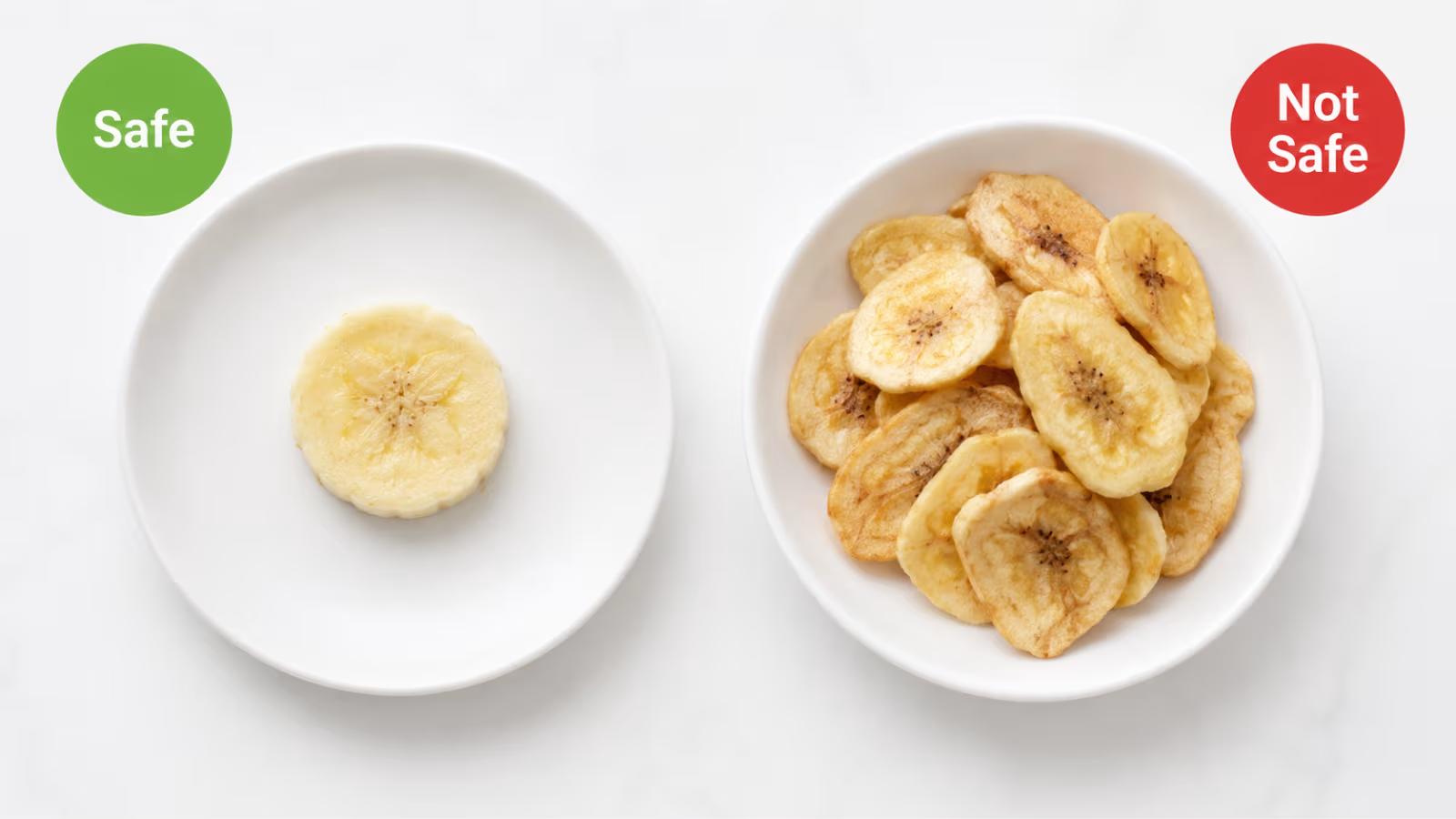
When you dehydrate fruit, the water evaporates but the sugar stays behind.
A small piece of dried banana contains 3 to 5 times more sugar per gram than the same volume of fresh banana. That is before accounting for the added sugar, oil, and salt that most commercial banana chips contain.
Dried fruit also sticks aggressively to teeth and to the inside of hamster cheek pouches, creating both a dental hazard and a potential choking risk.
This same rule applies to all dried fruit, not just banana.
Trust Signal: Many owners assume that if a food is labeled natural or organic, it is automatically safe. Sugar concentration does not care about the label.
Can Baby Hamsters Eat Banana?
No. Do not offer banana or any fruit to young hamsters.
Baby hamsters should stay on their mother's milk until weaning at around 3 to 4 weeks old.
After weaning, their diet needs to consist entirely of high-quality pellets, very small amounts of safe fresh vegetables, and clean water until they are around 3 months old.
Introducing high-sugar fruit too early can disrupt gut flora and raise the risk of early metabolic problems.
How to Feed Banana to Your Hamster
Step 1: Choose the Right Banana
Pick a ripe but not overripe banana.
Overripe bananas have even more sugar because the starches have fully converted to glucose. Skip green unripe bananas too, since they are harder to digest.
Organic is the better choice if you can find it.
Step 2: Cut the Piece Correctly
Peel the banana, cut a small section, then cut that down to the right size for your hamster's species.
Do not add anything to it. No honey, no yogurt coating, and no mixing it into other foods.
Step 3: Offer It the Right Way
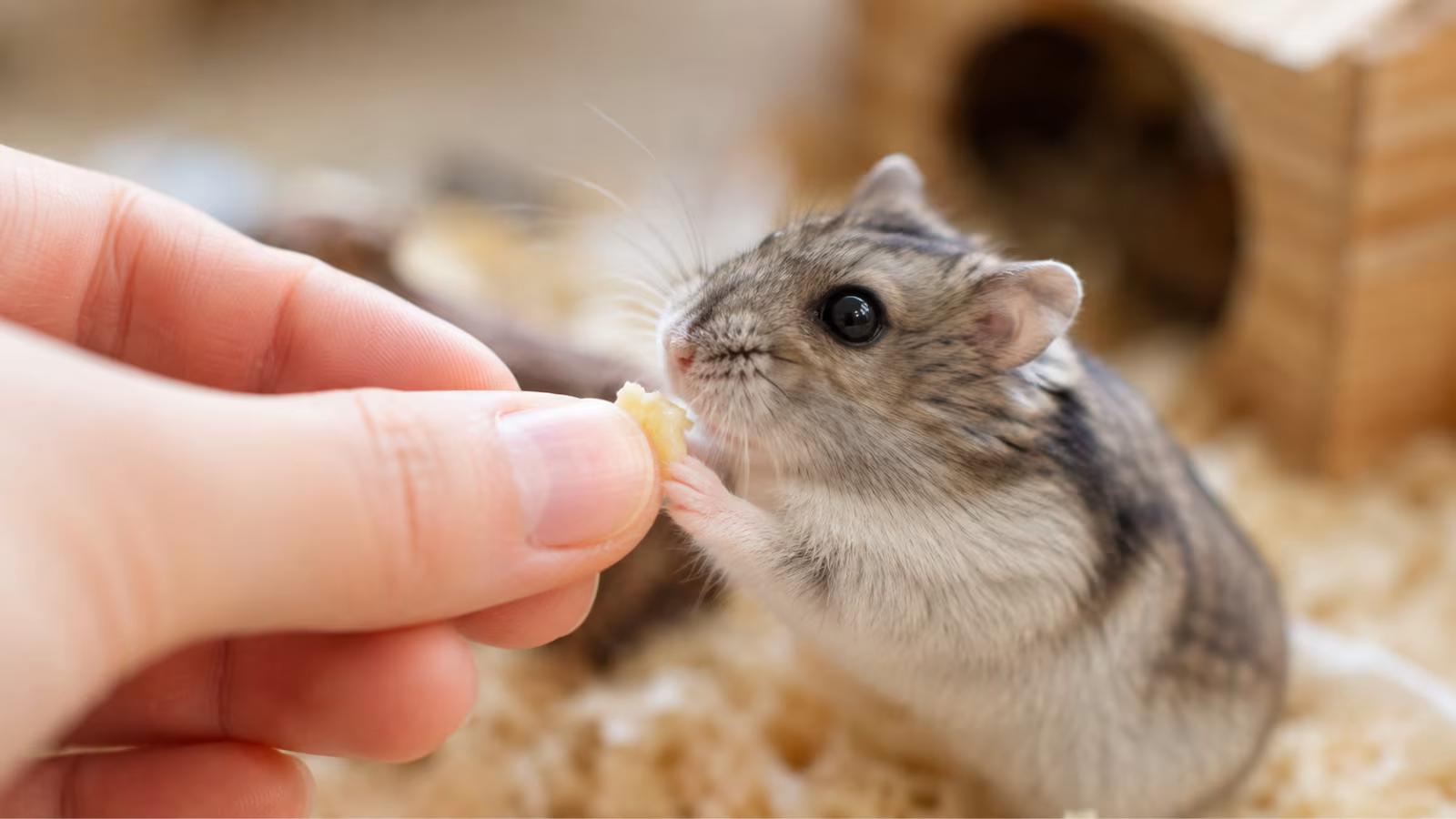
Place the piece in the food bowl or hand-feed it.
Remove any uneaten banana after a couple of hours. Banana ferments quickly at room temperature and can grow mold or bacteria that may make your hamster sick.
Step 4: Watch for 24 to 48 Hours
After introducing banana for the first time, monitor droppings, energy levels, and appetite.
Loose stools or sluggishness means fruit is not agreeing with your hamster right now. Pull it from the diet for at least a week.
Step 5: Never Feed on Consecutive Days
Even if your hamster shows zero reaction, do not give banana two days in a row.
Hamsters are natural hoarders. They cache food and eat from their stash multiple times throughout the day, meaning a single serving can actually result in repeated consumption.
Safe Fruits for Hamsters: How Banana Compares
Not all fruits carry the same risk. Here is an honest comparison so you can make smarter treat choices.
| Fruit | Sugar per 100g | Safe for Dwarfs? | Notes |
|---|---|---|---|
| Banana | 12 to 15g | Rarely or avoid | High sugar; diabetes risk |
| Apple, no seeds | 10g | Small amount | Seeds contain compounds harmful to hamsters |
| Blueberry | 10g | Yes, occasionally | Good antioxidant profile; lower risk |
| Strawberry | 5g | Yes, occasionally | One of the safer fruit choices |
| Watermelon | 6g | Yes, tiny amounts | High water content; hydrating |
| Grape | 16g | No | Too high in sugar; avoid entirely |
| Pear, no seeds | 10g | Small amount | Remove seeds and core |
| Peach, no pit | 8g | Small amount | Remove the pit entirely |
| Mango | 14g | No | Too high in sugar |
| Citrus fruits | 9g | No | Too acidic for hamster digestion |
Expert Advice: Strawberries and blueberries are better treat options for most hamsters, especially dwarf species.
Safe vs. Unsafe Foods for Hamsters
Knowing the full picture of what belongs in a hamster's diet, and what should never touch it, gives you the confidence to make good daily choices.
Foods That Belong in a Hamster's Diet
- High-quality hamster pellets as the foundation, around 70 to 80 percent of intake
- Timothy hay for fiber and gut health
- Fresh vegetables such as broccoli, cucumber, zucchini, bell pepper, small amounts of carrot, and leafy greens
- Cooked plain chicken or boiled egg in small amounts for protein
- Dried or live mealworms as an occasional protein boost
- A small seed mix, not as a replacement for pellets
- Occasional low-sugar fruits like strawberry, blueberry, and small banana pieces
Foods That Should Never Be Offered
- Onion and garlic
- Any citrus fruit
- Chocolate in any form
- Candy, sweets, or sugary human snacks
- Anything heavily salted
- Avocado
- Grapes or raisins
- Iceberg lettuce
- Raw potato and rhubarb
- Caffeine and alcohol
- Processed human food of any kind
Signs Your Hamster Has Had Too Much Sugar
Short-Term Signs
- Loose or watery stools
- Reduced energy
- Loss of interest in food
- Soft or stained fur around the hindquarters
Long-Term Signs
- Drinking water far more than usual
- A consistently wet cage bottom from excessive urination
- Unexplained weight loss alongside normal appetite
- A rounded or heavy body shape
- Unusual tiredness and reduced exercise
- Cloudy or dull eyes in advanced cases
What to Do
- Remove all fruit and sugary treats right away.
- Make sure fresh water is always accessible.
- Monitor closely for 48 hours.
- If things do not improve or worsen at any point, see an exotic animal vet.
Hamster Nutrition: Building a Balanced Diet
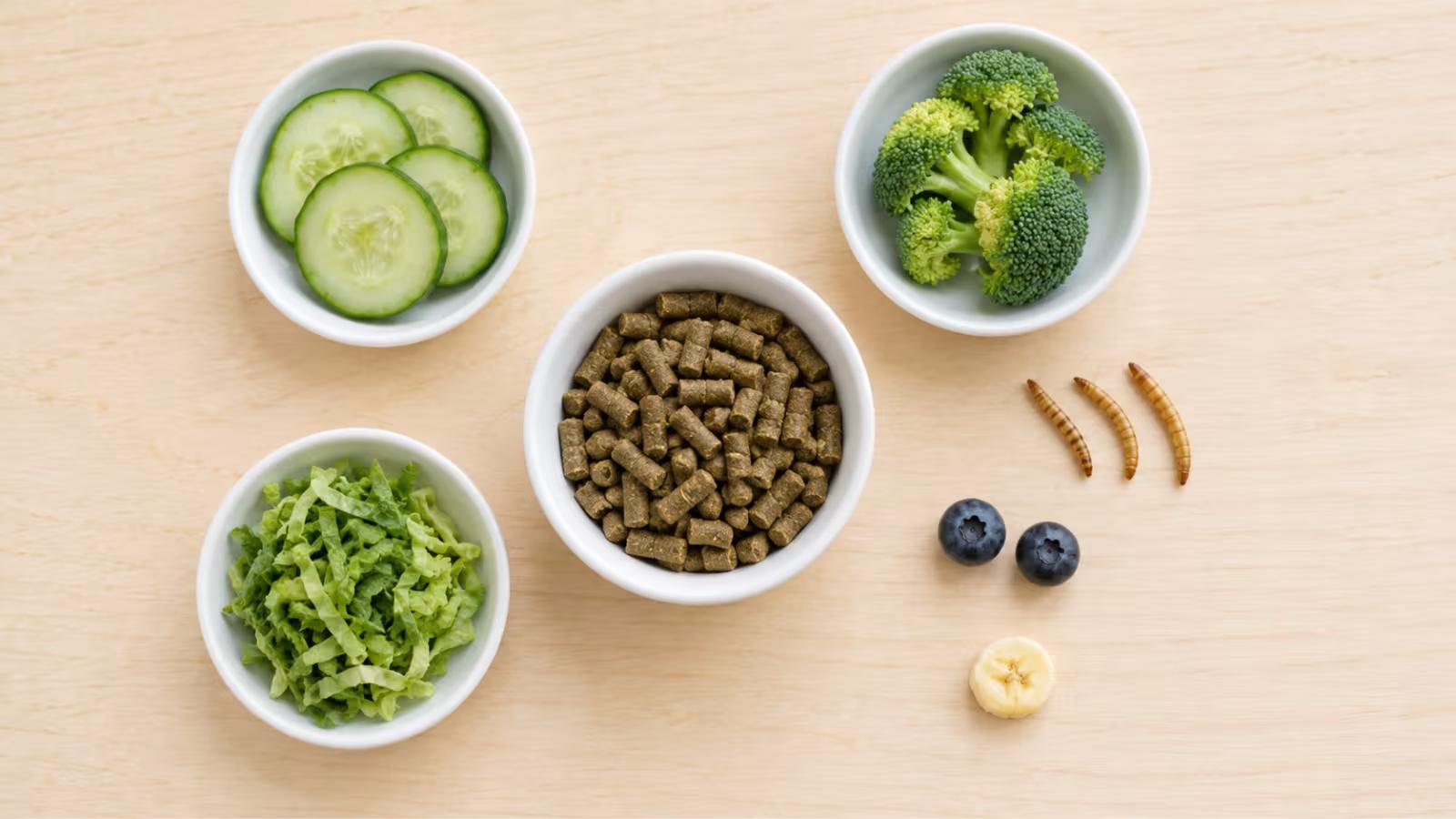
Banana only makes sense in the context of a diet that is already solid.
Treats piled onto a poor foundation just create more problems.
Think of the hamster diet as a simple pyramid. At the base, filling 70 to 80 percent of daily intake, are high-quality commercial hamster pellets.
Pellets matter because every bite is nutritionally identical. There is no selective eating.
Above that, making up around 10 to 15 percent of intake, sit fresh vegetables offered daily: cucumber, broccoli, zucchini, bell pepper, and leafy greens.
Carrots can be offered occasionally, but they are higher in natural sugars, so keep amounts small.
Protein sources, whether mealworms, a small piece of boiled egg, or a tiny bit of plain cooked chicken, make up around 5 to 10 percent of the diet.
Many beginners miss this completely. Hamsters are omnivores, and without enough protein, muscle condition and overall health suffer.
At the very tip of the pyramid, no more than 5 percent total, sits fruit. That is where banana lives. Treat it accordingly.
Common Mistake: Avoid seed-only diets. Hamsters selectively eat the fattiest seeds and leave the rest, creating nutritional gaps over time.
Fresh, clean water should always be available. A sipper bottle is better than an open dish because it stays clean longer.
Change the water every day and clean the bottle once a week.
Myth-Busting: What Most Owners Get Wrong
Myth 1: Fruit is natural, so it is always healthy.
Wild hamsters encounter high-sugar tropical fruit almost never. Natural origin does not automatically mean appropriate for your specific pet's biology.
Myth 2: My hamster has been eating banana for months and looks fine.
Diabetes and obesity build silently. A hamster can appear healthy for a long time while damage accumulates internally.
Myth 3: Dried fruit is fine because it is concentrated nutrition.
It is concentrated sugar, which is the exact problem. Dried fruit is always a worse choice than fresh fruit for hamsters.
Myth 4: My hamster stops when it is full, so I do not need to control portions.
Hamsters hoard. They will eat a treat, stuff more into their cheek pouches, bury it in their bedding, and come back for it repeatedly throughout the day.
Myth 5: Baby hamsters can eat the same things as adult hamsters.
Young hamsters have developing digestive and metabolic systems that are even more vulnerable. Keep fruit away entirely until they are at least 3 months old.
Enrichment: Make Treat Time Work Harder
Instead of placing a banana piece directly in the bowl every time, use it as a tool for enrichment.
Scatter it in the bedding so your hamster has to dig and forage. Hide a small piece inside a cardboard tube or under a layer of nesting material.
You can also use it as a reward during gentle handling sessions to build trust.
These small changes give your hamster mental stimulation alongside the treat, which is better for their overall wellbeing than passive eating.
When to Call a Vet
Contact an exotic animal vet if your hamster shows any of these signs after dietary changes:
- Diarrhea lasting more than 24 hours
- Wet or matted fur around the tail area
- Refusal to eat or drink for more than 12 to 24 hours
- Unusual lethargy or difficulty moving normally
- Labored breathing
- Unexplained weight loss
- Any diabetes warning signs mentioned earlier
Trust Signal: Not every vet sees exotic animals. Look specifically for a practice that handles small mammals or lists exotic pets among their specialties.
The 5 Rules of Feeding Banana to Hamsters
- Keep portions genuinely tiny: no larger than a pea for most hamsters, and smaller than that for dwarf and Roborovski species.
- Feed infrequently: no more than once or twice a week for Syrians and less for smaller species.
- Always use fresh banana only: never dried, never chips, never banana-flavored products of any kind.
- Monitor your hamster for 24 to 48 hours after any new food introduction.
- Never offer banana to baby hamsters, sick hamsters, or any hamster that shows signs of diabetes.
Final Thoughts
Once your hamster's diet is well-established and built on a solid foundation, occasional treats like banana become a nice addition rather than a risk.
Most problems happen during those first weeks of ownership when feeding habits are still forming.
Get the basics right early, and the rest becomes much easier.