If you love the idea of a giant, gentle, dog-like cat but someone in your house starts sneezing the moment they go near one, you have probably typed this exact question into Google. Are Maine Coon cats hypoallergenic? It is one of the most common worries from people falling for this gorgeous breed, and the honest answer is not the one most hopeful owners want to hear.
I will give you the straight version, then explain why, what really causes cat allergies in the first place, and the practical things that genuinely help if you want a Maine Coon but your immune system has opinions.
The honest answer: no, Maine Coons are not hypoallergenic
Let us not bury it. Maine Coon cats are not hypoallergenic, and in fact no cat truly is. The word hypoallergenic gets thrown around a lot, but there is no breed that is completely free of the things that trigger cat allergies. Some breeds may produce a little less of the main allergen than others, but the Maine Coon is not one of the breeds usually singled out as easier on allergy sufferers.
If anything, the Maine Coon's size and famously thick coat can make things slightly harder, not because the fur itself is the problem, but because of how much of it there is and how much grooming goes with it. More on that in a moment, because the reason is the interesting part.
What actually causes cat allergies
Here is the bit that surprises almost everyone. People assume they are allergic to cat hair. They are not, at least not directly. The real culprit is a tiny protein called Fel d 1.
Fel d 1 is produced mainly in a cat's saliva and in the oil glands of its skin. When a cat grooms itself, and cats groom constantly, that protein gets spread all over the fur. As the cat sheds hair and microscopic flakes of skin, called dander, the allergen travels with it onto your sofa, your clothes and into the air you breathe. That is what sets off the sneezing, itchy eyes and congestion.
So the fur is really just the delivery vehicle. The allergen is in the saliva and skin oils. This is why even a short-haired or so-called hairless cat can still trigger a reaction, and why no amount of a fluffy coat being labelled hypoallergenic changes the underlying problem.
Why the Maine Coon coat does not help
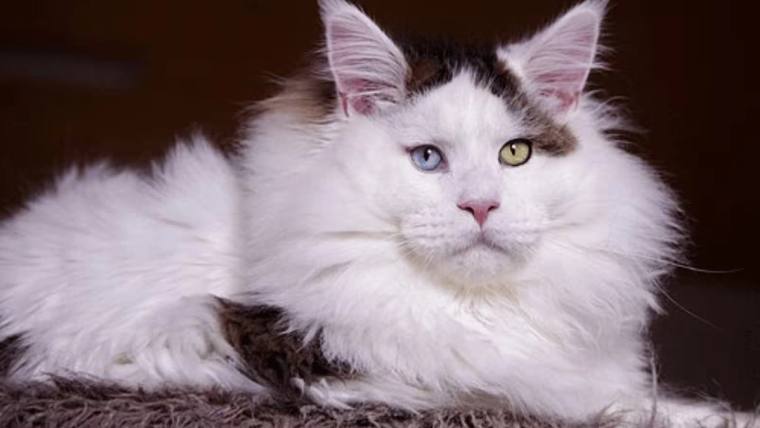
Maine Coons are one of the largest domestic cat breeds, and they carry a long, dense, water-resistant double coat. That coat is part of what makes them so stunning, but it also means a few things for allergy sufferers:
- More surface area for allergen. A big cat with a thick coat simply carries more fur, and therefore more Fel d 1 coated onto it.
- More shedding. All that coat sheds, especially during seasonal moults, spreading dander around your home.
- Lots of grooming. Maine Coons are diligent self-groomers, which keeps refreshing the layer of allergen-rich saliva on their fur.
None of this makes the Maine Coon uniquely bad, and plenty of long-haired cats are in the same boat. If you have looked at other fluffy breeds like the elegant Angora cat, you will find the same allergy considerations apply. The coat is not the allergy, but a big coat does help spread the thing that is.
Are some cats really lower-allergen?
You may have read that certain breeds, such as the Siberian or the Balinese, produce less Fel d 1 than average. There is some anecdotal support for this, and a few owners with mild allergies report doing better around them. But the evidence is limited, individual cats vary enormously even within a breed, and lower-allergen is not the same as no-allergen.
The Maine Coon does not appear on those lower-allergen lists. It is worth saying that allergen levels can differ from one cat to the next, can vary between males and females, and can even change with neutering, so two Maine Coons might affect you differently. The only reliable test is spending real time with the specific cat you are considering before you commit.
How to live with a Maine Coon if you have allergies
Here is the more hopeful part. A cat allergy does not automatically rule out a Maine Coon, especially if your symptoms are mild. Plenty of allergy sufferers share their homes with cats by keeping allergen levels down. These are the things that genuinely help:
- Brush regularly. Frequent grooming removes loose, allergen-coated hair before it ends up around your home. Ideally have someone without the allergy do the brushing, and do it outdoors if you can.
- Wipe or bathe the cat. Occasional baths or a damp wipe-down reduce surface allergen. Many cats hate water though, and bathing can be stressful, so go gently and watch for signs your cat is stressed and stop if it is too much for them.
- Use a good air purifier. A HEPA filter pulls airborne dander out of the room, which makes a real difference in bedrooms and living spaces.
- Create a cat-free zone. Keeping the bedroom off limits gives you at least one space with low allergen levels, which helps a lot with sleep and morning symptoms.
- Clean often. Vacuum with a HEPA filter, wash soft furnishings and cat bedding regularly, and wash your hands after cuddles.
- Talk to your doctor. Antihistamines, nasal sprays and in some cases allergy immunotherapy can make living with a cat far more comfortable. A GP or allergist can advise on what suits you.
So should you get a Maine Coon if you are allergic?
It comes down to how severe your allergy is. If your reactions are mild and well managed, many people live happily with a Maine Coon by staying on top of grooming and cleaning. If your allergy is severe, or if it affects your breathing, a large double-coated breed is a real gamble and you should be cautious.
The single best thing you can do is spend several hours around Maine Coons before deciding, ideally more than once, so you know how your body actually reacts rather than how you hope it will. A reputable breeder or a Maine Coon owner will usually understand the request. Do not rely on a cat being marketed as hypoallergenic, because for this breed that label does not hold up.
The takeaway
Maine Coon cats are not hypoallergenic, and neither is any other cat, because the real trigger is the Fel d 1 protein in saliva and skin, not the fur itself. The Maine Coon's big, beautiful coat does not cause allergies, but it can spread the allergen around more than a smaller cat would. If your allergy is mild and you are willing to put in the grooming and cleaning, sharing your life with one of these gentle giants is absolutely possible. If it is severe, think very carefully first.
Falling for a specific breed but want to weigh up your options? Browse our other in-depth breed guides like the British Longhair, or explore the full cat breeds section to find the right match for your home and your health.