Cat Breeds British Longhair
You see a cat online with a round, sweet face and a plush coat that looks like velvet. The cat resembles a teddy bear more than a feline. This is the British Longhair, one of the most beautiful and sought after cat breeds. If you are searching for cat breeds that combine luxury appearance with calm temperament, the British Longhair deserves your attention.
The cat breeds British Longhair category is relatively new compared to ancient breeds like Persians or Siamese. However, these fluffy cats have quickly gained popularity among indoor cat owners who want a beautiful, calm, and affectionate companion. Their dense, plush coats and round, expressive faces make them look like living stuffed animals. Understanding what makes cat breeds British Longhair special helps you decide if this breed fits your lifestyle.
This guide covers everything about cat breeds British Longhair: their history from the British Shorthair, physical characteristics, personality traits, grooming requirements, health concerns, and ownership costs. You will learn how these luxury cats differ from Persians, Ragdolls, and their close relatives, the British Shorthair. Whether you are considering adoption or simply admiring from afar, you will understand why cat breeds British Longhair are treasured worldwide.
Before we explore the details, note that cat breeds British Longhair are not recognized by all cat registries. The Governing Council of the Cat Fancy (GCCF) in the UK does not recognize them as a separate breed. However, The International Cat Association (TICA) and some European registries do. This lack of universal recognition affects availability and pricing, which we will discuss later.
History and Origin of British Longhair Cats
Understanding cat breeds British Longhair requires knowing their British Shorthair ancestors. British Shorthairs have existed for centuries, possibly dating back to Roman times when cats accompanied Roman legions to Britain. These cats developed thick, dense coats to survive cold British weather. They were working cats, not luxury pets, protecting granaries and homes from rodents.
The cat breeds British Longhair category emerged accidentally. British Shorthairs carry a recessive gene for long hair. When two British Shorthairs carrying this gene mate, some kittens in the litter are born with longer, fluffier coats. Historically, breeders considered these long-haired kittens undesirable and removed them from breeding programs. They were sold as pets rather than show cats.
In the mid-20th century, some breeders began deliberately developing cat breeds British Longhair. They crossed British Shorthairs with Persians or other long-haired breeds to enhance the fluffy coat while maintaining the round head and sturdy body. The result was a cat that looked like a British Shorthair but wore a plush, luxurious coat.
Today, the cat breeds British Longhair category is gaining recognition. TICA accepted them for championship status in 2009. However, they remain rarer than British Shorthairs. Many people searching for cat breeds British Longhair find that breeders have waiting lists of six months to two years. Their rarity adds to their appeal as luxury indoor pets.
Resource from the International Cat Care explains that the British Longhair is essentially the long-haired version of the British Shorthair, sharing the same sturdy build and round features but with a denser, plush coat.
Appearance and Physical Features
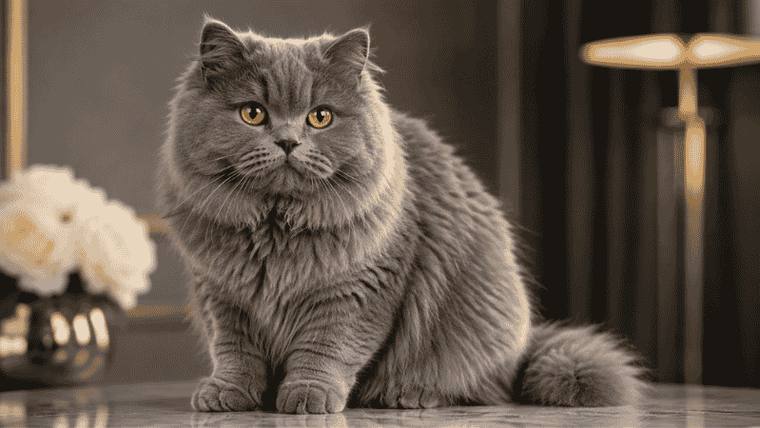
The most striking feature of cat breeds British Longhair is their coat. Unlike the silky fur of a Persian or the woolly coat of a Ragdoll, the British Longhair has a dense, plush double coat that stands away from the body. The texture is often described as crisp or springy. When you touch a British Longhair, your fingers sink into a thick layer of fur that feels like high-quality velvet or plush carpet.
Cat breeds British Longhair have round heads, full cheeks, and short, broad noses. Their ears are small and set wide apart. Their eyes are large, round, and deeply set. Eye colors include copper, gold, blue, green, and odd-eyed combinations depending on coat color. The overall impression is a cat that looks like a teddy bear or a plush toy.
The body of cat breeds British Longhair is cobby, meaning compact, muscular, and sturdy. British Longhairs are medium to large cats, with males weighing 12 to 18 pounds and females weighing 9 to 14 pounds. Their legs are short but thick, with large, round paws. The tail is thick and fluffy, tapering to a rounded tip.
Cat breeds British Longhair come in nearly every color and pattern. The most famous is the Blue British Longhair, which has solid blue-gray fur and copper or gold eyes. Other popular colors include black, white, cream, chocolate, lilac, and various tabby patterns. Golden and silver shaded British Longhairs are especially prized for their dramatic coats with dark tipping on a pale background.
The question "cat breeds British Longhair vs Persian" often confuses potential owners. Persians have flatter faces, longer, silkier coats, and more extreme features. British Longhairs have a more moderate face with a shorter plush coat. As we discussed in angora cats splendor, Turkish Angoras have silky single coats, unlike the dense double coat of British Longhairs.
According to the Cornell Feline Health Center, cats with dense double coats require more grooming than single-coated breeds, a consideration for owners interested in cat breeds British Longhair.
Personality and Temperament
If you are searching for cat breeds British Longhair, you likely want a calm, gentle companion. The British Longhair delivers exactly that. These cats are known for their easygoing, placid temperament. They are not hyperactive or demanding. A British Longhair spends much of the day napping in sunny spots and observing household activity from a comfortable perch.
Cat breeds British Longhair are affectionate but not clingy. They enjoy petting and lap time, but they do not demand constant attention. When you are busy, a British Longhair finds something else to do. When you are ready to cuddle, she will happily accept. This makes cat breeds British Longhair ideal for working professionals who want a loving cat that does not suffer from separation anxiety.
p>British Longhairs are quiet cats. They rarely meow excessively. When they do vocalize, their voices are soft and pleasant. If you live in an apartment with thin walls, cat breeds British Longhair are excellent choices because they will not disturb neighbors with loud yowling or crying.Cat breeds British Longhair are generally good with children and other pets. Their patient, tolerant nature means they tolerate gentle handling from respectful children. They usually get along with cat-friendly dogs and other cats. However, introducing any new pet slowly is always recommended. As covered in signs of stress in cats, even calm breeds need proper introductions to avoid anxiety.
Intelligence is another trait of cat breeds British Longhair. They learn routines quickly and can be trained to use scratching posts, puzzle feeders, and even to perform simple tricks. However, they are not as intensely active or mischievous as breeds like Bengals or Abyssinians. British Longhairs are content with moderate play sessions and do not require hours of engagement daily.
Your previous article on indoor cat depression explains that all indoor cats need environmental enrichment. Even calm cat breeds British Longhair need climbing trees, window perches, and interactive toys to prevent boredom and maintain mental health.
Grooming and Care Requirements
Cat breeds British Longhair require more grooming than shorthaired breeds, but less than Persians or Maine Coons. Their dense double coat mats less easily than a Persian's silky coat because the texture is springier. However, neglecting grooming leads to tangles, mats, and hairballs.
Brush your British Longhair two to three times per week using a stainless steel comb and a slicker brush. Focus on the belly, armpits, and behind the ears where mats form most easily. During spring and fall shedding seasons, daily brushing helps remove loose fur before it ends up on your furniture or in your cat's stomach. The question "cat breeds British Longhair shedding level" has an answer: moderate to high during seasonal changes.
p>Bathing cat breeds British Longhair is rarely necessary. Their coats naturally repel dirt. If your cat becomes genuinely dirty, use a cat-specific shampoo and rinse thoroughly. Proper drying is essential. A damp coat mats more easily than a dry one. Some owners use a pet-safe conditioner to maintain coat softness and reduce static.Hairballs are a concern with cat breeds British Longhair because they groom themselves frequently. The dense fur traps loose hair that your cat ingests. Regular brushing reduces hairballs significantly. You can also offer hairball control treats or supplements. Your article on do cats fart explains how dietary changes, including hairball remedies, affect cat digestion.
Nail trimming, ear cleaning, dental care, and eye cleaning are also part of maintaining cat breeds British Longhair. Trim nails every two to three weeks. Check ears weekly for wax buildup or redness. Brush teeth daily or use veterinary-approved dental treats. British Longhairs have large, round eyes that may water slightly; clean the area gently with a soft, damp cloth.
The ASPCA cat grooming guide offers additional advice for owners of long-haired breeds, including cat breeds British Longhair, on managing shedding and preventing mats.
Health and Lifespan
Cat breeds British Longhair are generally healthy with a lifespan of 12 to 16 years, sometimes longer with excellent care. They inherited robust health from their British Shorthair ancestors, who were working cats selected for hardiness rather than extreme features.
However, cat breeds British Longhair are prone to certain genetic conditions. Hypertrophic cardiomyopathy (HCM) is the most concerning. This heart disease causes thickening of the heart muscle and can lead to heart failure. Responsible breeders screen their breeding cats for HCM using echocardiograms. When researching cat breeds British Longhair, always ask for documentation of heart screening in the parent cats.
p>Obesity is a major health risk for cat breeds British Longhair. Their calm temperament and love of napping make them prone to weight gain. An overweight British Longhair develops joint problems, diabetes, and heart disease. Measure food portions carefully and encourage daily play. Your article on how long are cats pregnant discusses pregnancy nutrition, but weight management applies to all life stages.Polycystic kidney disease (PKD) occurs in cat breeds British Longhair, though less frequently than in Persians. PKD causes cysts to form in the kidneys, eventually leading to kidney failure. Responsible breeders test for PKD through DNA screening or ultrasound. When asking "cat breeds British Longhair health testing," look for breeders who provide documentation of PKD-negative status.
p>Dental disease affects many cat breeds British Longhair because of their compact facial structure. Crowded teeth trap food and bacteria, leading to gingivitis and tooth resorption. Regular tooth brushing and annual veterinary dental cleanings are essential. Your cat's angora cats splendor article covered similar dental considerations for long-haired breeds.Cat breeds British Longhair should live exclusively indoors. Their thick coats protect them from cold but not from cars, predators, or infectious diseases. Indoor life also protects their luxurious fur from dirt, parasites, and matting from outdoor vegetation. Provide climbing trees, scratching posts, and window perches to keep your indoor British Longhair physically and mentally stimulated.
Cost and Ownership Considerations
Cat breeds British Longhair are expensive. The rarity of these cats combined with their luxury appearance drives prices high. A British Longhair kitten from a reputable breeder typically costs between $1,500 and $3,500. Show-quality kittens or rare colors like golden or silver shaded cost even more, sometimes exceeding $5,000.
p>Why are cat breeds British Longhair so expensive? First, they are rare. Few breeders specialize in this category. Second, breeding British Longhairs requires genetic testing for HCM, PKD, and other conditions, which adds cost. Third, the long waiting lists mean breeders can charge premium prices. If you see a British Longhair kitten priced under $1,000, be very suspicious of the breeder's practices.Adoption is an alternative to purchasing cat breeds British Longhair. Check breed-specific rescues and general animal shelters. Occasionally, a British Longhair or British Longhair mix becomes available for adoption. Adoption fees are much lower, typically $100 to $300. However, purebred British Longhairs rarely appear in shelters, so patience is necessary.
p>Beyond the purchase price, owning cat breeds British Longhair involves ongoing costs. High-quality cat food suitable for indoor cats costs $30 to $60 per month. Veterinary care including annual checkups, vaccinations, and dental cleanings averages $200 to $500 per year. Grooming supplies including brushes, combs, and nail trimmers cost $50 to $100 upfront.Cat breeds British Longhair are excellent pets for first-time cat owners. Their calm temperament, patient nature, and moderate activity level make them forgiving of minor mistakes in cat care. However, the grooming commitment surprises some new owners. Be honest with yourself: do you have time to brush a fluffy cat two to three times per week? If not, consider the British Shorthair instead.
Your previous article on why cats follow you to the bathroom discusses clingy cat behavior. British Longhairs are affectionate but not typically clingy. They follow you out of curiosity and companionship but do not usually exhibit separation anxiety when left alone.
Final Thoughts
Cat breeds British Longhair offer a rare combination of luxury appearance and easygoing temperament. Their plush, teddy bear-like faces and dense, velvety coats make them one of the most beautiful indoor cat breeds available. Their calm, patient, affectionate nature makes them excellent companions for families, singles, and seniors alike.
However, cat breeds British Longhair are not for everyone. Their grooming needs require commitment. Their price tag is substantial. Their rarity means waiting. If you are willing to brush a fluffy coat several times per week, invest in quality cat food, and provide a calm indoor environment, a British Longhair will reward you with years of gentle companionship and quiet affection.
Before bringing home any cat breeds British Longhair, research breeders carefully. Ask for health testing documentation. Visit the cattery if possible. Meet the parent cats. A well-bred British Longhair from a responsible breeder is a healthy, well-socialized companion for twelve to sixteen years. A poorly bred cat from a kitten mill may come with health problems and behavioral issues. Choose wisely, and you will understand why so many cat lovers consider British Longhairs the ultimate luxury indoor pet.
Trusted Resources for British Longhair Cats
For more information on cat breeds British Longhair, their care, and their history, these independent organisations provide evidence-based guides and breed information.
- International Cat Care – Breed profile and health considerations for British Longhairs
- Cornell Feline Health Center – Veterinary information on breed-specific health concerns
- ASPCA Cat Grooming Guide – Practical advice for maintaining long-haired coats
- The International Cat Association – Breed standard and recognition information
You may also find our related guides helpful: Signs of Stress in Cats explains how to recognize anxiety in calm breeds like the British Longhair, and angora cats splendor compares other luxury long-haired breeds to help you choose the right cat for your home.