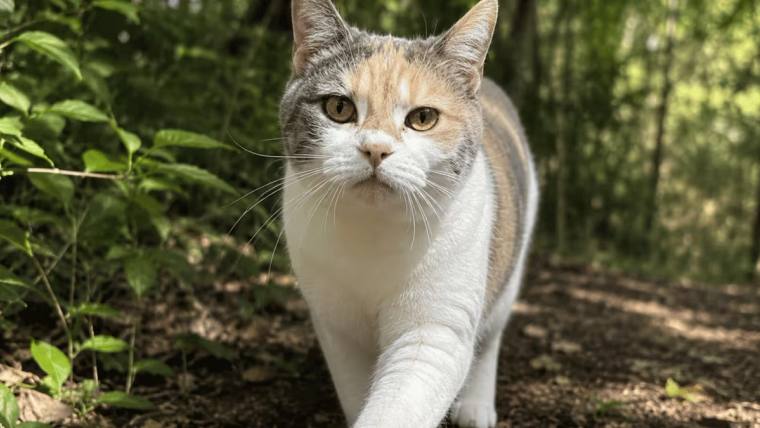
Watch your cat stalk a toy mouse across the living room and you are seeing thousands of years of instinct in action. Behind the sunbeam naps and the head bonks is a small, efficient predator, built to hunt and survive. So what do cats eat in the wild, when there is no bowl waiting for them? The answer tells us a lot about how we should be feeding the cats curled up on our sofas.
In this guide we will cover what wild cats actually catch and eat, whether they bother with plants at all, how feral and stray cats differ, what their big cousins like lions and tigers eat, and what all of this means for your own cat's dinner.
The short answer: cats are born meat eaters
Cats are obligate carnivores. That is the key fact behind everything else, and it simply means they are biologically built to get almost all of their nutrition from meat. Unlike dogs or humans, cats cannot thrive on a mixed or plant-based diet. They need certain nutrients, like the amino acid taurine, that are only found in animal tissue.
So in the wild, a cat's menu is overwhelmingly made up of small prey animals. Fresh meat, organs, bone and a little fur or feather, eaten raw, several small meals a day. No carbohydrates to speak of, very little plant matter, and plenty of moisture that comes straight from the prey itself.
What a wild cat's menu really looks like
A wild or outdoor cat is an opportunistic hunter, which means it eats whatever small creatures it can reliably catch. The exact menu depends on where the cat lives, but it usually includes:
- Small rodents. Mice, voles, rats and shrews are the staple. For most wild cats, rodents make up the bulk of the diet.
- Birds. Small garden birds and fledglings are common catches, though birds are harder to take than rodents.
- Insects. Grasshoppers, crickets, beetles, moths and other large insects, especially for younger or less experienced hunters.
- Rabbits and young hares. Larger prey for a bigger or bolder cat, often a substantial meal.
- Reptiles and amphibians. Lizards, small snakes and frogs, depending on the climate.
- Fish, occasionally. Despite the cartoon image, most cats are not natural fishers, but some will catch fish in shallow water if the chance comes up.
A wild cat typically eats many tiny meals throughout the day and night rather than one or two big ones. That little-and-often pattern is why a lot of house cats prefer grazing over wolfing down a single large bowl.
Do wild cats eat grass or plants?
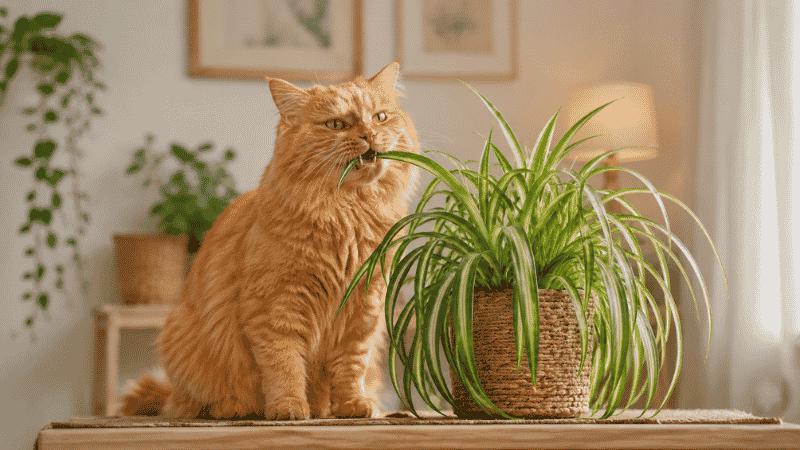
A bit, yes, but not as food in the nutritional sense. You will often see cats nibbling grass, and wild cats do the same. The leading theories are that grass helps them bring up indigestible bits like fur and bone, supports digestion, and may provide trace nutrients such as folic acid.
What they are not doing is eating greens for a balanced diet the way a rabbit would. If your own cat munches grass and then brings it back up, that is usually normal behaviour, although frequent vomiting is worth paying attention to. If you ever find yourself asking why your cat keeps being sick, grass is only one possible cause among several.
One important warning that applies to house cats more than wild ones: many common houseplants are dangerous to cats. A wild cat instinctively avoids most harmful plants, but a curious indoor cat may not. Lilies in particular are highly toxic, and even popular picks are a risk, so it is worth checking whether something like a spider plant is safe around your cat before bringing it home.
What do feral cats eat?
Feral cats are domestic cats living wild, usually born outdoors with little human contact. Their diet is similar to any wild hunter, built around rodents, birds and insects. The difference is that feral cats are also expert scavengers. Living near people, they will raid bins, eat scraps, and take advantage of food left out by humans, including the kindly placed bowls of cat colonies.
This scavenging is a survival strategy rather than a preference. Given the choice, a feral cat will still hunt fresh prey, because that is what its body is designed to run on. Scraps and bin food fill a gap, but they rarely match the nutrition of a freshly caught mouse.
What do stray cats eat?
Stray cats are a slightly different case. A stray is usually a cat that was once owned and has become lost or abandoned, so it is more used to people and to being fed. Strays lean even more heavily on human sources of food, from handouts and bins to whatever they can find, because many were never taught to hunt efficiently as kittens.
A stray that has been on its own for a long time may sharpen its hunting skills over time, but in the early days especially, a stray often struggles to feed itself purely by hunting. This is one reason strays are more likely than ferals to approach people for help.
What do big cats eat in the wild?
The same carnivore blueprint scales right up to the big cats, just with much larger prey. Lions, tigers, leopards and the rest are also obligate carnivores, and their wild diet is built around hunting:
- Lions take large grazing animals such as zebra, wildebeest, antelope and buffalo, usually hunting as a pride.
- Tigers are solitary ambush hunters that go after deer, wild boar and other sizeable mammals.
- Leopards and cheetahs target medium prey like antelope, gazelle and smaller mammals.
The principle is identical to your house cat. Fresh meat, organs and bone, eaten as the main and almost only food source. The scale is dramatically different, but a tiger and a tabby share the same fundamental dietary needs.
The nutrition behind the wild diet
Once you look at what wild cats eat, the nutritional pattern is clear, and it explains a lot about what good cat food should look like:
- High protein. The wild diet is overwhelmingly animal protein, which is a cat's main energy source.
- Plenty of moisture. Fresh prey is full of water, so wild cats get most of their hydration from food rather than drinking. This is why many house cats on dry-only diets are mildly under-hydrated.
- Very low carbohydrate. There is almost no grain or starch in a natural feline diet.
- Essential nutrients from meat. Taurine, certain fatty acids and vitamins that cats cannot make themselves all come from animal tissue.
What this means for feeding your own cat
You do not need to release mice into your kitchen to honour your cat's wild side. But understanding the natural diet helps you make better choices at the bowl:
- Prioritise meat. Look for foods high in animal protein with named meat ingredients, rather than vague fillers and lots of grain.
- Boost moisture. Wet food, or a mix of wet and dry, helps replace the hydration cats would naturally get from prey.
- Feed little and often. Smaller, more frequent meals suit a cat's grazing instinct better than one giant serving.
- Feed the hunter, not just the stomach. Indoor cats keep all their predatory instincts with nowhere to use them. Hunting-style play with wand toys and puzzle feeders matters, and a bored, under-stimulated cat can even slide into low mood and indoor cat depression. Ten minutes of stalk-and-pounce play goes a long way.
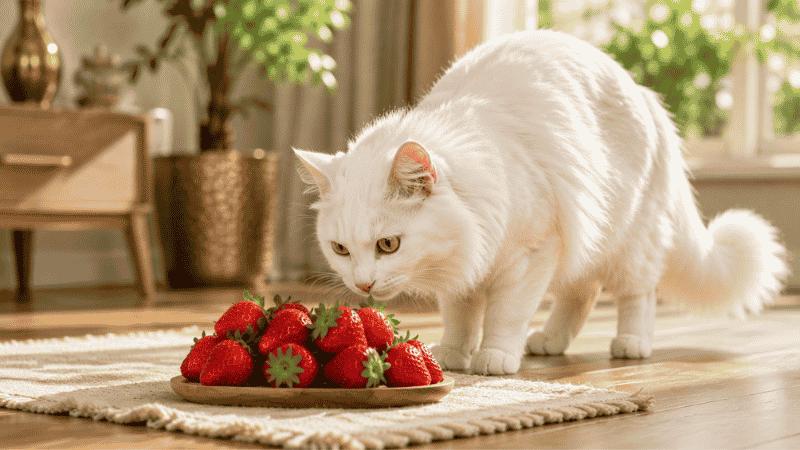
It is also worth knowing where the wild diet stops and danger begins. Cats are pure carnivores, so many human foods that seem harmless are not suitable, and some are toxic. If you like to share the odd treat, check first rather than guessing. Our can my pet eat that tool is a quick way to look something up, and for a common example, see whether cats can have strawberries before you offer a slice.
The takeaway
In the wild, cats eat what they were built to eat: small fresh prey such as mice, birds, insects and rabbits, with the occasional reptile or fish, a little grass on the side, and very little else. Feral cats add scavenging to the mix, strays lean on human food, and big cats simply hunt on a grander scale, but the carnivore blueprint never changes.
Your cat carries that same wild design under all the cuddles. You cannot recreate the hunt exactly, but a meat-first, moisture-rich diet and a bit of daily play let your indoor hunter live closer to its nature. For more on choosing the right food, browse our cat food guides.