You are mowing the lawn. You stop. A patch of fur and grass moves. Tiny pink creatures curl together in a shallow dip. You have found an infant bunny. Your first instinct is to help. But helping a baby rabbit often means doing nothing at all.
An infant bunny looks nothing like the fluffy adult rabbits you see in pet stores. Newborn rabbits are born hairless, blind, and completely helpless. They fit in the palm of your hand. They cannot regulate their own body temperature. Their eyes are sealed shut for the first ten days of life.
This guide covers everything about infant bunnies: what they look like at each age, how mother rabbits care for them, when human help is actually needed, and common mistakes that harm healthy babies. Whether you found a nest in your yard or your pet rabbit just gave birth, you will learn exactly what to do.
Understanding infant bunny development helps you avoid one of the most common mistakes: assuming an unattended nest is abandoned. Rabbit mothers have a very different parenting strategy than cats or dogs. Most of the time, the best help you can offer is walking away.
An infant bunny is born hairless, blind, and helpless. Mother rabbits visit their nests only once or twice daily to avoid attracting predators. Most baby rabbits found alone are not abandoned. Do not move them.
What Does an Infant Bunny Look Like
A newborn rabbit, called a kit, is surprisingly tiny. Depending on the breed, an infant bunny at birth weighs between 25 and 80 grams. That is about the weight of a large strawberry or a small egg. Domestic rabbit breeds vary in size, but all newborns are extremely small.
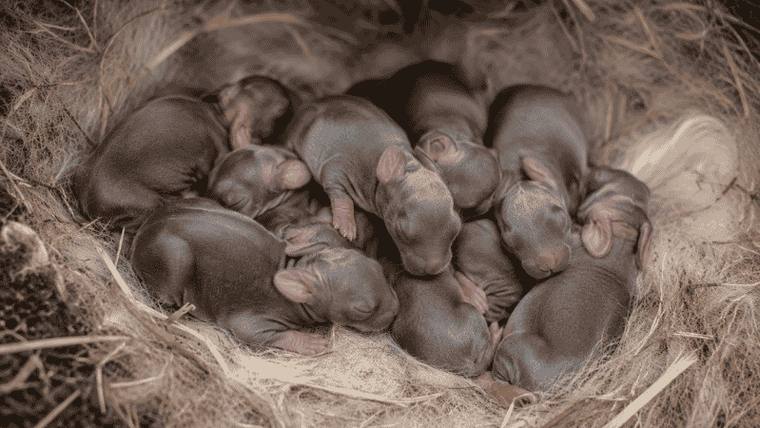
At birth, an infant bunny has no fur. The skin may appear pink, dark, or slightly gray depending on the future coat color. Rabbits that will grow up to have black or blue-gray fur often have dark skin at birth. White or light-colored rabbits typically have pink skin.
Just born bunnies have their eyes tightly closed. Their ears lie flat against their heads. They cannot stand or walk. They wiggle and crawl short distances but spend most of their time sleeping in a tight pile with their littermates. This huddling behavior helps them stay warm since they cannot regulate their own body temperature.
A tiny newborn bunny changes rapidly. By day three, a thin layer of fine fur begins to appear. The skin starts showing the color that will become the adult coat. By day seven, the infant bunny has a visible coat of short fur, though the eyes remain closed.
Wildlife rehabilitators commonly report that people find what they think are just born bunnies but are actually older babies that have simply not opened their eyes yet. Learning the full growth timeline helps you identify age accurately.
The following table shows the key developmental milestones for an infant bunny:
| Age | Appearance | Key Milestones |
|---|---|---|
| Birth (Day 0) | Hairless, pink or dark skin, eyes closed, ears flat | Cannot regulate temperature, huddles with littermates |
| 3 Days | Fine fur begins to appear, skin color visible | Still completely dependent on mother |
| 7 Days | Fur coat visible, still hairless on belly | Eyes still closed, ears beginning to lift |
| 10 Days | Eyes begin to open as tiny slits | Ears become more upright, can wiggle short distances |
| 2 Weeks | Eyes fully open, full fur coat | Begins exploring near nest, nibbles hay and greens |
| 3 Weeks | Looks like small adult rabbit | Independent and hopping, eating solid food |
| 4 Weeks | Fully furred, active, curious | Weaning begins, can be separated from mother |
For more detailed information on rabbit body structure, including how their legs and paws develop as they grow, see rabbit paw anatomy.
A newborn rabbit has no fur, closed eyes, and flat ears. By day 10, eyes begin to open. By 3 weeks, an infant bunny looks like a tiny adult rabbit and can survive independently.
How Mother Rabbits Care for Their Babies
Rabbit mothers have a parenting strategy that confuses many people. A mother rabbit does not stay with her infant bunny the way a cat or dog stays with her newborns. She visits only once or twice every 24 hours, usually at dawn or dusk.
Mother rabbit feeding sessions are very brief. She enters the nest, nurses the babies for two to five minutes, and leaves. She then covers the nest back up with grass and fur. This behavior is not neglect. It is a survival strategy. A mother rabbit sitting on the nest all day would attract predators directly to her infant bunny.
Rabbit maternal instincts prioritize nest camouflage over constant presence. The nest itself is a shallow depression lined with grass and fur pulled from the mother's own chest and belly. This fur provides warmth and insulation. When the mother leaves, she pulls grass and leaves over the nest to hide it from view.
How to know if an infant bunny is being fed? Check the babies' bellies. A well-fed baby rabbit has a round, full, plump belly. The skin looks smooth and healthy. Hungry babies have wrinkled, loose-looking skin and may cry persistently. Well-fed babies sleep quietly and remain warm.
Rabbit milk is extremely rich. It contains more fat and protein than cow or goat milk. This high nutritional density allows baby rabbits to go 24 hours between feedings without starving. A single feeding session provides enough calories for an entire day of growth.
Veterinary guidance recommends that if you find a nest of infant bunnies, do not disturb it. The mother will return. She is almost certainly still caring for her babies even if you never see her.
For more on rabbit maternal instincts and nest building, read bunny nest, which covers how to identify and protect wild rabbit nests in your yard.
Mother rabbits visit their nests only once or twice daily. They stay away to avoid attracting predators. A well-fed infant bunny has a round, plump belly. The nest is almost never abandoned.
Infant Bunny Care: When Human Help Is Actually Needed
Most infant bunnies found in yards do not need human help. However, some situations are genuine emergencies. Knowing the difference saves lives.
How to care for infant bunnies starts with knowing when not to care for them. A healthy infant bunny found in an intact nest with a round belly should be left completely alone. The mother is caring for it. Your intervention will only harm it.
Signs a baby rabbit needs immediate help include visible bleeding, broken or bent limbs, fly eggs or maggots on the body, cold body temperature despite being in the nest, weak or unresponsive behavior, constant crying for more than 12 hours, and the nest being completely destroyed with no sign of the mother for over 24 hours.
Caring for a newborn bunny without a mother is extremely difficult. Even experienced wildlife rehabilitators have low success rates with orphaned infant bunnies. Their digestive systems are delicate. Their temperature needs are precise. Their stress response is severe.
Taking care of newborn rabbits should never be attempted without professional guidance. If you find an orphaned infant bunny, contact a wildlife rehabilitator immediately. Do not try to raise it yourself. Do not feed it anything. Do not give it water.
How to care for newborn bunnies that are truly orphaned involves specialized formula, feeding techniques, temperature control, and stimulation for urination and defecation. Wildlife rehabilitators train for years to develop these skills. Well-meaning amateurs almost always cause more harm than good.
For orphaned domestic rabbit babies, contact a rabbit-savvy veterinarian or a rabbit rescue organization. They can provide guidance or take the babies into care. Never attempt to raise orphaned infant bunnies without professional support.
Most infant bunnies found in yards do not need help. Signs that require intervention include bleeding, broken bones, fly eggs, cold body temperature, constant crying, or a destroyed nest with no mother. Contact a wildlife rehabilitator immediately.
Feeding Infant Bunnies and Hydration
Do baby bunnies need water? Yes, eventually. But newborn infant bunnies get all their hydration from their mother's milk. Offering water to a newborn rabbit can cause aspiration pneumonia or fatal diarrhea.
Feeding newborn bunnies is a job for their mother or a trained wildlife rehabilitator. Cow's milk is deadly to infant bunnies. It causes severe diarrhea that leads to dehydration and death within days. Goat's milk is also inappropriate. Only specialized rabbit milk replacers should be used, and only by experienced hands.
Rabbit milk replacer formulas exist, but even these are risky. Overfeeding is extremely common and often fatal. A newborn rabbit's stomach is tiny. Feeding too much formula causes bloat, diarrhea, and aspiration. Wildlife rehabilitators measure formula in fractions of a milliliter.
Newborn rabbit nutrition is unique. Rabbit milk is higher in fat and protein than almost any other mammal milk. Replicating this balance is difficult. Most homemade formulas lack essential nutrients and cause slow starvation even if the baby survives the immediate feeding.
What not to feed a baby rabbit includes cow's milk, goat's milk, human baby formula, soy milk, almond milk, bread, cereal, vegetables, fruit, grass, water, and electrolyte solutions. Nothing from your kitchen is safe for an infant bunny.
If you find an orphaned infant bunny, the only safe food is nothing. Keep the baby warm in a quiet, dark box. Do not offer any food or water. Contact a wildlife rehabilitator immediately. They have the correct formula and the training to use it safely.
Do baby bunnies need water? Not as newborns. Mother's milk provides all hydration. Cow's milk kills baby rabbits. Never feed an infant bunny anything without professional guidance. The safest food is no food until a wildlife rehabilitator takes over.
Finding Wild Baby Bunnies in Your Yard
Finding a wild infant bunny in your yard is common during spring and summer. Eastern cottontails, the most common wild rabbit species in North America, build nests in open lawns, flower beds, gardens, under bushes, along fence lines, under decks, and under sheds.
A wild baby rabbit nest looks like a shallow depression lined with dry grass and fur. The mother often covers the nest with more grass and leaves, making it hard to see. You might not notice the nest until you are standing right over it.
A 2 week old bunny wild rabbit has its eyes open, full fur, and may be exploring near the nest. At this age, they look like miniature adult rabbits. They are not abandoned. They are learning to hop and forage. Their mother is still nearby.
Wild baby rabbit care is almost never necessary. A baby rabbit found outside the nest with its eyes open, fully furred, and able to hop does not need rescue. It is old enough to be on its own. The mother rabbit is still caring for it, just not constantly present.
If you find a wild infant bunny that is injured, cold, or covered in flies, contact a wildlife rehabilitator. Do not attempt to care for it yourself. Do not bring it inside and try to feed it. The rehabilitator has the training and resources to give it the best chance of survival.
Lawn mowing precautions save lives. Before mowing, walk your yard and look for patches of dead grass or fur. Mark any nests with a flag or a ring of flour. Mow around the nest, leaving an uncircled area of grass. The babies will leave the nest on their own within three to four weeks.
For more on protecting wild rabbit nests from lawn mowers and pets, read bunny nest. That guide covers nest identification and safety tips.
A 2 week old bunny wild rabbit has open eyes and full fur. It is independent and does not need rescue. Most wild baby rabbits found in yards are not orphaned. Leave them alone.
Infant Bunny Growth Timeline
Understanding the rabbit growth timeline helps you identify the age of any infant bunny you find. This knowledge prevents unnecessary intervention.
At birth, the infant bunny is hairless, pink or dark-skinned, eyes closed, ears flat, and unable to move more than a wiggle. It weighs 25 to 80 grams depending on breed. It huddles with littermates for warmth.
At one week, fine fur covers the body. The skin color is visible beneath the fur. Eyes remain closed. The infant bunny is still completely dependent on its mother. It sleeps most of the day.
At two weeks, the baby rabbit's eyes begin to open as tiny slits. By day 14, both eyes are usually fully open. The fur coat is thick and complete. The baby can crawl and attempt small hops. It may nibble at hay and greens but still relies on mother's milk.
At three weeks, a baby rabbit looks like a miniature adult. It has a full coat of fur, open eyes, upright ears, and can hop well. It begins eating solid food regularly. It can survive independently if necessary, though it still benefits from nursing.
At four weeks, the baby rabbit is weaning from its mother's milk. It eats hay, pellets, and greens on its own. It is fully mobile and curious about its environment. It can be separated from the mother if needed, though staying until six to eight weeks is better.
When can you handle newborn rabbits? As little as possible. For domestic rabbits, wait until the babies are at least two weeks old and have open eyes. For wild rabbits, never handle them. Human scent is not the concern. Stress is. Handling causes fear responses that can weaken an infant bunny's immune system.
When rabbits open their eyes is a key milestone. This happens around day 10 to day 14. Until then, the baby rabbit is completely blind and entirely dependent on its mother and the nest environment.
When rabbits eat solid food begins around two to three weeks. They start nibbling hay and greens. They continue nursing until about six to eight weeks old. The transition is gradual.
A 6 month old bunny is considered an adult, especially for smaller breeds. Larger breeds may continue growing until 9 to 12 months. When are rabbits fully grown depends on breed size. Small breeds mature faster than large breeds.
For a complete guide to rabbit body development, including skeletal growth and organ maturation, read anatomy of a rabbit.
An infant bunny opens its eyes at 10 to 14 days. At 3 weeks, it looks like a small adult rabbit and can survive independently. At 6 months, most rabbits are fully grown.
Common Health Problems in Baby Rabbits
Weak newborn rabbits are at high risk. The most common health issues in infant bunnies include hypothermia, dehydration, hypoglycemia (low blood sugar), diarrhea, aspiration pneumonia, and flystrike (maggot infestation).
Cold baby bunny symptoms include a body that feels cool to the touch, lethargy, weak movement, pale or blue-tinged skin, and the baby not snuggling with littermates. A cold infant bunny cannot digest food properly. Even if fed, it will not absorb nutrients.
Dehydrated infant rabbits show wrinkled skin, sunken eyes, lethargy, and dry mouth. Offering water directly is dangerous. The baby may aspirate. Only a wildlife rehabilitator should attempt to rehydrate an infant bunny using proper techniques.
Baby rabbit diarrhea is almost always fatal without treatment. The causes include inappropriate formula, overfeeding, bacterial infection, or parasites. Diarrhea leads to rapid dehydration and death within 24 to 48 hours. There is no safe home treatment.
Injured baby rabbits need immediate professional care. Broken bones, deep wounds, or signs of predator attack require veterinary attention. Do not attempt to treat injuries yourself. The stress of handling plus the injury itself often proves fatal without proper support.
Sick newborn bunny signs include refusal to eat when the mother is present, crying constantly, separation from littermates, sitting hunched alone, labored breathing, visible wounds or swellings, and fly eggs or maggots on the body.
If you see any of these signs, contact a wildlife rehabilitator or rabbit-savvy veterinarian immediately. Do not wait. Do not try home remedies. Infant bunnies deteriorate quickly.
Common health problems in infant bunnies include hypothermia, dehydration, diarrhea, and flystrike. Signs of illness include constant crying, lethargy, refusal to eat, and wounds. Contact a wildlife rehabilitator immediately.
What People Often Get Wrong About Baby Bunnies
Rabbit owner communities and wildlife rescue groups share consistent observations about the most common mistakes people make with infant bunnies. Learning these patterns helps you avoid harming healthy babies.
Most baby bunnies found alone are not abandoned. This is the most frequent misunderstanding. Mother rabbits intentionally stay away from the nest to avoid attracting predators. A nest with no mother visible for hours or even a full day is almost certainly still being cared for.
Mother rabbits often visit only once or twice daily. They usually come at dawn and dusk. If you check the nest at noon, you will likely see no mother. That does not mean she has abandoned her babies. She will return when the sun sets.
Many people accidentally remove healthy babies from nests. Well-meaning rescuers see a nest without a mother and assume the babies are orphaned. They bring the infant bunnies inside, offer food and water, and unintentionally cause the babies' death. The babies were healthy before. Human intervention killed them. Touching a baby bunny does NOT automatically cause abandonment. This is a persistent myth. Mother rabbits have a weak sense of smell compared to many other mammals. Human scent alone is unlikely to cause abandonment. However, excessive handling still stresses the babies and should be avoided.Overfeeding orphaned rabbits is a common mistake. Well-meaning rescuers offer formula until the baby seems full. But infant rabbit stomachs are tiny. Overfeeding causes bloat, diarrhea, and death. Wildlife rehabilitators measure formula in fractions of a milliliter for a reason.
Keeping wild rabbits as pets rarely succeeds. Even if an infant bunny survives to adulthood, it remains a wild animal. It will be fearful, stressed, and potentially aggressive. Wildlife rehabilitation centers report that most wild rabbits raised in captivity die within the first year or live in chronic distress.
The surprising truth about newborn bunnies is that the best help is often no help. Most people accidentally harm healthy babies by trying to rescue them. The kindest thing you can do for a wild infant bunny is leave it alone.
The most common mistake is assuming an unattended nest is abandoned. Mother rabbits visit only once or twice daily. Most baby bunnies found alone are not orphaned. The best help is often no help at all.
Common Myths About Infant Bunnies
Several myths about infant bunnies cause real harm. Clearing them up prevents well-meaning but dangerous interventions.
Myth: Mother rabbit abandoned the nest because you touched the babies. Truth: Mother rabbits rarely abandon their young due to human scent. If the nest is intact and the babies are warm and round-bellied, the mother is still caring for them.
Myth: Human scent causes mothers to reject their babies. Truth: Rabbits have a relatively poor sense of smell compared to dogs or cats. Scent alone is unlikely to cause abandonment. However, handling still stresses babies and should be minimized.
Myth: Baby bunnies need water immediately. Truth: Newborn infant bunnies get all hydration from mother's milk. Offering water can cause aspiration pneumonia or diarrhea. Do not give water to an infant bunny without professional guidance.
Myth: All baby rabbits found alone need rescue. Truth: Most do not. A baby rabbit with open eyes, full fur, and the ability to hop is old enough to be independent. The mother is still nearby but not constantly present.
Myth: Wild baby rabbits make good pets. Truth: Wild rabbits are not domesticated. They experience extreme stress in captivity. Their survival instincts make them fearful, not affectionate. It is also illegal in most places to keep wild rabbits as pets.
Common myths about infant bunnies include the belief that human scent causes abandonment, that baby bunnies need water, and that all found babies need rescue. Most are false. Learn the facts before intervening.
For more on how rabbits communicate distress, including sounds that may indicate a baby rabbit is in trouble, read what does a rabbit scream sound like.
Final Thoughts
Finding an infant bunny can be alarming. You want to help. But understanding rabbit behavior is the key to actually helping. Most baby rabbits found in yards are not abandoned. Their mothers are nearby, visiting only once or twice daily to avoid attracting predators. An infant bunny with a round belly, warm body, and intact nest is healthy and does not need human intervention.
When intervention is necessary, the best action is contacting a wildlife rehabilitator or rabbit-savvy veterinarian. Do not attempt to care for an orphaned infant bunny yourself. The risks of improper feeding, temperature mismanagement, and stress are extremely high. Professional help gives the baby the best chance of survival.
The most important thing to remember about an infant bunny is that leaving healthy babies alone is not neglect. It is the most responsible and caring action you can take. Learn the growth stages. Know the warning signs. Trust the mother rabbit to do what she has evolved to do for millions of years. And when in doubt, call a professional before touching anything.
Trusted Resources for Rabbit and Wildlife Care
- RSPCA Rabbit Health Guide – Veterinary-reviewed advice on rabbit care and baby rabbits
- Humane Society Wild Rabbits – Guidance on finding baby rabbits and nest identification
- House Rabbit Society Orphaned Bunnies – Expert advice on when to intervene
- PDSA Wild Rabbit Guide – UK veterinary charity guidance on wild rabbits
- Animal Help Now – Find licensed wildlife rehabilitators in your area
You may also find these related guides helpful: bunny nest covers nest identification and protection, and newborn bunny rabbits provides additional details on growth and care.