If that sounds familiar, please don’t blame yourself. Most pet stores don’t teach you the truth. They just hand you a box and a bill.
You weren’t set up for success. But you can be, starting now.
That story plays out thousands of times every year. And almost none of those deaths were inevitable.
Hermit crabs are not fragile animals. They are not short-lived novelties. In the right conditions, they can outlive your dog, your cat, and possibly your teenager’s interest in keeping pets.
The problem is almost never the crab. It’s almost always the setup.
The Surprising Truth About Hermit Crab Lifespan
Here’s something most pet store employees will never tell you: a pet hermit crab can live anywhere from 10 to 30 years under proper care.
Most pet hermit crabs die within a year. Many don’t make it past six months.
That gap isn’t about genetics or bad luck. It’s almost entirely about conditions.
Hermit crabs sold at tourist shops, beach boardwalks, and mall kiosks are typically kept in setups that would slowly kill any hermit crab, regardless of species.
The painted shells, the gravel substrate, the tiny plastic tanks — none of it supports a living animal. It supports a sale.
From a physiological standpoint, hermit crabs are remarkably tough crustaceans. Their systems are built for long-term survival in variable coastal environments.
When they die young in captivity, it’s almost always because one or more basic environmental requirements aren’t being met. Not because the animal is inherently delicate.
In the wild, hermit crabs live in large coastal colonies with access to exactly what they need: natural humidity from the ocean, warm stable temperatures, varied food from scavenging, hundreds of shells to choose from, and other crabs to interact with.
Most wild species routinely reach 25 to 40 years, and some documented individuals exceed even that.
Most pet hermit crabs in a basic beginner setup live less than a year. But put them in a proper setup, and they can regularly live 20 years or more.
The Factors That Determine How Long Your Hermit Crab Lives
Humidity and Temperature: The Number One Killer
This is the factor most beginner care guides either skip entirely or mention so vaguely it becomes useless.
It’s also the most common cause of early death.
Hermit crabs don’t breathe through lungs. They breathe through modified gills, the same structures their aquatic ancestors used underwater, adapted over evolutionary time for life on land.
Those gills must stay moist to function.
When they dry out, the crab can’t extract oxygen properly, even from air that contains plenty of it. The result is a slow, gradual respiratory failure that can take weeks or months.
Owners almost never recognize it. The crab just seems increasingly inactive, then stops eating, then dies.
Humidity in a hermit crab enclosure needs to stay between 70 and 80 percent consistently. Temperature should be maintained between 72 and 80 degrees Fahrenheit.
Wild land hermit crabs are tropical animals, and room temperature in a drafty house or an air-conditioned apartment is frequently too cold.
Tip: A digital hygrometer and thermometer inside the tank is not optional. It can be the difference between a thriving crab and one that is slowly dying without you knowing.
Glass tanks with tight-fitting lids hold humidity far better than mesh-topped enclosures.
Substrate Depth and the Molting Crisis
Molting is how hermit crabs grow. They shed their old exoskeleton, form a new and larger one, and emerge bigger and softer for a brief vulnerable period.
It’s one of the most biologically demanding things a hermit crab does, and it kills more captive crabs than almost any other single factor.
Imagine burying yourself in cool, dark sand for two months to grow an entirely new body. You’d want absolute peace. No digging, no checking, just complete trust that you’d be left alone.
That’s exactly what your crab needs.
To molt successfully, a hermit crab must bury itself completely underground in substrate that is at minimum three times the height of your largest crab.
The substrate must be packed tightly enough to hold a tunnel without collapsing.
The standard gravel sold with most starter kits is too shallow, too coarse, and too dry to work.
The right mix is five parts play sand to one part coconut fiber, moistened until it holds its shape when you squeeze a handful but doesn’t release water when you open your fist.
Experienced keepers often call this “sandcastle sand.”
A small hermit crab may spend two to four weeks underground during a molt. A large adult can remain buried for two to three months.
During that entire time, the crab must not be disturbed.
Note: Digging up a molting crab, even gently, exposes a soft and defenseless animal. It is almost always fatal.
Shell Quality and Shell Availability
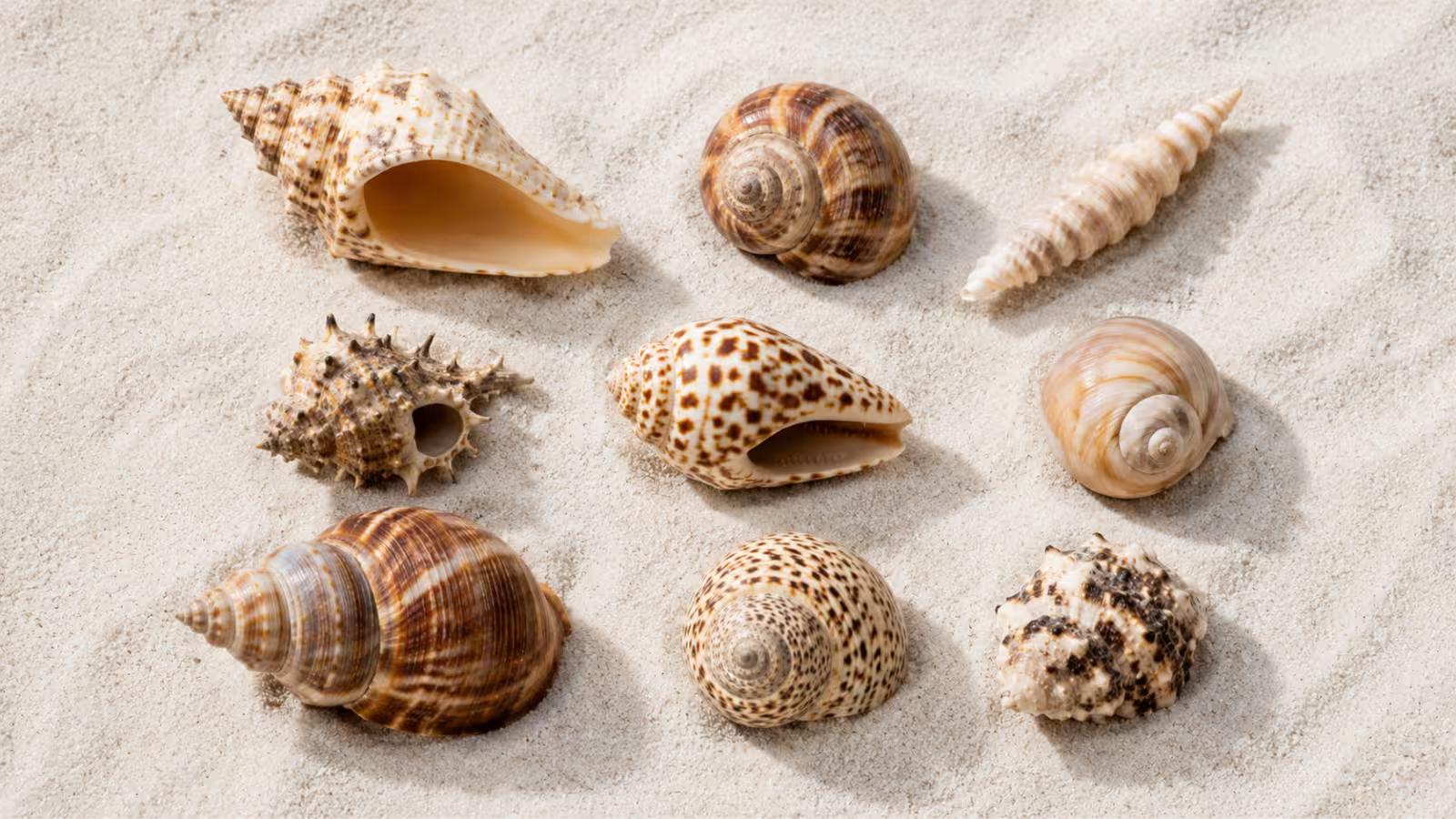
Hermit crabs can’t produce their own shells. They find and inhabit empty gastropod shells, trading up to larger ones as they grow throughout their lives.
Without access to appropriately sized shells, a hermit crab is slowly crushed by its own growth inside a shell that has become too small.
It may also fight other crabs for shells, causing injuries to both animals involved.
You need to provide a variety of empty, natural shells at all times, with openings slightly larger and smaller than the one your crab currently inhabits.
Turbo shells and Babylonia shells are among the most widely recommended by experienced keepers.
Painted shells are a serious and widespread problem.
The paints and lacquers used on these shells are toxic to hermit crabs, which absorb chemicals through their abdomen, the most permeable part of their body.
Important: Never place a painted shell in your hermit crab tank.
Water Quality and the Copper Problem
Most people know that hermit crabs need water. Far fewer know they need two kinds, or understand why tap water can kill them.
Hermit crabs require constant access to both freshwater and saltwater.
Each pool should be large enough for the crab to submerge its entire body.
These pools are not decorative. Hermit crabs use them to regulate moisture in their modified gills, clean themselves, and maintain proper hydration.
Tap water is not safe for hermit crabs. Chlorine is the obvious concern, but copper is the more dangerous one.
Most household plumbing leaches trace amounts of copper into tap water at concentrations undetectable by taste or smell.
An amount that is harmless to you can quietly poison your crab over months.
Water must be treated with a dechlorinator that specifically states it neutralizes heavy metals, not just chlorine.
For the saltwater pool, use marine-grade salt, the kind sold for reef aquariums, mixed to the correct salinity for your species.
Do not use table salt. Do not use aquarium salt labeled for freshwater tanks.
Most of these products contain iodine, which is harmful to hermit crabs.
Social Needs: Loneliness as a Lifespan Factor
Hermit crabs are colonial animals.
In their natural habitat, they live in groups of hundreds or even thousands. They gather to trade shells, forage together, and spend their lives in constant company.
A hermit crab kept alone is a stressed hermit crab.
Socially isolated hermit crabs may show reduced activity, disrupted feeding, and weaker immune function.
In practical terms, a lone hermit crab stays hidden more, eats less, and declines faster than one kept with companions.
Tip: Keep a minimum of three hermit crabs together. More is better, as long as the enclosure is large enough.
The Difference Between Molting and Dying
This mistake breaks hearts, and it is entirely preventable.
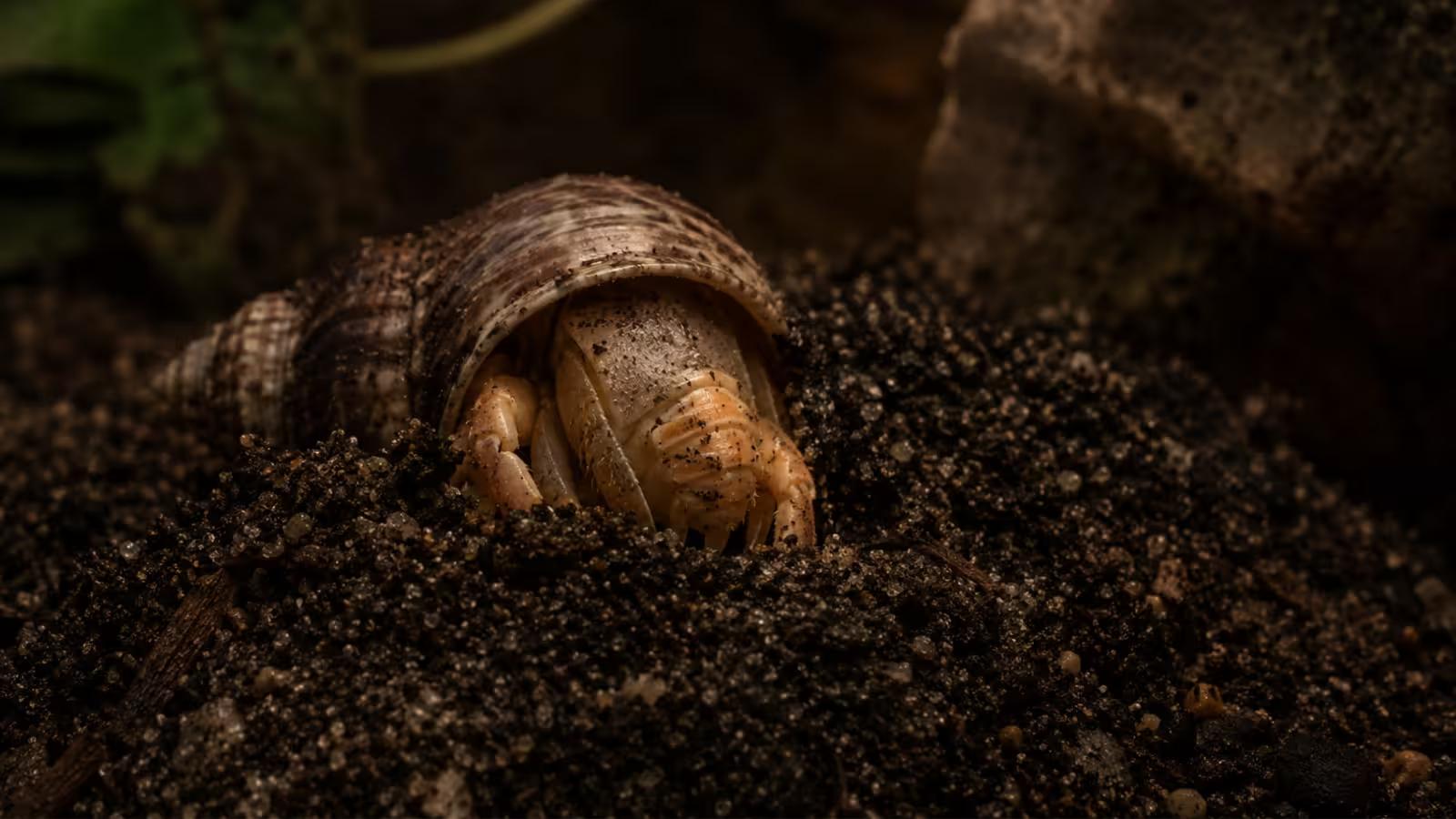
A molting hermit crab is buried, motionless, and unresponsive for weeks. To a new owner, this can look exactly like death.
Many crabs are dug up, discarded, or disturbed during a molt because their owner believed they had died.
Once disturbed during a molt, the crab almost never survives.
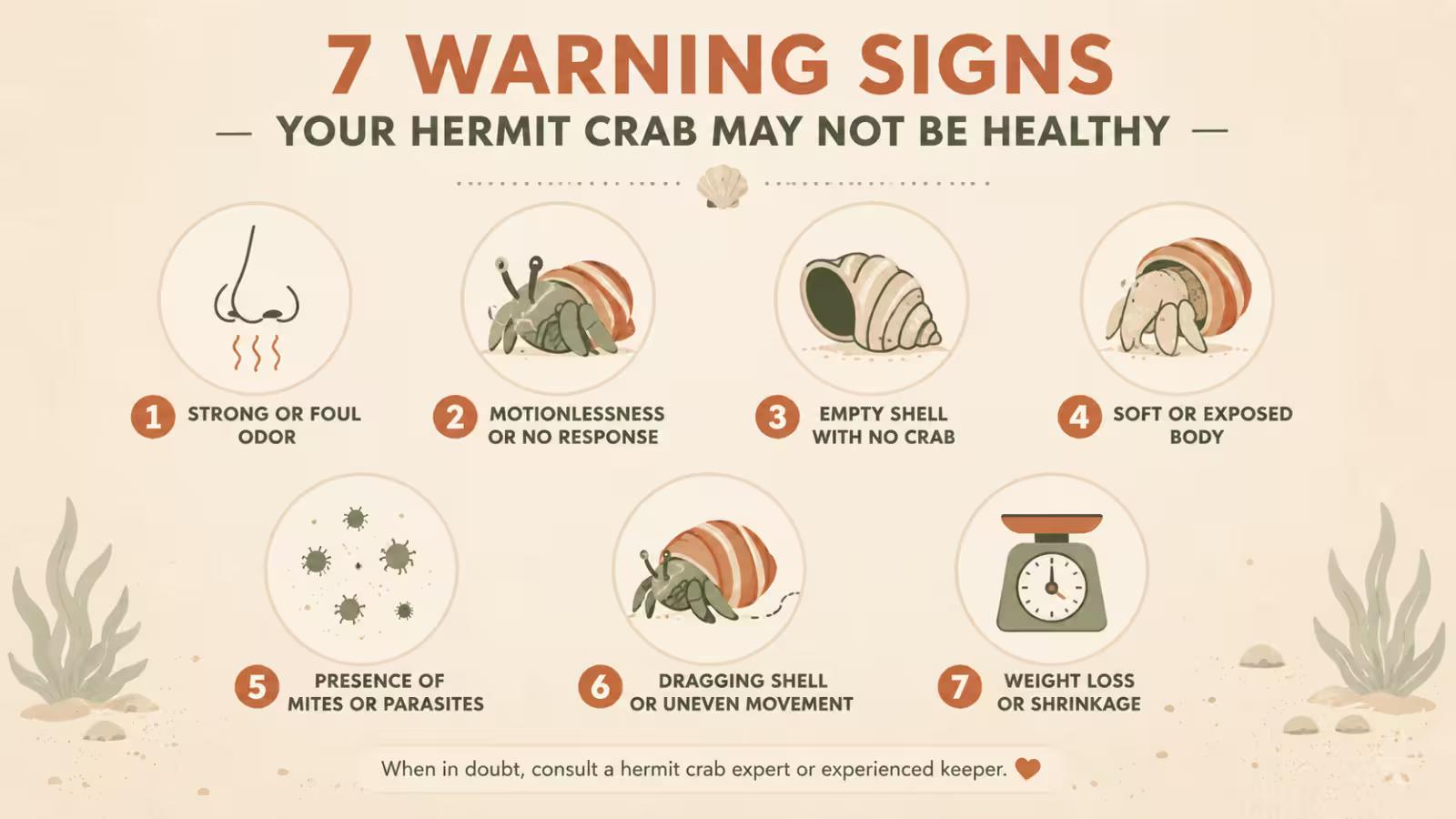
Rule: A dead hermit crab smells like rotting meat. That smell develops within 24 to 48 hours and is unmistakable. If there is no smell, do not disturb the crab.
When a crab surfaces after a molt, it will look pale, soft, and disoriented. It may appear sick.
This is completely normal.
The new exoskeleton takes several days to harden. During this time, the crab needs quiet, food, and calcium sources like cuttlebone to rebuild properly.
Give it space and resist the urge to help.
Warning Signs That Require Immediate Attention
Most of these signs are rare if your setup is right. But if you do see them, knowing what to look for means you can act faster than most owners ever would.
Contact an exotic veterinarian with crustacean experience if you notice any of the following signs:
- A sweet or fishy smell coming from the tank
- A crab completely motionless outside the substrate for more than three days with no known molt underway
- A crab voluntarily leaving its shell and not re-entering
- A soft body visible outside the shell with no recent molt
- Small moving dots on the crab or substrate
- A crab dragging itself rather than walking normally
- Significant weight loss where the body appears to hang loosely in the shell
How to Set Up the Ideal Hermit Crab Habitat
Setting up the right environment is where most owners either win or lose.
Choose a glass tank with a glass or acrylic lid. A 20-gallon tank is a good minimum for a first setup.
Avoid mesh lids entirely, as they let humidity escape quickly.
Mix your substrate using five parts play sand and one part coconut fiber. Add water gradually until a squeezed handful holds its shape without releasing water.
Fill the tank to at least six inches deep, or deeper if your crabs are large. Pack it firmly so tunnels can hold.
Set up two water pools: one freshwater and one saltwater. Both should be deep enough for full submersion and treated properly.
Add hides and climbing structures made from cork bark, cholla wood, or natural branches. Avoid anything painted or chemically treated.
Install an under-tank heater on one side only to create a temperature gradient.
Place your digital hygrometer and thermometer inside the tank.
Run the setup for 48 to 72 hours before introducing crabs. This helps confirm that humidity and temperature are stable in the target ranges.
Then add your crabs, with a minimum of three, in the evening when they are naturally most active.
| Parameter | Requirement |
|---|---|
| Minimum tank size for 2 small crabs | 10 gallons |
| Recommended tank size | 20–40 gallons |
| Substrate depth | 3x the height of your largest crab, minimum 6 inches |
| Substrate type | 5:1 play sand to coconut fiber, moistened |
| Humidity | 70–80% |
| Temperature | 72–80°F |
| Lighting | 12 hours on, 12 hours off |
| Both water pools | Large enough for full submersion |
| Water treatment | Dechlorinator that removes heavy metals |
| Salt type | Marine-grade reef salt only |
Feeding Your Hermit Crab for a Long Life
Commercial hermit crab pellets are almost universally poor nutrition.
Most are made primarily of starch and table salt, which is harmful to hermit crabs. Use them sparingly at best, or not at all.
In the wild, hermit crabs are opportunistic scavengers. They eat an enormous variety of organic materials, including fruits, leaves, flowers, bark, fungi, animal matter, and mineral sources.
That variety supports healthy molting, immune function, and longevity.
In captivity, offering a diverse diet is one of the most impactful things you can do for a long crab life.
Safe foods include fresh mango, papaya, apple, grape, romaine, kale, spinach, dried shrimp, krill, unseasoned fish, unseasoned boiled egg, cuttlebone, dried insects, oak or maple leaf litter, unsweetened coconut, and salt-free whole grain crackers.
Foods to avoid include anything with citric acid, onion, garlic, table salt, iodized salt, added sugar, artificial sweeteners, processed human foods, preservatives, artificial colors, artificial flavors, and anything prepared with tap water.
Tip: Offer food in the evening and remove uneaten fresh food within 24 hours to prevent mold.
Reducing Stress for a Longer Life
Stress kills hermit crabs quietly.
Chronic environmental stress can suppress immune function and make crabs more vulnerable to bacterial and fungal infections.
A consistently stressed hermit crab is a hermit crab with a compromised immune system.
The main stressors in captivity are preventable.
Excessive handling is one of them. Keep handling sessions to five to ten minutes maximum and never more than once daily.
Never pull a crab from its shell. This causes extreme stress and can physically injure the animal.
Inconsistent temperature and humidity swings are more harmful than a reading that is slightly off but stable.
Noise and vibration also matter more than most owners realize. Hermit crabs are sensitive to vibration, so placing a tank near speakers or a heavily used surface can cause stress over time.
Overcrowding and too few available shells create constant low-level competition and stress that wears crabs down over months and years.
Species Differences and How They Affect Lifespan
The purple pincher, named for the distinctive purple-blue color of its larger claw, is the most commonly sold species in North American pet stores.
It is also one of the more adaptable species in captivity.
It tolerates a modest range of humidity and temperature variation better than some other species, which is part of why it survives in poor conditions long enough to be sold.
Well-cared-for purple pinchers have documented lifespans well beyond 20 years.
Ecuadorian hermit crabs are the second most common species sold in North America.
They are slightly smaller and noticeably more active than purple pinchers, which makes them entertaining to watch but also more sensitive to environmental instability.
Ecuadorians tend to show stress symptoms more quickly when conditions drift.
This can actually be useful, since they act as early warning indicators that something in the setup needs attention.
Their lifespan potential under ideal conditions is similar to purple pinchers.
Coconut crabs are technically hermit crabs and members of the same family.
They show just how far the hermit crab lifespan can extend when conditions are right.
Wild coconut crabs have been estimated at 40 to 60 years old based on growth rate studies, making them among the longest-lived arthropods on Earth.
They are rarely kept as pets due to their size and legal restrictions in many regions.
Still, their existence is a useful reminder of what this animal family is genuinely capable of when its needs are met.
What to Expect as Your Hermit Crab Ages
A young hermit crab molts frequently, sometimes every few months, because it is growing rapidly.
Each molt produces a slightly larger animal that needs a slightly larger shell.
In the first few years of ownership, you may notice your crab moving into progressively bigger shells and becoming more confident in its environment.
As the crab matures and growth slows, molts become less frequent. Eventually, they may happen once a year or less.
Each individual molt also takes longer.
A crab that molted for three weeks as a juvenile may spend two to three months underground as an adult.
Activity levels tend to become more predictable over time in well-established crabs.
Older crabs often develop visible preferences for a favorite hide, a preferred water pool, or consistent foraging routes they repeat nightly.
Continue offering a wide variety of shell sizes throughout your crab’s entire life.
Even slow-growing adult crabs will occasionally find a shell that fits better than their current one.
Having options available prevents the health problems that come from a crab outgrowing its shell without a replacement.