
Most pet hedgehogs live between 3 and 7 years. The African pygmy hedgehog, which is by far the most common pet species, typically lives around 4 to 6 years under good captive care.
A small number of exceptionally well-cared-for hedgehogs have reached 8 years or beyond, though this is genuinely rare.
Genetics play a role, but the bigger truth is that husbandry matters enormously. Diet, temperature, exercise, veterinary access, and daily stress levels can each add or subtract years from your hedgehog's life.
Your hedgehog was busy exploring last night. Tonight, he's barely left his hide, and the food dish looks untouched. Situations like this are exactly why understanding hedgehog health and lifespan matters before problems appear, not after.
Many new owners assume hedgehogs are easy, hands-off pets. They're not. African pygmy hedgehogs are sensitive animals with specific temperature requirements, nutritional needs, and a natural tendency to mask illness until things become serious.
This guide walks through everything you need to know: average lifespan figures, what factors affect longevity the most, how to recognize aging versus illness, the health problems most likely to shorten a hedgehog's life, and a practical plan for giving your hedgehog the best possible chance at a long, comfortable life.
What Is the Average Lifespan of a Pet Hedgehog?
The African pygmy hedgehog typically lives between 4 and 6 years in captivity. Some individuals land closer to 3 years, usually due to genetic issues, illness, or poor early care. Others push past 6 or 7 years when their environment, diet, and healthcare are consistently excellent.
A 3-year lifespan is not simply "bad luck." It usually points to an underlying problem, whether that's a genetic condition, chronic stress, obesity, or a health issue that went undetected and untreated for too long.
Wild hedgehogs, despite the romantic idea of living free, actually tend to live shorter lives than their captive counterparts. Predators, food scarcity, disease, and vehicle collisions all take a toll.
| Hedgehog Situation | Typical Lifespan |
|---|---|
| African pygmy hedgehog with average care | 4 to 6 years |
| Well-cared-for captive hedgehog | 5 to 7 years |
| Exceptional cases | 8+ years |
| Wild hedgehogs | Generally shorter |
What Factors Affect Hedgehog Life Expectancy?
Genetics
Some hedgehogs are simply born with conditions that will shorten their lives regardless of how carefully they're cared for. Wobbly Hedgehog Syndrome, for example, has a clear genetic component and appears most frequently in African pygmy hedgehogs bred without regard for hereditary health.
If you're buying from a breeder, ask about the parents' health histories. This is one area where the source of your hedgehog matters more than most people realize.
Diet Quality

Poor diet is one of the most common and most preventable reasons pet hedgehogs live shorter lives. Obesity, dental disease, and weakened immune function are all strongly linked to what ends up in the food dish.
A healthy hedgehog diet typically includes:
- High-quality insectivore kibble or a quality low-fat cat food as a base
- Live or dried insects such as crickets and mealworms in moderation
- Occasional safe fruits like blueberries or melon in small amounts
- Occasional safe vegetables
- Fresh, clean water available at all times
The most common diet mistakes are overfeeding mealworms, offering sugary treats too frequently, and relying on a single food source without any variety.
Tip: Mealworms should be treats, not staples. If your hedgehog is visibly round and struggles to curl into a complete ball, the diet needs adjustment.
Temperature Regulation
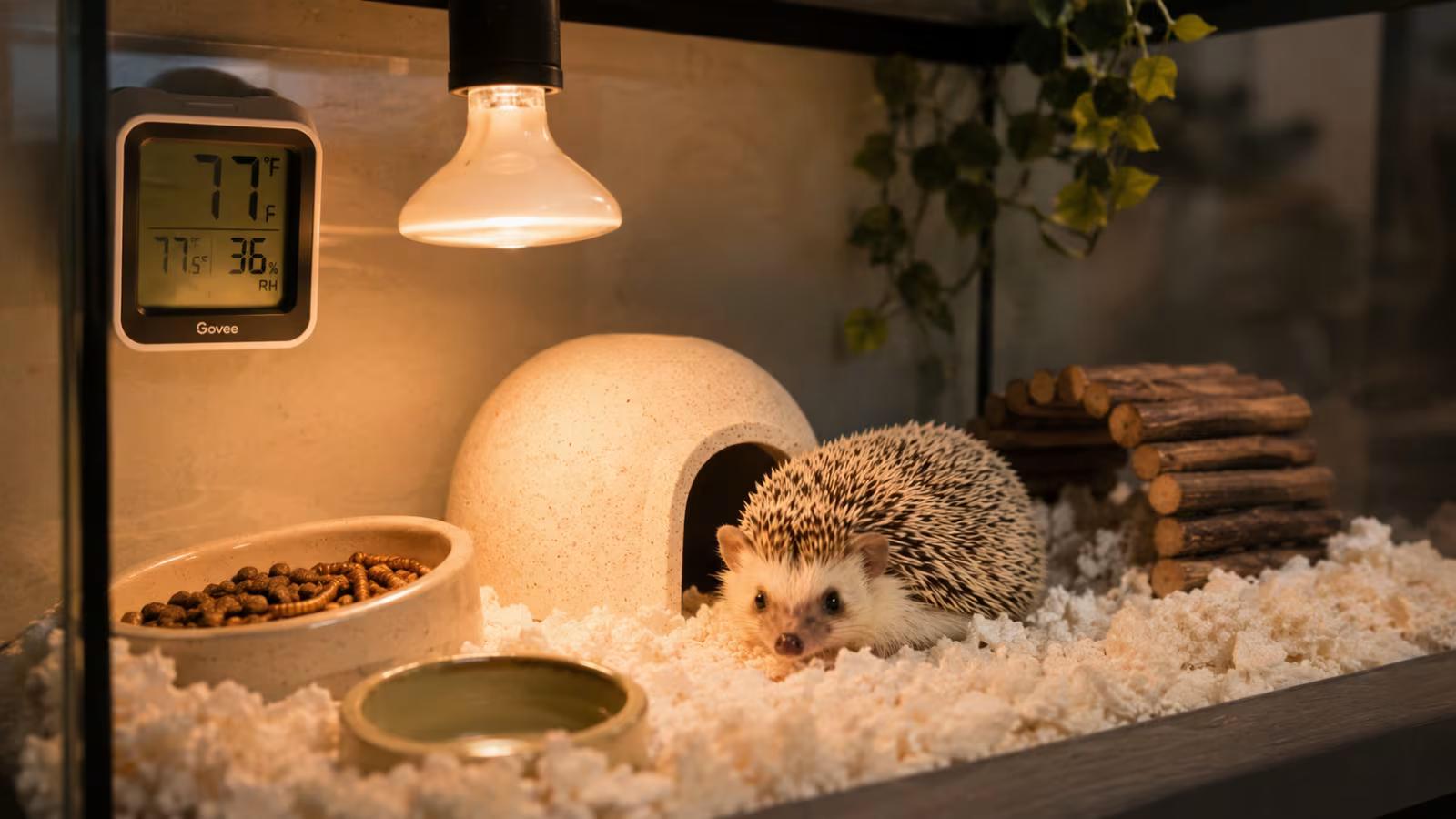
African pygmy hedgehogs are not naturally suited to cool environments. Their wild ancestors come from sub-Saharan Africa, and their bodies are wired to respond to cold temperatures by attempting hibernation.
The problem is that captive African pygmy hedgehogs cannot safely hibernate the way true hibernating species can. A hibernation attempt in a pet hedgehog is a medical emergency, not a normal seasonal behavior.
The safe enclosure temperature range is 75 to 80°F, or 24 to 27°C. Below 72°F, or 22°C, creates stress. Below 65 to 70°F, or 18 to 21°C, a hedgehog may go into torpor, and without intervention, this can be fatal.
Most owners in cooler climates use a ceramic heat emitter on a thermostat. A digital thermometer placed inside the enclosure is not optional.
Important: Room temperature is not a reliable guide because drafts, seasonal changes, and overnight temperature drops can shift things faster than you may expect.
Exercise Level
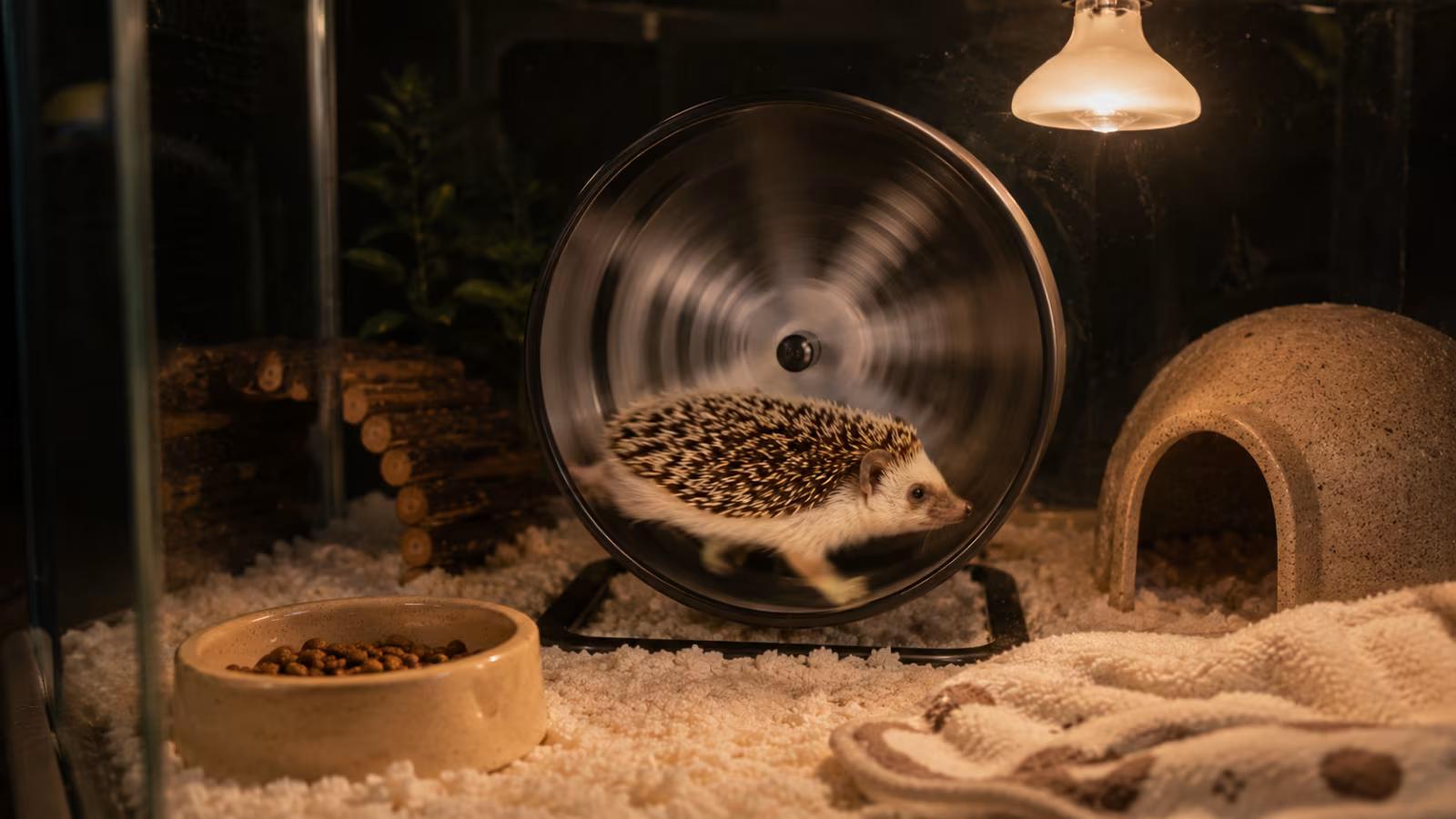
In the wild, hedgehogs routinely travel several miles per night while foraging. In captivity, a hedgehog that doesn't have access to an adequate exercise wheel will become sedentary and, eventually, overweight.
A properly sized solid-surface exercise wheel is essential, not optional. The wheel should be large enough that the hedgehog's back doesn't arch uncomfortably while running, generally at least 10 to 12 inches in diameter for an adult.
Spoked or mesh wheels should be avoided entirely because toes and legs can catch in the gaps.
Veterinary Care
Many hedgehog owners have never taken their pet to a vet. This is one of the biggest gaps between hedgehogs that live average lives and those that live longer ones.
Hedgehogs are prey animals with a strong instinct to hide illness, which means by the time visible symptoms appear, a problem has often been developing for some time.
Annual wellness exams with an exotic animal veterinarian allow for weight monitoring, dental checks, and hands-on assessment of any lumps or physical changes.
Stress Management
Chronic stress doesn't kill hedgehogs quickly, but it does erode their health over time. Persistent stress suppresses immune function, disrupts sleep, reduces appetite, and contributes to weight loss.
Common stress triggers include loud or unpredictable environments, being handled or disturbed during daytime sleep, sudden temperature changes, enclosures without adequate hiding spots, and improper handling that causes pain or fear.
When Does a Hedgehog Become a Senior?
Most hedgehogs begin showing age-related changes somewhere around 3.5 to 4 years old. This doesn't mean they're suddenly frail. Many senior hedgehogs remain active, curious, and healthy for another year or two.
Senior hedgehogs often sleep more, move a little slower, and show less intense nighttime activity than they did at one or two years old.
Signs of Aging in Hedgehogs
Normal Age-Related Changes
- Sleeping longer during the day and being less active at night
- Moving more slowly and tiring more easily during exercise
- Mild, gradual weight fluctuations
- Increased preference for resting in familiar spots
- Slightly reduced enthusiasm for exploring

Signs That Require a Vet Visit
- Sudden or rapid weight loss
- Loss of appetite lasting more than a day or two
- Difficulty walking or a noticeable wobble
- Frequent stumbling or falling over
- Labored or noisy breathing
- Visible lumps, masses, or unusual swelling
- Blood in urine or stool
- Persistent lethargy with no obvious cause
Rule of thumb: Gradual, slow changes over weeks or months are usually aging. Sudden changes over days are usually illness. When in doubt, call your exotic vet.
Common Health Problems That Can Shorten a Hedgehog's Lifespan
Obesity
Obesity is the most common preventable health problem in captive hedgehogs. It builds slowly, often invisibly, until the hedgehog can no longer curl into a complete ball or shows visible fat pads around the legs.
Weekly weight checks using a kitchen scale are the single most practical tool for catching early weight gain.
Dental Disease
Dental disease is frequently overlooked because hedgehogs don't exactly open their mouths on request. Signs that something is wrong include bad breath, drooling, difficulty chewing, weight loss despite seeming interested in food, or pawing at the mouth.
Tumors and Cancer
Cancer is one of the leading causes of death in pet hedgehogs over 3 years old. Mammary tumors, oral tumors, and internal masses are among the most frequently reported types.
Not all tumors are immediately fatal, and some respond well to treatment if caught early. Early detection genuinely changes outcomes here.
Respiratory Infections
Respiratory infections in hedgehogs can move from mild to serious quickly, especially in animals that are already stressed or living in suboptimal conditions.
Symptoms include sneezing, wheezing, nasal discharge, labored breathing, and reduced activity. These are not symptoms to take a "wait and see" approach with.
Wobbly Hedgehog Syndrome
Wobbly Hedgehog Syndrome, or WHS, is a progressive neurological disease seen almost exclusively in African pygmy hedgehogs.
It typically first appears as a subtle wobble or stumble when walking, progresses to difficulty moving the hind legs, and eventually leads to full paralysis. There is currently no cure.
How to Help Your Hedgehog Live Longer
Maintain Proper Temperatures
Install a ceramic heat emitter on a quality thermostat and place a digital thermometer inside the enclosure, not on the outside wall where readings can differ significantly from the interior.
Feed a Balanced Diet
Offer a quality insectivore food or a low-fat cat food as the dietary foundation. Rotate in live or dried insects two to three times per week as enrichment and protein supplementation.
Keep fruit and other treats genuinely occasional, meaning once or twice a week at most and in small amounts.
Monitor Body Weight Consistently
A small kitchen scale with a gram readout is one of the most useful tools a hedgehog owner can own.
Weighing your hedgehog once a week, at the same time of day, and recording the result takes about 90 seconds.
Provide Daily Exercise
An appropriately sized, solid-surface wheel should be in the enclosure and accessible every night.
Beyond the wheel, occasional free-roam time in a fully secured area adds enrichment and encourages natural exploratory behavior.
Keep the Enclosure Clean
A basic cleaning routine looks like this:
Daily
- Remove any soiled bedding or waste
- Refresh food and water
- Wipe down food dishes if needed
Weekly
- Full substrate change or fleece liner wash
- Wipe down enclosure surfaces with a safe disinfectant
- Wash and dry the wheel, hides, and accessories
Fleece liners and paper bedding are among the most common and safest substrate options. Cedar and pine shavings should be avoided because the aromatic oils can cause respiratory irritation.
Schedule Routine Vet Exams
A healthy adult hedgehog should see an exotic-capable vet at least once per year. Once your hedgehog hits the 3 to 3.5 year mark, twice-yearly checkups are worth considering.
Common Mistakes That Reduce Hedgehog Lifespan
- Underestimating heating requirements: A room that feels comfortable to you may still be too cold for a hedgehog.
- Ignoring gradual weight gain: Small increases can go unnoticed until the hedgehog is clearly obese.
- Waiting too long to see a vet: Hedgehogs hide illness well, so visible symptoms can mean the problem is already advanced.
- Using unsafe bedding: Cedar and pine shavings can irritate the respiratory system.
- Providing no enrichment: A bare enclosure can lead to stress, inactivity, and obesity.
Can You Actually Increase a Hedgehog's Lifespan?
You cannot rewrite genetics, but you genuinely do have significant control over many of the factors that determine how long a hedgehog lives.
Proper nutrition, consistent exercise access, stress reduction, safe temperatures, clean housing, and regular preventive veterinary care are all within an owner's control.
Together, they can make the difference between a hedgehog that reaches 4 years and one that reaches 6 or 7.
What Is the Oldest Pet Hedgehog on Record?
Verified records are hard to pin down, but anecdotal reports and some documented cases suggest certain captive African pygmy hedgehogs have lived beyond 8 years, with a small number reaching 9 or 10.
These cases are genuinely rare and not a reasonable baseline expectation.
A realistic, aspirational target for a well-cared-for African pygmy hedgehog is 6 to 7 years.
Expert Tips for Long-Term Hedgehog Health
Pro Tip: Never let enclosure temperatures fluctuate dramatically between day and night. Consistency matters as much as the target number.
Pro Tip: Track body weight monthly as a minimum, weekly if possible. Weight changes are often the first visible sign of disease.
Pro Tip: Provide the exercise wheel every single night. Consistent activity helps prevent obesity and supports long-term health.
Common Mistake: Many owners only seek veterinary care when something is obviously wrong. Obesity, dental disease, and tumors are far more manageable when identified early.
My Advice: Find an exotic-capable vet before you need one urgently. Call around, confirm they see hedgehogs, and schedule a baseline wellness exam within the first few weeks of bringing a new hedgehog home.
Conclusion
The average pet hedgehog lifespan lands between 4 and 6 years, but that range is not fixed. It reflects what happens under average care.
With attentive husbandry, proper temperatures, a balanced diet, regular exercise, and consistent veterinary monitoring, many hedgehogs can live toward or past the upper end of that range.
Genetics will always play a role you can't fully control. But the environment you create, the food you provide, the vet visits you schedule, and the stress you prevent are all within your hands.
The best time to start optimizing your hedgehog's care is before a problem develops. Consistent attention, early intervention, and a willingness to learn the specifics of hedgehog health are the tools that make the difference between a hedgehog that merely survives and one that genuinely thrives.
References and External Sources
- African Pygmy Hedgehog Care - The British Hedgehog Preservation Society: https://www.britishhedgehogs.org.uk
- Hedgehog Health and Disease - Merck Veterinary Manual: https://www.merckvetmanual.com/exotic-and-laboratory-animals/hedgehogs
- Wobbly Hedgehog Syndrome - VCA Animal Hospitals: https://vcahospitals.com/know-your-pet/wobbly-hedgehog-syndrome
- Exotic Pet Nutrition - Association of Exotic Mammal Veterinarians (AEMV): https://www.aemv.org
- Small Mammal Preventive Care Guidelines - House Rabbit Society (contextually relevant husbandry principles): https://rabbit.org
- Obesity in Small Exotic Mammals - Lafeber Veterinary: https://lafeber.com/vet/hedgehog