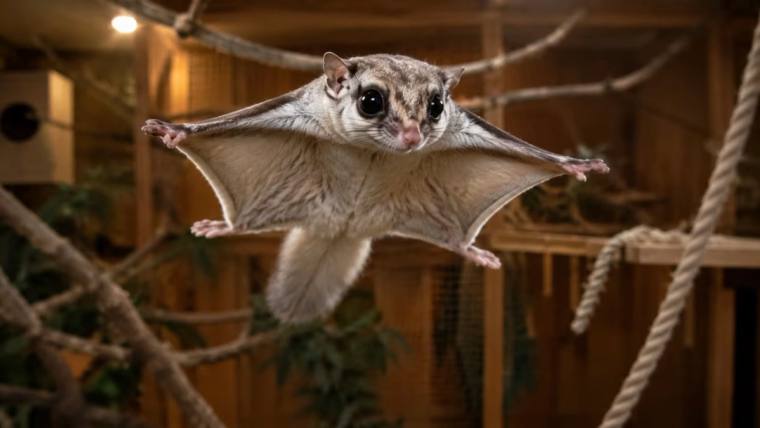
You spot a tiny animal with enormous dark eyes gliding silently through the air. It lands on a branch, tucks its gliding membrane against its sides, and stares back at you with what looks like pure curiosity. Whether that animal is a flying squirrel or a sugar glider, the moment feels almost magical.
That shared visual appeal is exactly what confuses so many people considering exotic pets. Both animals glide. Both are small, nocturnal, and impossibly cute. At a glance, they look like close cousins from the same branch of the animal family tree.
The reality is far more surprising. These two animals are not remotely related. They evolved their gliding ability on completely different continents, from completely different ancestors, separated by millions of years of evolutionary history. Understanding what truly sets them apart is the most important step you can take before deciding to bring either one home.
What Is a Flying Squirrel?
Flying squirrels are small gliding rodents that share the same family tree as tree squirrels, chipmunks, and ground squirrels. They belong to the family Sciuridae and are found across North America, Europe, and parts of Asia. There are over 50 species worldwide, though most pet owners in North America encounter just two.
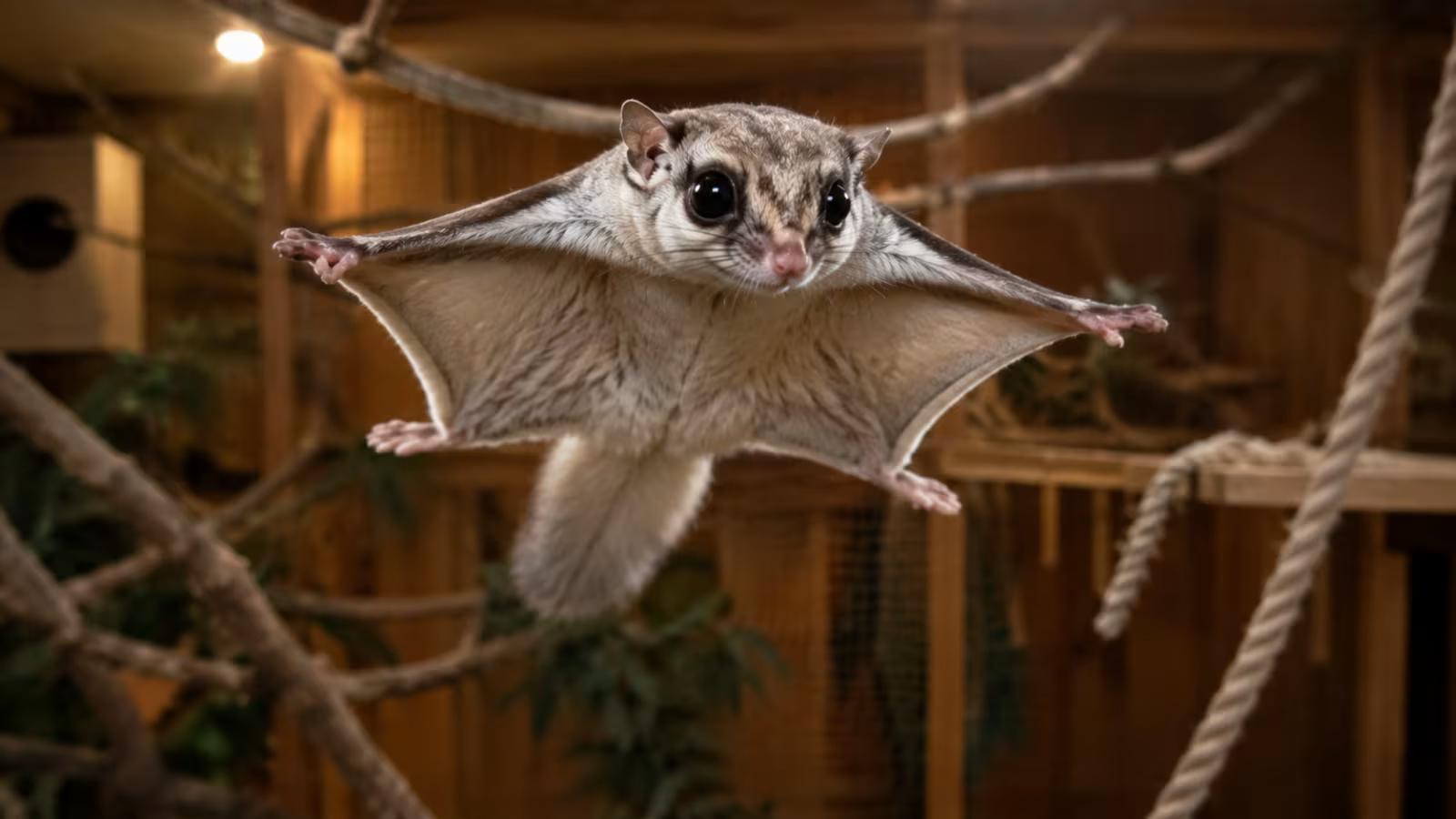
The Southern flying squirrel, Glaucomys volans, is the smaller of the two North American species, typically weighing between 45 and 85 grams. The Northern flying squirrel, Glaucomys sabrinus, is slightly larger and better adapted to colder forest environments. Both are almost entirely nocturnal and spend the majority of their lives moving through the forest canopy.
Flying squirrels glide using a thin membrane of skin called a patagium, which stretches between their wrists and ankles. When they leap from a branch and spread their limbs, this membrane opens like a cape and allows them to glide gracefully between trees. Experienced individuals can cover more than 150 feet in a single glide.
They are placental mammals, meaning their young develop fully inside the mother's womb before birth. This is one of the most fundamental biological differences between flying squirrels and sugar gliders. Despite their appealing appearance, most flying squirrels remain wild animals at heart, and captivity presents genuine welfare challenges.
What Is a Sugar Glider?
Sugar gliders are marsupials, which puts them in the same broad category as kangaroos, wombats, and koalas. Their scientific name is Petaurus breviceps, and they are native to Australia, Indonesia, and Papua New Guinea, where they live in eucalyptus forests and thrive in colonies.
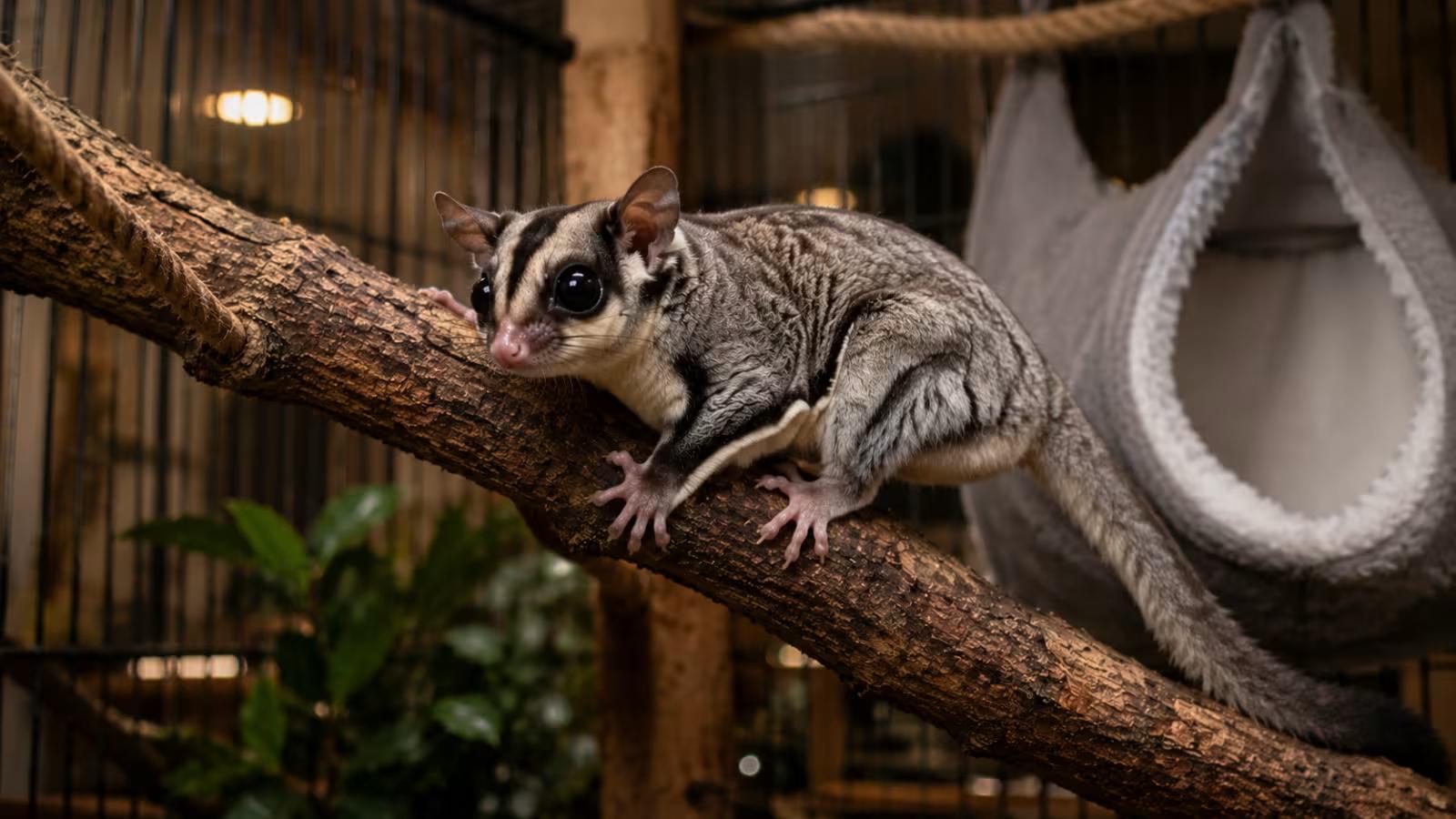
The marsupial classification is not just a biological footnote. Female sugar gliders carry underdeveloped joeys in an abdominal pouch after a gestation period of only 16 days. The joeys continue developing inside the pouch for approximately 70 more days. This reproductive strategy is entirely different from anything you would see in a flying squirrel, and it shapes nearly every aspect of the sugar glider's behavior, anatomy, and social structure.
Sugar gliders are intensely social animals. Wild populations live in groups of up to 15 individuals, and those social bonds are not optional for their wellbeing. In captivity, a sugar glider kept alone will often develop depression, stress behaviors, and health complications within months.
They communicate through a surprisingly wide range of vocalizations, including a distinctive sound called crabbing that sounds like a small locust or an electric buzzer. New owners are frequently startled by this sound the first time they hear it at two in the morning.
Flying Squirrel vs Sugar Glider: Quick Comparison
Before going deeper, here is a side-by-side overview of the most important differences between these two animals.
Animal Class
Flying Squirrel: Rodent (Placental Mammal)
Sugar Glider: Marsupial
Origin
Flying Squirrel: North America, Europe, Asia
Sugar Glider: Australia, Indonesia, Papua New Guinea
Weight
Flying Squirrel: 45–180g depending on species
Sugar Glider: 100–160g
Lifespan in Captivity
Flying Squirrel: 10–15 years
Sugar Glider: 12–15 years, sometimes longer with ideal care
Social Needs
Flying Squirrel: Moderate
Sugar Glider: Very High
Noise Level
Flying Squirrel: Low to moderate
Sugar Glider: Moderate to high
Diet Complexity
Flying Squirrel: Moderate
Sugar Glider: High
Bonding with Humans
Flying Squirrel: Possible with early handling
Sugar Glider: Strong with consistent interaction
Legal Status
Flying Squirrel: Restricted in many regions
Sugar Glider: Restricted in some regions
Beginner Friendly
Flying Squirrel: No
Sugar Glider: No
This comparison gives a useful starting point, but the real differences run much deeper than a simple chart can capture.
Why Do They Look So Similar?
The resemblance between flying squirrels and sugar gliders is one of the most striking examples of convergent evolution in the animal kingdom.
Convergent evolution happens when unrelated species independently develop similar traits because they face similar environmental challenges. Both animals evolved in dense forest canopies. Both needed a way to move efficiently between trees while avoiding predators. Both needed excellent night vision and lightweight bodies to survive.
The result is two animals that look almost identical despite being separated by millions of years of evolutionary history. Their gliding membranes, large nocturnal eyes, lightweight builds, and agile climbing ability all developed independently on opposite sides of the world.
This is why appearance alone is such a misleading guide when choosing between them. The similarities on the surface hide dramatic differences in biology, nutritional needs, social behavior, and care requirements underneath.
Physical Differences
Body Structure and Size
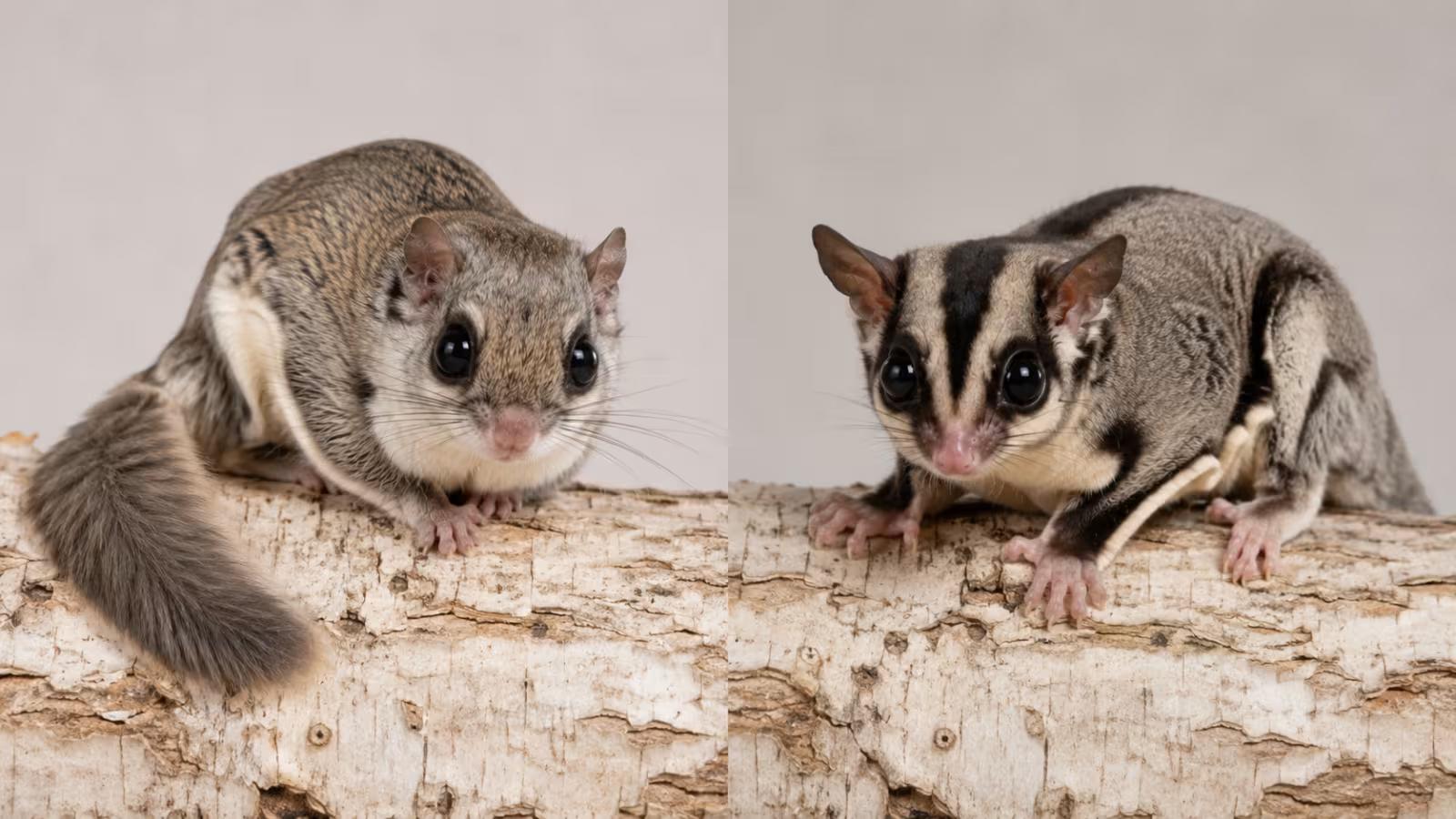
Flying squirrels tend to have slightly flatter, broader tails compared to sugar gliders. Their fur is typically denser and softer, adapted for colder climates in many North American populations. Southern flying squirrels are quite small, while Northern flying squirrels have a more robust build.
Sugar gliders have a more slender body profile with a semi-prehensile tail that helps them carry nesting material and maintain balance during climbing. Their ears are proportionally larger and more mobile, giving them a slightly more alert, almost elfin facial expression.
Facial Features
Both animals have large, round, dark-adapted eyes that seem almost disproportionate for their small faces. The sugar glider typically has a pointed muzzle and a distinctive dark stripe running from the tip of the nose down the center of the back. Flying squirrels usually have a rounder, softer facial structure without the prominent dorsal stripe.
The Pouch Difference
The most fundamentally important anatomical difference cannot be seen from the outside at all. Female sugar gliders carry joeys in a marsupial pouch on the abdomen. Flying squirrels have no such structure because they are placental mammals. This single anatomical feature represents hundreds of millions of years of separate evolutionary development.
Behavior Differences
Social Needs and Companionship
This is where the two animals diverge most dramatically in terms of daily care demands.
Sugar gliders are colony animals. In the wild, they sleep in huddles and spend their active hours foraging and socializing with a group. A solitary sugar glider in captivity is not just bored. It is genuinely suffering. Self-mutilation, depression, loss of appetite, and stereotypic behaviors are well-documented outcomes of housing sugar gliders alone. Most experienced owners keep them in bonded pairs at minimum.
Flying squirrels are less socially dependent. Some species will communally huddle for warmth during cold months, but they are not colony-based animals in the same way. A single flying squirrel, if hand-raised from a young age, can often be kept alone as long as it receives regular human interaction and environmental enrichment.
Bonding With Humans
Sugar gliders have genuine capacity for strong emotional bonds with their owners. When handled consistently from a young age, many sugar gliders will choose to sleep in a bonding pouch worn close to their owner's body, become calm during handling, and actively seek out interaction.
Flying squirrels can become tame, especially if raised by hand from a young age, but they generally retain more of their wild caution. Even well-socialized flying squirrels can be unpredictable, and many never reach the level of relaxed, voluntary interaction that a well-bonded sugar glider can achieve.
Nocturnal Activity and Noise
Both animals are nocturnal. This is not a minor lifestyle consideration. It means they will be at their most active, most vocal, and most likely to need attention during the hours most humans are trying to sleep.
Sugar gliders produce a wider range of vocalizations including crabbing, chirping, barking, and soft hissing. A pair of active sugar gliders in a cage in a bedroom can produce enough noise to disrupt sleep regularly. Flying squirrels are generally quieter, though not silent.
In my experience, many new exotic pet owners dramatically underestimate how disruptive nocturnal pets can be until they have lived with one for a few weeks.
Gliding and Flight Behavior
Neither species actually flies. What they do is controlled gliding. They climb to an elevated point, leap into the air, spread their patagium membrane, and use subtle body movements to steer toward a landing point. It is a remarkably effective locomotion strategy, but it requires vertical space to express naturally.
Flying squirrels, particularly Northern flying squirrels, are exceptional gliders. In forest environments with tall trees and long sightlines, they can travel impressive distances in a single glide. Their patagium is proportionally large and very efficient.
Sugar gliders are agile gliders as well, especially in enclosed habitats with multiple elevated launch points. They tend to be slightly more interactive with their environment during gliding, often landing on their owners and treating them as just another surface to explore.
Both species need tall, vertically oriented enclosures rather than wide, low ones. A cage that prioritizes horizontal floor space wastes the most important resource for a gliding animal.
Diet Differences
What Flying Squirrels Eat
Wild flying squirrels eat a varied diet that changes with the seasons. Their natural food sources include acorns, hickory nuts, seeds, fungi, berries, tree buds, and insects. They occasionally raid bird nests for eggs. Their diet is nutritionally diverse and adapts to whatever the forest offers.
In captivity, a flying squirrel diet should mimic this variety. Good staple foods include:
- High-quality rodent blocks or lab blocks as a nutritional base
- Fresh fruits like apples, grapes, and berries in small amounts
- Nuts such as pecans, walnuts, and acorns, unsalted and not roasted
- Protein sources like mealworms, crickets, and hard-boiled egg
- Some leafy greens
Avoid citrus fruits, foods high in oxalates, and any salted or processed human snacks. Flying squirrels can develop obesity if given unrestricted access to high-fat foods like sunflower seeds.
What Sugar Gliders Eat

Wild sugar gliders consume nectar, tree sap, pollen, soft plant matter, and insects. Their digestive system is specifically adapted to extract nutrition from these sources. This creates a significant challenge in captivity, because no commercially available pet food replicates this diet effectively.
Captive sugar glider nutrition is considered one of the most complex challenges in exotic pet care. Nutritional imbalance, particularly calcium-to-phosphorus ratio problems, can cause metabolic bone disease relatively quickly.
Experienced owners typically follow one of several community-developed feeding systems:
- BML diet, also known as Bourbon's Modified Leadbeater's
- TPG diet, also known as The Pet Glider diet
- OHPW diet, also known as Original High Protein Wombaroo
These systems require regular preparation of a blended diet mix alongside fresh fruits, vegetables, and protein sources. Feeding a sugar glider is not a matter of pouring kibble into a bowl. It is a consistent meal-preparation commitment that most owners underestimate at the start.
Common mistake: feeding sugar gliders mostly fruit because they clearly enjoy it. Fruit should be a small portion of the diet, not the foundation. A fruit-heavy diet leads to nutritional deficiencies even when the animal appears to be eating enthusiastically.
Habitat and Cage Requirements
Flying Squirrel Enclosures
Flying squirrels are escape artists with remarkable problem-solving ability. Any enclosure must be constructed from fine wire mesh with openings no larger than half an inch, since these animals can squeeze through gaps that look far too small for their body.
A minimum enclosure size for one or two flying squirrels should be at least 24 inches wide, 24 inches deep, and 36 inches tall, though larger is always better. Vertical space is essential. Key components include:
- Natural or artificial branches at multiple heights for climbing and launching
- Nesting boxes or enclosed hiding spaces where they feel secure during the day
- Ropes, ledges, and platforms for exploration
- An appropriately sized exercise wheel with a solid running surface, not a wire mesh wheel
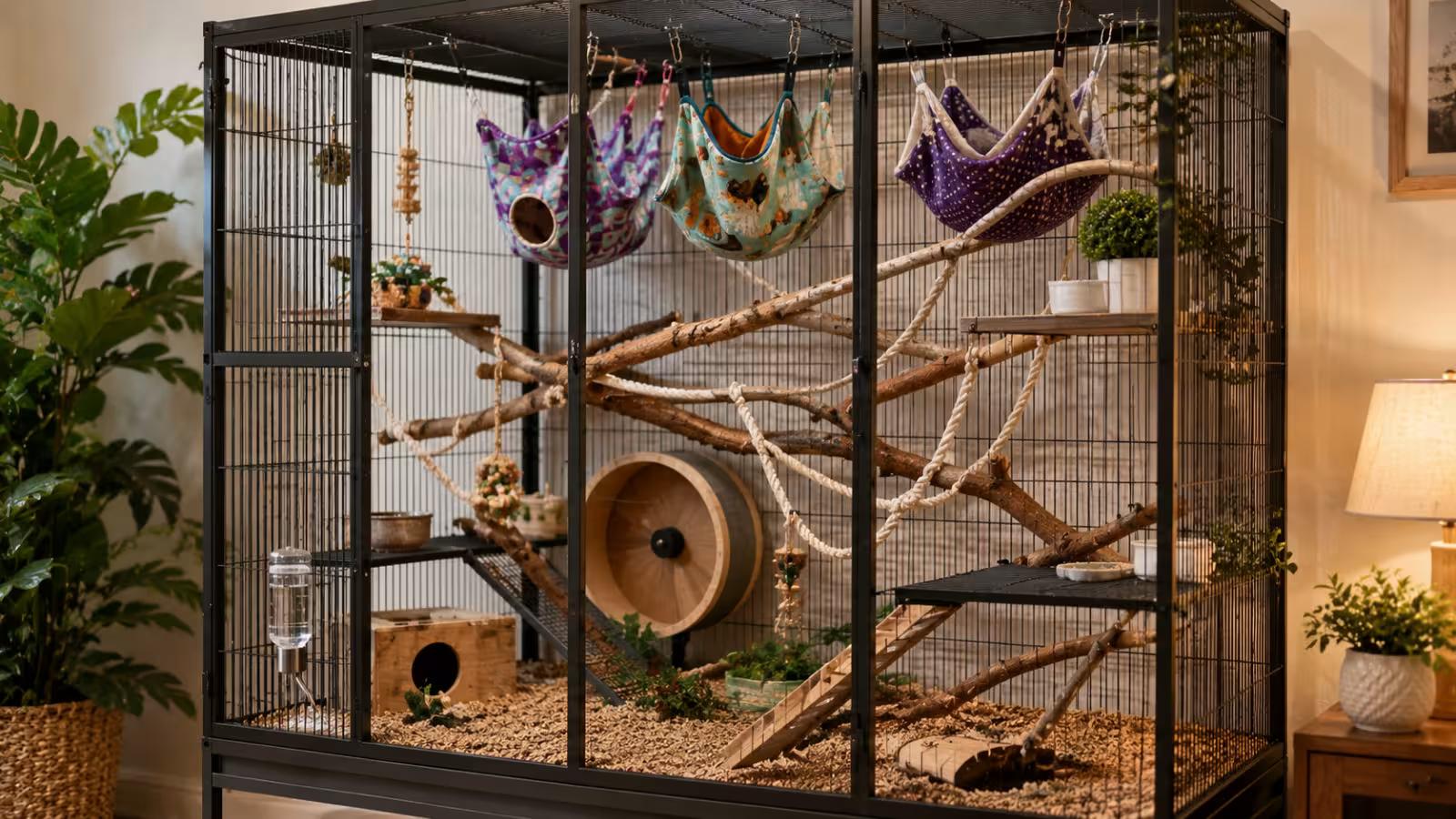
Temperature matters significantly. Flying squirrels are not comfortable in warm environments. They do best between 60 and 75 degrees Fahrenheit. Excess heat causes stress and can lead to health problems.
Sugar Glider Enclosures
Sugar gliders need a tall cage, ideally at least 24 by 24 by 48 inches, though many dedicated owners use even larger enclosures. The vertical dimension is more important than the floor footprint.
Inside the enclosure, a well-designed sugar glider setup includes:
- Multiple fleece sleeping pouches so the animals can choose where to rest
- Branches and ropes at various heights for climbing
- A sugar glider-safe exercise wheel
- Foraging enrichment to stimulate natural feeding behavior
- Fresh food and water refreshed daily
A sugar glider left in a barren cage with no enrichment and no companion is a welfare emergency in slow motion. These animals develop self-mutilation behaviors when they are understimulated or isolated, often chewing their own tails or limbs. This is not a rare occurrence in poorly managed captive situations.
Lifespan Comparison
Sugar gliders tend to outlive flying squirrels in captivity by a meaningful margin, which surprises many people because of how small they are.
Flying squirrels in captivity typically live between 10 and 15 years with proper care. Wild individuals rarely exceed 5 or 6 years due to predation and environmental hazards, so captivity, when managed well, dramatically extends their lifespan.
Sugar gliders commonly live 10 to 15 years in captivity, with well-cared-for individuals sometimes reaching beyond 15 years. Their longevity is strongly influenced by diet quality and veterinary care. A sugar glider with metabolic bone disease from poor nutrition may deteriorate rapidly, while one with a well-managed diet and regular checkups can remain active and healthy well into its teens.
The long lifespan of both animals is something potential owners need to genuinely reckon with. You are not making a one-year or two-year commitment. You are considering a 10 to 15-year relationship with an animal that has complex care needs throughout its entire life.
Common Health Problems
Flying Squirrel Health Concerns
Flying squirrels in captivity are prone to several health issues, most of which trace back to husbandry mistakes rather than inherent fragility.
- Nutritional deficiencies from unbalanced diets, particularly calcium and phosphorus imbalances
- Stress-related illness from improper handling, inadequate hiding spaces, or excessive daytime disturbance
- Dental disease from inappropriate food choices
- Parasites including mites and intestinal parasites, particularly in wild-caught individuals
- Obesity from overfeeding high-fat foods
- Injuries from unsafe cage furnishings, inappropriate wheels, or drops
Wild-caught flying squirrels carry significantly higher parasite burdens and stress levels than captive-bred individuals. If you are considering a flying squirrel as a pet, always seek a captive-bred animal from a reputable source.
Sugar Glider Health Concerns
Sugar gliders are prone to several conditions that are almost entirely preventable with good husbandry.
- Metabolic bone disease caused by calcium-phosphorus imbalance in the diet, leading to bone fractures and deformity
- Dental disease from diets too high in soft, sugary foods
- Obesity in animals with insufficient exercise and excess fruit intake
- Self-mutilation in isolated, understimulated, or stressed individuals
- Prolapsed cloaca, which requires immediate veterinary attention
- Hypoglycemia in animals that miss meals or are fed inadequate protein
- Depression and behavioral deterioration in solitary animals
Many of these conditions are not just treatable, they are almost entirely avoidable with proper setup and diet. The challenge is that correct care requires advance knowledge, not just good intentions.
Recognizing Normal vs. Abnormal Behavior
Knowing what healthy behavior looks like is one of the most practical skills an exotic pet owner can develop. Behavioral changes are often the earliest warning sign of illness, stress, or nutritional problems.
Healthy flying squirrel behavior includes active exploration at night, regular eating, using the exercise wheel, seeking out the nesting box during daylight hours, and alert, bright eyes.
Warning signs in flying squirrels include lethargy during normally active hours, weight loss, discharge from eyes or nose, hunched posture, loss of balance, or refusing food for more than two days.
Healthy sugar glider behavior includes foraging activity at night, normal crabbing when startled, using the sleeping pouch during the day, maintaining a healthy coat, and normal social interaction with a bonded companion.
Warning signs in sugar gliders include self-mutilation, abnormal droppings, significant weight loss, labored breathing, swollen limbs, unusual lethargy, or a sudden change in vocalization patterns.
In my experience, stressed pets usually stop eating first. If your animal is off food for more than two days without an obvious reason, that is your cue to contact an exotic veterinarian.
Legal Ownership Differences
This is one of the most practically important sections of this entire comparison, and one that beginners frequently skip past.
Flying Squirrel Legality
Flying squirrels occupy a complicated legal position in many parts of the world because they are native wildlife in numerous regions, not imported exotic pets. In the United States, Southern flying squirrels are legal to keep as pets in many states, but regulations vary dramatically. Some states require permits. Others prohibit ownership entirely. Northern flying squirrels are protected as wildlife in most jurisdictions.
In Europe, native flying squirrel species are protected wildlife and cannot be kept as pets without specific scientific or conservation permits.
Sugar Glider Legality
Sugar gliders are more widely available in the legal exotic pet trade than flying squirrels, but they are by no means legal everywhere.
In the United States, sugar gliders are illegal in California, Hawaii, and Alaska. They are also restricted or banned in certain other states and municipalities. Outside the United States, regulations vary by country, and some regions treat them as invasive species risks.
Before pursuing either animal, you must:
- Contact your state or regional wildlife agency directly
- Verify local municipal regulations, as these sometimes differ from state law
- Confirm that you can find an exotic-animal veterinarian in your area before acquiring the animal
- Check whether permits are required for purchase, ownership, or transport
Purchasing an illegal animal not only puts you at legal risk. It typically results in confiscation and a deeply stressful experience for the animal.
Which Makes the Better Pet?
This is the question most people come here to answer, and the honest answer is that neither animal is a good fit for most people.
Sugar gliders are more commonly bred in captivity, more accustomed to human handling through generations of captive breeding, and more capable of forming strong bonds with owners. For an experienced exotic pet owner who has done thorough research, has access to a qualified exotic veterinarian, and can commit to daily specialized feeding, a pair of sugar gliders can be genuinely rewarding companions.
Flying squirrels remain much closer to wild animals in temperament even when hand-raised. Their legal restrictions are more complex, their care is more challenging to get right, and the welfare risks of keeping them in improper conditions are significant. They are best suited to experienced wildlife rehabilitators, permitted keepers, or people with specific expertise in small mammal husbandry.
For beginners or families looking for a first exotic pet, neither species is an appropriate starting point. Both animals demand far more than their small size suggests.
Ethical Considerations
This section matters more than many people expect when they first start researching exotic pets.
Flying squirrels, particularly wild-caught individuals, experience significant stress in captivity. Even captive-bred flying squirrels retain strong instincts for the canopy lifestyle they evolved to lead. Keeping any wild-natured animal ethically means being honest about whether your specific situation can truly meet its needs.
Sugar gliders are bred in large numbers specifically for the pet trade, but captive breeding does not automatically mean domesticated. These animals still carry the full suite of instincts, nutritional needs, and social requirements of their wild counterparts.
Before acquiring either animal, sit with these questions honestly:
- Can I provide specialized care and enrichment for 12 to 15 years?
- Do I have access to a veterinarian experienced with exotic marsupials or gliding rodents within a reasonable distance?
- Can I maintain a complex feeding routine consistently, not just at the start?
- Am I prepared for nocturnal activity, noise, and disruption to my sleep?
- Can I afford unexpected veterinary bills for an animal that may need specialist care?
These questions are not meant to discourage. They are meant to help the right people make an informed decision and spare both owner and animal from a difficult situation.
Common Myths About Flying Squirrels and Sugar Gliders
Myth: They are closely related animals. They are not related at all in any meaningful biological sense. One is a rodent and the other is a marsupial. Their similar appearance is the result of convergent evolution, not shared ancestry.
Myth: They are good starter exotic pets. Both animals have complex nutritional, social, environmental, and veterinary needs that go well beyond what beginners typically anticipate. Starting with either species before gaining experience with less demanding exotic animals often ends badly for both parties.
Myth: Small animals are happy in small cages. Both flying squirrels and sugar gliders need large, vertically oriented enclosures with enrichment. A small cage for either species is a welfare problem, not a space-saving solution.
Myth: Fruit is a healthy main diet. Both species need protein, appropriate fat sources, and micronutrient balance. A diet centered on fruit leads to nutritional deficiencies even if the animal eats it willingly.
Myth: Sugar gliders are fine living alone. This is one of the most dangerous myths in sugar glider ownership. Solitary housing causes real psychological and physical harm.
Beginner Mistakes to Avoid
Most problems in exotic pet ownership trace back to decisions made before the animal even comes home. The most common mistakes include:
- Purchasing an enclosure that is too small or not tall enough
- Feeding a diet based primarily on fruit or seeds
- Housing a sugar glider alone to avoid the perceived complication of managing two animals
- Not locating an experienced exotic veterinarian before acquisition
- Handling animals during daytime sleep cycles and then wondering why they are stressed
- Buying from a pet store or unresearched source rather than a reputable breeder
- Underestimating the 12 to 15-year commitment involved
- Assuming the animal will simply adapt to whatever care is provided
Research before acquisition is not optional with these species. The animals pay the price for owners who skip this step.
References and External Sources
- VCA Animal Hospitals. Sugar Gliders: General Information. https://vcahospitals.com/know-your-pet/sugar-gliders-general-information
- Association of Exotic Mammal Veterinarians. https://www.aemv.org
- Australian Museum. Sugar Glider Fact Sheet. https://australian.museum/learn/animals/mammals/sugar-glider
- Merck Veterinary Manual. Exotic and Laboratory Animals. https://www.merckvetmanual.com/exotic-and-laboratory-animals
- National Wildlife Federation. Flying Squirrel. https://www.nwf.org
- Smithsonian's National Zoo. https://nationalzoo.si.edu
- Animal Diversity Web. University of Michigan Museum of Zoology. https://animaldiversity.org