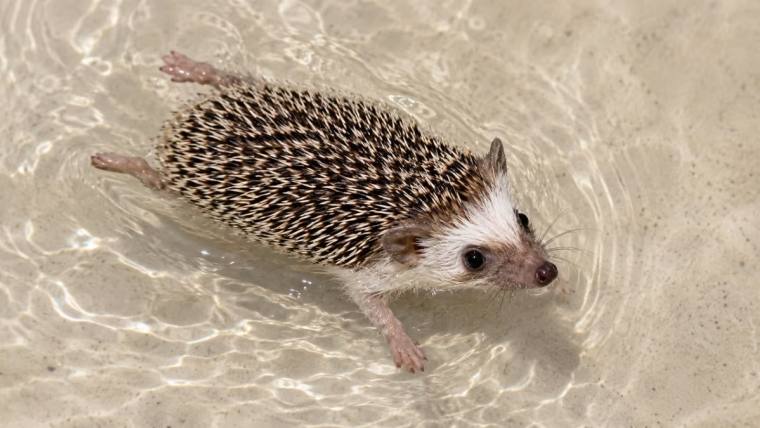
Yes, hedgehogs can swim. Both wild and pet hedhogs are physically capable of paddling through water using their four legs. It is a survival skill built into their instincts over thousands of years.
But here is the part most articles skip. Being able to swim is not the same as enjoying it or being safe doing it. For pet hedgehogs, especially African pygmy hedgehogs, swimming carries real risks including stress, exhaustion, hypothermia, and even drowning.
Water exposure for pet hedgehogs should generally be limited to supervised, shallow baths for hygiene purposes. Deep water, cold water, and unsupervised situations should always be avoided.
Why So Many Owners Wonder About This
Most new hedgehog owners picture a round, spiky little animal and assume it would sink the moment it touched water. The short legs, dense quills, and compact body do not exactly scream "natural swimmer."
That assumption is completely understandable. And completely wrong.
Wild hedgehogs regularly encounter ponds, streams, ditches, and seasonal flooding while foraging at night. They developed swimming as a survival skill over thousands of years, not as a recreational hobby.
So yes, hedgehogs can swim. The question most owners really need to answer is whether they should.
Can All Hedgehogs Swim?
African Pygmy Hedgehogs
African pygmy hedgehogs are the species you are most likely keeping as a pet. They can swim when necessary and will instinctively paddle if placed in water.
Wild Hedgehogs
Wild hedgehogs often swim more confidently than pets, simply because they occasionally need to. Crossing a shallow stream or escaping a predator near a pond is part of their natural world.
Baby Hedgehogs
Hoglets struggle to regulate their body temperature and tire out much faster than adults. Unless a vet specifically recommends it, baby hedgehogs should never be intentionally placed in water.
How Hedgehogs Actually Swim
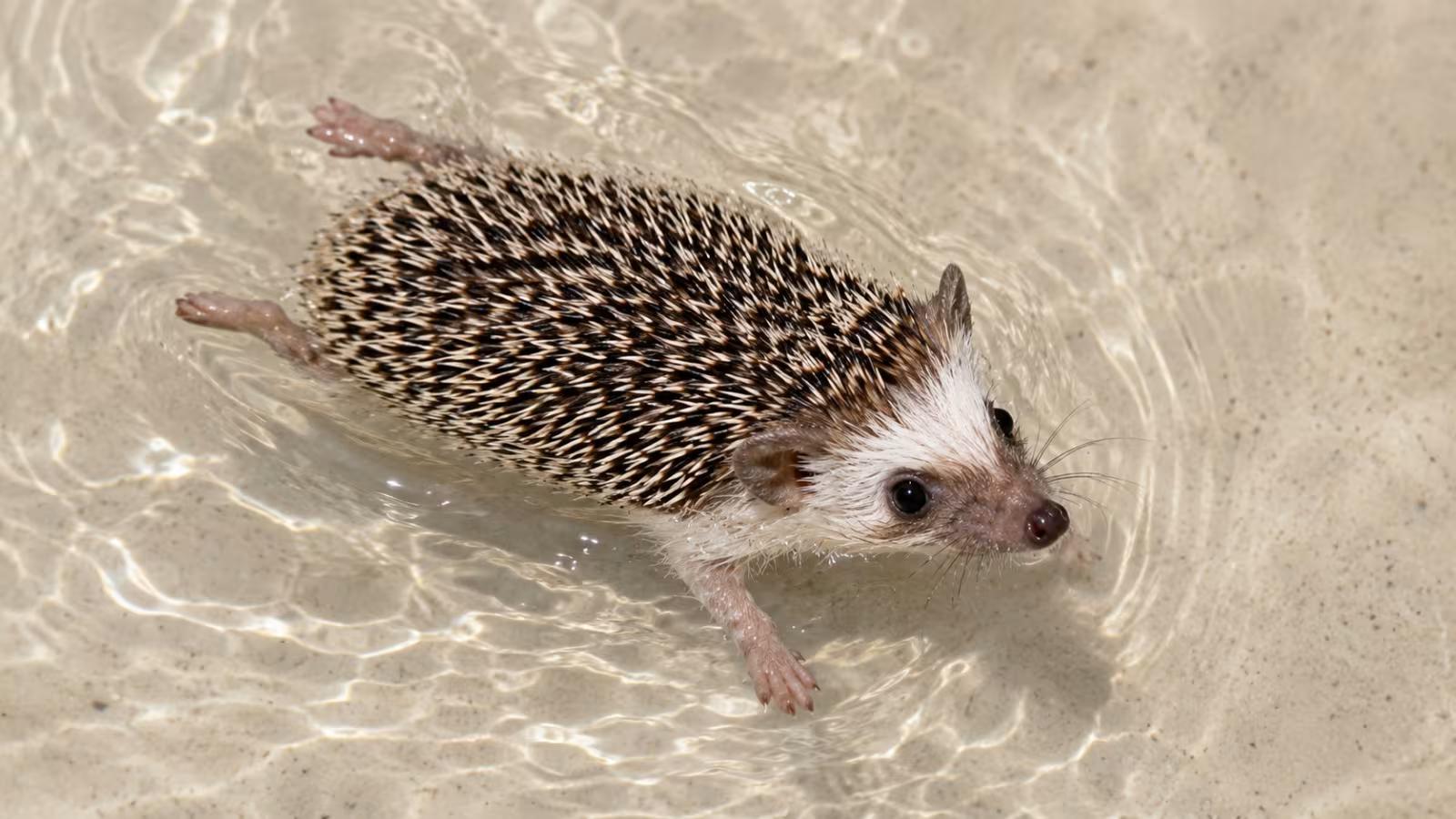
Once in water, a hedgehog will typically keep its head above the surface, use all four legs in a steady dog-paddle motion, move toward the nearest exit point, and show urgency rather than curiosity.
Hedgehogs are not efficient swimmers. They stay afloat through continuous effort, and every moment in the water costs them energy.
Why Hedgehogs Can Float
Air gets trapped between the quills, which adds natural buoyancy. The hedgehog's body composition, including fat distribution and tissue density, also helps it stay near the surface.
Floating ability is not the same as water safety. A hedgehog that cannot find an exit point can still drown from exhaustion.
Do Hedgehogs Actually Like Water?

Some hedgehogs tolerate water calmly, but tolerance is not the same as enjoyment. Many hedgehogs show signs of discomfort around water, including rapid paddling, frantic attempts to climb out, huffing loudly, or balling up after being removed.
Most pet hedgehogs view water as something to endure, not enjoy.
Does Swimming Count as Exercise for Hedgehogs?
No. Swimming is not a recommended or necessary form of exercise for hedgehogs.
Healthy exercise for a hedgehog includes a solid-surface exercise wheel, supervised floor time, enrichment tunnels, dig boxes, exploration areas, and foraging setups.
Can Hedgehogs Drown?
Yes. Hedgehogs can absolutely drown, even though they are capable swimmers.
A hedgehog may drown if it becomes exhausted before reaching an exit, gets trapped in a container with steep or slippery sides, falls into deep water, or is already weakened by illness.
Common Household Water Hazards
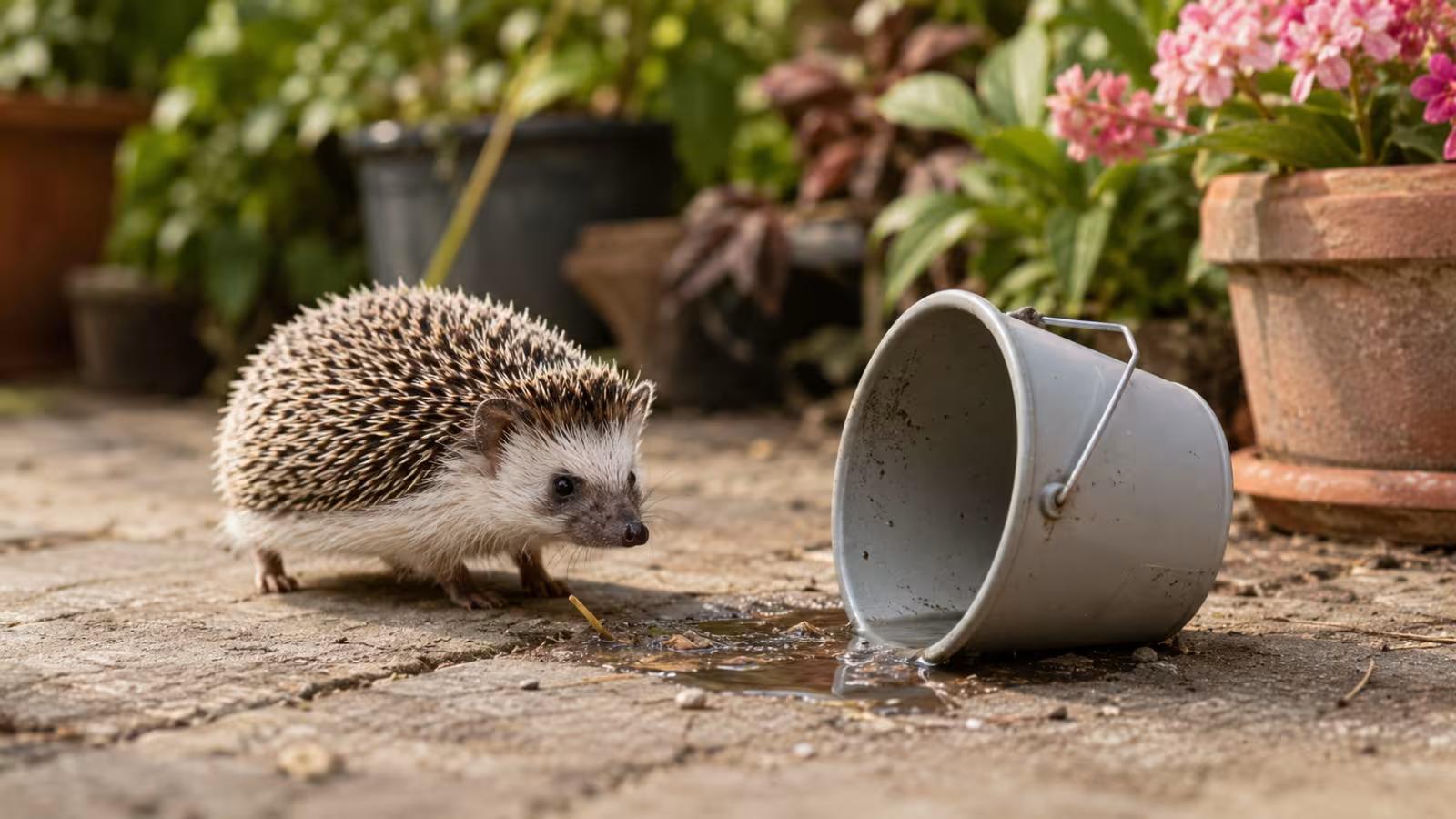
- Buckets
- Garden ponds
- Open toilets
- Bathtubs
- Deep water dishes
- Outdoor water storage containers
The safest approach is to scan any area before allowing your hedgehog to roam freely, both indoors and outside.
Understanding Hypothermia Risk
Hedgehogs are highly sensitive to temperature changes. When a hedgehog gets wet, its body temperature can drop quickly, especially if the room is cool or the animal remains damp.
Always use warm water during bathing, between 35 and 38 degrees Celsius, and have a warm towel ready when the bath is finished.
Drying your hedgehog properly is not optional. It is part of the care routine.
Signs Your Hedgehog Is Stressed During Water Exposure
Signs of stress include frantic paddling, repeated attempts to climb out, loud huffing or hissing, balling up tightly after removal, shaking, trembling, and refusing food or interaction after the bath.
If your hedgehog consistently shows strong stress responses to bathing, speak with an exotic vet about alternative hygiene approaches.
How to Bathe a Hedgehog Safely

- Use a shallow container.
- Keep the water warm.
- Use a soft toothbrush.
- Keep one hand nearby at all times.
- Rinse thoroughly.
- Dry immediately and completely.
- Keep the room warm.
Pro Tip: Bathing once every four to six weeks is usually enough for most hedgehogs. Over-bathing can strip natural oils from the skin and cause dryness.
What to Do If Your Hedgehog Falls Into Water
Stay calm and remove the hedgehog from the water immediately. Wrap it in a warm towel and hold it gently against your body to help restore heat.
If the hedgehog was submerged for more than a few seconds or shows signs of respiratory difficulty, contact an exotic vet immediately.
Conclusion
Hedgehogs can swim, but swimming carries real risks and should never be treated as recreation. Shallow, warm, supervised baths for hygiene are appropriate. Deep water, cold water, and unsupervised water exposure should always be avoided.
Your hedgehog does not need to swim to be happy and healthy. It just needs clean, safe, carefully managed water interactions when hygiene requires it.