Cats and ferrets can live together peacefully, but it takes careful planning, slow introductions, and consistent supervision. This article covers everything you need to know, from understanding their natural behaviors to setting up a safe home where both animals can thrive.
Imagine coming home to find your cat curled up near your ferret's playpen, both completely relaxed. That actually happens in many multi-pet homes. But it doesn't happen by accident.
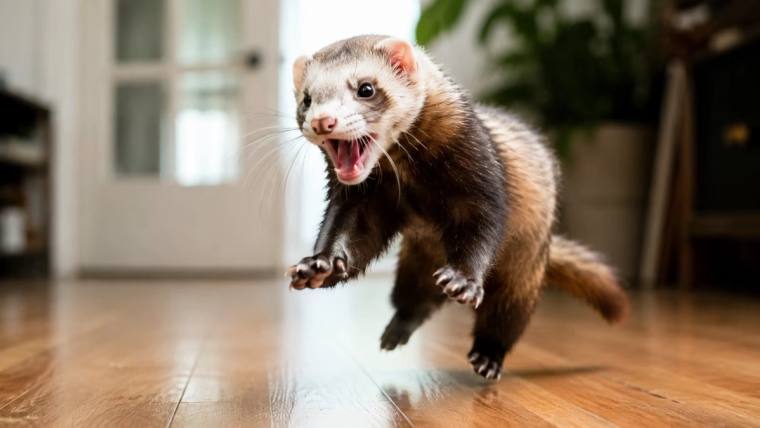
The first time a curious ferret bounces toward your cat doing its wild sideways "war dance," your cat might freeze, hiss, or take off running. That moment is where most introductions go wrong.
The good news is that with patience and the right approach, many cats and ferrets not only tolerate each other but genuinely enjoy each other's company. The key is understanding that these two animals speak very different social languages, and your job is to help them find a way to communicate safely.
Understanding Cat and Ferret Behavior
Before you even think about putting these two animals in the same room, you need to understand how they naturally behave. This is not optional knowledge. It is the foundation everything else is built on.
How Ferrets Naturally Behave
Ferrets are relentlessly social and energetic. They want to investigate everything, play with everyone, and they have very little concept of personal space.
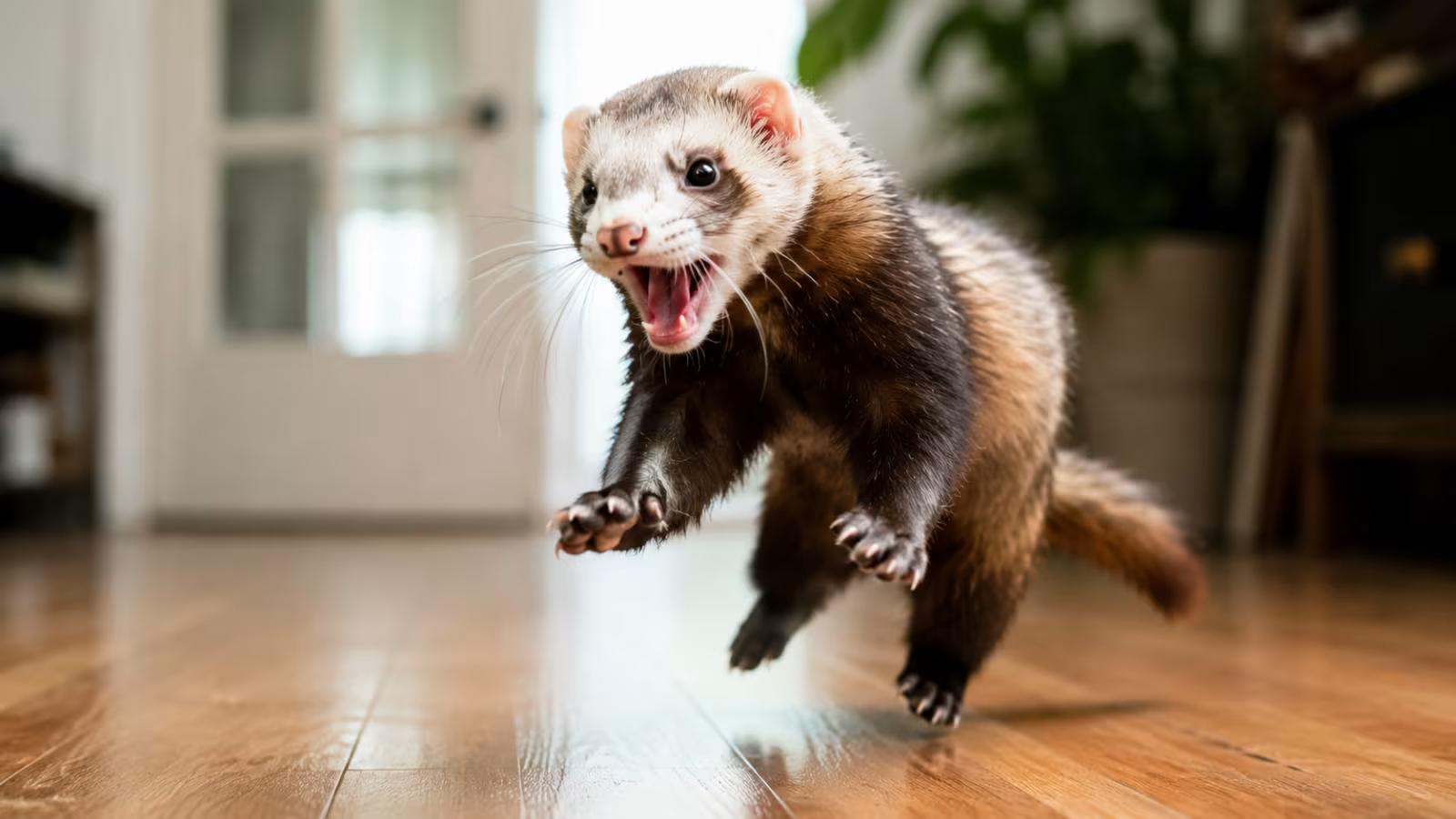
A happy ferret will often perform a "war dance," which involves bouncing sideways, puffing up, and making a soft clucking noise called dooking. To you, it is adorable. To an anxious cat, it can look like a tiny creature having a full breakdown.
Ferrets also play rough by nature. They wrestle, nip, chase, and tumble. This is completely normal ferret behavior, but it can easily overwhelm a cat that just wants peace and quiet.
How Cats Naturally Behave
Cats are territorial, sensitive to sudden movement, and they value personal space deeply. A confident, socialized indoor cat handles new animals far better than a skittish or highly territorial one.
Cats communicate discomfort clearly if you know what to watch for. Flattened ears, a twitching tail, dilated pupils, a low growl, or complete avoidance are all warning signs.
The important thing to understand is that some cats have a strong prey drive. To these cats, a fast-moving ferret can trigger a hunting instinct rather than a "new friend" response.
Can Cats and Ferrets Safely Live Together?
The honest answer is yes, many can, but there are no guarantees. Compatibility depends far more on individual personality than on species rules.
Pairings That Tend to Work Well
- A calm, social cat with a well-socialized ferret
- Younger animals that have not become set in their habits
- Cats with low prey drive and ferrets that are not overly relentless
- Homes where the owner is patient and committed to slow introductions
Higher-Risk Situations
- Cats with strong hunting instincts
- Very nervous or undersocialized ferrets
- Large cats paired with small ferrets
- Any situation involving unsupervised free-roaming early on
Note: Some cats and ferrets will never be safe together. Permanent separation is not a failure. It is the responsible choice when one or both animals are stressed or at risk.
How to Introduce Cats and Ferrets Safely
Slow introductions are the single most important factor in whether this pairing works. Rushing this process is the most common mistake owners make, and it creates problems that are very hard to undo.
Step 1: Set Up Separate, Secure Living Spaces
Your ferret needs a proper ferret-safe enclosure with hiding spots, hammocks, and separate food and water. Your cat still needs elevated spaces, a private resting area, and a litter box the ferret cannot access.
Neither animal should feel like they have lost their territory. That security allows them to be curious about each other rather than defensive.
Step 2: Start With Scent Swapping
This step is often skipped, but it genuinely matters. Exchange a blanket or piece of bedding between their spaces. Let each animal investigate the scent of the other in a completely safe, pressure-free setting.
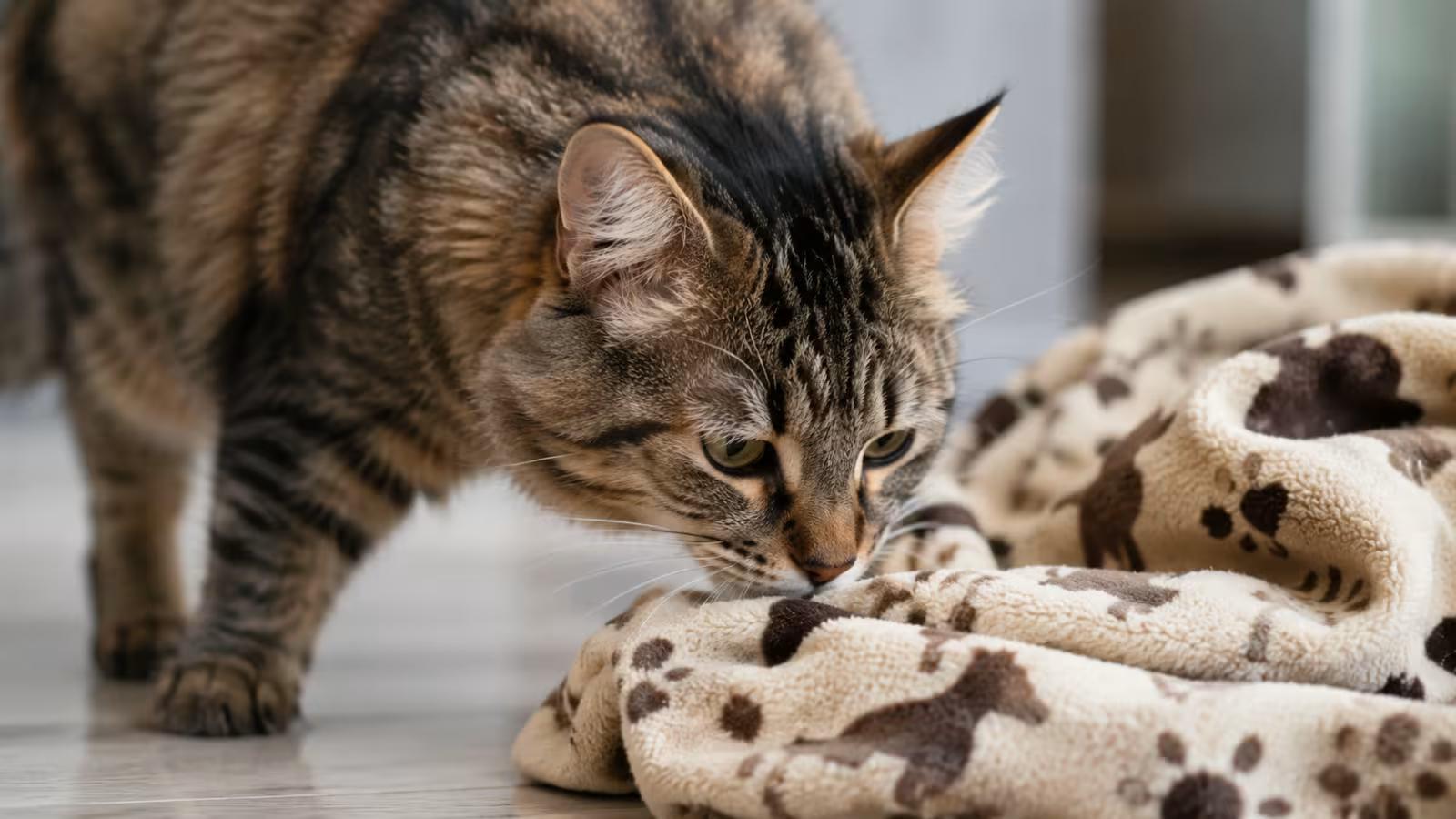
Reward calm sniffing with treats. If your cat approaches the ferret's blanket without hissing, that is a good sign. If your ferret ignores the cat's bedding entirely, that is also fine.
Step 3: Allow Visual Introductions Through a Barrier
Use a pet gate, cage bars, or a playpen to let them see each other without direct contact. Keep these sessions short, around 5 to 10 minutes at first.
Watch both animals carefully. Calm sniffing, relaxed posture, and quiet observation are positive signs. Hissing, lunging, puffed fur, or frantic behavior means the session should end calmly.
Step 4: Controlled Face-to-Face Meetings
Once both animals stay calm during visual introductions, you can move to brief, supervised face-to-face time. Use a neutral room that does not feel like either pet's territory.
Many owners find it helpful to have one person holding or distracting the ferret with a toy while the cat observes. Keep early meetings under 10 minutes and always end before either animal becomes overstimulated.
Step 5: Gradually Increase Supervised Time Together
If things are going well, extend session length slowly over days and weeks. Continue full supervision. Some cats and ferrets settle into comfortable coexistence within two weeks, while others need two months or more.
There is no timeline you should force. The goal is building genuine comfort, not just tolerance under stress.
Signs Cats and Ferrets Are Getting Along
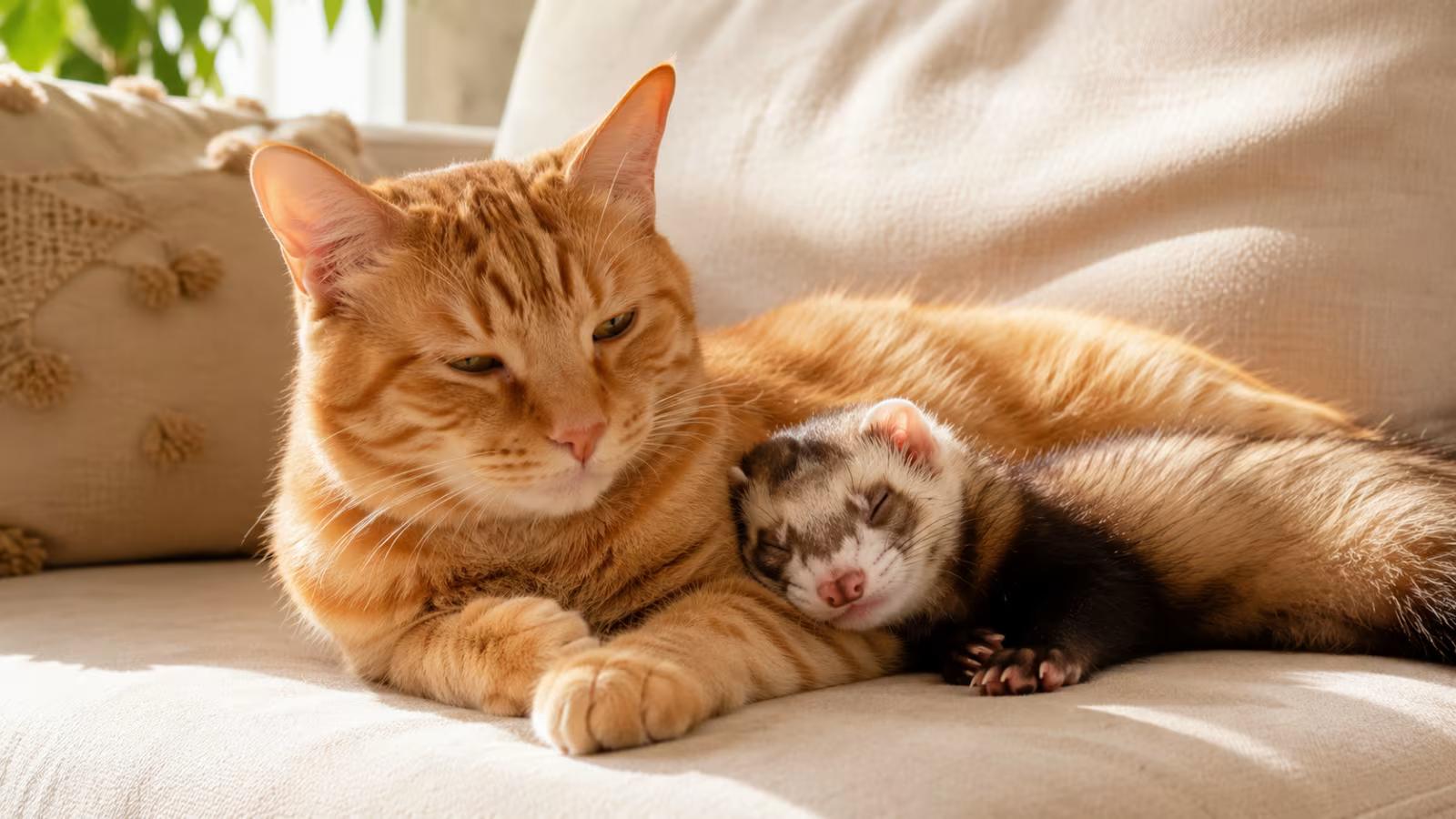
Getting along does not always look like cuddling on the couch. For many cats and ferrets, peaceful coexistence is the real success story.
Healthy positive signs include calm curiosity near each other, relaxed body posture, brief gentle sniffing, and the ability to share a room without tension.
Some pairs do become affectionate. They may play together gently, nap in the same general area, and seem genuinely comfortable in each other's presence. Even then, supervision is still important.
Recognizing Dangerous Aggression vs. Normal Play
Misreading aggression as rough play can lead to serious injuries. Owners need to be very honest about what they are seeing.
Normal play may include short chasing sessions, gentle wrestling, and light nipping with both animals taking turns. Both pets should be able to pause, disengage, and move away freely.
Dangerous behavior includes sustained stalking, hard cornering, neck biting, panic-running, trembling, screaming, or repeated lunging. If one animal cannot escape or calm down, it is not safe play.
Safety tip: A single swat from a cat can seriously injure a ferret's eyes or face. If you are unsure whether an interaction is safe, separate them immediately.
Common Problems and How to Fix Them
The Ferret Will Not Stop Chasing the Cat
Ferrets chase during play naturally, but a bored ferret may chase constantly. Before interaction sessions, make sure your ferret has had enough exercise and enrichment time.
A tired ferret is usually a calmer ferret. Redirect relentless chasing with wand toys, tunnels, or other safe play options.
The Cat Is Frightened of the Ferret
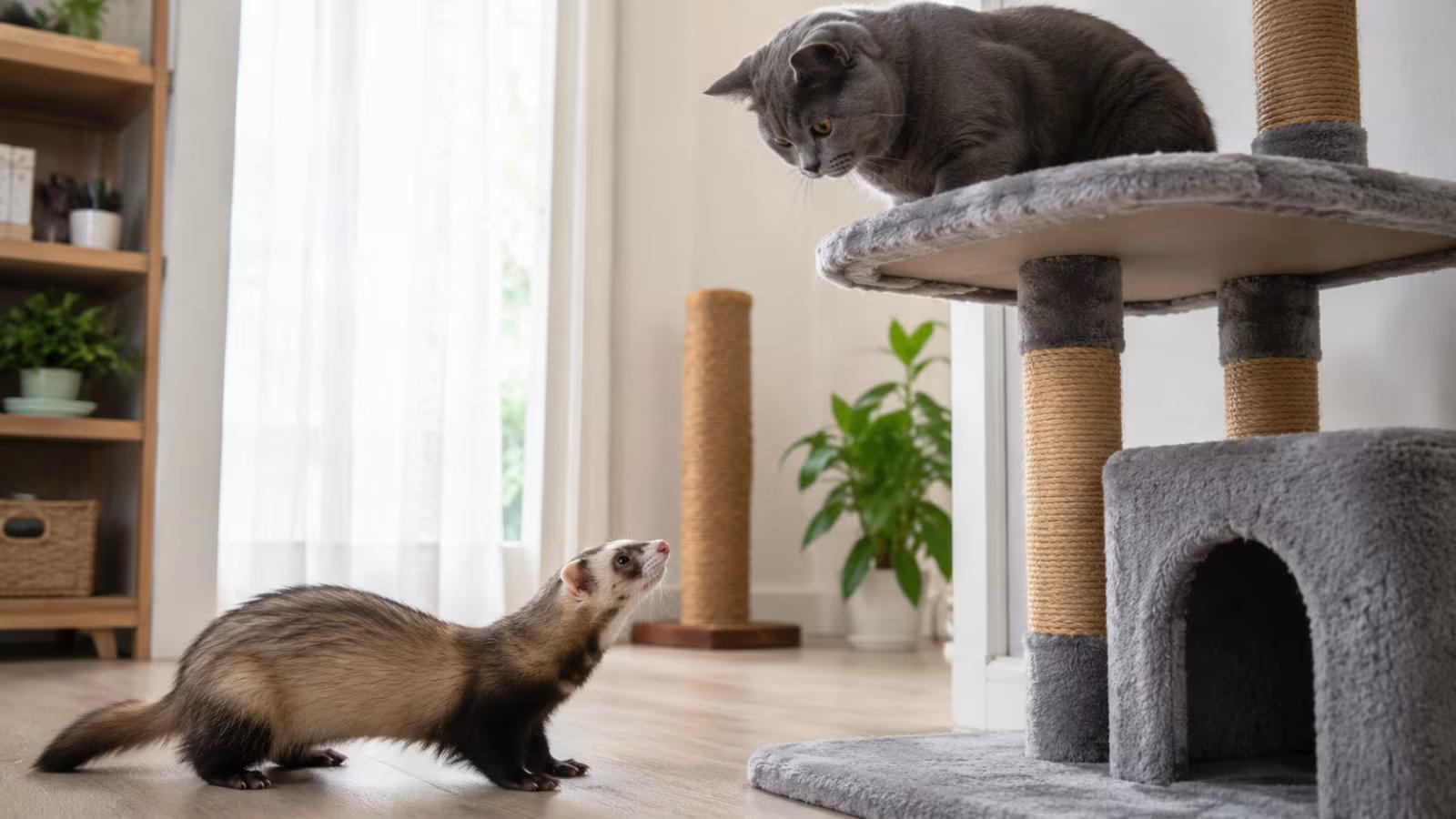
Ferrets move quickly and unpredictably, which can overwhelm shy or anxious cats. Keep interaction sessions very short and make sure your cat always has elevated escape routes.
Never force contact. Gradual exposure over many sessions often builds confidence over time.
The Cat Swats the Ferret
Swatting usually means the cat feels cornered, overstimulated, or ignored after giving earlier warnings. Never punish hissing or swatting because these are communication signals.
Give your cat more room to retreat and reduce session length. Most early problems come from too much too soon.
Creating a Safe Environment for Both Pets
The physical setup of your home matters more than most owners realize. A well-designed space reduces stress before any interaction even begins.
Your cat needs vertical space, such as tall cat trees, wall shelves, or elevated platforms that the ferret cannot reach. These give your cat a safe way to observe without feeling trapped.
Your ferret needs a secure enclosure that works as a true safe base, not just a cage. Separate feeding stations and separate litter areas also reduce territorial stress.
Should Cats and Ferrets Ever Be Left Alone Together?
Newly introduced pairs should never be unsupervised. Even animals that have shown weeks of peaceful interaction can have unpredictable moments when the owner is not present.
Some experienced owners with well-matched pairs eventually allow monitored free-roaming time. Even then, nighttime separation is strongly recommended.
Important: The safest long-term habit is to treat supervision as a permanent part of your routine, not a temporary phase.
Stress Signals to Watch for in Both Animals
Stress shows up before aggression does. Learning to recognize early stress signals gives you time to intervene before biting or injury happens.
Stress Signals in Cats
- Flattened ears
- Rapidly flicking tail
- Hiding
- Dilated pupils
- Refusing food
- Excessive grooming
- Growling at normal sounds
Stress Signals in Ferrets
- Persistent hiding
- Refusing food
- Loose stools linked to stress
- Excessive sleeping
- Trembling
- Panic vocalizations
If stress signals persist for more than a few days despite reduced interaction, consult your veterinarian. Chronic stress can affect both physical health and behavior.
Do Age and Life Stage Matter?
Kittens and Young Ferrets
Young animals are generally more adaptable because they are less set in their territorial habits and more naturally curious. Introductions between a kitten and a young ferret often go more smoothly than adult pairings.
That said, young animals can also be reckless. A kitten playing hard can accidentally injure a ferret, and a young ferret's relentless energy can terrify even a confident kitten.
Adult and Senior Cats
Adult cats can accept ferrets, especially if they have a calm temperament and previous experience with other animals. Senior cats, however, often prefer quiet environments.
If you have an older cat, introduce a ferret very slowly and watch your cat's stress levels carefully over weeks, not days. Their comfort and quality of life should always be the priority.
Sleeping, Toys, and Feeding: Practical Shared Living Tips
Separate sleeping areas should be maintained even for bonded pairs. Both animals can startle during sleep, and a ferret sharing sleeping space with a cat may be accidentally injured.
Some toys can be shared safely, including wand toys, soft balls, and tunnels. Avoid toys with loose strings, very small parts, or anything that triggers resource guarding.
Always feed cats and ferrets separately. They have very different nutritional needs, and food competition adds unnecessary tension.
When Cats and Ferrets Should Not Live Together
Sometimes, despite your best efforts, a pairing simply is not safe or fair to either animal. Permanent separation is the right answer when the cat repeatedly attacks, the ferret lives in constant fear, injuries occur, or one animal stops eating, grooming, or behaving normally.
This is not giving up. Recognizing an incompatible pairing and protecting both animals is one of the most responsible things a pet owner can do.
Long-Term Tips for Peaceful Multi-Pet Homes
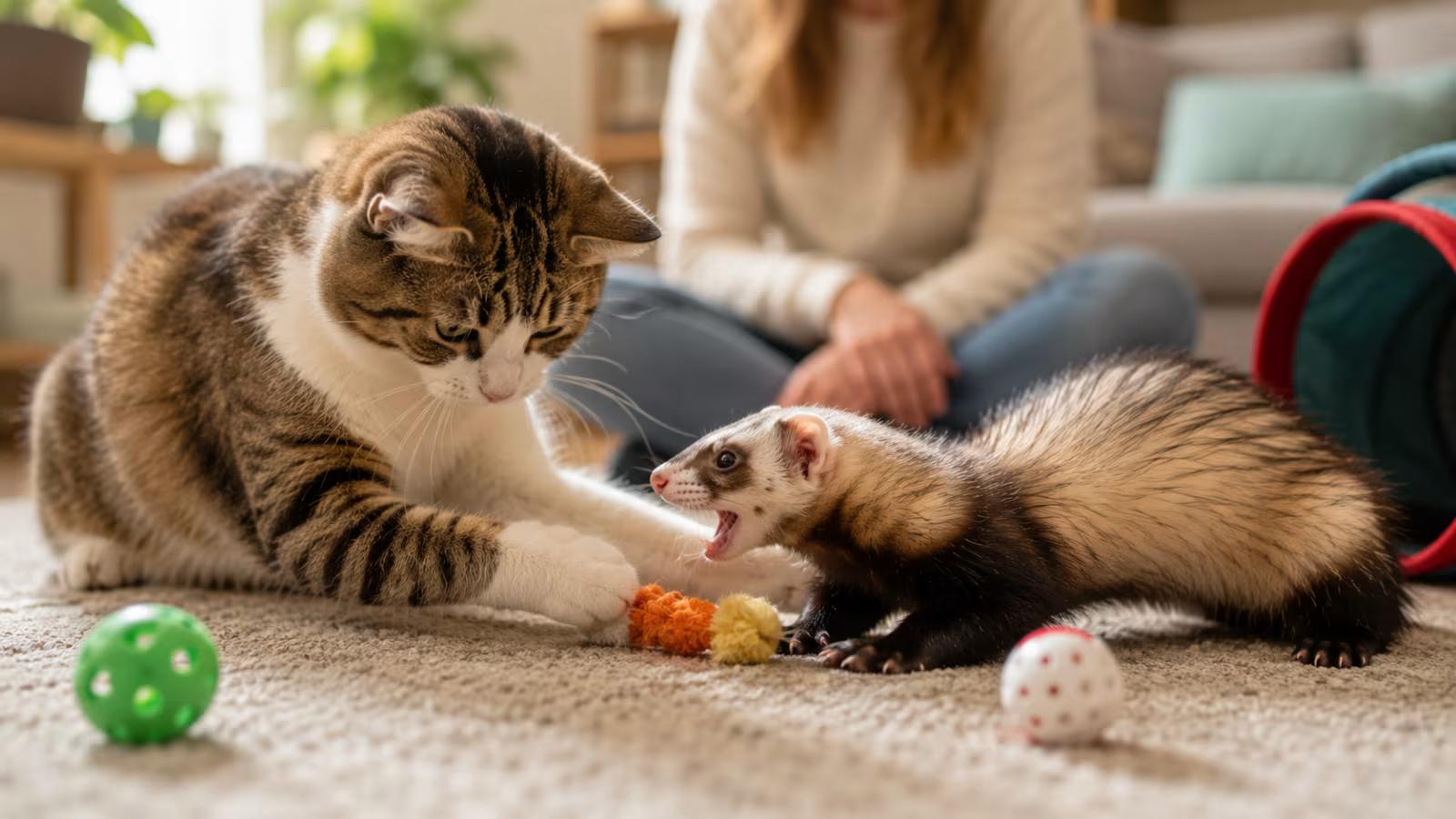
Successful long-term cohabitation comes down to consistent habits rather than one successful introduction. Keep daily routines predictable because both cats and ferrets thrive on consistency.
Continue monitoring their relationship over time. A cat who tolerated a young ferret may become less patient as both animals age and energy levels change.
Regular veterinary check-ups also matter. Pain, illness, adrenal disease, or other health issues can change behavior and increase tension between pets.
Conclusion
Cats and ferrets can absolutely share a home, and many do happily. The relationship just requires more intentional setup than most people expect.
Some pairs become genuine companions. Others establish a respectful distance that works perfectly well for both of them. Either outcome is a success as long as both animals feel safe and relaxed.
The goal is not to force friendship. The goal is a calm, secure home where both your cat and your ferret can be themselves without fear. With patience and consistency, that is achievable for many households.