
Best Bunny for Kids
Your child wants a pet rabbit. You want a pet that is safe, gentle, and won’t bite. Finding the best bunny for kids is about matching the right breed temperament with your family’s lifestyle. Not all rabbits are equally suited for children.
According to the RSPCA, rabbits can make wonderful family pets when properly cared for. However, some breeds are naturally calmer, more tolerant of handling, and less likely to bite when startled. The best bunny for kids is one that is patient, gentle, and forgiving of the inevitable mistakes children make when learning to handle pets.
This guide covers the best rabbit breeds for kids, what makes a rabbit child-friendly, and how to help children bond safely with their pet bunny. For a complete overview of all rabbit breeds and their characteristics, see our main guide on types of rabbits. If you are looking for generally friendly breeds regardless of children, our friendliest rabbit breeds guide covers similar ground.
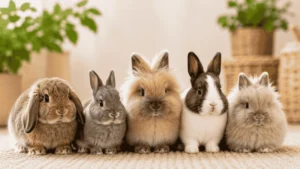
The best bunny for kids combines calm temperament, tolerance of handling, and manageable size. Top breeds include Holland Lop, Mini Rex, Lionhead, and Flemish Giant. All rabbits need adult supervision and proper handling training for children.
What Makes a Good Rabbit for Kids
Not every rabbit breed is suitable for families with children. The best bunny for kids has specific characteristics that make it safer and more enjoyable for young handlers.
Calm rabbit temperament is the most important factor. A rabbit that startles easily may bite or scratch when frightened. Children are often loud and move quickly. A skittish rabbit will be constantly stressed. According to The Spruce Pets, breeds known for calm temperaments are better suited for families.
Friendly rabbit breeds naturally enjoy human interaction. They approach people willingly rather than hiding. They may nuzzle, lick, or sit calmly when petted. The best bunny for kids is one that actually enjoys being handled, not just tolerates it.
Easy to handle rabbits have manageable size and body structure. Small breeds like Holland Lop (2-4 lbs) are easy for children to lift with proper training. Large breeds like Flemish Giant (12-20+ lbs) are too heavy for young children to carry safely. Medium breeds offer a balance.
Low aggression rabbits are essential for safety. Some breeds are more territorial or prone to nipping. The best bunny for kids rarely bites, even when startled. Breeds developed specifically as pets rather than for meat or fur tend to have better temperaments.
For more detailed information on rabbit personalities and which breeds are naturally more affectionate, see our friendliest rabbit breeds guide. Understanding why rabbits bite also helps parents choose a breed with lower aggression tendencies.
A good rabbit for kids is calm, friendly, easy to handle, and low aggression. The best bunny for kids enjoys human interaction, tolerates gentle handling, and rarely bites even when startled. Temperament matters more than size or appearance.
Best Rabbit Breeds for Kids
The following breeds are consistently recommended as the best bunny for kids by rabbit experts and veterinarians. These breeds combine calm temperaments with manageable size and friendly personalities.
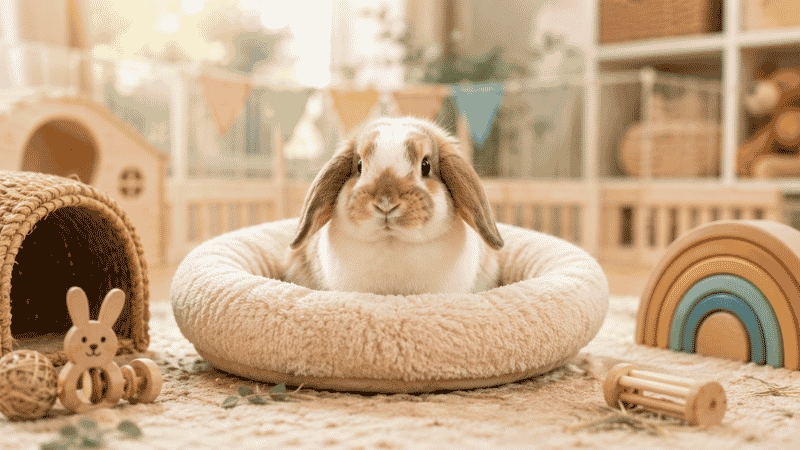
Holland Lop: According to The Spruce Pets, the Holland Lop is widely considered the best bunny for kids. Weighing 2 to 4 pounds, these small rabbits have floppy ears and a compact, rounded body. They are calm, gentle, and very tolerant of handling. Holland Lops rarely bite, even when startled. Their small size makes them easy for children to lift with proper training. They also enjoy human attention and will nuzzle their owners for pets. The Holland Lop’s compact body type, as discussed in rabbit body types, makes them easier to hold securely than longer-bodied breeds.
Mini Rex: The Mini Rex is another top choice for families. Weighing 3 to 4.5 pounds, these rabbits have plush, velvety fur that children love to pet. They are docile, friendly, and calm. Mini Rex rabbits rarely show aggression and tolerate gentle handling well. Their short, dense fur is also very low maintenance, requiring minimal grooming. Their commercial body type, covered in the meat rabbit breeds guide, gives them a sturdy build that withstands gentle handling.
Lionhead Rabbit: Lionheads are friendly, playful, and outgoing. Weighing 2.5 to 3.75 pounds, they have a distinctive woolly mane around the head. According to The Spruce Pets, they are known for enjoying human interaction and playing with toys. They are good with children who handle them gently. However, their woolly coat requires regular grooming, which can be a good way to teach children pet care responsibility.
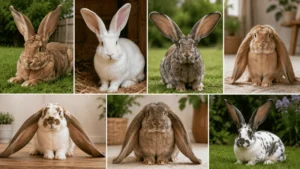
Flemish Giant: Despite their massive size (12 to 20+ pounds), Flemish Giants are known as “gentle giants.” They are calm, patient, and very tolerant of handling. They are excellent with older children who are calm and gentle. However, due to their large size, they are not suitable for young children to carry. They also need significantly more space than smaller breeds, as discussed in ideal rabbit cage requirements for giant breeds.
Mini Lop: Similar to the Holland Lop but slightly larger (3-6 lbs), the Mini Lop is also very friendly and good with families. They have floppy ears and a compact body. They are calm and enjoy being petted. Their larger size makes them more sturdy than Holland Lops, which can be an advantage with younger children.
Harlequin Rabbit: Harlequins are medium-sized rabbits (6.5-9 lbs) with distinctive striped or spotted coloring. They are known for being intelligent, calm, and very friendly. They enjoy human interaction and are good with children who handle them gently. Their unique appearance also makes them fascinating to children.
The table below compares the best rabbit breeds for kids side by side:
| Breed | Weight (lbs) | Temperament | Grooming Needs | Best for Age | Good for Carrying |
|---|---|---|---|---|---|
| Holland Lop | 2-4 | Calm, gentle, affectionate | Low | All ages | Yes |
| Mini Rex | 3-4.5 | Docile, friendly, calm | Very Low | All ages | Yes |
| Lionhead | 2.5-3.75 | Playful, friendly, curious | Moderate | 8+ years | Yes |
| Flemish Giant | 12-20+ | Gentle, patient, docile | Low | 10+ years | No (too heavy) |
| Mini Lop | 3-6 | Calm, friendly | Low | All ages | Yes |
If you are unsure what breed your child’s rabbit is, the what rabbit breed do I have guide can help you identify it through ear shape, fur type, and size.
The best bunny for kids includes Holland Lop (top choice), Mini Rex (velvety fur, low grooming), Lionhead (friendly, needs grooming), and Flemish Giant (for older kids). All breeds need adult supervision and proper handling training.
Small vs Large Rabbits for Children
Size matters when choosing the best bunny for kids. Small breeds and large breeds each have advantages and disadvantages for families.
Small bunny breeds for kids (under 5 lbs) include Holland Lop, Mini Rex, Lionhead, and Netherland Dwarf. Their small size makes them easy for children to lift and carry with proper training. However, their small bones are fragile. Rough handling can injure them. Young children must be supervised closely.
Large gentle rabbit breeds (over 8 lbs) include Flemish Giant and English Lop. Their larger size makes them more sturdy. They are less likely to be injured by accidental rough handling. However, they are too heavy for young children to carry safely. A child dropping a 15 lb rabbit could injure the rabbit’s spine or legs. The rabbit body types guide explains that semi arch breeds like Flemish Giants have different handling considerations than compact breeds.
Compact rabbit breeds like Holland Lop and Mini Rex are often the best compromise. They are small enough to be handled but have sturdy, rounded bodies that are less fragile than dwarf breeds. Their compact shape, as described in the rabbit body types guide, makes them easier to hold securely than long-bodied breeds.
Giant rabbits for families are best for older children (10+ years) who can handle the rabbit’s size responsibly. Younger children can still interact with giant rabbits but should not be expected to carry them. The Flemish Giant’s gentle temperament makes it excellent for calm, patient older kids.
Easy handling rabbit breeds combine manageable size with calm temperament. Holland Lop, Mini Rex, and Mini Lop are the top choices. Their body structure makes them easy to hold securely, and their calm nature means they are less likely to struggle when picked up.
For housing guidance appropriate to your rabbit’s size, see ideal rabbit cage for size-specific recommendations.
Small breeds (under 5 lbs) are easier to carry but more fragile. Large breeds (over 8 lbs) are sturdier but too heavy for young children to lift. Compact breeds like Holland Lop offer the best balance for most families.
Best Beginner Rabbits for First-Time Owners
If your family has never owned a rabbit before, choosing a forgiving, easy-going breed is essential. The best bunny for kids is also a good beginner rabbit breed.
Holland Lop is the top choice for first-time owners. They are calm, tolerant of minor handling mistakes, and have predictable temperaments. Their small size makes them manageable in most homes. They rarely bite, even when frightened.
Mini Rex is also excellent for beginners. Their docile nature and low grooming needs make them easy to care for. Their velvety fur is resistant to matting, so grooming is minimal. They are very friendly and enjoy human interaction.
Lionhead rabbits are good for beginners who are willing to commit to regular grooming. Their woolly mane requires brushing several times a week to prevent matting. This can be a good way to teach children pet care responsibility. Their friendly, outgoing personality makes them enjoyable companions.
Low maintenance rabbits in terms of grooming are Mini Rex (velvety fur that does not mat) and Holland Lop (normal short coat). In terms of temperament, all the breeds listed above are low maintenance because they are naturally calm and less likely to develop stress-related behavioral problems when provided with proper care.
Indoor rabbit breeds that adapt well to family homes include all the breeds listed above. They enjoy being in the middle of family activity, which helps them become more social. Place their enclosure in the living room or family room so they are part of daily life.
For more on rabbit body types and how they affect handling ease for children, see the compact body type description in rabbit body types.
Best beginner rabbits are Holland Lop (top choice), Mini Rex (low grooming), and Lionhead (needs grooming but friendly). These breeds are forgiving of minor handling mistakes and have predictable temperaments, making them ideal for first-time rabbit-owning families.
Rabbit Care Kids Should Know
Before bringing home the best bunny for kids, children should understand basic rabbit care. Teaching responsibility is part of pet ownership.
Rabbit feeding basics: Rabbits need unlimited hay (timothy hay for adults), fresh water, a small amount of high-fiber pellets (1-2 tablespoons per day), and fresh leafy greens. Treats like fruit should be rare. Children can help by measuring pellets, adding hay to the feeder, and washing greens.
Cleaning rabbit cages: The litter box should be spot cleaned daily. Full cage cleaning should happen weekly. Older children can help with supervision. Wearing gloves is recommended. The rabbit in cages guide provides detailed cleaning instructions.
Rabbit litter training: Most rabbits can be litter trained. Place a litter box in the corner where the rabbit naturally goes. Use paper-based litter or hay. Never use clay or clumping cat litter. Children can help by placing stray droppings into the litter box.
Safe rabbit handling: Never pick up a rabbit by the ears or scruff. Support the chest with one hand and the hindquarters with the other. For children, sitting on the floor to interact with the rabbit is often safer than lifting. The do rabbits bite guide explains why rabbits bite and how to handle them safely.
Rabbit enrichment ideas: Rabbits need mental stimulation. Provide tunnels, chew toys (apple sticks, willow balls), and a digging box. Children can help rotate toys weekly and hide treats in puzzle feeders.
Daily rabbit exercise: Rabbits need 3-4 hours of exercise outside their cage daily. This can be in a rabbit-proofed room or an x-pen. Children can help set up the exercise area but must be supervised to ensure the rabbit does not chew electrical cords.
Pet responsibility for children: Assign age-appropriate tasks. A young child can fill the hay rack. An older child can clean the litter box with supervision. A teen can take the rabbit for veterinary checkups. The how long does a bunny rabbit live guide helps children understand that rabbits are a long-term commitment (8-12 years).
Children can help with rabbit care by feeding, adding hay, washing greens, and helping to clean the cage with supervision. Safe handling (supporting both ends) is essential. Rabbits need daily exercise, mental enrichment, and a long-term commitment of 8-12 years.
Common Mistakes When Choosing a Bunny for Kids
Many families make avoidable mistakes when selecting the best bunny for kids. Knowing these pitfalls helps you choose wisely.
Rabbits are not low maintenance. They need daily feeding, exercise, cage cleaning, and social interaction. Many families underestimate the time commitment. A rabbit is not a “starter pet” that requires minimal care.
Rabbits and young children need supervision. Children under 8 years old should never handle a rabbit without adult supervision. Rabbits have delicate bones and can be seriously injured by rough handling or dropping. Even the best bunny for kids can bite if frightened or hurt.
Improper rabbit handling is common. Many children (and adults) try to pick up rabbits by the ears or scruff. This is painful and dangerous. Teach children to support the chest and hindquarters. Better yet, have children interact with rabbits on the floor rather than picking them up.
Small cages for rabbits are inadequate. The tiny cages sold in pet stores are far too small. A rabbit needs an enclosure of at least 6ft x 3ft, plus daily exercise time outside the cage. The ideal rabbit cage guide explains proper housing.
Rabbit boredom and stress lead to behavioral problems. A bored rabbit may chew cage bars, pull out fur, or become aggressive. Rabbits need enrichment: tunnels, chew toys, and social interaction. A stressed rabbit is not a good pet for children.
Rabbit biting behavior is often fear-based. A rabbit that bites is not “mean.” It is scared, in pain, or territorial. Understanding why rabbits bite helps parents choose a breed with lower aggression tendencies and teach children proper handling.
Unhappy rabbit signs include hiding, tooth grinding (loud), and aggression. A rabbit that constantly hides or thumps is stressed. A rabbit that lunges or bites is frightened. These behaviors indicate the rabbit is not a good fit for the household.
Common mistakes include thinking rabbits are low maintenance, allowing unsupervised handling of young children, using tiny cages, ignoring enrichment, and misinterpreting fear-based biting as aggression. Proper preparation prevents these problems.
How to Help Kids Bond with Rabbits
Even the best bunny for kids needs proper bonding to become a loving family pet. Here is how to help children build a positive relationship with their rabbit.
Building trust with rabbits takes time. Have children sit quietly on the floor near the rabbit’s enclosure. Let the rabbit approach them. Do not chase or grab. Offer treats from an open hand. Speak softly. Move slowly.
Rabbit body language for kids to learn: A rabbit with relaxed ears and soft eyes is comfortable. A rabbit with flattened ears and a tense body is scared. A rabbit that thumps is warning of danger. Teaching children to read rabbit body language prevents bites.
Gentle interaction with rabbits: Children should pet rabbits on the forehead and back, not the belly or feet. Never pull ears or tail. Never pick up a rabbit by the scruff. Never chase a rabbit that is trying to get away.
Playing safely with rabbits: Set up tunnels and cardboard boxes for the rabbit to explore. Hide treats in puzzle feeders. Use wand toys to play at a distance. Do not wrestle or roughhouse with rabbits.
Calming shy rabbits: Some rabbits are naturally shy. Have children sit quietly near the enclosure and read aloud or talk softly. Over time, the rabbit will learn that children are not threats. Offer favorite treats like small pieces of apple or herb.
Rabbit affection signs include nuzzling, licking, flopping down nearby, and asking for head rubs. A rabbit that closes its eyes while being petted is relaxed and happy. A rabbit that runs to the front of the cage when a child approaches is bonded and excited.
For more on rabbit behavior and communication, see rabbit paw anatomy to understand how rabbits express comfort through their feet and posture.
To help kids bond with rabbits, have them sit quietly on the floor, let the rabbit approach, offer treats, and learn rabbit body language. Never chase or grab. With patience, rabbits show affection through nuzzling, licking, and flopping nearby.
Final Thoughts
The best bunny for kids combines calm temperament, tolerance of handling, and manageable size. Holland Lop, Mini Rex, and Lionhead top the list. These breeds are gentle, friendly, and less likely to bite when startled. They are forgiving of the inevitable mistakes children make when learning to handle pets.
However, breed selection is only the first step. Adult supervision is essential. Children must be taught proper handling techniques: support the chest and hindquarters, never pick up by ears or scruff, and never chase. Rabbits need daily care, exercise, and enrichment. They are a long-term commitment of 8-12 years.
When parents choose wisely and teach children responsibility, rabbits can become wonderful family pets. A calm Holland Lop that nuzzles a child’s hand or a friendly Mini Rex that flops down next to a child reading a book creates lasting memories. For more information on rabbit breeds and care, see our types of rabbits guide, friendliest rabbit breeds guide, and rabbit body types guide.
Trusted Resources for Family Rabbit Care
- RSPCA Rabbit Care Guide – Welfare guidelines for pet rabbits
- The Spruce Pets Rabbit Breeds – Detailed breed profiles for families
- House Rabbit Society – Rabbit care information for pet owners
- Humane Society Rabbit Care – General rabbit care guidance
FAQ Section: Questions You Might Have
The best bunny for kids is the Holland Lop. They are calm, gentle, small (2-4 lbs), and very tolerant of handling. They rarely bite, even when startled. Their floppy ears and compact body make them easy for children to hold with supervision. Mini Rex and Lionhead are also excellent choices.
The best rabbits for children are Holland Lop, Mini Rex, Lionhead, and Mini Lop. These breeds are known for calm temperaments, friendliness, and tolerance of gentle handling. Flemish Giants are good for older children (10+ years) who can handle their large size safely.
Yes, rabbits can be excellent pets for kids when the right breed is chosen and proper supervision is provided. The best bunny for kids is calm, gentle, and tolerant of handling. However, rabbits are not low-maintenance pets. They need daily care, exercise, and social interaction. Adult supervision is essential for young children.
The safest rabbit for children is the Holland Lop or Mini Rex. These breeds have calm temperaments and rarely bite. Their compact body type makes them easier to hold securely. However, no rabbit is completely safe unsupervised. Adult supervision is essential for any child handling a rabbit.
Yes, Flemish Giants are known as “gentle giants” and are excellent with older children (10+ years) who are calm and gentle. They are patient and very tolerant of handling. However, they are too heavy for young children to carry safely (12-20+ lbs). Adult supervision is always required.
The easiest rabbit to take care of for a child is the Mini Rex. They have plush, velvety fur that resists matting, so grooming is minimal. They have calm temperaments and are very friendly. Their small size (3-4.5 lbs) makes them manageable. However, adult supervision is still necessary for all rabbit care tasks.
A 5 year old can have a rabbit with constant adult supervision. The adult is the primary caregiver. The child can help with supervised tasks like feeding, adding hay, and gentle petting. The best bunny for a 5 year old is a calm breed like Holland Lop or Mini Rex. Never leave a young child alone with any rabbit.
Both male and female rabbits can be equally good for kids when spayed or neutered. Spaying/neutering reduces hormonal aggression and territorial behavior. Unneutered males may spray urine. Unspayed females can be moody. For the best bunny for kids, always adopt a spayed or neutered rabbit.
Initial costs include cage/enclosure (£50-150), supplies (£30-50), and adoption fee (£20-50). Ongoing monthly costs include hay (£10-20), pellets (£5-10), fresh vegetables (£10-20), and bedding (£10-15). Veterinary care (annual checkups, emergency care) adds additional costs. Rabbits live 8-12 years, so factor long-term expenses.
A child’s rabbit needs an enclosure of at least 6ft x 3ft (18 square feet) of continuous floor space. This is much larger than pet store cages. The rabbit also needs 3-4 hours of daily exercise outside the cage. See the ideal rabbit cage guide for detailed housing recommendations.