What Do Bunnies Do in the Winter
You look outside your window. Snow covers the ground. You wonder where all the rabbits went. The question "what do bunnies do in the winter" comes to mind. Do they hibernate like bears? Do they migrate somewhere warmer? The answer might surprise you.
Rabbits do not hibernate. Unlike groundhogs or chipmunks, bunnies stay active all winter long. They cannot sleep through the cold because their bodies are not built for hibernation. Instead, they have developed remarkable adaptations to survive freezing temperatures, snow, and scarce food.
This guide covers everything about what do bunnies do in the winter: where they hide, how they stay warm, what they eat when grass is gone, and what dangers they face. You will also learn how to care for pet rabbits during cold months and debunk common myths about rabbit hibernation.
Understanding what do bunnies do in the winter helps you appreciate these resilient animals. Whether you are watching wild rabbits in your backyard or caring for a domestic bunny, knowing their winter behavior is essential.
Rabbits do not hibernate. They remain active all winter, growing thick fur, seeking shelter in burrows, and changing their diet to bark and twigs when grass is unavailable. Wild rabbits have specialized adaptations that allow them to survive freezing temperatures without sleeping through the cold season.
Do Bunnies Hibernate
One of the most common questions is: do bunnies hibernate? The short answer is no. Rabbits are not hibernators. They stay awake and active throughout the winter months. This applies to both wild rabbits and domestic pets.
Do bunny rabbits hibernate like some other small mammals? No. Hibernation is a survival strategy used by animals that cannot find food in winter. Bears, groundhogs, and some bats hibernate. Rabbits, however, have year-round food sources. They eat bark, twigs, and evergreen needles when grass is buried under snow.
Does bunny hibernate if temperatures drop extremely low? Still no. Even in severe cold, rabbits remain active. They may stay in their burrows for a day or two during a blizzard, but they do not enter a deep sleep. They simply wait for the storm to pass.
So do wild rabbits hibernate in colder regions? European rabbits, Eastern cottontails, and other wild species do not hibernate regardless of location. A rabbit in Canada faces the same winter activity as a rabbit in a milder climate. Their adaptations, not hibernation, get them through the cold.
Veterinarians and wildlife biologists confirm that rabbits lack the physiological mechanisms for hibernation. They do not store massive fat reserves. Their body temperature does not drop. Their heart rate does not slow. They simply cannot hibernate.
Rabbits do not hibernate. They remain active year-round. Hibernation is a strategy used by animals that cannot find winter food. Rabbits survive by eating bark, twigs, and evergreen needles. They also grow thick winter fur and seek shelter in burrows during storms.
Resource from the RSPCA rabbit health guide confirms that rabbits are active all winter and do not hibernate.
Where Do Bunnies Live in the Winter
If rabbits do not hibernate, where do bunnies live in the winter? They need shelter from wind, snow, and predators. Wild rabbits use several types of winter homes.
Where do bunnies live in the winter when temperatures drop? Their primary shelter is the burrow. Wild rabbits dig warrens: complex tunnel systems underground. These burrows stay warmer than the surface. The temperature underground remains relatively stable, often above freezing even when the air is bitterly cold.
Eastern cottontails, common in North America, do not dig their own burrows as extensively as European rabbits. Instead, they use existing holes made by groundhogs or other animals. They also hide under brush piles, thick evergreen shrubs, and hollow logs.
Where do bunnies live in the winter in suburban areas? Backyard rabbits hide under decks, sheds, and porches. They burrow into wood piles and compost heaps. Any structure that blocks wind and holds some warmth becomes a potential winter shelter.
Rabbit nests are different from winter shelters. In spring and summer, rabbits build shallow grass-lined nests for their babies. In winter, they do not use these nests. They need deeper, more insulated spaces like burrows.
Veterinarians recommend that if you find a rabbit under your deck in winter, leave it alone. It has found suitable shelter. Disturbing the rabbit could expose it to deadly cold.
Wild rabbits live in burrows during winter. These underground tunnels stay warmer than the surface. Eastern cottontails often use existing holes made by other animals. Suburban rabbits hide under decks, sheds, and brush piles. They do not use their spring nesting spots for winter shelter.
Resource from the PDSA wild rabbit guide provides additional information on rabbit burrows and winter shelter preferences.
How Do Bunnies Survive in the Winter
The question "how do bunnies survive in the winter" has several answers. Rabbits have multiple adaptations that allow them to thrive in cold weather without hibernating.
First, rabbits grow a thick winter coat. Starting in late autumn, their fur becomes denser and longer. This coat traps air close to the body, providing insulation. The winter coat is so effective that a rabbit can stay warm even in subzero temperatures.
Second, rabbits change their behavior. They become less active during the coldest parts of the day. They rest in their burrows when temperatures drop to dangerous lows. They come out to feed during warmer periods, such as late morning or early afternoon.
Third, wild rabbits huddle together for warmth. In a warren, multiple rabbits share body heat. This is especially important for young rabbits that have not yet grown their full winter coats.
Fourth, rabbits have a high metabolic rate. They generate significant body heat just by digesting food. Their digestive system runs constantly. This internal heat production helps them maintain a stable body temperature.
Fifth, rabbits have countercurrent heat exchange in their legs. Blood vessels in the feet are arranged so that warm blood leaving the body heats cold blood returning from the feet. This minimizes heat loss through the paws, which are not covered in thick fur.
Veterinarians emphasize that healthy wild rabbits are well-equipped for winter. Their main challenges are finding enough food and avoiding predators, not the cold itself.
Rabbits survive winter through several adaptations: growing thick fur, reducing activity during coldest periods, huddling with other rabbits, generating heat through constant digestion, and using countercurrent heat exchange in their feet. These adaptations allow them to stay active year-round.
What Do Rabbits Eat in Winter
Food becomes scarce in winter. Grass is buried under snow. Fresh greens disappear. So what do bunnies eat when the ground freezes? Wild rabbits switch to a different menu.
Tree bark is a major winter food. Rabbits gnaw on the bark of young trees, especially apple, maple, and poplar. They also eat twigs and buds. This behavior explains why you might see bark stripped off the lower parts of trees in early spring.
Evergreen needles provide another food source. Rabbits eat pine, spruce, and fir needles. These are not as nutritious as summer greens, but they provide enough energy to survive.
Rabbits also eat dried grass and weeds. They find dried stems poking through the snow. They dig through snow to reach frozen but still edible plants. They will eat garden vegetables left in the ground after harvest.
Wild rabbits sometimes eat their own droppings in winter. This is not desperation. Rabbits produce cecotropes, which are nutrient-rich droppings. Re-ingesting them allows rabbits to extract more nutrition from their food.
House Rabbit Society recommends that pet rabbits have unlimited hay year-round. Hay provides the fiber they need for digestion and dental health. In winter, indoor rabbits do not need dietary changes, but outdoor rabbits may need extra hay for bedding and warmth.
Wild rabbits eat tree bark, twigs, buds, evergreen needles, and dried grass in winter. They also eat their own cecotropes to extract maximum nutrition. Pet rabbits should have unlimited hay year-round, with extra hay provided for warmth in outdoor hutches.
Winter Dangers for Rabbits
Despite their adaptations, winter poses serious threats to wild rabbits. Understanding these dangers explains why some rabbits do not survive until spring.
Predators are a year-round danger, but winter makes rabbits more vulnerable. With snow cover, rabbits stand out against the white background. Foxes, coyotes, hawks, and owls hunt actively in winter when other prey is scarce.
Starvation is a real risk. Rabbits need to eat constantly. If snow is too deep or icy, they cannot reach food. A week without sufficient food can kill a rabbit.
Frozen water is another danger. Rabbits need water even in winter. They eat snow to get moisture, but this lowers their body temperature. Access to liquid water is much better. Veterinarians recommend checking outdoor rabbit water bottles twice daily in freezing weather.
Hypothermia can occur if a rabbit gets wet. Fur insulates only when dry. A rabbit caught in freezing rain or wet snow can become soaked and die of cold. This is why rabbits stay in their burrows during storms.
Humans also pose dangers. Lawn mowers, cars, and dogs kill many rabbits. In winter, people may accidentally disturb rabbit burrows while moving wood piles or clearing snow.
According to wildlife rehabilitation statistics, most rabbit deaths in winter occur from predation and starvation, not directly from cold. Healthy rabbits with adequate shelter survive freezing temperatures remarkably well.
Winter dangers for rabbits include predators (foxes, hawks, owls), starvation when snow blocks food access, frozen water sources, hypothermia if fur gets wet, and human activities like lawn mowing or wood pile disturbance. Most winter rabbit deaths come from predation and starvation, not cold itself.
Pet Rabbits in Winter
Domestic rabbits are not as hardy as wild ones. They descend from European rabbits, but generations of breeding have reduced their winter adaptations. Pet rabbits need human help to stay safe in cold weather.
Indoor rabbits are safest during winter. Rabbit welfare organizations recommend keeping rabbits indoors year-round if possible. Indoor temperatures between 55°F and 70°F (13°C to 21°C) are ideal. Rabbits can tolerate cooler temperatures but should never be exposed to drafts or sudden temperature changes.
Outdoor rabbits require special care in winter. The hutch must be weatherproof, elevated off the ground, and protected from wind and snow. Add extra bedding such as hay or straw for insulation. Cover the hutch with a blanket or tarp at night, leaving ventilation holes to prevent moisture buildup.
Water bottles freeze in cold temperatures. Check water at least twice daily. Use insulated water bottles or provide water in heavy ceramic bowls that resist freezing. Some owners use heated water bottles designed for small animals.
Pet rabbits need extra food in winter. Their bodies burn more calories to stay warm. Increase hay portions and add a small amount of extra pellets. Fresh vegetables are still important but should be given at room temperature, not straight from the refrigerator.
Signs of cold stress in rabbits include shivering, lethargy, hunched posture, cold ears, and pale gums. If you notice these signs, bring the rabbit indoors to warm up gradually. Do not put a cold rabbit directly in front of a heater, as rapid temperature changes can cause shock.
The PDSA recommends that outdoor rabbits be brought indoors when temperatures drop below 20°F (-7°C). Even with good shelter, extreme cold is dangerous for domestic rabbits.
Pet rabbits need winter protection. Indoor rabbits are safest. Outdoor rabbits need weatherproof hutches, extra bedding, unfrozen water checked twice daily, and increased hay rations. Bring rabbits indoors when temperatures drop below 20°F (-7°C). Signs of cold stress include shivering, lethargy, and hunched posture.
Resource from the Humane Society rabbit care guide provides additional information on winter housing for pet rabbits.
Fun Facts About Rabbits in Winter
Rabbit behavior in winter produces some interesting observations. Here are facts about what do bunnies do in the winter that might surprise you.
Rabbit tracks in snow are distinctive. The hind feet land ahead of the front feet, creating a pattern of two large prints followed by two smaller prints. You can tell if a rabbit was hopping or walking by the spacing of the tracks.
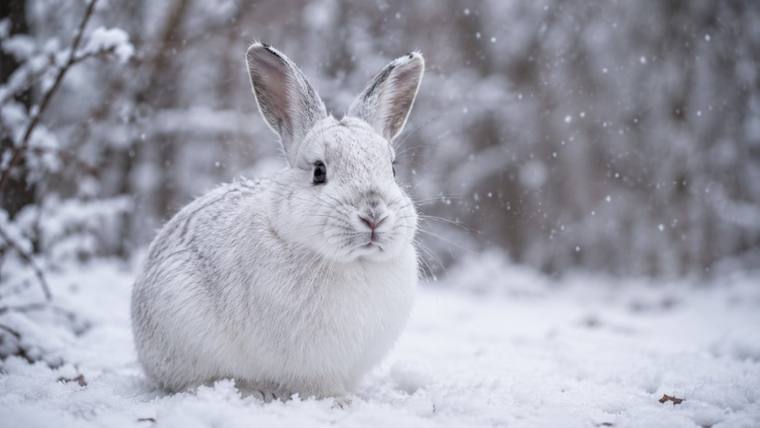
Some rabbits change color in winter. The snowshoe hare, which is a type of rabbit relative, turns white to blend in with snow. True rabbits (cottontails) do not change color. Their brown fur stands out against white snow, making them more visible to predators.
Rabbits use snow as insulation. When snow is deep, rabbits burrow into it. The snow acts as a blanket, trapping heat and blocking wind. A rabbit hidden in a snow burrow stays warmer than one sitting on top of the snow.
Rabbits can survive being buried in snow for short periods. Their low body weight allows them to move under the snow. They create tunnels similar to those made by voles and mice. This behavior helps them escape predators and find food.
Wild rabbits rarely freeze to death if they have adequate shelter and food. Their thick winter fur and high metabolism keep them warm. Most rabbits die from starvation or predation, not from the cold itself.
For more information on rabbit winter adaptations, including their unique foot structure that helps them move on snow, read rabbit paw anatomy.
Rabbit tracks in snow show two large hind prints ahead of two smaller front prints. Snowshoe hares turn white in winter, but true rabbits do not. Rabbits burrow into snow for insulation. They rarely freeze to death if they have food and shelter. Starvation and predation kill more winter rabbits than cold.
Final Thoughts
So what do bunnies do in the winter? They do not hibernate. They stay active, grow thick fur, and seek shelter in burrows. Wild rabbits have remarkable adaptations that allow them to survive freezing temperatures without sleeping through the cold. They change their diet to bark and twigs when grass is gone. They huddle together for warmth. They burrow into snow for insulation.
Pet rabbits need human help. Indoor rabbits are safest. Outdoor rabbits need weatherproof hutches, extra bedding, unfrozen water, and increased hay rations. Bring them inside when temperatures drop dangerously low. Domestic rabbits lack the full winter adaptations of their wild cousins.
Understanding what do bunnies do in the winter helps you appreciate these resilient animals. Whether you are watching a cottontail in your backyard or caring for a pet bunny, knowing their winter behavior allows you to help them survive and thrive through the coldest months.
Trusted Resources for Rabbit Winter Care
- RSPCA Rabbit Health Guide – Expert advice on winter shelter and temperature requirements
- PDSA Wild Rabbit Guide – Information on rabbit burrows and winter behavior
- Humane Society Rabbit Care – Winter housing recommendations for pet rabbits
- House Rabbit Society Outdoor Rabbits – Cold weather care guidelines
You may also find these related guides helpful: rabbit paw anatomy covers foot adaptations for snow, and rabbit in cages explains proper housing for domestic rabbits year-round.