
Rabbit Body Types
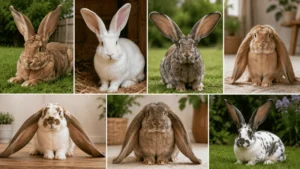
You look at a Holland Lop and a Flemish Giant side by side. One is small and round. The other is massive and arched. They look completely different. Yet both are domestic rabbits. Understanding rabbit body types helps explain these differences.
According to the American Rabbit Breeders Association (ARBA), recognized rabbit breeds are classified into body types based on their physical conformation. These body types reflect the breed’s original purpose: meat production, fur, wool, exhibition, or pet companionship. The five main rabbit body types are commercial, compact, full arch, semi arch, and cylindrical.
Body type affects not just appearance but also care requirements, temperament tendencies, and housing needs. A full arch rabbit needs more exercise space. A compact rabbit may be easier to handle. A commercial type has different nutritional needs for muscle development. Knowing your rabbit’s body type helps you provide better care.
This guide covers the five main rabbit body types, their characteristics, common breeds, and how body shape affects rabbit care. For a complete overview of all rabbit breeds and their classifications, see our main guide on types of rabbits. If you are trying to identify your rabbit breed, body type is one of the most reliable clues.
Rabbit body types are classified into five categories: commercial (meat-type, muscular), compact (small, round), full arch (hare-like, curved), semi arch (large, arched), and cylindrical (long, narrow). Body type reflects the breed’s original purpose and affects care requirements.
What Are Rabbit Body Types
Rabbit body types refer to the overall shape, structure, and conformation of a rabbit’s body. The ARBA uses these classifications in breed standards to judge exhibition rabbits. Body type is determined by the shape of the back, hip, shoulder, and overall proportions.
Body type is not the same as size. A compact body type rabbit can be small (Netherland Dwarf) or medium (Holland Lop). A commercial body type rabbit can be medium (New Zealand) or large (Champagne d’Argent). Size is a separate characteristic within each body type.
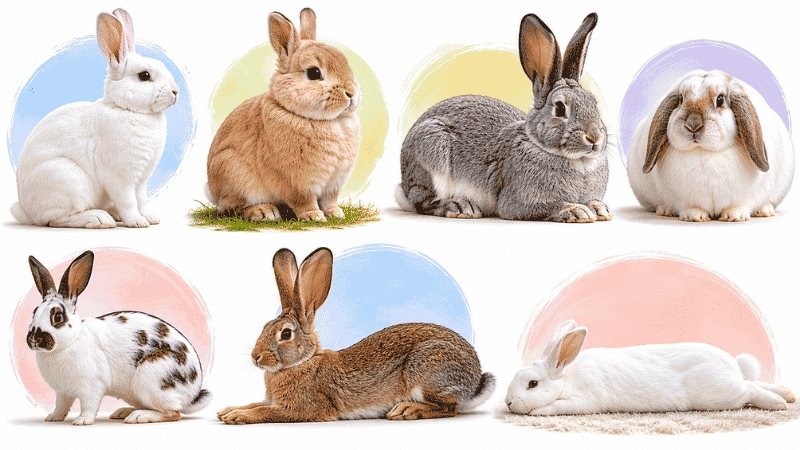
The five recognized rabbit body types are:
- Commercial: Well-rounded, muscular body with a deep flank. Designed for meat production.
- Compact: Small, round, short-coupled body with a short, broad head.
- Full Arch: Curved body shape resembling a hare, with long legs and a slender build.
- Semi Arch: Large arched body with a prominent shoulder and a long, powerful hindquarter.
- Cylindrical: Long, narrow, tubular body with straight lines from shoulder to hip.
Body type influences more than appearance. According to RSPCA guidelines, rabbits with different body types have different exercise needs, housing requirements, and health predispositions. A full arch rabbit, for example, needs more running space than a compact rabbit. A commercial type may be prone to obesity if not fed correctly.
The friendliest rabbit breeds often come from compact and commercial body types. Holland Lops (compact) and Mini Rex (commercial) are both known for calm, gentle temperaments. Body type can give clues about personality, but individual variation exists.
The five rabbit body types are commercial (meat-type, rounded), compact (small, round), full arch (hare-like, curved), semi arch (large, arched), and cylindrical (long, narrow). Each type has distinct physical characteristics that reflect the breed’s original purpose.
Commercial Rabbit Body Type
The commercial body type is the most common among domestic rabbit breeds. According to ARBA standards, commercial type rabbits have a well-rounded, muscular body with a deep, full flank. The body is medium to large in size, with a smooth transition from shoulder to hip.
Commercial rabbit breeds were originally developed for meat production. Their muscular build provides a high meat-to-bone ratio. The rounded body shape maximizes meat yield. For more details on which breeds excel in meat production, see our meat rabbit breeds guide.
Breeds with commercial body type include:- New Zealand: The most popular meat rabbit breed. White, red, and black varieties. Friendly temperament.
- Californian: White body with dark points. Excellent meat breed. Calm and gentle.
- Champagne d’Argent: French heritage breed with silver fur. Fine bone structure, good meat quality.
- Palomino: Golden or lynx-colored fur. Dual-purpose breed for meat and show.
- American: Heritage breed with blue or white fur. Critically endangered but excellent meat producer.
Commercial type rabbits have a broad, rounded back that is thickly muscled. The shoulders are as wide as the hips. The flank (area behind the ribs) is deep and full. The legs are medium length and sturdy, not too long or too short.
In terms of care, commercial type rabbits are generally robust and healthy. They have good appetites and efficient feed conversion. However, they are prone to obesity if overfed. Their muscular build requires adequate exercise to maintain condition. The ideal rabbit cage for commercial breeds should provide enough space for movement and exercise.
Commercial body type rabbits are well-rounded, muscular, and originally bred for meat production. Breeds include New Zealand, Californian, and Champagne d’Argent. They have good appetites and efficient feed conversion but need exercise to prevent obesity.
Compact Rabbit Body Type
The compact body type is characterized by small, round, short-coupled bodies. According to ARBA standards, compact rabbits have a short, broad head with full cheeks. The body is short, deep, and well-rounded. The legs are short and fine-boned.
Compact rabbit breeds are primarily bred as pets and show rabbits. Their small size and round shape are often described as “cute” or “teddy bear-like.” These breeds are popular as indoor pets because of their manageable size and calm temperaments. Many of the friendliest rabbit breeds have compact body types.
Breeds with compact body type include:- Holland Lop: Small, floppy-eared rabbit. One of the most popular pet breeds. Calm and affectionate.
- Netherland Dwarf: Very tiny, round face, short ears. Energetic and sometimes skittish.
- Mini Rex: Velvety fur, compact body. Docile and friendly. Low grooming needs.
- Mini Lop: Small lopped breed, slightly larger than Holland Lop. Friendly and good with families.
- Jersey Wooly: Small wool breed with a compact, round body. Gentle and easy to handle.
- Lionhead: Distinctive woolly mane around head. Playful and outgoing.
Compact type rabbits have a short, rounded back that forms a smooth curve. The shoulders and hips are about the same width. The head is short and broad with a well-rounded profile (called a “muff” head in some breeds). The ears are short to medium length, often with rounded tips.
Care considerations for compact breeds include gentle handling due to their small bones. They are more fragile than larger breeds. Their short legs mean they cannot jump as high as full arch types. When trying to identify your rabbit breed, a small, round body with short ears strongly suggests a compact type.
Compact body type rabbits are small, round, and short-coupled. Breeds include Holland Lop, Netherland Dwarf, Mini Rex, and Lionhead. They are popular as pets due to their manageable size and friendly temperaments, but they have fragile bones and need gentle handling.
Full Arch Rabbit Body Type
The full arch body type is the most distinctive among rabbit conformations. According to ARBA standards, full arch rabbits have a curved back that forms a continuous arch from the shoulders to the tail. The body is slender and hare-like, with long, powerful legs. The head is long and fine-boned, with long erect ears.
Full arch rabbits were originally developed to resemble wild hares. Their name refers to the arch of their back when standing or moving. These breeds are athletic, active, and need significant exercise space. They are not typically recommended as pets for small children because their high energy and long legs make them more challenging to handle.Breeds with full arch body type include:
- Belgian Hare: Not a true hare but the most hare-like domestic rabbit. Very active, high-strung.
- Tan: Compact name but full arch body. Energetic, known for racing behavior.
- Britannia Petite (Polish): Small but with a full arch body. Very active, not a lap rabbit.
- Checkered Giant: Large full arch breed. Striking spotted pattern. Needs experienced handling.
- English Spot: Medium-sized with full arch body. Active, playful, and intelligent.
Full arch rabbits have a long, slender body that is narrow through the shoulders and hips. The back forms a smooth, continuous arch from the base of the ears to the tail. When posed, the highest point of the arch is over the middle of the back. The legs are long and fine-boned, giving them a hare-like appearance.
In terms of care, full arch rabbits need significantly more exercise space than other types. Their long legs and high energy require room to run and jump. The ideal rabbit cage for full arch breeds should be larger than minimum recommendations. They also need mental stimulation to prevent boredom, which can lead to destructive behavior.
Full arch body type rabbits have a curved back resembling a hare, with long legs and slender bodies. Breeds include Belgian Hare, Tan, English Spot, and Checkered Giant. They are athletic and active, needing significant exercise space and experienced handling.
Semi Arch Rabbit Body Type
The semi arch body type is similar to the full arch but less pronounced. According to ARBA standards, semi arch rabbits have a curved back that begins behind the shoulders and continues to the tail. The body is large and well-muscled, with a prominent shoulder and a long, powerful hindquarter.
Semi arch rabbits include the largest domestic rabbit breeds. They were originally developed for meat and fur production but have become popular as pets due to their calm, gentle temperaments. The Flemish Giant, in particular, is known as a “gentle giant” and is one of the friendliest rabbit breeds despite its massive size.Breeds with semi arch body type include:
- Flemish Giant: The largest domestic rabbit breed. Gentle, patient, and good with families.
- English Lop: Extremely long, floppy ears. Laid-back personality. Good with children.
- French Lop: Large, heavy lop breed. Calm and easygoing.
- Giant Chinchilla: Large breed with distinctive chinchilla coloring. Docile temperament.
- Continental Giant: Similar to Flemish Giant but often larger. Very large, needs space.
Semi arch rabbits have a prominent shoulder that rises above the back. The highest point of the arch is behind the shoulders. The back then curves down slightly and rises again to a rounded hindquarter. The body is long and well-muscled, with a deep flank. The legs are sturdy and medium length.
Care considerations for semi arch breeds include significantly larger housing requirements. A Flemish Giant needs a room-sized enclosure or a very large x-pen, not a standard cage. The rabbit in cages guide provides specific recommendations for giant breeds. They also eat more food and produce more waste, requiring more frequent cage cleaning.
Semi arch rabbits are prone to joint problems and sore hocks due to their weight. Rabbit paw anatomy explains why large breeds need extra-soft flooring to prevent pressure sores.
Semi arch body type rabbits have a curved back behind the shoulders and include the largest domestic breeds: Flemish Giant, English Lop, and French Lop. They need significantly larger enclosures than other types and are prone to joint issues and sore hocks due to their weight.
Cylindrical Rabbit Body Type
The cylindrical body type is the rarest of the five classifications. According to ARBA standards, cylindrical rabbits have a long, narrow, tubular body with straight lines from shoulder to hip. The body lacks the curves of other types, appearing almost rectangular in profile.
Cylindrical rabbit breeds are very few. The Himalayan rabbit is the primary example. The Havana was once included but has been moved to the commercial classification. These breeds are not common as pets and are primarily maintained by specialized breeders and exhibition exhibitors.Breeds with cylindrical body type include:
- Himalayan: White body with dark points on nose, ears, feet, and tail. Long, narrow body. Calm temperament.
Cylindrical rabbits have a straight, level back that forms a flat line from shoulder to tail. The body is long and narrow, with minimal curvature. The legs are straight and medium length. The head is wedge-shaped, not rounded like compact types.
In terms of care, cylindrical breeds have similar needs to commercial types. Their long, narrow bodies are not as muscular as commercial breeds, so they may have lower feed requirements. They are generally healthy and long-lived when properly cared for.
If you are trying to identify your rabbit breed, a long, narrow, straight-backed rabbit with a wedge-shaped head and dark points strongly suggests a Himalayan.
Cylindrical body type is the rarest classification, with the Himalayan as the primary example. These rabbits have a long, narrow, tubular body with a straight back and wedge-shaped head. They are not common as pets and are primarily kept by specialized breeders.
Rabbit Breed Size Comparison
While body type describes shape, size describes how big the rabbit actually is. Both characteristics matter for breed identification and care planning.
The table below compares rabbit body types with typical size ranges:
| Body Type | Typical Weight Range | Example Breeds | Original Purpose |
|---|---|---|---|
| Commercial | 5-12 lbs | New Zealand, Californian | Meat production |
| Compact | 1.5-6 lbs | Holland Lop, Netherland Dwarf | Pets, exhibition |
| Full Arch | 4-12 lbs | Belgian Hare, English Spot | Exhibition, racing |
| Semi Arch | 9-20+ lbs | Flemish Giant, English Lop | Meat, fur, pets |
| Cylindrical | 3-5 lbs | Himalayan | Exhibition |
Small rabbit breeds (under 4 lbs) are almost always compact type. Medium rabbit breeds (4-8 lbs) can be commercial, compact, or full arch. Large rabbit breeds (8-12 lbs) are often commercial or full arch. Giant rabbit breeds (over 12 lbs) are semi arch.
For more detailed breed profiles, including size ranges for specific breeds, see the types of rabbits guide. For information on housing rabbits by size, read ideal rabbit cage.
Rabbit body types correlate with size ranges. Compact types are smallest (1.5-6 lbs), semi arch are largest (9-20+ lbs). Commercial and full arch fall in between (4-12 lbs). Size alone does not determine body type; shape matters equally.
How Body Type Affects Care
Different rabbit body types have different care requirements. Understanding your rabbit’s body type helps you provide appropriate housing, exercise, nutrition, and handling.
Exercise needs: Full arch rabbits (Belgian Hare, Tan) are the most active. They need significant running space and mental stimulation. Commercial and compact types need regular exercise but are less demanding. Semi arch giants need space to move but are less energetic due to their size.
Housing requirements: Semi arch giants need the largest enclosures. A Flemish Giant needs a room-sized area or a very large x-pen, as discussed in rabbit in cages. Compact types need the smallest enclosures but still require the same minimum floor space (6ft x 3ft). Full arch types need extra vertical space for jumping and running.
Health considerations: Commercial types are prone to obesity if overfed. Their muscular build requires careful portion control. Semi arch giants are prone to joint problems and sore hocks due to weight, as explained in rabbit paw anatomy. Compact types have fragile bones and need gentle handling. Full arch types can be high-strung and prone to stress.
Handling and temperament: Compact types are generally easiest to handle due to their small size and calm temperaments. Many are listed in the friendliest rabbit breeds guide. Commercial types are also calm but larger. Full arch types are challenging for inexperienced handlers. Semi arch giants are calm but require strength to lift.
Feeding: Semi arch giants need significantly more food than compact types. Commercial meat-type breeds have higher protein requirements for muscle maintenance. Full arch types have higher energy needs due to their activity levels. Always consult breed-specific feeding guidelines.
When identifying your rabbit breed, understanding body type helps you anticipate care needs even before you know the exact breed.
Body type affects exercise needs (full arch most active), housing size (semi arch largest), health risks (giants prone to joint issues), handling ease (compact easiest), and feeding requirements (giants need more food). Tailor care to your rabbit’s body type.
How to Identify Your Rabbit’s Body Type
Identifying your rabbit’s body type is the first step in breed identification. Here is a simple guide.
Step 1: Look at the back. Is it rounded (commercial), short and round (compact), arched like a hare (full arch), arched behind the shoulders (semi arch), or straight and level (cylindrical)?
Step 2: Assess size and proportions. Is the body short and deep (compact/commercial) or long and narrow (cylindrical/full arch)? Are the legs short (compact) or long (full arch/semi arch)?
Step 3: Check the head shape. Is the head broad with full cheeks (compact/commercial) or long and wedge-shaped (full arch/cylindrical)? Are the ears short (compact) or long (full arch/semi arch)?
Step 4: Compare to breed standards. Once you have identified the body type, match the size, ear type (lop or upright), and fur type to specific breeds. For example, a compact body with floppy ears and 2-4 lb weight suggests a Holland Lop.
If your rabbit does not fit neatly into one category, it may be a mixed breed. Mixed breed rabbits often show traits from multiple body types. For help identifying mixed breeds, see the what rabbit breed do I have guide.
For a complete reference on breed standards, see the ARBA breed list.
To identify your rabbit’s body type, examine the back shape (rounded, arched, or straight), body proportions (short/round or long/narrow), head shape, and leg length. Compare to the five body type descriptions above.
Final Thoughts
Rabbit body types are a fascinating aspect of rabbit biology and breed development. The five classifications—commercial, compact, full arch, semi arch, and cylindrical—reflect centuries of selective breeding for specific purposes. A New Zealand’s muscular commercial body is perfect for meat production. A Holland Lop’s compact, round body is ideal for pet companionship. A Belgian Hare’s full arch body mimics the wild hare’s athletic build.
Understanding rabbit body types helps in several ways. It aids breed identification when you are trying to determine what rabbit breed you have. It guides care decisions, from housing size to exercise needs to handling techniques. It also explains why certain breeds are more suitable for specific lifestyles. If you want a calm, cuddly pet, a compact or commercial type is better than a full arch type.
For a complete overview of all rabbit breeds organized by body type, see our main guide on types of rabbits. For breed-specific recommendations, read our guides on meat rabbit breeds, friendliest rabbit breeds, and what rabbit breed do I have.
Trusted Resources for Rabbit Body Types
- American Rabbit Breeders Association (ARBA) Breed List – Official breed standards and body type classifications
- RSPCA Rabbit Care Guide – Welfare guidelines for all rabbit body types
- The Spruce Pets Rabbit Breeds – Detailed breed profiles with body type information
- House Rabbit Society – Rabbit care information for pet owners
FAQ Section: Questions You Might Have
The five rabbit body types recognized by ARBA are commercial (well-rounded, muscular), compact (small, round), full arch (curved back, hare-like), semi arch (large, arched), and cylindrical (long, narrow, tubular). Each type reflects the breed’s original purpose: meat, pet, exhibition, or fur production.
Commercial body type breeds include New Zealand, Californian, Champagne d’Argent, Palomino, American, and Satin. These breeds have well-rounded, muscular bodies and were originally developed for meat production. Many also make good pets due to their calm temperaments.
The compact body type is the smallest, including breeds like Netherland Dwarf (1.5-2.5 lbs), Holland Lop (2-4 lbs), and Mini Rex (3-4.5 lbs). These rabbits have short, round bodies, short ears, and compact proportions. They are the most popular pet rabbit breeds.
Full arch body type breeds include Belgian Hare, Tan, Britannia Petite, English Spot, and Checkered Giant. These rabbits have a curved back resembling a hare, long legs, and slender bodies. They are very active and need significant exercise space.
Semi arch body type breeds include Flemish Giant, English Lop, French Lop, Giant Chinchilla, and Continental Giant. These are the largest domestic rabbit breeds, with curved backs behind the shoulders and well-muscled bodies. They are known as “gentle giants” despite their size.
The cylindrical body type is the rarest classification, with the Himalayan as the primary example. These rabbits have a long, narrow, tubular body with a straight back from shoulder to tail. They have wedge-shaped heads and dark points on the nose, ears, feet, and tail.
Body type affects exercise needs (full arch most active), housing size (semi arch largest), health risks (giants prone to joint issues), handling ease (compact easiest), and feeding requirements (giants need more food). Tailor your rabbit’s care to its body type for optimal health.
Yes, mixed breed rabbits often show traits from the body types of their ancestors. They may not fit neatly into one category. For example, a Holland Lop mix might have the compact body but slightly larger size from another breed. Body type is still a useful identification clue.
Compact body type rabbits (Holland Lop, Mini Rex, Lionhead) are generally the best pets for most families. They are small, easy to handle, and have calm temperaments. Commercial types are also good pets but larger. Full arch types are not recommended for beginners due to their high energy.
Examine your rabbit’s back shape (rounded, arched, or straight), body proportions (short/round or long/narrow), head shape (broad or wedge-shaped), and leg length. Compare to the five body type descriptions. For more detailed identification, see the what rabbit breed do I have guide.