
Ideal Rabbit Cage
A new rabbit owner buys a pet shop cage. It looks large enough on the shelf. The rabbit arrives, and within days it is clear the cage is far too small. The rabbit lies in one corner with nowhere to go. This is not what an ideal rabbit cage looks like.
What is an ideal rabbit cage? It is a living space spacious enough for your rabbit to take at least three consecutive hops, stand upright on its hind legs without ears touching the top, stretch out fully in any direction, and access food, water, litter, and enrichment areas without crowding. The Rabbit Welfare Association and Fund (RWAF) states that a rabbit enclosure must be at least 2 metres (6 feet) by 1 metre (3 feet) for a medium-sized rabbit.
Many people assume rabbits are low-maintenance pets that can live in small hutches. This is one of the most damaging myths in pet care. An ideal rabbit cage is not a cage at all in the traditional sense. It is a large living space that functions as a home base, not a prison.
This guide explains exactly what an ideal rabbit cage looks like, how large it should be, what rabbits need inside, common housing mistakes, and how to create a healthy rabbit living environment. For a broader overview of rabbit housing essentials, see our guide on rabbit in cages.
What is an ideal rabbit cage? It is a spacious enclosure measuring at least 6ft x 3ft for a medium rabbit, with a solid floor, separate zones for sleeping, eating, litter, and exercise, and enough space for three full hops in any direction.
What Is an Ideal Rabbit Cage
An ideal rabbit cage is designed around rabbit welfare, not human convenience. Rabbits are active, intelligent prey animals. Their housing must provide security while allowing natural behaviours. Understanding how rabbits use their bodies helps explain why space matters so much. The anatomy of a rabbit shows that their skeleton is designed for movement, with strong hind legs and a flexible spine.
A safe rabbit enclosure meets several basic requirements. It must be large enough for exercise. It must have a solid floor. It must include a hiding area where the rabbit can feel invisible. It must separate sleeping, eating, and toileting areas because rabbits are naturally clean animals.
The pet rabbit habitat should not be isolated. Rabbits are social animals. The enclosure should be placed in a room where the family spends time. A rabbit relegated to a quiet corner or an outdoor shed misses out on social interaction, which is essential for their wellbeing.
Many new rabbit owners do not realise that an ideal rabbit cage is not a permanent confinement space. It is a home base. The rabbit also needs daily exercise outside the cage. The RWAF recommends at least 3 to 4 hours of free-roam time every day in a rabbit-proofed area.
In the experience of rabbit rescue organisations, rabbits who live in appropriate housing are noticeably different from those in small cages. They are more active, more curious, and more likely to seek human attention. They also have fewer health problems, particularly related to obesity and gut stasis.
A safe rabbit enclosure must be spacious, have a solid floor, include hiding spots, separate living zones, and be placed in a social area of the home. Rabbits also need 3-4 hours of daily exercise outside the enclosure.
How Big Should a Rabbit Cage Be
How big should a rabbit cage be? This is the most common question new owners ask. The answer is larger than most people expect.
The Rabbit Welfare Association and Fund (RWAF) recommends a minimum enclosure size of 2 metres (6 feet) by 1 metre (3 feet) for a medium-sized rabbit. That is approximately 18 square feet of continuous floor space. The enclosure must be tall enough for the rabbit to stand on its hind legs without ears touching the top.
How big does a rabbit cage have to be for small breeds like a Netherland Dwarf or Holland Lop? Even small rabbits need significant space. The same 6 foot by 3 foot minimum applies. Small rabbits are just as active as larger ones. A dwarf rabbit confined to a tiny cage develops the same health and behaviour problems as a larger rabbit in inadequate housing. A rabbit’s lifespan is directly affected by housing quality.
How big does a bunny cage need to be for giant breeds like a Flemish Giant? Much larger. A Flemish Giant needs at least 8 feet by 4 feet of floor space. Some owners dedicate an entire room or use multiple connected x-pens. These breeds cannot thrive in standard hutches.
Rabbit hutch size guidelines from welfare organisations consistently state that the enclosure must allow the rabbit to take three consecutive hops in any direction. In a 2 foot by 3 foot cage, a rabbit cannot even take two full hops. That is not an ideal rabbit cage.
Bunny cage size recommendations from pet stores are often misleading. A cage labelled for rabbits may be suitable only for guinea pigs or hamsters. Always measure the internal floor space yourself. Ignore marketing claims.
In practice, most commercial rabbit cages are sold with dimensions that are too small. RWAF notes that “most rabbit hutches on the market are woefully inadequate”. Do not trust pet store labelling. Measure yourself.
How big should a rabbit cage be? Minimum 6ft x 3ft for a medium rabbit. Giant breeds need at least 8ft x 4ft. Small breeds need the same floor space as larger rabbits. Most pet store cages are far too small.
What Should a Bunny Cage Look Like
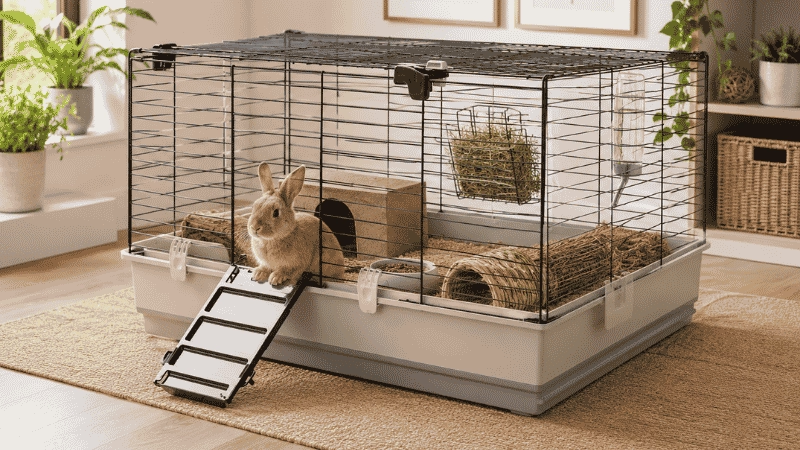
What should a bunny cage look like? It should have distinct zones for different activities, not be a single empty box.
The sleeping area should be a quiet, dark, enclosed space. A wooden hideout, a cardboard box with a hole cut out, or a covered cat bed works well. Your rabbit needs somewhere to retreat and feel completely invisible. In the wild, rabbits dig burrows and build nests for safety. Our guide on bunny nest explains how wild rabbits create hiding spaces, and the same principle applies to pet housing.
The litter area should be in one corner. Rabbits naturally choose a corner as a toilet. Place a large, low-sided litter box there. Fill with paper-based litter or hay. Never use clay or clumping cat litter.
The feeding area includes a hay feeder and a heavy ceramic bowl for pellets and fresh vegetables. The water bowl should be placed nearby but not so close that food debris falls into it.
The exercise and play area takes up most of the cage. Your rabbit needs open floor space to hop, stretch, and explore. Scatter toys, tunnels, and chew objects around this area.
What a rabbit cage should look like also includes soft flooring. Wire floors are unacceptable. Use fleece blankets, foam puzzle mats, or linoleum. To understand why wire floors are harmful, read rabbit paw anatomy, which explains how sensitive rabbit feet are.
The ideal rabbit cage layout allows your rabbit to move freely between zones without feeling cramped. A rabbit should be able to hop from the sleeping area to the litter box, then to the food and water, and then to the exercise area without obstruction.
What should a bunny cage look like? It should have separate zones: a sleeping hideout, a litter corner, a feeding station, and open exercise space. The layout should allow free movement between zones without crowding.
How to Set Up a Rabbit Cage
How to set up a rabbit cage correctly makes the difference between a stressed rabbit and a happy one. Follow these steps.
Step 1: Choose the location. Place the cage in a social area like the living room or home office. Rabbits are social animals. An isolated rabbit becomes lonely and depressed.
Step 2: Install the flooring. Never use wire flooring. Place a solid plastic tray, wood, or linoleum at the bottom. Add soft bedding such as fleece blankets, foam mats, or thick layers of hay.
Step 3: Set up the litter box. Observe where your rabbit naturally urinates. Place a large, low-sided litter box in that corner. Fill with paper-based litter or hay. Add a handful of hay to encourage use.
Step 4: Add hay and water. Place a hay feeder near the litter box. Rabbits like to eat hay while using the litter box. Use a heavy ceramic water bowl. Bowls are more natural and encourage more drinking than bottles.
Step 5: Add a food bowl. Use a heavy ceramic bowl for pellets. Limit pellets to 1-2 tablespoons per day for an average adult rabbit. Too many pellets cause obesity.
Step 6: Provide a hideout. Place a wooden box, cardboard box, or covered bed in a quiet corner. Your rabbit needs a place to feel safe.
Step 7: Add enrichment. Include chew toys, tunnels, a digging box, and items to toss. Rotate toys weekly to prevent boredom.
Rabbit set up is not a one-time task. You will need to clean daily, replace bedding, and adjust the layout as your rabbit’s needs change. Senior rabbits need easier access to litter boxes. Baby rabbits need extra hiding spots.
Bunny set up for a free-roam rabbit is different. The cage becomes a home base with the door left open. The rest of the room is rabbit-proofed. This is the most natural setup but requires the most preparation.
How to set up a rabbit cage: place it in a social area, install solid flooring, add a litter box in the corner, provide hay and water, add a hideout, and include enrichment toys. Clean daily.
What Do Rabbits Need in Their Cage
What do rabbits need in their cage to be happy and healthy? The list is longer than most new owners expect.
Unlimited hay. This is the most important item. Hay should be available at all times. Timothy hay is best for adults. Hay keeps the digestive system moving and wears down teeth.
Fresh water. Use a heavy ceramic bowl. Change water daily. Bowls are more natural and harder to tip than bottles.
Litter box. A large, low-sided box filled with paper-based litter or hay. Clean daily.
Hideout. A wooden box, cardboard box, or covered bed. Your rabbit needs to feel invisible sometimes.
Chew toys. Apple sticks, willow balls, untreated wood blocks, cardboard tubes. Rotate weekly.
Tunnels. Cat tunnels, concrete form tubes, or collapsible fabric tunnels. Rabbits love running through them.
Digging box. A shallow box filled with shredded paper, hay, or child-safe soil. Many rabbits need to dig.
Platform or shelf. A low, sturdy platform gives your rabbit a place to survey the room. Rabbits feel safer when they can see their environment.
Soft resting mat. A fleece blanket or foam mat. Rabbits can develop sore hocks on hard surfaces.
Beyond these physical items, your rabbit needs social interaction. A rabbit left alone all day with no enrichment will become depressed, even in a large cage. Housing two bonded rabbits together is ideal. When rabbits are stressed or frustrated by poor housing, they may show behavioural signs. One clear indicator of extreme distress is a rabbit scream, which no owner wants to hear.
What do rabbits need in their cage? Unlimited hay, fresh water, a litter box, a hideout, chew toys, tunnels, a digging box, a platform, and soft bedding. Enrichment is essential for mental and physical health.
Indoor Rabbit Cage Setup Ideas
Indoor rabbit cage setup ideas vary based on your space, budget, and your rabbit’s personality. Here are the most common options.
X-pen enclosure. An exercise pen (x-pen) is the most popular option. A single x-pen provides about 4 feet by 4 feet of space. Connect two pens for 6 feet by 3 feet. X-pens are flexible, portable, and affordable.
Rabbit condo. A multi-level wooden or metal enclosure. Rabbit condos save floor space by using vertical levels. Ensure ramps are not too steep and cover wire levels with soft material.
Nic cube cage. DIY enclosure made from wire grid panels. You can build any shape and size. Add a second level using coroplast or wood. Very customisable.
Large dog crate. A dog crate for a Great Dane-sized dog works well. Cover the wire floor with solid material. Add a hideout and litter box. Dog crates are secure and easy to clean.
Free-roam setup. The cage door is left open. The rabbit has access to a rabbit-proofed room or the entire home. This is the most natural and enriching option but requires the most preparation.
Apartment rabbit setup requires creativity. Use vertical space with shelves and platforms. Ensure the rabbit has a solid floor to walk on. Tile or laminate floors are slippery for rabbits. Add rugs or foam mats for traction.
Safe indoor rabbit space requires rabbit-proofing. Cover electrical cords with cord protectors. Block access to dangerous areas like behind appliances. Remove toxic plants. Secure heavy furniture that could tip over.
Rabbit flooring ideas include fleece blankets (washable), foam puzzle mats (soft, easy to clean), linoleum (waterproof), and low-pile rugs (provide traction). Avoid carpet that rabbits can chew and ingest.
Indoor rabbit cage setups include x-pens, rabbit condos, nic cube cages, large dog crates, and free-roam rooms. Apartment setups should use vertical space and soft flooring. Rabbit-proofing is essential before allowing free-roam time.
The Perfect Indoor Rabbit Setup Explained
What rabbits secretly need to stay happy is space, variety, and control over their environment. Many rabbit cages fail because they provide none of these.
Rabbits need to move. In the wild, they roam large territories. A rabbit confined to a 2 foot by 3 foot cage cannot exercise, cannot explore, and cannot express natural behaviours. This leads to obesity, muscle loss, depression, and destructive behaviours. A rabbit frustrated by confinement may also become aggressive, as covered in our guide on why rabbits bite.
Why many cages fail is simple: they were designed for humans, not rabbits. Pet stores sell cages that look attractive but are functionally prisons. A rabbit needs to hop, run, jump, dig, stretch, and hide. A tiny cage with a plastic igloo does not provide these opportunities.
Rabbits actually use space differently than many owners realise. They do not just sit in one spot. They run, they binky (jump and twist in the air), they explore, they rearrange objects. An ideal rabbit cage allows all of these behaviours.
Enrichment is as important as space. A rabbit with plenty of room but nothing to do is still a bored rabbit. Provide different textures, different toys, and different challenges. Rotate items weekly. Hide food in puzzle feeders. Create cardboard castles that can be destroyed.
The importance of movement cannot be overstated. Rabbits who cannot move freely develop stiff joints, weak muscles, and digestive problems. GI stasis, one of the leading causes of death in rabbits, is more common in sedentary rabbits with small cages.
One experienced rabbit owner described the difference: “I thought my rabbit was lazy. She just sat in her cage all day. Then I upgraded to a 4×4 x-pen with tunnels and platforms. Suddenly she was running, jumping, and binkying. She was never lazy. She was confined.”
The perfect indoor rabbit setup combines a large enclosure (minimum 6×3 feet) with daily free-roam time, varied enrichment, and soft flooring. Rabbits need space to move and things to do. A bored rabbit is an unhealthy rabbit.
Common Rabbit Housing Mistakes
Small rabbit cage problems are the most common mistake. A rabbit in a tiny cage cannot exercise, cannot stretch, and cannot express natural behaviours. This leads to obesity, depression, and behavioural problems.
Wire bottom rabbit cages are another major error. Wire floors cause sore hocks (painful pressure sores), foot infections, and chronic pain. Never use wire flooring. Cover all wire with solid material. Rabbit paw anatomy explains that rabbits have fur-covered feet without protective pads, making them especially vulnerable to wire floors.
Dirty rabbit cages cause respiratory infections. Ammonia from urine builds up quickly in small, poorly ventilated spaces. Spot clean daily. Full clean weekly. A dirty cage is not just unpleasant; it is dangerous.
Rabbit boredom signs include chewing cage bars, pulling out fur, lethargy, and aggression. These are not normal behaviours. They are signs that your rabbit is under-stimulated. Add more enrichment, more space, and more exercise time.
Lack of exercise in rabbits leads to obesity, muscle wasting, and GI stasis. A cage is not enough. Your rabbit needs 3-4 hours of exercise outside the cage every day. This is not optional.
Unsafe rabbit bedding includes pine and cedar shavings. These woods release phenols that damage rabbit livers. Use aspen shavings, paper-based litter, or fleece instead.
Poor ventilation in rabbit hutches is a risk for outdoor rabbits. Hutches can become stuffy in summer and damp in winter. Outdoor rabbits need sheltered, well-ventilated housing with separate sleeping and exercise areas.
One of the most common mistakes is assuming a rabbit is fine because it appears calm. Rabbits are prey animals. They hide pain and stress. A quiet rabbit in a small cage may not be content. It may be shut down.
Common rabbit housing mistakes include too small cages, wire flooring, dirty cages, no enrichment, no exercise, unsafe bedding, and poor ventilation. Most pet store cages are inadequate. Always prioritise welfare over convenience.
Signs Your Rabbit’s Cage Is Too Small
Your rabbit may not be able to tell you the cage is too small, but the behaviour will. Watch for these signs.
Chewing cage bars. This is not normal behaviour. Rabbits chew bars out of frustration and boredom. A rabbit with enough space and enrichment does not chew bars.
Repetitive pacing or circling. A rabbit that paces back and forth or circles the same spot is stressed. This stereotypy indicates the cage is too small.
Reduced activity. A rabbit that lies in one corner and rarely moves may be depressed. In small cages, rabbits learn helplessness. They stop trying to move because there is nowhere to go.
Aggression when the cage is opened. A rabbit that lunges or bites when you reach in may be defending its only space. A crowded, stressful environment makes rabbits territorial and aggressive. For more on this, see our article on why rabbits bite.
Fur pulling or overgrooming. Stress behaviours include pulling out fur or overgrooming to the point of bald spots. This is a sign of psychological distress.
Obesity despite a proper diet. If your rabbit is overweight but eats correctly, the problem is likely lack of exercise. A rabbit needs space to move.
Tooth grinding (loud, harsh). Quiet, soft grinding is a sign of contentment. Loud, harsh grinding is a sign of pain or extreme stress.
If you notice any of these signs, the solution is not punishment. It is a larger enclosure, more enrichment, and more exercise time.
Signs your rabbit’s cage is too small include chewing bars, repetitive pacing, reduced activity, aggression, fur pulling, obesity, and harsh tooth grinding. These are stress behaviours, not personality traits.
The Biggest Mistakes Rabbit Owners Make
Buying the cage sold with the rabbit is a trap. Pet stores package rabbits with cages that are far too small. The cage is designed to be sold, not to house a rabbit long-term. Always buy the largest enclosure you can afford and fit in your home.
Assuming rabbits need little space is a dangerous myth. Rabbits are active, intelligent animals. In the wild, they roam large territories. A small cage is not a home. It is a prison.
Ignoring enrichment leads to behavioural problems. A rabbit without toys, tunnels, and things to do becomes bored and destructive. Chewing cage bars, digging at corners, and aggression are all signs of an under-stimulated rabbit.
Keeping rabbits isolated is another common error. Rabbits are social animals. A single rabbit needs daily human interaction. Better yet, adopt a bonded pair. Two rabbits keep each other company and are not much more work than one.
Not allowing daily exercise is perhaps the biggest mistake. A rabbit in a cage all day, even a large cage, cannot get enough exercise. Rabbits need at least 3-4 hours of free-roam time every day in a rabbit-proofed space.
One rabbit owner shared: “I thought a 4×4 x-pen was huge. My rabbit seemed fine. Then I started letting her free-roam in the living room. Now she refuses to go back in the x-pen. She was never fine. She was just tolerating it.”
The biggest mistakes rabbit owners make are buying the cage sold with the rabbit, assuming rabbits need little space, ignoring enrichment, keeping rabbits isolated, and not allowing daily exercise. All of these can be corrected with better housing and care.
Final Thoughts
An ideal rabbit cage is not a small hutch from a pet store. It is a spacious, thoughtfully designed living space that meets all your rabbit’s physical and psychological needs. A rabbit needs room to hop, stretch, stand up, and lie flat. It needs a litter area, a sleeping hideout, a feeding station, and open exercise space. It needs soft flooring, enrichment, and daily social interaction.
Most importantly, a cage is not enough. Your rabbit needs daily exercise outside the cage. The ideal rabbit cage setup combines a large home base with several hours of free-roam time every day. This is not optional. Rabbits who are confined to small spaces develop health problems, depression, and destructive behaviours.
Investing in proper housing is investing in your rabbit’s health and happiness. A rabbit who can run, jump, hide, and explore is a rabbit who will live longer, stay healthier, and bond more strongly with you. The RSPCA, PDSA, RWAF, and House Rabbit Society all agree: bigger is better. Give your bunny the home it deserves.
Trusted Resources for Rabbit Housing
- RSPCA Rabbit Environment Guide – Expert advice on cage size and setup
- Rabbit Welfare Association & Fund (RWAF) – Housing standards and recommendations
- PDSA Rabbit Housing – UK veterinary charity guidance
- House Rabbit Society Housing FAQ – Indoor rabbit enclosure ideas
- Humane Society Rabbit Care – General rabbit care and housing
FAQ Section: Questions You Might Have
The ideal rabbit cage size for a medium rabbit is at least 6 feet by 3 feet (18 square feet). Giant breeds need at least 8 feet by 4 feet. Small breeds need the same 6 by 3 space; they are just as active as larger rabbits. The enclosure must be tall enough for your rabbit to stand upright without ears touching the top. The RWAF recommends this as the minimum permanent housing size, plus daily free-roam time.
How big should a rabbit cage be? Minimum 6 feet by 3 feet for a medium rabbit. Giant breeds need at least 8 feet by 4 feet. Most commercial cages are only 2 feet by 3 feet, which is far too small. A rabbit in a cage that size cannot take even two full hops. Always measure internal floor space yourself. Do not trust pet store labels.
No. Rabbits need daily exercise outside their cage. Even an ideal rabbit cage is not enough. Rabbits need at least 3-4 hours of free-roam time every day in a rabbit-proofed space. Without exercise, rabbits become obese, develop muscle wasting, and are at higher risk of GI stasis. A cage is a home base, not a prison.
What should a bunny cage look like? It should have separate zones: a sleeping hideout, a litter corner, a feeding station, and open exercise space. The floor must be solid (never wire). Add soft bedding like fleece or foam mats. The layout should allow your rabbit to move freely between zones without crowding. Place the cage in a social area of your home.
Rabbits need unlimited hay, fresh water, a litter box, a hideout, chew toys, tunnels, a digging box, a platform or shelf, and soft bedding. Hay is the most important item. It should be available at all times. Enrichment toys should be rotated weekly. A rabbit without these essentials will be stressed, bored, and unhealthy.
No. Wire-bottom cages are never safe for rabbits. Wire floors cause sore hocks (painful pressure sores), foot infections, and chronic pain. Rabbits do not have paw pads like cats or dogs. Their feet are covered in fur and are not designed for wire. Cover all wire with solid flooring such as plastic trays, wood, linoleum, fleece, or foam mats.
Free-roam housing (no cage, full access to a rabbit-proofed room or home) is the most natural and enriching option. However, it requires significant preparation: covering electrical cords, blocking dangerous areas, removing toxic plants, and securing furniture. Many owners use a large x-pen as a home base with daily free-roam time. Both approaches are better than permanent confinement.
The best indoor rabbit setup is either a large x-pen (minimum 6×3 feet) attached to a free-roam area, or a full free-roam room. The enclosure must have solid flooring, a litter box, a hay feeder, a water bowl, a hideout, and enrichment toys. Place it in a social area like the living room. Add tunnels, platforms, and a digging box for variety.
Spot clean the litter box and remove soiled bedding daily. Do a full cage clean weekly: remove all bedding, wipe down surfaces with a vinegar-water solution (safe for rabbits), replace with fresh bedding, and clean the litter box thoroughly. A dirty cage causes ammonia buildup, which leads to respiratory infections.
A Holland Lop needs an enclosure at least 6 feet by 3 feet. Use an x-pen or build a nic cube cage. Add low, wide platforms for climbing. Ensure the litter box has low sides for easy access. Never use wire flooring. Holland Lops are prone to back problems, so avoid steep ramps or high jumps. Soft flooring is essential.
A Mini Rex rabbit cage must have soft flooring. Mini Rex rabbits have thinner fur on their feet, making them prone to sore hocks. Use fleece blankets, foam puzzle mats, or thick layers of hay. Avoid wire floors, carpet, and hard plastic. The enclosure should still meet the minimum 6×3 foot size. Add plenty of enrichment to keep this active breed stimulated.
A traditional outdoor hutch is almost never enough. Most hutches are far too small. They also isolate the rabbit from family interaction. Outdoor rabbits face predators, extreme temperatures, and parasites. If you use a hutch, it must be attached to a large, secure run (minimum 6×3 feet). However, indoor housing with daily free-roam time is always better for rabbit welfare.