
Wild Bunny Rabbits as Pets
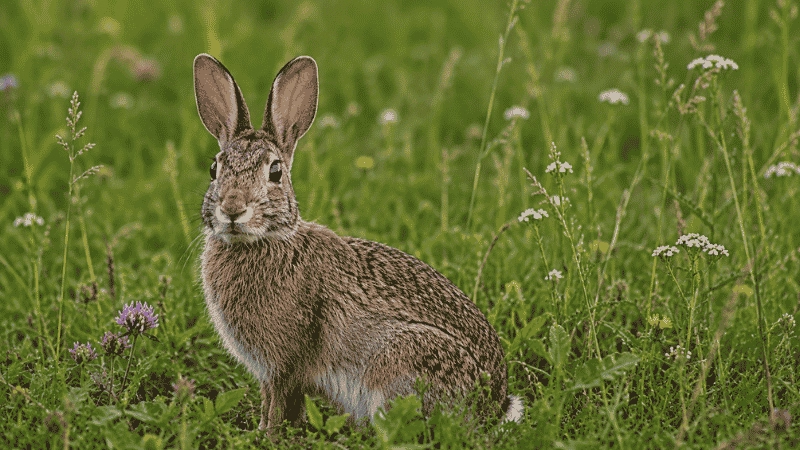
You find a tiny rabbit in your yard. It sits perfectly still. It does not run away. It looks calm, maybe even friendly. Suddenly you wonder: can wild bunny rabbits become pets? The question seems reasonable. But the answer is far more complicated than most people realize.
Wild bunny rabbits as pets is a common fantasy. People see a cottontail in their garden or a baby bunny alone in the grass and feel an urge to rescue it. The animal appears helpless. Surely you can give it a better life. Surely it will learn to love you.
Wildlife experts and rabbit rescue organizations strongly advise against this. Wild bunny rabbits as pets almost never works. The animals suffer from chronic stress, develop life-threatening health problems, and rarely survive more than a few months in captivity. Even when they do survive, they remain fearful and wild, not affectionate companions.
This guide explains why wild bunny rabbits cannot be pets, the difference between wild and domestic rabbits, what to do if you find a baby rabbit, and how to ethically help wildlife without causing harm.
Wild bunny rabbits as pets is not recommended by wildlife experts. Wild rabbits have complex needs, high stress sensitivity, and strong survival instincts that make them unsuitable for domestic life. Most wild rabbits taken into captivity die within weeks or months.
Can Wild Bunny Rabbits Be Pets?
The short answer is no. Wildlife experts consistently advise against keeping wild bunny rabbits as pets. The Environmental Literacy Council states that attempting to domesticate a wild rabbit is not only incredibly difficult but often harmful to the animal [citation:1]. Wild rabbits have very specific needs that are nearly impossible for the average person to meet.
Can wild rabbits be pets in any situation? Even with the best intentions, wild rabbits remain fearful of humans. They are born with a strong fight-or-flight instinct programmed to be wary of people and other animals [citation:1]. This inherent fear makes them incredibly susceptible to stress, a factor that can quickly lead to severe health issues and even death in captivity.
Can you keep a wild bunny as a pet if you raise it from birth? Many people assume a baby rabbit raised by hand will bond with them. This is a dangerous misconception. Wildlife rehabilitators report that even hand-raised wild rabbits rarely become tame. Their wild instincts remain strong. A rabbit that tolerates your presence is not necessarily a rabbit that enjoys your company.
Can you keep wild bunnies as pets legally? In most places, it is illegal to keep wild animals as pets without proper permits and licenses [citation:1]. Wildlife protection laws in many states and countries prohibit capturing or possessing native wildlife. You could face fines or other penalties for unlawfully keeping a wild animal.
The question “can a wild bunny be a pet” has a clear answer from the scientific community. Rabbits were domesticated only about 1,400 years ago in southern France [citation:2][citation:7]. This domestication involved hundreds of small genetic changes that reduced fear responses and increased tolerance for human contact [citation:7]. Wild rabbits never went through this process. They remain genetically wild and behaviorally distinct from domestic rabbits.
Key takeaway: Wild bunny rabbits cannot be domesticated as individuals. Their genetics, instincts, and stress responses make them unsuitable for captivity. Wildlife experts and laws overwhelmingly advise against keeping wild rabbits as pets.
Wild Rabbit vs Domestic Rabbit
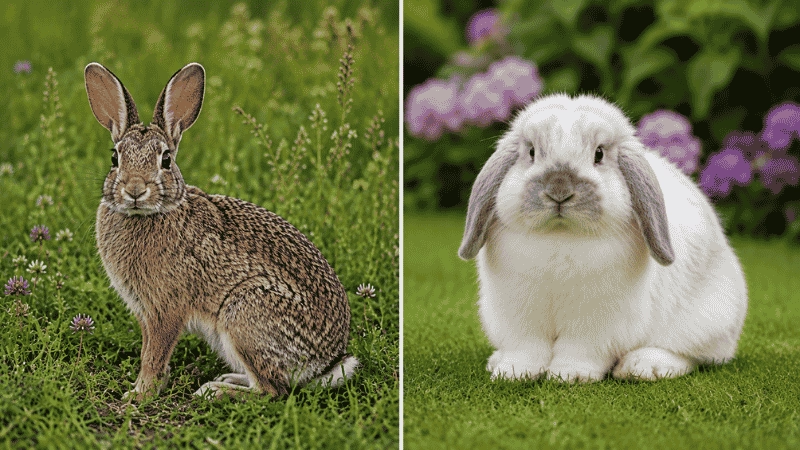
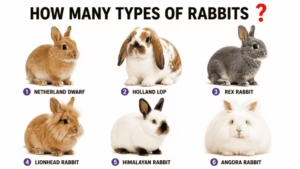
Understanding the difference between wild rabbits and domestic rabbits is essential. Many people assume a rabbit is a rabbit. But the differences are profound and rooted in thousands of years of separate evolution.
Domestic rabbits (Oryctolagus cuniculus domesticus) are descended from European wild rabbits. They were selectively bred over centuries for docility, tolerance of humans, and suitability for life in captivity [citation:6]. Pet rabbits have been bred as house companions since the Victorian era [citation:6].
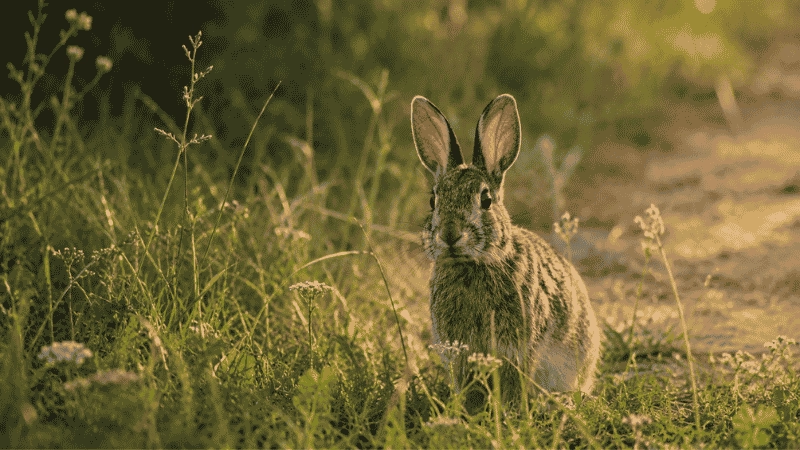
Wild rabbits, particularly cottontails in North America, belong to a different genus (Sylvilagus). They have never been domesticated. Their entire biology and behavior are optimized for survival in the wild, not for life in a cage or house.
The following table compares key differences:
| Trait | Wild Rabbit (Cottontail) | Domestic Rabbit |
|---|---|---|
| Temperament | Fearful, alert, independent | Varies by breed, can be calm and social |
| Human tolerance | Extremely low, flees from humans | High, bred for human interaction |
| Stress level | Very high in captivity | Moderate, can adapt to home environments |
| Life expectancy | 1-2 years in wild [citation:1] | 8-12 years with proper care |
| Suitability as pets | None | Good for committed owners |
BBC Wildlife Magazine notes that pet rabbits rarely completely lose their wild genes, which suggests they could become genetically wild again if released [citation:2]. This underscores how close domestic rabbits still are to their wild ancestors, yet the behavioral differences remain significant.
Wild rabbit behavior is complex and closely related to survival instincts. Research published in PubMed explains that stress, especially stress related to predation, crowding, heat, and inappropriate caging, profoundly affects rabbit behavior [citation:3]. A wild rabbit in captivity experiences these stressors constantly.
For a deeper understanding of how rabbit anatomy supports wild survival, including their powerful hind legs and sensitive hearing, read anatomy of a rabbit.
Wild rabbits and domestic rabbits are different at the genetic, behavioral, and physiological level. Wild rabbits have never been domesticated and cannot thrive in captivity. Domestic rabbits have been selectively bred for centuries for life with humans.
Can You Domesticate a Wild Bunny?
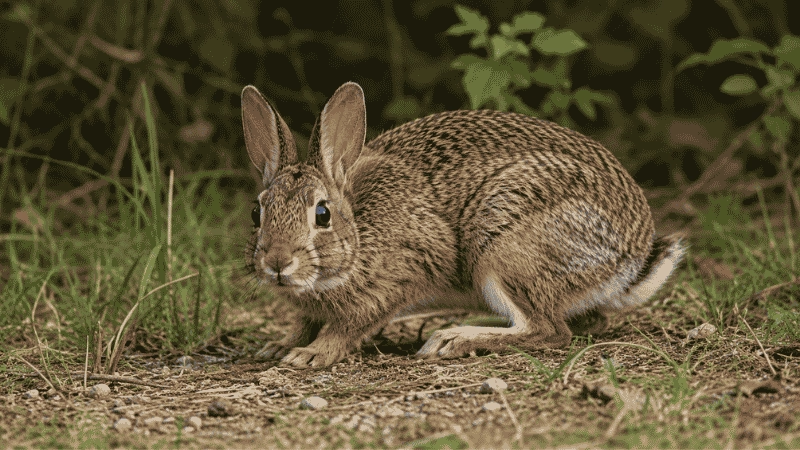
Domestication and taming are different processes. Taming an individual wild animal means teaching it to tolerate human presence. Domestication means selectively breeding a species over many generations for traits desirable to humans [citation:7].
Can you domesticate a wild bunny as an individual? No. Domestication takes generations, not weeks or months. An individual wild rabbit remains wild regardless of how much time you spend with it.
Can you tame wild rabbits to the point where they enjoy handling? Wildlife rehabilitators consistently report that even hand-raised wild rabbits rarely become truly tame. They may tolerate being held, but they do not enjoy it. They show signs of fear and stress during handling.
How to tame a wild rabbit is a common internet search. The honest answer is that you cannot. The RSPCA explains that rabbits placed on their backs enter a state called tonic immobility, which is a fear response, not relaxation [citation:8]. A rabbit that stays still when handled is not calm. It is playing dead in hopes the predator will lose interest.
A research study from Uppsala University found that domestication changed about 100 regions of the rabbit genome, mostly in areas affecting brain and nervous system development [citation:7]. These genetic changes reduced fear responses. A wild rabbit lacks these genetic adaptations entirely.
The biggest mistake people make is confusing a rabbit that freezes with a rabbit that is comfortable. Wild rabbits freeze when frightened. This freezing behavior looks like calmness, but it is actually intense fear. What most people interpret as friendliness is often terror.
For more on how rabbits communicate distress, including subtle body language signs, read what does a rabbit scream sound like.
Domestication takes generations of selective breeding. An individual wild rabbit cannot become domesticated. Taming may reduce fear slightly, but the rabbit remains wild at its core and will experience chronic stress in captivity.
What Happens If You Raise a Wild Rabbit?
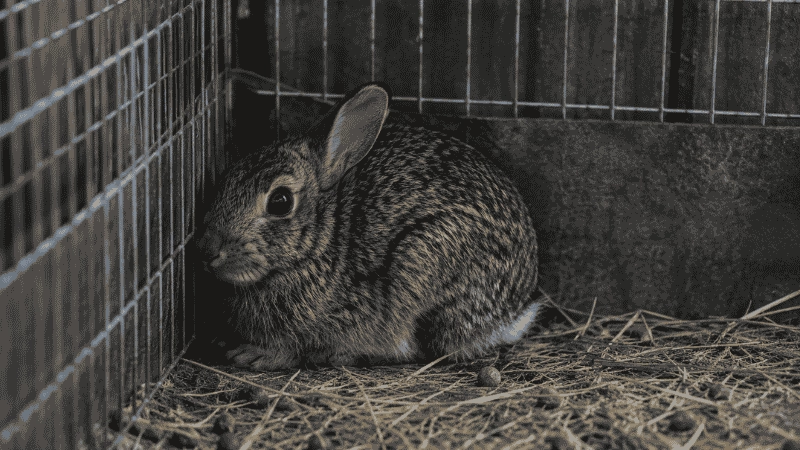
People who attempt to raise wild bunny rabbits as pets often report similar outcomes. Wildlife rehabilitators see these cases frequently. The results are rarely positive.
What happens if you raise a wild rabbit from a baby? Initially, the baby may seem to thrive. It eats, grows, and becomes active. But as the rabbit matures, wild instincts emerge. It may become aggressive, fearful, or destructive. Many wild rabbits raised in captivity begin refusing food, injuring themselves in panic, or showing signs of severe stress.
Pet wild bunny situations often end with the rabbit dying suddenly. Wildlife rehabilitators report that many baby rabbits literally die from the stress of captivity [citation:1]. Their delicate systems cannot handle the constant fear response.
Even wild rabbits that survive to adulthood remain poor companions. They bite and scratch when handled. They do not seek human interaction. They spend most of their time hiding. A wild rabbit in a cage is a terrified animal, not a happy pet.
Rabbit rescue organizations note that raising a wild rabbit also creates release challenges. Once a wild rabbit has been in captivity for more than a few weeks, it cannot easily return to the wild. It may have lost natural foraging skills or become imprinted on humans. Wildlife rehabilitators aim for release whenever possible, but captivity complicates this goal.
The New England cottontail breeding program, run by zoos and wildlife agencies, deliberately keeps the rabbits away from people to ensure they stay wild and ready to thrive on their own [citation:4]. This conservation approach shows that even professionals working to save endangered rabbit species avoid human contact to preserve wild instincts.
For more on rabbit paw anatomy and how their feet are adapted for wild survival, read rabbit paw anatomy.
Wild rabbits raised in captivity often die from stress-related illnesses. Survivors remain fearful and may injure themselves in panic. Wildlife rehabilitators aim to release wild rabbits, not keep them as pets.
How to Care for a Wild Rabbit If You Find One
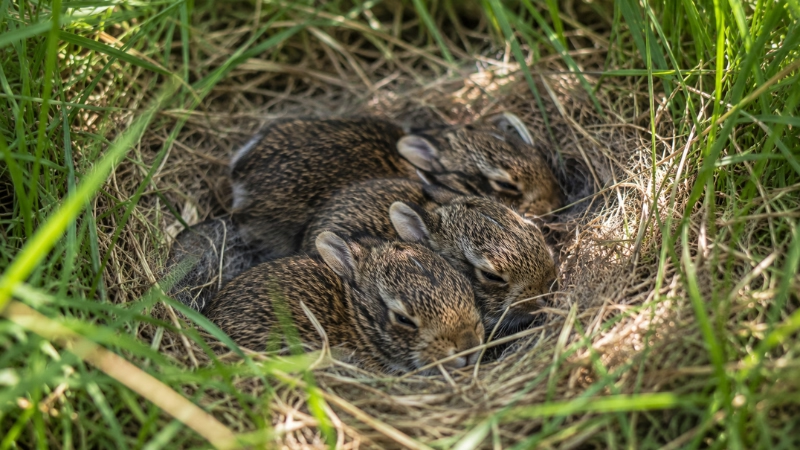
Many people search for “how to care for a wild rabbit” because they found a baby bunny and want to help. The most important advice is to help without taking the rabbit into your home.
Wild baby rabbit care begins with determining if the rabbit actually needs help. In most cases, it does not. Mother rabbits leave their nests for most of the day, visiting only once or twice every 24 hours to nurse [citation:1]. A nest without a mother visible is not abandoned.
How do you care for a wild rabbit that appears injured? If the rabbit has visible wounds, is bleeding, has broken bones, is covered in fly eggs, or is cold and unresponsive, it needs professional help. Contact a wildlife rehabilitator immediately. Do not attempt to treat injuries yourself.
Baby wild rabbit care at home is strongly discouraged. Even experienced wildlife rehabilitators have low success rates with infant rabbits. Their digestive systems are extremely delicate, and improper feeding causes fatal diarrhea [citation:1].
Injured wild rabbit care is best left to professionals. Wildlife rehabilitators have specialized training, proper formula, and appropriate housing. They also have permits that make it legal for them to possess wild animals.
If you must contain a wild rabbit temporarily before transferring to a rehabilitator, follow these guidelines: place the rabbit in a cardboard box with soft bedding, keep it in a warm, dark, quiet area, do not offer food or water, and do not handle it unnecessarily. Contact a rehabilitator as soon as possible.
Call a wildlife rehabilitator immediately if the rabbit is injured, has fly eggs or maggots, is cold and unresponsive, was caught by a cat or dog, or has been in the same spot for over 24 hours without moving.
For more on what rabbit nests look like and how to identify them, read bunny nest.
Most wild baby rabbits found alone do not need help. Their mothers are nearby. If a rabbit is truly injured or orphaned, contact a wildlife rehabilitator. Do not attempt to raise wild rabbits yourself.
Can Cottontail Rabbits Be Pets?
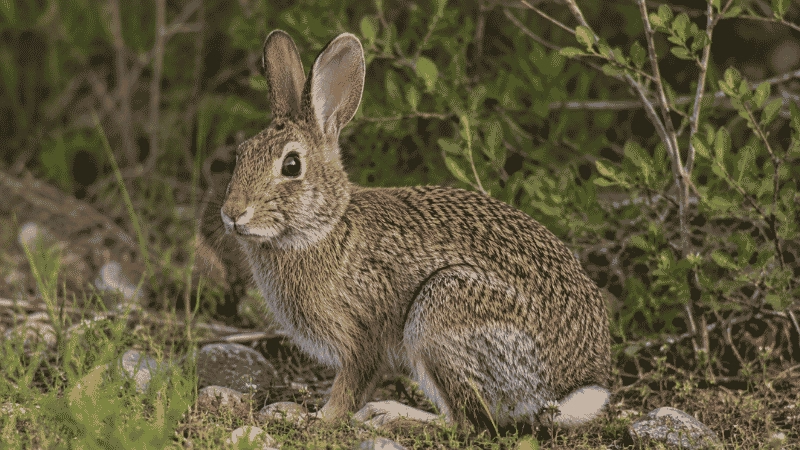
Cottontails are the most common wild rabbits in North America. Many people ask: can cottontail rabbits be pets? The answer is no.
Cottontails have never been domesticated. They are solitary in the wild, unlike European rabbits that live in social warrens. A cottontail kept in captivity remains fearful and stressed. It does not adapt to human handling.
Can you keep a cottontail rabbit as a pet if you find a baby? Wildlife rehabilitators report that baby cottontails are extremely difficult to keep alive. Their survival rate in captivity is very low. Even those that survive remain wild and unsuitable as pets.
A cottontail as a pet faces multiple welfare problems. It cannot exercise properly in a cage. It cannot eat its natural diet of varied wild plants. It cannot express natural behaviors like digging burrows or fleeing from threats. The constant stress weakens its immune system and leads to illness.
One misconception is that a calm cottontail is a happy cottontail. This is incorrect. Cottontails freeze when frightened. A rabbit that sits perfectly still is terrified, not comfortable. Wildlife experts explain that this tonic immobility is a last-ditch survival response, not a sign of relaxation [citation:8].
The U.S. Fish and Wildlife Service has invested millions in breeding programs for endangered New England cottontails. These programs deliberately keep the rabbits away from humans to preserve their wild instincts [citation:9]. Even conservation breeding programs do not create pet rabbits.
Cottontail rabbits are wild animals that cannot thrive in captivity. They remain fearful, stressed, and prone to illness. Wildlife experts and conservation programs emphasize keeping cottontails wild.
Are Wild Rabbits Friendly?
A wild rabbit that does not run away may seem friendly. But wildlife experts caution against interpreting stillness as friendliness.
Are wild rabbits friendly to humans? No. Wild rabbits evolved to fear humans as potential predators. A rabbit that approaches or tolerates human presence is likely sick, injured, or habituated due to feeding. Habituation is not friendship. It is a learned behavior that puts the rabbit at risk.
Wild rabbit aggression is rare. Wild rabbits prefer to flee rather than fight. However, a cornered wild rabbit can bite and scratch. Their teeth are sharp, and their kicks are powerful. Handling a wild rabbit without training risks injury to both the person and the animal.
Wild rabbit fear of humans is a survival mechanism. Rabbits that lose this fear are more likely to be killed by cars, dogs, cats, or other predators. Feeding wild rabbits makes them less afraid, which shortens their lives.
Handling wild rabbits safely is not something most people should attempt. Wildlife rehabilitators use specific techniques to minimize stress. Even with training, handling causes fear responses. The RSPCA notes that rabbits show both physiological and behavioral indicators of stress and fear during handling, including flattened ears, widened eyes, and tensed muscles [citation:8].
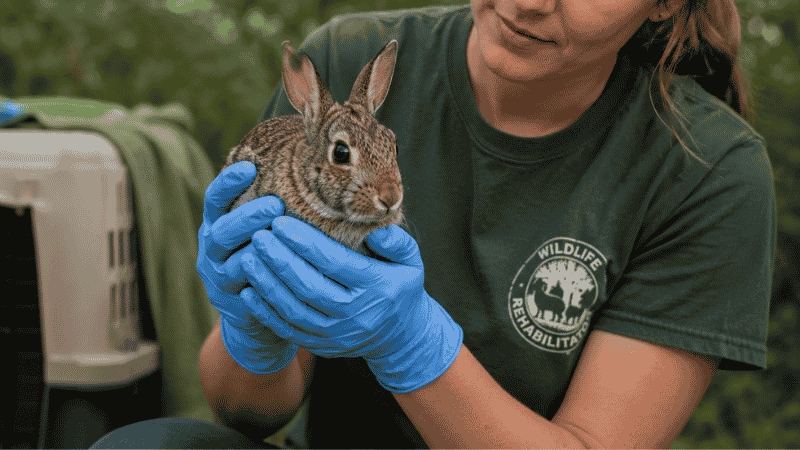
If you must handle a wild rabbit, wear thick gloves. Tularemia (rabbit fever) is a bacterial disease that can be transmitted from wild rabbits to humans [citation:1]. Symptoms include fever, ulcers, and swollen lymph nodes. Always wash your hands thoroughly after any contact with wild rabbits.
Wild rabbits are not friendly. A rabbit that stays still is likely frozen in fear. Wild rabbits fear humans as predators, and this fear keeps them alive. Do not attempt to handle wild rabbits without training and protective gear.
Ethical and Legal Concerns
Keeping wild bunny rabbits as pets raises serious ethical and legal questions. Wildlife experts consistently advise against it.
Keeping wild animals as pets is illegal in most jurisdictions. State wildlife agencies generally prohibit capturing and possessing native wildlife without permits [citation:5]. Some states allow possession of certain species with restrictions, but rabbits are typically protected [citation:5]. Violating wildlife laws can result in fines, confiscation of the animal, and legal charges.
Wildlife protection laws exist for good reason. Wild animals belong in the wild. Removing them from their natural habitat disrupts ecosystems and harms individual animals. The St. Lawrence County public health guidance explicitly states: “Do not keep wildlife as pets. It is against the law” [citation:10].
Ethical rabbit rescue means contacting a wildlife rehabilitator, not keeping the animal yourself. Rehabilitators have the training, facilities, and permits to provide appropriate care. Their goal is to release healthy animals back into the wild.
Rabbit rehabilitation centers exist across North America. A quick online search for “wildlife rehabilitator near me” will help you find licensed professionals. Many are open 24 hours for wildlife emergencies.
Wild rabbit conservation is important. Cottontail populations face habitat loss and competition from introduced species. Removing rabbits from the wild further threatens local populations. The ethical choice is to leave wild rabbits alone unless they are genuinely injured or orphaned, and then to transfer them to professionals.
For more on rabbit anatomy and how their bodies are adapted for wild survival, including their powerful hind legs and specialized digestion, read anatomy of a rabbit.
Keeping wild rabbits as pets is illegal in most places and ethically problematic. Wildlife belongs in the wild. If you find a rabbit that needs help, contact a licensed wildlife rehabilitator.
The Real Truth About Wild Bunny Rabbits as Pets
Many myths surround the idea of wild bunny rabbits as pets. Understanding the facts helps you make ethical decisions.
Myth: Wild rabbits make great pets if you raise them from babies. Fact: Even hand-raised wild rabbits remain fearful and stressed in captivity. Their survival instincts are too strong to be bred out in one generation.
Myth: A calm wild rabbit is a happy rabbit. Fact: Wild rabbits freeze when frightened. This tonic immobility is a fear response, not relaxation. The rabbit is terrified.
Myth: Wild rabbits can be tamed with enough patience. Fact: Taming an individual wild rabbit may reduce its fear slightly, but it will never become truly domesticated. It will always prefer to avoid humans.
Myth: Releasing a captive wild rabbit is easy. Fact: Rabbits raised in captivity often lack the skills to survive in the wild. They may not recognize predators, find food, or avoid cars. Release is rarely successful.
Myth: It is kind to rescue a wild rabbit from nature. Fact: Removing a healthy wild rabbit from its environment is not rescue. It is capture. The rabbit was surviving on its own before you intervened.
What happens when you raise a wild bunny? You cause chronic stress, increase disease risk, and likely shorten its life. The kindest thing you can do for a wild rabbit is leave it wild.
For a deeper look at rabbit behavior and body language, including how to recognize signs of fear and stress, read what does a rabbit scream sound like.
The truth is that wild rabbits are not pets. They cannot be domesticated as individuals, they suffer in captivity, and they belong in the wild. If you want a rabbit companion, adopt a domestic rabbit from a rescue shelter.
What People Often Get Wrong About Wild Bunnies
Rabbit owner communities and wildlife rescue groups share consistent observations about common mistakes people make with wild bunnies.
Most baby bunnies found alone are not abandoned. Mother rabbits intentionally stay away from the nest to avoid attracting predators. A nest with no mother visible for hours or even a full day is almost certainly still being cared for.
Touching a baby bunny does NOT automatically cause abandonment. This is a persistent myth. Mother rabbits have a weak sense of smell compared to many other mammals. However, handling still stresses babies and should be avoided.Many people accidentally remove healthy babies from nests. Well-meaning rescuers see a nest without a mother and assume the babies are orphaned. They bring the bunnies inside and unintentionally cause their death through stress or improper feeding.
A baby rabbit with open eyes, full fur, and the ability to hop is old enough to be independent. It does not need rescue. The mother is still nearby but not constantly present.
Keeping wild rabbits as pets rarely succeeds. Even if a baby survives to adulthood, it remains a wild animal. It will be fearful, stressed, and potentially aggressive. Wildlife rehabilitation centers report that most wild rabbits raised in captivity die within the first year or live in chronic distress.
The most common mistake is assuming an unattended nest is abandoned. Mother rabbits visit only once or twice daily. Most baby bunnies found alone are not orphaned. The best help is often no help at all.
Final Thoughts
Wild bunny rabbits as pets is an appealing idea. The animals are small, fluffy, and seemingly helpless. But wildlife experts, veterinarians, and conservationists all agree: wild rabbits belong in the wild. They cannot be domesticated as individuals. They suffer in captivity. They die from stress-related illnesses. And keeping them is often illegal.
The best way to help wild rabbits is to leave them alone. If you find a nest in your yard, protect it from lawn mowers and pets, but do not move it. If you find a baby bunny, observe from a distance before intervening. Most are not abandoned. If a rabbit is genuinely injured or orphaned, contact a licensed wildlife rehabilitator.
If you want a rabbit companion, adopt a domestic rabbit from a rescue shelter. Domestic rabbits have been bred for centuries for life with humans. They can thrive in a home environment, form bonds with their owners, and live 8 to 12 years with proper care. A domestic rabbit is a wonderful companion. A wild rabbit is a wild animal. Respect them both by keeping them where they belong.
Trusted Resources for Rabbit and Wildlife Care
- RSPCA Rabbit Behavior Guide – Veterinary-reviewed advice on rabbit behavior and welfare
- Humane Society Wild Rabbits – Guidance on finding baby rabbits and nest identification
- House Rabbit Society Orphaned Bunnies – Expert advice on when to intervene
- PDSA Wild Rabbit Guide – UK veterinary charity guidance on wild rabbits
- Animal Help Now – Find licensed wildlife rehabilitators in your area
You may also find these related guides helpful: anatomy of a rabbit covers the full body structure, and bunny nest provides nest identification tips.
FAQ Section: Questions You Might Have
No. Wildlife experts strongly advise against keeping wild bunny rabbits as pets. Wild rabbits have complex needs, high stress sensitivity, and strong survival instincts that make them unsuitable for domestic life. Most wild rabbits taken into captivity die within weeks or months from stress-related illnesses. It is also illegal in most places to keep wild animals as pets. If you want a rabbit companion, adopt a domestic rabbit from a rescue shelter.
No. Domestication takes generations of selective breeding. An individual wild rabbit cannot become domesticated. Taming may reduce fear slightly, but the rabbit remains wild at its core. Scientific research shows that domestication involved hundreds of genetic changes over 1,400 years. A wild rabbit lacks these genetic adaptations entirely.
A wild rabbit cannot be domesticated as an individual. Domestication is a population-level process that occurs over many generations through selective breeding. Wild rabbits are genetically distinct from domestic rabbits. They have never undergone the selective breeding process that produced docile pet rabbits.
No. Wild rabbits are not friendly to humans. A wild rabbit that does not run away is likely frozen in fear, not being friendly. Wild rabbits evolved to fear humans as predators. This fear keeps them alive. A rabbit that loses its fear of humans is more likely to be killed by cars, dogs, cats, or other predators.
No. Cottontails are the most common wild rabbits in North America, and they cannot thrive in captivity. They remain fearful, stressed, and prone to illness. Wildlife rehabilitators report that baby cottontails have very low survival rates in captivity. Even those that survive remain wild and unsuitable as pets.
You cannot. Keeping wild rabbits as pets is illegal in most jurisdictions, harmful to the animal, and ineffective for companionship. Wild rabbits suffer chronic stress in captivity, develop life-threatening health problems, and rarely survive more than a few months. If you find a wild rabbit that needs help, contact a licensed wildlife rehabilitator.
The best way to care for a wild rabbit is to leave it alone. Most wild rabbits found by people do not need help. If a rabbit is genuinely injured or orphaned, contact a wildlife rehabilitator. Do not attempt to care for a wild rabbit yourself. Improper care, especially improper feeding, is often fatal.
You may be able to reduce a wild rabbit’s fear slightly through repeated positive interactions. However, the rabbit will never become truly tame. It will always prefer to avoid humans. Wildlife experts note that even hand-raised wild rabbits rarely become comfortable with handling. A rabbit that tolerates handling is not necessarily enjoying it.
Wild rabbits fear humans because humans are potential predators. This fear is an evolutionary adaptation that increases survival. Rabbits that were less fearful of predators were more likely to be eaten. Over thousands of generations, natural selection produced rabbits that flee from humans and other large animals. This fear is not learned; it is instinctive.
First, determine if the rabbit actually needs help. A baby rabbit with open eyes, full fur, and the ability to hop is independent and does not need rescue. If the rabbit is injured, cold, covered in flies, or was caught by a cat or dog, contact a wildlife rehabilitator. Do not attempt to feed or raise the rabbit yourself. Most babies found alone are not abandoned.