
Rabbit Paw Anatomy
You look at your rabbit’s feet. They look soft and furry. But have you ever wondered what is underneath? The structure of rabbit feet is surprisingly different from cats or dogs. It is built for speed, sudden turns, and survival. Understanding it helps you keep your bunny healthy.
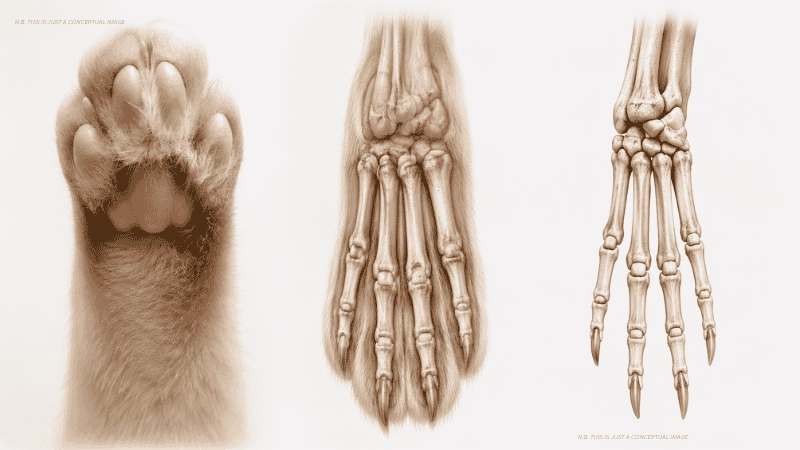
A basic fact about rabbits: they have no paw pads. Their feet are covered entirely in dense fur. This fur provides grip on natural surfaces like grass and soil. But on slippery floors, it offers almost no traction. Knowing this changes how you set up your rabbit’s living space.
This guide covers the essentials of rabbit feet: front and hind paws, claws, leg bones, movement mechanics, and common problems like sore hocks. You will also learn what healthy feet should look like.
This topic is just one part of understanding these amazing animals. For a complete look at rabbit bodies, from teeth to digestion, check out our detailed guide anatomy of a rabbit. That article covers the skeleton, organs, and how everything works together.
Rabbits have no paw pads like cats or dogs. Their feet are covered in dense fur that provides grip on grass but slips on smooth floors. Front feet have five claws, hind feet have four. The fur on the soles protects the skin but can wear down, causing painful sore hocks.
Do Rabbits Have Feet or Paws
A common question is whether rabbits have feet or paws. The answer is both. They have feet, and those feet end in paws. But rabbit paws look very different from dog or cat paws. The entire underside is furred with no bare pads.
How many feet does a rabbit have? Four. Like most four-legged animals, rabbits have two front feet and two hind feet. The hind feet are much larger and more powerful. This asymmetry is a key feature of their movement.
Rabbit claws are not retractable. They grow continuously and need regular trimming. Overgrown claws can curl under, change how a rabbit walks, and lead to foot problems.
In our experience, owners who understand these structures early are better at preventing foot issues. They know to check the fur on the bottom of the feet. They know to trim claws regularly.
Rabbits have four feet ending in paws. Their paws are unique: no bare pads, just dense fur. Front paws have five claws each. Hind paws have four claws each. The hind paws are much larger and more powerful. All claws grow continuously and need trimming.
Resource from the RSPCA rabbit health guide provides additional information on proper rabbit foot care.
Foot Structure and Function
The structure of rabbit feet reveals why these animals move with explosive power. The hind foot has a long, fused bone structure that gives length without extra joints that could break during high-speed turns.
Rabbit feet include tendons and ligaments that work like rubber bands. When a rabbit crouches, the tendons stretch. When it jumps, stored energy releases. This spring mechanism gives rabbits their amazing hop.
The fur on the bottom of their feet provides traction on soft ground. On hard surfaces, this fur compresses and becomes slippery. Rabbits also sweat through their feet, which helps with cooling.
Another interesting feature is that the hind feet are slightly angled outward. This gives rabbits a wider base when standing and allows sharper turns when running from predators.
In our observation, healthy rabbit feet have thick, even fur on the bottom. The claws should be short enough that they do not touch the ground when the rabbit stands. Any redness or bald spots is a concern.
Rabbit feet have long fused bones, spring-like tendons, and fur-covered soles. Hind feet are angled outward for balance and sharp turns. Sweat glands in the paws help cooling. Claws grow continuously and need regular trimming to prevent foot problems.
Leg Anatomy and Movement
Rabbit feet connect directly to the legs. The hind legs are much longer than the front legs. This asymmetry is key to rabbit movement. A rabbit in a relaxed position has its hind legs folded like a spring.
Their leg anatomy includes powerful thigh muscles attached to the femur. These muscles drive the hop. The lower leg bones are long and light, acting like a lever. The feet at the end transfer that force to the ground.
In the wild, rabbits can reach speeds of 55 kilometers per hour. Domestic rabbits have the same body structure, even if they never need to outrun a predator. This speed comes from the combination of leg muscles and foot design.
Rabbit leg anatomy features powerful thigh muscles and spring-like tendons. Hind legs are much longer than front legs, allowing explosive jumps. Front legs absorb landing impact. Rabbits can reach speeds of 55 km/h (35 mph) using their specialized leg and foot structure.
For more on how rabbits are built for survival, including their powerful hind legs, read anatomy of a rabbit. That guide covers the skeleton and movement mechanics in detail.
Sore Hocks: A Common Problem
Understanding rabbit feet explains one of the most common health problems: sore hocks. The underside of a rabbit’s foot is covered in fur, not tough pads. When rabbits live on hard or wire surfaces, the fur wears away.
Sore hocks usually start on the hind feet, which bear most of the weight. The heel area is the most common site of injury. This area has the least fur and the most pressure.
Signs of sore hocks include fur loss, red or inflamed skin, scabs, and swelling. Your rabbit may limp or sit differently. Prevention starts with proper flooring. Never use wire floors. Provide soft bedding like fleece or foam mats.
In our experience, sore hocks are preventable. Owners who understand rabbit foot structure make better choices about flooring. They check their rabbit’s feet regularly and catch problems early.
Sore hocks (pododermatitis) are common in rabbits. The fur on the bottom of the feet wears away on hard surfaces, causing painful sores. Prevention includes soft bedding, solid flooring, and regular foot checks. Severe cases need veterinary care.
Resource from the PDSA rabbit health guide provides more information on treating sore hocks.
Healthy Feet vs. Problem Feet
Healthy rabbit feet have thick, even fur on the bottom. The fur should be clean and dry. No bald spots, redness, or swelling. The claws should be short. This is what proper foot health looks like.
Check your rabbit’s feet weekly. Gently lift her rear end. Look at the bottom of both hind feet. Check the heels and between the claws. Then check the front feet.
Signs of problems include fur loss, red or inflamed skin, scabs, swelling, or discharge. Your rabbit may also limp or refuse to move. Any of these signs warrants a vet visit.
One Reddit user shared: “I learned about rabbit feet the hard way. My bunny developed sore hocks. I switched to fleece blankets and the hocks healed. Now I check her feet every week.”
Healthy rabbit feet have thick, even fur, no bald spots or redness, and short claws. Check your rabbit’s feet weekly. Signs of problems include fur loss, red skin, scabs, swelling, or discharge. Hind feet are most vulnerable because they bear the most weight.
How Rabbit Feet Help Survival
Rabbit foot structure is essential for survival in the wild. The fur on the bottom provides silent movement. When a rabbit runs on grass, the fur muffles sound. A predator relying on hearing will not detect the rabbit easily.
The spring-like tendons allow explosive acceleration. A rabbit can go from sitting to full speed in a split second. Their feet are designed for sudden bursts of speed.
The outward angle of the hind feet gives better balance during sharp turns. When chased, rabbits zigzag. Their foot structure allows rapid direction changes that predators cannot match.
The long hind feet act like snowshoes on soft ground. This prevents sinking and allows running where heavier predators would struggle.
Rabbit feet are built for survival. Fur-covered soles provide silent movement. Spring-like tendons enable explosive acceleration. Angled hind feet improve balance during sharp turns. Long feet act like snowshoes on soft ground. Every feature helps rabbits avoid predators.
Common Myths About Rabbit Feet
Several myths about rabbit feet confuse owners. Let us clear them up.
Myth: Rabbits have paw pads like cats. False. They have no bare paw pads. The entire underside is covered in fur.
Myth: Rabbits’ feet are indestructible. False. Their feet include delicate bones. A fall can break them.
Myth: Wire flooring is good for rabbits. False. Wire flooring causes sore hocks.
Myth: Rabbits do not need claw trims. False. Pet rabbits on soft bedding do not wear claws down naturally. Overgrown claws cause pain.
Myth: A rabbit limping is dramatic. False. Rabbits hide pain. A limp means serious injury.
Common myths about rabbit feet: rabbits have paw pads (false), feet are indestructible (false), wire flooring is good (false), claws wear down naturally (false), limping is dramatic (false). Understanding the truth prevents these mistakes.
Final Thoughts
Rabbit feet are fascinating and essential to understand. These animals have no paw pads, just fur-covered soles. Their feet are designed for silent movement, explosive acceleration, and sharp turns. But that same design makes them vulnerable on hard floors and wire surfaces.
Understanding how rabbit feet work helps you prevent common problems like sore hocks and overgrown claws. You learn to provide proper flooring and soft bedding. You learn to check your rabbit’s feet weekly. You learn to see a limp as the emergency it is.
Rabbit foot structure is just one part of the bigger picture. For a complete understanding of how rabbits are built, read anatomy of a rabbit. That guide covers the skeleton, teeth, and digestive system in detail.
Trusted Resources for Rabbit Foot Health
- RSPCA Rabbit Health Guide – Expert advice on rabbit foot care
- PDSA Rabbit Health – UK veterinary charity guidance
- House Rabbit Society Sore Hocks – Prevention and treatment
- Humane Society Rabbit Care – General rabbit care
You may also find these related guides helpful: anatomy of a rabbit covers the full body structure, and rabbit in cages explains proper housing to prevent foot problems.
FAQ Section: Questions You Might Have
No. Rabbit paw anatomy has no bare paw pads. The entire underside of a rabbit’s foot is covered in dense fur. This is very different from cats or dogs, which have thick skin pads. The fur provides some traction on grass but very little on smooth floors.
Rabbit paw anatomy includes five claws on each front foot and four claws on each hind foot. That is a total of 18 claws. The front feet have an extra claw called the dewclaw. All claws grow continuously and need regular trimming in pet rabbits.
Sore hocks, or pododermatitis, is a condition where the fur on the bottom of a rabbit’s feet wears away, exposing the skin. The skin becomes red, inflamed, and can become infected. It is caused by hard or wire flooring, obesity, or lack of soft bedding. Rabbit paw anatomy makes this a common problem.
Most pet rabbits need their claws trimmed every 4 to 6 weeks. Rabbit paw anatomy includes continuously growing claws. In the wild, digging and running on rough ground wears them down. Pet rabbits on soft bedding do not get this natural wear. Overgrown claws can cause foot problems and pain.
Rabbits thump their back feet as a warning signal. The loud thump alerts other rabbits to danger. It is not a sign of anger. Rabbit paw anatomy allows them to strike the ground with surprising force. The thumping foot leaves the ground and hits hard, creating a loud noise.
Yes. Rabbit paw anatomy includes fur-covered feet, but that fur is not thick enough to protect against extreme cold. In freezing temperatures, the ears and feet are most vulnerable to frostbite. Outdoor rabbits need insulated housing in winter. Indoor rabbits are safe from frostbite.
Rabbit paw anatomy differs between front and hind feet. Front feet have five claws, are lighter, and are used for landing, digging, and grooming. Hind feet have four claws, are much larger and more powerful, and are used for propulsion when hopping. The hind feet bear most of the rabbit’s weight.
Rabbits lick their front paws as part of grooming. They wet their paws with saliva, then rub their faces and ears to clean them. This is normal behavior. Rabbit paw anatomy allows this precise movement. It is not a sign of a problem unless the rabbit is overgrooming to the point of fur loss.
Soft, solid flooring is best for rabbit paw anatomy. Fleece blankets, foam puzzle mats, seagrass mats, or thick layers of hay work well. Never use wire flooring. Avoid carpet that rabbits might chew and ingest. Provide soft bedding in sleeping areas. Hard plastic floors are acceptable but should be covered with something soft.
Yes. Rabbit paw anatomy includes many small bones that can be dislocated or fractured. A toe can catch on wire flooring or in a gap between cage bars. The rabbit panics and pulls, dislocating the toe. This is painful and requires veterinary care. Signs include limping, swelling, and holding the foot up.