
Why Cats Lick You Then Bite You
Your cat is purring on your lap, gently licking your hand. Then without warning, she sinks her teeth into your skin. You pull back confused. Did she just bite the hand that pets her? This is one of the most common and misunderstood cat behaviours.Understanding why cats lick you then bite you requires looking at feline psychology, sensory limits, and how cats communicate affection differently than humans.
Many cat owners mistake this sequence as aggression or unpredictability. But the behaviour has clear meaning. Cats are not being mean or confused. They are sending a message that most humans simply do not read correctly. Once you learn why cats lick you then bite you, you can prevent it, respond appropriately, and strengthen your bond with your cat.
This behaviour confuses even experienced cat owners because it seems contradictory. Licking means affection. Biting means aggression. So what does it mean when a cat does both? The answer lies in how cats experience physical touch and their natural grooming instincts. Understanding cat licking then biting helps you see your cat as a sensitive communicator, not a moody pet.
What Is Cat Licking Then Biting
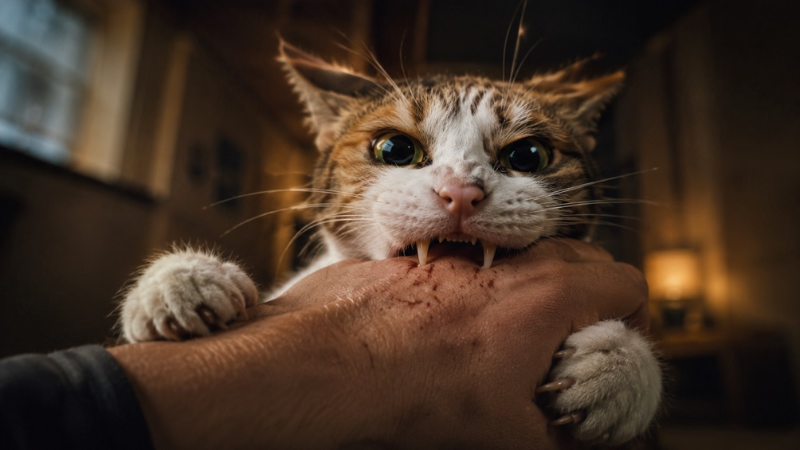
Cat licking then biting refers to a common behavioural sequence where a cat grooms or licks a person’s skin, then follows with a gentle or moderate bite. The bite is rarely hard enough to break skin, though it can sometimes be more forceful depending on the cat’s level of overstimulation. This behaviour is often called love bites or petting aggression. Understanding why cats lick you then bite you starts with recognising that this is normal feline behaviour, not a behavioural disorder.
Cats communicate primarily through body language and physical contact. Licking is a grooming behaviour that signals trust and bonding. When a cat grooms another cat or a human, she is saying you are part of her social group. The bite after licking usually means the cat has reached her limit for physical touch. She is not punishing you. She is telling you she needs a break. Respecting this boundary actually strengthens your cat’s trust in you over time.
This behaviour is especially common in indoor cats who receive high amounts of human interaction but have limited control over when touch starts and stops.The indoor cat lifestyle removes many natural escape routes, so cats use biting as a clear signal to stop. Outdoor cats can simply walk away when they have had enough petting.Indoor cats often cannot leave the room or jump to a high surface during a cuddle session, so they resort to a gentle bite. Understanding why cats lick you then bite you helps you design better indoor spaces with escape routes and safe zones for your cat.
Why Does This Happen
Several psychological and sensory factors explain why cats lick you then bite you. The most common reason is overstimulation. Cats have very sensitive skin and nervous systems. The average cat has hundreds of nerve endings per square centimetre of skin. Gentle petting feels good for a few minutes, but eventually the sensory input becomes overwhelming.The cat licks to calm herself, then bites to make the petting stop. Learning about why cats lick you then bite you means understanding that your cat’s nervous system has a limit.
Another reason relates to how cats show affection. Mother cats lick their kittens and give gentle bites during grooming and play. Your cat may be treating you like a littermate or her kitten. When she licks you then bites you, she is showing love the way cats understand love.The problem is that human skin is much more sensitive than cat fur, so the same behaviour feels different to us. What feels like a playful nibble to your cat feels like a sharp bite to you. Knowing why cats lick you then bite you helps you interpret this behaviour as affection, not aggression.
Some cats also bite after licking because they are trying to initiate play. In multi-cat households, grooming often leads to wrestling and chasing. Your cat may lick your hand, then bite gently to invite you to play. She does not understand that human play does not involve teeth. She is treating you like another cat. This is actually a compliment. Your cat sees you as a playmate.Learning why cats lick you then bite you in this context helps you redirect the behaviour to appropriate toys instead of your hand.
Petting aggression is a specific form of this behaviour. Some cats enjoy being petted for exactly three strokes, then suddenly bite. The cat is not angry. She simply reached her tolerance threshold. The lick is her attempt to tolerate the touch a little longer. The bite is her final signal that she needs space.Research into why cats lick you then bite you shows that most cats have a predictable threshold. Once you learn your cat’s number of strokes or minutes, you can stop before she feels forced to bite.
Common Signs Before the Bite
Most cats give clear warning signs before they bite. Owners miss these signals because they look for growling or hissing, which often does not happen. The signs are subtle but consistent. Learning to read them is the best way to prevent why cats lick you then bite you from becoming a painful habit. With practice, you can spot these signals seconds before the bite and stop petting in time.
Watch for these warning signs during petting:
- Tail twitching or flicking rapidly at the tip
- Ears flattening or rotating sideways
- Skin rippling along the back
- Sudden stop of purring
- Dilated pupils even in bright light
- Turning head toward your hand
- Stiffening of the body muscles
- Licking your hand repeatedly in one spot
- Subtle shifting of weight away from you
- Quick head turns toward the petting hand
When you see any of these signs, stop petting immediately. Let your cat walk away or simply rest near you without touch. The bite after licking is almost always preventable if you respect the early signals. Cat overstimulation symptoms appear seconds before the bite. With practice, you can learn to stop before your cat feels forced to bite. Understanding why cats lick you then bite you means becoming fluent in your cat’s pre-bite language.
Some cats also show more subtle signs that owners often miss. A cat who starts washing her face during petting is often signalling that she wants the interaction to end. A cat who suddenly becomes very interested in something across the room is trying to redirect her attention away from the overstimulation.These displacement behaviours are part of why cats lick you then bite you. The cat is trying to manage her own sensory input and needs your cooperation.
Important Facts to Know
Love bites are usually gentle and do not break skin. They feel more like a firm pressure than a painful puncture. A cat giving a love bite often keeps her mouth closed and does not shake her head. This is very different from aggressive biting, where the cat hisses, flattens ears completely, and bites with clear intent to harm. Part of understanding why cats lick you then bite you is learning to tell the difference between a love bite and an aggressive bite.
Kittens learn bite inhibition from their mothers and littermates. When a kitten bites too hard during play, the other kitten yelps and stops playing. Cats who were taken from their mothers too early often bite harder because they never learned this lesson. This is one reason why cats lick you then bite you more forcefully in some individuals. Early socialisation matters greatly for how a cat learns to moderate her bite pressure with humans. Resources like the International Cat Care library provide detailed guidance on kitten socialisation and preventing behaviour problems.
Indoor cats are more prone to overstimulation biting than outdoor cats. Outdoor cats can walk away from unwanted touch at any time. Indoor cats must rely on you to read their signals. When you miss the signals, the cat escalates to biting. This is not aggression. It is communication. Your cat is not bad or mean. She is telling you she has had enough. Understanding why cats lick you then bite you helps you see indoor living from your cat’s perspective. The Cornell Feline Health Center offers excellent advice on creating indoor environments that reduce stress and overstimulation.
Some cats also lick then bite because they are trying to groom an area they think is dirty. Human skin tastes salty, and lotions or sweat can attract a cat’s attention. The cat licks to clean you, then bites to remove something stuck, like a loose hair or small bump. This is less common but happens, especially with cats who have strong grooming instincts. In these cases, why cats lick you then bite you has nothing to do with overstimulation and everything to do with your cat thinking you need help with hygiene.
The location of the bite matters too. Cats who bite the back of your hand or forearm are usually overstimulated. Cats who gently nibble your fingers or knuckles are often showing affection or trying to play. Cats who bite your face or neck may be attempting to groom you as they would another cat. Each context for why cats lick you then bite you requires a slightly different response. For more on feline communication signals, the Journal of Feline Medicine and Surgery publishes peer-reviewed research on cat behaviour and sensory processing.
How to Respond When Your Cat Licks Then Bites
The worst thing you can do when a cat licks then bites is to pull your hand away quickly or yell. Sudden movements and loud sounds frighten the cat and can make her associate your hand with fear. This can lead to actual defensive biting in the future, not just overstimulation nips. Understanding why cats lick you then bite you means knowing that a calm response is always better than a reactive one.
The correct response is to stop moving your hand. Freeze for one second, then slowly remove your hand without jerking. Do not scold or push the cat away. Simply stop all interaction. Turn your attention elsewhere. This teaches your cat that biting ends the petting session. Over time, she learns that gentle behaviour keeps you close, while biting makes you withdraw. This is the most effective way to manage why cats lick you then bite you in the long term.
Pay attention to how long your cat tolerates petting before the bite. Many cats have a limit of two to five minutes. Some cats only tolerate one or two strokes. Learn your cat’s personal threshold and stop petting before she reaches it. This is the most effective way to prevent why cats lick you then bite you from happening at all. Keep a mental log of how many strokes or minutes your cat enjoys before showing warning signs.
Offer alternative ways to bond that do not involve prolonged touch. Play with a wand toy for ten minutes. Use a soft brush if your cat enjoys grooming. Simply sit near your cat without touching her. Some cats prefer parallel play or simply sharing space. The bite after licking often disappears when you stop forcing physical affection beyond what your cat comfortably accepts. Understanding why cats lick you then bite you helps you find other ways to show love that your cat genuinely enjoys.
You can also use positive reinforcement to change the behaviour. When your cat licks you without biting, reward her with a treat or gentle praise. When she licks then bites, end the interaction calmly and walk away. Over several weeks, your cat learns that gentle licking leads to good things while biting leads to you leaving. This works much better than punishment. The science behind why cats lick you then bite you supports positive reinforcement as the most effective training method. The ASPCA cat behaviour guide provides additional positive reinforcement techniques for common feline behaviour issues.
When to Seek Professional Help
Most cat licking then biting behaviour is normal and manageable. However, some biting patterns require professional attention. If your cat bites hard enough to draw blood repeatedly, or if the biting happens without any petting or interaction first, there may be an underlying medical or behavioural issue. Understanding why cats lick you then bite you includes knowing when the behaviour crosses from normal to concerning.
Sudden changes in behaviour always warrant a vet visit. A cat who never bit before but now licks then bites aggressively could be in pain. Dental disease, arthritis, skin conditions, and neurological problems can make cats more sensitive to touch. Pain makes cats bite because they are trying to protect an uncomfortable area. A vet can rule out medical causes before you assume the behaviour is purely behavioural. This is a critical step in understanding why cats lick you then bite you in an older cat or a cat with sudden behaviour changes.
Anxiety and chronic stress also increase biting frequency. Cats living in multi-cat households with unresolved tension, cats with no safe hiding spaces, or cats exposed to loud noises and unpredictable routines may develop heightened sensitivity. In these cases, addressing the underlying stress through environmental enrichment and routine changes reduces the biting over time. A behaviourist can help you identify stressors you may have missed. Our related guide on signs of stress in cats explains how chronic anxiety manifests in feline behaviour.
If your cat shows other signs of aggression like hissing, swatting, stalking, or attacking unprovoked, consult a veterinary behaviourist. These behaviours go beyond normal cat licking then biting. A behaviourist can create a tailored plan involving medication if needed and environmental modifications to keep both you and your cat safe. Understanding why cats lick you then bite you in these more severe cases requires professional help to rule out neurological conditions or severe anxiety disorders. The American College of Veterinary Behaviorists maintains a directory of certified behaviour specialists.
Final Thoughts
Understanding why cats lick you then bite you transforms a frustrating behaviour into meaningful communication. Your cat is not trying to hurt you. She is telling you her limits in the only way she can. When you learn to read her signals and respect her boundaries, the biting becomes less frequent or stops entirely. The behaviour is not a flaw in your cat. It is a feature of how cats experience the world.
The key takeaway is simple: stop petting before your cat tells you to stop. Watch for tail twitches, ear movements, and body stiffness. Keep petting sessions short and let your cat initiate touch when possible. Offer play and quiet companionship as alternatives to prolonged stroking. Your cat will feel safer, and you will feel less confused. Understanding why cats lick you then bite you ultimately makes you a better cat owner because you learn to see the world from your cat’s perspective.
Most cats who lick then bite are not aggressive or unpredictable. They are emotionally healthy cats with clear boundaries. The problem is not the cat’s behaviour. It is human expectations. Once you accept that cats experience touch differently than dogs or humans, the lick-bite sequence becomes easy to understand and easy to manage. Your cat loves you. She just also needs you to stop petting sometimes. That is not rejection. That is honest communication from a creature who cannot use words.
Trusted Resources for Cat Behavior
For more information on feline behaviour and mental health, these independent organisations provide evidence-based guides and research.
- International Cat Care – Veterinary-reviewed advice on cat stress, anxiety, and behaviour
- Journal of Feline Medicine and Surgery – Peer-reviewed research on feline behaviour and sensory processing
- Cornell Feline Health Center – University research on cat behaviour problems and solutions
- ASPCA Cat Behavior – Practical guides for common cat behaviour issues including biting
- American College of Veterinary Behaviorists – Directory of certified veterinary behaviour specialists
You may also find our related guide helpful: Indoor Cat Depression explains how overstimulation connects to other feline anxiety symptoms and body language signals.
FAQ Section: Questions You Might Have
No, your cat is not angry. She is overstimulated or trying to communicate that she has had enough touch. Anger in cats looks very different: flattened ears, hissing, growling, and swatting. The lick then bite sequence is usually affection or overstimulation, not aggression. Understanding why cats lick you then bite you helps you see this as communication, not anger.
Never punish a cat for this behaviour. Punishment increases fear and anxiety, which makes biting worse. Your cat is not being bad. She is telling you something important. Listen to her signals and change your behaviour instead of punishing hers. The best response to why cats lick you then bite you is calm withdrawal, not punishment.
Not all cats do this, but it is very common. Some cats never bite, while others do it regularly. The behaviour depends on the cat’s personality, early socialisation, sensitivity threshold, and how much forced handling she experiences. Indoor cats with high touch needs are more likely to show why cats lick you then bite you behaviour than outdoor cats with more control over their environment.
Cats often have different relationships with different people. Your cat may feel more comfortable setting boundaries with you because she trusts you. Or you may pet her differently, for longer periods, or in more sensitive areas. Watch how your partner interacts with the cat and adjust your technique. This is a common variation of why cats lick you then bite you that depends entirely on the human-cat relationship.
Kittens naturally bite more during play and teething. Most kittens learn bite inhibition and reduce biting as they mature. However, the lick then bite pattern often continues into adulthood if the cat remains sensitive to overstimulation. Training and respecting boundaries help manage it throughout the cat’s life. Understanding why cats lick you then bite you in kittens helps you teach good habits early.
A hard bite that the cat does not release is different from normal love bites. Do not pull away, as this can cause tearing. Push your hand gently toward the cat’s mouth instead of pulling back. This surprises her and usually makes her let go. Then stop all interaction and consult a vet or behaviourist if this happens regularly. This severe form of why cats lick you then bite you needs professional assessment.
Spaying and neutering reduce hormonally driven aggression but do not directly affect overstimulation biting. A fixed cat can still lick then bite you. The behaviour is not related to mating instincts. It is about sensory processing and communication, not hormones. Understanding why cats lick you then bite you means knowing that spaying will not change this particular behaviour.
Biting without licking may mean the cat is already over her threshold and skips the warning lick. Or the bite may be play-related, fear-based, or pain-related. If your cat bites without any licking, pay closer attention to earlier warning signs like tail twitching and ear flattening that you may have missed. This variation of why cats lick you then bite you suggests your cat feels more urgent about needing the petting to stop.
In severe cases where a cat bites frequently and hard despite environmental changes, a veterinarian may prescribe anti-anxiety medication. This is rare and usually a last resort. Most cats respond well to behaviour modification and respect for their boundaries. Medication addresses underlying anxiety that may contribute to why cats lick you then bite you, but it does not replace good management and training.
Research does not show consistent sex differences in overstimulation biting. Both male and female cats lick then bite their owners. Individual personality and early socialisation matter far more than sex. Understanding why cats lick you then bite you focuses on the cat’s unique sensory threshold, not whether she is male or female.