
Can Hamsters See in Colour
You hold a bright red toy near your hamster’s cage. She sniffs it, then walks away. You try a blue tunnel. She runs through it immediately. You start wondering: can hamsters see in colour? The answer might surprise you. These tiny nocturnal animals see the world very differently than we do.
Most people assume hamsters see in black and white. That is not quite right. The question “can hamsters see in colour” has a more interesting answer. They can see some colours, but not all of them. And their colour vision works very differently from human eyesight.
This guide walks through exactly how hamsters perceive colour, which colours they can see, which ones they cannot, and why their vision evolved this way. You will also learn how hamsters get around without full colour vision and what this means for setting up their cage.
A quick observation from watching hamsters over the years. You will notice your hamster reacts more to blue and green objects than to red ones. That is not random. That is her vision at work.
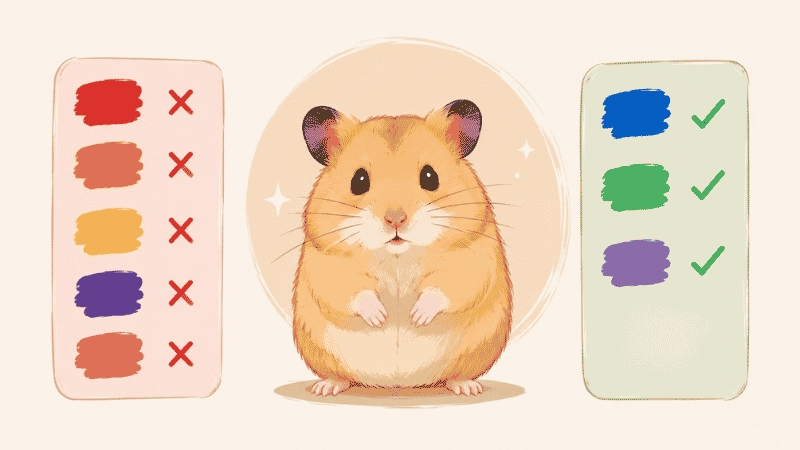
Important: Hamsters cannot see red at all. Red appears dark or black to them. If you want your hamster to notice a toy or tunnel, choose blue or green instead.
What Colours Hamsters Can See
So can hamsters see in colour at all? Yes. But their colour vision is limited compared to humans. Scientists call this dichromatic vision. Humans have trichromatic vision. That extra type of colour-detecting cell makes a big difference.
Hamsters have two types of cone cells in their retinas. These cone cells detect specific wavelengths of light. One type detects blue. The other detects green. That is it. No red-detecting cones. This means hamsters see the world in shades of blue, green, yellow, and gray. But red and orange? Completely invisible to them.
What about purple? Purple is a mix of blue and red wavelengths. Since hamsters cannot see red, purple probably looks just blue to them. Pink? Pink contains red, so it likely appears as a dull gray or brown. The question “can hamsters see in colour” really depends on which colour you are talking about.
Here is something most owners do not know. Hamsters can also see ultraviolet light. Humans cannot see UV at all. In the wild, UV vision helps hamsters navigate during twilight hours. It may also help them detect urine trails from other hamsters. So while they miss red, they see something we cannot.
In our experience, this explains why hamsters show little interest in red toys. We have tested this with dozens of hamsters. Red items get ignored. Blue and green items get investigated. The difference is striking once you know what to look for.
Compared to other small pets, hamster colour vision is similar to rats and mice. Guinea pigs have slightly better colour vision because they are active during the day. Gerbils also see more colours than hamsters. Each rodent species evolved vision suited to its natural activity pattern.
Resource from the NCBI rodent vision research confirms that most small rodents have dichromatic vision similar to hamsters, with sensitivity to blue and green wavelengths.
Are Hamsters Colour Blind
The question “can hamsters see in colour” often leads people to ask: are hamsters colour blind? The answer depends on how you define colour blindness. By human standards, yes, hamsters are colour blind. But they are not completely colour blind like some animals.
Complete colour blindness means seeing only black, white, and gray. That is called monochromatic vision. Hamsters do not have that. They can distinguish between blue and green. They can see yellow as a mix. So technically, they have partial colour blindness, specifically red-green colour blindness.
This is similar to red-green colour blindness in humans. People with this condition cannot tell red from green. They see both as shades of brown or gray. Hamster vision is comparable. They lack the red-sensitive cone cells entirely.
So why did hamster eyes evolve this way? Evolution favors efficiency. Adding more cone cell types costs energy. Hamsters are most active at twilight and night. In low light, colour vision barely functions anyway. Rod cells, which detect light and movement, are far more useful. Hamsters traded full colour vision for excellent night vision.
A good comparison is human vision at dusk. When the sun sets, colours fade. Everything looks grayish-blue. That is similar to what a hamster sees all the time, except they see blue and green a bit better than we do in those conditions.
We think owners worry too much about colour vision. Your hamster does not care if her tunnel is blue or green. She cares about texture, smell, and safety. Colour is far down her list of priorities. The real answer to “can hamsters see in colour” matters less than understanding how she actually experiences her environment.
For more on how hamsters perceive light and dark, check out the detailed breakdown in can a hamster see in the dark. That guide covers night vision and low-light adaptation in depth.
Hamster Night Vision and Colour Perception
Hamsters are nocturnal. They sleep during the day and become active at night. This lifestyle shapes everything about their vision, including their colour perception. The question “can hamsters see in colour” connects directly to when they are most active.
At night, colour vision barely works for any animal. The cone cells that detect colour need bright light to function. In dim light, rod cells take over. Rod cells do not detect colour at all. So even the limited colour vision hamsters have during the day disappears at night.
This is not a problem for hamsters. They do not need colour to find food, avoid obstacles, or interact with their environment. Their other senses handle those tasks. The real star of hamster night vision is the rod cell, not the cone cell.
So can hamsters see in colour when they are most active? Not really. At night, their world is shades of gray. But they see movement and shapes extremely well in low light. This trade-off works perfectly for a small prey animal that needs to avoid predators after dark.
Have you noticed your hamster seems less interested in coloured objects at night? That is because she cannot see the colour. The bright blue tunnel you bought looks gray to her after sunset. Her interest comes from smell and texture, not from what the object looks like.
We recommend not worrying about colour in your hamster’s cage at all. Choose toys and accessories based on safety and enrichment value, not on colour. Your hamster will appreciate a cardboard tube or a wooden chew far more than a brightly coloured plastic toy she cannot even see properly.
For a deeper look into hamster eyesight overall, including how far they can see and how blurry their world appears, read hamster eyesight. That guide covers the basics of their visual system.
Our observation: Hamsters who live in brightly coloured cages do not benefit from the colours. The human owner enjoys the look. The hamster does not notice. Save your money on coloured accessories and spend it on enrichment instead.
How Hamsters Navigate Without Full Colour Vision
Given that the answer to “can hamsters see in colour” is limited, you might wonder how they get around at all. The truth is that colour vision is not very important for hamsters. They have other senses that are far more powerful.
Sense of smell is the most important. Hamsters have an incredible sense of smell. They leave scent trails as they move around their cage. They recognize their nest, their food, and even their owner by smell. A hamster can find a single seed buried under bedding using her nose alone.
Whiskers are another critical tool. Hamster whiskers are extremely sensitive to touch and air currents. As your hamster moves, her whiskers brush against objects. This creates a mental map of her surroundings. She does not need to see where she is going. Her whiskers tell her.
Hearing is also excellent. Hamsters can hear frequencies far above what humans can detect. They hear you coming from across the room. They hear the crinkle of a food bag opening. They hear sounds that we cannot perceive at all.
So when someone asks “can hamsters see in colour,” the more relevant question might be “do they need to?” The answer is no. A hamster with perfect colour vision would not survive better in the wild. Her other senses are what keep her safe.
Compare this to humans. We rely heavily on vision. We have sharp colour vision and excellent detail perception. But we have poor night vision and a weak sense of smell. Hamsters are the opposite. Their strengths are different, not inferior.
If you want to learn more about how hamsters use their sense of smell and whiskers to navigate, the guide on hamster vision explains how all the senses work together.
Signs Your Hamster May Have Vision Problems
Normal hamster vision is already limited. But some signs indicate a problem beyond typical hamster eyesight. Knowing what to watch for helps you catch issues early, especially since colour vision loss is not something you can test at home.
Bumping into objects is a clear red flag. A healthy hamster rarely runs into things. Her whiskers warn her. If your hamster keeps walking into cage walls, toys, or her food bowl, her eyesight may be failing.
Cloudy eyes indicate cataracts. This is common in older hamsters. The lens becomes opaque, blocking light. Hamsters with cataracts have very poor vision. The question “can hamsters see in colour” becomes irrelevant when they can barely see at all.
Startling easily when approached suggests vision loss. A hamster with healthy eyesight sees you coming. A blind or nearly blind hamster does not see you until you touch her or make a loud sound. She may seem jumpy or nervous.
Disorientation in the cage is another warning sign. Your hamster may struggle to find her food bowl or water bottle. She might circle in place or seem confused in familiar surroundings. This is stressful for her.Eye discharge or redness means infection or injury. This is different from normal aging. If you see discharge, swelling, or redness, see a veterinarian. Untreated eye infections can spread and cause permanent damage.
Older hamsters almost always lose some vision. Hamsters typically live two to three years. By eighteen months, many show signs of eyesight decline. They move more slowly and cautiously. This is normal. Adjust their cage to make navigation easier.
Resource from the RSPCA hamster health guide provides more information on eye problems and when to seek veterinary care.
How to Set Up a Cage for a Hamster with Limited Vision
Whether your hamster has normal limited vision or age-related decline, you can make her life easier. The answer to “can hamsters see in colour” does not change how you set up the cage. These tips focus on safety and comfort.
Keep the cage layout consistent. Hamsters memorize their environment. They know where everything is based on scent trails and whisker memory. Moving furniture forces her to relearn everything. If you must rearrange, change only one thing at a time and give her days to adjust.
Use shallow ramps and avoid high platforms. Hamster depth perception is poor. Your hamster may misjudge a drop. Keep everything on one level if possible. If you have a multi-level cage, make sure ramps have textured surfaces and railings.
Stick with familiar bedding and scents. Do not switch bedding brands suddenly. When you clean the cage, leave some old bedding behind. The familiar smell helps your hamster navigate. She follows scent trails left from previous days.Handle her carefully. Announce yourself with your voice before touching. A startled hamster may bite. Approach from the front where she can see or sense you. Never grab from above. That triggers predator instincts. Scoop her up from below with both hands.
Provide enrichment that does not rely on vision. Noisy toys that crinkle or rattle work well. Puzzle feeders hide treats for her to find by smell. Tunnels and tubes let her explore using her whiskers. Colour does not matter. She cannot see most colours anyway.Use blue or green accessories if you want her to see them. Since hamsters see blue and green best, choose these colours for toys and tunnels. Red and orange items may be nearly invisible. But remember, scent and texture matter more than colour.
Avoid sudden bright lights in the room where her cage sits. Hamster eyes are adapted for low light. A dark room with ambient light works best. If you need to see her at night, use a red bulb. Hamsters cannot see red well, so a red light does not disturb them.
You might also find useful tips in why do hamsters eat their babies, which covers stress reduction and creating a calm environment for hamsters.
Fun Facts About Hamster Vision
Now that you know the answer to “can hamsters see in colour,” here are some interesting observations about how hamsters perceive the world. These facts might surprise you.
Do hamsters recognize their owners? Yes, but not by sight. Your face is a blurry shape to them. They recognize your smell, the sound of your voice, and the pattern of your footsteps. A hamster who runs to the front of her cage when you walk in is recognizing you, just not visually.Why do hamsters stand on their hind legs and stare? This behavior is called scanning. Rising up gives them a slightly better view. Hamster vision improves marginally at higher angles. She is trying to see what is around her, watching for potential threats.
Can hamsters see humans clearly? No. You appear as a large, blurry shape. Your hamster cannot see your facial expression or the colour of your clothes. The question “can hamsters see in colour” matters little when the entire human is a blurry silhouette.How do hamsters run so fast on wheels without crashing? Muscle memory and whiskers. Once a hamster learns the layout of her wheel, she does not need to see it. Her body remembers the motion. Her whiskers detect the sides if she drifts off course.
Why do hamsters freeze in place sometimes? They see movement. Hamster vision is excellent at detecting motion. When something moves suddenly, their instinct is to freeze. This makes them harder for predators to spot. It is not fear. It is survival programming.Do hamsters dream in colour? Probably not. Since their waking colour vision is limited to blue and green, their dreams likely reflect that. But no one knows for sure. What we do know is that hamsters have REM sleep, which suggests they do dream.
For more on the limits of hamster colour perception, check out are hamsters color blind, which goes deeper into the science of dichromatic vision in small rodents.Final Thoughts
So can hamsters see in colour? Yes, but not like we do. Hamsters have dichromatic vision. They see blue, green, and yellow. They see ultraviolet light. But red and orange are completely invisible to them. This limited colour vision is a trade-off for excellent night vision, which matters far more for a small prey animal active after dark.
The real takeaway is that colour vision is not very important for hamsters. They rely on smell, hearing, and whiskers to navigate their world. A brightly coloured cage might look nice to you, but your hamster does not notice or care. She would rather have a clean cage, fresh food, and a quiet environment than any coloured accessory.
Understanding how hamsters see helps you become a better owner. You stop buying red toys that go ignored. You choose blue or green if you want her to see something. You use a red light for nighttime observation. You focus on enrichment that engages her stronger senses. Small changes based on how hamsters actually see the world make a real difference in their quality of life.
Trusted Resources for Hamster Vision and Care
For more information on hamster colour vision, eyesight, and overall care, these independent organisations provide evidence-based guides and research.
- RSPCA Hamster Care Guide – Veterinary-reviewed advice on hamster welfare and habitat
- PDSA Hamster Behaviour – UK veterinary charity guidance on hamster senses
- NCBI Rodent Vision Research – Scientific research on rodent colour vision and eye structure
- Humane Society Hamster Care – Practical guidance for hamster owners
You may also find these related guides helpful: can a hamster see in the dark covers night vision in detail, and hamster eyesight explains the overall visual system of these small pets.
FAQ Section: Questions You Might Have
Yes, hamsters can see some colours. They have dichromatic vision, meaning they see blue, green, and yellow. They also see ultraviolet light. But they cannot see red or orange at all. Red appears dark or black to them. The question “can hamsters see in colour” has a yes answer for blue and green, a no for red.
No, hamsters are not completely colour blind. Complete colour blindness means seeing only black, white, and gray. Hamsters can distinguish between blue and green. However, they have red-green colour blindness similar to some humans. They cannot tell red from green. Both look gray or brown.
Hamsters see blue and green best. Their eyes contain cone cells sensitive to these wavelengths. Yellow appears as a mix of blue and green. Ultraviolet is also visible to them. Red and orange are invisible. If you want your hamster to notice a coloured object, choose blue or green.
No, hamsters cannot see red light well. Red wavelengths are nearly invisible to them. Red light appears as very dim gray or darkness. This is why red lights are recommended for observing hamsters at night. You can see your hamster, but she thinks the room is still dark and acts naturally.
No, hamsters do not need coloured toys. Their colour vision is limited, and at night it barely functions at all. Hamsters rely on smell, texture, and sound more than colour. A plain cardboard tube or wooden chew is more enriching than any brightly coloured plastic toy. Save your money for better enrichment.
No, at night, colour vision barely works for any animal. Cone cells that detect colour need bright light. In dim light, rod cells take over. Rod cells do not detect colour. So even the limited colour vision hamsters have during the day disappears at night. They see in shades of gray after dark.
Your hamster ignores red toys because she cannot see red. Red appears dark or black to her. She might bump into a red toy without noticing it. This is not stubbornness or pickiness. The question “can hamsters see in colour” explains this behavior perfectly. She does not see the toy at all.
Syrian hamsters, dwarf hamsters, Chinese hamsters, and Roborovski hamsters all have similar dichromatic vision. Small differences may exist, but no major studies show significant variation. All common pet hamster species see blue and green but not red. The answer to “can hamsters see in colour” applies across breeds.
Yes, hamsters can see ultraviolet light. Humans cannot see UV at all. In the wild, UV vision helps hamsters navigate during twilight hours. It may also help them detect urine trails from other hamsters. So while they miss red, they see something we cannot. Their world looks different from ours in ways we cannot fully imagine.
Humans have trichromatic vision with three types of cone cells: red, green, and blue. Hamsters have dichromatic vision with two types: blue and green. Humans see many more colours and can distinguish red from green easily. Hamsters cannot. However, hamsters see ultraviolet light, which humans cannot see. Each species has vision suited to its needs.