
Rabbit in Cages
You walk past the pet store. You see a small rabbit in a tiny cage. It looks sad. You want to bring it home and give it a better life. But then you wonder: what does a happy rabbit in cages actually need? The answer might surprise you.
Rabbits are not like hamsters or guinea pigs. They need space. Lots of space. A rabbit in cages that are too small becomes stressed, overweight, and even aggressive. Many commercial rabbit cages are simply not adequate. They are marketed as rabbit homes but function more like prison cells.
This guide covers everything about keeping a rabbit in cages: what size cage you actually need, what to put inside, how to set up the flooring, and how to keep your bunny mentally stimulated. You will also learn about housing multiple rabbits together and common mistakes that owners make.
Let us be honest. A rabbit in cages that are too small is a miserable rabbit. But with the right setup, your bunny can thrive. Here is what you need to know.
A rabbit in cages needs space to run, stand on hind legs, and stretch out fully. The minimum recommended cage size for a single rabbit is 4 feet by 2 feet, but larger is always better. Most store-bought cages are too small. Rabbits also need daily exercise outside the cage.
What Does a Rabbit in Cages Actually Need
Before you bring a rabbit home, you need to understand the essentials. A rabbit in cages is not a decoration. It is a living creature with complex needs. So what do rabbits need in their cage? Let us break it down.
First, space. The most important thing for a rabbit in cages is room to move. Your bunny needs to hop, stretch, stand on hind legs, and lie flat. Many commercial cages are only 2 feet by 3 feet. That is too small. A rabbit in cages that size cannot even take three hops in any direction.
Second, a hiding spot. Rabbits are prey animals. A rabbit in cages without a hideout feels exposed and stressed. Provide a wooden box, a cardboard castle, or a covered litter box. Your bunny needs somewhere to retreat when she feels scared.
Third, a litter box. Rabbits are naturally clean. A rabbit in cages with a proper litter box will use it consistently. Use rabbit-safe litter like paper-based or aspen. Avoid clay or clumping cat litter. It can kill rabbits if ingested.
Fourth, hay. Hay is not just food. It is also bedding and entertainment. A rabbit in cages needs unlimited hay. Place it in a hay feeder or stuff it into a cardboard tube. Your bunny will eat it, play with it, and sleep in it.
Fifth, water. A rabbit in cages needs fresh water at all times. Use a heavy ceramic bowl or a sipper bottle. Bowls are more natural. Bottles are less likely to spill. We recommend offering both.
In our experience, owners often forget that a rabbit in cages also needs mental stimulation. A bored rabbit chews cage bars, pulls out fur, or becomes lethargic. Provide toys, tunnels, and daily out-of-cage time.
What do rabbits need in their cage? Space to hop and stretch, a hiding spot, a litter box, unlimited hay, fresh water, and enrichment toys. The cage should be at least 4ft x 2ft for one rabbit. Rabbits also need daily exercise outside the cage for at least 3-4 hours.
What to Put in a Rabbit Cage
So you have the cage. Now you need to fill it. A rabbit in cages should never have a bare, empty space. Here is what to put in a rabbit cage to keep your bunny happy and healthy.
Start with a hay feeder. Rabbits eat their body weight in hay every day. A rabbit in cages with a hay rack keeps the hay clean and off the floor. You can also use a cardboard box with holes cut out. DIY options work great.
Next, a water bowl or bottle. A rabbit in cages without water for even a few hours can become dehydrated quickly. Check the water level twice daily. Bowls are easier to clean. Bottles do not get tipped over.
Add a litter box. Place it in the corner where your rabbit naturally goes. A rabbit in cages with a well-placed litter box is easier to clean. Use paper-based litter. Do not use pine or cedar shavings. They cause liver damage.
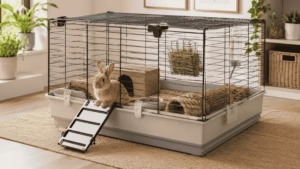
Include a hiding house. A rabbit in cages without a safe spot feels vulnerable. A wooden hideout, cardboard box, or even a covered cat bed works. Make sure the entrance is large enough for your rabbit to enter easily.
Add chew toys. Rabbit teeth grow continuously. A rabbit in cages without chew toys will chew the cage bars, baseboards, or even electrical cords. Provide apple sticks, willow balls, untreated wood blocks, or cardboard tubes.
Include a tunnel. Rabbits love running through tunnels. A rabbit in cages with a tunnel feels more secure and has an extra hiding spot. Use cat tunnels, concrete form tubes, or collapsible fabric tunnels.
Finally, add a resting mat. A rabbit in cages needs a soft spot to sleep. Fleece blankets, seagrass mats, or foam puzzle mats work well. Avoid towels with loose threads that rabbits can ingest.
One Reddit user shared their setup: “My rabbit in cages has a litter box, hay feeder, water bowl, cardboard castle, willow ball, and a fleece mat. She also gets 4 hours of free roam time every evening. She is so much happier than when I first got her in a tiny store cage.”
What to put in a rabbit cage? Hay feeder, water bowl or bottle, litter box, hiding house, chew toys, tunnel, and soft resting mat. Never leave the cage bare. Enrichment prevents boredom and destructive behavior. A rabbit in cages without toys will become stressed and may develop behavioral problems.
What to Put in Bottom of Rabbit Cage
The floor of your rabbit’s cage matters more than you might think. A rabbit in cages with the wrong flooring can develop sore hocks, foot infections, or joint problems. So what to put in bottom of rabbit cage?
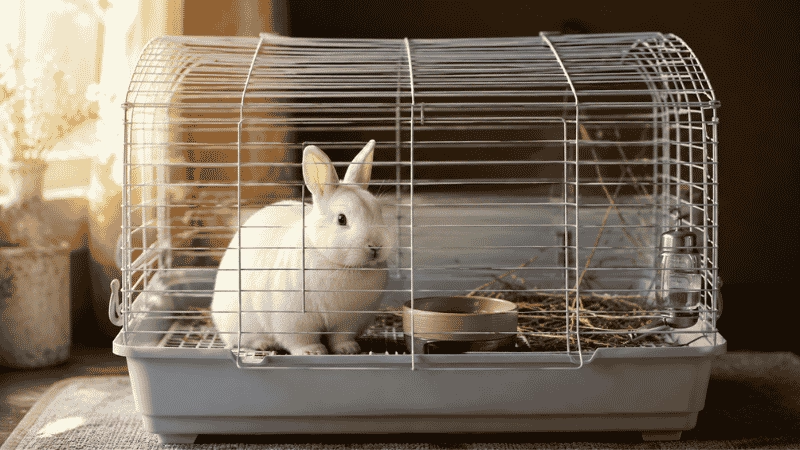
Do not use wire flooring. Many commercial cages have wire bottoms. This is terrible for rabbits. A rabbit in cages with wire flooring gets painful sores on their feet. Their paws were not designed for wire. They need solid flooring.
What to put in the bottom of a rabbit cage instead? Start with a solid plastic tray or a wooden floor. Then add bedding. The best option is a fleece blanket or a foam puzzle mat. These are soft, washable, and provide cushioning.
Some owners use paper-based litter on the floor. This works but gets expensive. A rabbit in cages with paper bedding will scatter it everywhere. You will be cleaning constantly. Save the paper litter for the litter box only.
Aspen shavings are safe for flooring. But avoid pine and cedar. These woods release phenols that damage rabbit livers. A rabbit in cages with pine bedding may develop respiratory problems over time.
What about carpet? A rabbit in cages with carpet will dig and chew it. Ingested carpet fibers cause intestinal blockages. Do not use carpet squares or rugs inside the cage unless you supervise constantly.
We recommend a layered approach. Solid plastic tray + fleece blanket + litter box + hay feeder. A rabbit in cages with this setup is comfortable, clean, and safe.
What to put in the bottom of a rabbit cage for multiple rabbits? The same rules apply. But you need a larger floor area. Each rabbit needs at least 4 square feet of solid flooring. Provide multiple litter boxes and hiding spots to reduce territorial fighting.
What to put in bottom of rabbit cage? Solid flooring never wire. Use a plastic tray or wood floor covered with fleece blanket, foam mats, or aspen shavings. Never use pine or cedar shavings. A rabbit in cages with proper flooring is healthier and happier. Avoid wire floors at all costs.
Resource from the RSPCA rabbit environment guide explains why wire flooring is harmful and what to use instead.
Best Types of Rabbit Cages for Indoor Rabbits
Not all cages are equal. A rabbit in cages designed for guinea pigs or ferrets will be too small. Here are the best options for indoor rabbits.
X-pens (exercise pens) are the gold standard. A rabbit in cages made from x-pens has room to run, hop, and play. Connect two pens together for even more space. The minimum height is 30 inches. Some rabbits can jump higher.
Rabbit condos are another good option. These are multi-level wooden or metal enclosures. A rabbit in cages with multiple levels gets exercise and enrichment. Ensure the ramps are not too steep. Cover wire levels with fleece or mats.
Nic cube cages are DIY enclosures. You buy wire grid panels and connect them. A rabbit in cages made from nic cubes can be any shape and size. Build a second level using coroplast or wood. This is the most customizable option.
Large dog crates work too. A rabbit in cages designed for a Great Dane has plenty of space. Cover the wire floor with solid material. Add a hideout and litter box. Dog crates are easy to clean and secure.
What about commercial rabbit cages? Most are too small. A rabbit in cages labeled for rabbits at pet stores are often only 2×3 feet. That is inadequate. Even two of these connected together is barely enough.
A big cage for a bunny should be at least 4 feet by 2 feet for one rabbit. For two bonded rabbits, aim for 6 feet by 2 feet. Remember that cage size is the minimum. A rabbit in cages needs daily exercise outside the enclosure.
For indoor rabbit cage setups, place the enclosure in a social area. Rabbits are social animals. A rabbit in cages isolated in a spare bedroom will be lonely. Put the cage in the living room or home office. Your bunny wants to be near you.
Best types of rabbit cages? X-pens (exercise pens), rabbit condos, nic cube DIY cages, and large dog crates. Minimum size for one rabbit is 4ft x 2ft. A rabbit in cages this size still needs 3-4 hours of daily exercise outside. Avoid small commercial rabbit cages from pet stores.
Big Cage for Bunny: Why Size Matters
You might think a small cage is fine because your rabbit will get exercise outside. That is not enough. A rabbit in cages that are too small experiences chronic stress, even with daily free roam time.
Why does size matter? Rabbits are active at dawn and dusk. A rabbit in cages needs to move during these peak hours. If she is locked in a tiny cage, she cannot express natural behaviors. She cannot run, jump, or even stand fully upright.
Research shows that rabbits in small cages have higher stress hormones. A rabbit in cages less than 4 feet by 2 feet shows more bar chewing, fur pulling, and lethargy. These are signs of depression and anxiety.
A big cage for a bunny does not have to be expensive. An x-pen costs about $40 to $60. Nic cube panels are even cheaper. A rabbit in cages made from these materials has space to live like a rabbit.
Compare this to a $100 pet store cage that is only 2×3 feet. The cheaper option is actually worse. A rabbit in cages that are too small will cost you more in vet bills from stress-related illnesses.
So what size do you need? For one rabbit, absolute minimum is 4×2 feet. That is 8 square feet. Better is 4×4 feet or larger. For two bonded rabbits, start at 6×2 feet or 4×4 feet.
Remember that cage size is the safe space. A rabbit in cages needs this area to feel secure. Even with free roam time, she needs a large enough home base to stretch out and relax.
One experienced rabbit owner on Reddit wrote: “I upgraded my rabbit from a 2×3 store cage to a 4×4 x-pen. The difference was night and day. She stopped chewing bars. She started binkying. A rabbit in cages with enough space is a different animal entirely.”
Why does a big cage for a bunny matter? Rabbits need space to run, jump, stand up, and stretch out. A rabbit in cages smaller than 4ft x 2ft shows stress behaviors like bar chewing and lethargy. Larger cages reduce stress hormones and improve overall health. Size matters as much as enrichment.
Multiple Rabbits in One Enclosure
Keeping more than one rabbit can be wonderful. But a rabbit in cages with a friend needs careful planning. Housing multiple rabbits together requires more space and more resources.
First, rabbits must be bonded. Two rabbits that are not bonded will fight. A rabbit in cages with an unfriendly roommate can be injured or killed. Bond rabbits gradually in neutral territory before housing them together.
A hutch for multiple rabbits needs to be larger than for one. For two bonded rabbits, aim for at least 6×2 feet or 4×4 feet. That is 12 to 16 square feet. A rabbit in cages this size has room to move away from the other when they want space.
Provide multiple resources. A rabbit in cages with one litter box, one food bowl, and one water bottle will fight over them. Use two of everything. Place them on opposite sides of the enclosure.
Add multiple hiding spots. A rabbit in cages with only one hideout may block the other from entering. Provide two or three hiding houses. Cardboard boxes work well and are cheap.
Watch for territorial behavior. Even bonded rabbits sometimes squabble. A rabbit in cages that is chasing, fur pulling, or circling aggressively may need a temporary separation. Give them a time-out and try again.
Neuter or spay all rabbits. Unfixed rabbits are more aggressive and territorial. A rabbit in cages with intact rabbits will fight more often. Spaying and neutering also prevent cancer and other health problems.
In our experience, two bonded rabbits are happier than one alone. But a rabbit in cages with a companion is not for every owner. It takes more work, more space, and more money. Do your research before adopting a pair.
Can multiple rabbits live together? Yes, if they are bonded. A hutch for multiple rabbits needs to be larger than for one. For two rabbits, minimum 6ft x 2ft or 4ft x 4ft. Provide multiple litter boxes, food bowls, water bottles, and hiding spots. All rabbits should be spayed or neutered.
Common Mistakes When Keeping a Rabbit in Cages
Many rabbit owners make the same mistakes. Learn from others. A rabbit in cages with these errors suffers unnecessarily.
Mistake one: too small. The most common error is a tiny cage. A rabbit in cages less than 4×2 feet is being neglected. Do not buy the cute pink cage from the pet store. It is too small for even a Netherland dwarf.
Mistake two: wire flooring. A rabbit in cages with wire floors develops sore hocks. The sores get infected. Your rabbit may go lame. Cover all wire with solid flooring or fleece.
Mistake three: no hideout. A rabbit in cages without a hiding spot lives in constant fear. Rabbits need to feel safe. Provide at least one hideout. Cardboard boxes work perfectly.
Mistake four: no hay. Hay is essential. A rabbit in cages without unlimited hay will have dental problems and gut stasis. Hay should be 80% of their diet. Timothy hay is best for adults.
Mistake five: dirty cage. A rabbit in cages with soiled bedding breathes ammonia. This causes respiratory infections. Spot clean daily. Full clean weekly. Rabbits are clean animals. They appreciate a tidy home.
Mistake six: no exercise. A rabbit in cages all day becomes obese and depressed. Rabbits need at least 3-4 hours of free roam time daily. Bunny-proof a room or use an x-pen to create a safe play area.
Mistake seven: wrong bedding. Pine and cedar shavings are toxic. A rabbit in cages with these materials breathes harmful fumes. Use aspen, paper-based litter, or fleece only.
What are common mistakes for a rabbit in cages? Too small cage, wire flooring, no hideout, no hay, dirty cage, no exercise, and toxic bedding. Avoid these errors to keep your rabbit healthy and happy. The most common mistake is underestimating how much space a rabbit truly needs.
Resource from the Humane Society rabbit care guide provides additional information on proper rabbit housing and common mistakes.
Final Thoughts
A rabbit in cages deserves a good life. That starts with the right enclosure. Most commercial cages are too small. A rabbit in cages less than 4 feet by 2 feet cannot express natural behaviors. She cannot hop, stretch, or even stand up properly.
The solution is not complicated. Use an x-pen, build a nic cube condo, or repurpose a large dog crate. Add a hideout, a litter box, a hay feeder, and soft flooring. Provide chew toys and a tunnel. Clean regularly. And most importantly, give your rabbit daily exercise outside the cage.A rabbit in cages with enough space and enrichment is a happy rabbit. She will binky, flop, and come to you for pets. She will not chew bars or pull out fur. She will thrive. Your job is to give her the environment she needs. Start today. Your bunny will thank you.
Trusted Resources for Rabbit Housing
- RSPCA Rabbit Environment Guide – Expert advice on cage size and setup
- Humane Society Rabbit Care – Housing recommendations and common mistakes
- PDSA Rabbit Housing – UK veterinary charity guidance
- House Rabbit Society Housing FAQ – Indoor rabbit enclosure ideas
You may also find these related guides helpful: bunny nest covers wild rabbit nesting behavior, and can rabbits see in the dark explains how rabbit vision affects their environment preferences.
FAQ Section: Questions You Might Have
Rabbits need a large cage (minimum 4ft x 2ft), a hiding spot, a litter box, unlimited hay, fresh water, chew toys, and a soft resting area. A rabbit in cages without these essentials will be stressed and unhealthy. Hay should be available at all times.
For one rabbit, minimum 4ft x 2ft (8 square feet). For two bonded rabbits, minimum 6ft x 2ft or 4ft x 4ft (12-16 square feet). Larger is always better. A rabbit in cages this size still needs 3-4 hours of daily exercise outside the cage. Most pet store cages are too small.
Use solid flooring never wire. Cover with fleece blanket, foam puzzle mats, or aspen shavings. A rabbit in cages with wire flooring develops painful sore hocks. Do not use pine or cedar shavings. They are toxic. What to put in the bottom of a rabbit cage matters for foot health.
A rabbit in cages should get at least 3-4 hours of exercise outside the cage every day. This is not optional. Rabbits need to run, jump, and explore. Use a rabbit-proofed room or an x-pen play area. Without exercise, rabbits become obese, depressed, and destructive.
Yes, if they are bonded. A hutch for multiple rabbits must be larger than for one. For two rabbits, minimum 6ft x 2ft. Provide multiple litter boxes, food bowls, water bottles, and hiding spots. All rabbits should be spayed or neutered. A rabbit in cages with an unbonded companion may fight.
Safe bedding options include aspen shavings, paper-based litter, fleece blankets, and foam mats. Never use pine or cedar shavings. A rabbit in cages with pine bedding breathes toxic fumes that damage the liver. Avoid clay or clumping cat litter. It causes blockages if ingested.
Yes. A rabbit in cages without a hiding spot lives in constant stress. Rabbits are prey animals. They need somewhere to retreat when scared. Provide a wooden hideout, cardboard box, or covered litter box. Make sure the entrance is large enough for your rabbit to enter easily.
Spot clean daily. Remove soiled litter and leftover vegetables. Do a full clean weekly. Wash the entire cage with vinegar and water. A rabbit in cages with ammonia buildup from urine can develop respiratory infections. Regular cleaning keeps your rabbit healthy.
Rabbits should live indoors. A rabbit in cages outdoors faces predators, extreme temperatures, and mosquitoes that spread diseases like myxomatosis. Outdoor hutches are rarely large enough. Indoor rabbits live longer, healthier lives. If you must keep rabbits outside, provide a predator-proof, climate-controlled shelter.
Signs of stress include chewing cage bars, pulling out fur, lethargy, aggression, hiding constantly, and refusing food. A rabbit in cages that is too small or lacks enrichment will show these signs. Increase cage size, add toys, and provide daily exercise. Consult a vet if behavior does not improve.