

Are Hamsters Color Blind
You watch your hamster explore her cage. She sniffs at a bright red toy, then ignores it. She shows more interest in a blue tunnel. You wonder: are hamsters color blind? The answer is not simple yes or no. Understanding how hamsters see colors helps you choose better toys, bedding, and cage setups for your small pet.
The question “are hamsters color blind” comes up often among owners. Hamsters see the world very differently than humans do. They are not completely color blind like some animals. But their color vision is severely limited compared to human eyesight. Knowing how hamster color vision works helps you understand your pet’s behavior.
This guide covers everything about hamster color vision: what colors hamsters can see, whether they see red or blue, how they navigate without full color vision, signs of vision problems, and how to create a hamster-friendly environment. You will learn why your hamster acts the way she does and how to make her life better.
Before we dive in, know that poor color vision is not a disability for hamsters. They evolved this way. Their other senses, especially smell and hearing, compensate for what their eyes cannot do. Understanding are hamsters color blind helps you appreciate how remarkable their sensory systems truly are.
Are Hamsters Color Blind
So are hamsters color blind? The scientific answer is yes, but with important nuance. Hamsters have dichromatic vision. This means they have two types of color-sensitive cone cells in their retinas. Humans have three types of cone cells. The question “are hamsters color blind like dogs” has a similar answer: both are dichromatic, but they see different color ranges.
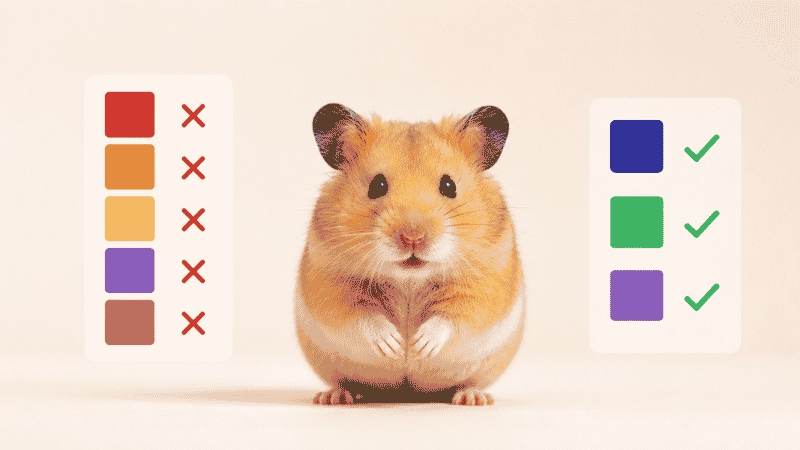
p>What colors can hamsters see? Research shows hamsters can distinguish between blue and green wavelengths. They can also see ultraviolet light, which humans cannot see at all. The answer to “are hamsters color blind to red” is yes. Red appears as dark gray or black to them. They cannot distinguish red from other dark colors.So are hamsters color blind completely? No. They are not monochromatic like some animals that see only black, white, and gray. Hamster color vision is limited but functional. They can tell the difference between blue and green objects. This ability likely helps them find food and detect predators in their natural environment.
p>Why does the question “are hamsters color blind” matter to owners? Because it affects how you set up your hamster’s cage. Bright red toys or orange bedding may be invisible or uninteresting to your hamster. Blue and green items are more visible. However, remember that hamster vision is very poor overall. Color is less important than scent and texture.The answer to “are hamsters color blind in bright light” is different than in dim light. Hamster eyes contain mostly rod cells, which detect light and movement but not color. Cone cells, which detect color, are fewer. In bright light, color vision works better. But bright light also discomforts hamsters, so they avoid it.
p>Resource from the NCBI rodent vision research confirms that most small rodents, including hamsters, have dichromatic vision. The question “are hamsters color blind” has a clear scientific answer backed by research.How Hamsters See Colors
Understanding how hamsters see colors requires looking at their eye structure. The retina contains two types of photoreceptor cells: rods and cones. Rods detect light and movement. Cones detect color. Hamsters have many rods and few cones. This explains why the answer to “are hamsters color blind” is more about limited color vision than no color vision.
p>Hamster visual perception works best for blue and green wavelengths. Studies show hamsters can distinguish between blue and green objects. They can also see ultraviolet light. This ability may help them navigate in low light conditions. The question “are hamsters color blind to UV” is no; they actually see UV better than humans do.Can hamsters see red? No. Hamster color vision lacks the red-sensitive cone cells that humans have. Red light appears dark or black. This is why red lights are recommended for viewing hamsters at night. The hamster does not see the red light as bright. The question “are hamsters color blind to red light” has a definite yes answer.
p>Blue and green vision in hamsters serves evolutionary purposes. In the wild, hamsters live in burrows and come out at twilight. Blue and green wavelengths penetrate dim light better than red wavelengths. Hamster color vision is optimized for low-light conditions, not bright daylight.Limited color vision in hamsters is not a disadvantage. Hamsters rely far more on smell, hearing, and touch than on vision. The question “are hamsters color blind” matters less than “how do hamsters navigate.” Their color vision is just one small part of their sensory toolkit.
p>Rodent color sensitivity varies by species. Hamsters, gerbils, rats, and mice all have dichromatic vision. But the exact wavelengths they see differ slightly. The answer to “are hamsters color blind compared to rats” is similar, but rats may have slightly better color discrimination in some studies.Our previous article on hamster vision covers general eyesight. The specific question “are hamsters color blind” is answered in more detail here, focusing on color perception rather than overall visual ability.
Hamster Night Vision
The question “are hamsters color blind at night” has a different answer. At night, color vision barely functions for any animal. Hamster night vision relies almost entirely on rod cells, not cones. Rods detect light and movement but do not detect color. So at night, all hamsters are effectively color blind regardless of their cone cell capabilities.
p>Can hamsters see in the dark? Hamsters have excellent low-light vision. Their eyes are packed with rod cells. Each rod cell is highly sensitive to small amounts of light. This allows hamsters to see movement in very dim conditions. But the question “are hamsters color blind in darkness” is irrelevant because color vision requires light.Hamster nocturnal behavior means they are most active at dawn and dusk. These twilight hours provide enough light for limited color vision. Hamster color vision likely functions best during these crepuscular periods. In full darkness, they rely on whiskers, smell, and hearing instead of vision.
p>Low light eyesight in hamsters comes with a trade-off. Their night vision is excellent, but their daytime vision is poor. Bright light overwhelms their sensitive eyes. The question “are hamsters color blind in bright light” is no, but they avoid bright light because it causes discomfort.Why are hamsters active at night? Evolution. Hamster ancestors were prey animals. Darkness provided cover from predators. Hamster sensory adaptation favored night vision over color discrimination. The answer to “are hamsters color blind” reflects this evolutionary path. They sacrificed color vision for better low-light sensitivity.
p>Hamster circadian rhythm controls their activity patterns. They naturally wake as the sun sets. Their eyes adjust to low light within minutes. During this time, their limited color vision may help them identify food and navigate tunnels. But once fully dark, color vision shuts down entirely.The PDSA hamster behavior guide explains that understanding hamster activity patterns helps owners provide better care. The question “are hamsters color blind” is part of understanding how they experience the world.
How Hamsters Navigate Without Good Color Vision
Since the answer to “are hamsters color blind” is generally yes for red and orange, how do hamsters navigate? They use other senses far more than vision. Understanding these senses helps you create a better environment for your pet.
p>Hamster sense of smell is their primary navigation tool. Hamsters have up to twenty thousand scent glands. They leave scent trails as they walk. They use smell to find food, recognize cage mates, and detect predators. A hamster’s nose is far more important than her eyes for daily functioning.Can hamsters recognize owners? Yes, but not through vision. The question “are hamsters color blind” matters less because they recognize you by scent. Your hamster knows your unique smell. She also knows the sound of your voice and footsteps. This recognition is real, just not vision-based.
p>Hamster whiskers function as touch sensors. The vibrissae on a hamster’s face detect air currents and vibrations. As the hamster moves, her whiskers brush against objects. This creates a mental map of her environment. Even if the answer to “are hamsters color blind” were complete blindness, whiskers would still allow navigation.Hamster hearing abilities are also excellent. Hamsters can hear frequencies up to 60,000 Hz. Humans can only hear up to 20,000 Hz. They hear sounds we cannot detect. This helps them sense predators and find food sources. The question “are hamsters color blind” becomes less relevant when you consider their powerful hearing.
p>How do hamsters find food without good color vision? Smell leads them. A hamster can locate a sunflower seed buried under bedding using her nose alone. Color vision helps very little in foraging. The answer to “are hamsters color blind” does not affect their ability to find food because they do not rely on color for this task.Hamster environmental awareness comes from integrating all senses. They combine scent trails, whisker feedback, hearing, and limited vision. The question “are hamsters color blind” is just one small piece of understanding how they perceive their world.
Our previous article on why do hamsters eat their babies discusses how stress affects hamster behavior. Sensory deprivation or overload can stress hamsters. Understanding all their senses, including the answer to “are hamsters color blind,” helps reduce stress.
Signs of Poor Vision or Blindness
Hamster vision naturally declines with age. But some vision problems require veterinary attention. Knowing the signs helps you identify when something is wrong. The question “are hamsters color blind” is about normal vision, but some hamsters have additional vision problems.
p>Bumping into objects is a clear sign of hamster vision problems. A healthy hamster with normal vision rarely bumps into cage furniture. She uses her whiskers to navigate. If your hamster repeatedly runs into walls, food bowls, or toys, her vision may be failing beyond normal hamster vision limitations.Cloudy eyes indicate cataracts or other eye diseases. A healthy hamster eye is clear, dark, and shiny. Cloudiness suggests the lens is becoming opaque. The question “are hamsters color blind” is about normal color perception. Cloudy eyes are a separate medical issue that requires veterinary attention.
p>Startling easily when approached may indicate vision loss. A hamster with healthy vision sees you coming. A blind or nearly blind hamster does not see you until you touch her or make a loud sound. She may seem more nervous or jumpy because she cannot see approaching hands.Disorientation in the cage is another sign. Hamsters with poor vision may struggle to find their food bowl, water bottle, or nest. They may circle repeatedly. Even if the answer to “are hamsters color blind” is normal for the species, additional vision loss makes navigation harder.
p>Eye discharge or redness indicates infection or injury. This is different from normal aging or normal color blindness. If your hamster has discharge, swelling, or redness around her eyes, see a veterinarian immediately. Hamster vision can be permanently damaged by untreated eye infections.Old hamster eyesight problems are common. Hamsters typically live two to three years. By age eighteen months, many hamsters show signs of vision decline. They may move more slowly and cautiously. This is normal. Adjust their cage to make it safer and easier to navigate.
Resource from the RSPCA hamster health guide provides additional information on eye problems and when to seek veterinary care.
How to Help Hamsters with Limited Vision
Whether your hamster has normal limited hamster vision or age-related decline, you can make her life easier. Simple cage adjustments improve safety and quality of life. The question “are hamsters color blind” reminds us that all hamsters need vision-friendly environments.
p>Keep cage layout consistent. Hamsters memorize their environment. Do not rearrange furniture frequently. Your hamster knows where everything is based on memory, scent trails, and whiskers. Moving items forces her to relearn the layout. Hamster vision limitations make adaptation harder.Use shallow ramps and platforms. Hamster vision includes poor depth perception. Your hamster may misjudge the distance to a platform. Provide ramps with textured surfaces. Ensure no drops over six inches. A fall from a high platform can injure a hamster with limited vision.
p>Avoid multilevel cages for hamsters with poor vision. Hamster vision problems make navigating between levels dangerous. Single-level cages with plenty of floor space are safer. If you use a multi-level cage, block off upper levels or provide very shallow, wide ramps with railings.Provide familiar bedding and scents. Hamsters rely on smell more than the answer to “are hamsters color blind.” Do not change bedding brands suddenly. Leave some old bedding when cleaning the cage. The familiar scent helps your hamster navigate. She follows scent trails left from previous days.
p>Handle hamsters carefully. Announce yourself with your voice before touching. A startled hamster may bite out of fear. Approach from the front where she can see or sense you. Never grab a hamster from above. This triggers predator instincts. Scoop from below with both hands.Enrichment ideas for hamsters focus on other senses. Use noisy toys that crinkle or rattle. Hide treats in puzzle feeders. Provide tunnels and tubes for exploring. The question “are hamsters color blind” matters less when you provide enrichment that engages their stronger senses like smell and hearing.
Use blue or green toys for better visibility. Since hamsters see blue and green best, choose these colors for toys, tunnels, and accessories. Red and orange toys may be nearly invisible. The answer to “are hamsters color blind to red” should guide your purchasing decisions.
Our previous article on signs of stress in cats discusses stress reduction. The same principles apply to hamsters. A predictable, safe environment reduces stress for animals with limited vision.
Fun Facts About Hamster Vision
Hamster vision leads to some interesting and cute behaviors. Understanding why hamsters act certain ways helps you appreciate their unique perspective. The question “are hamsters color blind” is just one fascinating aspect of these small pets.
p>Do hamsters recognize owners? Yes, but not through color vision. Hamsters recognize owners by smell, voice, and handling style. Your hamster knows you are safe even if she cannot see your face clearly. This recognition is real, just not vision-based.Can hamsters recognize faces? No, not really. Hamster vision lacks the detail needed for facial recognition. Your face appears as a blurry shape. The answer to “are hamsters color blind” is part of this limitation. They also lack the visual acuity to distinguish individual human features.
p>Why do hamsters stare at things? This behavior is called scanning. Your hamster rises on her hind legs to get a slightly better view. Hamster vision improves marginally at higher angles. She is trying to see what is around her. This is a natural predator-detection behavior.How do hamsters see humans? As large, blurry shapes. A human appears as a moving silhouette. A hamster cannot see your facial expression or the color of your clothes. The question “are hamsters color blind to my red shirt” is yes. She sees only a dark shape.
p>Hamster intelligence facts: They can learn mazes and remember routes. They use a combination of limited vision, whiskers, and scent marking. Their color vision plays a minor role in maze navigation. Hamsters rely more on body position memory than on what they see.Weird hamster behaviors like freezing in place serve a purpose. When a hamster sees movement, she freezes. This makes her harder to spot. The answer to “are hamsters color blind” does not affect this behavior. Movement detection works even in animals with limited color vision.
Our previous article on hamster vision covers more fascinating facts about how these small rodents perceive their world, building on the specific question “are hamsters color blind.”
Final Thoughts
The question “are hamsters color blind” has a nuanced answer. Hamsters are not completely color blind. They can see blue, green, and ultraviolet light. However, they cannot see red or orange. Their dichromatic vision is well adapted for their crepuscular, burrowing lifestyle. Color vision is just one small part of how hamsters experience their world.
p>Understanding hamster color vision helps you make better choices for your pet. Use blue or green toys for better visibility. Use red lights for nighttime observation. Keep cage layouts consistent. Provide enrichment that engages smell and hearing, not just vision. The answer to “are hamsters color blind” should guide your purchasing and care decisions.Remember that hamsters rely far more on smell, hearing, and touch than on vision. A hamster with normal limited color vision lives a full, happy life. She navigates, finds food, recognizes you, and explores her environment using all her senses together. The question “are hamsters color blind” is fascinating, but it does not diminish how remarkable these small pets truly are.
Trusted Resources for Hamster Vision and Care
For more information on hamster color vision, behavior, and health, these independent organisations provide evidence-based guides and research.
- RSPCA Hamster Care Guide – Veterinary-reviewed advice on hamster welfare
- PDSA Hamster Behaviour – UK veterinary charity guidance on hamster senses
- NCBI Rodent Vision Research – Scientific research on rodent color vision
- Humane Society Hamster Care – Practical guidance for hamster owners
You may also find our related guides helpful: hamster vision covers general eyesight, and why do hamsters eat their babies discusses stress and behavior in hamsters.
FAQ Section: Questions You Might Have
No, hamsters are not completely color blind. They have dichromatic vision, meaning they can see blue and green wavelengths. They also see ultraviolet light. However, they cannot see red or orange. Red appears dark or black to them. The answer to “are hamsters color blind to red” is yes.
Hamsters can see blue and green best. Research shows they can distinguish between these colors. They also see ultraviolet light, which humans cannot see. Hamsters cannot see red or orange. The question “are hamsters color blind to red” has a definite yes answer based on scientific research.
Yes, hamsters have excellent night vision. Their eyes contain many rod cells that detect light and movement in dim conditions. However, color vision requires light. In darkness, hamsters cannot see colors. The answer to “are hamsters color blind at night” is yes, but so are all animals including humans.
Similar but not identical. Both hamsters and dogs have dichromatic vision. However, dogs see yellow and blue. Hamsters see blue and green. Both cannot see red. The question “are hamsters color blind compared to dogs” has a yes answer, but the specific color ranges differ slightly between species.
No, hamsters cannot see red light well. Red light appears as darkness or very dim gray. This is why red lights are recommended for observing hamsters at night. A red light allows you to see your hamster without disturbing her. The answer to “are hamsters color blind to red light” is yes.
Hamsters have sensitive eyes adapted for low light. Bright light overwhelms their vision. They squint to protect their eyes. The question “are hamsters color blind in bright light” is no, but they avoid bright light because it causes discomfort. Their color vision works better in bright light, but they prefer dim conditions.
Yes, hamsters can see blue toys much better than red toys. Their color vision includes blue-sensitive cone cells. Red appears dark or black to them. The answer to “are hamsters color blind to red toys” is yes. Choose blue or green toys if you want your hamster to notice them visually.
No, hamsters do not need colorful cages. Their color vision is limited. They rely far more on smell, hearing, and touch than on vision. A safe, spacious cage with consistent layout matters more than color. The question “are hamsters color blind” reminds us that aesthetics matter less to hamsters than to humans.
Hamsters cannot recognize owners by sight alone. Their vision is too blurry and limited. However, they recognize owners by smell, voice, and touch. The answer to “are hamsters color blind” is less important than understanding that hamsters use multiple senses for recognition.
No, red light is not harmful to hamster vision. Hamsters cannot see red light well, so it does not disturb them. Red lights are recommended for observing nocturnal hamsters because they allow you to see without disrupting the hamster’s natural behavior. The answer to “are hamsters color blind to red light” makes red light a useful tool for owners.