
Bunny vs Rabbit vs Hare: Complete Difference Guide
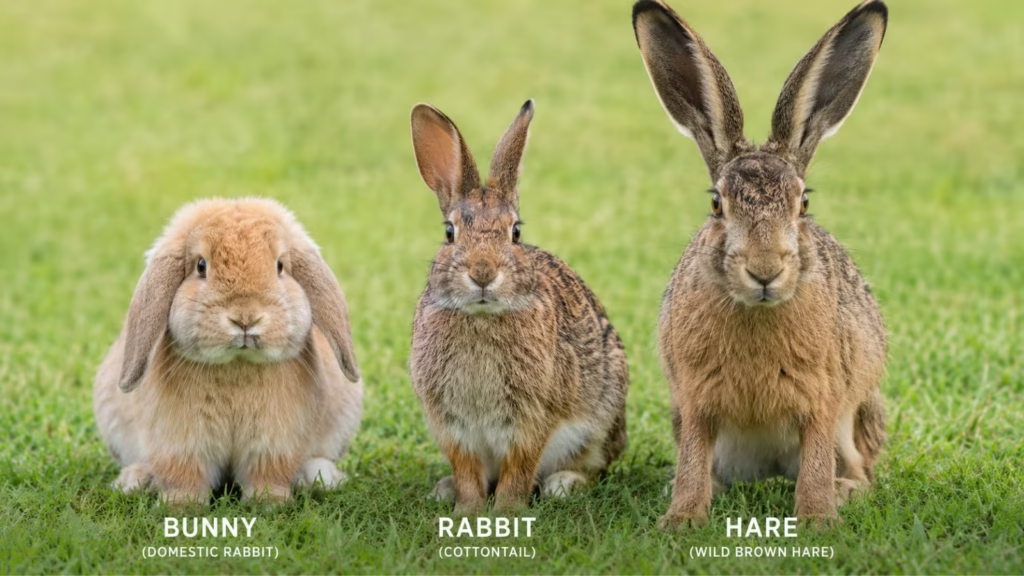
Most people use bunny, rabbit, and hare like they mean the same thing. Cartoons do it. Children's books do it. Even some pet websites do it. The truth is that bunny is just a nickname, but rabbit and hare are genuinely different animals with different biology, different survival strategies, and very different relationships with humans.
Once you understand the real differences, everything clicks into place. This guide covers everything clearly, from taxonomy and domestication history to physical traits, behavior, diet, lifespan, baby development, and why one makes an excellent pet while the other should stay wild.
What Is a Bunny?
Here is the simplest answer. A bunny is not a scientific term. It is an informal, affectionate word people use for rabbits, especially baby rabbits or small domestic ones.
There is no separate species called a bunny. When your neighbor calls her pet a bunny, she is talking about a rabbit. When a child points at a small furry animal in a picture book and calls it a bunny, that animal is a rabbit. The word became popular because it sounds softer and more endearing than the word rabbit, particularly for children.
So whenever you see or hear the word bunny, just think rabbit. The meaning is the same.
Is a Bunny Scientifically Different From a Rabbit?
Not at all. A bunny is simply a baby rabbit, a nickname for a small rabbit, or a casual term used by pet owners. There is no biological distinction. A Holland Lop can be called a bunny. A wild cottontail baby can be called a bunny. Both are still rabbits.
What Is a Rabbit?
Rabbits are a group of small mammals within the family Leporidae. They are known for their long ears, powerful back legs, social nature, and strong digging instinct. Rabbits exist in both wild and domestic forms, and domestic rabbits have been selectively bred for centuries into many different shapes, sizes, and coat types.
Wild rabbits typically live in underground tunnel systems called warrens, where colonies share space and protection. This social structure is deeply ingrained in rabbit behavior, which is why most domestic rabbits do better with a companion than living alone.
The Taxonomy: Where Rabbits Fit Scientifically
This part often gets skipped in articles, but it actually matters if you want to understand why rabbits and hares are so different.
Both rabbits and hares belong to the family Leporidae, but they belong to different genera within that family. Most true hares belong to the genus Lepus. The domestic rabbit, along with all its hundreds of modern breeds, descends almost entirely from one wild species: the European rabbit, Oryctolagus cuniculus.
That single species, native to the Iberian Peninsula, is the ancestor of every Holland Lop, Flemish Giant, Lionhead, and Mini Rex alive today. Hares, by contrast, were never brought into that domestication process. They evolved along a completely separate branch of the Leporidae family tree.
The Domestication History of Rabbits
This is one of the most interesting parts of rabbit history, and most people have never heard it.
The domestication of rabbits likely began in medieval Europe, probably around the 6th or 7th century AD. Catholic monks in France and Spain are widely credited with being among the first to keep European wild rabbits in enclosed spaces. The motivation was practical. Rabbits were a food source, and keeping them captive meant a reliable supply even in difficult seasons.
Over many centuries of selective breeding, the domestic rabbit gradually changed. Breeders shaped not only the physical appearance but also the temperament, producing animals that were progressively less fearful of humans and more tolerant of captivity and handling.
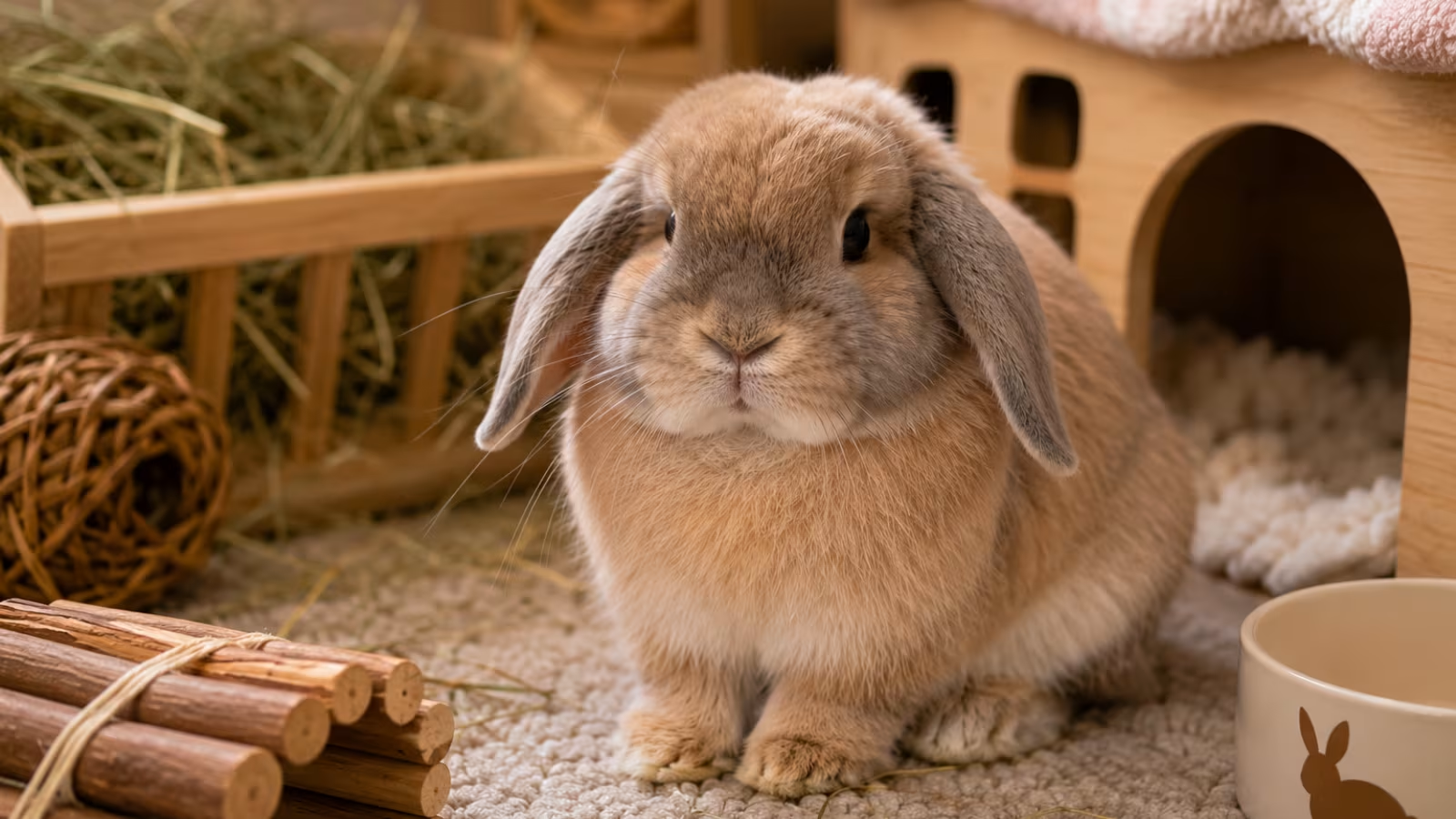
This is what makes domestic rabbits genuinely different from their wild relatives and from hares. They carry centuries of domestication in their genetics. Hares never went through any equivalent process. They remain exactly as they were in the wild.
Popular Domestic Rabbit Breeds
If you have ever visited a pet store or rabbit rescue, you have seen how varied domestic rabbits can look. Some popular breeds include the Holland Lop with its distinctive floppy ears, the Netherland Dwarf which stays very small, the fluffy Lionhead, the large and gentle Flemish Giant, and the short coated Mini Rex. Each breed has its own personality tendencies, but all of them trace back to Oryctolagus cuniculus.
Rabbit Personality and Behavior
Rabbits are intelligent prey animals. Their behavior is shaped by survival instincts built over millions of years of evolution. Even a domestic rabbit that has never seen a predator will still freeze when startled, thump its feet when alarmed, and hide when something feels wrong.
Normal healthy rabbit behaviors include digging, chewing, zooming around in joyful bursts of energy called binkies, grooming themselves and bonded companions, and thumping their back feet as a warning signal. They communicate primarily through body language, but they do make sounds too. Rabbits grunt when annoyed, produce a soft honking or oinking sound when excited, squeal when in pain or extreme fear, and make a gentle tooth chattering sound sometimes described as purring when they are deeply relaxed.
Many beginners do not realize how much communication rabbits pack into subtle body signals. A flopped over rabbit is a relaxed rabbit. A rabbit with flattened ears and a rigid body is stressed. Learning this baseline behavior early on makes it much easier to notice when something is wrong.
Rabbit Lifespan
For anyone considering a rabbit as a pet, this is important to know upfront. Domestic rabbits live considerably longer than most people expect.
A well cared for domestic rabbit commonly lives 8 to 12 years, and some individuals reach their early teens. That makes rabbits a long term commitment, closer to a cat than to a hamster. Wild rabbits have much shorter lifespans, typically 1 to 3 years, because predators, disease, and harsh weather dramatically reduce survival in the wild. The same genetic potential for a long life exists in wild rabbits but is rarely reached outside of domestic care.
Going in knowing that a rabbit may share your life for a decade or more changes how you think about the responsibility.
Why Rabbits Make Good Pets
With the right care, domestic rabbits become genuinely affectionate and interactive companions. They learn routines, recognize their owners, respond to their names, and many actively seek out human contact once they feel safe.
That said, rabbits are not low maintenance pets. They need large living spaces, daily exercise time outside their enclosure, the right diet, mental stimulation through toys and exploration, gentle consistent handling, and access to an exotic or rabbit savvy veterinarian. Going in with realistic expectations makes the whole experience better for both owner and rabbit.
What Is a Hare?
Hares are closely related but distinct animals within the same family as rabbits. The differences between a rabbit and a hare go much deeper than size.
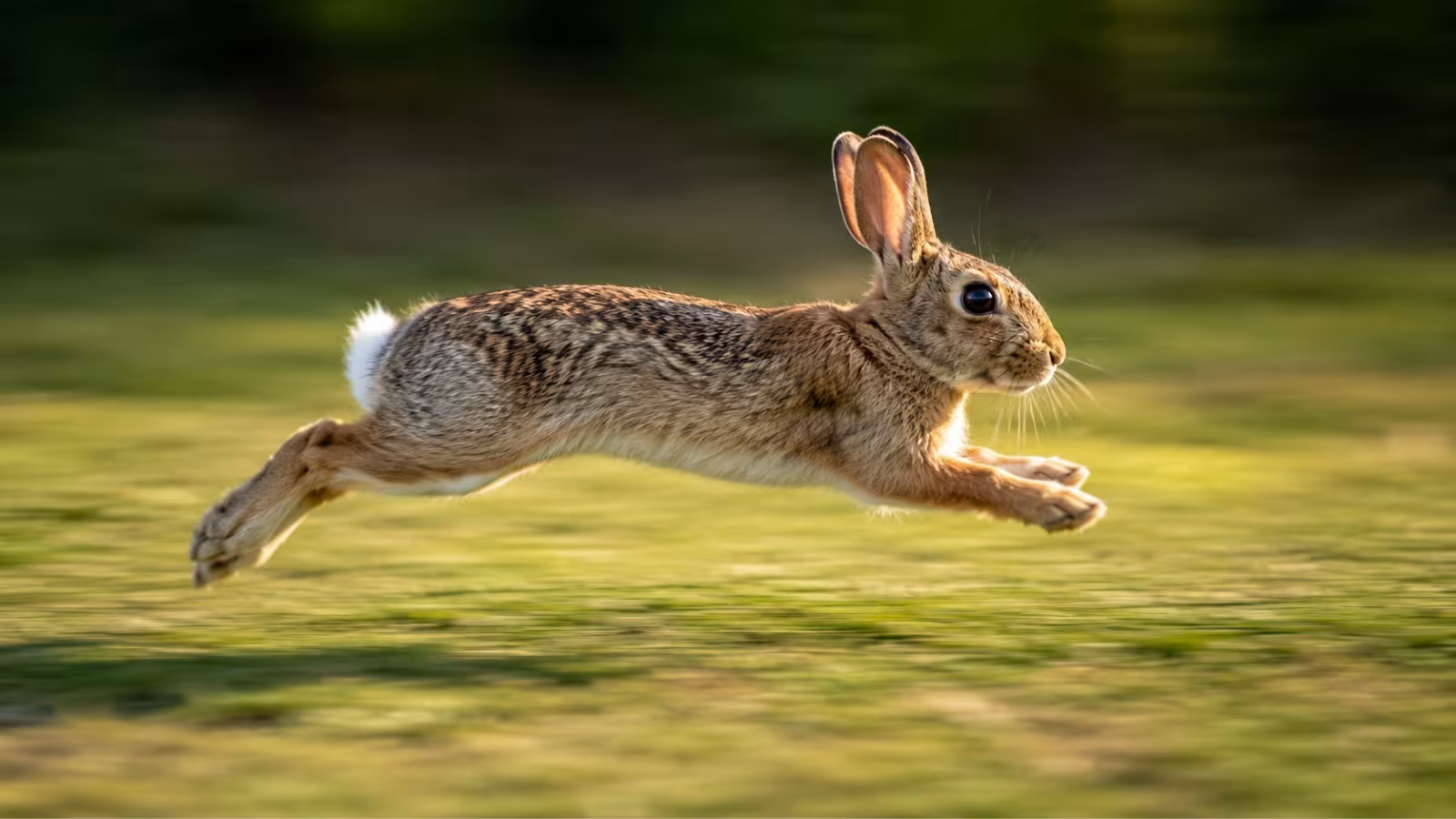
Most true hares belong to the genus Lepus and are generally larger, leaner, faster, and far more independent than rabbits. They evolved to survive in open environments where there is nowhere to hide and speed is the only real defense against predators. While a rabbit's first instinct is to dash underground, a hare's first instinct is to outrun whatever is chasing it.
Unlike domestic rabbits, hares have never been successfully domesticated as a species. They remain wild animals in every meaningful sense.
Hare Characteristics
Most hare species have noticeably longer legs, longer ears, and larger bodies compared to rabbits of similar age. Their muscles are built for explosive speed and endurance rather than burrowing. Some hare species can sprint at over 40 miles per hour and make sharp directional changes mid run to shake off predators.
Their longer ears serve two purposes. They help hares detect danger from much greater distances than a rabbit could, and they also act as a cooling system, releasing excess body heat efficiently during intense physical exertion.
Hare Lifespan
Hares in the wild typically live around 3 to 5 years, though this varies significantly by species and location. Like wild rabbits, predation and environmental conditions keep most individuals well below their biological maximum. Some species in protected environments have been recorded living longer, but a multi year wild lifespan is genuinely uncommon for most hares.
Why Hares Rarely Become Pets
This is important to understand, especially if you have ever seen a baby hare and felt the urge to keep it. Hares are extremely stress sensitive animals. They do not adapt to captivity the way domestic rabbits do, even when raised from infancy.
A hare kept in a domestic setting often remains chronically anxious, difficult to handle, prone to injuring itself in sudden panic responses, and unable to eat properly due to ongoing stress. Wildlife specialists and animal welfare organizations strongly discourage attempting to keep hares as pets, not because they are dangerous, but because captivity genuinely causes them suffering. A hare needs open space and freedom to thrive.
The Biggest Physical Differences Between Rabbits and Hares
At first glance, rabbits and hares look quite similar. Both have long ears and strong back legs. The differences become clearer when you place them side by side.
Size and Build
Hares are usually taller, leaner, and more muscular. Their bodies are built for speed, which means longer limbs and less compact mass. Rabbits are generally smaller and rounder, with a more compact body designed for fitting into burrows and moving through tight underground tunnels.
Ear Differences
Hare ears are typically much longer than rabbit ears, and many hare species have distinctive black markings at the tips. This is a useful visual clue if you ever spot a wild animal and want to identify which you are looking at.
Rabbit ears are shorter partly because rabbits spend a lot of time underground, where extremely long ears would be impractical.
Leg Differences
A hare's hind legs are noticeably longer and more powerful than a rabbit's. These legs allow for explosive acceleration from a standing start, sustained high speed sprinting, and the sudden zigzag patterns hares use to escape predators. Rabbits can run quickly too, but their legs are built more for short bursts toward shelter than long distance racing.
Baby Rabbits vs Baby Hares
This is one of the most dramatic differences between the two animals, and it comes down entirely to survival strategy.
Baby Rabbits (Kits)
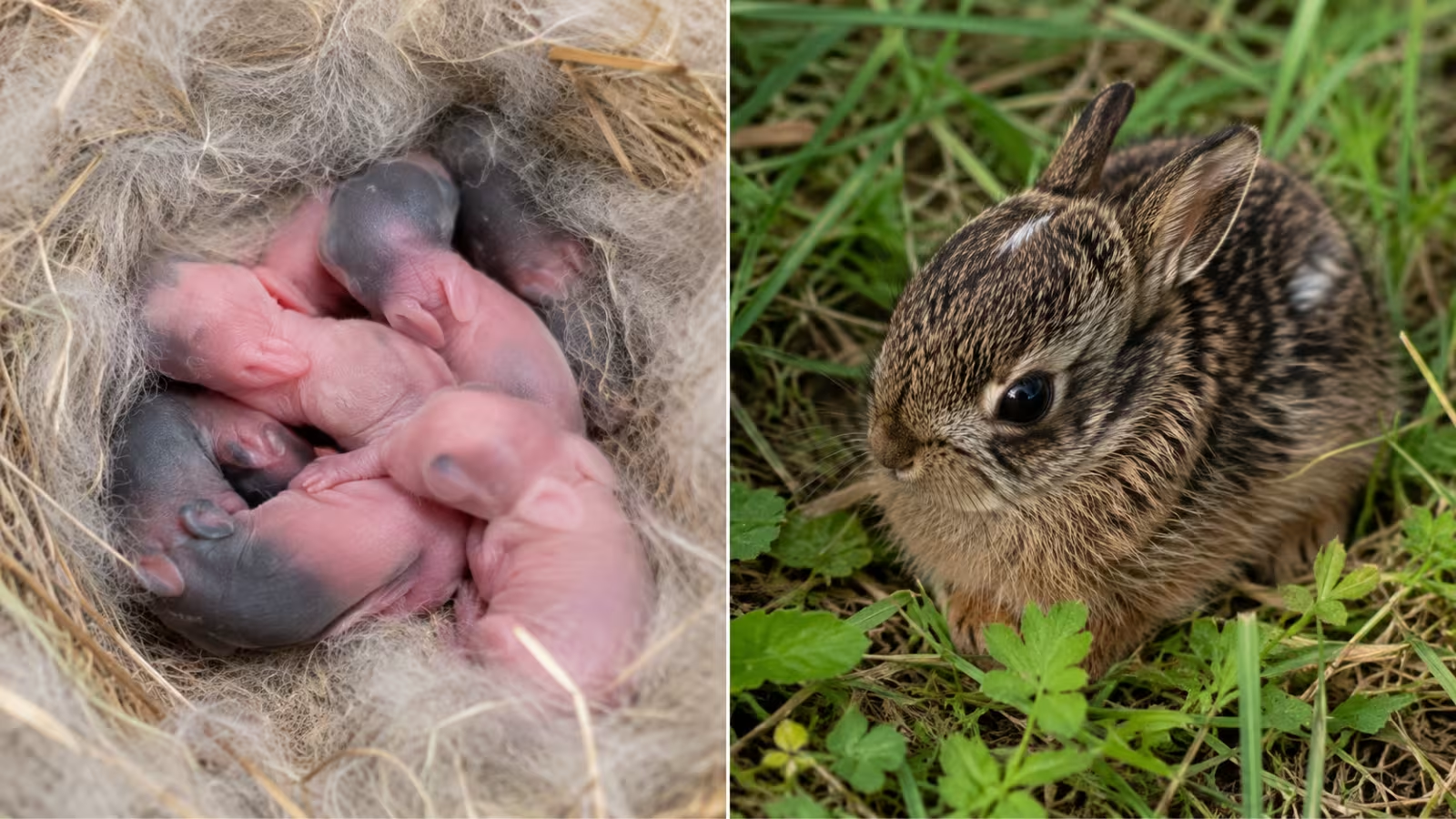
Baby rabbits, called kits, are born completely helpless. They arrive hairless, blind, and entirely dependent on their mother for warmth and feeding. Rabbit mothers give birth inside underground burrows specifically because their babies need that protection. The hidden nest shields vulnerable kits from predators during the weeks it takes for them to develop fur, open their eyes, and become mobile.
This is called altricial development, where the young are born underdeveloped and require intensive parental care.
Baby Hares (Leverets)
Baby hares, called leverets, are born in a completely different state. They arrive fully furred, with their eyes open, and are able to move within hours of birth. This is because hares give birth above ground with no burrow to protect them. A helpless hare baby would survive only minutes in an exposed field, so evolution produced babies capable of mobility and basic camouflage almost from the moment they are born.
This is called precocial development, where young are born in an advanced state and need far less parental care.
The contrast is remarkable. Two animals from the same family developed almost opposite birth strategies simply because they live in different environments.
Wild Rabbit Nests and Rescue Mistakes
This section matters more than most people realize, because it is a situation many rabbit owners and gardeners encounter without knowing what they are actually looking at.
Finding a nest of wild rabbit babies in your garden is surprisingly common. And the most common response, picking them up and trying to raise them, is almost always the wrong one.
Mother rabbits leave their nests for most of the day on purpose. A rabbit visiting her babies openly would attract every predator in the area directly to the nest. Instead, wild rabbit mothers typically return only at dawn and dusk, spend a few minutes nursing, and leave again. The nest may look completely abandoned for 22 hours a day and still be perfectly normal.
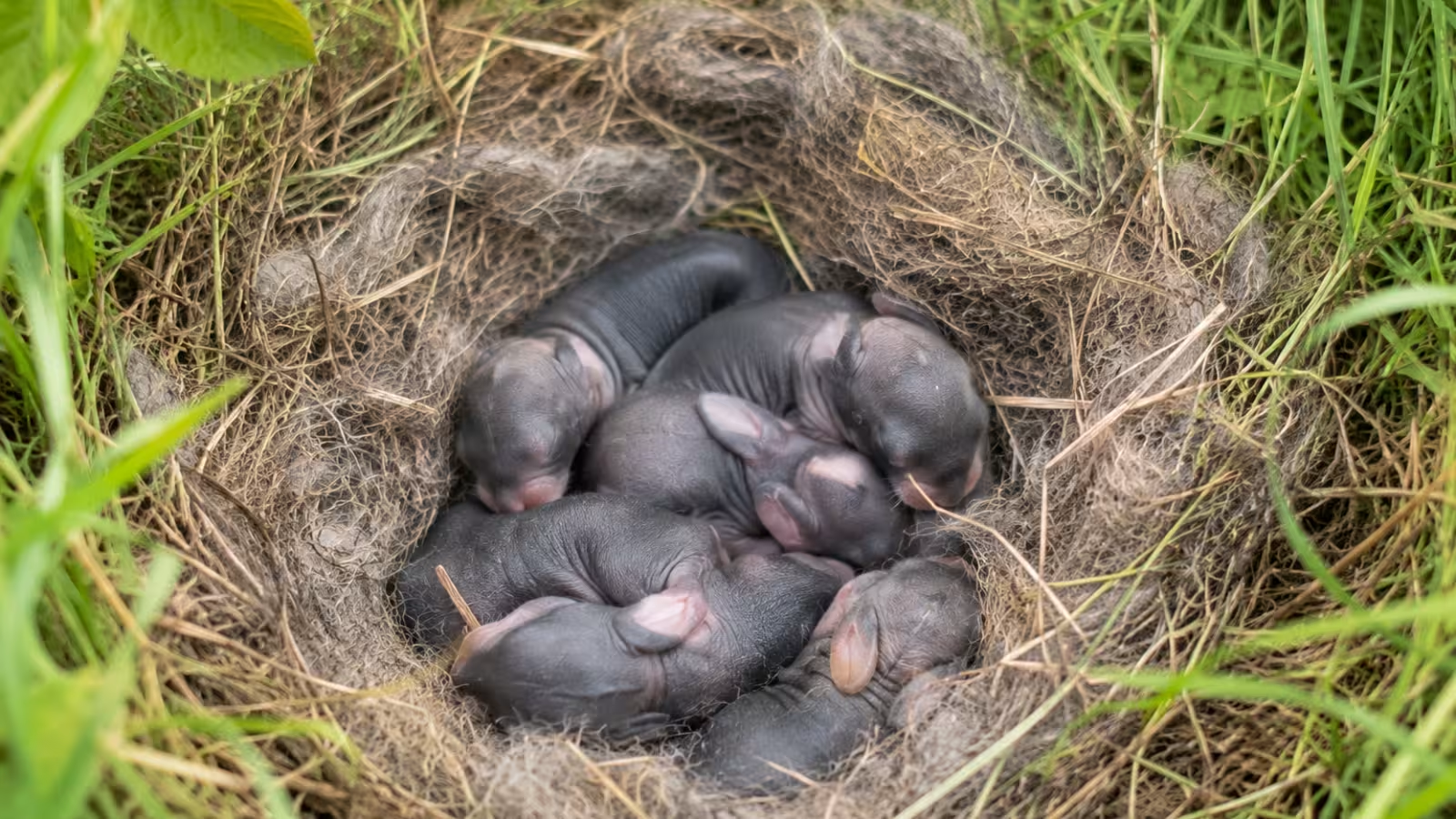
Baby wild rabbits that appear healthy, have no visible injuries, and are found inside an intact nest almost certainly have a mother who will return. Human interference, even well meaning interference, can separate healthy babies from their mother and dramatically reduce their chances of survival.
If you find wild rabbit babies and are genuinely concerned, the best first step is to contact a local wildlife rehabilitator rather than attempting to care for them yourself. Wild rabbits raised in captivity rarely thrive even with skilled care, and releasing them successfully into the wild is genuinely difficult.
This same caution applies even more strongly to baby hares. A leveret found alone in a field is almost never abandoned either. Their mothers leave them hiding in grass during the day and return to nurse at night.
Behavioral Differences Between Rabbits and Hares
How Rabbits Behave
Wild rabbits are social and community oriented animals. They live in groups, share complex tunnel systems called warrens, and maintain social bonds within their colony. When danger approaches, a rabbit's response is to freeze, alert others by thumping, and then retreat underground.
Domestic rabbits carry these same instincts. Even a pet rabbit living in your living room will thump at unexpected noises, seek out hiding spots when stressed, and generally prefer having a companion nearby. Their social nature is one reason single rabbits sometimes develop behavioral problems over time.
Rabbits are also crepuscular, meaning they are most active at dawn and dusk rather than being strictly nocturnal. This explains a lot of pet rabbit behavior that puzzles new owners. Your rabbit may seem relatively quiet and settled during midday, then become noticeably more active and energetic in the early morning and evening hours. That is not unusual. It is simply when their natural energy peaks.
How Hares Behave
Hares are more independent and largely solitary outside of mating season. Instead of living in warrens, hares rest in shallow depressions in the ground called forms, often hidden in tall grass or scrub. They do not dig and do not maintain social colonies the way rabbits do.
When threatened, a hare does not look for a hole to escape into. It sprints, relying entirely on its speed and athletic ability to outrun the threat. This fundamental behavioral difference reflects the very different environments the two animals evolved in.
Habitat and Survival Differences
Where Rabbits Live
Rabbits prefer environments where digging is possible and cover is available. Grasslands with soft soil, forest edges, meadows, and shrublands all suit rabbits well. The underground burrow is central to a rabbit's life, providing protection from predators, shelter from extreme weather, and a safe place to raise young.
Where Hares Live
Hares typically inhabit open terrain where speed and visibility give them an advantage. Open plains, agricultural fields, sparse grasslands, and even tundra environments suit hares because these landscapes allow them to spot danger from a distance and have enough open ground to run.
This fundamental difference in preferred habitat explains nearly all the physical differences between the two animals. The rabbit evolved to hide. The hare evolved to run.
What Do Rabbits Eat?
Diet is one of the areas where misinformation causes the most harm to pet rabbits, so it deserves a clear explanation.
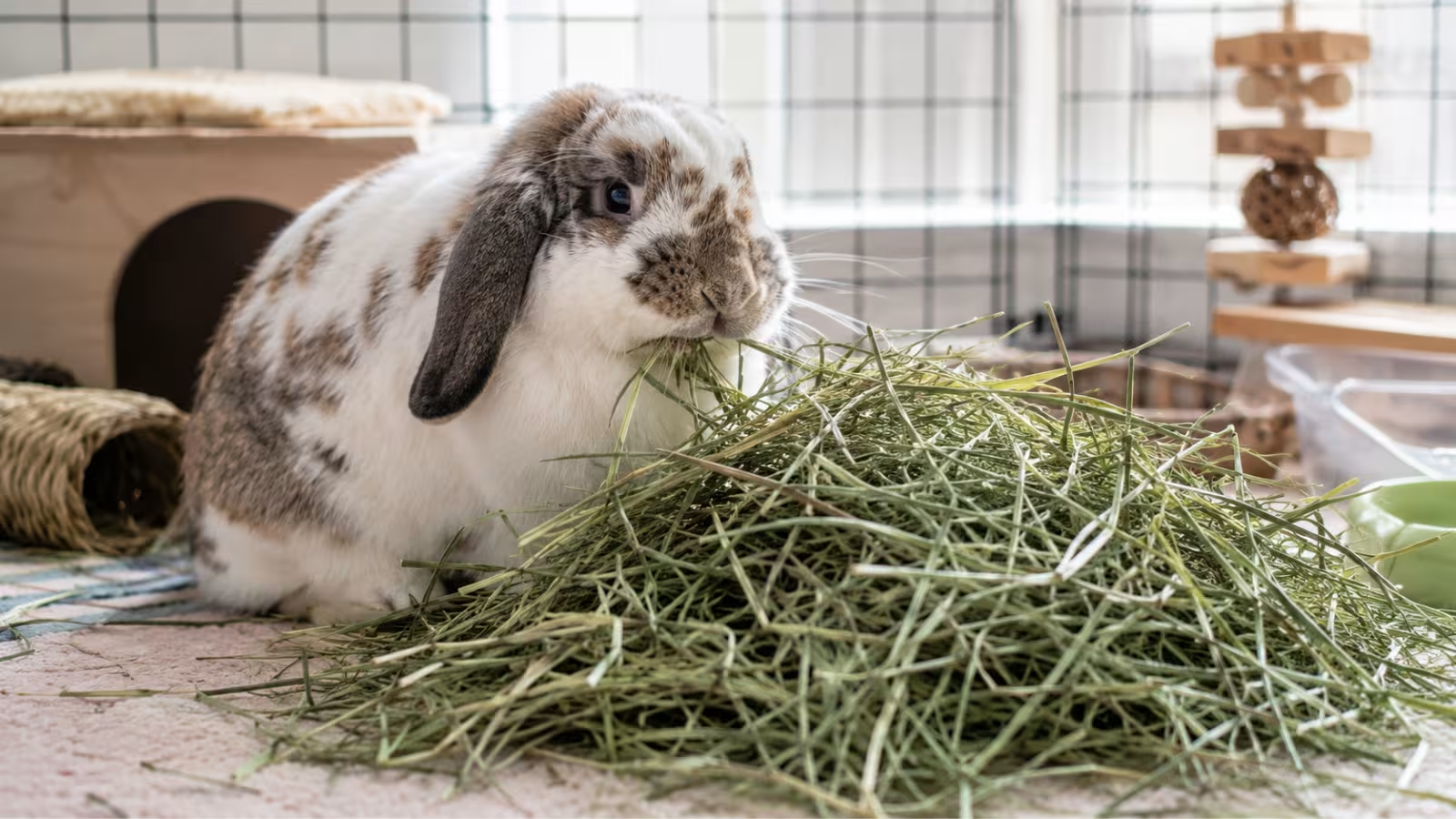
Hay should make up roughly 80 to 90 percent of a rabbit's daily diet. Specifically, unlimited grass hay such as timothy, orchard grass, or meadow hay should be available at all times. This is not optional. Hay serves two critical purposes: it keeps the digestive system moving properly and it wears down the teeth, which never stop growing throughout a rabbit's life. A rabbit without adequate hay will develop serious dental and digestive problems relatively quickly.
Fresh leafy greens are a healthy daily addition, but they should complement the hay rather than replace it. Good options include romaine lettuce, cilantro, parsley, and leafy green herbs. Iceberg lettuce is best avoided because it has very little nutritional value and can cause digestive upset.
Pellets should be limited to a small measured amount per day, not offered as an unlimited free choice food. Many new owners assume pellets are the main diet, when they are really just a supplement.
Sudden dietary changes can be genuinely dangerous for rabbits. Their digestive systems are sensitive and need time to adjust to new foods. Introducing anything new should be done slowly over a week or more, one new item at a time.
Fruits and sweet vegetables like carrots can be given as occasional small treats, not as regular diet items. The sugar content is too high for everyday feeding.
Can Rabbits and Hares Breed?
No. Although rabbits and hares belong to the same family, they are genetically separate animals and cannot successfully reproduce together. Their chromosome counts differ, their reproductive biology is incompatible, and the developmental patterns of their young are completely different.
The myth that they can crossbreed likely exists because they look superficially similar and occasionally share the same general habitat. But the biological barriers between them are real.
Are Jackrabbits Actually Rabbits?
This surprises a lot of people. Jackrabbits are actually hares, not rabbits.
Despite the name, jackrabbits share all the defining characteristics of hares. They have the long legs, the large ears, above ground nesting behavior, and precocial young that are born fully developed. The naming confusion has persisted long enough that most people never question it, which contributes significantly to how muddled the public understanding of these animals tends to be.
Which Makes a Better Pet?
If you are genuinely weighing up whether to keep a rabbit or a hare, the answer is clear. Domestic rabbits are vastly better suited to life as a pet.
Why Domestic Rabbits Adapt So Well to Humans
The centuries of domestication that shaped domestic rabbits produced animals with genuinely different behavioral tendencies compared to their wild relatives. They tend to show reduced fearfulness, greater tolerance for human contact, and real adaptability to indoor living environments.
With patience and consistent gentle handling, many domestic rabbits become affectionate companions who actively seek out their owner's company. Building that trust takes time, but it is absolutely achievable and genuinely rewarding.
Why Hares Do Not Work as Pets
Hares never went through the domestication process that shaped domestic rabbits over centuries. They remain fundamentally wild animals. Even a hare raised from birth in a home environment typically retains strong wild instincts that make captivity stressful and harmful.
Common problems in captive hares include chronic anxiety, violent panic responses to normal household sounds and movements, difficulty eating properly due to ongoing stress, and a high risk of self injury during fear responses. Wildlife specialists and animal welfare organizations consistently advise against attempting to keep hares as pets.
This is not about whether you could theoretically keep one alive. It is about whether the animal can have a good quality of life in captivity. For hares, the honest answer is almost always no.
Signs of Stress in Rabbits
Because rabbits are prey animals, they instinctively hide signs of illness and distress. By the time a rabbit looks obviously sick, the problem is often already serious. Learning the early warning signs is one of the most important things a rabbit owner can do.
What Normal Rabbit Behavior Looks Like
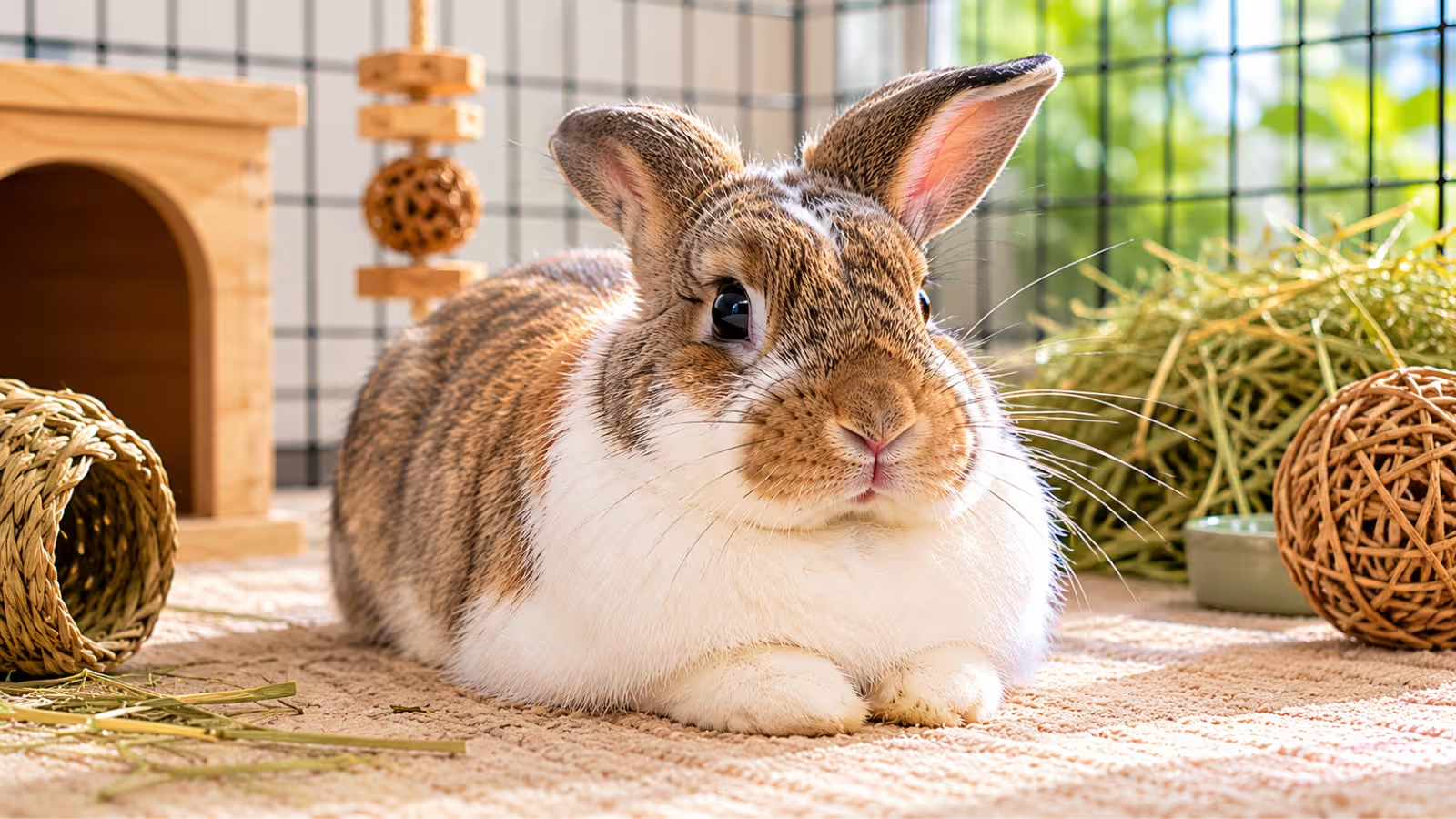
A relaxed, healthy rabbit will sit in a comfortable loaf position with its feet tucked under its body. It will groom itself regularly, explore its environment with curious sniffing, eat hay frequently throughout the day, and occasionally do a binky. Its eyes should look soft and relaxed, not wide and fixed. Its body should be loose, not rigid.
Stress Warning Signs to Watch For
A rabbit that is stressed, sick, or in pain may refuse food, grind its teeth audibly in a way that sounds harsh rather than soft (a sign of pain rather than contentment), hide much more than usual, become aggressive toward handling, or sit hunched with a rigid posture. Wide fearful eyes, labored breathing, and sudden unexplained lethargy are all serious warning signs.
One of the most important things I tell new rabbit owners: a rabbit that stops eating is an emergency, not a wait and see situation. Rabbits have sensitive digestive systems that can deteriorate rapidly when food intake stops.
When to Contact a Veterinarian
Contact an exotic veterinarian immediately if your rabbit stops eating entirely, produces no droppings, appears weak or lethargic, struggles to breathe, or seems to be in significant pain. Make sure you identify a rabbit savvy vet before you ever need one in an emergency. Not all general small animal vets have the specialist knowledge that rabbit care requires.
Common Myths About Bunnies, Rabbits, and Hares
A lot of misinformation about these animals circulates online and in everyday conversation. Here are the most common myths worth clearing up.
Myth: Bunny is a separate species. False. Bunny is simply an informal and affectionate term for a rabbit, particularly a young or small one. There is no scientific classification called bunny.
Myth: Hares are just larger rabbits. False. Hares and rabbits belong to different genera within the Leporidae family. They have different genetics, different developmental biology, different behaviors, and different evolutionary histories.
Myth: Wild rabbits make good pets. False. Wild rabbits have not been domesticated and do not adapt well to captivity. Even if kept alive, they rarely thrive and often suffer from chronic stress.
Myth: Jackrabbits are rabbits. False. Jackrabbits are hares. The name is misleading but the biology is clearly that of a hare.
Myth: Baby rabbits and baby hares look the same at birth. False. Baby rabbits are born hairless and blind while baby hares are born fully furred with their eyes open.
Myth: Rabbits and hares can breed together. False. They are genetically incompatible and cannot produce offspring together.
Myth: Wild rabbit nests found in gardens are abandoned. False. Mother rabbits intentionally stay away from the nest most of the day to avoid attracting predators. A nest that looks empty is almost certainly not.
Quick Reference: Bunny vs Rabbit vs Hare
Here is a clear rundown of the key distinctions.
A bunny has no scientific meaning. It is a nickname used for rabbits, usually young or small domestic ones. A bunny is a rabbit.
A rabbit is a group of small mammals within the family Leporidae. Domestic rabbits descend from the European rabbit, Oryctolagus cuniculus. Rabbits tend to be smaller and more compact, have shorter ears relative to body size, are born helpless and hairless, live in burrows underground, behave socially in colony groups, are crepuscular (most active at dawn and dusk), live 8 to 12 years in domestic care, and adapt very well to life as a pet.
A hare belongs to the genus Lepus within the same Leporidae family but is a distinct group of animals. Hares are larger and leaner, have noticeably longer ears often with black tips, are born fully furred and alert, live above ground in shallow depressions, tend to be more solitary, have shorter wild lifespans, and do not adapt well to captivity at all.
Fun Facts About Rabbits and Hares
Some hare species can sprint at over 40 miles per hour, making them one of the fastest land mammals of their size. A rabbit's teeth never stop growing throughout its life, which is one reason unlimited hay is so important since constant chewing keeps tooth growth in check. Arctic hares change their coat color seasonally, turning white in winter for camouflage in snow and reverting to brown or grey in summer. Rabbits are mostly crepuscular, which means a pet rabbit that seems sleepy at midday is perfectly normal. And a binky, that spontaneous joyful leap and twist a rabbit does when happy, is genuinely one of the most satisfying things to witness as a rabbit owner. It is their version of running around laughing.
How to Teach Kids the Difference Easily
If you are trying to explain this to a child, a simple framework works well. Bunny is just a nickname, like a cute pet name instead of a real name. A rabbit is the animal that digs underground holes and lives with its rabbit family. A hare is the bigger, faster animal that lives above ground and runs away when scared instead of hiding.
A useful visual trick: if the animal has very long ears with black tips and extremely long back legs, it is probably a hare. If the animal is rounder and more compact with shorter ears, it is probably a rabbit. A baby born helpless and furless comes from a rabbit. A baby born alert and fully furred comes from a hare.
Final Thoughts
The confusion between bunnies, rabbits, and hares is completely understandable. Language blends them together, popular culture mixes them up constantly, and even some animal names like jackrabbit are outright misleading.
But the differences matter, especially if you are considering a rabbit as a pet. Understanding that domestic rabbits are social, burrowing animals descended from centuries of domestication helps you set up a home environment that genuinely suits them. Understanding that hares are wild, speed dependent, stress sensitive animals helps you appreciate why keeping them in captivity causes them real harm.
Most problems rabbit owners encounter in the first year come from misunderstanding instincts, diet, or what normal behavior actually looks like. Once you understand how rabbits think and what their natural signals mean, daily care becomes far more intuitive. And knowing your rabbit may be sharing your life for a decade or more makes the early learning feel very much worth it.
FAQ Section: Questions You Might Have
Yes. Bunny is an informal nickname for a rabbit, especially a young or small domestic one. There is no separate species called a bunny.
Rabbits and hares belong to different genera within the Leporidae family. Hares are generally larger, have longer ears and legs, are born fully developed, live above ground, and are more solitary. Rabbits are smaller, burrow underground, are born helpless, live in social colonies, and adapt well to domestic life.
With proper care, domestic rabbits commonly live 8 to 12 years. Some individuals live even longer. This is a long-term commitment comparable to many cats.
It is strongly discouraged. Hares are wild animals that do not adapt well to captivity and typically experience chronic stress in domestic settings even when raised from infancy.
No. Despite the name, jackrabbits are hares with the long legs, large ears, above-ground nesting behavior, and precocial young typical of hares.
Unlimited grass hay such as timothy hay should make up about 80 to 90 percent of the diet. Fresh leafy greens can be added daily. Pellets should be limited to a small daily measured amount. Iceberg lettuce, sugary treats, and sudden dietary changes should all be avoided.
They are not naturally companion animals. Their social structures, communication styles, and behavioral instincts are different enough that housing them together is generally not recommended.
Watch for refusal to eat, harsh teeth grinding, excessive hiding, flattened posture, rigid body language, wide fearful eyes, or sudden aggression. A rabbit that stops eating entirely needs veterinary attention right away.
Yes, in almost all cases. Mother wild rabbits leave their nests unattended for most of the day intentionally. The nest is almost never abandoned. Contact a wildlife rehabilitator before intervening.
Rabbits are crepuscular, meaning most active at dawn and dusk. A rabbit that seems quieter during the middle of the day is behaving completely normally.
References
- House Rabbit Society (HRS) Official care and behavior resources for domestic rabbits https://rabbit.org
- RSPCA Rabbit care guidance and welfare standards https://www.rspca.org.uk/adviceandwelfare/pets/rabbits
- MSD Veterinary Manual Rabbits: Biology, behavior, and husbandry https://www.msdvetmanual.com/exotic-and-laboratory-animals/rabbits
- Rabbit Welfare Association and Fund (RWAF) UK-based welfare and care standards for domestic rabbits https://rabbitwelfare.co.uk
- National Wildlife Federation Wild rabbit nest guidance and wildlife rescue advice https://www.nwf.org
- University of Edinburgh Royal (Dick) School of Veterinary Studies Rabbit health and husbandry guidance https://www.ed.ac.uk/vet