


You walk up to your tank and suddenly notice tiny white eggs at the bottom, but there’s no male betta anywhere.
Naturally, panic sets in.
Is your fish sick? Is your “male” actually female? Can betta fish even lay eggs without mating?
If this sounds like you, take a breath. You’re about to learn something most betta owners get wrong.
Can Betta Fish Lay Eggs Without a Male?
This is one of the most misunderstood facts about betta fish. And honestly? It catches a lot of new owners off guard.
Here’s the simple truth: female bettas naturally produce eggs, just like chickens produce unfertilized eggs. A male isn’t required for her body to make them. What a male is required for is fertilizing those eggs so they can develop into baby fish.
Without that fertilization, the eggs are just… eggs. They won’t develop. They won’t hatch. They’ll eventually dissolve or get eaten by your betta or other tank inhabitants.
Why Female Bettas Lay Eggs Without Mating
A mature female betta’s body is designed to produce eggs. It’s a natural part of her reproductive cycle. When conditions are right, stable temperatures, good nutrition, sexual maturity, her body releases eggs whether a male is present or not.
Think of it this way: her ovaries don’t “know” if there’s a male in the tank. They just do what they’re programmed to do.
In my experience, this typically happens when:
- She’s reached sexual maturity (usually between 4–12 months old)
- Water temperature and conditions are stable
- She’s well-fed with high-quality food
- She’s seen visual stimulation (another fish, her reflection, or environmental changes)
Any of these can trigger the release. And yes, sometimes it happens randomly. Her body just decides it’s time.
What Do Unfertilized Betta Eggs Look Like?
Unfertilized eggs are tiny white or yellowish dots, usually about the size of a grain of salt. You’ll typically find them scattered at the bottom of the tank or caught in plants and decorations.
They’re small enough that many owners don’t even notice them at first.
The eggs will usually sink because they’re heavier than water. Some get stuck in substrate or filter intakes. Others your betta might eat (which is normal, she’s recycling nutrients). If the tank stays warm and clean, they’ll eventually dissolve or be consumed.
If you see these eggs and panic about fry taking over your tank, don’t worry. They won’t become baby fish. Not without a male.

Unfertilized betta eggs are tiny white or yellowish dots about the size of a grain of salt. They typically sink to the tank bottom where they’ll eventually dissolve or be consumed.
Can Male Betta Fish Lay Eggs?
The short answer: no.
But let me explain why this question comes up so often. Many new betta owners confuse male behavior with egg-laying.
First-time owners often think: “What are these bubbles? Oh no, are those eggs?”
They’re not. They’re a male’s way of preparing to breed. It’s instinctive nesting behavior. Healthy males make bubble nests regularly, especially in stable tanks with good conditions. It means he’s feeling good, not that he’s breeding.
Eggs sink. Bubble nests float at the surface. That’s your easiest way to tell the difference.
Why People Think Their Male Betta Laid Eggs
It happens more often than you’d think, and there are solid reasons why the confusion exists.
Your Betta Was Misidentified
Here’s the thing: sexing young bettas isn’t always obvious.
A female betta with longer fins can look like a male to an untrained eye. Plakat females, those with short fins that look more aggressive, might be labeled as male at the store. I’ve seen it countless times.
Young females especially get misidentified. Their fins aren’t fully developed yet. Their body shape hasn’t filled out. When they’re juveniles, the differences aren’t always clear.
So you bring home your “male,” set up his tank, and suddenly, eggs appear. Then you realize the misidentification happened at purchase.
Bubble Nests Cause Confusion
A male creating a bubble nest for the first time can alarm new owners.
The bubbles accumulate. They get thicker. Sometimes there’s slight discoloration or floating debris in them. And if you’ve never seen one before, you might wonder: “Is my fish sick? Are those eggs? Should I be worried?”
The answer is almost always no.
Bubble nests mean your male is healthy, water conditions are good, and his hormones are doing what they should do. It’s actually a positive sign.
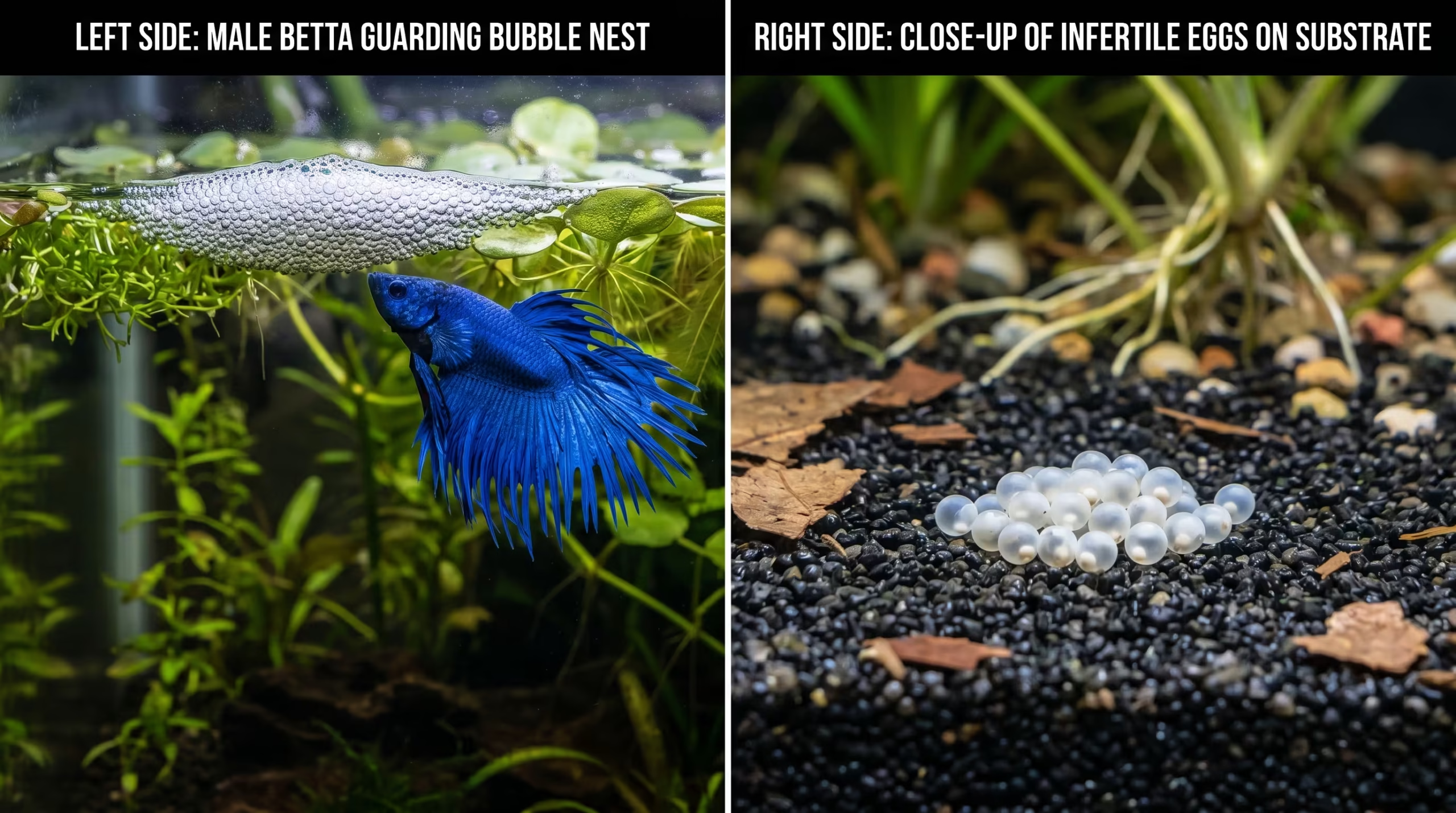
The most common confusion: bubble nests vs. eggs. Males create bubble nests at the water surface (left). Unfertilized eggs sink and settle in the substrate (right). They look completely different.
Another Fish in the Tank Laid Eggs
Community tanks sometimes surprise you.
Maybe you thought you had two males, or two peaceful fish. But one turned out to be female. Or maybe a different species in your tank laid eggs.
I’ve seen pleco eggs, mystery snail eggs, and betta eggs all blamed on the wrong fish. It happens when tank dynamics shift or when fish you thought were one sex turn out to be another.
How Betta Fish Reproduction Actually Works
Understanding the actual breeding process makes all of this clearer.
The Step-by-Step Breeding Process
- Step 1: Male Builds Bubble Nest
Before anything else, the male prepares. He blows bubbles at the water surface, sometimes for days. This nest is where eggs will be protected. - Step 2: Female Becomes Egg-Ready
When a female is ready to breed, her body shows specific signs:- Vertical breeding stripes appear on her body (dark bars running vertically)
- An egg spot becomes visible near her vent (it looks like a tiny dot)
- Her abdomen becomes noticeably rounder and fuller
- Step 3: The Breeding Embrace
When introduced (carefully), the male and female perform what’s called a “breeding embrace” or “T-position.” It looks dramatic, they wrap around each other, but it’s the moment fertilization happens. - Step 4: Female Releases Eggs
During or after the embrace, the female releases her eggs. Dozens, sometimes hundreds, depending on her size and condition. - Step 5: Male Collects Eggs Into Nest
Immediately, the male starts collecting the sinking eggs and placing them into his bubble nest. This is his role now, he’ll guard them obsessively, repairing bubbles and keeping fungus away until they hatch (usually 24–48 hours).
| Feature | Male Betta | Female Betta |
|---|---|---|
| Lays Eggs | ❌ No | ✅ Yes |
| Builds Bubble Nest | ✅ Yes | ❌ Rarely |
| Fertilizes Eggs | ✅ Yes | ❌ No |
| Guards Eggs | ✅ Yes | ❌ Usually Removed |
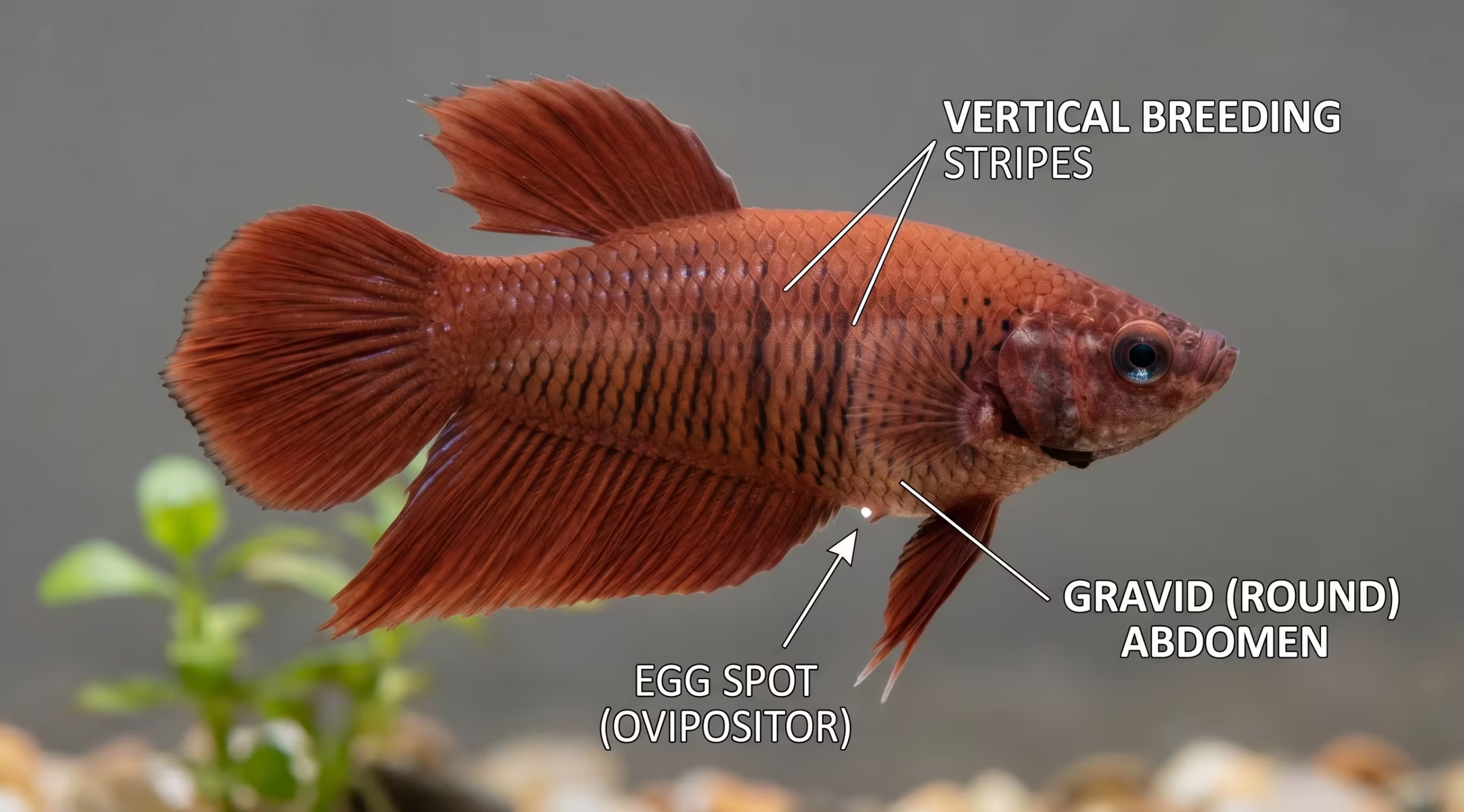
A female betta ready to lay eggs shows three key signs: an egg spot (tiny dot near the vent), vertical breeding stripes on her body, and a noticeably rounder, fuller abdomen.
Why Your Female Betta Suddenly Released Eggs
So your female laid eggs out of nowhere. Why?
She Is Sexually Mature
The most obvious reason: she’s old enough.
Female bettas typically reach sexual maturity between 4 and 12 months old. Once they reach that point, their bodies can produce eggs. Some do it once. Some do it periodically throughout their lives.
It’s not a one-time event. A healthy mature female can lay eggs multiple times if conditions stay favorable.
Warm, Stable Water Triggered Egg Production
Temperature matters more than most owners realize.
Bettas are tropical fish. Their bodies respond to warm, stable conditions. When tank temperature is consistently in the upper 70s to low 80s Fahrenheit, it mimics breeding season in their native habitats.
If you just got a heater, or adjusted your thermostat, or your tank was sitting in sunlight, that warmth can trigger egg production.
Stable water parameters (ammonia at 0, nitrites at 0, nitrates under 20 ppm) also signal to her body: “Conditions are good. It’s safe to breed.”
| Parameter | Ideal Range |
|---|---|
| Temperature | 76–82°F (24–28°C) |
| pH | 6.5–7.5 |
| Ammonia | 0 ppm |
| Nitrite | 0 ppm |
| Nitrate | Under 20 ppm |
She Saw Her Reflection or Another Fish
Visual stimulation triggers hormones.
A female betta seeing her own reflection in a mirror or tank wall, or spotting another fish (even in a neighboring tank), can stimulate her reproductive system. It’s instinctive. Her body thinks: “There’s a male nearby. Time to prepare.”
Even if there’s no actual male, the visual trigger is enough to sometimes push her into releasing eggs.
Overfeeding and Conditioning Foods
What you feed her matters.
High-protein foods like bloodworms and brine shrimp condition fish for breeding. They’re nutrient-dense and signal to her body: “Good nutrition is available. Now is a good time to reproduce.”
If you recently increased her feeding, switched to richer foods, or started treating her with live or frozen foods, egg production can follow.
What Should You Do If Your Betta Laid Eggs?
If you’re seeing eggs in your tank right now, here’s what to actually do.
Quick Action Checklist
- Stay calm, it’s normal
- Confirm your betta is female
- Remove eggs if desired
- Maintain clean water
- Watch for bloating or distress
Stay Calm — It’s Normal
First thing: this isn’t a medical emergency. Your betta isn’t sick. She’s not in danger. She’s just being a fish.
Egg-laying is completely normal behavior for mature females. It doesn’t hurt her. It doesn’t mean something is wrong.
Confirm Your Betta Is Female
Look for these signs:
- Egg spot (tiny dot near the vent)
- Shorter fins compared to males
- Fuller, rounder body shape
- Lack of a large beard (the flap of skin under the chin)
If you see these, you’ve got a female. Mystery solved.
Remove the Eggs If Desired
Should you remove unfertilized eggs? You can, but you don’t have to.
Many owners leave them alone. They’ll dissolve or be eaten naturally. If they bother you or you’re worried about fungus, use a small net or siphon to gently remove them.
Just don’t stress about it either way.
Maintain Clean Water
Keep doing what you’re doing. Water changes, regular maintenance, stable parameters. Nothing changes because of the eggs.
Watch for Bloating or Distress
Most females pass eggs without issue. But occasionally, a female becomes “egg-bound”, meaning she can’t release all her eggs and becomes severely swollen.
If your betta looks:
- Extremely bloated (not just pleasantly round)
- Lethargic or barely moving
- Refusing food for several days
- Gasping at the surface
Then there might be a health issue. But that’s rare with females who successfully released eggs.
When Egg-Laying Is NOT Normal (Health Warning Signs)
Most of the time, eggs are fine. But sometimes, what looks like egg-laying is actually a health problem.
Egg Binding in Bettas
Egg binding happens when a female can’t expel all her eggs. It’s uncomfortable and can become serious.
- Severe, uncomfortable-looking swelling
- Extreme lethargy or refusal to move
- Complete appetite loss
- Gasping or rapid breathing
- Darkness in body coloration
If your betta shows these signs, she might need help. A warm water bath (same temp as her tank) sometimes helps relax muscles and allow egg passage. Some breeders gently press the abdomen, but that requires experience.
If symptoms persist more than a few days, consult a fish veterinarian. Egg binding can be fatal if ignored.
Bloat or Dropsy vs. Eggs
This is where confusion happens. Not all stomach swelling is eggs.
| Condition | What It Looks Like |
|---|---|
| Eggs | Mild, symmetrical round belly |
| Bloat/Constipation | Swollen stomach, fish still active and eating |
| Dropsy | Severe swelling + pinecone-like scales standing out |
| Tumor | Uneven swelling, usually on one side |
Dropsy is serious and usually fatal. It’s caused by bacterial or parasitic infection. Bloat is often just constipation and can be treated with fasting and high-quality food.
If the swelling is just her belly and she’s otherwise acting normal, she probably just has eggs or mild bloat. If her scales are raised, or she’s extremely lethargic, that’s different.
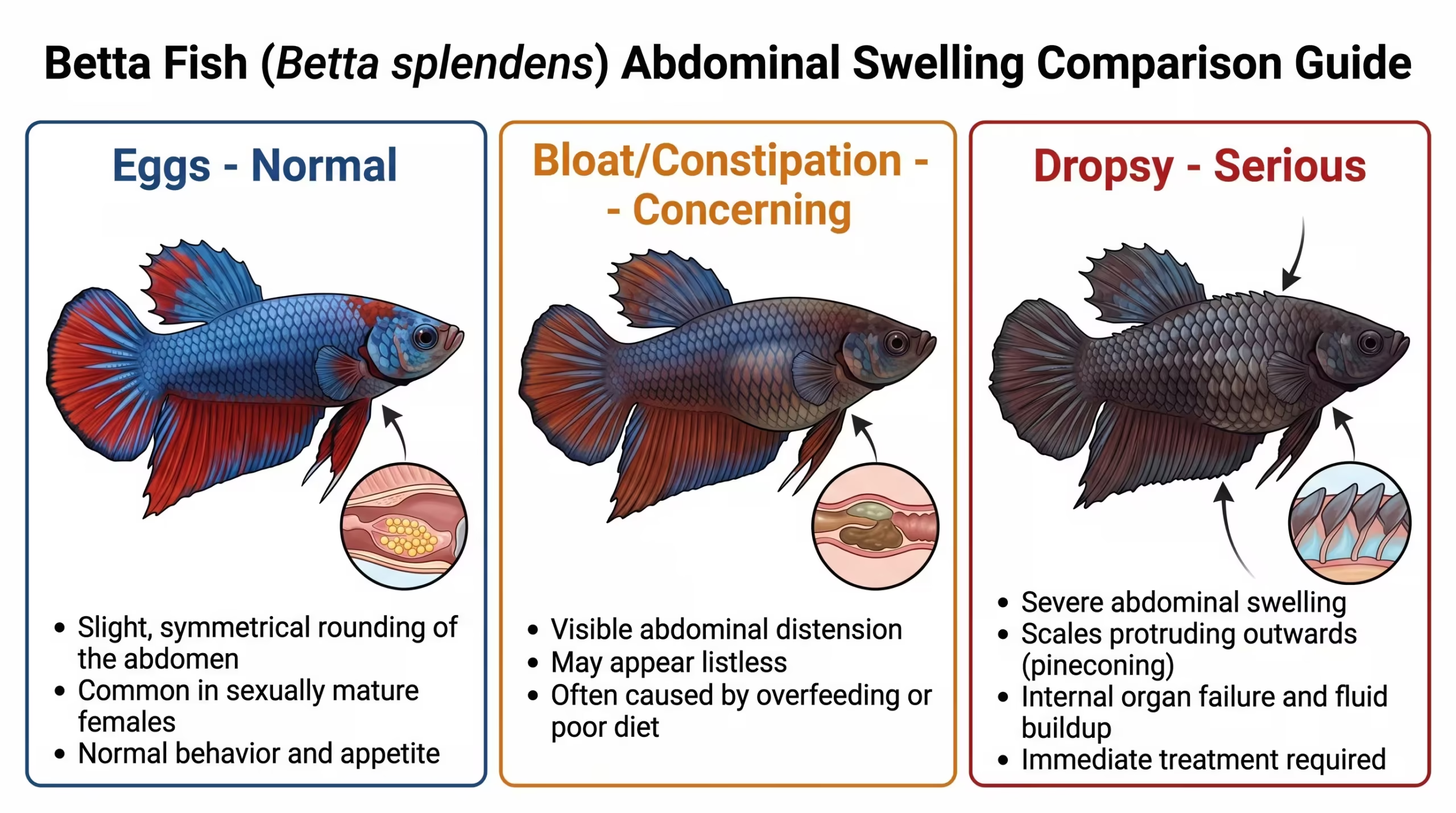
Not all belly swelling is from eggs. Bloat and dropsy look similar but are more serious. Dropsy shows pinecone-like scales standing out, that’s a red flag requiring immediate attention.
How to Tell If Your Betta Is Male or Female
This matters because a lot of confusion starts with misidentification.
Female Signs
- Egg spot (small white/dark dot near the vent)
- Shorter fins (usually equal to or shorter than her body length)
- Fuller, rounder body when viewed from above
- No beard (the flap of skin males extend under their chins)
- Vertical stripes (appear when she’s egg-ready or stressed)
Male Signs
- Longer fins (extend well beyond body length)
- Larger, more pronounced beard
- Slimmer body shape
- Ability to flare dramatically (opening gill covers wide)
- No egg spot
| Feature | Male | Female |
|---|---|---|
| Fins | Longer, flowing | Shorter, compact |
| Body Shape | Slim, streamlined | Fuller, rounder |
| Egg Spot | No | Yes |
| Beard | Prominent | Absent |
| Flaring | Extreme | Mild or none |
Young bettas can be tricky. A juvenile female with longer fins or a young male with shorter fins can look ambiguous. When in doubt, look for the egg spot. That’s your best indicator.
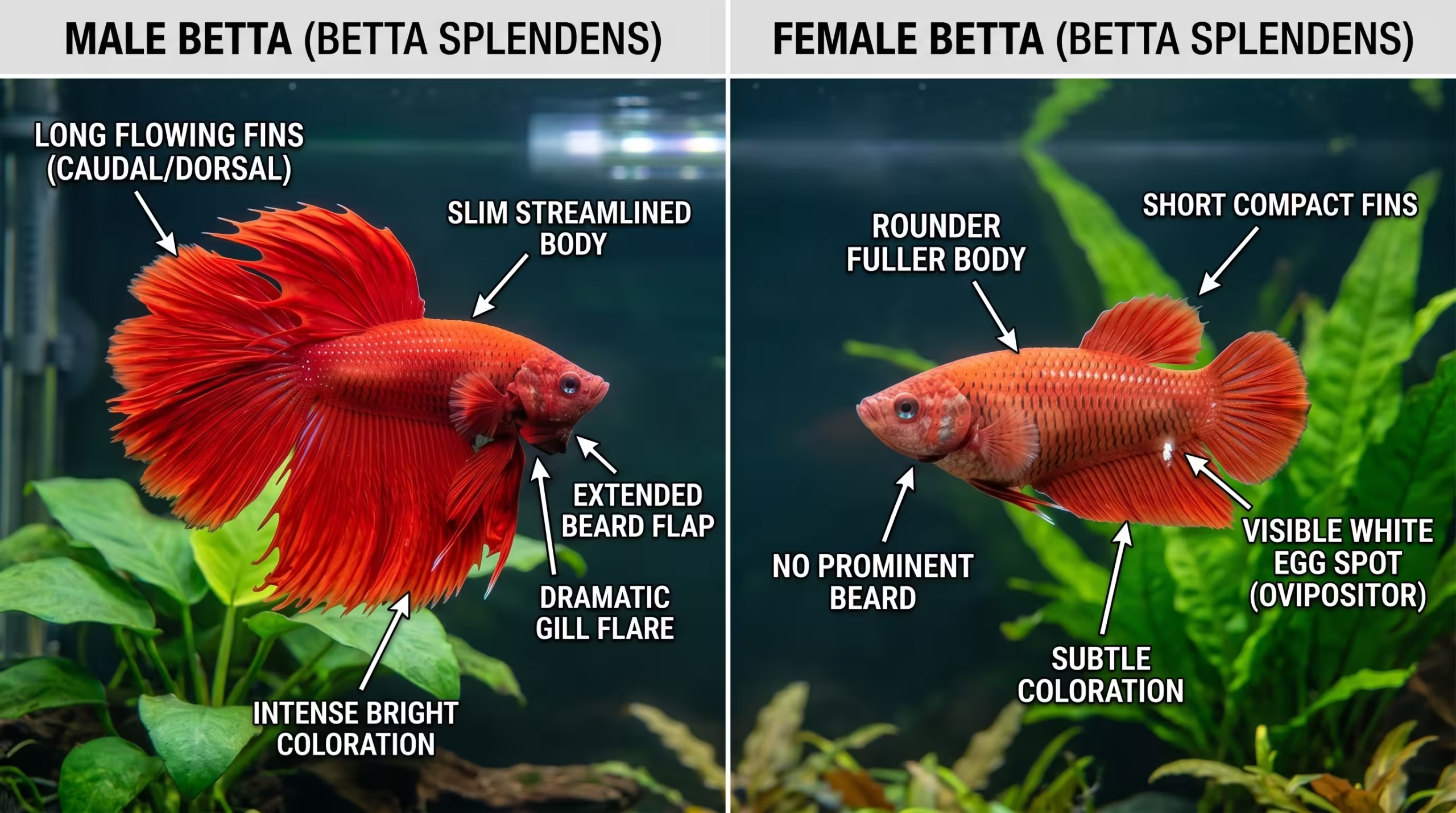
Key differences between male and female bettas. Look for the egg spot on females, it’s your most reliable identifier. Males have longer fins and a prominent beard; females have shorter fins and rounder bodies.
Common Myths About Betta Eggs
Let’s clear up the misinformation while we’re here.
False. Males never lay eggs. Their reproductive anatomy doesn’t allow it.
False. Only females get “pregnant” (egg-heavy), and bubble nests are a male behavior that has nothing to do with pregnancy. Males make bubble nests when healthy and ready to breed, but pregnancy only applies to females.
False. Unfertilized eggs cannot develop. Without male fertilization, they’re biologically inert. They won’t hatch no matter how long you wait.
Not true. Healthy females lay eggs regularly. It’s only a concern if she shows severe bloating, lethargy, or inability to pass eggs.
Final Verdict: Can Bettas Lay Eggs Without a Male?
Here’s what you need to remember:
Female betta fish can lay eggs without a male, but those eggs are infertile and will never hatch. Male bettas cannot lay eggs at all. If your betta released eggs unexpectedly, it’s usually normal reproductive behavior not a medical emergency.
If you walk up to your tank and see white eggs at the bottom, identify your fish’s sex. Look for the egg spot. Confirm she’s female. Then relax.
She’s just being a fish. And now you understand why.

A healthy female betta thrives in stable, well-maintained water with plants, proper heating (76–82°F), and consistent care. Most egg-laying happens in these ideal conditions.
FAQ Section: Questions You Might Have
Yes. Female bettas can release infertile eggs even when living completely alone. A male isn’t required for her body to produce them.
Your female betta is naturally releasing unfertilized eggs. This happens when she’s sexually mature, has stable water conditions, good nutrition, or visual stimulation. It’s normal.
It varies. Some females lay eggs once or twice in their lifetime. Others become egg-heavy periodically — sometimes monthly, sometimes every few months. It depends on age, diet, genetics, and tank conditions.
Yes, but timing matters. During breeding, the male fertilizes eggs as they’re released. If eggs have already fallen and been in the water for hours, fertilization becomes much less likely. Breeders work quickly during the spawning window.
It’s fine either way. Unfertilized eggs will dissolve or be eaten naturally. If you prefer a cleaner tank or worry about fungus, remove them with a small net. There’s no harm in leaving them, though.
Technically yes, but it’s risky. Breeders use separate tanks because adult bettas are aggressive and often injure or kill each other outside of controlled breeding conditions. Housing males and females together permanently doesn’t work — they’ll fight.
She could have eggs, constipation (bloat), or a more serious condition like dropsy. If the swelling is moderate and symmetrical, and she’s acting normally, she probably has eggs or mild bloat. If she’s lethargic, scales are raised, or swelling is severe and uneven, it’s more concerning.
Once you understand how betta reproduction actually works, the mystery disappears. What seemed alarming, tiny eggs at the bottom of the tank, becomes exactly what it is: normal fish behavior.
Your female isn’t sick. She’s not in danger. And those eggs? They’ll be gone in a week, one way or another.
You’ve got this.