
You’ve just witnessed something most betta owners misunderstand: your fish was sleeping the whole time.
Bettas do sleep – deeply and regularly. But since they have no eyelids, their eyes stay wide open the entire time. This simple fact causes more panic than almost anything else in fishkeeping.
By the end of this guide, you’ll understand exactly what healthy betta sleep looks like, when to worry, and how to create the perfect conditions for your fish to rest properly. You’ll also discover the hidden reasons sleep disruption happens in most tanks.
Let’s start with what you need to know right now.
Quick Answer – Yes, But It’s Not What You Expect
Your betta absolutely sleeps. Here’s what you’re actually seeing:
- Bettas DO sleep. They follow a natural daily rhythm, sleeping mostly at night but taking short naps during the day too.
- They don’t have eyelids. Their eyes stay open 24/7, even when they’re deep asleep. This is completely normal.
- They become still. When sleeping, your betta will float near plants, rest on the gravel, or perch on a leaf. Movement almost stops.
- Sleep is part of their natural cycle. Just like you, bettas need rest to survive and thrive.
What Healthy Sleep Actually Looks Like
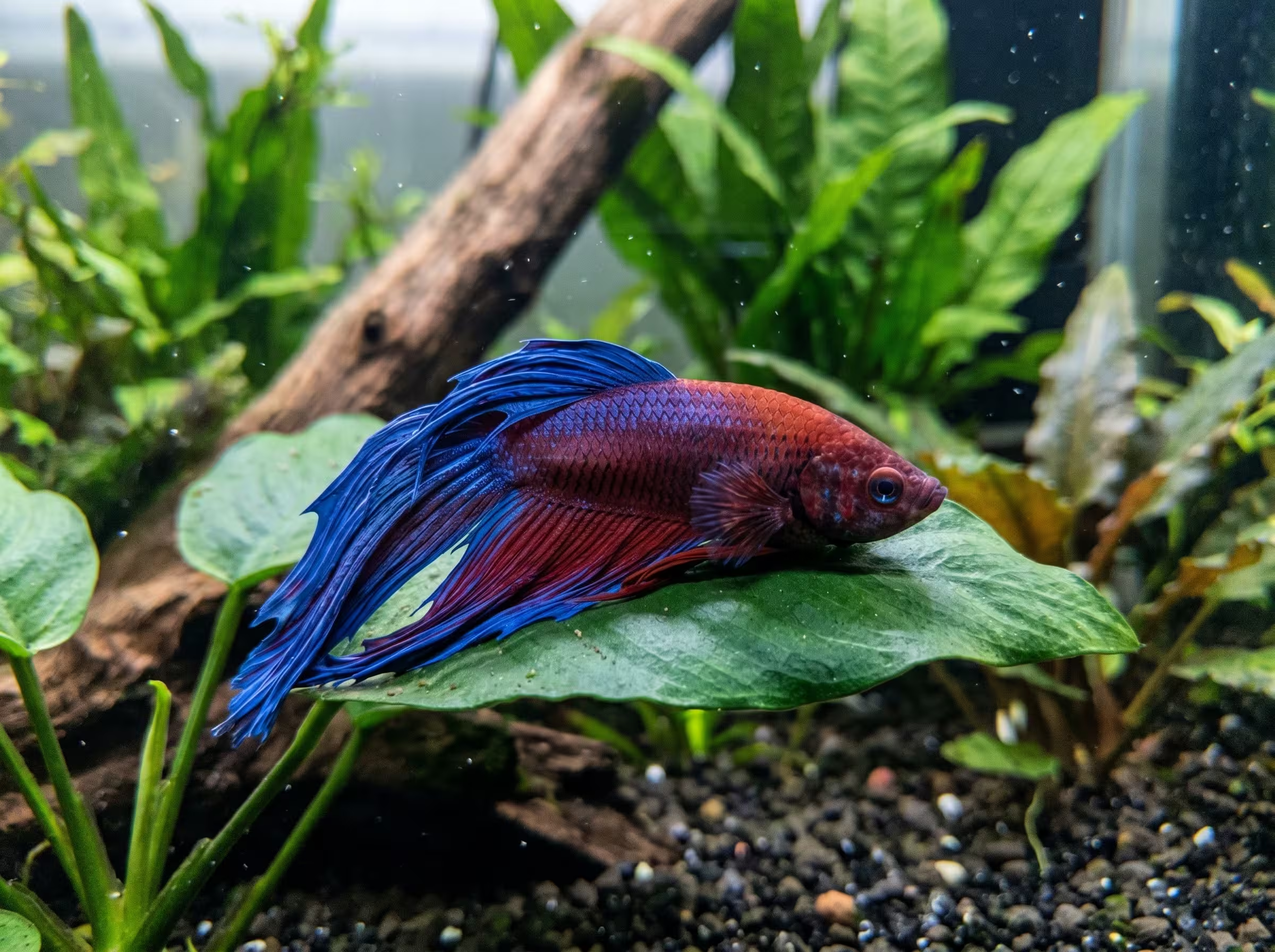
- Floating motionless near plants or decorations
- Resting on the gravel or substrate
- Sitting still on broad leaves (if you have live plants)
- Regular, calm breathing
- Quick response when you tap the glass or turn lights on
This is not sickness. This is your fish doing exactly what it should be doing.
How Betta Fish Sleep (The Science Explained Simply)
Before we go further, it helps to understand why bettas sleep the way they do.
Your betta’s brain works differently than yours. It doesn’t need to “shut down” the same way human brains do. But it absolutely needs rest—and that rest is critical for survival.
Circadian Rhythm in Fish
Bettas have an internal clock. Light and darkness control this clock.
During daylight, your betta’s brain gets a signal: stay active, hunt, explore. His metabolism speeds up. His movements become purposeful. Energy flows freely.
When darkness comes, the opposite happens. His brain receives a signal: rest time. Movement slows. Energy conservation kicks in. Metabolism drops significantly.
This light-and-dark cycle is called a circadian rhythm, and it’s built into virtually every creature on Earth, fish included.
Your betta didn’t evolve in aquariums with 24/7 lighting. In nature, Southeast Asian waters have roughly 12 hours of daylight and 12 hours of darkness. Your betta’s entire biology is tuned to that schedule.
Brain Activity During Sleep
Here’s what’s happening inside your sleeping betta’s head:
- Movement nearly stops. His muscles relax completely. No hunting. No patrolling territory. Just stillness.
- Metabolism drops. His body uses far less energy. Heart rate slows. Breathing becomes calmer and more measured.
- Energy conservation mode activates. Your betta is essentially putting himself into a low-power state, like a phone on battery saver mode.
This isn’t laziness. This is a survival strategy. In the wild, resting during darkness keeps your betta safe from predators and conserves calories during times when hunting is impossible.
In your aquarium, this behavior continues—whether you understand it or not.
Do Betta Fish Sleep at Night Only?
Not exactly. But nighttime is definitely when your betta sleeps the most.
The Primary Sleep Window
Bettas are primarily nocturnal resting fish. They sleep most heavily at night, usually for 6–12 hours depending on your lighting schedule and tank conditions.
But here’s the thing: they don’t sleep for 6–12 hours straight.
Instead, they break sleep into multiple short naps throughout the night. Your betta might rest for 1–2 hours, wake up briefly, then go back to sleep. This pattern repeats all night long.
Daytime Napping
Even during the day, your betta will occasionally nap. You might notice him floating motionless for 15–30 minutes, then suddenly becoming active again.
This is completely normal. It doesn’t mean something’s wrong.
If your lights are on 24/7 (which is a problem we’ll discuss in a moment), your betta might sleep randomly throughout the day because his circadian rhythm is confused.
How Lighting Schedule Affects Sleep
Here’s a practical rule: the lighting schedule you maintain determines when your betta sleeps.
- If your tank lights are on for 12 hours and off for 12 hours, your betta will naturally sleep during the dark period and be active during the light period.
- If your lights are on for 16 hours and off for 8 hours, your betta’s sleep window shrinks. He gets less rest overall.
- If your lights are on 24/7 (a common beginner mistake), your betta’s circadian rhythm breaks down completely. Sleep becomes erratic. Stress increases. Health problems follow.
Pro Tip: Maintain a consistent 10–12 hour light cycle for optimal sleep and health. This matches what your betta experiences in nature and allows his body to follow its biological programming.
How Long Do Betta Fish Sleep?
This is where things get interesting—and where most people get confused.
The Short Answer
Bettas need approximately 6–12 hours of rest per day. But this rest is broken into multiple short naps, not one long block of sleep.
Think of it this way: your betta might sleep for 1–2 hours, wake for 30 minutes to explore or eat, then sleep for another 1–2 hours. This pattern repeats throughout the night and occasional daytime hours.
Rest Patterns Vary
The exact amount of sleep your betta needs depends on several factors:
- Age. Younger bettas may sleep less. Older bettas often sleep more—similar to how elderly humans need different sleep amounts than teenagers.
- Temperature. Warmer water slightly increases activity and can reduce sleep time. Cooler water (but not too cold—more on this later) can increase rest periods.
- Tank stress. A betta in a calm, stable environment sleeps normally. A betta in a stressful tank might sleep more as his body tries to conserve energy.
- Feeding. A well-fed betta sleeps on a predictable schedule. A hungry betta might be restless.
- Health status. A healthy betta sleeps soundly. A sick or injured betta might sleep excessively or not at all.
How Often Do Betta Fish Sleep?
Your betta isn’t sleeping once per day. He’s sleeping throughout the day—but mostly at night.
During a typical 24-hour period, your betta might have 8–10 separate sleep sessions, totaling 6–12 hours of rest. The longest sessions happen at night. The shortest happen during daylight hours.
It’s not the quantity of sleep sessions that matters. It’s the total rest time and whether that rest is undisturbed by stress or poor water conditions.
Do Betta Fish Sleep on Their Side?
Yes. And no. And sometimes it’s completely fine. Other times it’s a serious warning sign.
Let me explain, because this is one of the most panic-inducing observations new betta owners make.
Normal Side-Sleeping Behavior
Healthy bettas absolutely rest on their sides. This is especially common when:
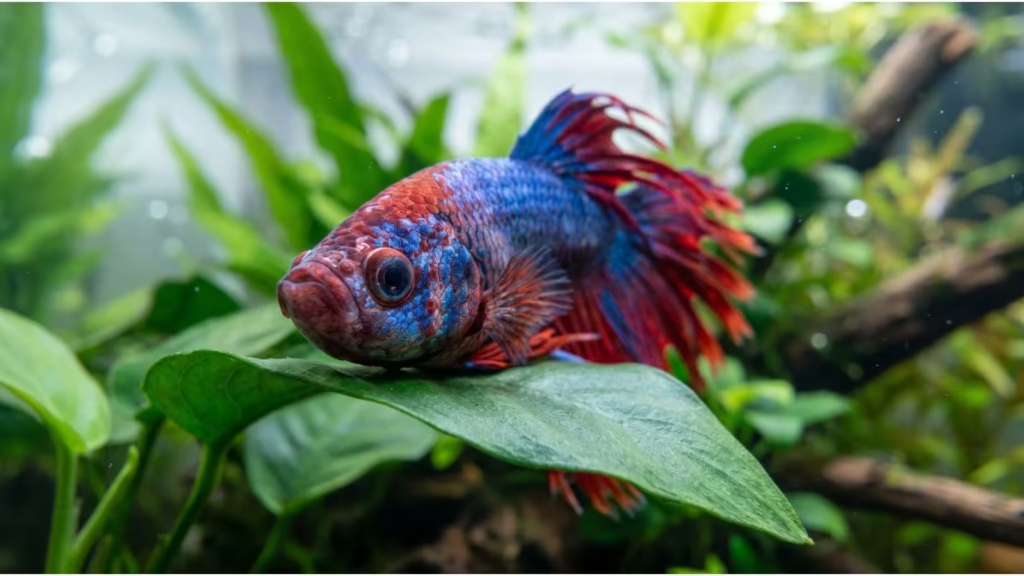
- Resting on a broad leaf. If you have live plants, your betta will often tilt sideways while resting on an anubias or amazon sword leaf. This is completely normal and actually indicates your betta feels safe and comfortable.
- Floating near the water surface. Bettas sometimes rest with a slight sideways tilt, especially near plants or decorations. The water supports their body, and the tilt is gentle and relaxed.
- Energy conservation. A sideways posture uses less muscle engagement than staying perfectly upright. Your betta’s body is simply finding the most efficient resting position.
When side-sleeping is normal, your betta looks calm. His fins are relaxed. His breathing is steady. When you tap the glass or move your hand near the tank, he responds immediately.
When Side-Sleeping Is a Warning Sign
Here’s where you need to pay attention:
- Collapsed on the substrate. If your betta is lying on the bottom of the tank, fully limp and completely unresponsive, this is not normal sleep. This is a sign of serious illness or extreme stress.
- Rapid, gasping breathing. A sleeping betta breathes slowly and steadily. If your betta is on his side AND breathing rapidly or gasping at the surface, something is very wrong.
- Complete unresponsiveness. A sleeping betta will react to sudden movement or light changes. If you turn lights on or tap the glass and your betta doesn’t react at all, this is concerning.
- Prolonged immobility. Sleeping for 30 minutes or an hour on the side? Normal. Lying motionless for 6+ hours without any movement? That’s worth investigating.
How to Tell the Difference
Common Beginner Mistake: Most new betta owners see their fish resting on its side for the first time and assume it’s dead or dying. This panic is completely understandable—but it’s usually unnecessary.
Here’s what experienced keepers do: we wait and observe. A sleeping betta will eventually move. It might shift position, swim a quick circle, then settle back down. That brief movement tells us everything we need to know: the fish is alive and fine.
If you’re genuinely worried, turn off the lights. Wait an hour. Turn them back on. A healthy betta will respond to the light change by becoming active. A truly sick betta might not.
Do Betta Fish Sleep With Their Eyes Open?
Yes. All the time. Even right now, while sleeping.
This shocks most people. But it’s completely normal and essential to understanding betta behavior.
Why Bettas Can’t Close Their Eyes
Bettas don’t have eyelids. At all. Their eyes are permanently open.
This isn’t a defect. It’s an evolutionary adaptation. In the wild, bettas live in shallow waters where predators can appear at any moment. Eyes that never close allow them to detect danger even while resting.
Your betta’s eyes stay open during sleep because he has no choice.
How Eyes-Open Sleep Works
Your betta’s eye works like a camera that never turns off. But the processing of what the eye sees is what changes during sleep.
During sleep, your betta’s brain isn’t actively monitoring the visual information coming in. He’s not aware of light, movement, or shadows the way he is when awake. His brain is essentially ignoring the input.
This is different from human sleep, where eyelids close and reduce light input to the brain. Your betta achieves the same result—reduced sensory awareness—without closing anything.
So How Do You Know Your Betta Is Sleeping?
Stillness is the only real indicator. A sleeping betta doesn’t move. He floats, rests, or leans against something without motion. His breathing is slow and regular. His fins stay in a relaxed position.
An awake betta is constantly shifting position, exploring, or responding to stimuli. He moves with purpose.
That’s the real difference. Not the eyes. The eyes are always open. The movement is what tells you whether he’s sleeping or awake.
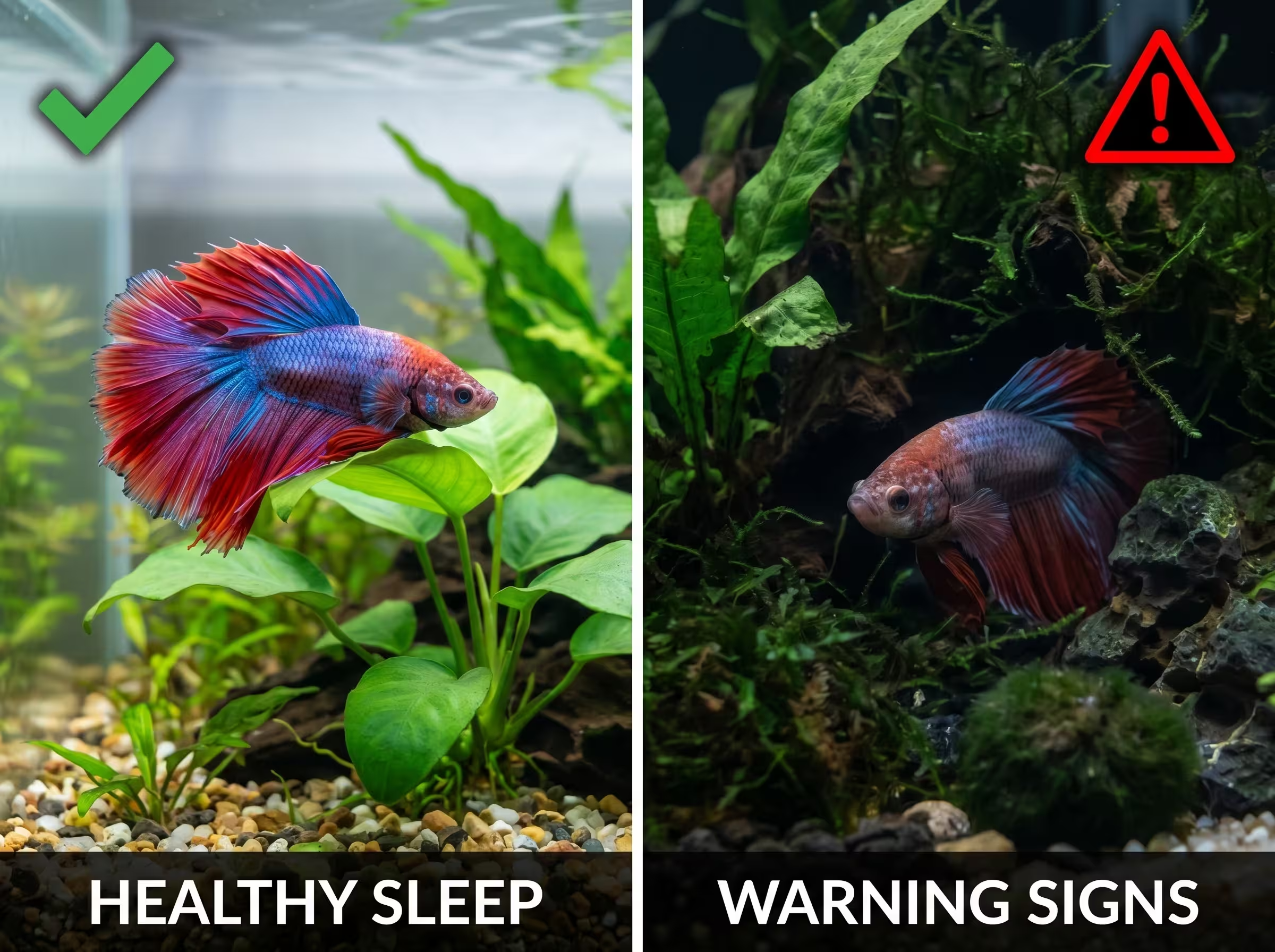
Normal vs Abnormal Sleep Behavior: Your Quick Reference Table
| Behavior | Normal? | Warning? | What It Means |
|---|---|---|---|
| Still at night | ✔ Yes | Healthy sleep cycle | |
| Hiding in plants/decorations | ✔ Yes | Feels safe and secure | |
| Floating sideways on leaves | ✔ Yes | Comfortable resting position | |
| No movement for 1–2 hours | ✔ Yes | Normal sleep duration | |
| Responds to light/movement | ✔ Yes | Brain is monitoring safety | |
| Lying on bottom, motionless for hours | ⚠ Investigate | Possible illness or severe stress | |
| Gasping at surface during rest | ⚠ Warning | Low oxygen or disease (rare) | |
| Rapid, panicked breathing while resting | ⚠ Warning | Acute stress response | |
| Clamped fins while resting | ⚠ Investigate | Stress, poor water quality, or illness | |
| Complete non-responsiveness to stimuli | ⚠ Warning | Serious health issue | |
| Sleeping 16+ hours with no activity | ⚠ Investigate | Stress, wrong temperature, or poor parameters |
The key takeaway: if your betta is still, relaxed, and responds to stimuli, he’s sleeping normally. If he’s limp, unresponsive, or breathing abnormally, something needs attention.
Why Your Betta Sleeps in Strange Positions
You’ve probably seen your betta in positions that made you do a double-take. Is that normal?
Usually, yes.
Resting on Broad Leaves
Bettas absolutely love resting on plant leaves. If you have live plants—especially ones with large, broad leaves like anubias or amazon sword—your betta will use them as sleeping platforms.
He’ll lean against the leaf, sometimes tilt sideways, and rest for extended periods. The leaf provides support and makes him feel secure. This is ideal behavior and a sign your tank setup is providing what your betta needs.
Pro Tip: If you don’t have live plants, add them. Bettas that have resting places sleep better and show less stress. Even a simple silk plant with broad leaves makes a difference.
Floating Near the Surface
Bettas often rest near the water surface, sometimes at a slight angle. This is also completely normal.
Your betta might be resting in a comfortable position. He might be cooling down if the tank is slightly warm. Or he might simply prefer that spot. None of these require concern.
Wedged Into Tight Spaces
Some bettas like to rest in narrow spaces—between decorations, in cave structures, or behind plants. This actually indicates comfort, not stress.
In the wild, bettas rest in tight spaces where predators can’t attack from all sides. When your betta seeks out cramped resting areas in your tank, he’s following his natural instinct to find a safe spot.
Motionless on the Gravel
Occasionally, a betta will rest on the bottom of the tank, fully relaxed and still. If he’s calm, breathing normally, and responsive to stimuli, this is fine. He’s simply chosen the bottom as his resting spot for the moment.
If he’s collapsed on the bottom—limp, unresponsive, gasping—that’s different. That requires investigation.
Tank Conditions That Directly Affect Sleep Quality
Here’s what most guides miss: your tank’s physical conditions dramatically impact how well your betta sleeps.
Even if your betta is sleeping, he might not be sleeping well. Poor conditions disrupt rest cycles and cause long-term health problems.
Water Temperature: The Critical Factor
Your betta’s body temperature matches his water temperature. Bettas evolved in warm Southeast Asian waters. Your tank needs to match that.
Optimal range: 76–82°F (24–28°C). Most keepers aim for 78–80°F as a sweet spot.
What happens at wrong temperatures:
- Too cold (below 72°F): Your betta becomes lethargic. His metabolism slows dramatically. He sleeps excessively but restlessly. Immune function drops. Disease risk increases.
- Too warm (above 84°F): Your betta becomes hyperactive. He can’t sleep properly. Oxygen levels in the water drop (warm water holds less oxygen). Stress spikes.
Common beginner mistake: Not using a heater. Many new betta owners assume room temperature is fine. It’s not. Even if room temperature seems warm to you, it’s usually too cold for a betta. An aquarium heater is essential, not optional.
A simple 25–50-watt heater costs $15–30 and solves this problem completely.
Water Chemistry: The Hidden Stressor
Poor water chemistry doesn’t just make your betta uncomfortable. It actively prevents proper sleep.
Here’s what you need to monitor:
- Ammonia: 0 ppm (zero). Any ammonia in the water is toxic and stressful. Your betta can’t relax or sleep normally. An ammonia spike is one of the most common hidden causes of “abnormal sleep behavior.”
- Nitrite: 0 ppm (zero). Like ammonia, nitrite is toxic. Both chemicals come from fish waste in uncycled tanks.
- Nitrate: <20 ppm. Nitrate builds up over time from the nitrogen cycle. Regular water changes keep it in check. Excessive nitrate causes chronic stress.
- pH: 6.5–7.5. Your betta can tolerate slight pH variations, but consistency matters more than the exact number. Sudden pH swings stress your betta and disrupt sleep.
How to maintain these parameters:
- Cycle your tank properly before adding your betta (20–30 days with a fishless cycling method)
- Change 20–30% of the water weekly to keep nitrate down
- Test water parameters at least monthly (or weekly if you’re new to fishkeeping)
- Use a simple aquarium test kit (API Master Test Kit is reliable and affordable)
Lighting Cycle: Regulating the Clock
We touched on this earlier, but it’s crucial: consistent, appropriate lighting controls your betta’s sleep schedule.
Proper lighting schedule: 10–12 hours on, 12–14 hours off daily.
Bettas thrive on rhythm. The same on/off cycle, every single day, helps their body know when to be active and when to rest.
What happens with bad lighting:
- 24/7 lights on: Your betta’s circadian rhythm completely breaks. He can’t sleep properly. Sleep deprivation leads to stress, aggression, and health problems. This is surprisingly common and surprisingly damaging.
- Random on/off times: Inconsistency stresses your betta. His body can’t establish a proper sleep schedule. Restlessness results.
- No lighting at all: Your betta can’t see properly and becomes stressed. Some light is necessary for health.
Pro Tip: Use a timer on your tank light. Set it to the same times every day. This small change dramatically improves sleep quality and reduces stress.
Oxygen Levels
Sleeping bettas still breathe. They need adequate oxygen in the water.
A filter provides water circulation and gas exchange. A heater-only tank (with no filter) often becomes stagnant. Oxygen levels drop. Your betta struggles to breathe, even during sleep.
Minimum requirement: A simple sponge filter or small hang-on-back filter. This keeps water moving and oxygen available.
Stress vs Sleep: How to Tell the Difference
Here’s the confusion that sends new owners into panic mode: stressed bettas often look like sleeping bettas.
Both conditions involve reduced movement. Both can involve hiding. Both look “not normal” to someone unfamiliar with betta behavior.
But they’re completely different, and treating them differently matters.
What Healthy Sleep Looks Like
- Posture: Relaxed, calm, resting against plants or decorations
- Fins: Fully relaxed, flowing naturally (not clamped against body)
- Breathing: Slow, steady, rhythmic
- Response: Quick reaction to light changes or sudden movement
- Duration: 30 minutes to a few hours, then activity resumes
- Behavior pattern: Cycles of sleep and activity throughout 24 hours
What Stress Looks Like
- Posture: Tense, rigid, often hiding in corners
- Fins: Clamped tightly against the body (called “fin clamping”)
- Breathing: Rapid, sometimes gasping
- Response: Slow or absent response to stimuli
- Duration: Prolonged, listless periods mixed with sudden, jerky movements
- Behavior pattern: No clear activity cycles; inconsistent, erratic behavior
The Key Difference: Responsiveness
A sleeping betta is responsive. When you turn lights on, he wakes and becomes active within seconds. When you tap the glass (gently—don’t stress him out), he notices and reacts.
A stressed betta is often unresponsive. He might not notice light changes. Tapping the glass doesn’t snap him back to normal.
Quick stress check: Turn off your tank lights for 15 minutes. Then turn them back on. A sleeping betta will wake up and become active. A stressed betta might remain lethargic or hide more.
Common Stress Causes
If your betta is stressed (not sleeping normally), look for these issues:
- Wrong temperature (too cold or too hot)
- Poor water quality (ammonia, nitrite, or high nitrate)
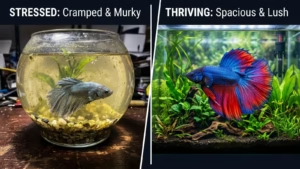
- Tank too small (tiny bowls are terrible)
- Incompatible tank mates (bettas are aggressive; they shouldn’t share space with other bettas or certain fish)
- Constant disturbance (tapping glass, moving decorations, sudden light changes)
- Lack of hiding spots (plants, caves, or other structures)
- Recent changes (new tank, new decorations, recent move)
Fix the underlying cause, and stress-related behavior resolves within a few days to a week.
Common Beginner Mistakes That Ruin Sleep
Most betta sleep problems aren’t complicated. They usually come from a few specific mistakes that nearly every new owner makes.
Mistake #1: Turning Lights On and Off Randomly
The problem: Your betta’s brain relies on consistent light cycles. Random on/off times confuse his circadian rhythm. He can’t establish a proper sleep schedule.
The fix: Use a timer. Set it once and forget it. Consistency matters more than the exact timing.
Mistake #2: Keeping Lights On 24/7
The problem: No darkness = no rest signal. Your betta’s brain stays in “active mode.” Sleep becomes fragmented and poor. Stress builds up. After weeks, behavioral and health problems emerge.
The fix: Make sure your lights have a predictable off-time daily. Ideally 12–14 hours of darkness per night.
Mistake #3: Assuming Inactivity Means Sickness
The problem: A sleeping betta looks motionless. A new owner sees this and panics, assuming the fish is sick. Then they might move the betta, chase him around, or make other stress-inducing changes trying to “help.”
The fix: Observe before reacting. A healthy betta will move at least a little when lights change. Stillness during dark hours is normal.
Mistake #4: No Heater
The problem: Room temperature is almost always too cold for a betta. Without a heater, your betta becomes lethargic, sleeps excessively, and his immune system weakens. He might look “sick” when he’s really just cold.
The fix: Get a reliable aquarium heater. A 25–50-watt heater costs $15–30 and lasts years.
Mistake #5: Ignoring Ammonia Spikes
The problem: If your tank isn’t cycled or if maintenance is skipped, ammonia builds up. Even small amounts of ammonia stress your betta and disrupt sleep. He becomes lethargic, stops eating, or sleeps restlessly.
The fix: Cycle your tank before adding the betta. Then do 20–30% water changes weekly.
Mistake #6: Tank Too Small
The problem: Tiny bowls and unfiltered tanks create multiple problems at once: poor water quality, no hiding spots, limited space to establish a proper sleep cycle. Your betta is constantly stressed.
The fix: Minimum 5-gallon tank with a filter and heater. 10 gallons is better. Most sleep problems in “tiny tank bettas” disappear after upgrading.
How Long Can Your Betta Live Without Food While Sleeping?
This question comes up a lot, usually when an owner is planning to be away.
Here’s the honest answer: Your betta can survive approximately 5–7 days without food, depending on age, health, and tank conditions.
But here’s what you should actually know:
Why the Survival Window Exists
When your betta sleeps, his metabolism drops dramatically. He uses far less energy than when he’s active. Food requirements decrease significantly.
Your betta’s body can live off stored energy for about a week. But “surviving” and “thriving” are different things. Just because he can go a week without food doesn’t mean he should.
What Happens During Extended Fasting
- Days 1–3: No problem. Your betta’s metabolism is low from sleep. He uses stored energy from previous meals.
- Days 4–5: Metabolism continues slowly. Your betta might sleep more. No immediate danger.
- Days 6–7: Your betta becomes sluggish. Immune function starts declining. Stress hormones rise.
- Day 8+: Health deteriorates. Organ function suffers. Survival becomes uncertain.
The Real Issue: Don’t Test It
Yes, your betta might survive a week without food. But why would you risk it? The stress of fasting damages long-term health even if your betta survives the immediate period.
Better options:
- For 2–3 days away: Don’t feed. Your betta will be fine. His metabolism during sleep means he doesn’t need food for a few days.
- For a longer trip (4–7 days): Use an automatic feeder set to dispense small amounts once daily. This ensures feeding continues while you’re away.
- For any extended absence: Ask a trusted friend to feed your betta while you’re gone. Tell them to give only a small pinch once daily—overfeeding is the more common mistake.
The takeaway: Your betta can survive without food during extended sleep cycles. But modern fishkeeping offers easy solutions. Use them.
Do Betta Fish Sleep More When Pregnant or Gravid?
If you’re breeding bettas or have a pregnant female, this question becomes relevant.
The short answer: Yes. Gravid (egg-bearing) females often rest more and show different sleep patterns than typical bettas.
Why Pregnant Bettas Sleep Differently
Carrying eggs is physically demanding. A gravid female’s body redirects resources toward egg production. This increased metabolic demand requires more rest to compensate.
Common behaviors in pregnant bettas:
- Increased hiding: Pregnant females spend more time hidden in plants or caves. This isn’t stress—it’s protective instinct.
- Reduced activity: She’ll move less overall. You might see her resting for extended periods.
- More frequent, shorter sleep cycles: Instead of long sleep blocks, she might sleep for 30–45 minutes, move briefly, then sleep again.
- Appetite changes: She might eat slightly less or more inconsistently than usual.
What She Needs
A gravid female requires extra stability:
- Consistent temperature (78–80°F is ideal)
- Excellent water quality (any stress during pregnancy can cause egg reabsorption)
- Plenty of hiding spots (plants, caves, decorations)
- Peaceful environment (no aggressive tank mates or constant disturbance)
- Adequate nutrition (high-protein foods support egg development)
If you’re planning to breed, research the entire breeding process beforehand. Pregnant bettas need specific care, and raising fry requires advanced knowledge and setup.
Long-Finned Betta Fish Sleep Behavior Differences
If you own a long-finned betta—or are considering one—understand that their sleep patterns differ slightly from short-finned varieties.
Why Long Fins Change Everything
Long-finned bettas (like deltas, super deltas, or halfmoons) carry significantly more weight in their fins. Those beautiful, flowing fins are metabolically expensive.
The consequence: Long-finned bettas fatigue faster than short-finned bettas.
How Sleep Differs
- Movement: Long-finned bettas move more slowly. Their long fins create drag in the water, requiring more effort to swim. They often rest between short bursts of activity rather than moving freely like short-finned varieties.
- Rest frequency: You might notice long-finned bettas sleep more frequently throughout the day. They’re not lazier—they’re managing the energy cost of carrying those fins.
- Resting position: Long-finned bettas often rest against plants or decorations, using external support for their heavy fins. This reduces the energy needed to stay upright.
- Fin position during sleep: Their long fins drape more naturally when resting. A healthy long-finned betta’s fins spread slightly when at rest, creating that characteristic “flowing” appearance even while sleeping.
Care Considerations for Long-Finned Bettas
If you have a long-finned betta:
- Provide plants or resting structures: He’ll use them frequently. Live plants work best, but quality silk or plastic plants are fine.
- Keep water quality excellent: Energy demands are higher; poor water stresses him faster.
- Maintain proper temperature: Warmth helps him manage the metabolic cost of those fins.
- Avoid aggressive tank mates: Long fins are delicate. Other fish will nip them, causing stress and disrupting sleep.
Long-finned bettas are absolutely worth owning. Just understand their specific needs.
How Long Should You Acclimate Your Betta Fish?
Acclimation is your betta’s first experience in his new home. Do it wrong, and sleep disruption follows for weeks.
What Is Acclimation?
Acclimation is the process of slowly adjusting your new betta to the water parameters of your tank. Skip this, and the sudden change stresses him severely. His sleep cycles break down. His immune system weakens. Illness often follows.
The Proper Acclimation Timeline
Minimum acclimation: 30–60 minutes using the drip method.
Here’s how to do it correctly:
- Float the betta’s bag in your tank for 10–15 minutes. This equalizes temperature between bag water and tank water.
- Start the drip method: Use an airline tube or siphon hose to slowly drip tank water into the betta’s bag. Adjust the drip to about 1–2 drops per second.
- Wait 30–45 minutes. During this time, water gradually mixes. Your betta’s body adapts to the new parameters.
- Net the betta gently into the tank. Do not pour bag water into your tank (it often contains waste from the store).
- Dim your lights. For the first 24 hours after introduction, keep lighting low. This reduces stress and helps your betta settle into his new home.
Why This Matters for Sleep
A properly acclimated betta enters his new home at a low-stress level. Within a few days, he establishes a normal sleep cycle in his new environment.
A betta that’s acclimated too quickly is severely stressed. His body is in shock from the parameter change. Sleep becomes erratic. He might hide for days. Recovery takes 2–3 weeks.
Common beginner mistake: Rushing acclimation. “I want to see my new betta swim around!” is understandable but harmful. Patience during acclimation prevents months of stress-related problems later.
First Week After Acclimation
For the first 3–7 days after introduction:
- Keep lights on a normal (but calm) schedule
- Don’t tap on glass or chase the betta around
- Don’t do large water changes
- Don’t change decorations or plants
- Feed small portions once daily
These first days establish your betta’s sleep routine in his new environment. Stability during this period sets up weeks of healthy behavior afterward.
When to Worry: The Emergency Guide
Not every still betta is sleeping. Here’s when stillness becomes a red flag that demands immediate attention.
Serious Warning Signs
Stop-and-investigate if you see:
- Lying on the bottom, completely motionless for 6+ hours. A sleeping betta takes brief rests, not marathon immobility. Extended bottom-sitting indicates serious stress, illness, or wrong water parameters.
- Gasping at the water surface during rest periods. Bettas should breathe normally while sleeping. Gasping indicates oxygen deprivation, gill damage, or acute stress.
- Complete non-responsiveness to stimuli. Turn lights on. Tap the glass gently. Your betta should react. Zero response is very concerning.
- Fin rot or white spots appearing. These are disease signs, not sleep-related. But they often occur alongside sleep disruption.
- Clamped fins combined with stillness. Clamped fins + stillness = stress or illness, not healthy sleep.
- Not eating for 2+ days. A betta that skips one meal might be stressed or sleeping through feeding time. Two days without eating is a real warning.
- Swollen belly or visible parasites. These indicate health problems that demand immediate action.
- Bulging eyes or popeye symptoms. Extreme swelling around the eyes is a serious bacterial or parasitic infection.
What to Do
If you observe any of these warning signs:
- Test water parameters. Ammonia, nitrite, pH, and temperature are the first suspects. Poor water quality causes most sleep disruptions and illnesses.
- Do a partial water change. Change 25–30% of the water. This dilutes any toxins and improves oxygen levels.
- Check temperature. Is it 76–82°F? If not, adjust it immediately.
- Observe for 24 hours. Many betta problems resolve within a day once water quality improves.
- If nothing improves, consult a vet. If your betta remains unresponsive, won’t eat, or shows disease signs after 24 hours, professional help is necessary.
Troubleshooting Workflow: Your Betta Is Sleeping Too Much
Your betta looks like he’s sleeping all day. Or he’s sleeping, but something feels off.
Use this workflow to figure out what’s wrong:
1. Check the Temperature First
Action: Use an aquarium thermometer to check your tank temperature.
What you’re looking for:
- 76–82°F? Good. Move to the next step.
- Below 74°F? This is your problem. Get a heater immediately.
- Above 84°F? Also problematic. Check if your room is too warm or if sunlight is heating the tank.
Why this matters: Temperature is the single most common cause of abnormal sleep behavior. Fix this first.
2. Test Water Parameters
Action: Use an aquarium test kit to check ammonia, nitrite, nitrate, and pH.
What you’re looking for:
- All at safe levels? Move to the next step.
- Ammonia or nitrite above 0? This is your problem. Do a 30% water change immediately. The tank needs cycling or better maintenance.
- Nitrate above 20 ppm? Do a partial water change and increase weekly water change frequency.
Why this matters: Toxic water parameters prevent normal sleep cycles. Even small ammonia amounts cause stress.
3. Observe Breathing Rate
Action: Watch your betta’s gill movements while he’s resting. Count how many times his gills open and close in 60 seconds.
What you’re looking for:
- 40–60 gill movements per minute? This is normal for a resting betta. Move to the next step.
- Over 80 per minute? His breathing is too fast. This indicates stress, low oxygen, or a health issue.
- Under 30 per minute? His breathing is very slow. This usually indicates he’s in a deep rest state, which is fine—unless combined with other warning signs.
Why this matters: Breathing rate tells you if your betta is truly calm or stressed while appearing to sleep.
4. Check the Lighting Cycle
Action: Assess your tank’s light schedule over the past week.
What you’re looking for:
- Consistent 10–12 hours on, 12–14 hours off? Good. Move to the next step.
- Lights on 24/7? This is destroying his sleep. Install a timer immediately.
- Random on/off times? This is confusing his circadian rhythm. Set a consistent schedule.
Why this matters: Broken light cycles prevent proper sleep regulation.
5. Reduce Stress Factors
Action: Check for ongoing disturbances:
- Are you tapping the glass constantly?
- Are decorations being moved frequently?
- Is the tank in a high-traffic area with sudden noises?
- Is a cat or child staring at the tank all day?
What to do:
- Stop tapping the glass (it stresses bettas).
- Keep decorations stable.
- Move the tank to a quieter area if possible.
- Teach kids and pets to observe without disturbing.
Why this matters: Constant disturbance prevents deep, restorative sleep.
6. Evaluate Food Intake
Action: Track how much your betta eats each day over the past week.
What you’re looking for:
- Eating normally? Food is not the problem. This is good.
- Not eating at all? This is a real concern and might indicate illness.
- Eating slightly less than before? This is sometimes normal—bettas eat less in cooler water or during stress recovery.
Why this matters: Poor appetite often accompanies sleep disruption but isn’t always the cause.
What to Do Next
If you’ve worked through this entire workflow and everything checks out: your betta is probably fine. Healthy bettas sleep a lot, especially during darkness. What looks like excessive sleep might just be normal behavior.
If one or more issues appeared during the workflow: fix that issue. Most problems—temperature, water quality, light schedule, stress—resolve within 3–7 days once addressed. Sleep patterns normalize once the underlying cause is fixed.
If everything is correct and your betta still seems wrong: contact a vet or experienced aquarist. Some health issues require professional diagnosis. There’s no shame in asking for help.
Myth Busting: What Betta Experts Know That Beginners Don’t
Let’s clear up some widespread misconceptions about betta sleep.
Myth #1: “Fish Don’t Actually Sleep”
The myth: Fish are too simple to need sleep. They’re always aware and active.
The truth: Fish absolutely sleep. Betta fish in particular have well-documented sleep cycles. Brain imaging shows that resting bettas have different neural activity than active bettas. Sleep isn’t a human invention—it’s a biological necessity for nearly all animals.
Myth #2: “If a Fish Is Sleeping, It’s Sick”
The myth: Any time a betta is still, something’s wrong.
The truth: Stillness is normal. Sleep is healthy. A motionless betta is usually fine. A betta that never moves and never eats is the concern—not a betta that sleeps regularly.
Myth #3: “Fish Sleep Upside Down Sometimes”
The myth: Bettas can flip upside down and sleep like that.
The truth: No. An upside-down betta is a sick betta. This indicates swim bladder disease, neurological problems, or severe stress. It’s never normal and always requires investigation.
Myth #4: “You Can’t Wake a Sleeping Fish”
The myth: Once a fish is asleep, it’s completely out and can’t detect danger.
The truth: Bettas sleep lightly. They remain aware of their surroundings. A sudden movement or light change will wake them. This is an evolutionary adaptation—bettas in the wild need to detect predators even while resting.
Myth #5: “Bettas Don’t Need Darkness”
The myth: Fish don’t care about light or dark. Light 24/7 is fine.
The truth: Constant light disrupts circadian rhythms and prevents proper sleep. Bettas evolved with daily light-dark cycles. Your betta’s biology expects that pattern. Ignoring it causes chronic stress.
Myth #6: “Movement Always Means Health”
The myth: A betta that’s constantly moving is healthy. A still betta is lazy or sick.
The truth: Constant movement can indicate stress or poor water quality (bettas become hyperactive in response to toxins). A betta that alternates between activity and sleep is healthy. A betta that’s never still might actually have a problem.
Expert Veterinary Insight: What a Vet Would Tell You
Sleep Is Essential for Immune Function
Your betta’s immune system doesn’t work well without adequate sleep. During sleep, his body produces immune cells and repairs damage from daily stress. A chronically sleep-deprived betta becomes sick frequently.
Many mystery illnesses—fin rot, velvet disease, bacterial infections—actually start with sleep deprivation. The root cause isn’t the disease itself. It’s the broken sleep cycle that weakened his immune system first.
Fix the sleep, and many “illnesses” resolve on their own. Treat the illness without fixing sleep, and it often returns.
Chronic Stress Breaks Sleep Cycles
Stress and sleep disruption are bidirectional. Bad sleep causes stress. Stress prevents sleep. Once the cycle starts, it’s hard to break without addressing both issues.
A betta in a stressful environment (wrong temperature, poor water quality, aggressive tank mates, constant disturbance) can’t sleep well even if he’s “trying.” His body stays in alert mode.
Poor Water Quality Mimics Disease Symptoms
This is the big one. Aquatic vets see betta owners treat for disease when the real problem is water quality.
Ammonia and nitrite toxicity cause:
- Lethargy and excessive sleeping (fish mistake it for sickness)
- Reduced eating
- Fin damage that looks like fin rot but isn’t
- Eye cloudiness that looks like infection but isn’t
- Rapid breathing that looks like gill disease but isn’t
A betta with ammonia poisoning needs water changes, not medications. Test your water before assuming your betta is sick.
When to Actually Call a Vet
Vets suggest contacting them if:
- Your betta shows visible parasites or spots that don’t improve with water changes
- Fin damage is severe or spreading rapidly
- Your betta has visible tumors or lumps
- Behavioral changes don’t improve after 1 week of water parameter corrections
- Your betta stops eating for more than 2–3 days
Most common betta problems (lethargy, poor sleep, reduced appetite) are solved by water maintenance. Medications come later, only after ruling out environmental causes.
Your Action Plan: Starting Tomorrow
You now know how betta sleep works, why it matters, and how to maintain it. But information without action is useless.
Here’s what to do this week:
Day 1
- Check your tank temperature. If it’s below 76°F, get a heater.
- Install a timer on your tank light. Set it to turn on at the same time every morning and off at the same time every evening. Consistency matters.
Day 2–3
- Test your water parameters using a reliable test kit. Note the results.
- Do a 25–30% water change if any parameter is off.
Day 4–5
- Add plants or resting structures if you don’t have them. Bettas sleep better with places to rest.
- Reduce tapping on glass and general disturbance.
Week 2+
- Establish a weekly water change routine (25–30% weekly).
- Observe your betta’s sleep patterns. Note what time he tends to rest and what positions he prefers.
- Watch for any changes in behavior. Early detection of problems prevents serious illness.
Most betta sleep issues resolve within a week once environmental factors are corrected. If your betta is still sleeping excessively or showing warning signs after 7 days, contact a veterinarian.
FAQ Section: Questions You Might Have
Mostly at night. Bettas are primarily nocturnal resting fish, meaning they sleep most heavily during dark hours. However, they do take short naps during the day too, especially if they’re comfortable in their environment.
The key difference is responsiveness. A sleeping betta will react to sudden light changes or movement. Turn on your lights (if they were off) or tap the glass gently. A sleeping betta will move or become active within seconds. A dead betta won’t respond at all. If you’re still worried, wait a few hours and observe again. A sleeping betta will eventually move on his own.
Yes, completely normal. Stillness is the defining characteristic of sleep. Healthy bettas are still during sleep periods. The concern isn’t stillness itself—it’s how long the stillness lasts and whether other warning signs (gasping, clamped fins, non-responsiveness) are present.
Several possibilities: Temperature drop (check your heater), poor water quality (test your parameters), stress (recent tank changes or new tank mates), age (older bettas sleep more), or recovering from stress (your betta might be resting after a stressful period). Check these factors. Most excessive sleeping resolves once the underlying cause is fixed.
They need a regular light-dark cycle, but not complete darkness. Some ambient light or very dim lighting is fine. The key is consistency. Your betta should have 10–12 hours of meaningful darkness per 24-hour period. Complete darkness is actually unnecessary—a dimly lit room is sufficient.
No. An upside-down betta is never normal. This is a medical emergency indicating swim bladder disease, neurological damage, or severe organ failure. Contact a vet immediately if you see this.
Let him sleep. Waking your betta disrupts his natural rest cycle and causes stress. There’s no benefit to waking him. Only wake him if there’s an actual emergency (like a water quality crisis requiring immediate tank intervention).