
Baby rabbits are among the cutest and most delicate animals many people ever see. Whether you found a rabbit nest in your garden, your pet rabbit recently had babies, or you are simply curious, newborn bunny rabbits can raise many questions. People often wonder what they eat, how fast they grow, whether they need help, and what normal behavior looks like.
Many people become worried after seeing baby rabbits because they often appear to be alone. Others mistakenly think a nest has been abandoned because the mother rabbit is not sitting beside her babies all day. In reality, rabbits have very different parenting habits compared to cats and dogs. For example, a mother dog or cat will stay with her young for most of the day, but a rabbit mother prioritizes staying hidden to avoid attracting predators.
Understanding how newborn bunny rabbits grow and behave can help prevent common mistakes and make it easier to recognize when a rabbit actually needs help.
In this complete guide, you will learn about newborn rabbit appearance, growth stages, feeding habits, behavior, care requirements, common myths, and frequently asked questions.
What Are Newborn Bunny Rabbits?
Newborn bunny rabbits are baby rabbits during the earliest stage of life after birth. Although many people simply call them baby bunnies, their proper name is kits or sometimes kittens.
Newborn rabbits begin life in an extremely fragile state. Unlike animals that are born with the ability to walk, see, or follow their parents around, rabbits arrive completely dependent on their mother. During the first days of life they cannot regulate body temperature properly and rely entirely on the nest and their siblings for warmth and survival. If a baby rabbit gets separated from the nest, it can become dangerously cold in under an hour.
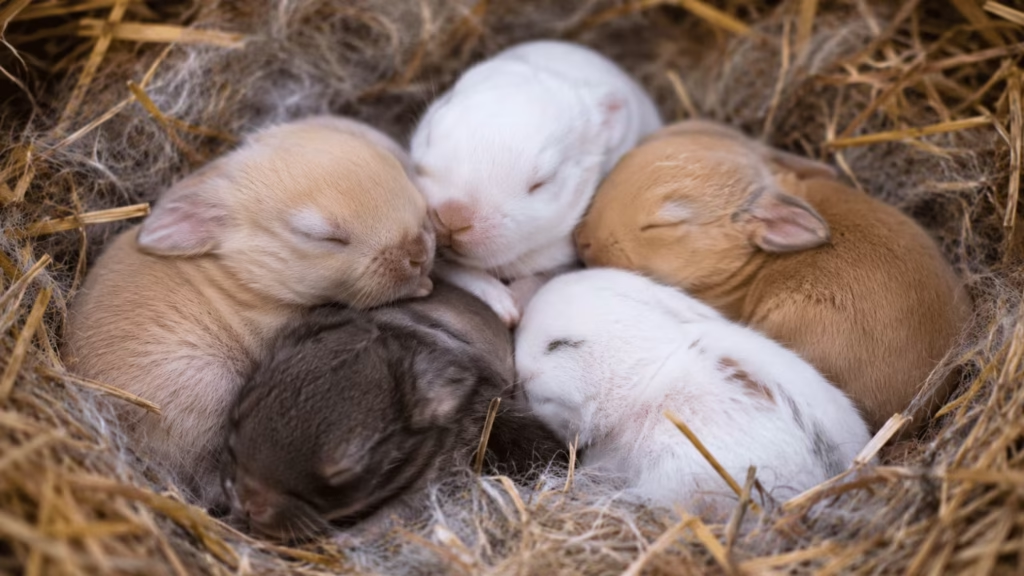
Mother rabbits create nests using grass, hay, leaves, and fur pulled from their own bodies. This soft nesting area helps protect babies from cold temperatures and predators. Interestingly, a mother pulls fur mostly from her chest and belly — not because it’s itchy, but because that fur is softest and provides the best insulation.
At birth, newborn rabbits usually have closed eyes, closed ears, little or no fur, and very limited movement. They cannot regulate their body temperature properly and depend completely on their mother’s milk. The first weeks of life involve very rapid changes. Within days, these tiny newborn animals begin transforming into active young rabbits.
Quick Facts About Baby Bunny Rabbits
| Information | Details |
|---|---|
| Baby rabbit name | Kit or kitten |
| Average litter size | 4–12 babies |
| Pregnancy length | Around 28–31 days |
| Weight at birth | 25–80 grams, about the weight of a large strawberry |
| Eyes open | Around 7–10 days |
| Begin eating solid food | Around 2–3 weeks |
| Weaning age | Around 6–8 weeks |
| Reach adulthood | 4–12 months depending on breed |
| Average lifespan | 8–12 years for domestic rabbits |
What Do Newborn Baby Rabbits Look Like?
One of the most surprising things about newborn rabbits is how different they look compared to adult rabbits. Most people imagine fluffy rabbits with large ears and soft fur, but newborn rabbits look almost unrecognizable during the first few days.
A newborn rabbit is extremely tiny. Some breeds are small enough to fit comfortably in the palm of your hand. Their skin may appear pink, dark, or slightly gray depending on the color of their future fur. For instance, a baby rabbit that will grow up to have black or blue-gray fur often has dark skin at birth, while a white or light-colored rabbit usually has pink skin.
Baby rabbits develop very quickly. Small changes happen almost every day, and after only a few weeks they begin looking much more like adult rabbits.
Birth to 3 Days
During the first few days, newborn rabbits usually have pink or dark skin, almost no fur, tightly closed eyes, and very little movement. They remain grouped closely together and sleep most of the time.
At this stage they spend nearly all their time sleeping and staying close to siblings. Remaining together helps preserve body heat. If one baby wanders even an inch away, it can quickly become chilled.
Around 1 Week
By around one week old, changes become more noticeable. Fur begins covering the body, usually starting on the back and head. The skin becomes less visible, the babies become slightly more active, and their body size increases quickly.
Growth during the first week happens surprisingly fast. Even small weight increases can become noticeable. Some kits double their birth weight within 5–7 days.
Around 10 Days
Around 10 days old, the eyes usually begin opening, first as tiny slits. The ears become more upright, curiosity increases, and movement improves. At this age, baby rabbits may shuffle or crawl short distances.
Once eyes begin opening, babies slowly become aware of the surrounding environment. At first, their vision is blurry, and they can mostly see light and shadow.
Around 2–3 Weeks
Around 2–3 weeks, baby rabbits begin exploring around the nest, jumping and hopping, nibbling hay and solid food, and grooming themselves. Their movement may look wobbly at first, but they become more confident very quickly.
This stage often marks the beginning of their playful behavior. You might see them pounce on a piece of hay or chase a sibling’s tail.
Around 6–8 Weeks
By around 6–8 weeks, baby rabbits eat independently, rely less on milk, and have much higher energy levels. Their social behaviors become stronger, and they begin looking like smaller versions of adult rabbits.
Baby Bunny Growth Timeline
Baby rabbits grow incredibly fast compared with many other animals. A rabbit that appears tiny and helpless can become active and independent within only a few weeks.
| Age | Milestone |
|---|---|
| Day 1 | Hairless or nearly hairless, eyes closed, fully dependent on mother |
| Day 3 | Skin starts darkening depending on future fur color |
| Day 5 | Fine, soft fur starts appearing, especially on the back |
| Day 7 | Fur becomes fuller, and babies look less like tiny hairless newborns |
| Day 10 | Eyes open, and ears begin to lift away from the head |
| Day 14 | Stronger movement develops, and they can crawl and attempt small hops |
| Day 21 | Begin eating solid foods such as hay, pellets, and soft greens |
| Week 6–8 | Weaning stage begins, and milk intake drops significantly |
How Do Mother Rabbits Care for Their Babies?
Rabbit mothers behave differently from many animals people are familiar with. Someone who expects rabbit mothers to sit beside their babies constantly may believe the babies were abandoned. However, this behavior is completely normal.
Wild rabbits evolved to avoid attracting predators to their nests. If a mother rabbit remained with the babies all day, predators like foxes, hawks, raccoons, and even domestic cats could easily locate the nest.
Instead, rabbit mothers usually return only briefly to feed babies, often just once or twice every 24 hours. The feeding session itself may last only 5 to 10 minutes. Mother rabbits usually feed around dawn or dusk, stay away from the nest most of the time, return quietly, and then cover the nest again with grass and fur after feeding.
Rabbit milk contains large amounts of nutrients and calories, which means babies do not require constant feeding. In fact, rabbit milk is one of the richest among mammals, higher in fat and protein than cow or goat milk.
If you discover baby rabbits in your garden and the nest appears undisturbed, the mother is often still caring for them even if you never see her.
What Do Newborn Bunny Rabbits Eat?
Nutrition is extremely important during the early stages of life because young rabbits grow rapidly. Their digestive systems are also very sensitive, which means feeding inappropriate foods can sometimes create health problems.
As rabbits grow, their nutritional needs change gradually. From birth to around 2 weeks old, baby rabbits drink only milk from their mother. Rabbit milk is rich in nutrients and calories and supports rapid growth.
Around 2–3 weeks old, babies begin experimenting with hay, small amounts of pellets, and tiny amounts of greens if the mother is healthy and they nibble naturally. Soft, leafy hay like alfalfa is often used at this stage because it provides extra protein. Even when they start nibbling, milk still remains their primary food source.
Around 6–8 weeks old, young rabbits gradually transition toward unlimited hay, fresh water in a shallow tip-proof bowl, high-quality rabbit pellets, and appropriate greens in small amounts. Timothy hay or orchard grass becomes more suitable as they grow, while alfalfa is usually reduced after around 8 weeks.
Hay becomes particularly important because it supports digestion and helps maintain healthy teeth. Rabbits’ teeth grow continuously, and hay wears them down naturally.
What To Feed a Newborn Bunny Rabbit if You Found One
Many people immediately try feeding a baby rabbit after finding one outdoors. However, this can sometimes do more harm than good. Baby rabbits found in gardens are often not abandoned.
You should not immediately give cow milk, bread, human baby formula, fruit, or random vegetables. Cow milk can cause fatal diarrhea, bread can cause dangerous blockages, human baby formula has the wrong nutrients, fruit contains too much sugar, and random vegetables may be too harsh for tiny stomachs.
Instead, check if the nest is nearby by looking for a shallow grass-and-fur-lined dip. Look for injuries such as bleeding, broken bones, or flies around the rabbit. If the baby does not appear injured, observe from a distance for 12–24 hours and avoid moving it unnecessarily.
Many healthy rabbits are accidentally removed from the wild by people trying to help. If you are unsure or the baby seems injured, cold, weak, or covered in flies, contact a wildlife professional or wildlife rehabilitator.
How Can You Tell If a Baby Bunny Is Hungry?
Recognizing hunger can sometimes be difficult because rabbits naturally spend much of their time sleeping.
Possible signs of hunger include wrinkled or loose-looking skin, weak movement, lethargy, not responding to touch, a sunken stomach area instead of a round and full belly, weight loss over a day or two, or constant crying and squeaking sounds that are different from occasional sleep sounds.
Well-fed babies usually sleep quietly without fussing, have round and plump bellies, stay warm to the touch, and remain calm even when gently moved.
If a baby feels cold, looks skinny, and cries constantly for over 12 hours, that is a red flag.
Can You Touch Newborn Bunny Rabbits?
Many people have heard that touching a baby rabbit will make its mother reject it. This is one of the most common myths surrounding rabbits.
Human scent alone usually does not cause mothers to abandon babies. Mother rabbits have a poor sense of smell compared to some other animals, and they rely more on vision and nest structure.
However, handling should still be limited because young rabbits are extremely delicate. Their bones are soft, and sudden movements can cause injury.
If handling becomes necessary, wash your hands first and avoid perfumed soap. Handle the baby gently and only for a few seconds. Keep the area calm, avoid loud noises or sudden movements, and return the baby carefully to the exact same spot in the nest.
Excessive handling can increase stress and create unnecessary risk. In most cases, it is better to leave them alone.
Where Do Wild Rabbits Build Nests?
Wild rabbits, including eastern cottontails in North America and European rabbits elsewhere, usually build nests in places that provide protection and camouflage.
Common nesting locations include under bushes or shrubs, in grassy areas with tall grass, near gardens, under decks, under sheds, under porches, and in hidden shallow ground areas.
Rabbit nests may look surprisingly simple. Many people expect large visible nests like bird nests, but rabbit nests are often only shallow depressions lined with grass and fur. Sometimes the nest is completely covered with dried grass, making it almost invisible.
Some nests are so well hidden that people discover them accidentally while gardening, mowing lawns, or even while children are playing in the yard.
Common Behaviors of Baby Bunny Rabbits
As rabbits grow, they gradually develop normal behaviors and personality traits.
Sleeping Often
Young rabbits sleep frequently because growth requires a large amount of energy. A 1-week-old kit may sleep 22 hours a day.
Staying Close Together
Baby rabbits naturally gather closely together for warmth and security. If separated, they will wiggle and call softly until they find siblings again.
Small Twitching Movements
Small movements during sleep, such as tiny leg kicks, nose twitches, and ear flickers, are normal and usually not a cause for concern. They might even be dreaming.
Exploring
As their eyes open and movement improves, curiosity begins increasing. You may notice them sniffing hay, nest edges, and siblings. They may also try small clumsy hops, look around with wide eyes, gently interact with siblings, nudge each other, groom each other, or pull at bits of grass and fur.
Grooming
Young rabbits eventually begin grooming themselves, which becomes an important part of rabbit behavior throughout life. A rabbit that does not groom itself may be sick or stressed.
Signs a Baby Rabbit May Need Help
Not every baby rabbit found outdoors needs rescue, but certain warning signs may indicate a problem.
A baby rabbit may need help if there is bleeding, broken or visibly bent limbs, extreme weakness, very cold body temperature, difficulty breathing, severe thinness, fly activity around the rabbit, or constant crying while the nest is destroyed.
Difficulty breathing may include wheezing or open-mouth breathing. Severe thinness may mean the ribs and spine are easily felt. Fly activity is also concerning because flies may lay eggs on weak or injured animals.
Young rabbits can become weak quickly, so serious injuries should not be ignored. If you see any of these signs, contact a wildlife rehabilitator or rabbit-savvy veterinarian immediately.
How To Keep Baby Rabbits Safe
If caring for domestic rabbits, not wild ones, creating a safe environment is important.
Keep the Nest Warm
Young rabbits struggle with body temperature regulation. Provide a nest box with soft hay and ensure the room temperature stays around 68–72°F, or 20–22°C. A heating pad set on low under half the nest box can help, but leave the other half cool so babies can move away if too warm.
Avoid Loud Noises
Stress can negatively affect baby rabbits. Keep the nesting area away from TVs, loud music, barking dogs, or banging doors.
Keep Pets Away
Cats and dogs can unintentionally harm young rabbits. Even a gentle sniff can scratch delicate skin. Keep other pets in a separate room.
Use Clean Bedding
Change soiled bedding carefully. Remove wet spots, but leave as much of the nest fur as possible. Clean nesting materials reduce health risks.
Avoid Over-Handling
Baby rabbits are delicate and should not be handled excessively. Once a day for a quick health check is plenty.
Interesting Facts About Baby Bunny Rabbits
Rabbits are among the fastest reproducing mammals. A female rabbit, also called a doe, can become pregnant again within hours after giving birth. A female rabbit can have up to 6 litters per year in the wild.
Rabbit teeth continue growing throughout life, about 2–3 mm per week. Wild baby rabbits often leave nests while still appearing very small, around 3–4 weeks old, and are actually independent.
Domestic rabbit breeds can vary greatly in size, from 2-pound Netherland Dwarfs to 20-pound Flemish Giants. Baby rabbits are also born without any ability to see or hear for the first week. A group of baby rabbits is sometimes called a litter or nest.
Common Mistakes People Make With Baby Rabbits
Assuming Babies Are Abandoned
Mother rabbits naturally spend long periods away from the nest. A nest with no mother visible for 24 hours may still be completely fine.
Feeding Cow Milk
Cow milk does not match rabbit nutritional needs and can cause deadly diarrhea. Never give cow milk to a baby rabbit.
Giving Vegetables Too Early
Young digestive systems are sensitive. Vegetables before 3 weeks old can cause painful gas and bloating.
Handling Too Much
Excessive handling can create stress, which weakens the immune system and may lead to illness.
Moving Nests Unnecessarily
Relocating nests, even a few feet away, can cause the mother to never find it again. If you find a nest, leave it exactly where it is.
Using Dog or Cat Formula
Even pet milk replacers for kittens are wrong for rabbits. Only rabbit-specific formulas or professional help should be used.
Final Thoughts
Newborn bunny rabbits may appear fragile and helpless, but nature designed them to grow quickly. During only a few short weeks they transform from tiny newborn animals with closed eyes into active and curious young rabbits.
Understanding how baby rabbits grow, eat, and behave can help avoid common misunderstandings. In many situations, observing carefully and allowing natural behavior to continue is often the best approach.
Whether you found a nest outdoors, recently welcomed baby rabbits, or simply wanted to learn more, understanding these early stages can help ensure young rabbits remain healthy and safe. And remember, when in doubt, a wildlife rehabilitator or rabbit-experienced vet is always the best person to ask.
Frequently Asked Questions About Newborn Bunny Rabbits
What is a baby rabbit called?
A baby rabbit is called a kit or kitten. “Bunny” is an informal and affectionate term.
How many babies do rabbits usually have?
Rabbit litters commonly contain 4–12 babies. First-time mothers often have smaller litters of around 2–4, while experienced mothers may have larger ones.
How long do newborn rabbits keep their eyes closed?
Most baby rabbits open their eyes around 7–10 days after birth. By day 14, all babies should have both eyes fully open.
Can baby rabbits survive without their mother?
Very young newborn rabbits under 2 weeks old usually depend heavily on proper care and feeding. Without milk, they rarely survive more than 24–48 hours.
What can baby rabbits eat?
Young rabbits gradually move toward hay, plain high-fiber rabbit pellets, fresh water, and age-appropriate greens. Alfalfa may be used before 8 weeks, then grass hays become more suitable. Greens should usually be introduced after 12 weeks in small amounts.
Can newborn rabbits drink water?
Very young newborn rabbits under 2 weeks mainly rely on milk and do not need water. Older rabbits over 3–4 weeks gradually begin drinking small amounts from a shallow bowl.
How can I tell a baby rabbit’s age?
You can estimate a baby rabbit’s age by looking at fur development, eye opening, size, weight, ear position, and activity level. Fine fur often appears around day 5, a fuller coat is common by day 14, and eyes usually open around day 10–12. Flat ears usually mean the baby is under 10 days old, while upright ears often mean it is over 2 weeks old. A baby that sleeps constantly is usually very young, while a baby that is hopping is often over 3 weeks old.
Can baby rabbits eat carrots?
Carrots should not become a primary food source for young rabbits. They are high in sugar. A tiny piece, about the size of a fingernail, after 12 weeks is fine as an occasional treat.
How long do rabbits nurse babies?
Mothers usually nurse babies for around 6–8 weeks. In the wild, babies may start nibbling solid food as early as 2 weeks but still nurse until about 6 weeks.
What should I do if I find a baby rabbit in my yard?
Check whether the rabbit appears injured before interfering. If it is fully furred, has open eyes, and is bigger than a tennis ball, it may actually be fine on its own. If it is injured, cold, or covered in flies, contact a wildlife rehabilitator.
Resources & References
- House Rabbit Society – https://houserabbit.org/
- Rabbit Welfare Association & Fund (RWAF) – https://rabbitwelfare.co.uk/
- Merck Veterinary Manual – https://www.merckvetmanual.com/
- Dane County Humane Society – Wildlife Tips – https://www.giveshelter.org/
- Norecopa – Hand-Rearing Mammals – https://norecopa.no/
- Animal Help Now (find rehabbers) – https://ahnow.org/
- National Wildlife Rehabilitators Association – https://www.nwrawildlife.org/
For wild baby rabbits, contact a licensed rehabilitator before intervening. For domestic rabbits, consult a rabbit-savvy veterinarian or local House Rabbit Society chapter.