

Your hedgehog has been exploring its cage for weeks and you’ve never once spotted a tail. You start to wonder if something is wrong or if hedgehogs simply don’t have one. It’s one of the most common questions new hedgehog owners ask, and the answer surprises a lot of people.
Every hedgehog is born with a tail. The reason you rarely see it comes down to body shape, quill coverage, and the animal’s naturally compact size. Once you know where to look and what to expect, the whole thing makes a lot more sense.
Do Hedgehogs Actually Have Tails?
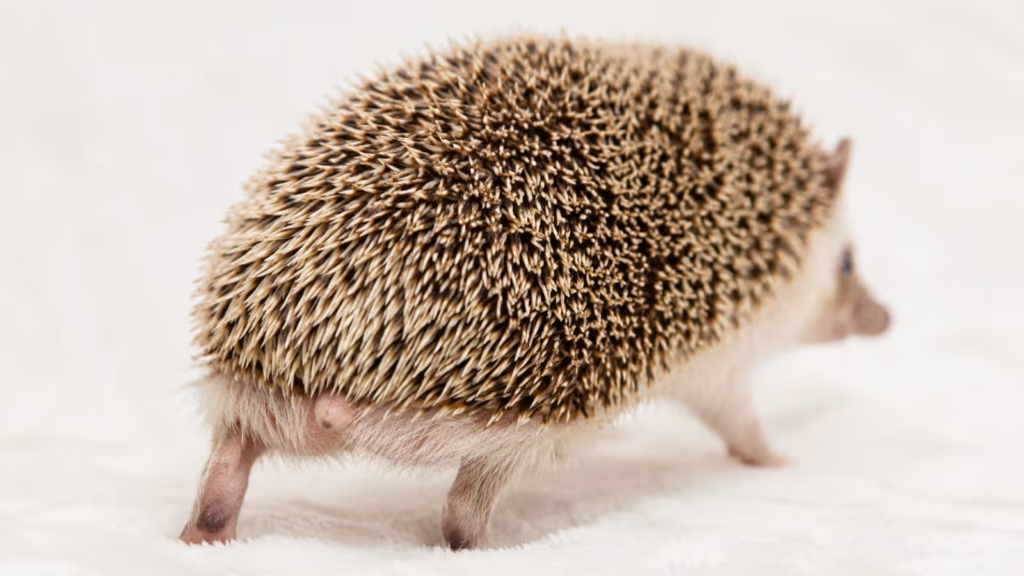
Yes, every single hedgehog species has a tail. It is a normal and permanent part of their anatomy from birth. The confusion comes from how short and well-hidden the tail is compared to other common small pets like rats, gerbils, or mice.
Most pet hedgehog owners never clearly see the tail during normal day-to-day interaction. This is completely normal and not a sign of injury, genetics, or poor health. The tail is simply tucked away where quills and fur cover it naturally.
If you have ever owned a rat or a mouse, you are used to seeing an obvious trailing appendage behind the animal. Hedgehogs work the opposite way. The tail is there, it just blends almost perfectly into the rear of the body.
Why Is a Hedgehog’s Tail So Hard to See?
Understanding why the tail stays hidden helps new owners stop worrying about it. Several features of hedgehog anatomy work together to keep the tail out of sight.
Dense Quill Coverage
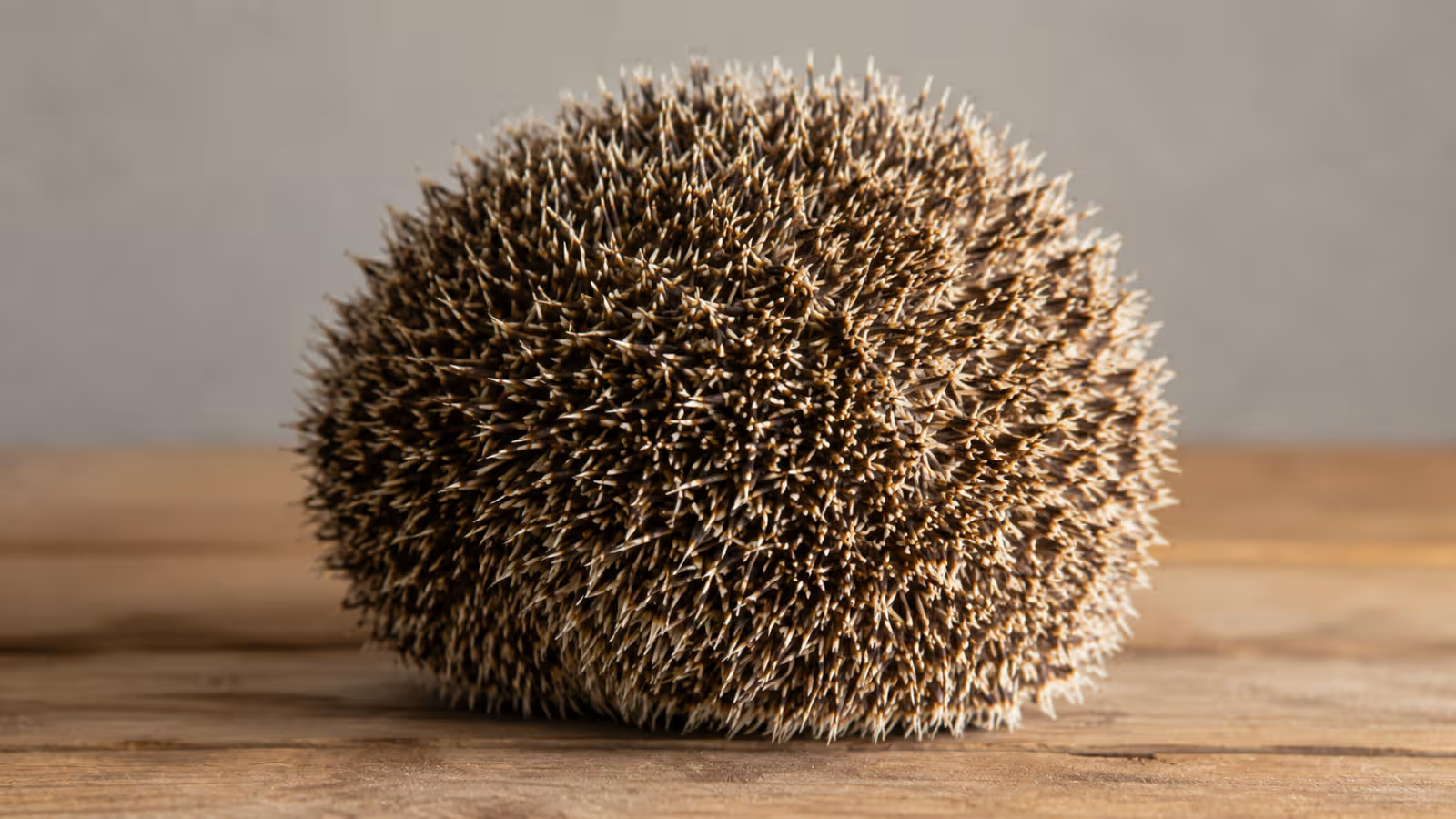
Hedgehogs carry somewhere between 5,000 and 7,000 individual quills across their back, sides, and upper body. These quills overlap and extend toward the rear, covering the entire base area where the tail begins. Even when the hedgehog is relaxed and walking, the quills drape over the tail and block the view.
Compact, Rounded Body Shape
Hedgehogs have short legs and a stocky, low-slung body. There is no long hindquarters like you might see in a rabbit or a rat. The rear end sits close to the ground, and the tail points downward slightly rather than extending behind the animal in a noticeable way.
Defensive Curl Position
When a hedgehog feels threatened or startled, it curls into a tight ball. The entire body, legs, face, and tail disappear inside a tight dome of quills. During this posture, there is absolutely no chance of spotting the tail without gently and carefully uncurling the animal, which should be done only when necessary.
Soft Fur at the Rear
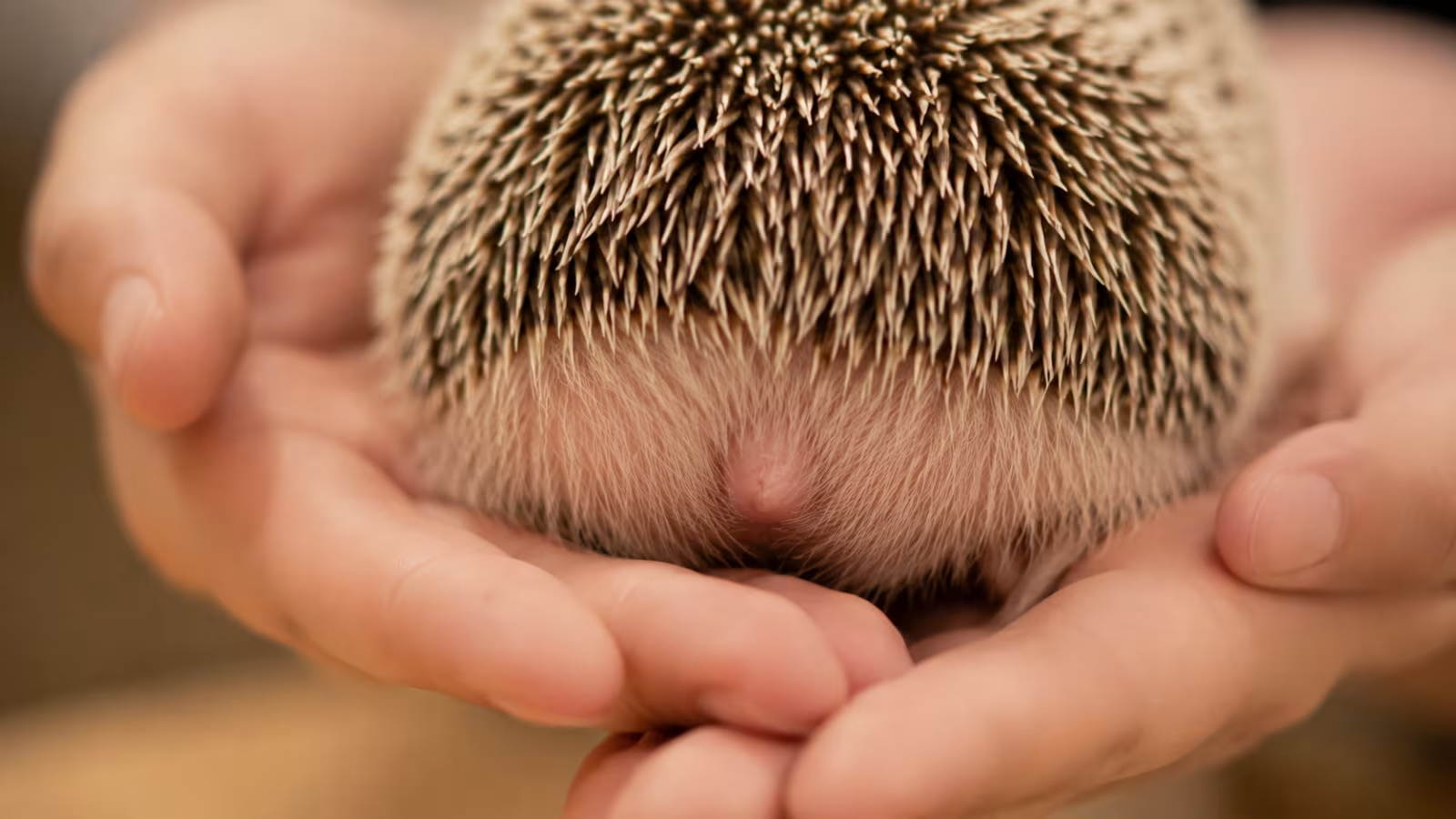
The underside and rear of a hedgehog are covered with soft fur rather than quills. This fur grows around and past the tail area, adding another layer of natural camouflage. The tail blends with the surrounding fur coloring and becomes nearly invisible unless you are actively looking for it.
Note: Most owners only get a clear look at the tail when the hedgehog is being examined during a health check, a bath, or a vet visit. Outside of those moments, it stays quietly out of sight.
Hedgehog Tail Length: What to Expect by Species
One of the first things owners want to know after confirming hedgehogs have tails is how long those tails actually are. The answer varies by species, though none of them would impress anyone accustomed to the long tails of rats or chinchillas.
African Pygmy Hedgehog
The African pygmy hedgehog is the species you are most likely keeping as a pet. Their tails typically measure between 2.5 and 5 centimeters, which works out to roughly 1 to 2 inches. Even at the longer end of that range, the tail remains short enough to stay completely hidden beneath quills during normal activity.
European Hedgehog
European hedgehogs, the species found wild across much of the United Kingdom and continental Europe, have tails measuring roughly 2 to 4 centimeters. They are slightly stockier animals overall, and the tail is no more visible in person than it is on their African counterparts.
Long-Eared Hedgehog
The long-eared hedgehog, native to central Asia and parts of the Middle East, has a slightly more visible tail in some cases, though it still measures only a few centimeters. The longer ears draw attention away from the rear end, which may be part of why the tail goes unnoticed even in this species.
Baby Hedgehogs
Baby hedgehogs, also called hoglets, are born with tails already present. At birth the tail is tiny, often just a few millimeters, and the quills begin emerging within hours of birth as the skin dries. The tail grows proportionally as the hoglet develops but never becomes long enough to be easily visible without a close inspection.
Across all species, the tail proportionally stays quite short throughout the animal’s entire life. It is not something that simply has not grown yet in a young hedgehog. Even adult animals have what most people would describe as a stub rather than a proper tail.
Hedgehog Tail Anatomy: What Is Actually Back There
The hedgehog tail is not just a decorative nub. It is a functional part of the animal’s skeletal and muscular system, even if its role is minor compared to the tails of other mammals.
Vertebrae and Skeletal Structure
The tail contains several small vertebrae that form a natural extension of the spinal column. The exact number varies slightly by species but generally falls between 4 and 8 caudal vertebrae. These give the tail its modest length and structural integrity.
Muscle Attachments
Several small muscles attach near the base of the tail and contribute to movement and posture in the rear end of the body. These muscles help with basic body positioning during walking, climbing, and digging behaviors.
Skin and Fur Coverage
The tail itself is covered with the same soft skin and fur found on the underside of the hedgehog. There are no quills growing on the tail itself, which is one reason it feels noticeably different from the rest of the animal’s back when you do get a clear feel of it during handling.
Functional Role
The tail of a hedgehog does not serve the same communication or balance functions you see in cats, dogs, or squirrels. It does contribute to overall skeletal architecture and basic movement coordination, but it is not a primary feature of the animal’s daily behavior. The hedgehog simply has not needed a long, functional tail through its evolutionary history the way other mammals have.
What a Healthy Hedgehog Tail Should Look Like
Knowing what normal looks like makes it much easier to spot a problem early. A healthy hedgehog tail has a few consistent characteristics.
- Short and proportionate to the overall body size
- Clean, dry skin at the base and along the length
- Free from any visible swelling, lumps, or bumps
- No discharge, crusting, or unusual odor
- Skin coloring matches the surrounding fur area
- No signs of irritation, redness, or broken skin
- The animal shows no discomfort when the area is gently touched
In practice, most owners only closely inspect the tail area during routine health checks or bath time. As long as the hedgehog is eating normally, moving comfortably, and showing no signs of pain around the rear end, the tail is almost certainly fine.
Tip: If you have never looked closely at your hedgehog’s tail before, a quiet moment during handling is a good opportunity. Gently support the animal’s full body and use your fingers to lightly move the quills aside near the rear. The tail base should appear clean and healthy with no notable abnormalities.
Common Hedgehog Tail Health Problems
While tail problems in hedgehogs are not extremely common, they do occur and are worth knowing about. Catching issues early makes a significant difference in treatment outcomes.
Tail Injuries and Wounds
Hedgehogs can injure their tails by catching them on cage accessories, wire flooring, or exercise wheels. Because the tail is so short and usually hidden, minor injuries can go unnoticed for longer than they would on a larger animal. Any wound near the tail area that is not healing within a few days should be evaluated by an exotic pet veterinarian.
Dermatitis and Skin Conditions
Skin irritation around the tail base can develop from fungal infections, mite infestations, or contact with unsuitable bedding. Signs include redness, flaking skin, hair loss around the area, and the animal scratching or rubbing at its rear end frequently.
Masses or Lumps
Any lump or growth near or on the tail should be checked promptly. Hedgehogs are unfortunately prone to certain types of tumors as they age, and a lump in the tail area is not something to monitor and hope disappears on its own.
Wobbly Hedgehog Syndrome and Neurological Impact
Wobbly Hedgehog Syndrome is a progressive neurological condition that affects some hedgehogs, particularly African pygmy hedgehogs. While the primary symptoms involve the hind legs and general mobility, the tail area can also be affected as muscle weakness progresses. If your hedgehog is having difficulty walking or seems to have lost control of the rear portion of its body, Wobbly Hedgehog Syndrome should be ruled out by a vet.
Infection at the Tail Base
Bacterial infections can develop at the base of the tail, particularly if the area is kept in damp or dirty conditions. This is one more reason why regular cage cleaning matters. Spot-clean dirty bedding daily and do a full cage clean at minimum once per week.
Tail problems are rarely the first health issue a hedgehog owner encounters, but being familiar with the warning signs means you will not dismiss something important as normal behavior.
Pet Hedgehog vs Wild Hedgehog Tails: Any Difference?
A common question is whether captive-bred hedgehogs might have shorter or differently shaped tails due to selective breeding over generations. The honest answer is no.
Pet African pygmy hedgehogs have been bred in captivity for several decades, primarily for temperament and color mutations rather than physical size or anatomy. The tail remains genetically unchanged from their wild counterparts. A wild African pygmy hedgehog in the savannah and a leucistic hedgehog in a pet owner’s cage in a suburban home will have tails of essentially the same relative length.
Wild hedgehog species photographed in nature sometimes appear to show more visible tails because photographers often capture them mid-stride in a stretched walking position. That walking posture elongates the rear end and briefly exposes the tail more clearly than it appears during normal observation. It is the same animal with the same tail, just photographed at the right moment.
Hedgehog Tail Myths Worth Clearing Up

A few persistent myths about hedgehog tails circulate in online forums and beginner care guides. It is worth setting them straight.
Myth: Hedgehogs are born without tails.
Truth: False. Every hoglet is born with a tail present. It is simply too small to notice immediately after birth.
Myth: A missing or invisible tail means the hedgehog was injured.
Truth: False in almost every case. The tail is naturally hidden and does not indicate past injury or surgical removal.
Myth: Wild hedgehogs have longer tails than pet species.
Truth: False. Tail length is consistent within each species regardless of whether the animal lives wild or in captivity.
Myth: Hedgehog tail length indicates health.
Truth: False. A short tail says nothing about the animal’s condition. Tail health relates to the quality of the tissue itself, not the length.
Myth: You can determine a hedgehog’s age by its tail.
Truth: False. Tail length does not reliably indicate age beyond the very early weeks of life when growth is still occurring.
How to Inspect Your Hedgehog’s Tail During Routine Care
Regular tail checks should be a normal part of your hedgehog care routine. This does not mean a daily inspection, but once every week or two during your general health check is a good habit.
Here is a simple approach that works well in practice:
- Choose a moment when your hedgehog is calm and relaxed, usually after it has been awake for a little while.
- Support the animal’s full body weight in both hands to avoid any stress.
- Gently tilt the hedgehog slightly so the rear end is accessible.
- Use a finger to carefully move aside a few quills near the base of the tail.
- Look for any redness, swelling, discharge, or skin changes.
- Gently press the area around the tail base to check for any discomfort response.
- Release the animal and allow it to settle normally.
Note: If your hedgehog consistently pulls away, vocalizes, or shows clear discomfort when the tail area is touched, that is a reason to schedule a vet check rather than assume everything is fine. Hedgehogs do not usually react strongly to gentle handling of the tail area when it is healthy.
When to See an Exotic Pet Vet About the Tail
Most hedgehog owners will never need to visit a vet specifically for a tail-related concern. However, there are clear situations where a professional opinion is the right call.
Book an appointment if you notice any of the following:
- Visible swelling at or near the tail base
- An unusual lump that was not there before
- Signs of broken or damaged skin in the tail area
- Persistent moisture or discharge
- Your hedgehog seeming to drag or favor the rear end
- Obvious pain response when the area is touched
- Any loss of control of the tail and hind legs together
Exotic pet vets with hedgehog experience are the right choice here. Not every general small animal veterinarian has specific knowledge of hedgehog anatomy, so it is worth finding one with exotic pet experience before you need them urgently.
Conclusion
Hedgehogs do have tails. Every species, every individual animal, every hoglet born in a nest or a breeding enclosure has one. The fact that most owners never see it clearly is not a cause for concern. It is simply the result of a compact body shape, dense quill coverage, and a tail that is genuinely very short by mammal standards.
For everyday care purposes, the tail requires no special attention beyond including the tail base in your regular health check routine. Keep the cage clean, handle your hedgehog gently, and stay familiar with what the rear end looks like when it is healthy. That knowledge alone puts you ahead of most beginners.
If you ever notice swelling, a new lump, broken skin, or signs of pain near the tail area, that is when a qualified exotic pet vet becomes important. Outside of those situations, a hidden tail is just a hedgehog being a hedgehog.
FAQ Section: Questions You Might Have
Yes. Hoglets are born with tails already present. The tail is small and not easily visible immediately after birth, but it is there from day one.
Yes, if you gently move aside the quills and fur near the rear of the hedgehog, you can feel the small, soft tail. It does not feel like quills because the tail is covered in skin and fur, not spines.
Completely normal. Many healthy hedgehogs go months without their owner spotting the tail. The quills and compact body shape conceal it during almost all normal activity.
The area around the tail should be clean, dry, and free from swelling, discharge, or visible wounds. If your hedgehog is moving comfortably and shows no pain when the rear area is gently touched, the tail is likely fine.
Not exactly. Tail length varies slightly between species, but all species fall within a similar short range. African pygmy hedgehogs, the most common pet species, typically have tails between 2.5 and 5 centimeters.
It is possible for tail injuries to occur in hedgehogs, particularly from wheel injuries or cage accessories. If you have never seen a tail and are concerned, a brief hands-on inspection during a vet visit will give you a definitive answer.
Not in the way a cat or squirrel does. The tail contributes to basic skeletal structure and movement but is not a significant balance tool due to its small size.
Photographs often capture hedgehogs mid-stride in a stretched walking position. This posture briefly exposes the tail more clearly than it appears during normal resting or slower movement.
References and External Source Links
- African Wildlife Foundation – Hedgehog species and natural habitat information.
- The British Hedgehog Preservation Society – Hedgehog anatomy and UK wild species care.
- Association of Exotic Mammal Veterinarians (AEMV) – Hedgehog health and veterinary care guidelines.
- Merck Veterinary Manual – Hedgehogs as pets, care overview, and common health conditions.