

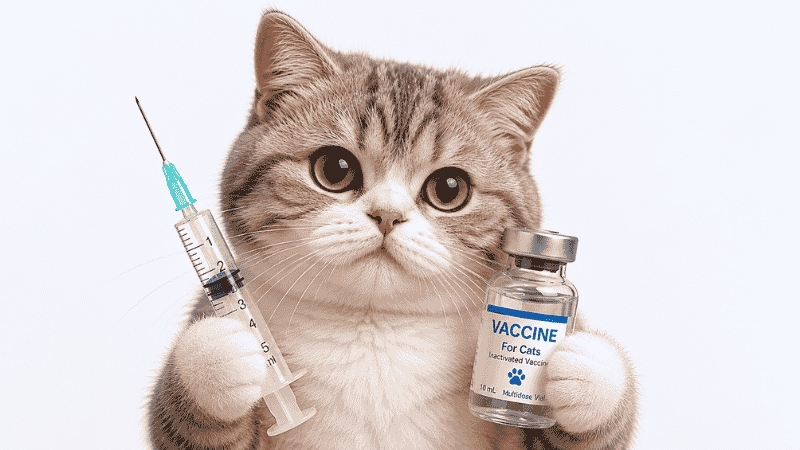
Rabies Injection for Cats
Your cat sits calmly on the veterinary exam table. The vet prepares a syringe. You feel nervous. Rabies injection for cats is one of the most important preventive healthcare measures you can provide. But many owners have questions about safety, necessity, and side effects. Understanding the facts helps you make informed decisions for your feline companion.
Rabies is a viral disease that attacks the nervous system. Once symptoms appear, rabies is almost always fatal. There is no cure. The only protection is prevention through vaccination. A rabies injection for cats protects not only your pet but also your family. Rabies can spread from infected animals to humans through bites or scratches.
This guide covers everything about rabies injection for cats: what the vaccine is, when kittens need their first shot, how often boosters are required, signs of rabies to watch for, possible side effects, and legal requirements. You will also learn why even indoor cats need this vaccine and what to expect after your cat receives the shot.
Before we dive in, know that rabies injection for cats is one of the most studied and safest vaccines available. Millions of cats receive it every year with no serious problems. As discussed in cats that puke, mild side effects like temporary lethargy are normal and not cause for alarm.
What Is the Rabies Vaccine for Cats
The rabies injection for cats contains inactivated (killed) rabies virus. Your cat cannot get rabies from the vaccine because the virus is dead. When the vaccine enters your cat’s body, the immune system recognizes the virus particles and produces antibodies. These antibodies protect your cat if she is ever exposed to live rabies virus later in life.
So why is rabies injection for cats so important? Rabies is zoonotic, meaning it spreads from animals to humans. A cat with rabies can infect family members through bites, scratches, or even saliva contact with open wounds. Vaccinating your cat protects your entire household. The rabies injection for cats is one of the few vaccines legally mandated for this reason.
There are two types of rabies injection for cats commonly used in veterinary medicine. The recombinant vaccine uses a different technology but is also killed virus. The adjuvanted vaccine contains additives that enhance the immune response. Some cats have mild reactions to adjuvants, but both types are considered safe and effective for the vast majority of cats.
The rabies injection for cats works within about twenty-eight days. After this period, your cat has adequate protection. However, immunity wanes over time. This is why booster shots are necessary. Depending on the vaccine type and local laws, cats need boosters every one to three years.
Resource from the International Cat Care explains that rabies injection for cats is considered a core vaccine, meaning every cat should receive it regardless of lifestyle.
When Cats Need Rabies Shots
The rabies injection for cats schedule depends on your cat’s age, health status, and local laws. Most veterinarians follow guidelines from the American Association of Feline Practitioners. Understanding the timeline helps you stay compliant and protect your cat.
Kittens typically receive their first rabies injection for cats between twelve and sixteen weeks of age. This timing ensures that maternal antibodies have faded enough for the vaccine to work effectively. Kittens younger than twelve weeks do not respond well to the rabies vaccine because their immune systems are still developing.
After the initial rabies injection for cats, a booster is required one year later. This one-year booster confirms that the vaccine worked and maintains protection. Following the one-year booster, cats can receive boosters every one to three years. The exact interval depends on the vaccine product and your local legal requirements.
So how often do indoor cats need rabies injection for cats? Even indoor cats need boosters on the same schedule. The law does not distinguish between indoor and outdoor cats. Veterinary guidelines also recommend rabies injection for cats every one to three years regardless of lifestyle. As covered in are spider plants toxic to cats, indoor cats face fewer risks than outdoor cats, but rabies is an exception.
Senior cats also need rabies injection for cats. Age alone is not a reason to stop vaccinating. As long as your senior cat is generally healthy, she should continue receiving rabies boosters on schedule. Discuss any age-related health concerns with your veterinarian before vaccination.
If your cat misses a booster, the rabies injection for cats schedule may need to restart. Some states require a new initial vaccine series if a cat is overdue. Others accept a single booster. Your veterinarian can advise you based on local laws and your cat’s history.
Signs of Rabies in Cats
Understanding rabies symptoms helps you recognize danger. While rabies injection for cats is the best prevention, knowing the signs allows you to act quickly if you suspect exposure. Rabies progresses through several stages.
The first stage of rabies is called the prodromal stage. This lasts two to three days. During this stage, your cat may show behavior changes. A friendly cat might become shy or aggressive. An independent cat might become clingy. The earliest sign of rabies is often a sudden, unexplained change in personality.
The second stage is the furious stage. This is what most people picture when they think of rabies. Cats become extremely aggressive, restless, and irritable. They may attack anything that moves. They may chew at their own skin or bite at imaginary objects. Foaming at the mouth occurs because rabies affects the throat muscles, making swallowing impossible. Cats in this stage are dangerous to humans and other animals.
The third stage is the paralytic stage. The cat’s muscles begin to fail. First, the jaw and throat muscles weaken, causing drooling and inability to eat or drink. Paralysis spreads to the legs and eventually the respiratory muscles. Death occurs from respiratory failure within days of paralysis onset.
Remember that rabies injection for cats prevents these terrifying symptoms. A vaccinated cat who is exposed to rabies has a very low chance of developing the disease. Unvaccinated cats who are exposed face almost certain death. There is no treatment. Euthanasia is often recommended to prevent suffering.
If your cat has been bitten by a wild animal such as a bat, raccoon, fox, or skunk, contact your veterinarian immediately. Your cat may need a rabies booster even if she is up to date on rabies injection for cats. A cat without current vaccination may face quarantine or euthanasia after exposure.
Our previous article on why is my cat vomiting discusses other health symptoms. Rabies symptoms are different and more severe than common digestive upset. If your cat shows aggression, drooling, or paralysis, seek emergency veterinary care immediately.
Side Effects of Rabies Injection for Cats
Like any medical intervention, rabies injection for cats can cause side effects. Most side effects are mild and short-lived. Serious reactions are very rare. Knowing what to expect helps you monitor your cat appropriately after vaccination.
Mild lethargy is the most common side effect of rabies injection for cats. Your cat may sleep more than usual for twenty-four to forty-eight hours after vaccination. She may seem less interested in playing or interacting. This is normal. Her immune system is working hard to build protection. Rest is part of that process.
p>Mild fever can occur after rabies injection for cats. Your cat may feel warm to the touch. Her ears may be red. She may seek out cool surfaces like tile floors. A low-grade fever is a normal immune response. High fever over 104 degrees Fahrenheit or fever lasting more than forty-eight hours needs veterinary attention.Loss of appetite for one meal is common. Your cat may skip her dinner after receiving rabies injection for cats. She should eat normally by the next day. If she refuses all food for more than twenty-four hours, call your veterinarian. Dehydration can develop quickly in cats who do not eat or drink.
p>Swelling at the injection site occurs in some cats. The rabies injection for cats is given under the skin, usually between the shoulder blades. You may feel a small lump. This is usually harmless and resolves within two to four weeks. If the lump grows larger, becomes painful, or persists beyond a month, have your veterinarian examine it.Serious allergic reactions to rabies injection for cats are very rare but possible. Signs include facial swelling, hives, difficulty breathing, vomiting, diarrhea, or collapse. These reactions usually occur within minutes to hours of vaccination. If you see any of these signs, return to your veterinarian immediately or go to an emergency veterinary hospital.
Resource from the Cornell Feline Health Center explains that while any medical procedure carries risks, the benefits of rabies injection for cats far outweigh the risks. Rabies is universally fatal. Vaccine reactions are almost always treatable.
Do Indoor Cats Need Rabies Injection for Cats
This is one of the most common questions cat owners ask. “My cat never goes outside. Do I really need rabies injection for cats?” The answer is yes, for several important reasons. Understanding these reasons helps you protect your indoor cat effectively.
p>First, indoor cats can escape. Even the most careful owners have accidents. A door left open by a visitor. A window screen that gives way. A cat who darts past your feet. If your indoor cat escapes and is not vaccinated, she could encounter a rabid animal outdoors. The rabies injection for cats protects her even if you never planned for her to go outside.Second, rabid animals can enter your home. Bats are the most common source of rabies transmission to indoor cats. Bats are small. They can enter through gaps in screens, chimneys, or attics. Your cat may catch a bat inside your home. A bat with rabies can infect your cat through a bite. Rabies injection for cats protects against this hidden risk.
Third, the law requires rabies injection for cats regardless of lifestyle. Most states and municipalities have mandatory rabies vaccination laws for all cats, indoor and outdoor. Failing to vaccinate your cat can result in fines. If your cat bites someone, even accidentally during play, you may face legal consequences. Proof of rabies injection for cats is required in these situations.
p>Fourth, your cat could be exposed during veterinary visits or boarding. Other animals in waiting rooms may carry diseases. Although rare, an infected animal could expose your cat. The rabies injection for cats provides protection even outside your home.Our previous article on signs of stress in cats discusses indoor cat wellness. Indoor cats face fewer risks than outdoor cats, but rabies is not one of those risks. The rabies virus does not discriminate based on lifestyle. All cats need protection.
The ASPCA cat vaccination guide emphasizes that rabies injection for cats is considered a core vaccine for all cats, regardless of whether they live exclusively indoors or go outside.
Cost and Safety of Rabies Injection for Cats
p>Cost is a concern for many cat owners when considering rabies injection for cats. The good news is that rabies vaccination is relatively inexpensive compared to other veterinary procedures. Most private veterinary clinics charge between $15 and $40 for a rabies shot. Some clinics offer low-cost vaccine clinics where the price is even lower, sometimes $10 to $20.Low-cost vaccine clinics are offered by many animal shelters, humane societies, and some veterinary hospitals. These clinics provide rabies injection for cats at reduced prices. They may also offer other core vaccines. The vaccines used at these clinics are the same high-quality products used at full-service veterinary hospitals.
p>Is rabies injection for cats safe? Yes, overwhelmingly. Serious reactions are extremely rare. The benefits of protection from a fatal disease far outweigh the small risks of vaccination. Your veterinarian can discuss any specific concerns based on your cat’s health history. Most cats experience no side effects at all or only mild, temporary lethargy.The rabies injection for cats has been used for decades. Millions of doses are given each year. The vaccine technology is well understood. Manufacturers continuously test their products for safety and efficacy. When a serious reaction occurs, it is usually treatable. Rabies itself has no treatment and is almost always fatal.
p>Cost should never be a reason to skip rabies injection for cats. If you cannot afford veterinary care, look for low-cost options in your area. Animal shelters often provide vaccines at reduced prices. Some humane societies offer mobile vaccine clinics. Preventive care like vaccination is much less expensive than emergency care or legal fines.Our previous article on indoor cat depression discusses affordable ways to keep indoor cats healthy. Preventive healthcare, including rabies injection for cats, is one of the most cost-effective ways to protect your cat’s long-term health.
Aftercare and Recovery
After your cat receives rabies injection for cats, you can help her recover comfortably. Simple aftercare steps reduce stress and allow her immune system to work effectively. Most cats return to normal within twenty-four to forty-eight hours.
p>Allow your cat to rest. The rabies injection for cats triggers an immune response. This response requires energy. Your cat may sleep more than usual. Do not force her to play or interact. Let her rest in a quiet, comfortable spot. Provide a cozy bed or blanket where she feels safe.Monitor your cat’s behavior. Check for normal eating and drinking within twelve hours of rabies injection for cats. Most cats resume normal eating by the evening after morning vaccination. If your cat refuses food for more than twenty-four hours, call your veterinarian. Offer her favorite wet food to encourage eating.
p>Watch for the injection site. You may feel a small lump where the rabies injection for cats was given. This is normal and usually resolves within a few weeks. If the lump grows larger, becomes painful, or does not go away, have your veterinarian examine it. Rarely, a condition called vaccine-associated sarcoma can develop, though this is extremely rare with modern vaccines.Keep your cat hydrated. Encourage water intake by providing fresh, clean water. Some cats drink more after vaccination because of mild fever. Others drink less. Monitor water consumption. Dehydration is a risk if your cat does not drink for an extended period.
p>Do not bathe your cat for twenty-four hours after rabies injection for cats. The injection site needs time to seal. Water and soap can irritate the area. Allow the small puncture wound to heal naturally. Most cats need no additional care beyond rest and monitoring.Our previous article on do cats fart discusses normal feline digestive patterns. Mild digestive changes after vaccination are possible but not common. If your cat vomits or has diarrhea after rabies injection for cats, monitor closely and call your vet if symptoms persist.
When to See a Vet After Rabies Injection
p>Most cats do not need veterinary care after routine rabies injection for cats. However, certain symptoms require attention. Knowing when to call your vet helps you respond appropriately.Call your veterinarian immediately if your cat has difficulty breathing after rabies injection for cats. Labored breathing, wheezing, or open-mouth breathing are emergency signs. These could indicate a severe allergic reaction. Even if your cat seems otherwise fine, breathing problems need immediate attention.
p>Seek veterinary care if your cat’s face or paws swell after vaccination. Facial swelling, hives, or swollen ears are signs of an allergic reaction. These reactions are treatable with medication. Do not wait to see if they resolve on their own. The rabies injection for cats can trigger allergic responses in rare cases, but they respond well to prompt treatment.Call your vet if your cat collapses or seems extremely weak after rabies injection for cats. Lethargy is normal. Collapse is not. If your cat cannot stand, seems unresponsive, or is too weak to lift her head, go to an emergency veterinary hospital immediately.
p>Contact your veterinarian if your cat has persistent vomiting or diarrhea after vaccination. A single episode is not concerning. Repeated vomiting or watery diarrhea for more than twelve hours needs evaluation. Dehydration can develop quickly, especially in kittens and senior cats.Call your vet if the injection site swelling grows larger or becomes painful. A small lump that slowly shrinks is normal. A lump that grows, becomes red, or causes your cat discomfort needs examination. Rarely, vaccine reactions can cause more serious inflammation at the injection site.
If you are ever unsure whether your cat’s symptoms are normal after rabies injection for cats, call your veterinarian. They can advise you over the phone. It is better to call and be told everything is fine than to wait and have a problem worsen.
Final Thoughts
Rabies injection for cats is one of the most important preventive healthcare measures you can provide. The disease is almost always fatal once symptoms appear. There is no treatment. Vaccination is your cat’s only defense. It is also legally required in most places, making it non-negotiable for responsible pet ownership.
p>Indoor cats need rabies injection for cats just as much as outdoor cats. Bats can enter homes. Doors can be left open. Cats can escape. The law does not distinguish between indoor and outdoor cats. Protect your cat, your family, and your community by keeping rabies vaccination current.The rabies injection for cats is safe, affordable, and widely available. Most cats experience no side effects. Serious reactions are very rare. The small risks of vaccination are nothing compared to the certain death of rabies infection. Speak with your veterinarian about scheduling your cat’s rabies shot if she is not current. It is a simple procedure that saves lives.
Trusted Resources for Cat Vaccination
For more information on rabies injection for cats and feline preventive healthcare, these independent organisations provide evidence-based guides and research.
- International Cat Care – Veterinary-reviewed advice on rabies vaccination for cats
- Cornell Feline Health Center – University research on feline vaccination guidelines
- ASPCA Cat Vaccination Guide – Practical advice for cat owners about vaccines
- CDC Rabies Information – Government guidance on rabies prevention and laws
You may also find our related guides helpful: signs of stress in cats explains how to recognize illness symptoms, and indoor cat depression covers overall wellness for indoor cats including preventive healthcare.
FAQ Section: Questions You Might Have
The rabies injection for cats protects for one to three years depending on the vaccine product. The first shot is valid for one year. Subsequent boosters may be valid for one or three years. Check your cat’s vaccine certificate for the expiration date. Local laws may require boosters at specific intervals regardless of the vaccine type.
Most cats experience no side effects from rabies injection for cats. Some cats have mild lethargy, slight fever, or decreased appetite for twenty-four to forty-eight hours. Serious reactions are very rare. The benefits of protection from a fatal disease far outweigh the small risks of vaccination.
Yes, indoor cats need rabies injection for cats. Bats can enter homes through small gaps. Doors can be left open. Your cat could escape. Most states legally require rabies vaccination for all cats regardless of lifestyle. Protecting your indoor cat from rabies is simple and affordable.
The rabies injection for cats typically costs $15 to $40 at private veterinary clinics. Low-cost vaccine clinics offered by animal shelters and humane societies may charge $10 to $20. Some clinics offer package deals including exam and other vaccines. Rabies vaccination is one of the most affordable preventive care services available.
Kittens need one rabies injection for cats between 12 and 16 weeks of age. A booster is required one year later. After that, cats need boosters every one to three years depending on the vaccine. Senior cats need boosters on the same schedule as adult cats unless health conditions prevent vaccination.
Vaccine-associated sarcoma is an extremely rare type of cancer linked to some vaccines in cats. Modern rabies vaccines have a much lower risk than older formulations. The risk is approximately one in 10,000 to one in 30,000 cats. The risk of dying from rabies is nearly 100% if exposed and unvaccinated. Most veterinarians recommend rabies injection for cats despite the very small cancer risk.
An unvaccinated cat who bites someone may be quarantined or euthanized for rabies testing. An unvaccinated cat exposed to a rabid animal may be euthanized or face a six-month quarantine. Vaccinated cats exposed to rabies receive a booster and short observation. Rabies injection for cats protects your cat from these severe consequences.
Cats feel a brief pinch when the needle enters. The rabies injection for cats is given under the skin, not into muscle for most cats. This is less painful than intramuscular injections. Most cats tolerate the shot well with minimal reaction. Some cats may be sore at the injection site for a day after vaccination.
Yes, allergic reactions to rabies injection for cats are possible but rare. Signs include facial swelling, hives, difficulty breathing, vomiting, or collapse. These reactions usually occur within minutes to hours of vaccination. If you see any of these signs, return to your veterinarian immediately. Treatment is usually successful with prompt care.
The rabies injection for cats begins working immediately. However, full protection takes about twenty-eight days. Your cat is considered fully vaccinated four weeks after the initial shot or booster. Some states require waiting periods for legal compliance. Check your local laws about quarantine requirements for newly vaccinated cats.