

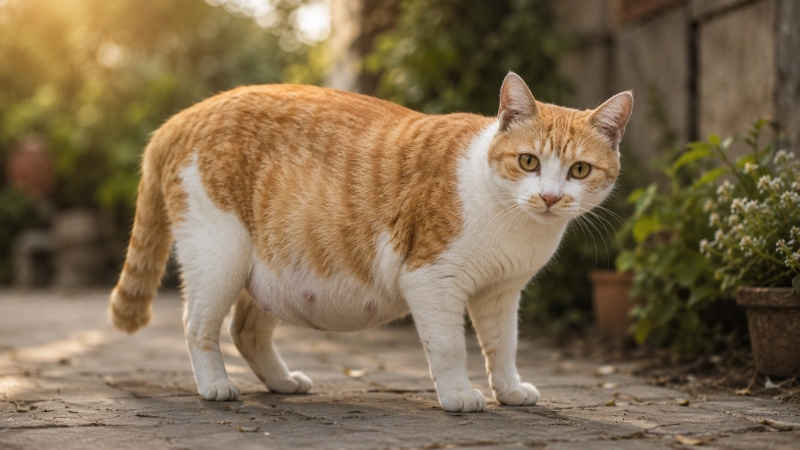
How Long Are Cats Pregnant
You suspect your cat might be pregnant. Her belly looks fuller. Her nipples have changed color. She sleeps more than usual. Now you need answers about how long are cats pregnant and what happens during the weeks ahead.
The short answer is that a typical cat pregnancy lasts between 63 and 65 days. This is roughly nine weeks from conception to birth. However, healthy kittens have been born anywhere from 61 to 70 days after mating. Understanding how long are cats pregnant helps you prepare for labor, recognize warning signs, and provide proper care for your pregnant queen.
Cat pregnancy, also called gestation, is relatively short compared to human pregnancy. In just over two months, a litter of kittens develops from microscopic embryos to fully formed newborns. Knowing how long are cats pregnant matters because the timing of labor affects kitten survival. Kittens born before day 58 rarely survive. Kittens born after day 70 may face complications requiring veterinary help.
This guide covers everything about how long are cats pregnant, including weekly development stages, early pregnancy signs, behavior changes, labor symptoms, and postpartum care. Whether you are a first-time cat owner or an experienced breeder, understanding cat pregnancy timeline helps you keep your cat and her kittens healthy.
What Is Cat Pregnancy Duration
Cat pregnancy duration refers to the time between successful mating and the birth of kittens. Veterinarians call this the gestation period. The question how long are cats pregnant has a range rather than a single exact number because cats vary slightly based on age, breed, litter size, and individual health factors.
The average cat pregnancy lasts 63 to 65 days from the date of mating. This is approximately nine weeks. First-time mothers sometimes deliver slightly earlier, while experienced queens may go closer to 65 days. When owners ask how long are cats pregnant, veterinarians typically answer with this 63 to 65 day window while noting that 61 to 70 days is still considered normal in most cases.
It is important to understand that cats can become pregnant again very quickly after giving birth. A nursing mother cat can go into heat as soon as one to two weeks after delivering kittens. Knowing how long are cats pregnant helps you plan for spaying or separation to prevent back-to-back litters, which are exhausting and unhealthy for the mother cat.
Outdoor cats and indoor cats have similar pregnancy durations. The question how long are cats pregnant does not change based on lifestyle. However, indoor cats may have more predictable due dates because their mating is usually planned or observed by owners. Outdoor cats may have mated with multiple males, making pregnancy timing less certain.
How Long Are Cats Pregnant Week by Week
Understanding how long are cats pregnant becomes clearer when you break the nine weeks into weekly stages. Each week brings visible and internal changes for the pregnant queen and her developing kittens.
During week one, fertilization occurs and embryos travel to the uterus. There are no visible signs of pregnancy yet. Most owners do not know how long are cats pregnant until they notice changes around week three. Week two involves implantation, where embryos attach to the uterine wall. Your cat may eat slightly more but still looks normal.
Week three is when early signs appear. Your cat’s nipples become pinker and more prominent, a change called pinking up. She may experience morning sickness similar to human pregnancy, though less obvious. By week four, a veterinarian can sometimes feel small bumps in the uterus. This is the earliest reliable answer to how long are cats pregnant through physical examination.
Week five brings visible belly growth. Your cat’s abdomen becomes rounder. She may seem hungrier than usual. Week six is the second trimester equivalent in cat pregnancy. Kittens begin moving inside the womb, though you may not feel the movement until week seven. Understanding how long are cats pregnant helps you schedule a veterinary checkup during this stage to confirm healthy development.
Week seven brings obvious swelling of the abdomen. You can feel kittens moving if you place your hand gently on your cat’s belly. Your cat may start searching for quiet, secluded spots. Week eight is the final stretch. The kittens are fully formed and positioned for birth. By now, you have a clear answer to how long are cats pregnant because birth is less than one week away.
Week nine is delivery week. Most cats give birth between day 63 and day 65. Your cat may stop eating 12 to 24 hours before labor begins. She will look for her nesting area. Knowing how long are cats pregnant helps you prepare this nesting box at least two weeks before the expected due date.
Resource from the International Cat Care provides detailed week-by-week guidance for pregnant cat owners and explains how long are cats pregnant across different breeds.
Early Signs a Cat Is Pregnant
Before you know how long are cats pregnant will last, you need to recognize that your cat is pregnant in the first place. Early signs appear around three weeks after mating. Watching for these changes helps you confirm pregnancy before visible belly growth occurs.
The most reliable early sign is nipple changes. About fifteen to eighteen days after mating, your cat’s nipples become larger, pinker, and more noticeable. Veterinarians call this pinking up. This happens because blood flow increases to the mammary tissue. If you know how long are cats pregnant, you can use pinking up as your earliest confirmation point.
Your cat may also show morning sickness symptoms. Some pregnant cats vomit occasionally during weeks three and four. She may eat less for a few days then return to normal appetite. Behavior changes often include increased affection. Many pregnant cats become clingier and seek more attention. Understanding how long are cats pregnant helps you distinguish early pregnancy signs from illness.
Weight gain becomes noticeable around week four. However, overweight cats may not show obvious changes until week five or six. Your cat may also sleep more than usual. Growing kittens takes energy. If you suspect pregnancy and notice these signs, calculate how long are cats pregnant by counting days from the known mating date. If you did not see the mating, a veterinarian can confirm pregnancy by palpation at day 21 or ultrasound at day 28.
Your previous article on signs of stress in cats explains how anxiety can mimic some pregnancy symptoms. A stressed cat may also eat more or hide. If you are unsure whether your cat is pregnant or stressed, the timeline of how long are cats pregnant helps you wait for more definitive signs before visiting the vet.
Pregnant Cat Behavior Changes
Behavior changes are often the first clue that a cat is pregnant. Even before you know how long are cats pregnant will last, your cat’s personality may shift. These changes are driven by hormones and the physical demands of growing kittens.
Many pregnant cats become more affectionate. They seek out their owners for lap time and petting. A cat who was previously independent may suddenly follow you from room to room. This clinginess is normal and usually lasts throughout the pregnancy. Understanding how long are cats pregnant helps you appreciate these affection changes as part of the natural process.
Some pregnant cats become irritable or aggressive. This is especially common in the final two weeks before birth. Your cat may hiss at other pets or swat when touched in certain areas. She is protecting her belly and preparing to guard her future kittens. Knowing how long are cats pregnant helps you give her extra space during this sensitive time.
Nesting behavior appears in the final week. Your cat will search for quiet, dark, warm places to give birth. She may rearrange blankets or towels in her chosen spot. She may also become restless and move between nesting locations. Owners who understand how long are cats pregnant prepare a nesting box at least two weeks before the due date to give her a safe option.
Vocalization changes are also common. Some pregnant cats meow more often. Others become quieter. Your cat may purr more intensely or at unusual times. If you know how long are cats pregnant, you can track these behavior changes against the timeline to ensure she is progressing normally.
How to Prepare for Kittens
Once you know how long are cats pregnant, you have about nine weeks to prepare for the arrival of kittens. Proper preparation reduces stress for the mother cat and increases the survival chances of newborn kittens.
Set up a nesting box in a quiet, warm, low-traffic area of your home. Use a cardboard box or plastic pet crate lined with soft towels or blankets. The box should be large enough for your cat to lie down comfortably and turn around. Place it in a room where you can close the door if needed. Understanding how long are cats pregnant helps you set up this box around week six, giving your cat time to accept it as her birthing space.
Change your cat’s food during pregnancy. Pregnant and nursing cats need kitten formula food, which has higher calories, protein, and essential nutrients. Switch to kitten food around week four of pregnancy. Provide fresh water at all times. Knowing how long are cats pregnant helps you plan food purchases so you have enough kitten food for the entire pregnancy and nursing period.
Schedule a veterinary checkup between week three and week five. The vet can confirm pregnancy, estimate litter size, and check for health problems. This is also the time to discuss how long are cats pregnant in your specific cat’s case and when you should call the vet during labor. The Cornell Feline Health Center recommends prenatal veterinary care for all pregnant cats, especially first-time mothers.
Gather supplies for birth. You need clean towels, unwaxed dental floss for tying umbilical cords if needed, a heating pad, a scale for weighing kittens, and emergency veterinarian contact information. Understanding how long are cats pregnant gives you time to assemble these supplies before labor begins.
Your related article on indoor cat depression covers environmental enrichment for indoor cats. Pregnant indoor cats benefit from calm, predictable routines. Avoid major changes to your home during the weeks you now know how long are cats pregnant will last.
Signs Labor Is Close
Knowing how long are cats pregnant helps you predict when labor will start, but individual cats vary. Watching for these signs in the final days tells you birth is approaching within 24 to 48 hours.
Your cat’s temperature will drop below 100 degrees Fahrenheit (37.8 degrees Celsius). Normal cat temperature is 100.5 to 102.5 degrees. About 12 to 24 hours before labor, it drops to 99 degrees or lower. If you understand how long are cats pregnant, you can start taking your cat’s temperature daily after day 60 to catch this drop.
Your cat will stop eating 12 to 24 hours before labor begins. She may also vomit or seem restless. She will spend more time in her nesting box, arranging blankets and towels. Some cats pant or breathe faster. Knowing how long are cats pregnant allows you to recognize these signs as normal labor preparation rather than illness.
You may see milk production. Gentle squeezing of the nipples may release a whitish fluid called colostrum. This can happen a few days before birth or just hours before. Your cat may also groom her belly and genital area more frequently. She is cleaning the area where kittens will emerge. Understanding how long are cats pregnant helps you distinguish pre-labor grooming from normal grooming habits.
Visible contractions signal active labor has begun. Your cat may cry out or purr loudly during contractions. She will push for five to thirty minutes before the first kitten appears. Kittens usually arrive every fifteen to sixty minutes. The entire process of how long are cats pregnant ends when all kittens are born, which typically takes two to six hours.
When to See a Vet
Most cat births proceed normally without human intervention. However, complications can happen. Knowing how long are cats pregnant and recognizing problem signs helps you act quickly when veterinary help is needed.
Call your vet immediately if your cat has strong contractions for thirty minutes without producing a kitten. This could indicate uterine inertia or a kitten stuck in the birth canal. Another emergency sign is green or black discharge before any kittens are born. This may mean the placenta has detached prematurely. Understanding how long are cats pregnant helps you know when labor is taking too long.
Seek veterinary help if your cat goes more than four hours between kittens but you know more kittens remain. The Journal of Feline Medicine and Surgery reports that prolonged labor increases risk of stillbirth and maternal exhaustion. Also call your vet if your cat seems in extreme pain, collapses, or bleeds heavily.
If your cat has not given birth by day 70 of pregnancy, schedule a vet appointment. Knowing how long are cats pregnant means knowing that going beyond 70 days is dangerous for both mother and kittens. Kittens may become too large to pass through the birth canal, requiring a C-section. Your veterinarian can confirm whether pregnancy is truly overdue or if your conception date estimate was wrong.
Other reasons to call your vet include your cat refusing to care for newborn kittens, not producing milk, or showing signs of postpartum infection such as fever, foul discharge, or lethargy. The ASPCA cat pregnancy guide offers additional guidance on when to seek emergency veterinary care during and after cat birth.
Final Thoughts
Understanding how long are cats pregnant prepares you for the rewarding experience of welcoming newborn kittens. The average pregnancy lasts 63 to 65 days, roughly nine weeks from mating to birth. During this time, your cat needs proper nutrition, a quiet nesting space, and veterinary monitoring to ensure healthy development.
The signs of cat pregnancy become visible around week three with nipple changes and increased appetite. By week five, belly growth is obvious. In the final week, nesting behavior and appetite loss signal that labor is approaching. Knowing how long are cats pregnant helps you prepare supplies and recognize when to seek veterinary help for complications.
Most cat births proceed without problems. However, knowing the emergency signs and having your veterinarian’s contact information ready protects both mother and kittens. After birth, provide high-quality kitten food for nursing cats and a safe, warm environment for the new family. Understanding how long are cats pregnant is the first step toward responsible cat care during this special time.
Trusted Resources for Cat Pregnancy
For more information on feline pregnancy, birth, and kitten care, these independent organisations provide evidence-based guides and research.
- International Cat Care – Veterinary-reviewed advice on cat pregnancy, labor, and newborn care
- Cornell Feline Health Center – University research on cat pregnancy and delivery
- ASPCA Cat Pregnancy Guide – Practical advice for pregnant cat owners
- Journal of Feline Medicine and Surgery – Peer-reviewed research on feline reproduction
You may also find our related guides helpful: Signs of Stress in Cats explains how anxiety affects pregnant cats, and Indoor Cat Depression covers environmental enrichment for indoor cats during pregnancy recovery.
FAQ Section: Questions You Might Have
The average cat pregnancy lasts 63 to 65 days from mating to birth. Healthy kittens have been born anywhere from 61 to 70 days. If you need a specific number for planning, use 64 days as the average answer to how long are cats pregnant.
Yes, slight variation is normal. First-time mothers sometimes deliver earlier at 61 or 62 days. Cats with small litters may go longer, up to 68 or 70 days. Large litters often arrive earlier. The general answer to how long are cats pregnant is 63 to 65 days, but 61 to 70 days is still within normal range.
Cats have shorter pregnancies than dogs. The answer to how long are cats pregnant is about 63 to 65 days. Dog pregnancy lasts 58 to 68 days depending on breed, but larger dogs often go longer. Cat pregnancy is more consistent across breeds than dog pregnancy.
A typical cat pregnancy lasts 63 to 65 days and produces 4 to 6 kittens on average. First-time mothers usually have smaller litters of 1 to 3 kittens. Experienced queens may have 6 to 8 kittens. Litter size does not change how long are cats pregnant, though very large litters may arrive earlier.
Experienced veterinarians and breeders can estimate how far along a cat is, but guessing by appearance alone is unreliable. Belly size varies based on litter number, cat size, and individual body shape. A vet using ultrasound or palpation gives the most accurate answer to how long are cats pregnant in a specific case.
Going beyond 70 days is dangerous. Kittens may become too large to pass through the birth canal naturally. The placenta may age and stop providing nutrients. If your cat has not given birth by day 70, call your vet immediately. This is the most important exception to the typical answer of how long are cats pregnant.
Most cats show visible signs around week three or four. Nipple changes appear at 15 to 18 days. Belly growth becomes noticeable around day 35. Weight gain continues until birth. The complete answer to how long are cats pregnant with visible signs is about three weeks, but subtle changes happen earlier.
No, pregnant cats do not go into heat. If your cat shows heat signs after mating, she likely is not pregnant. However, some cats show pseudo-pregnancy symptoms that mimic real pregnancy. Understanding how long are cats pregnant helps you wait for confirmation rather than assuming pregnancy from missed heat cycles alone.
A nursing mother cat can go into heat as soon as one to two weeks after giving birth. This is why knowing how long are cats pregnant matters for preventing back-to-back litters. Keep your queen away from unneutered males until she is spayed or at least eight weeks postpartum to protect her health.
No, the answer to how long are cats pregnant does not change based on indoor or outdoor lifestyle. Both indoor and outdoor cats average 63 to 65 days. However, indoor cats may have more predictable due dates because their mating is observed. Outdoor cats may have mated multiple times with different males, making pregnancy timing less certain.